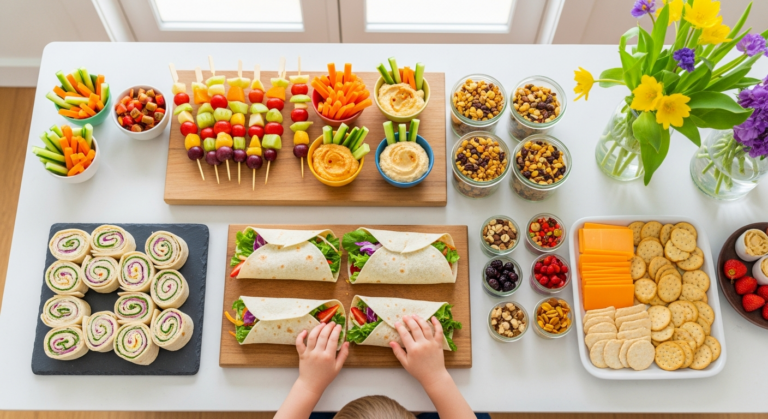
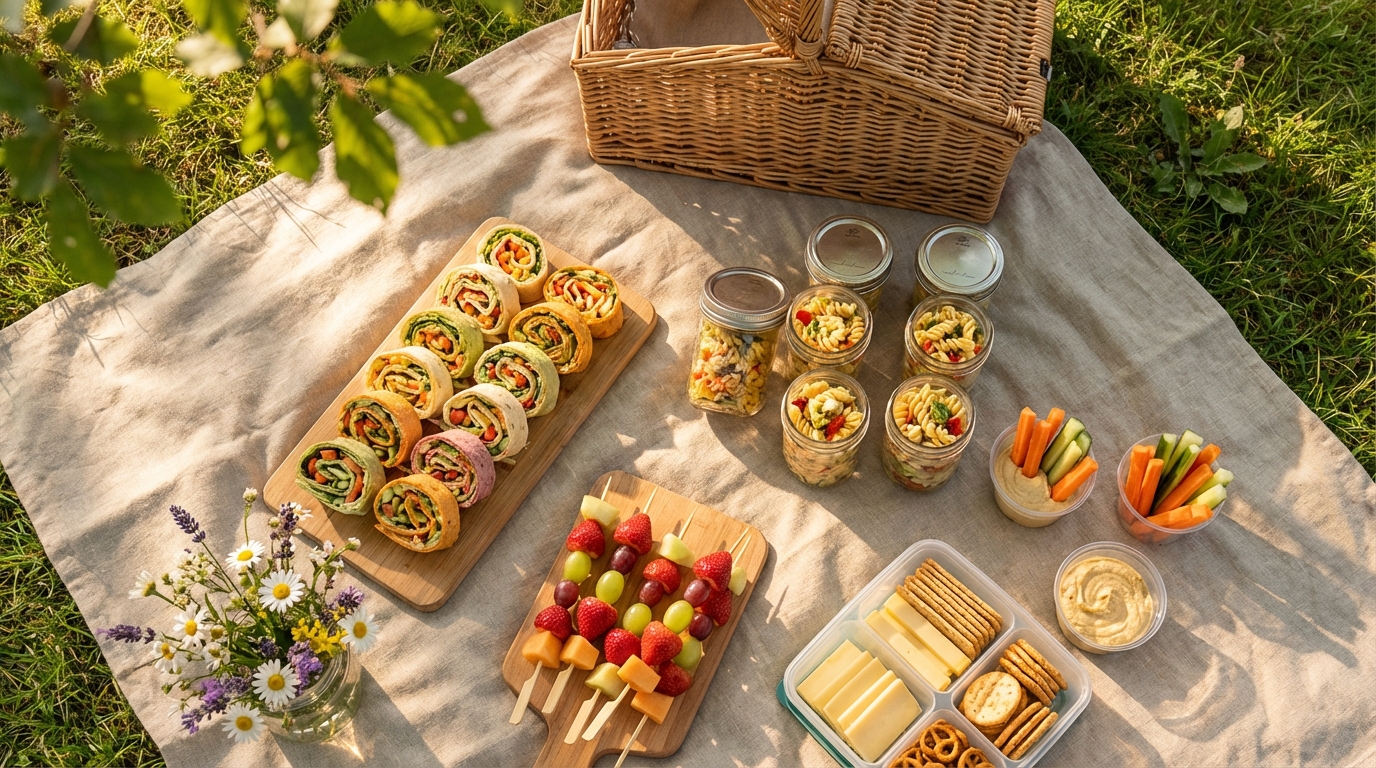
15 No-Fuss Picnic Lunch Ideas Kids Will Actually Eat (No Soggy Sandwiches)
Learn 15 no-soggy picnic lunch ideas kids will actually eat, plus crucial food safety rules and a cooler-packing system. You'll pack delicious, self-contained finger foods that stay fresh and prevent common mishaps.
- Prevent soggy sandwiches: Choose from 15 self-contained finger food ideas that pack cold and dry.
- Master cooler safety: Keep food at or below 40F and eat within 2 hours (1 hour above 90F).
- Adapt for young kids: Modify foods for ages under 5 to prevent choking hazards and ensure safety.
- Utilize make-ahead options: Many ideas can be prepped in advance to save time on picnic day.
This post contains affiliate links. As an Amazon Associate I earn from qualifying purchases.
This post has 15 no-soggy picnic lunches kids actually eat, a cooler-packing system, and the food-safety rules that matter. It all started with a picnic that broke me.
The Picnic Lunch Packing Kit printable on this page puts the cooler rules on one sheet.
Last May I packed turkey sandwiches, grapes, juice boxes and cookies. By the time we reached the park, the ice pack had shifted and the sandwiches had turned into wet bread. My four-year-old daughter took one bite and said, “I don’t like picnics.”
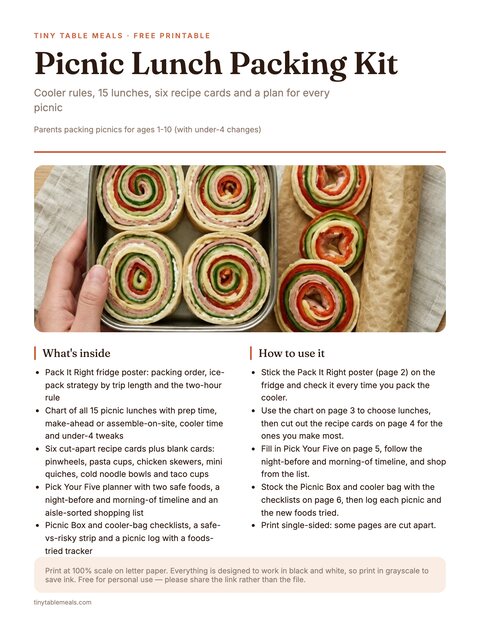
Free printable · 6 pages
Picnic Lunch Packing Kit for Kids
A fridge poster with the cooler packing order, ice-pack guide and two-hour rule, a chart of all 15 picnic lunches with under-4 tweaks, six cut-apart recipe cards, a Pick Your Five planner with prep timeline and shopping list, plus a Picnic Box checklist, cooler-bag gear list, safe-vs-risky strip and picnic log.
Free. Your download link appears right here. You'll also join the Sunday Supper Plan. Unsubscribe anytime. Privacy
It took a humbling number of mediocre picnics to find a better way. These 15 ideas travel well, taste good at outdoor temperatures, and get eaten.
For allergy-safe packing, see my nut-free school lunch ideas. For little ones, my toddler meal prep lunches cover portions and cuts.
In this article (5 sections)
15 Picnic Lunch Ideas That Actually Work
Most picnic lunches fail for the same few reasons: the food gets warm, the bread goes soggy, and nobody has a table or a free hand. So every idea here is a self-contained finger food that packs cold and dry.
The table shows prep time, what you can make ahead, and which ideas need changes for younger kids. One rule covers all 15: keep the cooler at or below 40F, and eat food within 2 hours of taking it out (1 hour above 90F).
Safety firstRound, firm foods (grapes, cherry tomatoes, olives, mozzarella balls) should be quartered lengthwise until about age 5 or until your child chews well. Hard pretzels, whole nuts and whole raw carrot or celery sticks are for ages 5 and up. For a 4-year-old, cut raw carrot and celery into very thin sticks and watch while they eat.
Skewers and picks are for ages 5 and up, eaten sitting down with an adult watching. For younger kids, pull the food off and serve it in a cup.
For children under 4, also serve carrots cooked or finely grated, cut cheese into thin strips, and skip popcorn and nut-heavy trail mix. Mash or skip whole edamame and beans. Every idea marked “With changes” in the table has its own note below.
Safety firstNo honey for babies under 12 months, so maple syrup is the default sweetener in the noodle sauces. The energy bites are for ages 2 and up. Introduce peanut, egg, shellfish and sesame at home first, following current AAP guidance and your pediatrician’s advice. At parks and playdates, check for nut-allergic kids before sharing food.
| Idea | Prep | Make ahead | Nut-free | Toddler-ready |
|---|---|---|---|---|
| 1. Pinwheels | 10 min | Yes | Yes (skip PB&J) | With changes |
| 2. Pasta cups | 20 min | Yes | Yes | With changes |
| 3. Chicken skewers | 30 min | Yes | Yes | Off the stick under 5 |
| 4. Veggie spring rolls | 25 min | Morning of | Swap the sauce | With changes |
| 5. Mini quiches | 25 min | Yes | Yes (contains egg, dairy) | Yes |
| 6. Hummus boxes | 5 min | Yes | Yes | With changes |
| 7. Fruit kebabs | 10 min | Morning of | Yes (skip Nutella) | Off the stick under 5 |
| 8. Cold noodle bowls | 20 min | Yes | Soy sauce version (contains soy, sesame) | With changes |
| 9. Cheese stackers | 5 min | Yes | Yes | With changes |
| 10. Pita pockets | 10 min | Yes | Yes | With changes |
| 11. Rice paper rolls | 30 min | Morning of | Swap the sauce | With changes |
| 12. Energy bite boxes | 5 min | Yes | Sunflower butter swap (check the chocolate chip label) | Ages 2+, with changes |
| 13. Taco cups | 20 min | Yes | Yes (contains dairy) | With changes |
| 14. Caprese skewers | 10 min | Yes | Yes | Off the pick under 5 |
| 15. Yogurt parfaits | 5 min | Assemble on-site | Nut-free granola | With changes |
1. Pinwheel Wraps
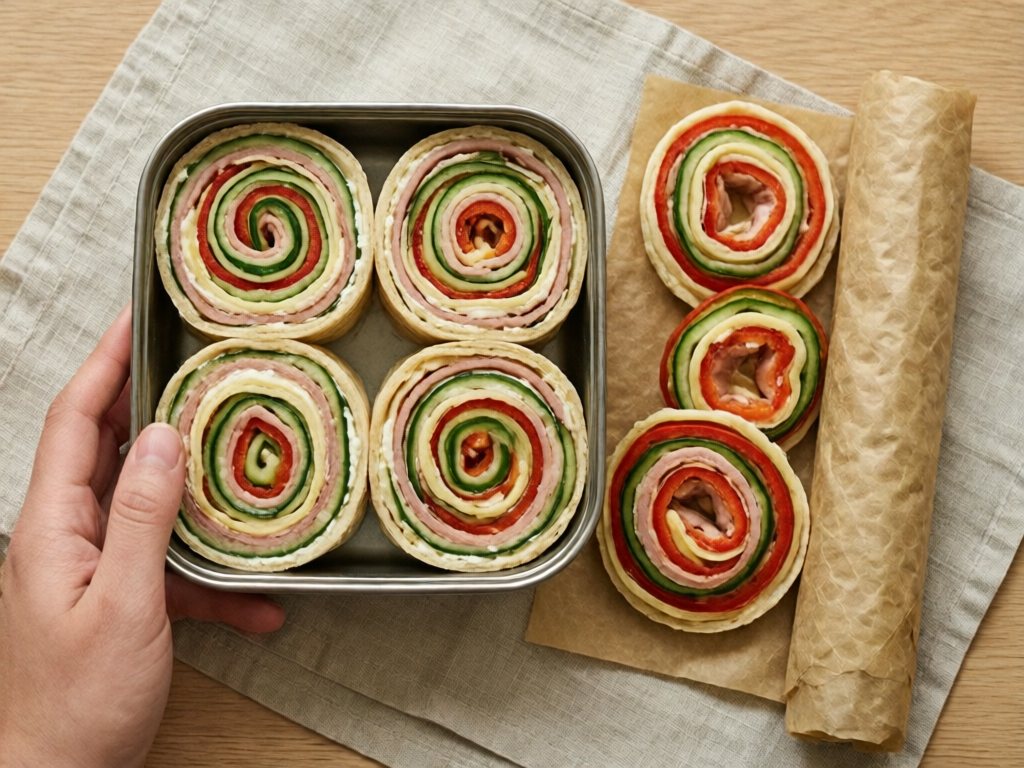
This is my number one picnic food. If you make nothing else on this list, make these.
Why they work: The cream cheese and tortilla keep moisture out, so the rounds stay compact and dry for one-handed eating.
How to make them:
- Lay a large flour tortilla flat. Spread a thin layer of cream cheese all the way to the edges (this is your “glue” and moisture barrier).
- Layer thin deli turkey or ham, a slice of cheese, and thinly sliced cucumber or bell pepper strips.
- Roll tightly, starting from one edge. Wrap in plastic or beeswax wrap and refrigerate for at least an hour.
- Slice into 1-inch rounds just before packing (or at the picnic site for maximum freshness).
- For under-4s, cut each round in half and use finely shredded veggies instead of strips.
Variations kids love:
- Pizza pinwheels: cream cheese + pepperoni + mozzarella + a thin spread of marinara.
- “Rainbow” pinwheels: cream cheese + shredded carrots, purple cabbage, and spinach.
- PB&J pinwheels: peanut butter + a thin line of jam (don’t spread the jam all the way to the edges or it’ll ooze).
Prep time: 10 minutes. Keep cold at or below 40F and follow the 2-hour rule once out.
2. Pasta Salad Cups
Individual cups fix what a big bowl of pasta salad gets wrong at a picnic. No communal bowl getting warm, no serving spoons, and no fighting over who got more of the good stuff.
Why they work: Pasta salad is meant to be eaten cold, and it tastes better after a night in the dressing. I pack it in small mason jars or 8-oz deli containers.
How to make them:
- Cook 1 lb short pasta (rotini, penne, or bowtie) until al dente. Drain and rinse with cold water until the pasta is fully cool. This makes roughly 8 small cups, depending on your mix-ins.
- Toss with 2 tbsp olive oil to prevent sticking.
- Add: halved cherry tomatoes, diced cucumber, cubed mozzarella, sliced olives, and diced bell pepper.
- Dress with Italian vinaigrette (oil-based dressings travel better than creamy ones).
- Divide into small, shallow individual containers so the salad chills fast, and get them into the fridge right away, always within 2 hours of cooking the pasta. Chill overnight.
Kid-friendly tip: Let kids pick their own mix-ins before you assemble. My daughter hates olives but loves corn, so her cups get corn instead. Customization means everyone eats.
Prep time: 20 minutes. Keep in the cooler at or below 40F and eat within 2 hours of taking it out (1 hour above 90F).
Until about age 5, quarter the cherry tomatoes and olives lengthwise. For under-4s, also swap the mozzarella cubes for thin strips. Peel the cucumber and dice it and the bell pepper very small, or steam the pepper until soft.
3. Chicken Skewers
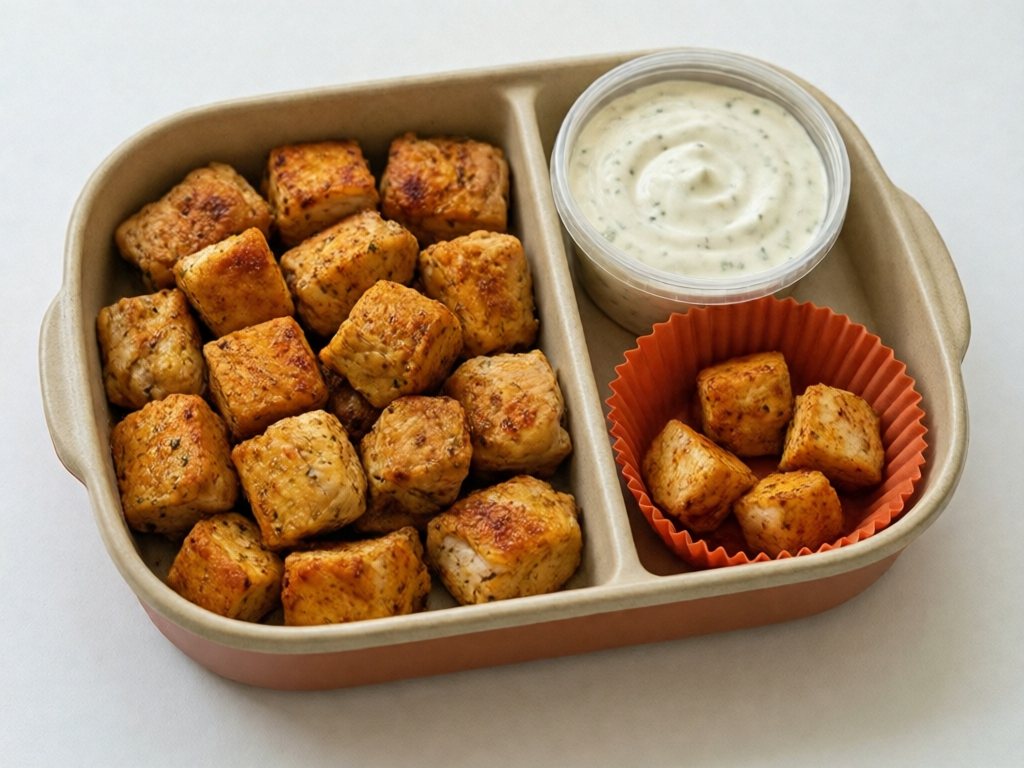
Something about food on a stick makes kids think it’s a special occasion. I have no scientific explanation for this. I just know that the same piece of grilled chicken my seven-year-old son would ignore on a plate becomes irresistible on a wooden skewer.
Why they work: They are cooked, chilled and ready to dip, and the protein keeps park energy going. My guide to high-protein meals and snacks for kids has more ideas like this.
How to make them:
- Cut 1.5 lbs boneless, skinless chicken thighs into 1-inch cubes.
- Marinate in: 2 tbsp olive oil, 1 tbsp lemon juice, 1 tsp garlic powder, 1 tsp paprika, salt, and pepper. Minimum 30 minutes, overnight is better.
- Thread onto wooden skewers (soak the skewers in water for 20 minutes first if grilling; skip soaking if baking).
- Grill on medium-high for 3-4 minutes per side, or bake at 400F for 18-20 minutes. Cook to 165F (74C), checked with a thermometer.
- Spread the cooked skewers in a single layer in a shallow container so they chill fast, and move them to the fridge within 2 hours of cooking (1 hour if it is above 90F). Pack them only once they are fully chilled.
- Pack a small container of ranch, honey mustard, or BBQ sauce for dipping.
Safety firstSkewers are for kids 5 and up, sitting down, with an adult watching. For younger kids, slide the chicken off the skewers before packing. Pointed sticks and excited toddlers are not a combination I recommend. For under-4s, also cut the cubes into smaller pieces.
Prep time: 30 minutes (plus marinating). Refrigerate within 2 hours of cooking (1 hour above 90F) and pack fully chilled. Keep at or below 40F, then eat within 2 hours of taking them out (1 hour above 90F).
4. Veggie Spring Rolls
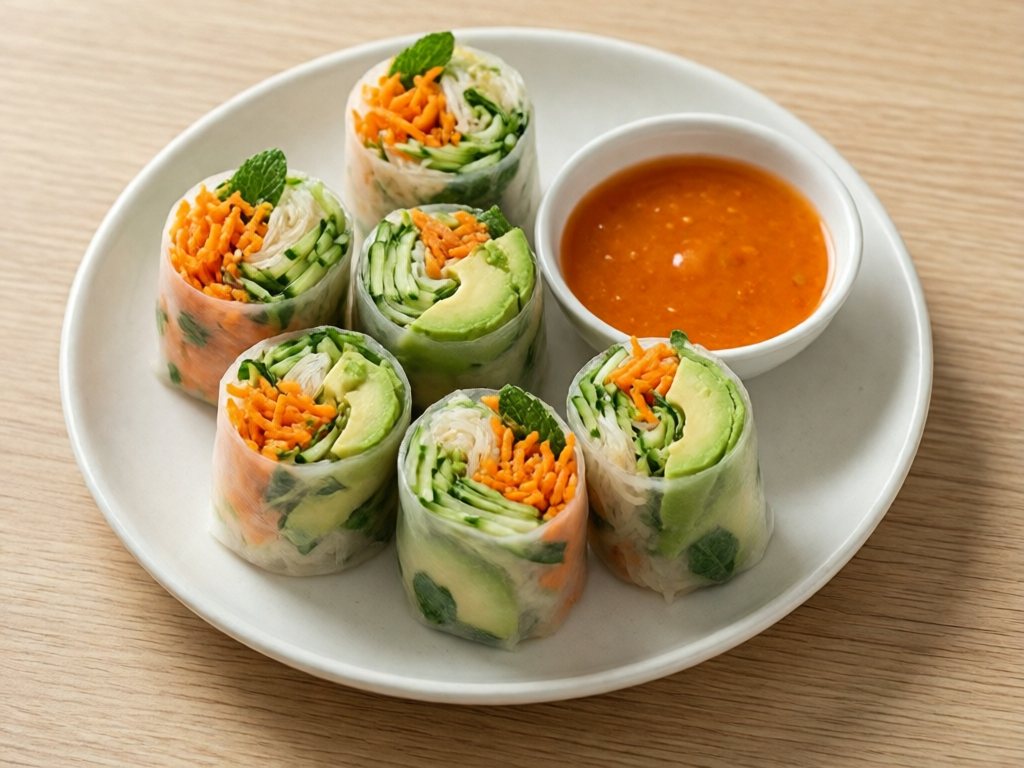
These look incredibly impressive for the amount of effort they actually require. Which is basically none if you buy the rice paper wrappers and pre-shred your veggies.
Why they work: The rice paper holds a pile of vegetables in a tight roll that doesn’t go soggy the way bread does.
How to make them:
- Fill a shallow dish with warm water. Dip one rice paper wrapper until just pliable (about 15 seconds — don’t over-soak or it tears).
- Lay flat and arrange in the center: a few rice noodles (cooked and cooled), julienned carrots, cucumber matchsticks, thinly sliced avocado, and a few mint or cilantro leaves.
- Fold the bottom edge over the filling, fold in the sides, and roll tightly upward (like a burrito).
- Pack with a damp paper towel between rolls to prevent sticking. Include peanut sauce or sweet chili sauce for dipping.
Kid-friendly tip: Let older kids help roll their own. It’s slightly messy and completely fun. If you’re looking for more ways to get kids involved in the kitchen, my age-by-age guide to teaching kids to cook has tons of ideas.
Prep time: 25 minutes. Keep cold and eat within 2 hours of taking them out (1 hour above 90F). Rice paper also dries out. For nut allergies, use a sweet chili or sunflower-based sauce. For under-4s, finely grate the carrot and cut each roll into short pieces.
5. Mini Muffin Tin Quiches
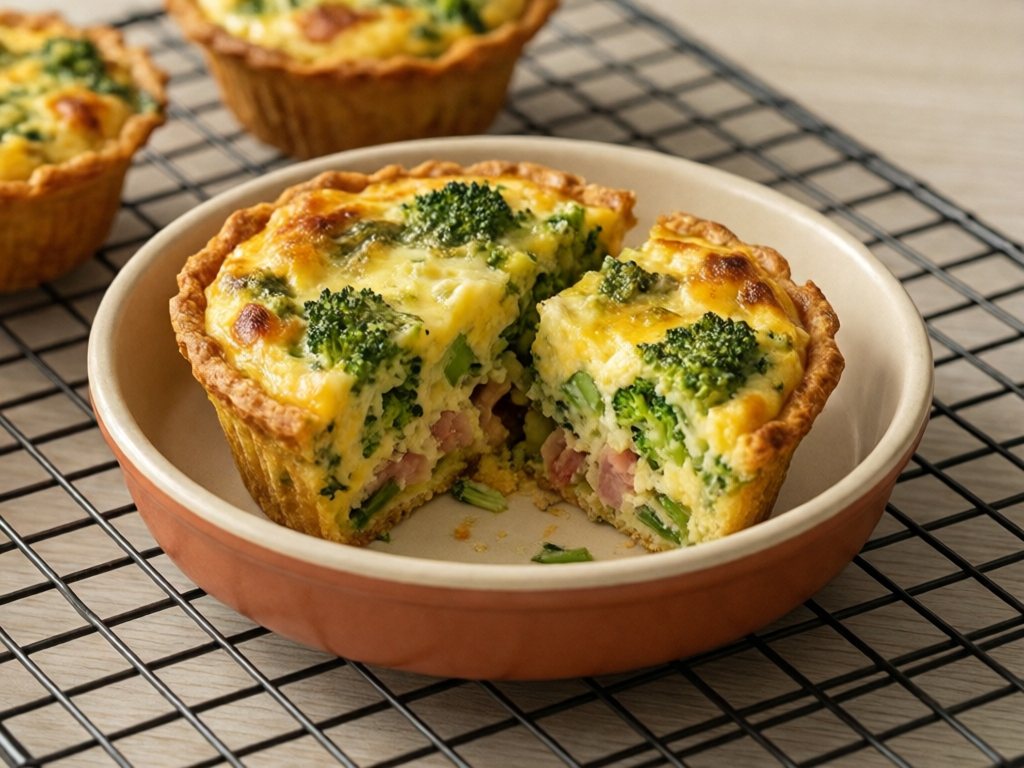
These are a regular in our house, and they’re not just for picnics. I make a batch every Sunday and they become breakfast, snack, and picnic staples all week.
Why they work: They are two-bite, no-utensil protein, and finely diced vegetables disappear into the egg.
How to make them:
- Preheat oven to 375F. Grease a 24-cup mini muffin tin generously.
- Whisk together: 8 eggs, 1/4 cup milk, 1/2 tsp salt, pinch of pepper.
- Divide finely diced fillings among the cups — think: broccoli and cheddar, ham and Swiss, spinach and feta, or bacon and tomato.
- Pour egg mixture over the fillings, filling each cup about 3/4 full.
- Bake for 12-15 minutes until set in the center and 160F inside.
- Cool on a wire rack, then refrigerate in a single layer in a shallow container within 2 hours of baking (1 hour above 90F). Keep them in the fridge until you pack the cooler.
Make-ahead tip: These freeze well. Make a double batch, freeze on a sheet pan, then transfer to a zip bag. Move however many you need to the fridge the night before, so they thaw at or below 40F.
Prep time: 25 minutes. Contains egg and dairy. Pack the quiches chilled alongside ice packs, never as a stand-in for them. Keep at or below 40F and eat within 2 hours of taking them out (1 hour above 90F).
6. Hummus and Dipper Boxes
This is the lazy-day picnic meal I’m not even slightly ashamed of. Sometimes you just need to assemble, not cook.
Why they work: Kids choose what to dip, so even picky eaters find something they like. Most hummus contains sesame (tahini), so check before sharing.
How to assemble:
- Put a generous scoop of hummus in a small leak-proof container (or use a silicone muffin cup as a built-in well inside a larger container).
- Surround with dippers: pita triangles, cucumber rounds, bell pepper strips, cherry tomatoes, snap peas, breadsticks, and soft-cooked carrot sticks. Pretzel sticks, raw baby carrots and raw celery sticks are for ages 5 and up. For a 4-year-old, cut raw carrot and celery into very thin sticks and watch while they eat.
- Until about age 5, quarter the cherry tomatoes lengthwise. For under-4s, also steam the snap peas and steam or finely grate the carrots. Peel the cucumber and cut it into thin half-moons, and serve bell pepper cooked soft or sliced very thin.
- Add a few extras: cubed cheese, rolled-up deli meat, a handful of olives, or some dried fruit. Quarter the olives lengthwise until about age 5. For under-4s, also cut the cheese into thin strips, tear the deli meat into small pieces, and skip the dried fruit or chop it finely.
Budget tip: Store-bought hummus is perfectly fine. Homemade hummus from canned chickpeas usually costs less than store-bought. I have a whole guide to budget meal planning for families if stretching your grocery dollars is a priority.
Prep time: 5 minutes. Keep cold at or below 40F and follow the 2-hour rule once out.
7. Fruit Kebabs
Putting fruit on a stick is the oldest trick in the parenting playbook, and it still works. Sliding fruit off a skewer feels less like “eating your fruit” and more like “having a treat.”
Why they work: Fruit that is already cut and ready to grab gets eaten, and fruit that needs peeling at the park does not.
How to make them:
- Choose fruits that hold up well: strawberries (hulled and halved if large), grapes, pineapple chunks, cantaloupe cubes, blueberries, watermelon cubes, mandarin segments, and kiwi rounds.
- Thread onto blunt-ended skewers or reusable picks with rounded tips, alternating colors. If you only have pointed wooden skewers, snip off the sharp tips first.
- Pack in a flat container lined with a paper towel to absorb excess juice.
- Optional: pack a small container of yogurt for dipping. (Nutella contains hazelnuts, so skip it around tree-nut allergies.)
Safety firstSkewers are for kids 5 and up, sitting down, with an adult watching. No walking or running with a stick. For younger kids, slide the fruit off before serving, quarter the grapes lengthwise, and serve everything in a cup. For under-4s, also cut melon and pineapple into small pieces.
What to avoid: Banana (turns brown), apple (turns brown unless treated with lemon juice), and pear (too soft, falls off the skewer). If you want to include apple, toss the pieces in lemon water and pack them separately.
Prep time: 10 minutes. Keep cold and eat within 2 hours of taking them out (1 hour above 90F).
8. Cold Noodle Bowls
This one surprised me. I started making these as my own lunch, and my kids kept stealing bites until I gave in and made them their own portions.
Why they work: These noodles are meant to be eaten cold, and the sauce coats every strand so nothing dries out in the cooler.
How to make them:
- Cook 8 oz soba noodles, rice noodles, or thin spaghetti according to package directions. Drain, rinse with cold water, and toss with 1 tsp sesame oil.
- Make the sauce: 3 tbsp soy sauce (or tamari for gluten-free), 2 tbsp rice vinegar, 1 tbsp maple syrup (or honey for kids over 12 months), 1 tbsp sesame oil, 1 tsp grated ginger, squeeze of lime.
- Toss noodles with sauce. Divide into individual containers.
- Top with: shredded carrots, sliced cucumber, edamame, sesame seeds, and sliced green onion.
Kid-friendly modification: If the ginger-lime sauce is too much for your kids, use a simpler one. Whisk 2 tbsp peanut butter, 1 tbsp soy sauce and 1 tbsp maple syrup (or honey for kids over 12 months), then thin with warm water. Basically peanut noodles. My kids call them “magic noodles” and have never once questioned the name. Skip this version around peanut allergies.
Prep time: 20 minutes, and they hold overnight in the fridge. Keep at or below 40F and eat within 2 hours of taking them out (1 hour above 90F). Contains soy, sesame and wheat (the peanut version adds peanut).
Safety firstFor children under 4, mash or skip the edamame, leave off the whole sesame seeds, grate the carrot finely and cut the noodles short. Introduce soy, sesame and peanut at home first.
9. Cheese and Cracker Stackers
This is the picnic version of a Lunchable, built from ingredients you choose.
Why they work: Kids build their own stacks, which feels like a snack and slows them down enough to notice they are full.
How to assemble:
- Pack separately: whole grain crackers. Choose sturdy ones that won’t crumble, like Triscuits, Wheat Thins, or water crackers.
- Add cheese (cheddar, Swiss, or pepper jack) and sliced deli meat (turkey, ham, or salami). For under-4s, cut the cheese into thin strips.
- Pack extras in their own section.
- Good extras: apple slices, grapes, dried cranberries, mini pickles, cherry tomatoes, or cucumber rounds.
- Quarter the grapes and cherry tomatoes lengthwise until about age 5. For under-4s, also slice the apple paper-thin and choose crackers that soften quickly in the mouth.
- Pack each item in its own section of a bento box or in separate small containers.
Why not just buy a lunch kit? Homemade often costs less than a packaged lunch kit, and you choose every ingredient.
Prep time: 5 minutes. Keep cold at or below 40F and follow the 2-hour rule once out.
10. Stuffed Pita Pockets
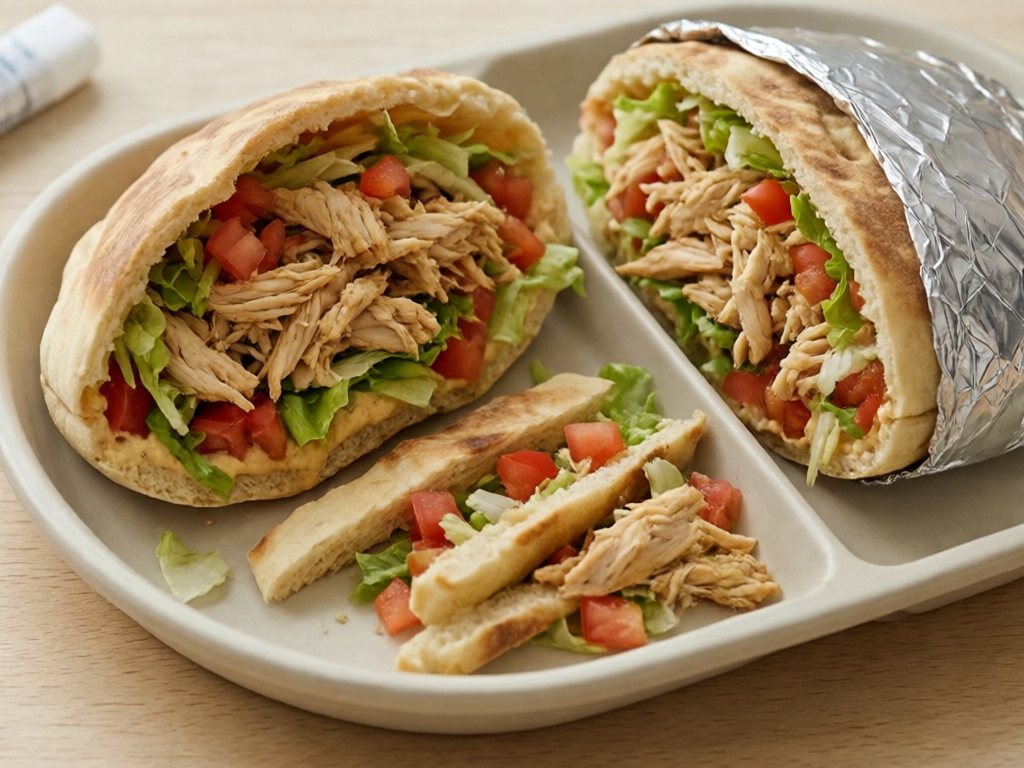
Pita pockets are the structural upgrade that sandwiches desperately need for outdoor eating. The pocket contains everything. Nothing slides out. The bread is sturdier than sliced bread. And they’re naturally portion-sized.
Why they work: Pita is denser than sliced bread, so it resists sogginess and keeps the fillings inside.
How to make them:
- Cut pita rounds in half to create two pockets.
- Spread the inside with hummus, cream cheese, or mashed avocado (your moisture barrier).
- Fill with: shredded chicken + lettuce + diced tomato, or falafel + cucumber + tzatziki, or turkey + cheese + shredded carrots, or egg salad + arugula.
- Wrap each half tightly in foil or beeswax wrap.
- For under-4s, cut each pocket into narrow strips, shred or dice the fillings small, and skip the arugula and big lettuce leaves.
- Allergens: pita contains wheat, hummus contains sesame, and the egg salad and tzatziki fillings contain egg and dairy.
Pro tip: Don’t overfill. Half-full pitas keep their shape and structural integrity. Overstuffed pitas split at the bottom, and then you’re back to sandwich chaos.
Keep the fillings cold: Put egg salad, tzatziki and chicken pitas back in the cooler between servings, not on the blanket.
Prep time: 10 minutes. Keep cold at or below 40F and follow the 2-hour rule once out.
11. Rice Paper Rolls (Vietnamese-Style)
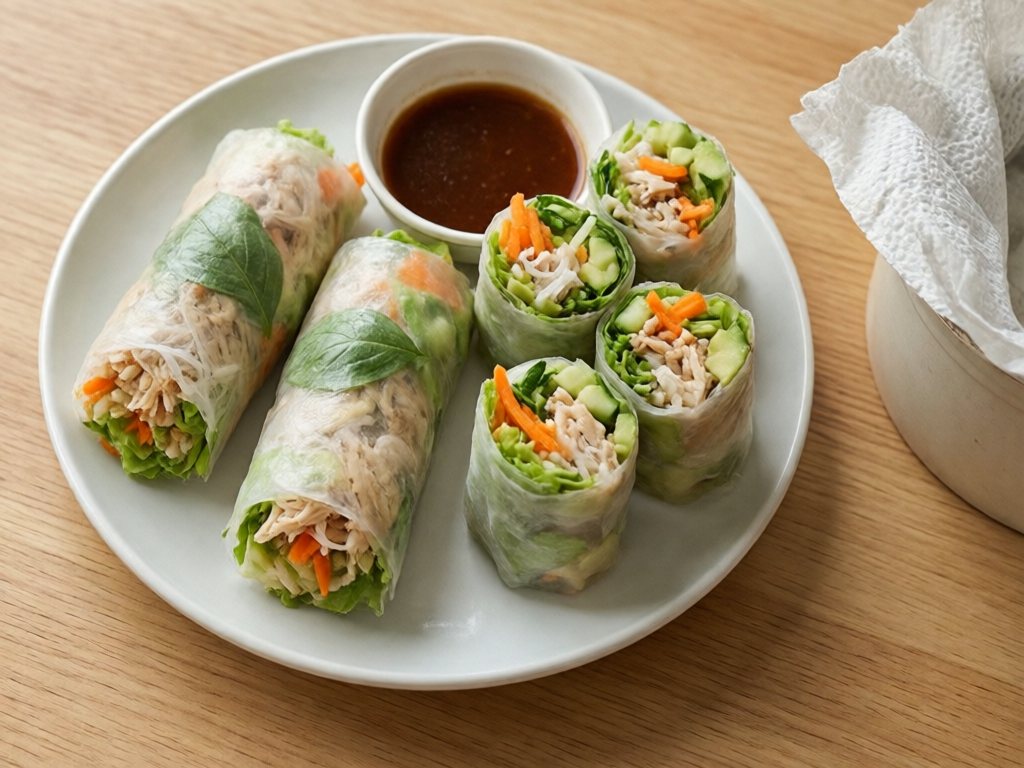
Yes, I know I already included spring rolls. These are different. Rice paper rolls are a heartier version with protein, and they’ve become one of our most-requested picnic foods.
Why they work: They are light but filling, and everything stays wrapped inside. They also make you look far more organized than a bag of sandwiches does.
How to make them:
- Soak rice paper wrappers one at a time in warm water until pliable.
- Fill with: cooked shrimp, optional (halved lengthwise and placed cut-side down), rice vermicelli, lettuce leaves, shredded carrots, cucumber, fresh herbs (mint, basil, cilantro), and avocado slices.
- Roll tightly: fold bottom up, sides in, then roll forward.
- Pack individually wrapped in damp paper towels, then in a sealed container.
- Include hoisin-peanut dipping sauce on the side.
For younger kids: Skip the shrimp and use shredded rotisserie chicken instead. Call them “rainbow wraps” and watch them disappear.
Prep time: 30 minutes for a batch of 8-10 rolls. Keep cold and eat within 2 hours of taking them out (1 hour above 90F). Put the cooked shrimp rolls back in the cooler between servings.
Shrimp is a major allergen, so check before sharing. Swap the hoisin-peanut sauce for a nut-free dip if needed. For under-4s, finely grate the carrot and cut each roll into short pieces.
12. Energy Bite Boxes
This is the picnic lunch for days when you didn’t plan ahead and need to assemble something in fifteen minutes flat. Energy bites plus supporting players equals a complete meal with zero cooking.
Why they work: Oats, nut or seed butter and flaxseed make the bites filling, and fruit, cheese and crackers round out the box with no cooking.
How to make the energy bites (ages 2 and up):
- Mix: 1 cup rolled oats, 1/2 cup peanut butter (or sunflower butter for nut-free), 1/3 cup maple syrup (or honey), 1/2 cup mini chocolate chips, 2 tbsp ground flaxseed, 1 tsp vanilla.
- Packing nut-free? Check the chocolate chip label for nut cross-contact warnings.
- Refrigerate mixture for 30 minutes, then roll into 1-inch balls.
- Makes about 24 bites. Store in the fridge for up to a week.
The box assembly:
- 4-5 energy bites per person.
- Fresh fruit (strawberries, grapes, mandarin segments).
- Cheese cubes or string cheese.
- A handful of crackers. Hard pretzels are for ages 5 and up.
- A few veggie sticks with a small ranch container. Raw carrot and celery sticks are for ages 5 and up; cut them very thin for a 4-year-old.
- Until about age 5, quarter the grapes lengthwise and flatten the bites into thin discs. For under-4s, also cut the cheese into thin strips and soft-cook the veggie sticks.
Make-ahead bonus: Energy bites are one of the best batch-prep foods. Make them on Sunday and you have picnic (and snack and lunchbox) fuel for the entire week.
Prep time: 5 minutes to assemble boxes (if bites are premade). Keep them in the cooler and follow the 2-hour rule.
Safety firstEnergy bites are for ages 2 and up. Whole oats, chocolate chips and sticky nut or seed butter are not for babies or young toddlers. Sticky, round bites are a choking risk for young children. Until about age 5, flatten them into thin discs or break them into small pieces, and stay close while little ones eat. Peanut butter is a common allergen, so use sunflower butter if anyone nearby has a peanut allergy.
13. Deconstructed Taco Cups
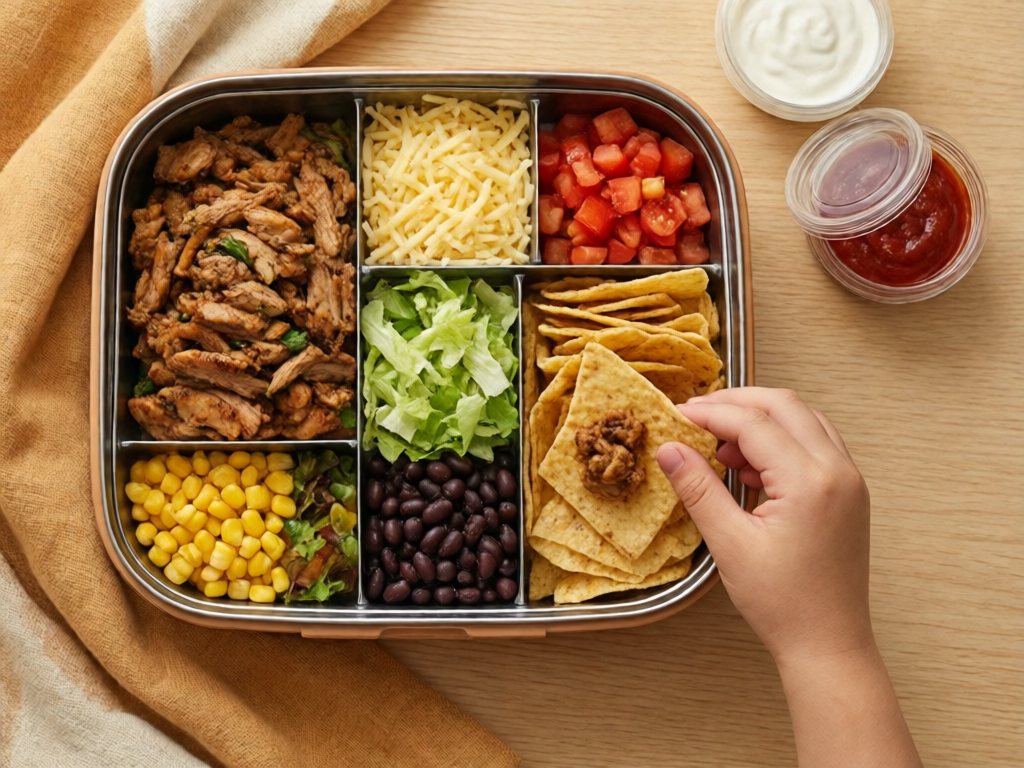
Tacos at a picnic sounds insane. Deconstructed taco cups, however, are genius. You’re giving kids all the components of a taco to assemble and eat however they want, minus the structural failure of a taco shell.
Why they work: Kids get the taco fillings they love, scooped up with sturdy chips instead of a shell that breaks and spills.
How to assemble:
- The protein layer: Cook 1 lb ground turkey (165F) or beef (160F) with taco seasoning. Spread the meat in a shallow container so it chills fast, and refrigerate within 2 hours of cooking (1 hour above 90F). Pack it fully chilled.
- The layers: Shredded cheese, diced tomatoes, shredded lettuce, black beans (drained and rinsed), corn kernels, sour cream in a small container, and salsa in another small container.
- The vehicle: Sturdy tortilla chips or mini tostada rounds.
- Pack everything in a bento-style box or a collection of small containers.
- For under-4s: Swap the chips for soft tortilla strips, lightly mash the black beans, and dice the tomatoes small.
Assembly at the picnic: Scoop meat and toppings onto chips. Eat. Repeat. Even my four-year-old figured this out on her own.
Prep time: 20 minutes (mostly cooking the meat). Keep the meat, cheese and sour cream at or below 40F and eat within 2 hours of taking them out (1 hour above 90F). Contains dairy.
14. Caprese Skewers
These are the most adult-friendly item on this list, but don’t write them off for kids. Mine eat them like candy. I think it’s the stick, plus the fact that fresh mozzarella is about as mild as cheese gets.
Why they work: Three ingredients and no cooking, with protein from the mozzarella and vitamins A and C from the tomatoes.
How to make them:
- Thread onto small wooden picks or cocktail skewers: one cherry tomato, one small fresh mozzarella ball (ciliegine size), and one fresh basil leaf.
- Arrange in a flat container.
- Pack a small container with balsamic glaze for drizzling (not balsamic vinegar — the glaze is thicker and sweeter, which kids prefer).
- Optional: drizzle with olive oil and sprinkle with salt before packing.
Seasonal tip: During spring and summer when seasonal produce is at its peak, the tomatoes are so sweet they barely need anything else. Out-of-season cherry tomatoes can be a bit mealy, so this one really shines from April through September.
Prep time: 10 minutes. Keep cold at or below 40F and eat within 2 hours of taking them out (1 hour above 90F). Contains dairy.
Safety firstPicks are for kids 5 and up, sitting down, with an adult watching. A whole cherry tomato or mozzarella ball is round, firm and airway-sized. For younger kids, pull everything off the pick, quarter the tomatoes and mozzarella lengthwise, and serve it in a cup. Keep quartering after 5 if your child doesn’t chew well yet.
15. Trail Mix Yogurt Parfaits
This is dessert disguised as lunch and I’m not sorry about it. Yogurt parfaits are filling, protein-rich, customizable, and feel like a treat. At a picnic, “treat-feeling” food gets eaten. That’s the whole game.
Why they work: The layers travel separately, so the granola is still crunchy when it hits the yogurt. Granola that sits in yogurt for two hours is just sad oatmeal.
How to pack them:
- Layer 1 (at home): Spoon thick Greek yogurt into a small jar or container. Keep cold.
- Layer 2 (pack separately): A zip bag or small container of trail mix: granola, dried fruit, mini chocolate chips, coconut flakes, and/or seeds. Whole nuts are for ages 5 and up. For under-4s, stick to soft granola without nut pieces or hard clusters, and chop the dried fruit small. Leave out the whole seeds and coconut flakes too.
- Layer 3 (pack separately): Fresh fruit — sliced strawberries, blueberries, raspberries, or diced mango.
- At the picnic: Let kids build their own parfaits by adding trail mix and fruit to their yogurt. This is half the fun.
Nutrition boost: The protein in Greek yogurt can help kids feel full. A 3/4 cup serving has roughly 12-18 grams of protein depending on brand, so check the label. With trail mix and fruit on top, it makes a filling lunch.
Prep time: 5 minutes. Keep the yogurt cold at or below 40F and assemble on-site. Eat within 2 hours of taking it out (1 hour above 90F). Contains dairy.
The Picnic Packing Cheat Sheet
Here’s my system for keeping picnic food fresh and safe until you eat it. It works for an hour at the park or an afternoon at the beach.
Essential Gear
You don’t need fancy equipment, but a few basics make everything easier.
| Item | Why You Need It | My Recommendation | Approximate Cost |
|---|---|---|---|
| Insulated cooler bag | Keeps cold food cold for roughly 2-4 hours with ice packs (see the ice pack table below) | A soft-sided bag with thick insulation (not a tote with thin lining) | $20-35 |
| Reusable ice packs | More reliable than ice, no mess | Flat, thin packs that stack between containers | $8-12 for a 4-pack |
| Leak-proof containers | Prevents cross-contamination and sogginess | Small, individual containers with snap lids (not press-on) | $15-25 for a set |
| Silicone muffin cups | Separates small items in a bento or container | Reusable, easy to clean, kids love the colors | $8-10 for a set of 12 |
| Beeswax or silicone wraps | Wraps individual items without plastic waste | Better grip than plastic wrap, keeps shape | $12-18 |
| Damp cloth in a zip bag | Hand-washing without a sink | Works better than dry napkins on sticky fingers | Free |
| A dedicated “picnic bag” | Keeps all your gear together so packing takes minutes | Any tote that fits your cooler bag, blanket, and utensils | Whatever you have |
The Packing Order
This makes a bigger difference than you’d think:
- Chill your cooler bag. Give it 30 minutes in the freezer before packing, or toss an ice pack in it while you prep.
- Pack heavy, cold items on the bottom. Think containers with dips, yogurt and cheese.
- Layer flat ice packs between rows. I use three thin packs: bottom, middle, top. Tuck a cooler thermometer in with them.
- Put delicate items on top. Berries, crackers, anything that crushes.
- Keep dry and wet foods separate. Crackers in one container, hummus in another. Seal bread-based items individually.
- Pack drinks separately. Frozen water bottles can back up your ice packs and thaw into cold drinks, but they don’t replace the packs.
Timing Tips
- Prep the night before where you can. Pasta cups, noodle bowls, quiches, energy bites and pinwheel rolls hold up overnight in the fridge. Make spring rolls, rice paper rolls and fruit kebabs the morning of, because rice paper dries out and cut fruit weeps.
- Pack the cooler right before you leave, not an hour before. Every minute at room temperature counts.
- Keep perishables at or below 40F in the cooler. Once food is out, it has 2 hours (1 hour above 90F). A cooler with frozen packs and a thermometer is the only setup for longer outings.
- Bring the cooler bag into the shade immediately at your destination. A cooler bag in direct sun is just a warm bag with ambition.
For more portable lunches beyond picnics, see my bento box lunch ideas for kids. They use the same principle: think in components rather than single composed dishes.
Picnic Lunch Food Safety for Kids: Keeping Food Cold
Food safety at picnics is easy to be casual about until someone gets sick. The rules are simple.
The Temperature Danger Zone
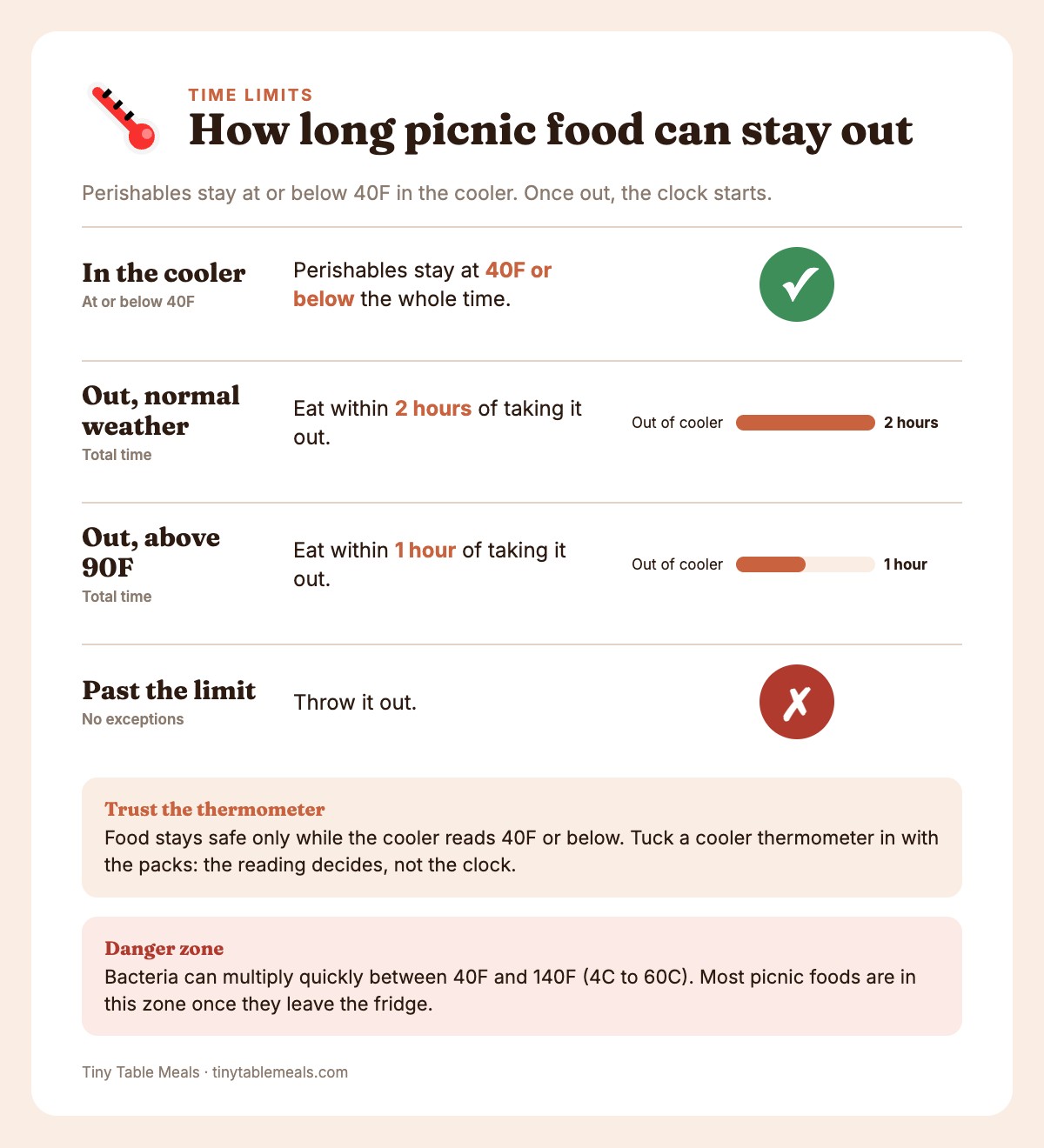
The USDA identifies the “temperature danger zone” as between 40F and 140F (4C to 60C). Bacteria that cause foodborne illness can multiply quickly in this range. Most picnic foods live in this zone the moment they leave your fridge.
The rule to remember: perishable food stays at or below 40F in the cooler. Once it is out, it has 2 hours total, or 1 hour above 90F. Food stays safe only while the cooler reads 40F or below, so tuck a cooler thermometer in with the packs. The reading decides, not the clock.
| Situation | Limit |
|---|---|
| Perishables in the cooler | At or below 40F |
| Out of the cooler, normal weather | 2 hours total |
| Out of the cooler, above 90F | 1 hour total |
| Past the limit | Throw it out |
| Cook temperatures | Chicken 165F, ground turkey 165F, ground beef 160F, egg dishes 160F |
What counts as perishable: Anything with meat, dairy, eggs, cooked grains, or cut fruits and vegetables. So basically… everything on this list.
The Ice Pack Math
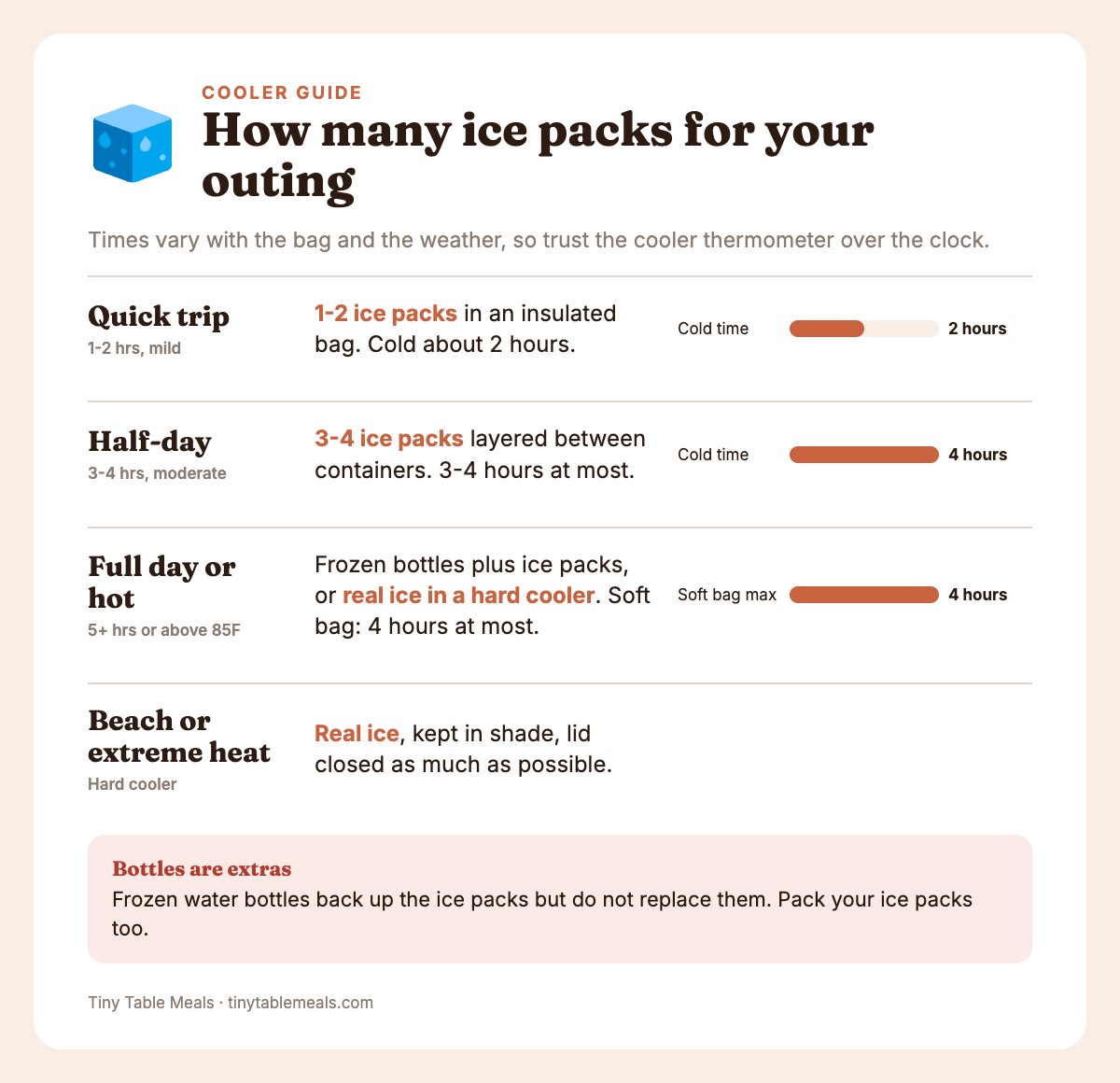
Here’s the rough guide I use. Times vary with the bag and the weather, so trust the cooler thermometer over the clock. A soft bag with ice packs tops out at about 4 hours. For anything longer, use a hard cooler with real ice.
| Situation | Ice Pack Strategy | Rough Cold Time (check the thermometer) |
|---|---|---|
| Quick trip (1-2 hours, mild weather) | 1-2 ice packs in an insulated bag | About 2 hours |
| Half-day outing (3-4 hours, moderate weather) | 3-4 ice packs layered between containers | 3-4 hours at most |
| Full day or hot weather (5+ hours or above 85F) | Frozen water bottles + ice packs, or actual ice in a hard cooler | Soft bag: 4 hours at most. Hard cooler: as long as ice remains and it reads 40F or below |
| Beach day or extreme heat | Hard cooler with real ice, kept in shade, lid closed as much as possible | Only as long as ice remains and it reads 40F or below |
Pro tip: I freeze two water bottles the night before a picnic. They back up the ice packs and thaw into cold drinks. They are an extra, not a replacement, so pack your ice packs too. Never count on frozen food to keep the cooler cold.
Foods That Are Naturally Safer
These foods are lower-risk, not risk-free, and the allergy checks still apply to every one. Some foods hold up better outdoors because they’re less hospitable to bacteria:
- Whole fruits (uncut apples, bananas, oranges) — the skin is a natural barrier.
- Dried foods (crackers, dried fruit, trail mix) — low moisture inhibits bacterial growth. Trail mix with nuts is an allergen, so check before sharing. Whole nuts and hard pretzels are for ages 5 and up, and under-4s need dried fruit chopped finely.
- Acidic foods (pickles) — low pH slows bacteria. A vinaigrette on pasta salad does not exempt it from the 2-hour rule.
- Commercial nut butters — shelf-stable, but check for nut-allergic kids before sharing at parks and playdates. Sunflower butter is the swap.
- Hard cheeses (aged cheddar, Parmesan) — tolerate warmth better than soft cheeses, but keep them cold and eat within 2 hours (1 hour above 90F).
When in Doubt, Throw It Out
I know it feels wasteful. I know those pasta salad cups took twenty minutes to make. But if food has been sitting in warm temperatures and you’re not sure how long it’s been, don’t risk it. The cost of food poisoning — especially in children — is infinitely higher than the cost of the food. “It’s probably fine” is not a food-safety rule.
If the food got warm, pull out a backup of shelf-stable items: crackers, whole fruit, and sunflower butter or commercial nut butter on sturdy bread. Use the sunflower butter if any child nearby has a nut allergy.
Easy Picnic Ideas for Every Week: Backyard and Weeknight Picnics
Here’s what I want to leave you with: picnics don’t have to be special events. They don’t require a Pinterest-worthy spread, a scenic overlook, or a free Saturday. Some of our best picnics have been Tuesday-night dinners on a blanket in the backyard.
The Weeknight Picnic
This is my secret weapon for hard days. When the kitchen feels claustrophobic and dinner feels like a mountain, I grab a blanket. I pack whatever we would have eaten inside into containers, and we eat on the back porch or in the yard. Same food, completely different experience. The kids think it’s an adventure. I get fresh air. Everyone’s mood improves.
You don’t even need to cook differently. Leftover pasta in a container, some fruit, and a handful of crackers eaten on a blanket is a picnic. Give yourself permission to lower the bar.
The “Picnic Box” System
The thing that made picnics go from “occasional stressful event” to “easy default option” for our family was creating a dedicated picnic box. It’s just a plastic bin in our garage with:
- A blanket
- Reusable plates and cups
- A set of utensils
- Napkins
- Wet wipes
- Sunscreen
- A garbage bag
- A frisbee
When everything is already packed and ready, the activation energy drops to almost zero. “Want to have a picnic?” goes from a 45-minute production to a 15-minute grab-and-go.
Making It Part of Your Rhythm
In our family, Saturday lunch is a picnic from April through October, weather permitting. Sometimes it’s one of the fifteen ideas above. Sometimes it’s crackers, apple slices and string cheese thrown in a bag. Both count.
In our house, the kids try new things more readily on a blanket than at the table.
So that picky eater who won’t touch a vegetable at the kitchen table? They might just try a snap pea at the park. Stranger things have happened. (My son’s first voluntary bite of bell pepper happened on a picnic blanket, and I nearly cried into my hummus.)
To keep the easy-lunch momentum going on weekdays, try my sandwich-free lunch ideas. They use the same portable, kid-friendly principles.
Frequently Asked Questions
What’s the best way to keep sandwiches from getting soggy at a picnic?
The best strategy is to avoid wet condiments directly on bread. Spread a thin layer of butter or cream cheese as a moisture barrier, pack tomatoes and lettuce separately, and use sturdier breads like ciabatta or pita. But honestly? My best advice is to skip traditional sandwiches entirely and go with wraps, pinwheels, or pita pockets instead. They handle moisture and travel stress far better than sliced bread ever will.
How far in advance can I prep picnic food?
Most of the ideas on this list can be prepped 12-24 hours in advance. Pasta salads, energy bites, mini quiches, and cold noodle bowls actually taste better the next day. Pinwheel wraps should be rolled the night before but sliced the morning of. Fruit kebabs, spring rolls and rice paper rolls are best made the morning of your picnic. Anything with crackers, chips, or granola should be packed dry and assembled at the picnic site.
What picnic foods are safe without a cooler?
If you’re going cooler-free (brave!), stick to shelf-stable options: whole uncut fruit, granola bars, dried fruit, crackers, and commercial nut butter on sturdy bread if no one nearby has a nut allergy. Hard pretzels and whole raw carrot or celery sticks are for ages 5 and up, and a 4-year-old gets very thin raw sticks with an adult watching. For under-4s, skip granola bars with nuts or hard pieces, and chop dried fruit finely. Without a cooler, leave out dairy (including hard cheese), cooked meat, eggs and cut fruit.
How do I pack a picnic for a baby or toddler?
For babies (6-12 months), pack soft finger foods that are easy to gum: ripe avocado strips, steamed sweet potato sticks, banana, and well-cooked pasta. Thin strips or shreds of pasteurized, lower-sodium cheese work too, kept cold. Cut the avocado and banana at the picnic, or keep cut pieces in the cooler.
No honey under 12 months, so use maple syrup instead, and skip the energy bites (they are for ages 2 and up). Introduce allergens like peanut, egg, shellfish and sesame at home first, following current AAP guidance and your pediatrician’s advice.
For toddlers (1-3 years), most of the ideas on this list work with simple changes. Take food off skewers and picks (those are for ages 5 and up), quarter grapes and cherry tomatoes lengthwise, choose softer crackers, and cut food into small pieces. Keep quartering round, firm foods until about age 5. The first Safety first box above the 15 ideas has the full list of cuts and foods to skip. Always bring extra water and a bib — outdoor eating with a toddler is messy in the best possible way.
What’s the easiest picnic lunch for a large group or playdate?
Hummus and dipper boxes (Idea #6) or cheese and cracker stackers (Idea #9) are the easiest to scale because they require zero cooking — just multiply the quantities. For something heartier, deconstructed taco cups (Idea #13) work beautifully for groups because you set out all the components and let everyone build their own. The budget meal planning guide has tips on feeding a crowd affordably.
How do I get my picky eater to actually eat at a picnic?
My picky eater eats better at a picnic than at the table, because everything is new and there’s less pressure. Lean into this. Pack five small things rather than one big thing, and include at least two “safe” foods you know they’ll eat. Then say nothing about what they are or aren’t eating. My guide to introducing new foods with no pressure has more on this. The picnic context does a lot of the heavy lifting — the excitement, the fresh air, the freedom to graze rather than sit still.
Can I make a complete, balanced picnic lunch without any cooking?
Absolutely. A no-cook picnic lunch might look like this: hummus with pita and veggies, cheese and crackers, and fresh fruit. Add energy bites or trail mix for kids old enough for them, plus a cup of yogurt. That covers a lot of variety with zero time at the stove, as long as the cooler stays cold. No-cook picnics are a completely legitimate meal, and anyone who tells you otherwise has never packed lunch for a crowd of kids while also finding everyone’s shoes.