Budget Meal Planning for Families: Feed Your Crew for Less Without Sacrificing Nutrition
Learn a simple, repeatable system to plan, shop, and cook nourishing family meals on a budget. This guide provides weekly planning steps, shopping strategies, and tips for cheaper proteins to feed your family for less.
- Dedicate 15-20 minutes weekly to plan meals based on your calendar, pantry, and sales.
- Shop with a list and avoid impulse buys; consider store hierarchy for best prices.
- Save money on protein by prioritizing beans, lentils, eggs, and chicken thighs.
- Utilize your freezer and batch cooking to reduce waste and save time.
- Download the free Budget Meal Planning Kit for templates and trackers.
This post contains affiliate links. As an Amazon Associate I earn from qualifying purchases.
Thursday at 5 p.m. is the hour a lot of us dread: hungry kids, a fridge of odds and ends and no plan. Rising prices and growing kids make that feel normal, but it doesn’t have to be.
You can feed your family nourishing meals on a real budget without extreme couponing or rice and beans every night. What helps is a simple, repeatable system for planning, shopping and cooking. This guide covers the weekly planning steps, a sample week at about $129 for a family of four, protein swaps, freezer tips and food-safety notes for little eaters.
Short on time? Jump to the $129 sample week or the 30 budget meal ideas.
Free printable · 9 pages
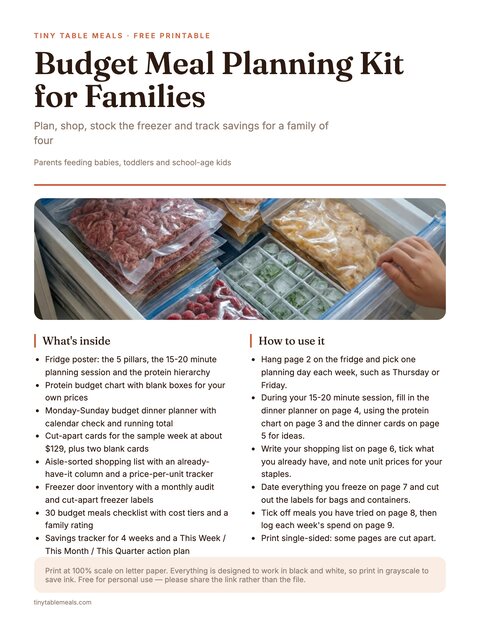
Budget Meal Planning Kit for Families
A fridge poster of the 5 pillars, a protein budget chart, a Monday-Sunday dinner planner, cut-apart sample-week dinner cards, an aisle-sorted shopping list with price tracker, a freezer inventory with labels, a 30-meal checklist and a savings tracker.
Free. Your download link appears right here. You'll also join the Sunday Supper Plan. Unsubscribe anytime. Privacy
The five habits below build on each other, so start with one.
In this article (14 sections)
- The Real Cost of Not Planning
- Weekly Meal Planning Session
- Grocery Shopping Strategy on a Budget
- Budget Protein Swaps
- Freezer Meals and Storage Times
- Batch Cooking to Save Money
- A Week of Budget Meals: Sample Plan
- 30 Budget-Friendly Meal Ideas
- How to Save on Groceries: In the Store and In the Kitchen
- Meal Planning with Picky Eaters
- Budget Meals When Money or Time Is Really Tight
- Frequently Asked Questions
- Your Budget Meal Planning Action Plan
- Feeding Your Family Well on Any Budget
The Real Cost of Not Planning
Without a plan, grocery spending creeps up through impulse buys, forgotten produce and last-minute takeout. A plan means you buy what you’ll actually cook, use what you already own and skip the premium prices on convenience foods.
The weekly routine has five parts: a planning session, a shopping strategy, cheaper proteins, the freezer and batch cooking. Each has its own section below.
Weekly Meal Planning Session
Successful budget meal planning starts with a dedicated 15-20 minute planning session each week.
When to plan: Same day each week (many families choose Thursday or Friday to prep before weekend shopping).
What you need:
- Calendar with the week’s activities.
- A quick peek at your pantry and freezer.
- Store sales flyer (digital or paper).
- A meal planning template. The Budget Meal Planning Kit on this page has a weekly planner and shopping list.
The process:
- Check the calendar. Mark the crazy-busy nights for simple meals or leftovers, plus any guests.
- Check what you have. Note the proteins in the freezer, the produce that needs using up and the staples running low.
- Check the sales. See which proteins, produce and stock-up staples are discounted this week.
- Build your menu. Start with what you have plus what’s on sale, fill in the remaining days and plan one intentional leftovers night.
- Write your list. Include only what the planned meals need, grouped by store section, with quantities.
TipSee the sample week for a worked example. If a planned meal gets skipped, move it to tomorrow. Freeze or cook any produce that is about to spoil.
Grocery Shopping Strategy on a Budget
How you shop matters as much as what you buy.
Shop with a list—always. Impulse buys add up fast, and a list is the easiest way to skip them.
Shop alone when possible. Kids (and sometimes spouses) add to impulse purchases. If you must bring kids, give them a job: finding items, comparing prices, or managing the list.
Don’t fear the center aisles. “Shop the perimeter” is oversimplified. The center aisles hold cheap staples: dried beans, rice, pasta, canned tomatoes and frozen vegetables.
Know your prices. Track prices on items you buy frequently. This helps you:
- Recognize true sales vs. marketing tricks.
- Know when to stock up.
- Compare store prices.
Consider store hierarchy:
- Aldi, Lidl, or warehouse clubs for staples and produce.
- Regular grocery store for specific items and sale prices.
- Specialty stores only for genuine deals.
Don’t shop hungry. Eat first.
Budget Protein Swaps
Protein is typically the most expensive part of any meal. Here is how to spend less on it.
The protein hierarchy (budget-friendly to splurge):
- Beans, lentils, and eggs (most budget-friendly).
- Chicken thighs, ground turkey, whole chickens.
- Ground beef, pork shoulder, chuck roast.
- Chicken breasts, pork chops.
- Beef steaks, seafood (most expensive).
A good weekly mix is one beans night, two chicken nights, one ground-meat night, one egg night, one pizza night and one leftovers night. The sample week below uses exactly that. Swap nights around to fit what’s on sale.
Money-saving protein tips:
- Buy whole chickens and break them down (often cheaper per pound than parts).
- Purchase family packs and portion at home.
- Stretch meat with beans, grains, or vegetables.
- Use meat as a flavoring, not the star.
- Embrace “breakfast for dinner” with eggs.
Freezer Meals and Storage Times
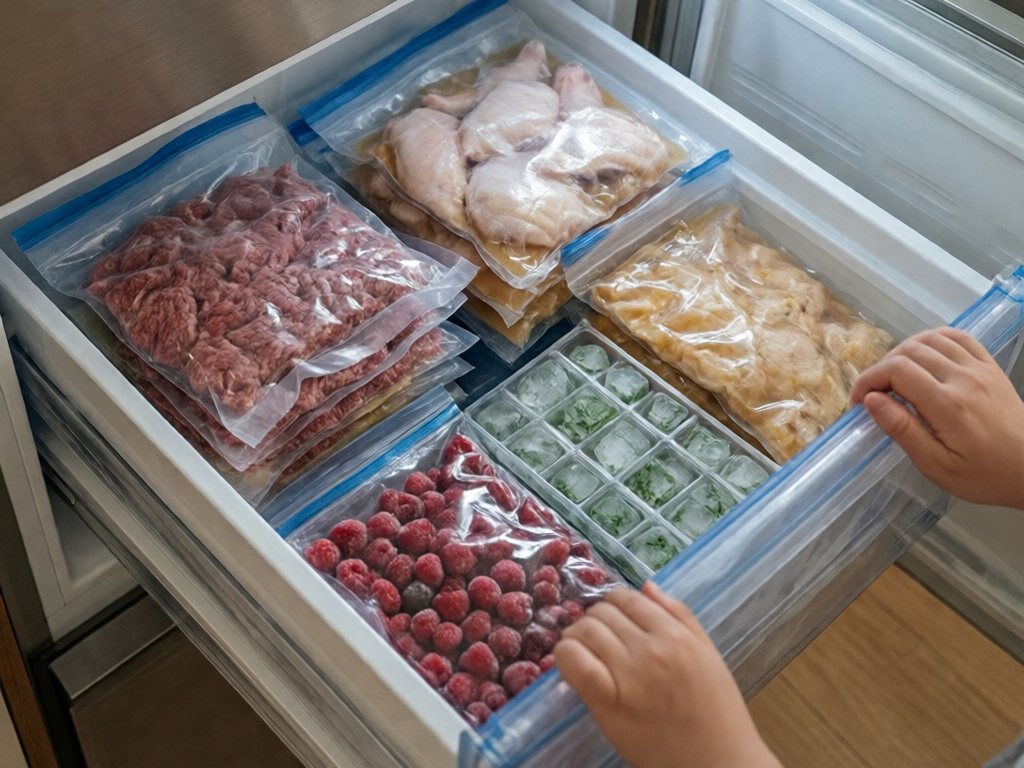
A well-stocked freezer lets you buy on sale now and cook later.
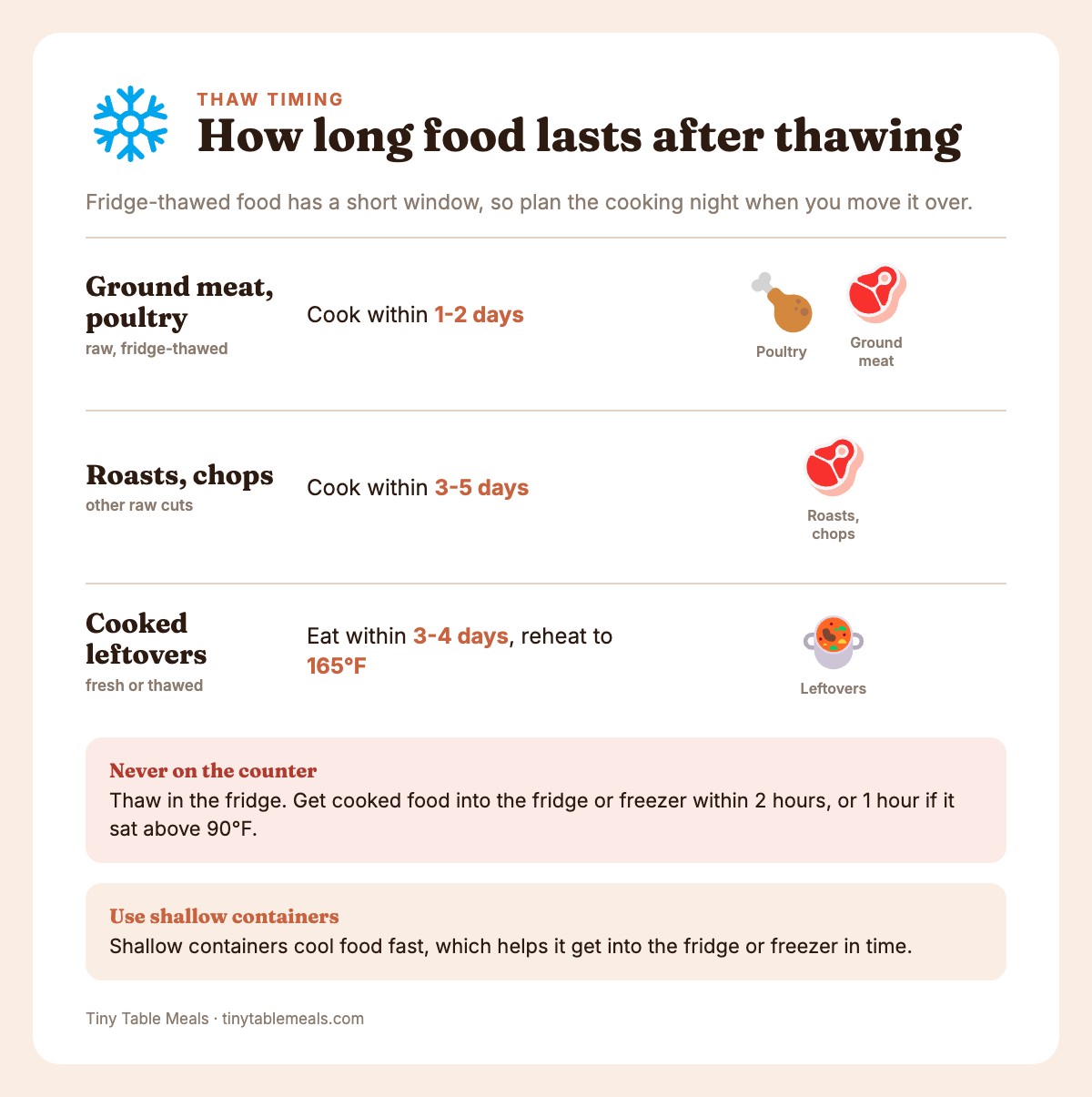
Safety firstThese are the thaw and leftover rules for the whole plan. Freeze raw meat before its use-by date. Get cooked food into the fridge or freezer within 2 hours, or within 1 hour if it has been sitting out above 90°F. Use shallow containers so it cools fast. Thaw in the fridge, never on the counter.
- Raw ground meat and poultry thawed in the fridge: cook within 1-2 days.
- Other raw cuts, such as roasts and chops, thawed in the fridge: cook within 3-5 days.
- Cooked leftovers, fresh or thawed in the fridge: eat within 3-4 days and reheat to 165°F.
| Food | How to pack | Best quality (roughly) | Thaw method |
|---|---|---|---|
| Raw ground meat | Flat in meal-sized bags | 3-4 months | Fridge overnight, cook within 1-2 days |
| Chicken pieces | Portioned, air squeezed out | Up to 9 months | Fridge, cook within 1-2 days |
| Whole chicken | Original wrap plus freezer bag | Up to 1 year | Fridge, 1 day per 4-5 lb, cook within 1-2 days |
| Cooked beans | Portions with a little cooking liquid | 3-4 months | Fridge, then reheat to 165°F, or straight into soup |
| Soups and stews | Shallow containers, cooled first | 3-4 months | Fridge, then reheat to 165°F |
| Berries | Wash, dry, freeze flat, then bag | 8-12 months | Use frozen in smoothies |
| Bread, muffins, pizza dough | Sliced or portioned, wrapped | About 3 months | Counter or toaster |
| Cooked grains | Flat bags, cooled fast | 3-4 months | Fridge or microwave, reheat to 165°F |
Good to knowFreezing pauses bacteria but doesn’t kill them. That is why meat needs to go in before its use-by date. Food kept frozen at 0°F stays safe indefinitely, but that covers safety, not quality. The times in the table are best-quality guides only, so older food is safe but may taste worse.
Meat thawed in the fridge can go back in the freezer uncooked, though it loses some quality. If you thaw in cold water or the microwave, cook it right away, and cook it before you refreeze it.
Freeze overripe bananas for smoothies and baking, and blanch vegetables first. Fresh herbs can be frozen in olive oil in ice cube trays. Keep those cubes frozen and thaw only what you’ll use, since herbs in oil can carry a botulism risk in the fridge or at room temperature.
Keep an inventory. Date everything, keep a list on the freezer door, use the oldest items first and do a quick audit once a month so nothing gets forgotten.
Batch Cooking to Save Money
Cooking once and eating several times saves both money and time.
Component cooking: Prepare building blocks, not full meals.
- Cook a big batch of rice or quinoa.
- Roast a sheet pan of vegetables.
- Roast or grill a tray of chicken thighs.
- Prepare a pot of beans.
These components combine into various meals throughout the week.
Intentional leftovers: Make double and repurpose.
- Wednesday meat sauce → Friday baked pasta with cheese.
- Sunday roast chicken → Monday lunch sandwiches → stock from the carcass.
- Grilled chicken → Chicken salad → Chicken quesadillas.
- Baked potatoes → Twice-baked potatoes → Potato soup.
Freezer meal prep: Once a month, set aside 2-3 hours to prepare 5-10 freezer meals. Our freezer-to-Instant-Pot dump meals are a good starting point.
Safety firstThaw slow cooker kits in the fridge before cooking. Don’t put them in frozen. The same goes for any dump meal you make in a slow cooker. Once a kit with raw ground meat or poultry has thawed, cook it within 1-2 days.
Good freezer-meal formats:
- Marinated meats ready to cook.
- Assembled casseroles.
- Soups ready to heat.
- Slow cooker meal kits in bags (thaw in the fridge before cooking).
A Week of Budget Meals: Sample Plan
Here’s a week for a family of 4 at about $129. It’s a lean target, not a typical bill.
Every figure here is my own rough estimate at discount-grocer prices, not a receipt or an official number. Prices vary widely by store and region, so check them against your own shelf tags. I’d rather give you an honest ballpark than a perfect-looking number.
Wednesday’s sauce feeds Friday, and Sunday’s chicken feeds Monday’s lunch. The week works as one connected system.
For a benchmark, the USDA Food Plans list weekly costs by age and plan level, from thrifty to liberal. Look up the current figures for your family. This lean target likely sits below them, and your number will vary with your kids’ ages and where you live.
Good to know: what this $129 assumesIt assumes a discount grocer, rough regional prices and pantry staples already on hand: oil, spices, garlic, flour and yeast. The breakfast, lunch, snack and milk lines are the bare minimum, and lunch at $25 for the week is tight. If you have to buy staples, or want extras like salad, garlic bread and more fruit, expect to add to it.
| Day | Dinner | Key ingredients (rough quantities) | Est. cost |
|---|---|---|---|
| Monday | Slow cooker black bean tacos | 1 lb dried black beans, corn tortillas, 2 cups rice | ~$6 |
| Tuesday | Sheet pan chicken thighs | 2 lb bone-in thighs, 1.5 lb potatoes, carrots, onions | ~$10 |
| Wednesday | Pasta with meat sauce (double batch) | 1 lb ground beef, diced veggies, 1 jar marinara, 1 lb pasta (double batch carries to Friday) | ~$12 |
| Thursday | Breakfast for dinner | 8 eggs, flour or pancake mix, fruit | ~$7 |
| Friday | Leftovers remix | Wednesday’s sauce, pasta, cheese (added items only) | ~$4 |
| Saturday | Homemade pizza night | Flour, yeast, sauce, 8 oz cheese | ~$10 |
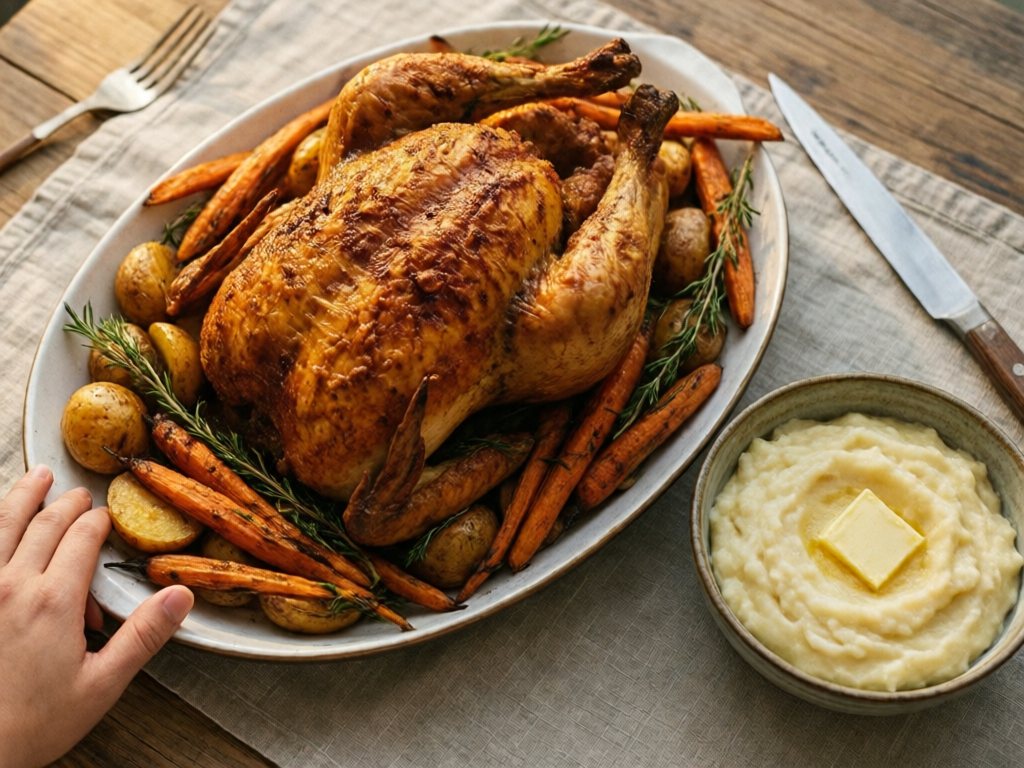
| Sunday | Whole roasted chicken | 4-5 lb whole chicken, veggies, potatoes (carcass makes stock, leftovers feed Monday lunch) | ~$15 |
| Dinner total | ~$64 | ||
| Breakfast staples | ~$15 | ||
| Lunch ingredients | ~$25 | ||
| Snacks | ~$15 | ||
| Milk and basics | ~$10 | ||
| Weekly total | ~$129 |
What the Other $65 Buys
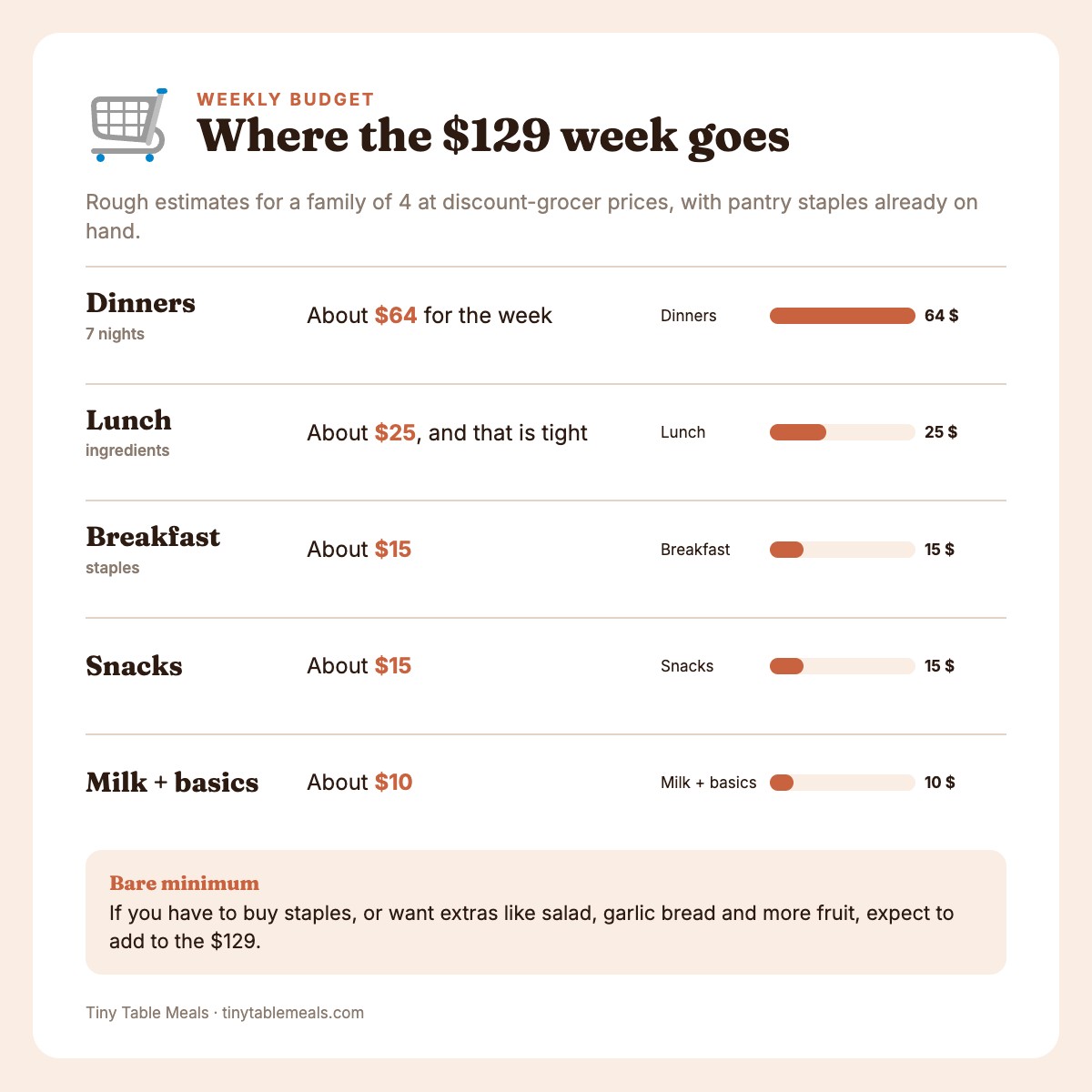
Here is one example of how the non-dinner money can be spent. Treat it as a bare-minimum list. At many stores it won’t all fit in $65, so buy the staples first and count the rest as extras.
Swap in whatever is cheapest where you shop.
| Category | Example items (rough quantities) | Est. cost |
|---|---|---|
| Breakfast staples | Large canister of oats, 1 dozen bananas, 1 loaf bread, 1 tub plain yogurt | ~$15 |
| Lunch ingredients | 2 loaves bread, 1 jar peanut butter, sliced cheese, 1 bag apples, 1 bag carrots, plus Sunday’s leftover chicken | ~$25 |
| Snacks | Crackers, 1 bag oranges or other fruit, extra yogurt, frozen berries | ~$15 |
| Milk and basics | 2 gallons milk, butter, 1 bag frozen vegetables | ~$10 |
Safety first: kitchenMost of this plan relies on a few simple food-safety habits.
- Cook poultry to 165°F (74°C) and ground beef to 160°F (71°C).
- Follow the leftover and thaw rules in the safety box in the Freezer Meals and Storage Times section: fridge within 2 hours, eat within 3-4 days, reheat to 165°F.
- Cool cooked rice fast and refrigerate it within 1 hour if you can. 2 hours is the hard limit, the same as other cooked food. Rice can carry Bacillus cereus spores that survive cooking and multiply at room temperature. Reheat it until steaming hot.
- Boil soaked dried beans, especially kidney and black beans, hard for 10 minutes before they go in the slow cooker. Raw beans contain a natural lectin, and a slow cooker may not get hot enough to break it down.
- Lentils don’t need soaking or the hard boil first. Just cook them until soft.
- Cook eggs until firm.
- No tasting raw dough or batter, since raw flour and eggs can carry bacteria. Wash hands and surfaces afterward.
- Thaw meat fully in the fridge before it goes in the slow cooker. Never put it in frozen.
Safety first: little eatersChoking risks matter most under age 4.
- Quarter grapes and cherry tomatoes lengthwise.
- Cook or grate hard raw vegetables such as carrots.
- Skip whole nuts, popcorn and hard chunks of cheese.
- Always supervise meals.
- Serve eggs well cooked, in soft, age-appropriate pieces for babies.
- Never give honey under 12 months, including in baking or on pancakes.
- Babies under 12 months need softer, age-appropriate textures. See our guide to moving from purees to table food.
Good to know: allergensEgg, peanut, dairy and wheat are in this plan. Current guidance is to introduce them in the first year, not delay them. If your baby has severe eczema or a known food allergy, talk to your pediatrician before introducing peanut or egg. Our allergen guide has the basics.
Serve peanut butter thinned or mixed into food, never by the spoonful or as a thick spread.
Introduce dairy as yogurt or cheese. Don’t give cow’s milk as a drink before 12 months. Small amounts cooked into food are fine. The milk in this plan is for the bigger kids and grown-ups.
Prep Notes by Night
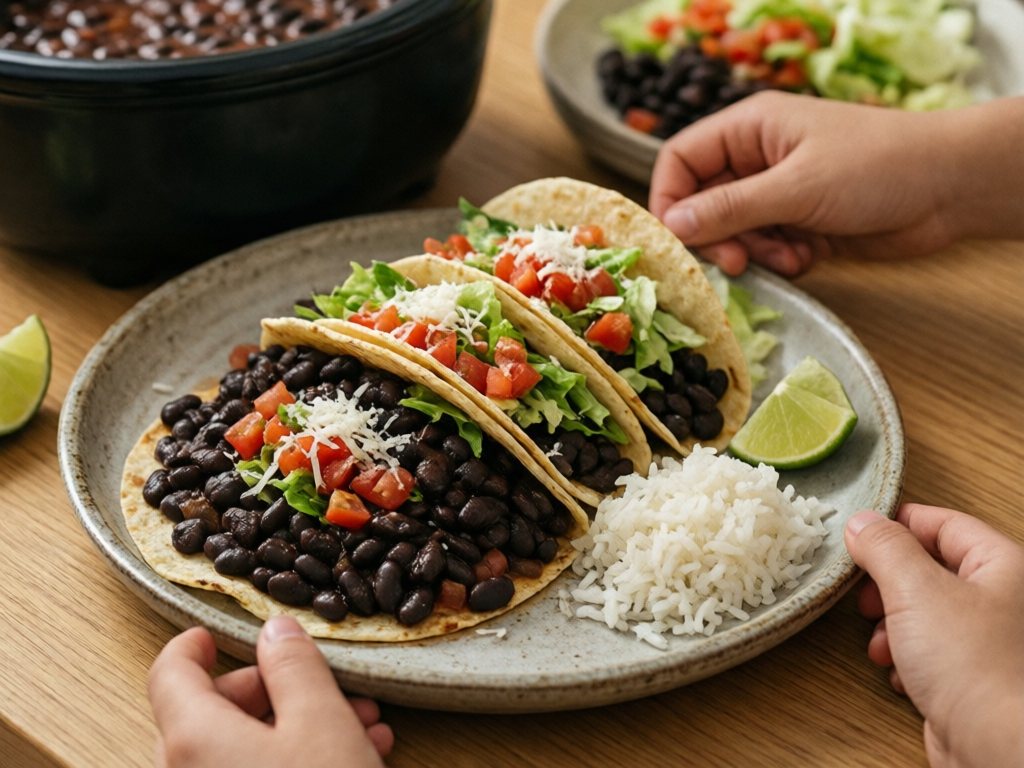
Monday (black bean tacos, ~$6): Soak the beans overnight, drain, boil hard for 10 minutes, then slow cook with onion, garlic and cumin until fully tender. Undercooked dried beans can make people sick, so the hard boil matters.
Tuesday (sheet pan thighs, ~$10): Roast the potatoes, carrots and onions on the same pan as the bone-in thighs, so there is only one pan to wash.
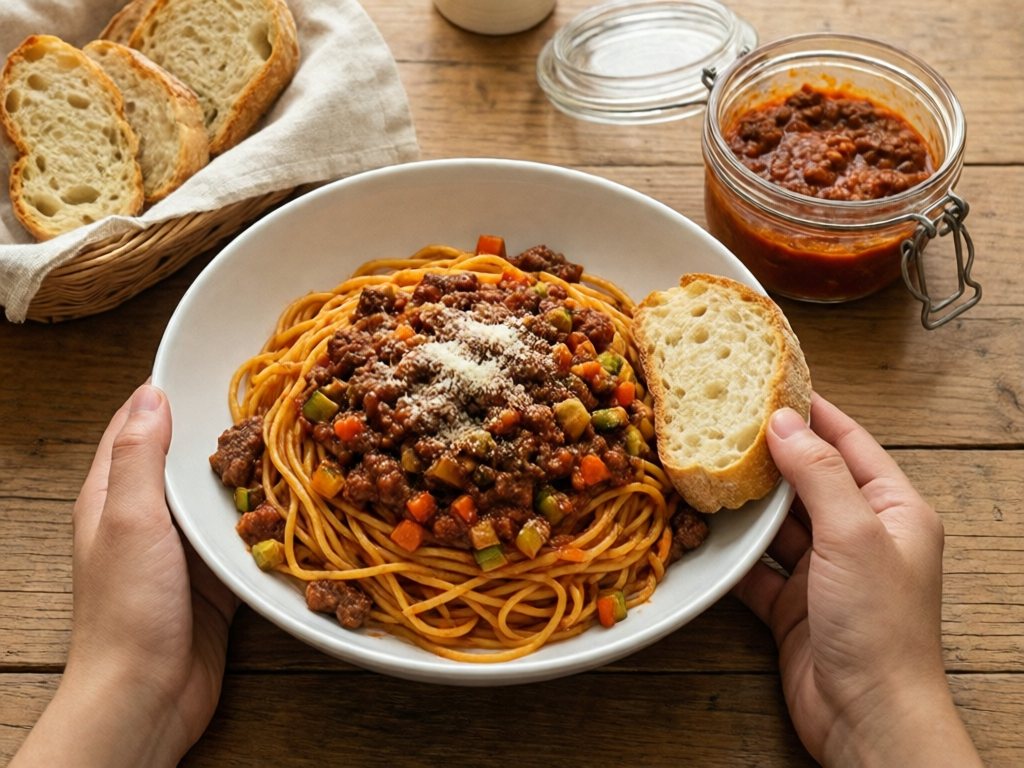
Wednesday (meat sauce, ~$12): Stretch the ground beef with finely diced vegetables and make a double batch of sauce. Be honest with yourself: by Friday, some kids will be tired of pasta. Turn it into baked pasta so it feels different.
Thursday (breakfast for dinner, ~$7): Scrambled eggs cooked until firm, pancakes and fruit. For a baby, serve the eggs well cooked in soft pieces and skip any honey or syrup. This only works on some nights. If your crew wants a “real” dinner, swap it with a leftovers night.
Friday (leftovers remix, ~$4): Wednesday’s sauce and pasta become baked pasta with cheese. Only the cheese and a side are new purchases.
Saturday (pizza, ~$10): Make the dough from flour, yeast and oil, with simple tomato sauce, cheese and whatever toppings are on hand. Kids can help knead, but no tasting raw dough.

Sunday (whole chicken, ~$15): A whole bird is only cheaper if you use the carcass for stock and the leftovers for Monday lunch. If you won’t, buy thighs instead.
If your chicken is frozen, move it to the fridge by Saturday morning. A 4-5 lb bird needs about 24 hours to thaw.
Weekly dinner total: ~$64
Add breakfast staples ($15), lunch ingredients ($25), snacks ($15), and milk/basics ($10) = ~$129 total weekly groceries.
30 Budget-Friendly Meal Ideas
TipCosts and times are rough and vary by region. A stretchy staple like beans, rice or pasta turns any of these into a bigger meal. Soups, chili, meat sauce and shepherd’s pie batch and freeze well.
Meatless Meals (about $6-8 per family dinner)
| Meal | Stretchy staple | Prep time (rough) |
|---|---|---|
| Black bean quesadillas with salsa | Beans, tortillas | 20 min |
| Vegetable fried rice with eggs | Rice | 25 min |
| Lentil soup with crusty bread | Lentils | 40 min |
| Pasta primavera with garlic bread | Pasta | 30 min |
| Bean and cheese burritos | Beans, rice | 20 min |
| Minestrone soup | Beans, pasta | 40 min |
| Grilled cheese with tomato soup | Bread | 20 min |
| Vegetable stir-fry with tofu | Rice | 25 min |
| Baked potato bar with veggie toppings | Potatoes | 60 min, mostly hands-off |
| Shakshuka (eggs in tomato sauce) | Eggs, canned tomatoes | 25 min |
Chicken Meals (about $10-15 per family dinner)
| Meal | Stretchy staple | Prep time (rough) |
|---|---|---|
| Slow cooker salsa chicken tacos | Tortillas, beans | 10 min, then slow cook |
| Sheet pan chicken and vegetables | Potatoes | 45 min |
| Chicken stir-fry with rice | Rice | 30 min |
| Chicken noodle soup | Noodles | 40 min |
| BBQ chicken with coleslaw | Cabbage | 30 min |
| Chicken curry with rice | Rice | 35 min |
| Chicken Caesar salad | Bread (croutons) | 20 min |
| Baked chicken drumsticks | Potatoes or rice | 50 min, mostly hands-off |
| Chicken fried rice | Rice, eggs | 25 min |
| Greek chicken bowls | Rice, cucumbers | 30 min |
Ground Meat Meals (about $12 per family dinner)
| Meal | Stretchy staple | Prep time (rough) |
|---|---|---|
| Spaghetti with meat sauce | Pasta, diced veggies | 35 min |
| Taco night | Beans, rice | 25 min |
| Sloppy joes | Buns, lentils or beans | 25 min |
| Shepherd’s pie | Potatoes | 60 min |
| Stuffed bell peppers | Rice | 60 min |
| Meatball subs | Bread | 40 min |
| Beef and broccoli | Rice | 30 min |
| Chili | Beans | 45 min |
| Korean beef bowls | Rice | 25 min |
| Hamburger stroganoff | Egg noodles | 30 min |
How to Save on Groceries: In the Store and In the Kitchen
In the Store
Buy store brands. Quality is often comparable to name brands and the price is usually lower. Try a few and see which ones your family likes.
Check unit prices. Bigger isn’t always cheaper. Compare the per-ounce or per-pound number on the shelf tag, not the package price.
Keep a simple price book. Write down the unit price of your five most-bought items at two stores. After a month you’ll know what a real sale looks like.
Buy ugly produce. Cosmetically imperfect produce is comparable in nutrition and often discounted. Discard anything moldy or spoiled.
Shop seasonal. In-season produce is cheaper, fresher, and tastier.
Hit the “last chance” section. Marked-down meat and produce can be a real saving if you cook or freeze it before the use-by date. When you thaw it, follow the rules in the safety box in the Freezer Meals and Storage Times section.
In the Kitchen
Use every part. Vegetable scraps become stock. Stale bread becomes breadcrumbs. Overripe bananas become banana bread.
Control portions. Restaurant-sized portions waste food and money. Use appropriate serving sizes.
Pack lunches. A packed lunch often costs less than buying one, though school lunch programs can be cheap or free for school-age kids. Check what your district offers, and see our toddler lunch prep ideas for little ones.
Avoid single-serve. Big containers divided at home cost less than individual portions.
Budget Mindset Shifts
Think cost per serving, not package price. A whole chicken often gives more servings per dollar than a rotisserie bird, though a store-sale rotisserie can win on time.
Consider time as money (but reasonably). Cooking from scratch saves money, but don’t burn out. Balance effort with savings.
Plan for the skipped meal. When a night falls apart, move that dinner to tomorrow rather than ordering out. Cook or freeze any produce that is about to turn.
Meal Planning with Picky Eaters
Budget constraints plus picky eaters is a particular challenge. Try these approaches:
Build modular meals. Taco night, Buddha bowls, and pasta bars let everyone customize while sharing the same base ingredients.
Include one “safe” food per meal. Always serve something you know they’ll eat alongside the main dish.
Involve them in planning. Give choices: “Tacos or quesadillas this week?” Being part of the decision increases buy-in.
Don’t cook separate meals. Making multiple dinners doubles your cost and effort. Serve one family meal with something on the table for everyone. Our picky eater meal plan shows how.
The exceptions are allergies, medical needs and baby textures. Those come first.
Offering a new food again and again helps. If picky eating is extreme or affects growth, talk to your pediatrician.
Repeat winners. If they love spaghetti, serve it weekly. Reliable meals reduce waste from untouched food. A realistic week with picky eaters might be two repeat winners, one build-your-own night and one leftovers night.
Budget Meals When Money or Time Is Really Tight
When Money Is Really Tight
Focus on stretchy staples:
- Rice, beans, pasta, oats.
- Eggs.
- Cabbage, carrots, onions, potatoes.
- Peanut butter. See the allergens note above for how to serve it to little ones.
- Frozen vegetables.
Apply for assistance if needed. SNAP, WIC (for pregnancy, postpartum, infants and children under 5), free or reduced-price school meals and food banks exist for difficult times. Your local benefits office or 211 can point you to what you qualify for. There’s no shame in using them.
Slash to essentials. Cut extras like chips, soda, and specialty items temporarily.
When Time Is Really Tight
Use your slow cooker. Load it in the morning and dinner is ready at night. Thaw meat first; never put it in frozen.
Embrace rotisserie chickens. When on sale, these can be the basis for multiple meals (see our rotisserie chicken meal ideas).
Keep an emergency backup. Frozen pizzas, pasta and jarred sauce, or breakfast-for-dinner ingredients that require minimal effort.
Accept imperfection. Sandwiches are a valid dinner. Cereal happens. Don’t beat yourself up.
Mama Munch
Mama Munch is a food-obsessed parent of two who believes every family deserves simple, nutritious meals — even on the busiest weeknights. With a background in nutrition education and years of navigating picky eaters, allergies, and toddler taste buds, she creates practical recipes and meal strategies that actually work for real families.
Frequently Asked Questions
How much should a family of 4 spend on groceries?
The USDA Food Plans publish current weekly costs by age and plan level (thrifty to liberal), so look up the latest figures for your family. Your real number depends on your kids’ ages and where you live. The $129 sample week above is a lean target, so expect to land higher if you buy more convenience foods or fresh produce.
Is buying organic worth it on a tight budget?
The “Dirty Dozen” is a list from the Environmental Working Group, an advocacy group, so use it as a guide if budget allows. Conventional produce is safe and nutritious, and better than no produce. Wash all produce either way.
How do I meal plan for dietary restrictions on a budget?
Focus on naturally compliant whole foods rather than expensive specialty products. Beans, rice, vegetables and many proteins are naturally gluten-free and dairy-free. For diagnosed allergies or celiac disease, read labels for cross-contact and check with your pediatrician or a registered dietitian.
Should I buy in bulk?
Only if you’ll actually use it before it expires and have storage space. Bulk buying items that spoil or you won’t eat doesn’t save money.
How do I stop impulse buying?
Shop with a list, avoid the store when hungry or stressed, try grocery pickup or delivery to eliminate temptation, and set a firm budget before entering.
Is meal planning worth it for just two people?
Absolutely. The principles scale down. Smaller quantities, same strategies.
How do I get my spouse on board with budget meals?
Involve them in planning, show the financial impact, include favorite meals in the rotation, and make it about “eating better” not “spending less.”
How do I budget when feeding babies and toddlers?
Little ones can usually share the family meal in softer or smaller pieces, so you don’t need separate food. Cut round foods lengthwise, cook hard vegetables until soft, and save the pricey pouches and toddler snacks for emergencies.
What if I hate cooking?
Focus on simple meals, use shortcuts like rotisserie chicken and pre-cut vegetables, embrace breakfast for dinner, and remember that cooking improves with practice.
Your Budget Meal Planning Action Plan
This week:
- Take inventory of your pantry, fridge, and freezer.
- Plan 5 dinners using what you already have plus sale items.
- Create a shopping list and stick to it.
This month:
- Establish your weekly planning session time.
- Try 5 new budget-friendly recipes.
- Begin tracking your grocery spending.
This quarter:
- Build a rotating menu of family-favorite budget meals.
- Master batch cooking basics.
- Stock your freezer with emergency meals.
Feeding Your Family Well on Any Budget
You don’t need a perfect system. A list, a few stretchy staples and a freezer with something in it will carry most weeks.
Start where you are. One planned meal is better than none. One skipped impulse purchase is progress. One batch of soup in the freezer is future you saying thank you.
This week, plan just five dinners and write the list. That’s all it takes to begin.
—