Toddler Snack Station Setup: Weekly Restock Checklist
Learn to set up a three-zone toddler snack station (fridge, pantry, freezer) and implement a 15-minute weekly restock system. This guide provides checklists and a 'Rule of Three' to ensure you always have balanced snacks ready for your 1-4 year old.
- Set up a three-zone snack station: fridge, pantry, and freezer.
- Dedicate 15 minutes weekly to restock your toddler's snack station.
- Apply the "Rule of Three" for balanced and ready-to-eat snacks.
- Utilize the provided checklists, choking-safety cut guide, and snack planner.
This post contains affiliate links. As an Amazon Associate I earn from qualifying purchases.
Last spring at 3:40 on a Tuesday, I stood at my open fridge with a toddler on my hip and a hungry kid wailing from the floor. Nothing was ready, so I handed over plain crackers. Then I did it again on Wednesday.
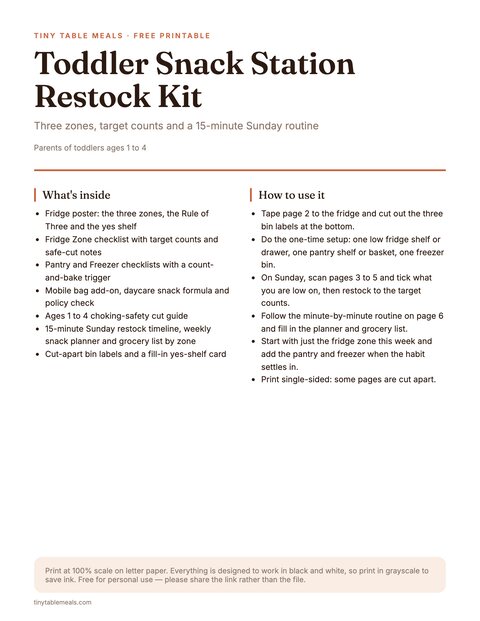
Free printable · 6 pages
Toddler Snack Station Restock Kit
A fridge poster with the three-zone system and Rule of Three, fridge, pantry, freezer and mobile-bag checklists with target counts, a daycare policy check, a choking-safety cut guide, a 15-minute Sunday restock timeline, a weekly snack planner and a grocery list by zone.
Free. Your download link appears right here. You'll also join the Sunday Supper Plan. Unsubscribe anytime. Privacy
This post covers a toddler snack station with three zones (fridge, pantry, freezer) and a weekly restock checklist for ages 1 to 4. I never lacked toddler snack ideas. I lacked a system for the worst moment of the day. The station fixed that, and it takes about fifteen minutes of hands-on time to restock once a week.
You’ll also get a simple rule for balanced snacks. For more ideas to fill the zones, my healthy toddler snack ideas list is the companion to this one.
In this article (15 sections)
- Why a Station Beats Another List of Snack Ideas
- The Three-Zone System at a Glance
- Setting Up the Physical Station (15 Minutes, Once)
- The Weekly Restock Checklist (Copy or Print From This Page)
- The “Rule of Three” That Keeps Snacks Balanced
- Fridge Zone: The Fresh, Fast Stuff
- Pantry Zone: The Shelf-Stable Safety Net
- Freezer Zone: Your Future Self’s Best Friend
- Toddler Snacks on the Go: The Bag That’s Always Ready
- Daycare Snack Ideas and Rules for Toddlers
- The 15-Minute Sunday Restock Routine
- Safety Notes for Ages 1 to 4
- Keeping the Station on a Budget
- Frequently Asked Questions
- Start With One Zone This Week
Why a Station Beats Another List of Snack Ideas
Lists tell you what to make. A station tells you what’s already there when the moment hits, and that’s the part that actually changes your afternoons.
Here’s what shifted for us once the station existed:
- I stopped deciding at 3:40. The decisions were made on Sunday, with a clear head.
- My toddler started choosing. A low shelf with three or four approved options lets them pick without negotiation.
- Snacks got more balanced and packing got faster. Whatever gets grabbed is a decent combination, and a daycare bag takes two minutes.
A snack list asks you to be creative every day. A system asks you to be consistent once a week. I’ll take the second one every time.
What a snack station is not
It’s not a grazing buffet. Toddlers do best with structured eating times, usually two to three snacks sandwiched between meals, offered at roughly the same time each day. The station is how you stay stocked, not a free-for-all the child accesses at will. In my house, the child chooses from the station; I decide when snack happens and what’s on offer that round.
The Three-Zone System at a Glance
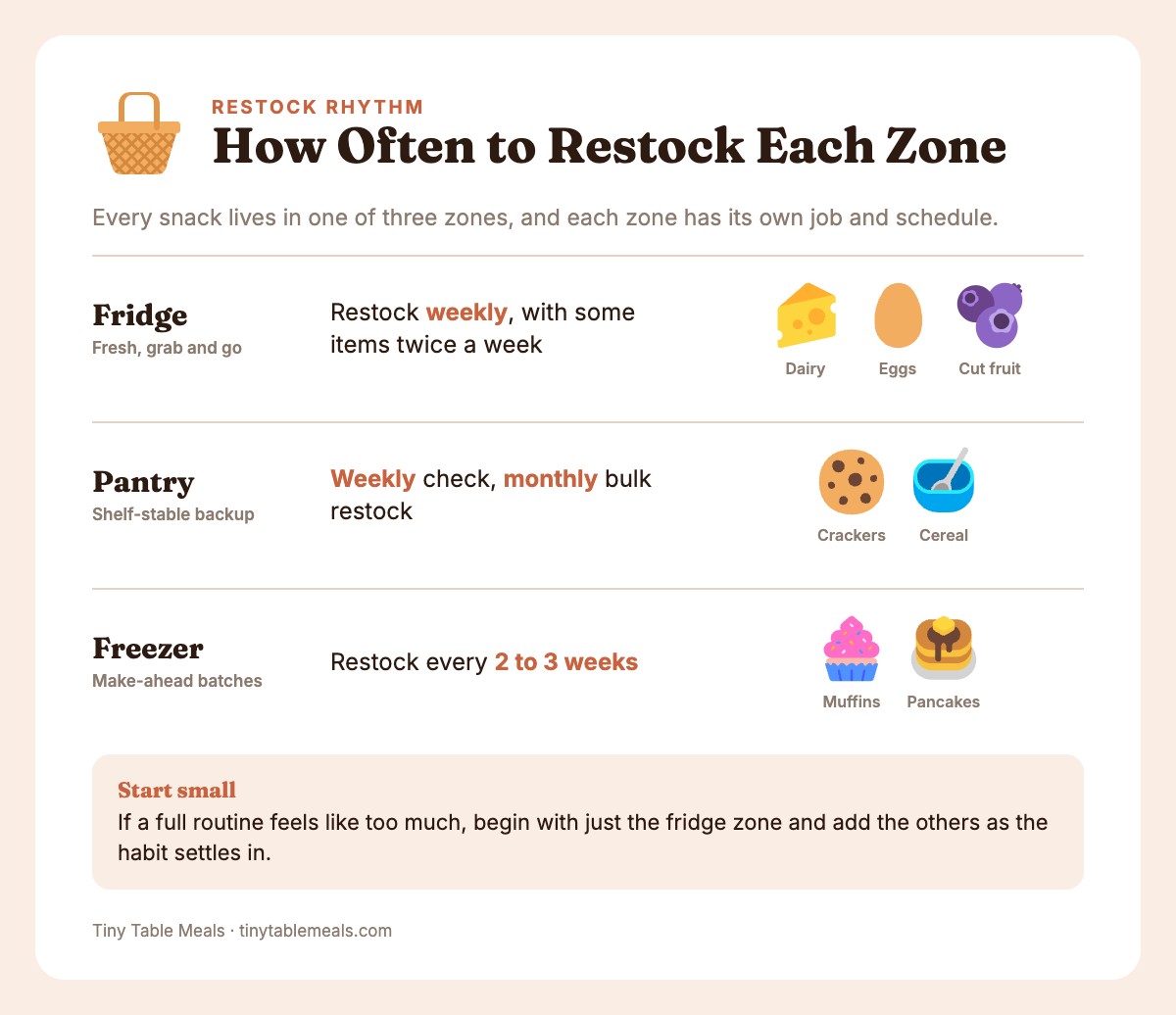
The whole idea is that every snack lives in one of three zones, and each zone has a job.
| Zone | Job | What lives here | Restock rhythm |
|---|---|---|---|
| Fridge | Fresh, protein-forward, “grab and go” | Cut fruit and veg, dairy, dips, boiled eggs, hummus, cooked pasta shapes | Weekly (some items twice a week) |
| Pantry | Shelf-stable fiber and carbs, backup plans | Whole grain crackers, oat bars, dried fruit, nut-free seed butters, cereal, pouches | Weekly check, monthly bulk |
| Freezer | Make-ahead batches, emergency snacks | Muffins, mini pancakes, frozen berries, smoothie packs, edamame | Every 2 to 3 weeks |
Each zone also gets a home base, a physical spot so your toddler (and your partner, and the grandparent on babysitting duty) can find things:
- A low fridge bin or drawer at toddler eye level
- A pantry basket or lower shelf with the shelf-stable options
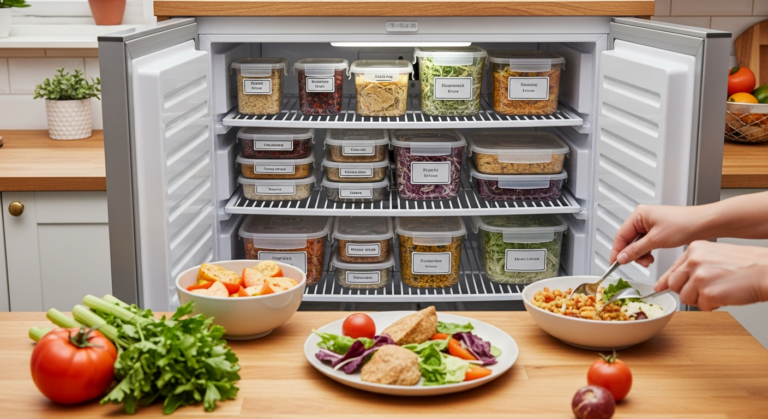
- A labeled freezer bag or bin so “snack stuff” doesn’t get lost among the dinner leftovers
You don’t need new furniture. A dollar-store bin and a marker will do the job.
Setting Up the Physical Station (15 Minutes, Once)
You only do this part one time. After that, it’s maintenance.
Step 1: Pick your spots
Choose one low fridge shelf or drawer, one pantry shelf or basket, and one freezer bin. If you have a small kitchen, the “pantry” zone can be a basket on the counter or in a cabinet. Location matters less than consistency.
Step 2: Use containers that toddlers can actually manage
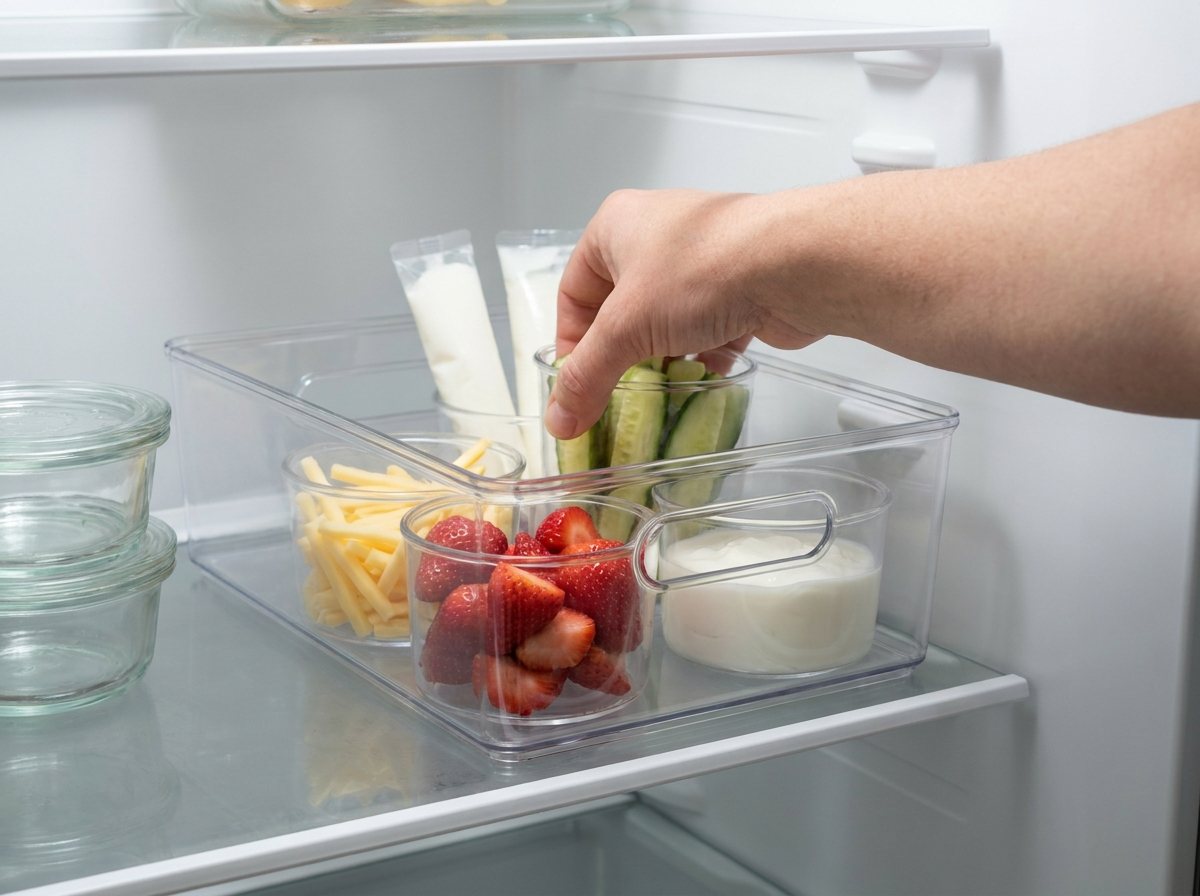
Clear, shallow, easy-open bins win. I use:
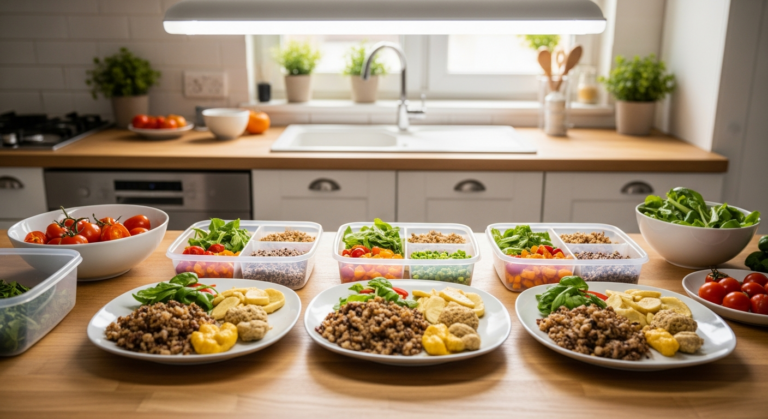
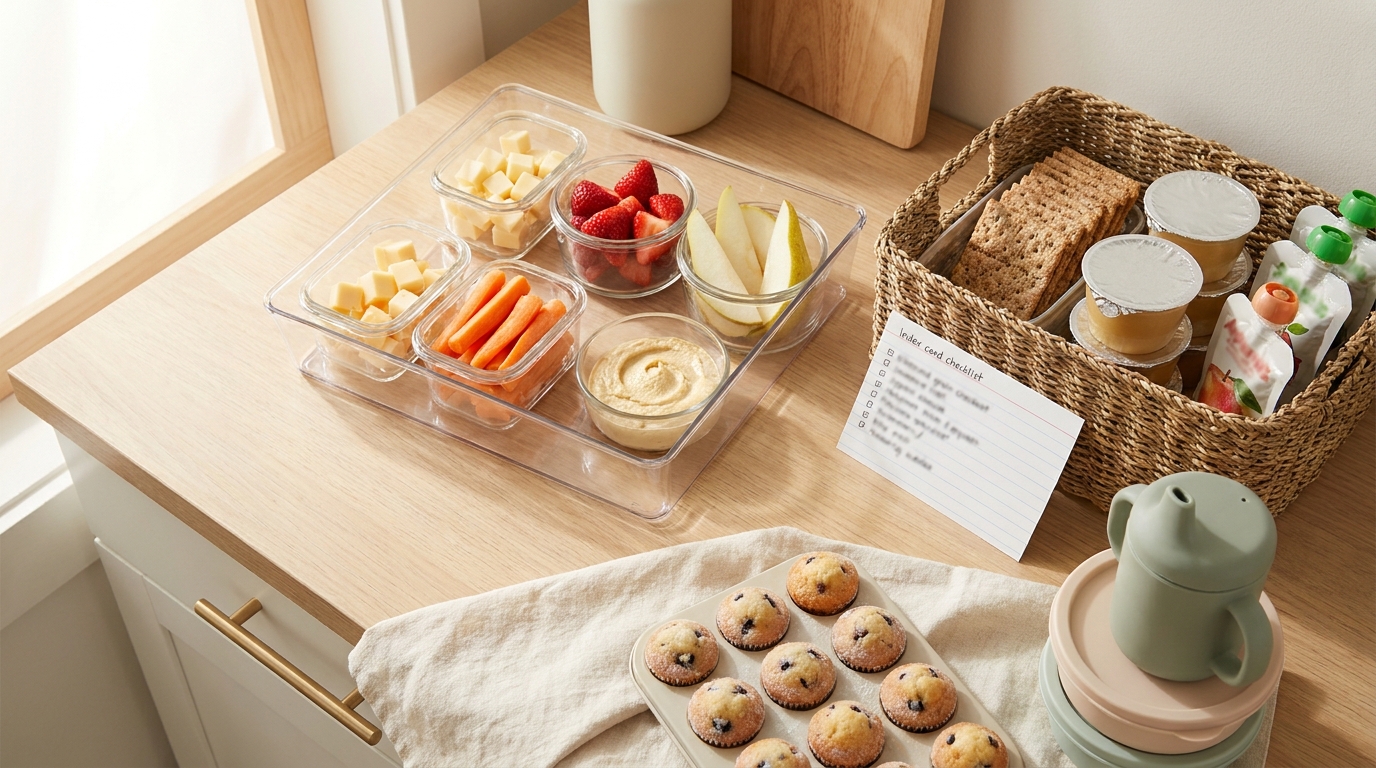
- A clear lidded bin in the fridge with grab-and-go items (cheese cubes, yogurt tubes, cut fruit cups)
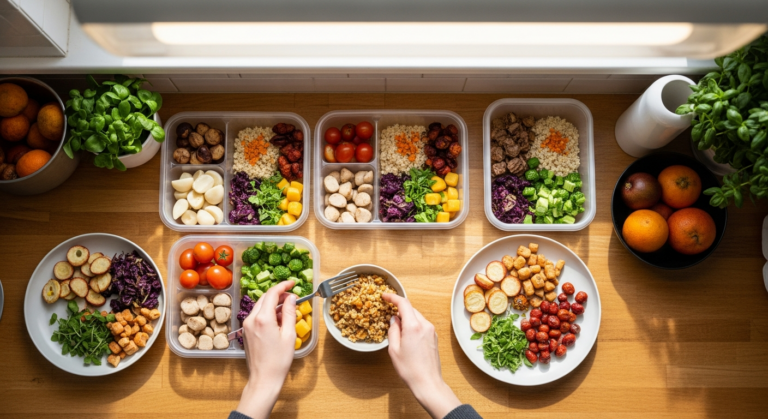
- Small snack-size containers pre-portioned with fruit, veggies, or dips
- A sturdy basket in the pantry with single-serve portions of crackers, bars, and pouches
- Labeled freezer bags lying flat, so they stack neatly
Step 3: Make a “yes” shelf
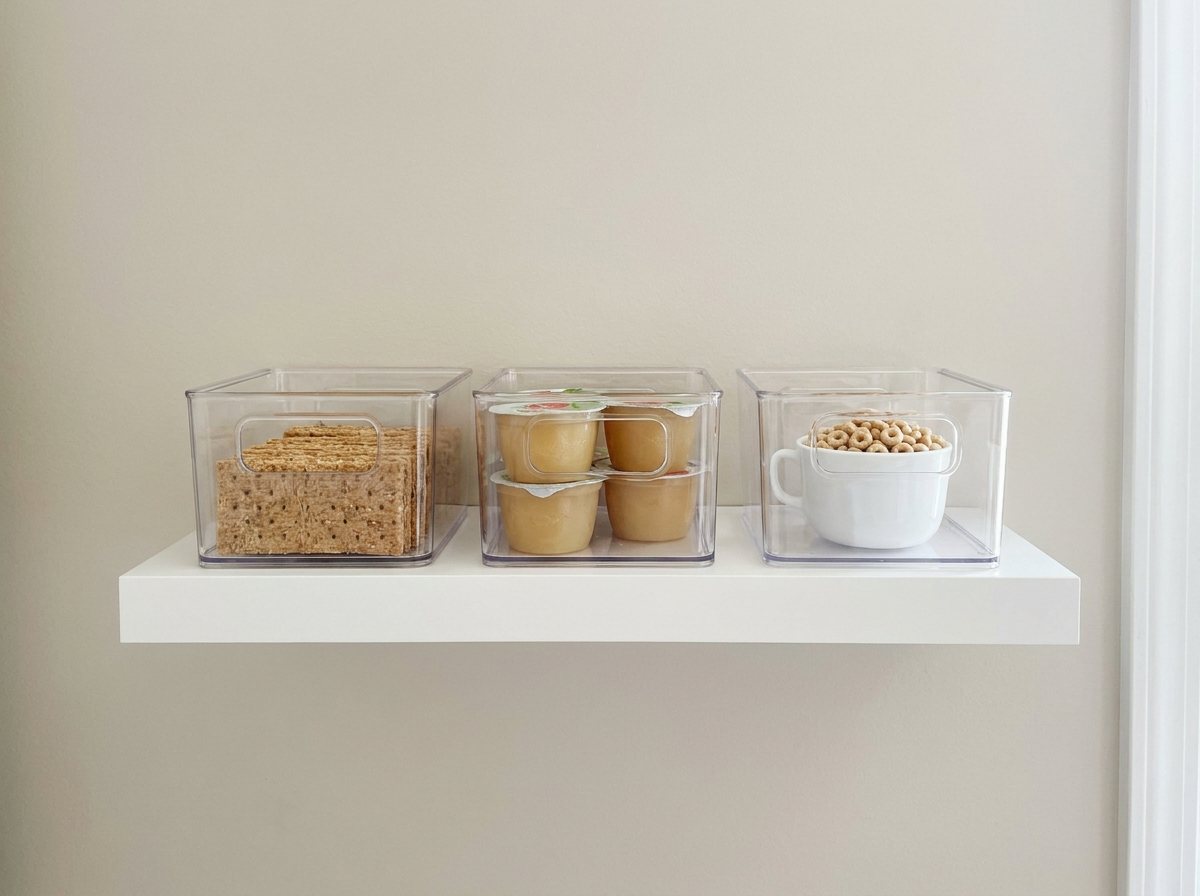
This is the single best trick I’ve found. Everything on the toddler-accessible shelf is something you’re genuinely happy for them to eat any time snack is offered. No “ask first” items down there. When the options are all good ones, you stop being the gatekeeper and the whole dynamic gets calmer.
Step 4: Stick the checklist inside the pantry door
Write the restock checklist (below) on an index card or print this page’s version and tape it where you’ll see it. Mine lives on the inside of a cabinet door next to the grocery list.
The Weekly Restock Checklist (Copy or Print From This Page)
Each zone has a target count, the number of options I like to have on hand, so you’re restocking to a level, not guessing. Check off what you’re low on, then add those items to your grocery list.
Fridge Zone
| ☐ | Item | Target on hand | Notes |
|---|---|---|---|
| ☐ | Cheese (thin strips or shredded) | 1 to 2 options | For ages 1 to 2, cut into thin strips or pieces no bigger than 1/4 inch, or shred. Never give whole cheese sticks or large cubes. |
| ☐ | Yogurt (plain or lightly sweetened) | 4 to 6 servings | Full-fat for ages 1 to 2; your pediatrician can advise on lower-fat after age 2. |
| ☐ | Hard-boiled eggs | 3 to 4 | Peeled eggs, 5 days max; in the shell, up to 7 days. Refrigerate within 2 hours of cooking; discard if slimy or off-smelling. Peel only as needed. |
| ☐ | Hummus or bean dip | 1 container | Pair with soft veggies or soft pita strips |
| ☐ | Cut fruit | 2 kinds | Blueberries and other grape-sized berries quartered or mashed for ages 1 to 2, strawberries sliced; melon; pear only ripe and soft, or thinly sliced or grated for ages 1 to 2; apple only cooked or grated. Cut fruit keeps 3 to 4 days, melon 3. |
| ☐ | Cut veggies | 2 kinds | Cucumber peeled and cut into thin spears or lengthwise quarters; carrot steamed until fork-soft and cut small for ages 1 to 2; roasted sweet potato |
| ☐ | Cooked pasta or “snack noodles” | 1 small batch | Cut shapes into small pieces for under 2. Toss with a little olive oil to prevent clumping. Keeps 3 to 5 days. |
| ☐ | Nut-free spread or dip for fruit | 1 option | Yogurt dip, sunflower seed butter, or cream cheese |
| ☐ | Milk or milk alternative for snack-time cups | Check level | Whole cow’s milk from 12 months; unsweetened fortified soy is the closest alternative, other plant milks need a pediatrician check. About 16 to 24 oz a day total. |
Pantry Zone
| ☐ | Item | Target on hand | Notes |
|---|---|---|---|
| ☐ | Whole grain crackers | 1 to 2 boxes | Look for a short ingredient list |
| ☐ | Oat or fruit-and-grain bars | 1 box | Check sugar per serving |
| ☐ | Unsweetened dried fruit | 1 option | Chop very small or skip under age 2 to 3; never offer whole raisins or whole dried fruit pieces to young toddlers |
| ☐ | Cereal for dry snacking | 1 box | Low-sugar O’s work well |
| ☐ | Fruit-and-veg pouches | 4 to 6 | Backup for the car and the stroller |
| ☐ | Nut-free seed butter | 1 jar | Sunflower or pumpkin seed butter |
| ☐ | Rice cakes or puffed snacks | 1 bag | Under 2, use dissolvable puffs, or spread thinly and break into small pieces; supervise |
| ☐ | Applesauce cups (no sugar added) | 4 to 6 | Easy for daycare bags |
| ☐ | Popcorn (ages 4+ only) | Optional | Not for under 4 due to choking risk; supervise |
Freezer Zone
| ☐ | Item | Target on hand | Notes |
|---|---|---|---|
| ☐ | Muffins (savory or sweet) | 6 to 12 | Muffins can thaw on the counter. If microwaved, stir or test for hot spots and cool before serving. |
| ☐ | Mini pancakes or waffles | 8 to 12 | Great dipped in yogurt |
| ☐ | Frozen berries | 1 bag | For smoothies, oatmeal, or thawed as a snack |
| ☐ | Smoothie packs | 3 to 4 | Pre-portioned fruit, spinach, and a scoop of oats |
| ☐ | Shelled edamame | 1 bag | Steam, cool, then mash or flatten each bean or pea for all children under 4. |
| ☐ | Mini quiche or egg bites | 6 to 8 | Thaw in the fridge, reheat until steaming (165°F), then cool and test before serving. |
| ☐ | Bean and cheese quesadilla wedges | 6 to 8 | Reheat in a toaster oven |
| ☐ | Frozen banana (blend to soft-serve) | 1 bag | Blend to soft-serve and serve by spoon, never as hard frozen cubes |
The “Mobile” Add-On (for bags, cars, and daycare)
| ☐ | Item | Target on hand | Notes |
|---|---|---|---|
| ☐ | Reusable snack containers | 4 to 6 clean | Dishwasher day matters |
| ☐ | Small ice pack | 1 to 2 | For yogurt, cheese, cut fruit |
| ☐ | Spill-proof water cup | 2 | One in the bag, one at home |
| ☐ | Wipes and a spare bib | 1 set | Lives in the bag permanently |
| ☐ | Shelf-stable “emergency” snack | 2 | Pouch + crackers, never touched except in emergencies |
If it feels long, remember that most weeks you’re only topping off two or three lines.
The “Rule of Three” That Keeps Snacks Balanced
You don’t need a nutrition degree to build a good toddler snack. Aim for two or three of these food groups at each snack, and you’re already ahead:
- Protein or healthy fat: cheese, yogurt, egg, hummus, nut-free seed butter, beans
- Fiber or produce: fruit, vegetables, whole grains, oats, legumes
- A satisfying carb: crackers, toast, pasta, muffin, tortilla
The goal is staying power. A snack that’s only carbs (plain crackers, say) tends to be less filling than one that pairs a carb with protein or fiber.
Examples that take under two minutes
| Snack | Protein/fat | Fiber/produce | Carb |
|---|---|---|---|
| Cheese strips + soft ripe pear slices + crackers | Cheese | Pear | Crackers |
| Yogurt + thawed, mashed or quartered berries + oat cereal | Yogurt | Berries | Cereal |
| Hummus + cucumber spears + soft pita strips | Hummus | Cucumber | Pita |
| Hard-boiled egg + peeled orange pieces (membranes and seeds removed, cut small) + toast fingers | Egg | Orange | Toast |
| Sunflower seed butter + banana + rice cake | Seed butter | Banana | Rice cake |
| Mini quiche + cherry tomatoes (quartered) | Egg, cheese | Tomatoes | Crust |
Iron matters a lot between ages 1 and 3, when milk often crowds out iron-rich foods. Pairing beans, eggs, or fortified oats with a vitamin C fruit helps absorption. Eggs provide some iron, but meat, beans and iron-fortified cereal are stronger sources, and your pediatrician will screen iron around 12 months. My guide to iron-rich meals and snacks for kids walks through it by age.
Fridge Zone: The Fresh, Fast Stuff
The fridge zone is where the “real food” snacks live, the ones that make you feel good about what’s going into small bodies. It’s also the zone that goes bad fastest, so it gets the most attention.
What I always keep stocked
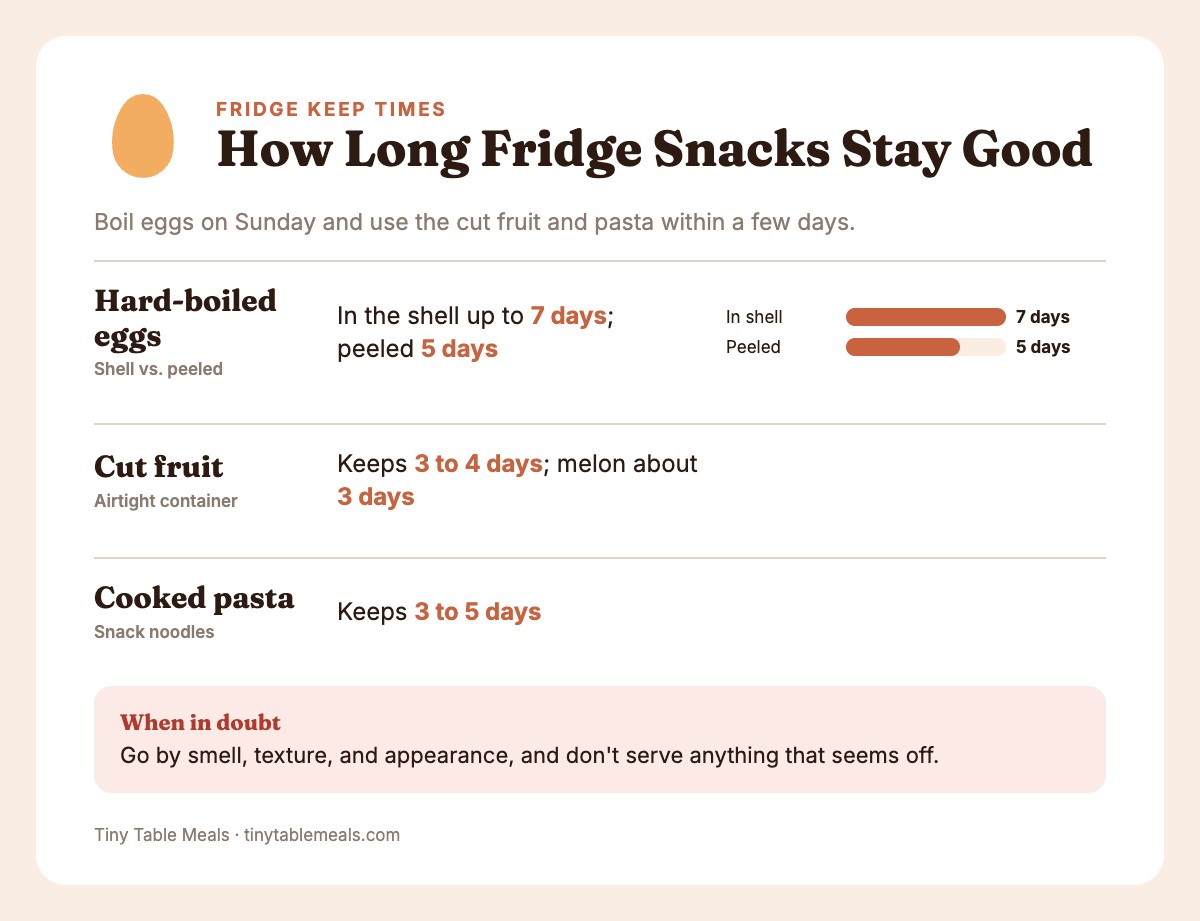
Protein anchors. Cheese, yogurt, hard-boiled eggs, and hummus cover most of my protein-and-fat needs. I boil half a dozen eggs on Sunday and keep them in the shell, peeling only as needed. Peeled eggs last 5 days; in the shell, up to 7.
Two fruits, two veggies. I rotate depending on season and price. In fall that often means ripe, soft pears, plus cooked or grated apple, soft steamed carrot pieces and roasted sweet potato pieces. Cucumbers stay good all week.
A “dip” or two. Toddlers eat nearly anything dipped. A scoop of plain yogurt mixed with a little cinnamon, or a smear of hummus, turns a plain veggie into a “special” snack.
How to prep fridge items so they’re toddler-ready
- Cut to size. For ages 1 to 2, think thin, soft, and small, like grapes quartered lengthwise (never whole), grated or cooked apple, and soft-cooked carrots. Grapes, cherry tomatoes and hot dogs stay quartered lengthwise until at least age 4. For other soft foods, pieces can get a little larger at 3 to 4.
- Steam firm veg. Raw carrots and raw apple are hard for little teeth and a choking hazard under age 4. Steam them until fork-soft, or grate them.
- Store in single servings. Small containers mean you grab, hand, and go.
Restock rhythm
Some fridge items stay fresh all week; others need a midweek refresh. My routine is Sunday for the big restock and a quick Wednesday check for cut fruit and cooked pasta. That mini-reset takes five minutes and prevents the sad, brown-edged apple slices that go uneaten.
Pantry Zone: The Shelf-Stable Safety Net
The pantry zone is your backup plan. It’s what saves you when the fridge is empty, when the car trip runs long, or when the plan falls apart. It also needs the least maintenance, which is exactly why it’s worth setting up well.
For the bigger picture of what should always be on your shelves, my pantry staples for families list covers the full pantry. The snack zone is a smaller slice of that, just the grab-and-eat items.
My pantry snack lineup
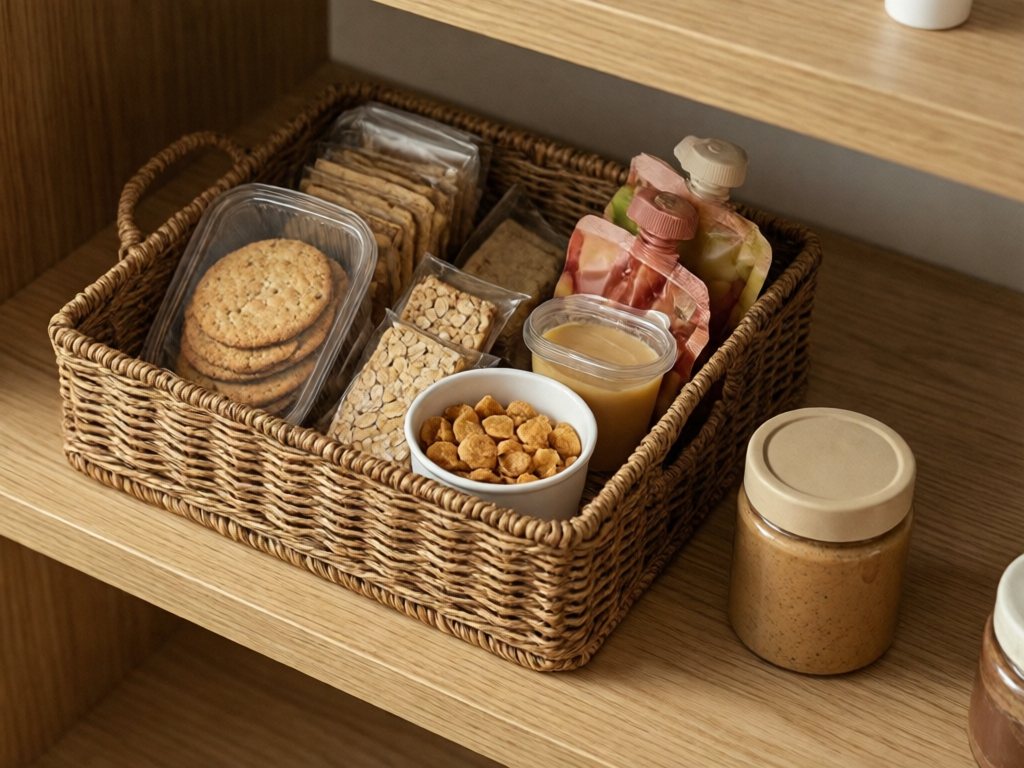
- Whole grain crackers: pick ones with a short ingredient list. Fewer than five ingredients is a good rule of thumb.
- Oat or fruit-and-grain bars: handy, but read labels. Some “toddler” bars have more added sugar than you’d expect. I look for bars where oats and fruit lead the ingredients.
- Unsweetened dried fruit: see the checklist for size and age limits.
- Dry cereal: a toddler-favorite finger food that’s easy to portion into a snack cup.
- Pouches: not my everyday choice, but great for travel. Look for ones that include a vegetable alongside the fruit.
- Nut-free seed butter: sunflower seed butter spread thinly on a rice cake or toast fingers is a daycare-friendly protein.
- Applesauce cups: unsweetened, single-serve, and tough to beat for packing.
Keeping the pantry zone honest
I do a quick scan every Sunday: Is anything expired? Anything we’ve stopped eating? Anything empty? Then I keep a small stash of duplicates (a second box of crackers, an extra pouch pack) so one empty box never becomes an emergency.
One more pantry-zone tip: rotate by “first in, first out.” New boxes go to the back, old ones move to the front. It’s the same system a restaurant uses, and it takes about thirty seconds.
Freezer Zone: Your Future Self’s Best Friend
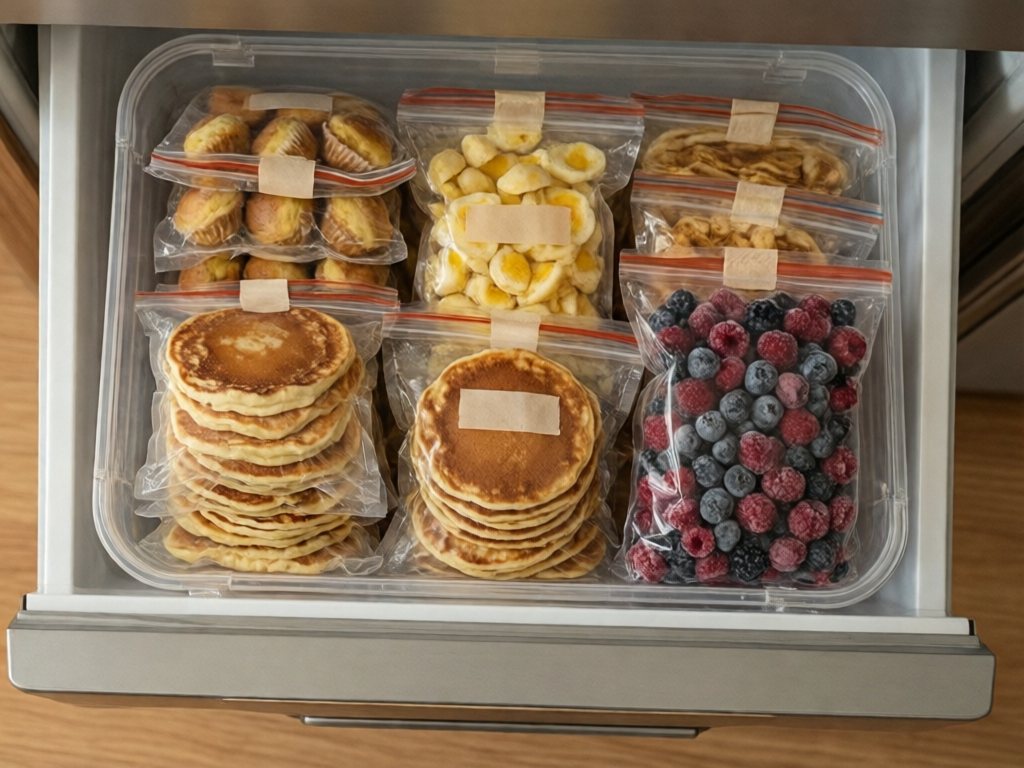
If the fridge zone is for fresh and the pantry zone is for backup, the freezer zone is for planning ahead. This is where batch cooking pays off, and it’s the zone that most directly supports the “weekly restock” idea, because one baking session can fill the freezer for two or three weeks.
What freezes well for toddler snacks
- Muffins: both sweet (banana-oat, apple-cinnamon) and savory (cheddar-zucchini, veggie-egg). My freezer muffins for toddlers guide has make-ahead batches for both. Freeze them individually on a tray first, then bag them so they don’t clump.
- Mini pancakes: make a double batch on a weekend, freeze flat, and reheat in the toaster. They’re a snack, a breakfast, and a dinner-side in one.
- Egg bites or mini quiches: bake in a mini muffin tin, cool, and freeze. Reheating steps are in the checklist.
- Quesadilla wedges: bean and cheese is my default. Cut into small strips for easy eating.
- Smoothie packs: portion fruit, a handful of spinach, and a spoonful of oats into a bag. Dump in a blender with milk or yogurt, and snack is done.
- Steamed veggies: frozen peas, edamame, and corn are budget-friendly. Serve them steamed, then cooled. For all children under 4, mash or flatten peas and edamame, and mash or skip corn kernels.
The freezer rules I follow
- Label everything with the date. Future-you will not remember.
- Freeze flat. Bags laid flat freeze faster, stack better, and thaw evenly.
- Keep a “snack” bin. Group everything toddler-snack-related together so you aren’t digging past the frozen peas and a mystery container.
- Use within 2 to 3 months for best quality.
Restock rhythm
Unlike the other zones, the freezer doesn’t need weekly attention. I check it every Sunday as part of the routine, but I only bake or batch when the muffin or pancake count drops below about six. That usually works out to every two to three weeks.
Toddler Snacks on the Go: The Bag That’s Always Ready
Here’s where the station really pays off. Before I had a system, “on-the-go snacks” meant a frantic scavenger hunt as we were heading out the door. Now the mobile kit is part of the station.
Build the bag once, refill weekly
My always-packed bag contains:
- 2 snack containers (one dry, one with something fresh)
- 1 pouch or applesauce cup
- 1 spill-proof water cup
- A small pack of wipes and a spare bib
- 1 shelf-stable “emergency” snack that never gets used for anything but emergencies
After each outing, I restock the bag from the station rather than waiting until we’re about to leave.
Best snacks for travel and errands
| Situation | Snack that works | Why |
|---|---|---|
| Before or after the ride, or at a stop | Dry cereal, dissolvable puffs, cheese strips in a cooler bag | Mess-free, and you can watch them eat |
| Grocery store | Banana, a rice cake, or a pouch | Peels or opens fast, won’t melt |
| Playground | Sliced fruit cup + crackers | Hydrating and energizing |
| Doctor’s office wait | Hard-boiled egg, yogurt tube | Quiet and filling |
| Long trip (eat at rest stops) | Mini muffin + cheese + cut fruit, offered at a stop | Balanced enough to hold until a real meal |
A word on car snacks
Safety firstI don’t give snacks while the car is moving, because nobody can watch the child eat. We eat before the ride, after it, or at a stop. The same goes for carts and strollers: seated and supervised only. Choking is quiet, and it’s worth planning around.
Daycare Snack Ideas and Rules for Toddlers
Daycare snacks come with extra constraints, and the station makes them much easier to meet.
Know the policy first
Before you pack anything, check:
- Nut policy. Many daycares are nut-free. Sunflower seed butter and seed-based bars are good swaps.
- Allergen rules. Some have additional restrictions on eggs, dairy, or sesame.
- Refrigeration. Not all programs have fridge space for lunch boxes; you may need an ice pack.
- Provided vs. packed. Some daycares serve snacks; others expect you to send them. Ask which.
- Labeling. Everything usually needs your child’s name on it.
A daycare-friendly snack formula
I pack one protein or fat, one fruit or veg, and one carb. For example:
- Cheese strips + sliced pear + whole grain crackers
- Yogurt tube + banana quartered lengthwise and sliced + oat cereal
- Hummus + soft carrot pieces + soft pita strips
- Hard-boiled egg + berries (quartered) + toast fingers
Make Monday morning easy
If you want daycare snacks to be a two-minute job instead of a twenty-minute one, pre-pack them Sunday as part of the restock. A row of five containers in the fridge labeled Monday through Friday means you grab and go. For the lunch side of the equation, my toddler meal prep lunches post pairs naturally with the snack prep, since you can do both in the same session.
Mix in the “familiar plus one new”
Daycare can be an excellent place for kids to try new foods, since they watch their peers eat. I often pack a familiar favorite alongside one small new thing. No pressure, no expectations, just exposure. Keep new foods to ones that aren’t major allergens, or that your child has already eaten safely at home.
The 15-Minute Sunday Restock Routine
This is the routine I run, in order. It takes about 15 minutes of hands-on time, with eggs cooking in the background.
| Minute | Task |
|---|---|
| 0 to 2 | Open the fridge, freezer, and pantry. Scan against the checklist above. |
| 2 to 4 | Put the eggs on to boil and set a 12-minute timer. Toss anything expired, stale, or untouched for two weeks. |
| 4 to 7 | Wash fruit and veg while the eggs cook. Steam or grate firm veg and apple. |
| 7 to 10 | Cut fruit and veg to size; portion into containers. |
| 10 to 12 | Portion dry snacks into pantry baskets and the mobile bag. |
| 12 to 14 | Check freezer count. If muffins or pancakes are low, add “bake” to next weekend’s plan. |
| 14 to 15 | Move the eggs to ice water (peel later or as needed; refrigerate within 2 hours of cooking). Write the grocery list for whatever’s low. |
A sample week of snacks
This isn’t a menu you have to follow, just an example of how the station produces variety without extra thinking.
| Day | Morning snack | Afternoon snack |
|---|---|---|
| Monday | Yogurt + berries | Cheese strips + crackers + pear |
| Tuesday | Mini pancake + banana | Hummus + cucumber + pita |
| Wednesday | Hard-boiled egg + orange | Frozen muffin (thawed) + milk |
| Thursday | Smoothie from freezer pack | Quesadilla wedge + steamed carrots |
| Friday | Oat cereal + yogurt dip | Seed butter spread thin on soft toast + banana |
| Saturday | Egg bite + fruit | Applesauce + crackers |
| Sunday | Toast fingers + cream cheese | Leftover pasta + cooled, mashed peas |
Notice how most combinations pull from at least two zones. That’s the point. You aren’t thinking “what should I make?” but “what’s in the station?”
Adjusting by season
Your station should shift with the year. In fall, I lean on apples, pears, and roasted squash; in summer, melon, berries, and cucumber. If you want a refresher on what’s at its best right now, my fall produce guide for families helps you stock the fridge zone without overspending.
Safety Notes for Ages 1 to 4
A snack station is only as good as its safety habits, so here are the essentials.
Safety firstQuarter grapes, cherry tomatoes and hot dogs lengthwise. Cut cheese into thin strips or 1/4-inch pieces. Keep raw apple and carrot grated or steamed, mash edamame and peas, chop dried fruit very small, and break up or replace rice cakes. No honey under 12 months.
Choking hazards to avoid or modify
- Whole grapes, cherry tomatoes, and large berries: quarter lengthwise
- Whole nuts and large seeds: avoid under age 4
- Popcorn, hard candy, and chunks of raw carrot or apple: avoid under age 4 (or steam/grate)
- Hot dog rounds and sausage coins: slice lengthwise, then into small pieces
- Large globs of nut or seed butter: spread thinly
- Dried fruit, including raisins: chop very small or skip under age 2 to 3; never whole
- Rice cakes: under 2, use dissolvable puffs or break into small pieces
- Edamame and peas: mash or flatten for children under 4
- Cheese: thin strips or 1/4-inch pieces for ages 1 to 2
- No honey under 12 months, including in muffins, cereals and bars
Supervision basics
- Toddlers should sit while eating, not walk, run, or play.
- Stay within arm’s reach and eye line.
- Offer small portions, then more if they want it.
Allergen awareness
- If you’re still introducing major allergens, do it at home, early in the day, and not at daycare.
- Current guidance supports introducing allergenic foods like peanut and egg early, around 6 months and not before 4 months, once your baby is ready for solids. If your child has eczema or a known food allergy, talk to your pediatrician first. A nut-free daycare rule doesn’t mean avoiding nuts at home. My guide to introducing allergens to your baby covers the steps.
- Label shared containers clearly if you have multiple kids with different needs.
- Keep a short list of “safe for everyone” snacks for playdates and grandparents.
If a snack comes before bed, brush teeth afterward and skip sticky foods.
I’m not a pediatrician, so if your child has feeding difficulties, a history of choking, or specific medical needs, check with your provider.
Keeping the Station on a Budget
A snack station doesn’t have to be expensive.
- Buy the whole version, cut it yourself. A block of cheese costs far less per ounce than pre-cut cubes or individually wrapped sticks. A tub of yogurt beats single-serve cups. A bag of oats beats boxed bars.
- Batch-bake for the freezer. Homemade muffins cost pennies each compared to store-bought.
- Use frozen produce. Frozen berries, peas, and edamame are often cheaper than fresh and just as nutritious.
- Plan around what’s on sale. Let the weekly flyer tell you which fruit gets the “fruit slot” on the checklist.
- Don’t over-stock. The target counts in the checklist are minimums that keep you covered, not goals to exceed. Stocking too much leads to waste.
If you’re looking at your whole food spend, my budget meal planning for families post has ways to stretch the grocery dollar across meals as well as snacks.
Frequently Asked Questions
How many snacks a day does a toddler need?
Most toddlers between 1 and 4 do well with two to three snacks a day, spaced between three meals. That usually works out to roughly one mid-morning, one mid-afternoon, and sometimes a small one before bed if dinner is early. Appetite varies a lot from day to day, so some days they’ll eat everything offered and others barely a bite. Offering snacks at consistent times (instead of letting them graze) helps them show up hungry for meals.
What are good toddler snack ideas that aren’t just crackers and fruit?
Think in combinations: a protein or healthy fat, plus a fruit or vegetable, plus a carb. Try hard-boiled egg with small orange pieces (peeled, seeds and membranes removed) and toast fingers, or hummus with soft cucumber and pita. Yogurt with quartered berries and oat cereal, mini egg bites with steamed carrots, or a bean-and-cheese quesadilla wedge all fit too. The station makes this easy because the ingredients are already portioned and waiting.
How do I handle a toddler who only wants one snack from the station?
Offer two or three choices you’re happy with and let them pick, then keep offering variety without pressure. It’s very common for toddlers to fixate on one food for a stretch. Keep the favorite available, but pair it with something new or different on the plate, and avoid turning snack time into a battle. Repeated, low-pressure exposure is what slowly widens a child’s range over weeks and months.
How long can cut fruit and veggies stay in the fridge?
Cut fruit stays good 3 to 4 days in an airtight container, melon about 3 days, and cooked pasta 3 to 5 days. Cut carrots and cucumbers keep about 3 to 5 days. Hard-boiled eggs keep up to 7 days in the shell and 5 days once peeled. When in doubt, go by smell, texture, and appearance, and don’t serve anything that seems off.
What are the best toddler snacks for daycare if the program is nut-free?
Look to sunflower or pumpkin seed butter on crackers or rice cakes, cheese and whole grain crackers, yogurt tubes, hard-boiled eggs, hummus (check that tahini or sesame isn’t restricted), fruit cups, and homemade muffins made without nuts. Always read labels on packaged items, since many crackers and bars are made in facilities that process nuts, and confirm your daycare’s specific rules before packing.
Do I have to restock every single week?
Not in every zone. The fridge zone benefits from a weekly refresh, and a quick midweek check for cut fruit. The pantry zone mostly needs a weekly scan to catch what’s running low. The freezer zone can go two to three weeks between batch-baking sessions. If a full weekly routine feels like too much, start with just the fridge zone and add the others as the habit settles in.
Is it okay to use pouches and packaged snacks in the station?
Absolutely. A few convenience items are what make the system realistic, especially for travel and emergencies. I treat pouches, applesauce cups, and bars as the backup plan rather than the default. Choose options with short ingredient lists and no added sugar when you can, and aim for most snacks to come from the fresh and freezer zones when time allows.
Start With One Zone This Week
The goal of a snack station isn’t a Pinterest-perfect fridge. It’s to take one small decision off your plate every day so you can enjoy the part that actually matters: handing a hungry little person something good and watching them eat it. Start with just one zone this week, probably the fridge, and see how it feels. Add the pantry and freezer when you’re ready. Fifteen minutes on Sunday buys back a surprising amount of calm on Tuesday at 3:40, and these days I open the fridge and actually have something good to hand over.