Iron-Rich Meals and Snacks for Kids: An Age-by-Age Guide to Preventing Deficiency
Learn how to prevent iron deficiency in your child with this age-by-age guide, covering daily iron needs, key foods, and the vitamin C trick to boost absorption. You'll understand critical windows for deficiency and how to manage milk intake.
- Understand your child's daily iron needs by age, as they vary significantly.
- Pair iron-rich foods with vitamin C to maximize absorption.
- Limit cow's milk to 16-24 oz/day for toddlers to prevent iron deficiency.
- Introduce iron-rich foods around 6 months as prenatal stores deplete.
This post contains affiliate links. As an Amazon Associate I earn from qualifying purchases.
Here’s an illustration, not a real family. Dana’s 15-month-old, Bea, is walking, babbling and growing right on her curve. Then a routine finger-prick test comes back “anemic.” “She eats fine,” Dana says. “How did I miss this?”
You usually don’t miss it, because there’s often nothing to see. Iron deficiency rarely looks like a pale, listless child. It looks like an active, well-fed toddler whose diet drifted toward milk, crackers and fruit pouches after the first birthday.
This guide covers daily iron needs by age, the vitamin C trick that helps it absorb, foods and snacks from 6 months to the tween years, and the signs worth a call to your pediatrician.
Free printable · 3 pages
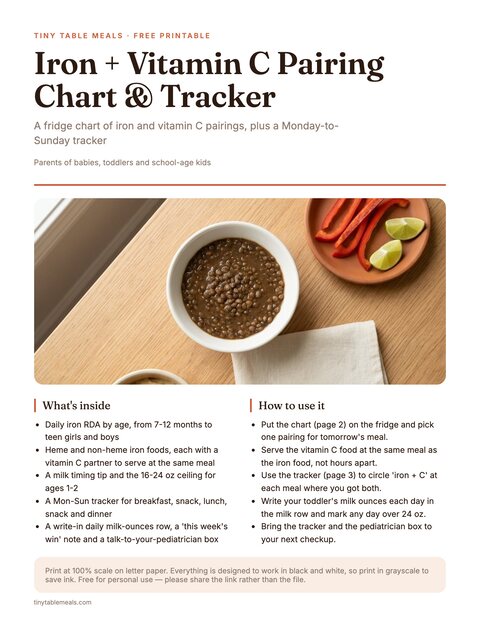
Iron + Vitamin C Pairing Chart & Tracker
A fridge chart with daily iron needs by age, heme and non-heme iron foods with vitamin C partners and a milk timing tip, plus a weekly tracker for meals, milk ounces and a pediatrician talk box.
Free. Your download link appears right here. You'll also join the Sunday Supper Plan. Unsubscribe anytime. Privacy
In this article (14 sections)
- Why Iron Deficiency Sneaks Up on Kids
- How Much Iron Do Kids Need by Age?
- Heme vs. Non-Heme Iron: Which Absorbs Better
- The Vitamin C Pairing Trick That Boosts Iron Absorption
- Iron-Rich Foods for Babies (6–12 Months)
- Iron-Rich Foods for Toddlers (1–3 Years)
- Iron-Rich Foods for Preschoolers and Big Kids (4–8 Years)
- Iron-Rich Foods for Tweens (9–13 Years)
- What Blocks Iron Absorption in Kids
- Iron-Rich Foods List: Beans, Dried Fruit and Fish
- Cooking Tricks That Add Iron Without Adding a New Food
- Signs of Iron Deficiency in Toddlers and Kids
- Frequently Asked Questions
- A Gentle Last Word
Why Iron Deficiency Sneaks Up on Kids
Babies are born with a stash of iron from mom, built up in the third trimester. For the first few months, that stash plus breastmilk or formula covers them.
Then two things happen around six months. The prenatal reserve runs out, and babies need more iron per pound than at any other point in childhood, because they’re building blood volume and brain tissue fast. That’s why pediatricians push iron-rich first foods at about six months.
Good to knowBabies who get mostly breastmilk (more than half their feeds) need about 1 mg/kg/day of supplemental iron from 4 months until iron-rich foods are regular. Preterm babies usually start earlier. Formula-fed babies get iron from the formula. Your pediatrician sets the dose and timing.
The second danger window opens around 12–18 months, for a different reason: cow’s milk. Once toddlers move to whole milk, many families lean on it because it’s easy and kids love it. It’s great for calcium and vitamin D, just not for iron.
Cow’s milk has almost no iron. It can also interfere with absorption from other foods, and in large amounts it can cause tiny bits of intestinal blood loss in some toddlers. It’s also filling enough to crowd out the iron-rich foods that belong on the plate.
Safety firstPediatricians commonly advise about 16–24 oz (2–3 cups) of cow’s milk a day for ages 1–2. Regularly going over 24 oz is a red flag for iron deficiency.
The picky-eating window opens around the same age. Toddlers start rejecting meat and fortified cereal in favor of beige carbs, and iron gets harder to cover. None of this is a parenting failure. It’s biology plus toddler psychology colliding at an unlucky moment.
How Much Iron Do Kids Need by Age?
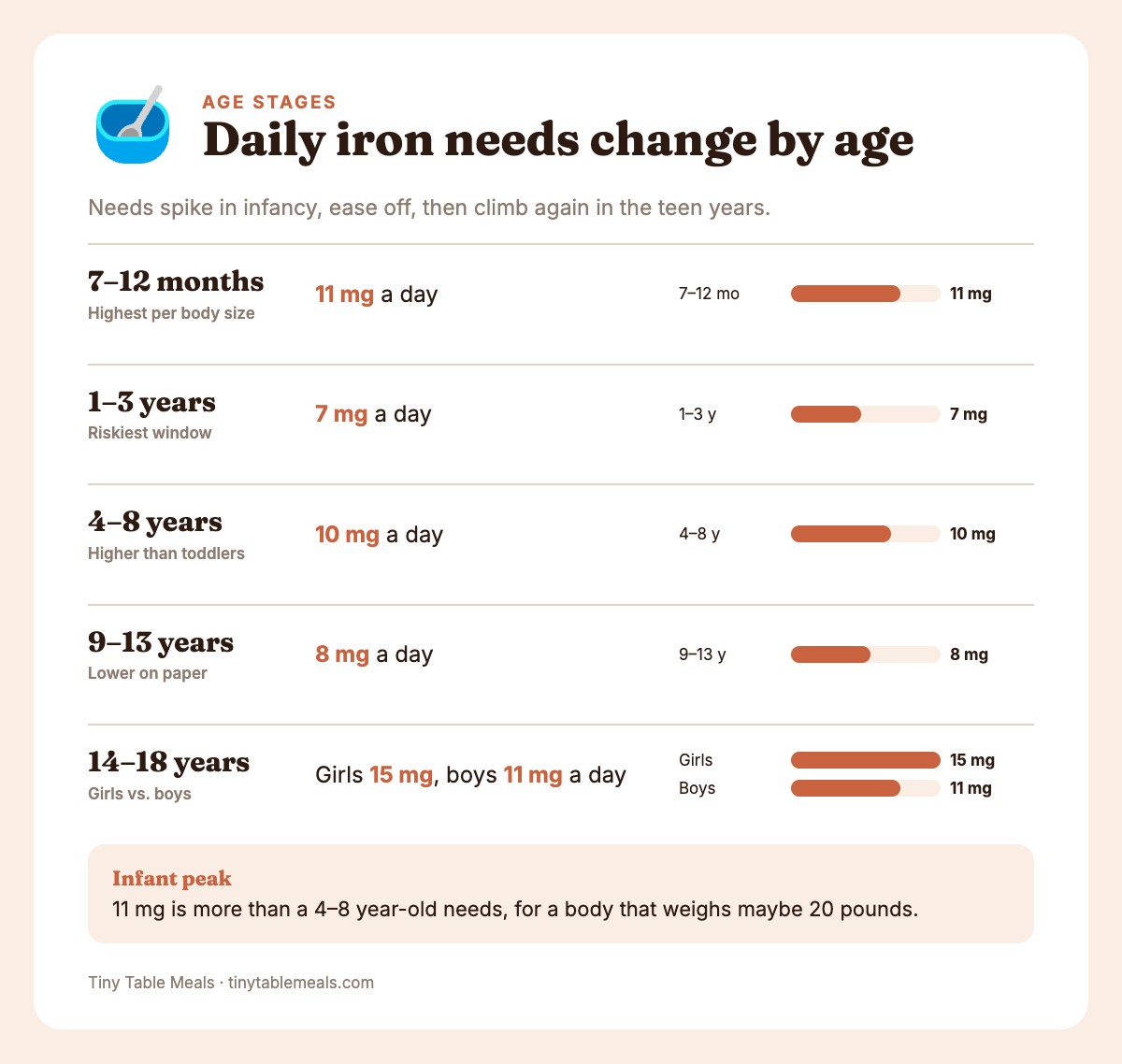
Iron needs don’t rise smoothly with age. They spike in infancy, ease off in the preschool years, then climb again in adolescence, especially for menstruating tweens and teens. Here’s the RDA breakdown:
| Age | Daily Iron RDA | Notes |
|---|---|---|
| 0–6 months | 0.27 mg* | Covered by breastmilk/formula + prenatal stores. |
| 7–12 months | 11 mg | Highest need relative to body size in all of childhood. |
| 1–3 years | 7 mg | The riskiest window for deficiency. |
| 4–8 years | 10 mg | |
| 9–13 years | 8 mg | |
| 14–18 years (girls) | 15 mg | Menstruation significantly raises needs. |
| 14–18 years (boys) | 11 mg |
*Adequate Intake, based on the average intake of healthy breastfed babies. See the supplement note above.
Look at that 7–12 month row again: 11 mg is more than a 4–8 year-old needs, for a body that weighs maybe 20 pounds.
Heme vs. Non-Heme Iron: Which Absorbs Better
This is the difference between a plate that looks iron-rich and one that actually delivers iron to your kid’s bloodstream.
There are two forms of dietary iron:
- Heme iron comes from meat, poultry and fish. Your body absorbs it efficiently, somewhere in the 15–35% range, and it doesn’t need much help getting in.
- Non-heme iron comes from plants and eggs: beans, lentils, tofu, fortified cereals, dried fruit. Absorption is much lower and more variable, roughly 2–20%, and depends on what else is on the plate. Spinach and eggs are great foods, but both are only modest iron sources because their iron is poorly absorbed.
Plant-based iron absolutely counts. Iron-fortified infant and breakfast cereals make it a major source for many American kids. It just needs backup, and that backup is vitamin C.
The Vitamin C Pairing Trick That Boosts Iron Absorption
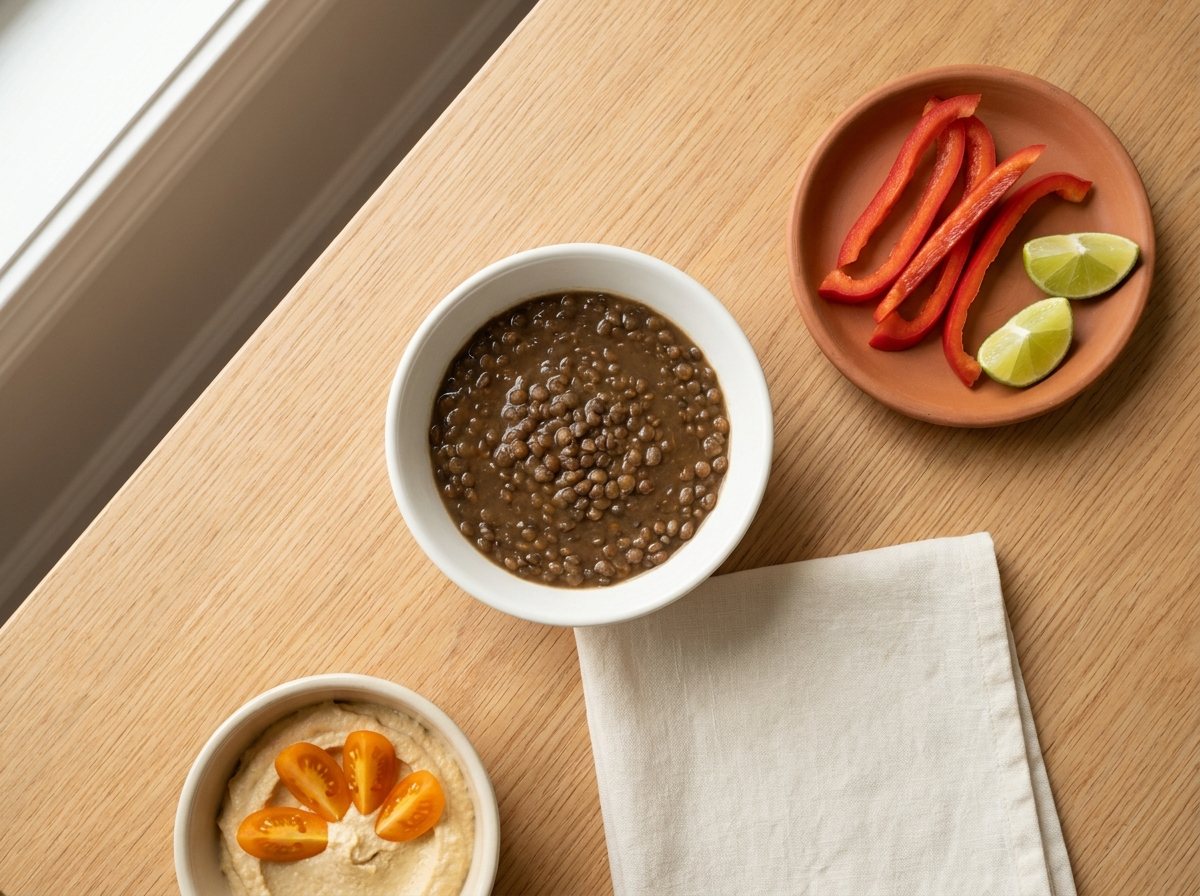
Vitamin C can substantially increase non-heme iron absorption, in some studies by two to three times or more, depending on the meal. It’s an easy win for a kid who doesn’t eat much meat. That could be picky eating, a vegetarian household, or just a Tuesday when nobody wants chicken.
The rule of thumb: every iron-rich meal should have a vitamin C food sitting right next to it, not hours apart. The pairing has to happen at the same meal. Strawberries at breakfast don’t help the iron in dinner’s lentil soup.
Easy vitamin C pairings to keep in rotation:
| Iron food | Pair with |
|---|---|
| Lentil or bean soup | Bell pepper strips, a squeeze of lime, tomatoes. |
| Fortified oatmeal | Sliced strawberries or kiwi. |
| Scrambled eggs | Orange segments, diced tomato. |
| Beef or turkey chili | Bell peppers, a side of citrus fruit. |
| Iron-fortified cereal | Sliced strawberries, kiwi or mandarin segments (cut small for toddlers). |
| Hummus | Quartered cherry tomatoes, soft-cooked bell pepper strips. |
| Tofu stir-fry | Broccoli, bell peppers, a splash of citrus in the sauce. |
Grab the free Iron + Vitamin C Pairing Chart & Tracker below to plan a week of pairings.
Calcium and tea can get in the way of iron. See “What Blocks Iron Absorption in Kids” below for easy timing fixes.
If you’re planning meals this way generally, our High-Protein Meals and Snacks for Kids guide pairs well with this one, since protein and iron sources overlap so heavily.
Iron-Rich Foods for Babies (6–12 Months)
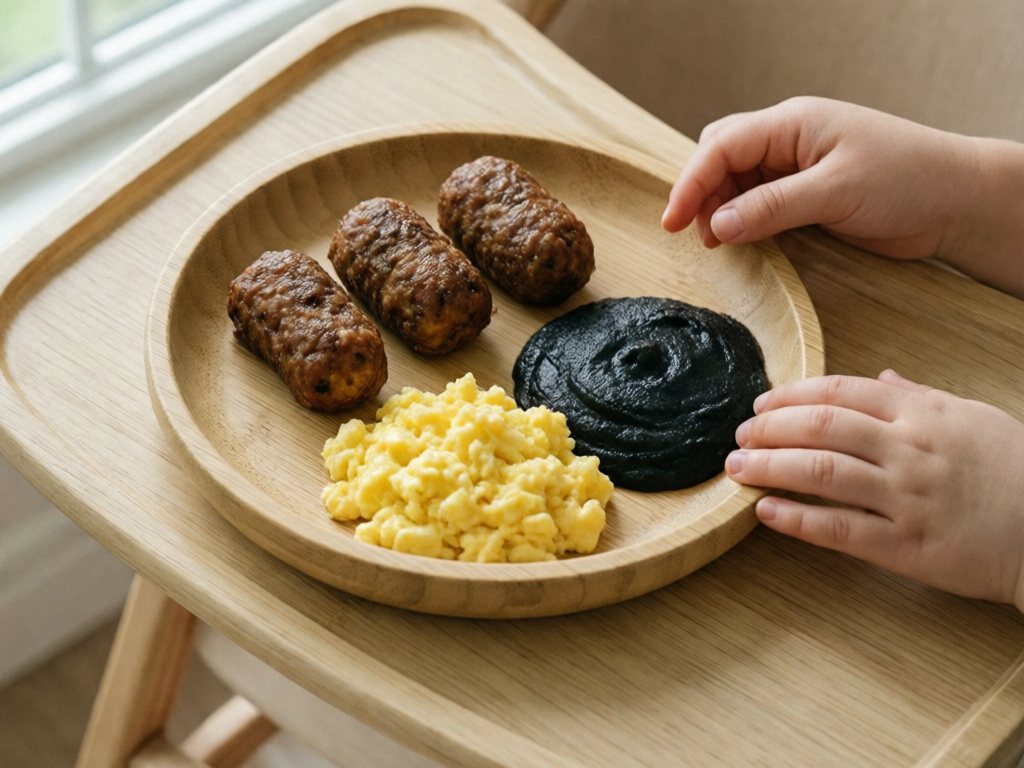
Aim for an iron-rich food at least twice a day once solids start at about 6 months.
What to prioritize
Start with iron-fortified infant cereal (oat, barley or multigrain, and vary grains rather than relying on rice cereal). Feed it by spoon, never in a bottle.
Add pureed or very tender ground meat, mashed beans and lentils, well-cooked whole egg, and iron-fortified infant formula if you’re not exclusively breastfeeding.
Realistic serving ideas by texture stage
- Purees (6–7 months): Pureed beef or chicken thigh thinned with a little breastmilk or formula, or mashed lentils. Iron-fortified oat cereal mixed with pureed mango or strawberry has the vitamin C pairing built right in.
- Mashed/lumpy (7–9 months): Finely minced slow-cooked beef or dark-meat chicken; mashed black beans; well-cooked whole egg mashed with avocado.
- Baby-led weaning / finger foods (8–12 months): Meatballs made soft with grated apple or zucchini for easy gumming. Very tender, shredded dark meat chicken that squishes between your fingers. Soft scrambled egg strips or mashed hard-boiled egg. Soft-cooked lentil fritters. Shape meatballs and fritters as soft finger-length logs or flatten them, with no hard crust.
Safety firstGagging is noisy and normal while babies learn to eat. Choking is silent, so stay within arm’s reach. Cut round foods lengthwise, and skip whole nuts, hard dried fruit and honey under 12 months. Cook poultry to 165°F and ground meat to 160°F. Cool batch-cooked meatballs and fritters quickly, freeze them, and reheat until steaming hot. Skip added salt in baby foods.
A few things worth knowing at this stage:
- Breastfed babies need iron-rich foods starting at 6 months. Breastmilk’s iron is well absorbed, but it isn’t enough on its own past that point, so keep any supplement your pediatrician recommended.
- Formula-fed babies are already getting iron from fortified formula, but pediatricians still want iron-rich solids introduced on the normal timeline, not delayed.
- Don’t fear the meat. Many parents default to fruits and veggies first and push meat later. Pureed meat is one of the best first foods: it’s iron-dense and easy to thin to any texture.
- Eggs are a great early food. Current AAP guidance supports introducing well-cooked egg around 6 months. Check in with your pediatrician first if your baby has severe eczema or another food allergy.
Iron-Rich Foods for Toddlers (1–3 Years)
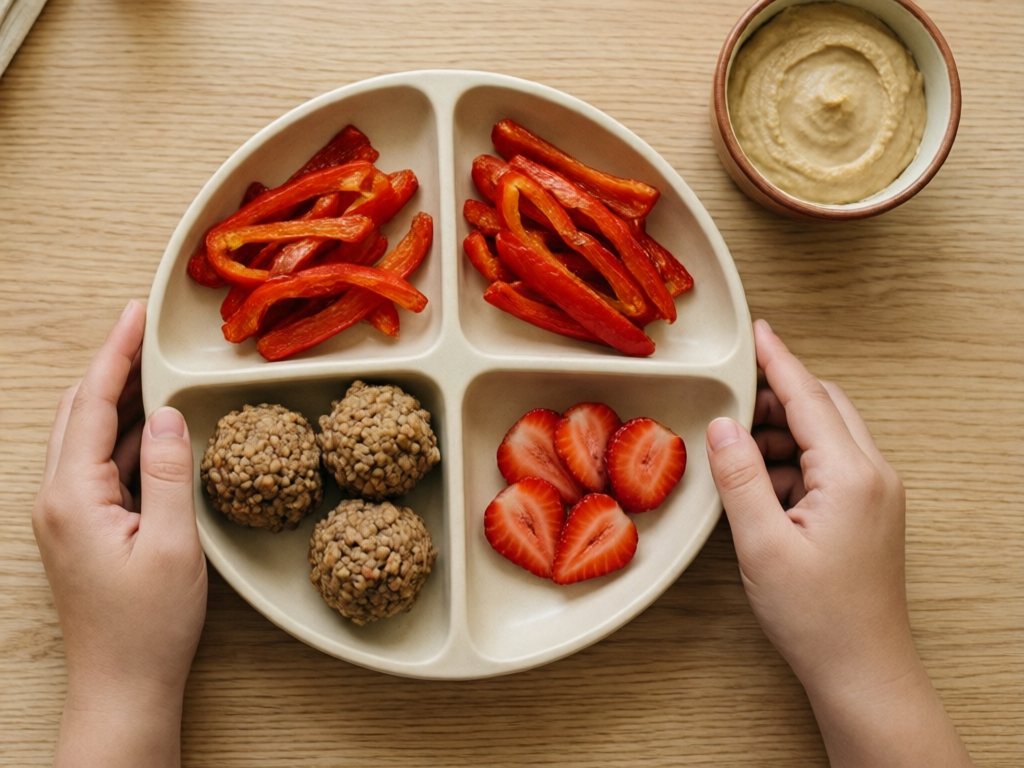
This is the milk-heavy, meat-rejecting, “beige food only” stretch we talked about earlier. The goal isn’t perfection at every meal. It’s making sure iron shows up reliably across the week, even on days your toddler declares war on anything with visible texture.
Watch the milk ceiling
Keep cow’s milk to about 16–24 oz (2–3 cups) a day for ages 1–2. If your toddler is a big milk drinker, trimming the volume is often the biggest lever to pull. It makes room for food, and appetite, at meals.
Safety firstChoking-safe cuts for under 4: shred meat or crumble it into pea-size pieces, use thin cheese sticks or small shreds, and steam or roast hard raw veggies until soft. Flatten meatballs into small patties or cut them into quarters, and keep them soft and moist. Mash edamame, and skip whole seeds, whole nuts and uncut dried fruit.
Toddler-friendly iron foods that actually get eaten
- Iron-fortified cereal, dry, as a snack. Toddlers love “cereal as finger food.”
- Soft meatballs, quartered or flattened (beef, turkey, or a lentil-beef blend), freezer-friendly and endlessly dippable.
- Scrambled eggs, any which way.
- Refried beans or hummus as a dip for soft pita or soft-cooked veggies.
- Shredded soft-cooked dark meat chicken, or pea-size crumbles of ground beef mixed into pasta sauce.
- Tofu with just a light golden edge, kept soft and cut into strips or small pieces a toddler can mash easily.
- Dried apricots, cut to pea-size or smaller, or soaked or stewed until soft. Never serve them whole under age 4, and always supervise.
- Edamame, shelled, then mashed, flattened or quartered for children under 4. Never serve the pods.
Roughly how much iron is in a kid-sized serving?
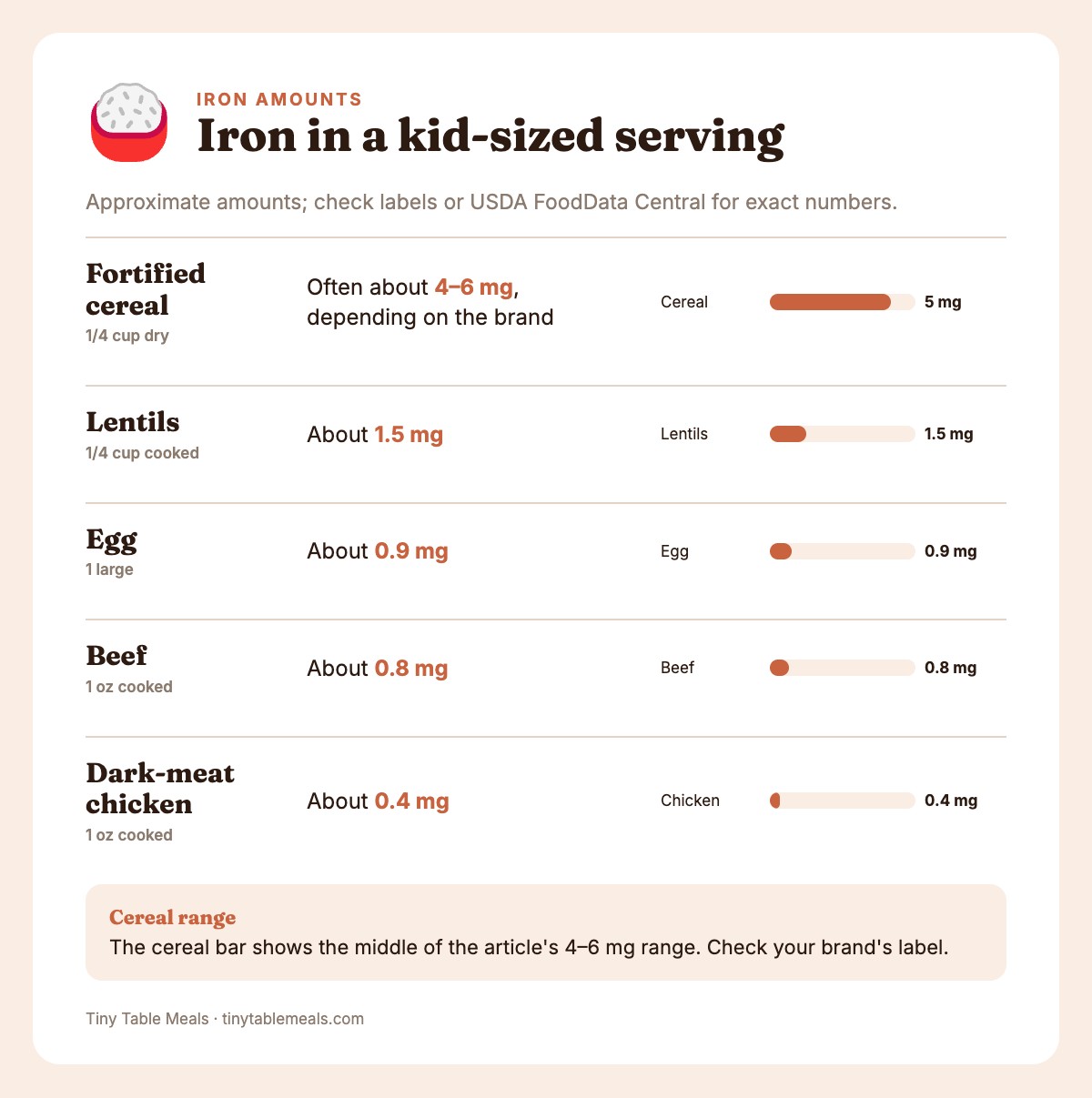
| Food (kid-sized serving) | Approx. iron |
|---|---|
| Iron-fortified infant cereal, 1/4 cup dry | Depends on the brand; often about 4–6 mg. |
| Beef, 1 oz cooked | About 0.8 mg. |
| Dark-meat chicken, 1 oz cooked | About 0.4 mg. |
| Lentils, 1/4 cup cooked | About 1.5 mg. |
| Egg, 1 large | About 0.9 mg. |
| Firm tofu, 1/4 cup | About 1–3 mg (varies by brand and type). |
| Pumpkin seeds, 1 tbsp ground | About 0.5 mg. |
These are approximate and vary by brand and preparation. Check the label or USDA FoodData Central for exact numbers. Fortified cereal is the biggest single boost, which is why it earns a spot in the toddler routine.
A real sample toddler day, iron-focused
| Meal | What’s on the plate | Iron + C pairing |
|---|---|---|
| Breakfast | Iron-fortified oat cereal with milk, sliced strawberries. | Cereal + strawberries |
| Snack | Small cup of dry iron-fortified cereal, kiwi slices cut small. | Cereal + kiwi |
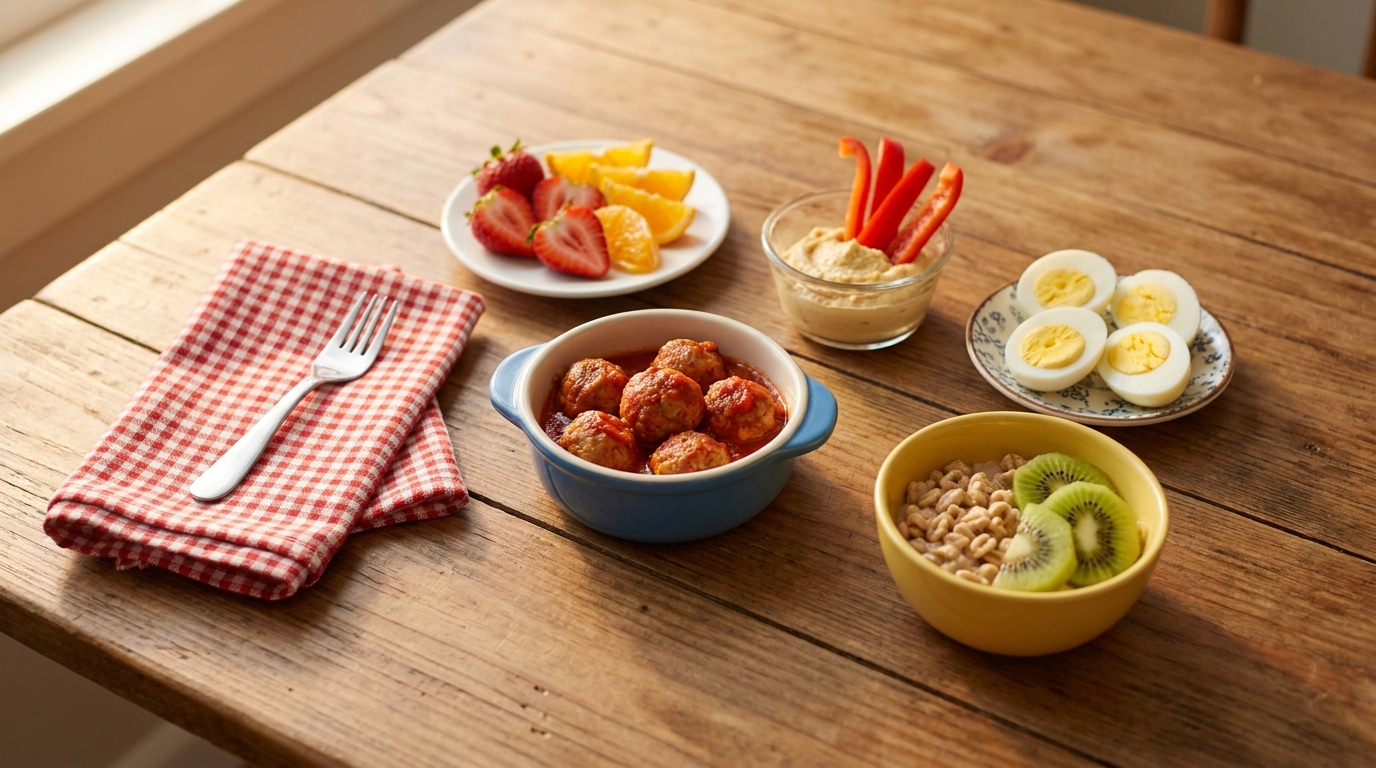
| Lunch | Soft mini turkey-lentil meatballs, quartered, with roasted bell pepper strips. | Meatballs + peppers |
| Snack | Hummus with soft-cooked bell pepper strips and thin, soft cucumber slices. | Hummus + peppers |
| Dinner | Scrambled eggs, avocado toast strips, orange segments cut small. | Eggs + orange |
| Rough day total | Two cereal servings, meatballs, hummus, eggs | Roughly 7 mg or more against the 7 mg target, mostly from the cereal. Check your cereal label. |
Iron shows up at every meal here, with no “eat your iron” battle.
In my kitchen, a big batch of mini meatballs with grated zucchini goes into the freezer every couple of weeks. It makes a quick iron-rich lunch on days I have no energy to cook. Quarter or flatten them before serving to a child under 4.
One thing that works at my table: dry fortified cereal in a small snack cup gets eaten on days a bowl of meat or beans gets pushed away. Serve it with no comment and no pressure.
If your toddler is deep in a picky phase and none of this feels realistic, start with why they’re picky. Our Picky Eater Quiz helps you sort out a sensory issue, an autonomy issue or a novelty issue. The fix looks different for each.
Iron-Rich Foods for Preschoolers and Big Kids (4–8 Years)
By preschool age, most kids have a wider food repertoire and the toddler-years panic eases. But iron needs go up to 10 mg/day, higher than toddlers and higher than tweens. School lunches and busy schedules make iron-thoughtful meals harder to control.
This is a great age to involve kids in the cooking. Hands-on kids eat more of what they help make, and it opens the door to iron-rich foods they might refuse on sight.
If your 4–8 year-old is ready for more kitchen independence, our Teaching Kids to Cook age-by-age guide maps out which skills are realistic at this stage.
Iron-smart lunchbox and snack strategies for this age
Safety firstWhole seeds, whole nuts and uncut dried fruit are not for children under 4. For a 4-year-old, chop the seeds or use seed butter and cut apricots to pea-size. Whole-seed trail mix is for about age 5 and up.
- Pack a hard-boiled egg plus orange wedges — portable, no reheating, built-in vitamin C pairing.
- Send trail mix with pumpkin seeds, dried apricots and a few dark chocolate chips for ages 5 and up, with the apricots cut small. Pumpkin seeds are a surprisingly strong plant-iron source.
- Rotate in bean-and-cheese quesadillas cut into triangles, with a small container of salsa for dipping (tomato = vitamin C).
- Pack soft mini meatballs or shredded chicken for an easy heme-iron snack that’s tender and low in sodium.
If lunchbox variety is where you’re stuck, our Bento Box Lunch Ideas post has combos built for this age range. Several of the protein-forward ones double as solid iron sources.
Kids this age can also make their own iron-rich snacks. See the After-School Snacks Kids Can Make Themselves list for hummus plates and other ideas that fit this framework.
Iron-Rich Foods for Tweens (9–13 Years)
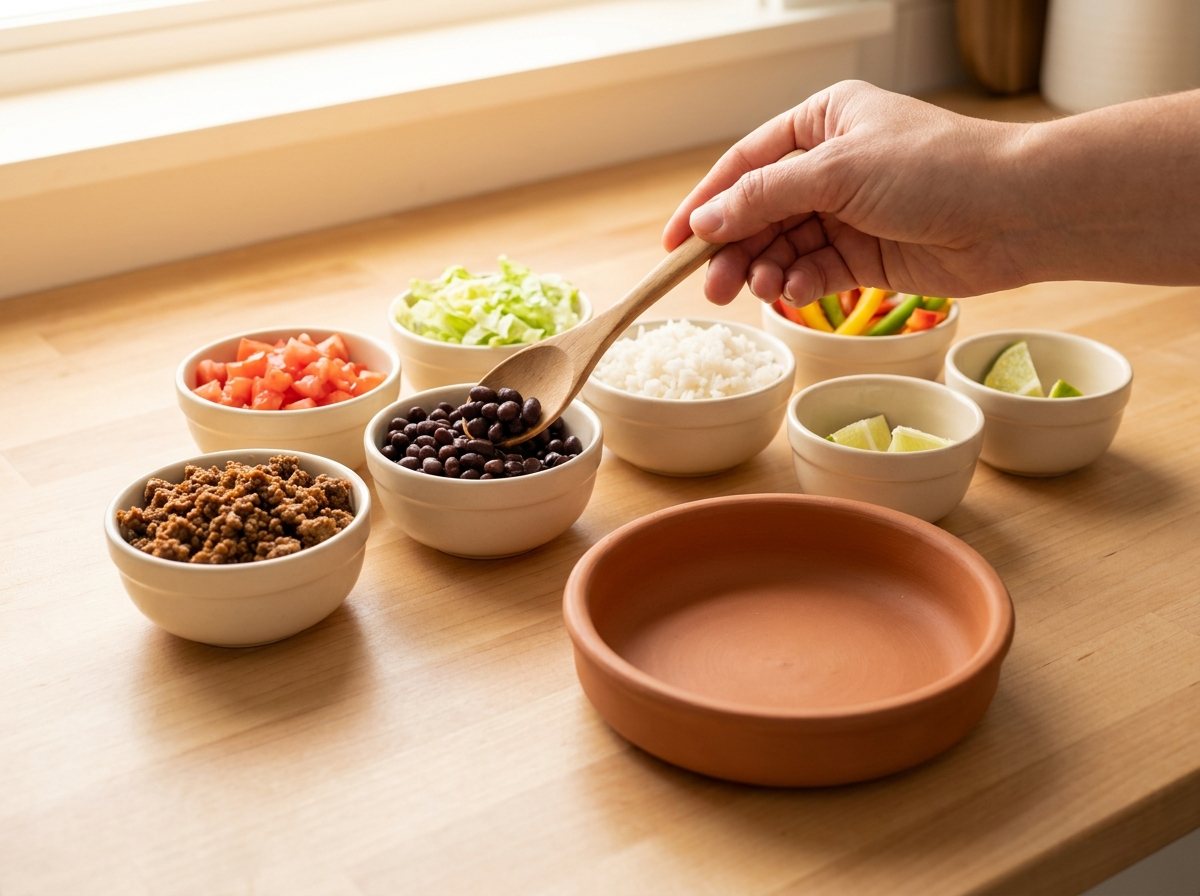
Iron needs drop slightly on paper for this age group (8 mg/day). But new risk factors show up that can offset that lower number:
- The onset of menstruation for many girls in this range. It raises iron needs significantly (toward the 15 mg/day teen recommendation) and is a common, easy-to-miss cause of deficiency in adolescent girls.
- Growth spurts that raise appetite and calorie needs. A tween eating more isn’t automatically eating more iron. The extra calories may come from snack foods and drinks.
- Athletic activity, especially endurance sports like running, soccer and swimming. It increases iron turnover and may raise the risk of low iron in active tweens and teens.
What actually works at this age
Tweens have real appetites and real food opinions. This is less about hiding iron and more about making iron-dense options available and appealing.
Think a bean-and-beef burrito bowl bar where they build their own plate, beef or chicken stir-fry with broccoli, or a hearty lentil chili with cornbread.
For tweens who menstruate, have a low-key conversation about how their iron needs just changed. It’s not a scare tactic. Kids this age respond well to knowing the “why” behind a nudge toward red meat, beans or fortified cereal.
What Blocks Iron Absorption in Kids
You can build a technically iron-rich meal and still not get much benefit if it’s paired wrong. Here’s what to watch for:
- Calcium. Dairy and calcium-fortified foods compete with iron for absorption in the gut. This doesn’t mean cutting dairy. Just don’t stack a big glass of milk next to your most iron-important meal. Serve milk with lunch and keep the iron-heavy dinner to water or a small amount of milk.
- Tannins — found in tea (including some herbal teas) and, to a lesser degree, coffee. Not usually a concern for young kids who aren’t drinking tea, but relevant for tweens who’ve started.
- Phytates. Found in whole grains, bran and raw legumes, these bind non-heme iron. Soaking, sprouting or fermenting reduces them. For most families this matters less than calcium and vitamin C timing.
- Too much cow’s milk. See “Watch the milk ceiling” in the toddler section above.
None of these are reasons to avoid dairy or whole grains — both are nutritionally important for other reasons. It’s just about timing and balance, not elimination.
Iron-Rich Foods List: Beans, Dried Fruit and Fish
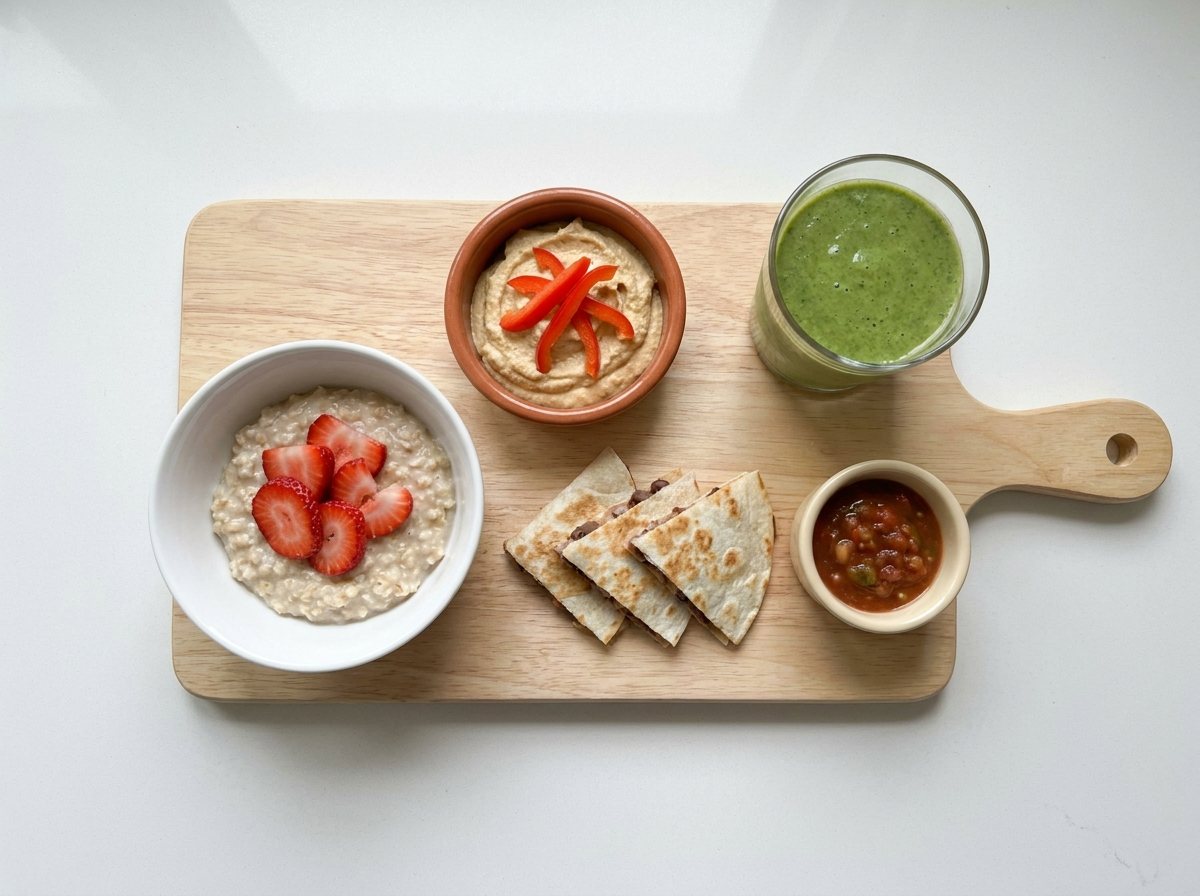
The toddler table above covers cereal, meat, lentils, eggs, tofu and pumpkin seeds. Here are the other iron foods I keep on hand, each with a vitamin C partner. The numbers are approximate, so check labels where you can.
| Food (kid-size serving) | Iron type | Approx. iron | Vitamin C partner |
|---|---|---|---|
| Black beans, 1/4 cup cooked | Non-heme | About 0.9 mg | Salsa, as in a bean-and-cheese quesadilla. |
| Kidney beans, 1/4 cup cooked (flattened under 4) | Non-heme | About 1 mg | Diced fresh tomato on top of chili. |
| Chickpeas, 1/4 cup cooked (mashed or flattened under 4) | Non-heme | About 1 mg | A squeeze of lemon or diced tomato. |
| Edamame, 1/4 cup shelled (mashed or quartered under 4) | Non-heme | About 0.9 mg | Mandarin segments, cut small. |
| Dried apricots or raisins, 2 tbsp, chopped pea-size or soaked soft (never whole under 4) | Non-heme | About 0.3–0.4 mg | Sliced strawberries or kiwi. |
| Sunflower seed butter, 1 tbsp, spread thinly (never in spoonfuls or globs) | Non-heme | Varies by brand; check the label | Sliced strawberries on the side. |
| Canned salmon or light skipjack tuna, 1 oz | Heme | About 0.5 mg or less | Diced tomato or a squeeze of lemon. |
Deli meat and canned fish
- Leftovers beat deli meat. Leftover roast beef or shredded rotisserie chicken is a better pick, and dark meat has more iron than white. If you use deli meat, choose low-sodium, heat it until steaming, chop it small for toddlers, and skip it under 12 months.
- Canned fish counts in small portions. Canned salmon (the lower-mercury pick) or canned light skipjack tuna adds more protein and omega-3s than iron. FDA/EPA guidance lists about 1 oz for ages 1–3 and 2 oz for ages 4–7, 2–3 servings a week from the Best Choices list. Mix with plain yogurt or a little mayo, and avoid albacore.
Want to plan a whole week of lunches this way? Our Toddler-Friendly Meal Prep guide batches meatballs, bean dishes and egg muffins in under an hour, which makes iron targets a lot easier to hit on busy days.
Cooking Tricks That Add Iron Without Adding a New Food
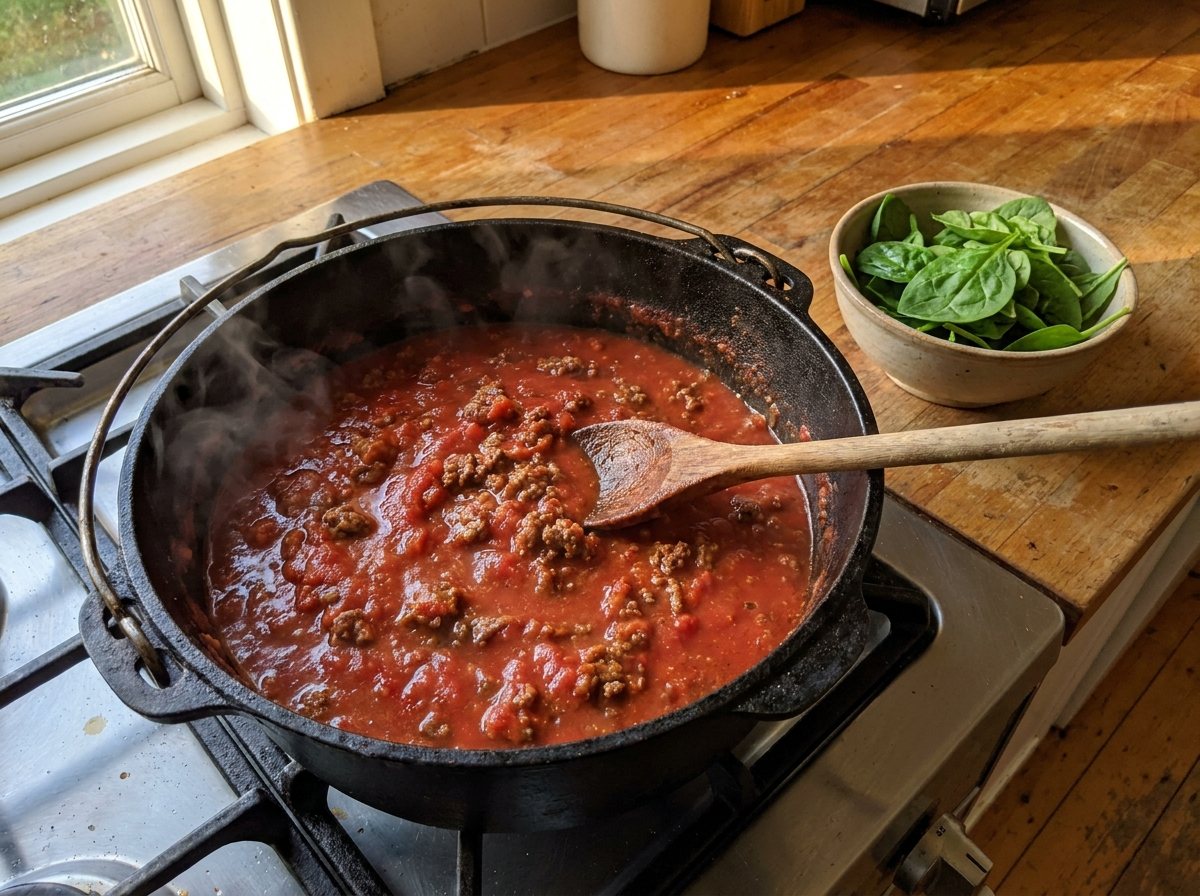
- Cook tomato sauces in cast iron. Acidic foods like tomato sauce and chili can pick up a small amount of iron from a cast iron pan or Dutch oven, depending on the pan and simmer time. It’s a bonus, not a replacement for iron-rich foods. Simmer a meat or lentil sauce this way, and pasta night becomes one of the best iron meals for a kid who only eats “plain” foods.
- Blend, don’t ban. Red lentils cook down to a soft mush, so blend a handful into pasta sauce, soup or chili. A kid who picks out “bits” still gets the iron.
- Fortify the fortified. Iron-fortified infant cereal stays useful after “baby food.” Stir a spoonful into pancake batter, muffin batter or oatmeal for an older toddler or preschooler.
Signs of Iron Deficiency in Toddlers and Kids
Iron deficiency is often symptom-free early on, so most cases are caught through routine screening. That’s why the AAP recommends screening for anemia at about 12 months, even for a toddler who seems fine. Ferritin or other tests may follow if hemoglobin is low. A few signs are worth flagging to your doctor:
- Unusual paleness, especially in the lower eyelids, gums or nail beds.
- Fatigue or low energy that’s out of character, like slowing down during play or wanting to be held more than usual.
- Irritability that doesn’t have an obvious cause.
- Poor appetite.
- Pica, which means craving and eating non-food items like ice, dirt or paper. It’s a known sign of iron deficiency, so mention it to your pediatrician.
- Frequent infections.
- In more advanced cases, developmental or behavioral effects. That’s why pediatricians screen even kids who look healthy.
If two or more of these sound like your kid, or you see pica, call the pediatrician rather than waiting. A simple finger-prick or blood draw settles the question quickly. If levels are low, iron-deficiency anemia typically responds well to dietary changes and, if needed, a short course of doctor-prescribed iron drops or chewables.
Safety firstNever give a child iron supplements without a doctor’s advice. Iron overdose is a serious poisoning risk for young children, so keep all iron products, including adult multivitamins, locked away. If a child swallows iron, call Poison Control at 1-800-222-1222 right away.
Frequently Asked Questions
At what age should I start worrying about my child’s iron levels?
Around 12 months, when the AAP recommends routine anemia screening, because iron deficiency is common and often has no symptoms at that age. Your pediatrician may screen earlier or more often if your child was born premature or at a low birth weight. The same goes for heavy milk drinkers, very limited eaters and kids with a family history of anemia.
How much cow’s milk is too much for a toddler?
About 16–24 oz (2–3 cups) a day for ages 1–2. Regularly going over 24 oz is a red flag: milk has almost no iron, can block absorption from other foods, and fills kids up so they eat less iron-rich food. If your toddler is a heavy milk drinker, trim the volume gradually rather than cutting milk out.
My toddler won’t eat meat. Can they get enough iron from plant foods alone?
Yes, with intention: serve beans, lentils, tofu, fortified cereal or ground pumpkin seeds with a vitamin C food at the same meal to boost absorption. Plant iron absorbs less well, so the National Academies estimate vegetarians need about 1.8 times the RDA. Ask your pediatrician or a pediatric dietitian about checking your child’s iron levels.
Is it bad to give my baby meat as a first food?
No, it’s one of the best first foods. Pureed meat is iron-dense and easy to thin to any texture, and many pediatric nutrition guidelines list iron-rich foods like meat and fortified cereal among the very first foods, around 6 months. That timing matters because a baby’s iron needs rise so quickly at that age.
Can too much iron be harmful?
Yes, but almost always from supplements, not food. Iron overdose is a serious poisoning risk for young children, so give iron only on a pediatrician’s advice and keep all iron products, including adult multivitamins, locked away. If a child swallows iron, call Poison Control at 1-800-222-1222 right away.
Does cooking in a cast iron pan really add iron to food?
Yes, a small amount, especially with acidic foods like tomato sauce or chili that simmer for a while. The amount varies by pan and cooking time, so treat it as a bonus on top of iron-rich ingredients, not a replacement.
What are the best iron-rich snacks for a picky eater who refuses meat and beans?
Start with the least “obviously healthy” options: iron-fortified cereal eaten dry as a finger food, scrambled or mashed hard-boiled eggs, or dried apricots cut to pea-size (never whole under age 4). If refusal runs deep across many foods, look at the root cause first, since sensory issues, a need for autonomy and fear of new foods each call for a different approach.
A Gentle Last Word
If a checkup just handed you a surprise like Dana’s, take a breath. Iron deficiency in kids is common, well-understood and very treatable. Usually it takes a few smart food swaps and, if needed, a short round of doctor-directed drops.
You don’t have to overhaul every meal starting tonight. Pick one or two things from this guide, like capping the milk a little or pairing tomorrow’s lentil soup with orange slices. Small, consistent changes at the plate add up faster than you’d think.