100 Foods Before 1: A Free Printable BLW Checklist
You can easily track 100 foods for your baby before age one with this free printable checklist, which includes safe serving shapes, allergen info, and readiness basics for baby-led weaning or mixed feeding.
- Get a free printable checklist to track 100 foods for your baby before age one.
- Find safe serving shapes for 6-8 and 9-12 months, eliminating guesswork.
- Utilize the allergen map and log to easily track potential allergens.
- Learn readiness and choking basics, plus a weekly pace and sample day.
- Discover easy first finger foods if you're new to solids.
This post contains affiliate links. As an Amazon Associate I earn from qualifying purchases.
When my daughter was seven months old, I kept a “foods she’s tried” sticky note on the fridge. By week three it was a coffee-ringed mess. I couldn’t remember whether the green stuff she’d gummed at my sister’s house was zucchini or pea, or whether she’d ever had egg (which, my pediatrician told me, I really should have known). So I made a proper list.
This is that list, grown up: a free printable 100 foods before 1 checklist for baby-led weaning and for families who mix BLW with spoon-feeding. Every food gets a checkbox and a safe serving shape for 6-8 and 9-12 months, so no more googling how to cut a mango at 5:40 p.m. You’ll also find readiness and choking basics, an allergen map, a weekly pace and a sample day. New to solids? Jump to the first finger foods section for the easiest starters.
Free printable · 3 pages
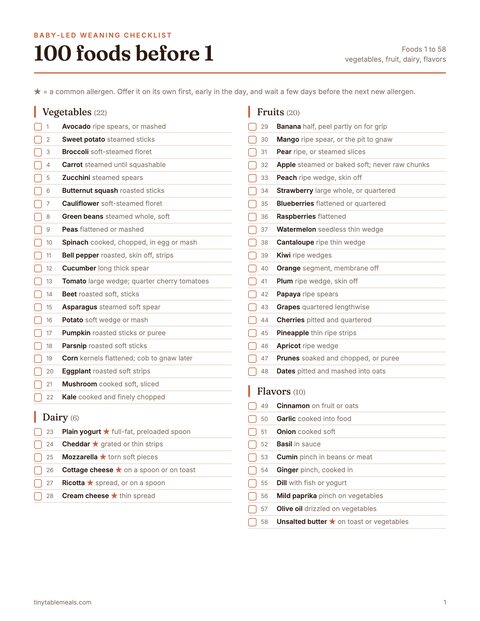
100 Foods Before 1 Checklist
One hundred foods in seven groups with a checkbox and a starting serving shape for each, allergens starred, plus a serving-shape and safety page with an allergen log.
Free. Your download link appears right here. You'll also join the Sunday Supper Plan. Unsubscribe anytime. Privacy
In this article (14 sections)
- What “100 Foods Before 1” Actually Means (and What It Doesn’t)
- Baby-Led Weaning Safety Basics: Readiness and Choking Risks
- Foods to Skip or Modify for Babies
- How to Use This Checklist
- The 100 Foods Before 1 Checklist
- Allergen Foods: How to Introduce Them Safely
- Building Meals Around the List (Without Losing Your Mind)
- First Finger Foods for the First Two Weeks
- When Your Baby Refuses a Food
- A Sample Day for a 9-Month-Old on a Checklist Mission
- What to Do When the Checklist Isn’t Going to Plan
- Beyond 12 Months: What to Feed After the 100 Foods Checklist
- Frequently Asked Questions
- Final Tips for Your 100 Foods Checklist
What “100 Foods Before 1” Actually Means (and What It Doesn’t)
The idea is simple: between about 6 and 12 months, you offer your baby a wide variety of foods, aiming for roughly 100 different ones by the first birthday. It’s a popular goal in baby-led weaning circles because the first year is a window when babies are often curious and relatively unbothered by new flavors. Some research suggests early variety helps babies stay more open to new foods later, though it’s not a guarantee. (Ask me how I know. My variety-fed baby went through a beige-only phase at two, which is normal and passes.)
Here’s what the goal is not:
- A test. Missing 12 foods doesn’t mean you failed. Hitting 100 doesn’t mean you win.
- A race. Some babies eat tiny amounts for the first few weeks. That’s normal. Milk or formula is still the main nutrition source until around 12 months.
- A reason to introduce anything unsafe. Every item on this list has a safe way to serve it. Foods that don’t (honey, whole nuts, whole grapes) are not on it.
- A rule that foods must be eaten. “Tried” means your baby had a real chance to interact with the food: touch it, smell it, mouth it. Swallowing is a bonus.
I count a food as tried when it landed on the tray and baby gave it a fair go. That’s the standard I’d suggest for your own checklist, too. It keeps the list fun instead of stressful.
If you’re brand new to the method, my baby-led weaning guide covers readiness signs, equipment, and the first week in more depth. This post is the tracking tool that goes with it.
Baby-Led Weaning Safety Basics: Readiness and Choking Risks
A checklist is only helpful if the foundation is solid, so please read this section even if you’ve done BLW before.
Is your baby ready?
Most babies are developmentally ready around 6 months. Look for all of these, not just one:
- Sits upright with minimal support and holds their head steady
- Opens their mouth when food approaches and reaches for food
- Has lost (or is losing) the tongue-thrust reflex that pushes food out
- Brings objects to their mouth with some coordination
Age alone isn’t the signal, and neither is a single tooth. If your baby was born early or has any feeding or developmental concerns, ask your pediatrician about timing before you start.
Gagging vs. choking
This is the part that scares everyone, so let’s be matter-of-fact about it.
| Gagging | Choking | |
|---|---|---|
| Sound | Noisy: coughing, retching, sputtering | Silent or high-pitched wheeze; little or no air movement |
| Face | Red, watery eyes | Pale or blue, panicked |
| What to do | Stay calm, let baby work it out | Act immediately: infant back blows and chest thrusts, call emergency services |
| Why it happens | Immature gag reflex sits forward on the tongue, which is protective | Airway blocked |
Gagging is common and, in itself, not dangerous. It’s how babies learn where food belongs in their mouths. I’m a food writer, not a medical professional, so treat this section as a nudge, not training.
If baby chokesSilent, pale or blue, no air moving: act immediately with infant back blows and chest thrusts, and call emergency services. Before starting solids, please take an infant CPR and choking class. Many hospitals and Red Cross chapters offer them for a small fee, and an hour of practice on a doll is worth it. The American Academy of Pediatrics also covers infant choking on its HealthyChildren.org site.
Setup that lowers risk
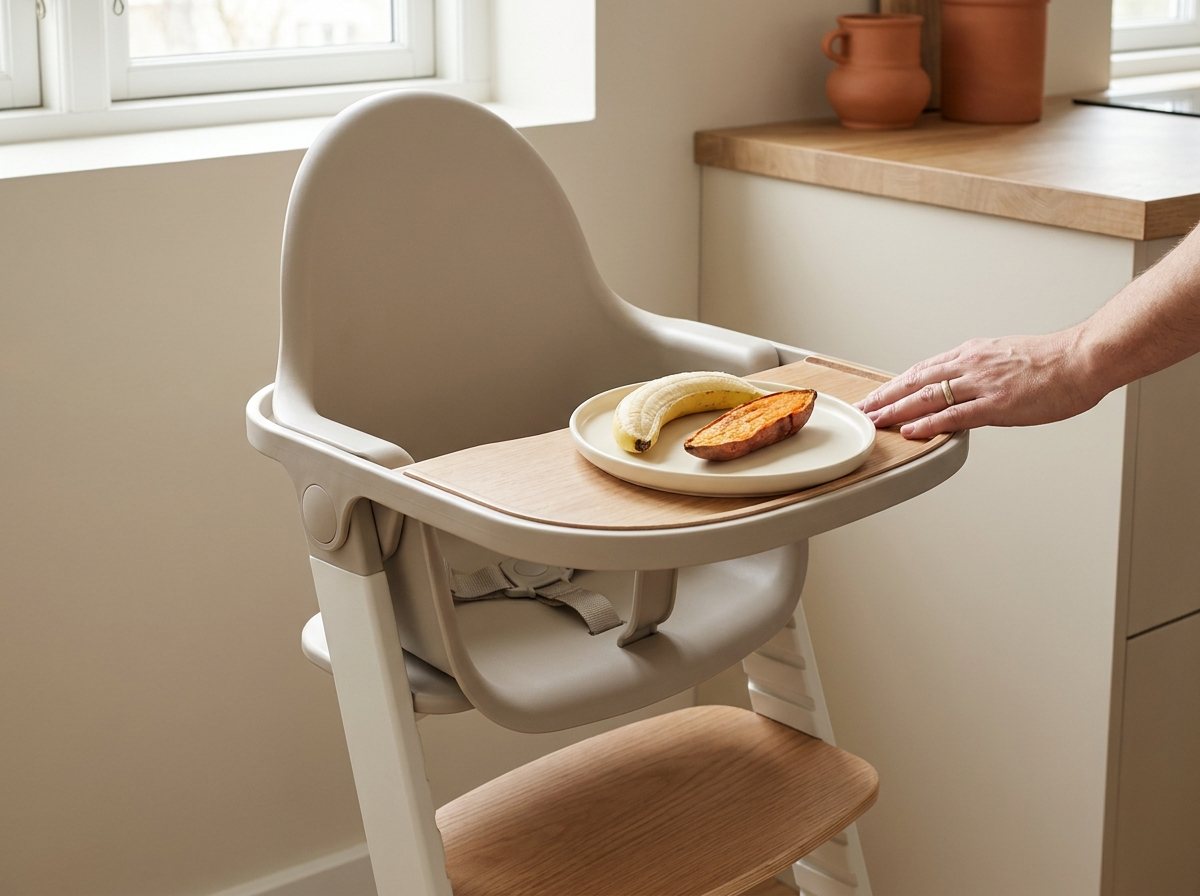
- Baby sits upright in a high chair with a footrest, never reclined, never in a car seat, and never left unwatched.
- An adult stays at arm’s reach throughout the meal.
- With BLW, let baby bring food to their own mouth and never place finger food in it. Spoon-feeding is fine when baby is calm and upright.
- Skip distractions: no screens, and no eating on the move.
Foods to Skip or Modify for Babies
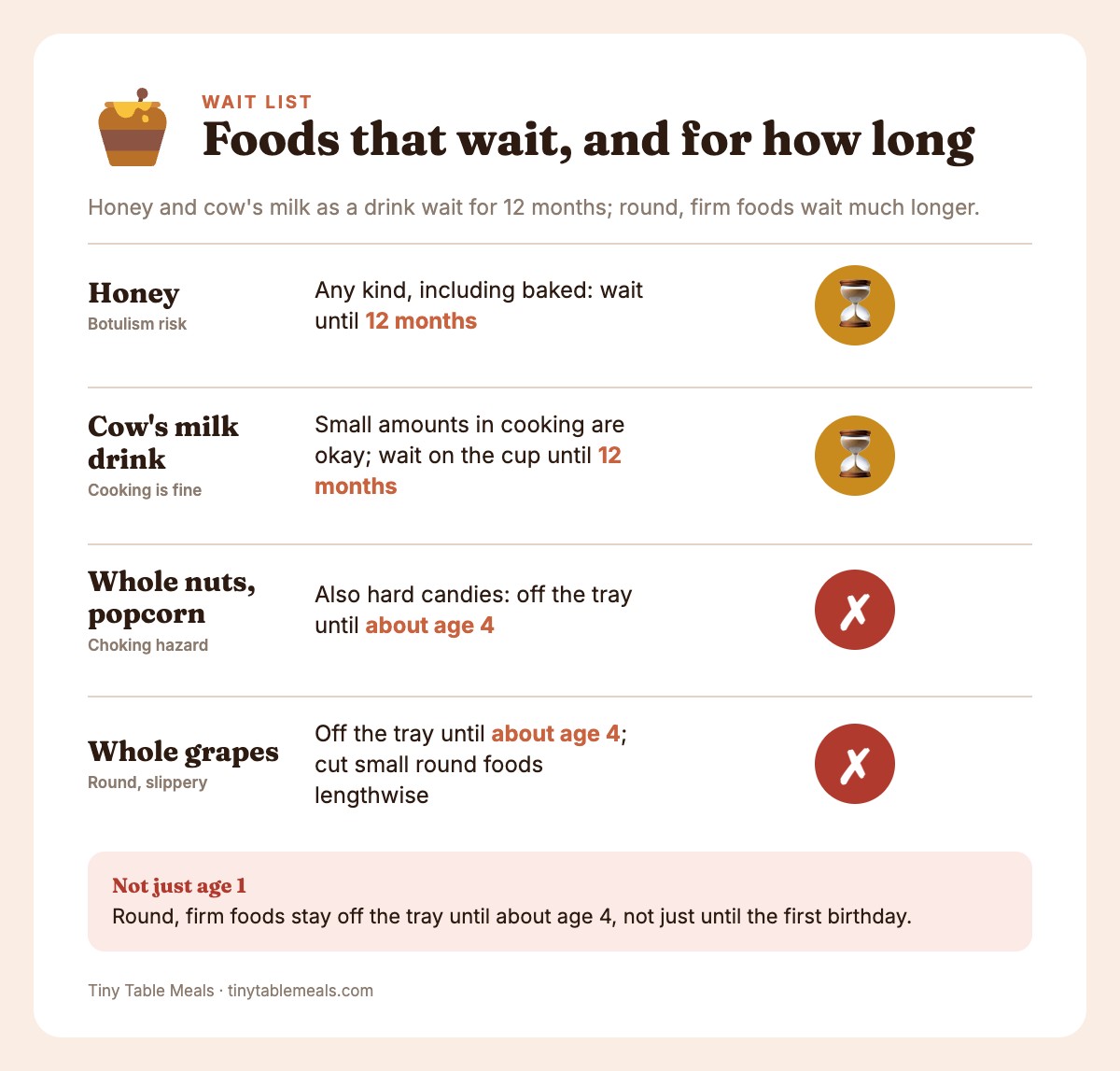
Safety firstRound, firm foods (whole grapes, whole nuts, popcorn, hard candy, raw hard chunks) stay off the tray until about age 4, not just until the first birthday. Honey and cow’s milk as a main drink wait until 12 months.
| Food | Why | Until when |
|---|---|---|
| Honey (any kind, including baked) | Infant botulism risk | 12 months |
| Whole nuts, whole peanuts, popcorn, hard candies | Choking hazard | About age 4 |
| Whole grapes, whole cherry tomatoes, whole blueberries | Round and slippery: cut lengthwise or flatten | Whole grapes until about age 4; keep cutting small round foods lengthwise |
| Raw hard vegetables and fruit (raw carrot sticks, raw apple chunks) | Too hard to break down safely; cook or grate | About age 4 for large raw chunks |
| Large globs of nut butter or sticky spreads | Can stick to the palate; thin it out | Ongoing: always spread thin |
| Cow’s milk as a main drink | Small amounts in cooking are fine; wait on the cup | 12 months |
| Added salt, sugar, and sugary drinks | Infant kidneys can’t handle much sodium; added sugar and juice aren’t recommended under 12 months | Ongoing caution |
| Unpasteurized dairy and juices, raw or undercooked eggs/meat/fish | Foodborne illness risk | Ongoing caution |
| High-mercury fish (shark, swordfish, king mackerel, tilefish, bigeye tuna) | Mercury exposure | Ongoing caution |
The checklist below is built around these rules. When in doubt, ask your pediatrician.
How to Use This Checklist
You’ve got two options: print it, or keep it digital.
To print: Grab the free PDF card on this page first. As a backup, use your browser’s print function (Cmd+P on a Mac, Ctrl+P on Windows) and choose just the pages with the tables. Tape it inside a cabinet door or clip it to the fridge. A pencil on a string saves a lot of “where’s the pen” moments.
To keep it digital: Copy the tables into a notes app or spreadsheet. A “date tried” column is easy to add and more useful than I expected, because you’ll start seeing patterns.
A few tracking habits I’d suggest:
- Tick the box when the food has been offered, not when it’s been eaten. It takes the pressure off both of you.
- Write the date in the margin for any common allergen. If there’s ever a reaction, you’ll know exactly what and when.
- Mark favorites with a star and “hmm” foods with a dot. The dot foods are your retry list.
- Don’t chase the number. If you land at 78 foods at your baby’s first birthday and they eat well, that’s a great outcome.
A realistic pace
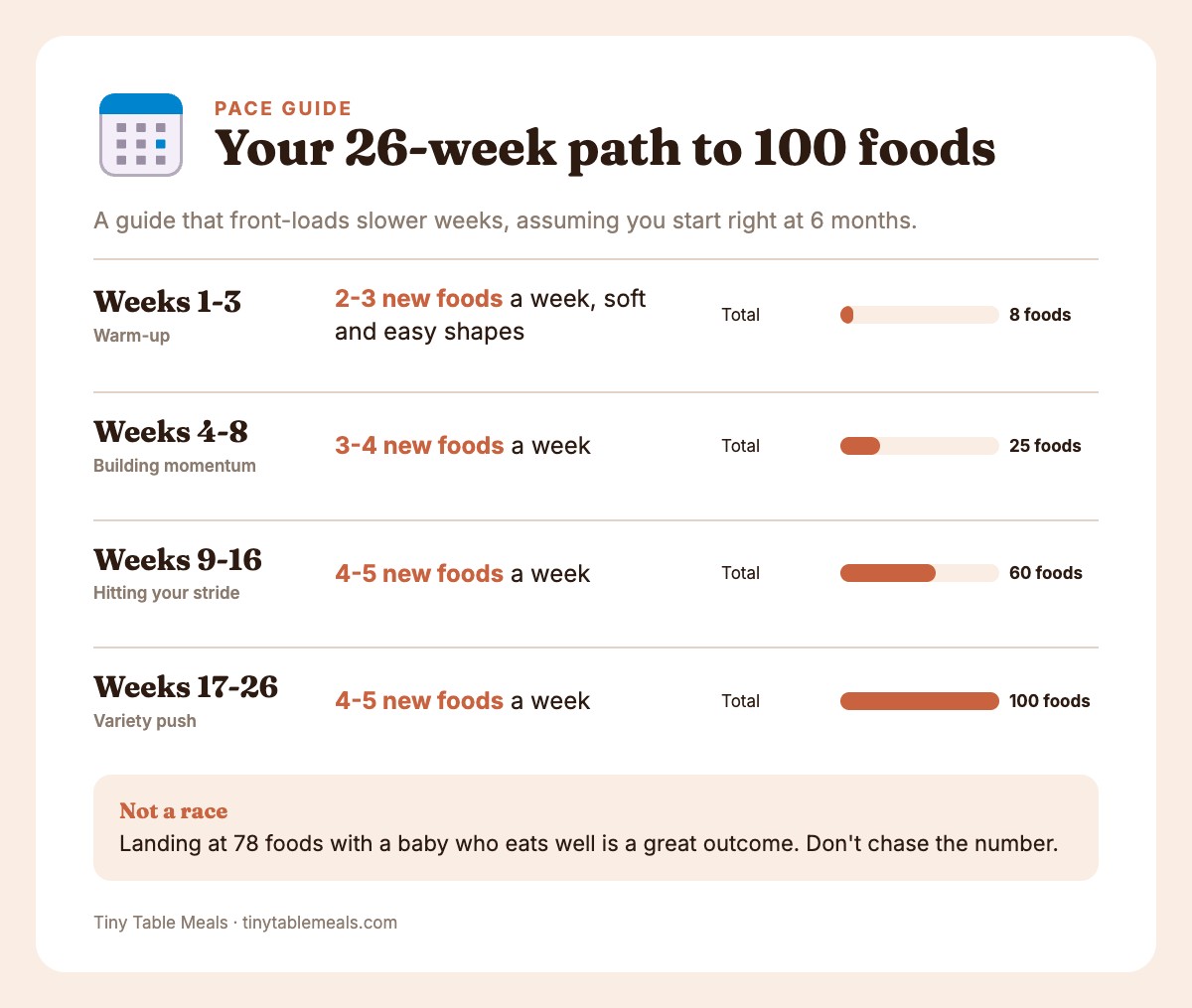
If you start at 6 months, you have about 26 weeks. That’s about four new foods a week on average to reach 100. The phases below are a guide that front-loads slower weeks, and they assume you start right at 6 months:
| Phase | Weeks | New foods per week | Running total |
|---|---|---|---|
| Warm-up | 1-3 | 2-3 (soft, easy shapes) | ~8 |
| Building momentum | 4-8 | 3-4 | ~25 |
| Hitting your stride | 9-16 | 4-5 | ~60 |
| Variety push | 17-26 | 4-5 | ~100 |
The early weeks are slow on purpose. At first your baby is practicing the mechanics of eating, and a lot of the food ends up on the floor.
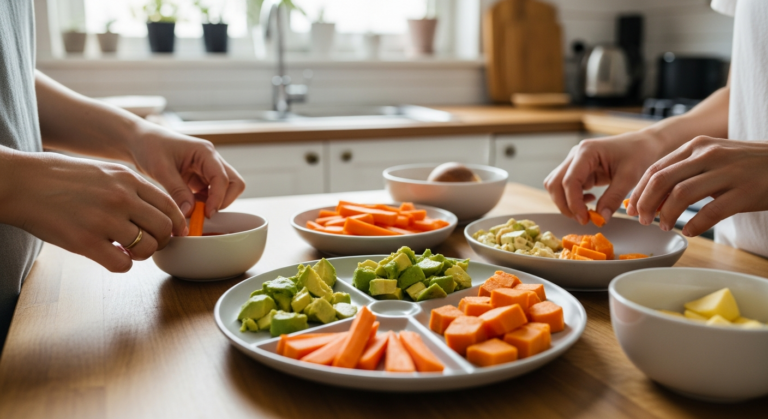
You also don’t need to cook separately for each new food. Many of these show up in one family dinner. A stir-fry can tick off four vegetables, a protein, and a few spices in one meal.
The 100 Foods Before 1 Checklist
Here it is. Foods are grouped by food group, with a serving shape for the early BLW stage (about 6-8 months) and a “level up” for when your baby develops a pincer grasp (about 9-12 months).
A few notes on how to read the tables:
- “Spear” means a thick strip about the size of two adult fingers, easy for a baby to grip with a fist and gnaw from the top.
- “Smash” means crushed with a fork so it’s flattened and soft.
- “Cooked soft” means it squishes easily between your thumb and finger.
- Serve foods plain at first. Cook with little or no added salt.
Fruits (16)
| ☐ | # | Food | Serving shape, 6-8 months | Level up, 9-12 months |
|---|---|---|---|---|
| ☐ | 1 | Avocado | Ripe wedge, rolled in hemp seeds or crushed oats for grip | Small cubes, mashed on toast |
| ☐ | 2 | Banana | Half banana with peel left on the bottom half as a handle | Halved or quartered lengthwise pieces, or mashed banana on toast |
| ☐ | 3 | Mango | Peeled spear, very ripe | Small cubes |
| ☐ | 4 | Peach | Ripe, peeled wedge | Small soft cubes |
| ☐ | 5 | Pear | Ripe, peeled wedge (steam if firm) | Thin slices, then small cubes |
| ☐ | 6 | Apple (cooked) | Steamed or baked spear until soft | Soft cooked cubes (keep apple cooked through the first year) |
| ☐ | 7 | Blueberries | Smash flat | Halve or quarter |
| ☐ | 8 | Strawberries | Large ripe berry with hull on as a handle, or smash | Quartered or chopped |
| ☐ | 9 | Raspberries | Gently smash | Halved or gently squashed |
| ☐ | 10 | Watermelon | Seedless, thick spear (it’s juicy and slippery) | Small cubes |
| ☐ | 11 | Cantaloupe | Ripe, peeled wedge | Small cubes |
| ☐ | 12 | Kiwi | Peeled, halved lengthwise, then spear | Small slices |
| ☐ | 13 | Papaya | Ripe, peeled spear | Soft cubes |
| ☐ | 14 | Plum | Ripe, peeled, pitted wedge | Small chunks |
| ☐ | 15 | Orange | Peeled segment with membrane trimmed, seeds out | Small pieces |
| ☐ | 16 | Prunes | Soft stewed prunes, mashed or pureed into oatmeal; never whole or sticky pieces | Stewed and mashed into oatmeal, yogurt or muffins; still never whole or sticky pieces |
Vegetables (20)
| ☐ | # | Food | Serving shape, 6-8 months | Level up, 9-12 months |
|---|---|---|---|---|
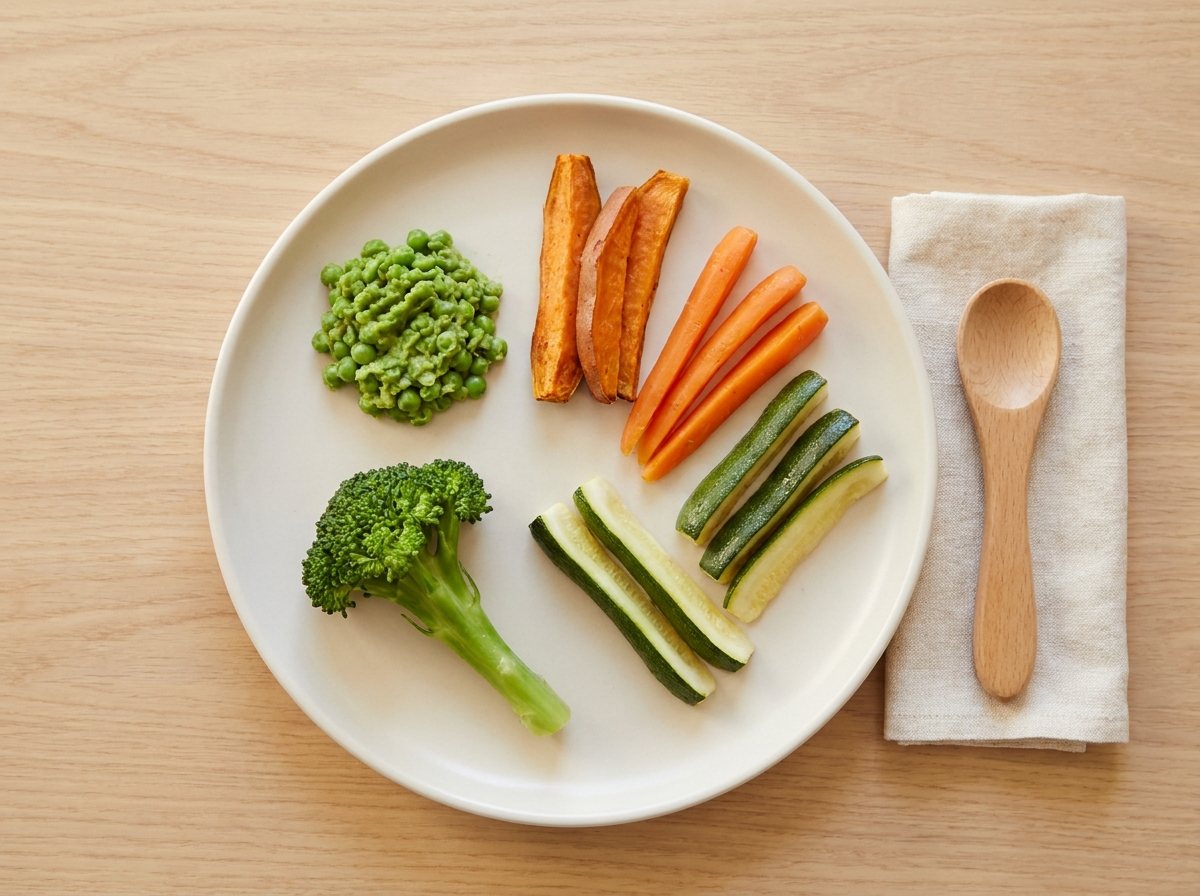
| ☐ | 17 | Sweet potato | Roasted spear, skin off | Small cubes, “fries” |
| ☐ | 18 | Carrot | Steamed until very soft, spear | Cooked soft sticks, then half-moons or small pieces |
| ☐ | 19 | Broccoli | Steamed floret with a long stem handle | Small florets |
| ☐ | 20 | Cauliflower | Steamed floret | Roasted small pieces |
| ☐ | 21 | Zucchini | Steamed or roasted spear | Small soft cubes |
| ☐ | 22 | Butternut squash | Roasted wedge, skin off | Cubes, mashed into pasta |
| ☐ | 23 | Green peas | Smash | Smash or flatten throughout the first year; serve whole only once chewing is well established (often after 12 months), with supervision |
| ☐ | 24 | Green beans | Stem ends and strings trimmed, steamed until it squashes easily between your fingers, served whole | Short soft pieces, still cooked until squashable |
| ☐ | 25 | Spinach | Stir into eggs, oatmeal, or purees | Chopped finely into meatballs and pasta |
| ☐ | 26 | Asparagus | Woody ends trimmed, steamed until it squashes easily between your fingers (tips first) | Small tender pieces, still cooked until squashable |
| ☐ | 27 | Bell pepper | Roasted strip, skin removed | Thin cooked strips, then small pieces |
| ☐ | 28 | Cucumber | Peeled, seeds removed, lightly steamed until soft, as a spear | Peeled, steamed or very thinly shaved ribbons, then small soft pieces |
| ☐ | 29 | Beets | Roasted spear (warning: it stains diapers pink) | Soft cubes |
| ☐ | 30 | Parsnip | Roasted spear | Small cubes |
| ☐ | 31 | Corn | Smash cooked kernels flat or stir into polenta | Keep kernels flattened or in polenta or fritters through the first year |
| ☐ | 32 | White potato | Baked or roasted wedge, skin off | Small cubes |
| ☐ | 33 | Eggplant | Roasted spear, skin on or off | Soft cubes in dips and pasta |
| ☐ | 34 | Mushrooms | Cooked, finely chopped and mixed into other foods | Cooked small pieces |
| ☐ | 35 | Kale | Cooked soft and finely minced into other foods | Chopped into pasta, soups |
| ☐ | 36 | Tomato | Cooked in sauce, or a peeled, cooked-soft wedge | Peeled, soft diced tomato; cherry tomatoes always quartered lengthwise into 4 pieces |
Proteins and Iron-Rich Foods (18)
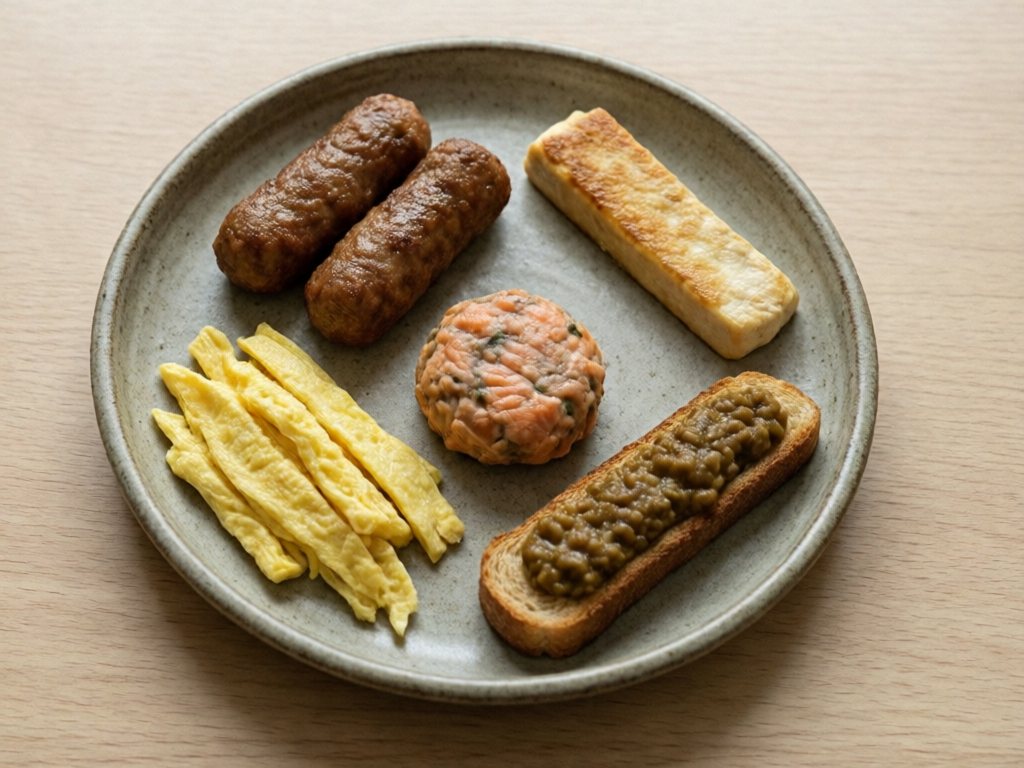
Iron matters a lot in this window, because the iron stores babies are born with start to run low around 6 months. Prioritize meat, fish, eggs, beans, lentils, and tofu early and often. If you want ideas for building iron into daily meals, my guide to iron-rich meals and snacks for kids goes age by age.
| ☐ | # | Food | Serving shape, 6-8 months | Level up, 9-12 months |
|---|---|---|---|---|
| ☐ | 37 | Egg (thoroughly cooked) | Strips of omelet or scrambled egg in a thin sheet | Small scrambled pieces, hard-boiled egg mashed with yogurt |
| ☐ | 38 | Chicken thigh | Slow-cooked, tender strip; or shredded | Small shredded pieces, meatballs |
| ☐ | 39 | Beef | Thick, slow-cooked strip; or a tender pot-roast chunk to gnaw | Shredded or finely chopped |
| ☐ | 40 | Ground beef | Soft meatball logs or patties | Mini meatballs |
| ☐ | 41 | Turkey | Ground turkey patties or tender strips | Small shredded pieces |
| ☐ | 42 | Pork | Slow-cooked tender strip or finely shredded | Small shredded pieces, meatballs |
| ☐ | 43 | Lamb | Slow-cooked strip or ground lamb patty | Shredded or chopped |
| ☐ | 44 | Salmon | Flaked, bones checked, or a salmon patty | Flaked pieces, salmon cakes |
| ☐ | 45 | White fish (cod, haddock) | Flaked, bones checked, or a fish cake | Flaked pieces with sauce |
| ☐ | 46 | Sardines | Drained, boned, low-sodium, mashed onto toast fingers | Mashed into pasta or rice |
| ☐ | 47 | Shrimp (shellfish allergen) | Finely chopped and mixed into a patty or cake; never whole | Small chopped pieces |
| ☐ | 48 | Tofu | Firm tofu spear, pan-seared for grip | Small cubes |
| ☐ | 49 | Lentils | Cooked soft and mashed onto toast, or mixed into patties | Cooked very soft, in soups and dals |
| ☐ | 50 | Black beans | Smash lightly, or form into a patty | Flattened or smashed beans |
| ☐ | 51 | Chickpeas | Smash or make into falafel-style patties | Smash or flatten between your fingers every time; no whole chickpeas in the first year |
| ☐ | 52 | Hummus | Spread thin on a toast finger or stirred into yogurt | Dip for soft veg |
| ☐ | 53 | Chicken liver | Homemade, fully cooked liver only (no commercial pâté), about a teaspoon blended into meatballs | About a teaspoon, occasionally (ask your pediatrician how often) |
| ☐ | 54 | Edamame (shelled; soy allergen) | Smash | Smash or flatten; keep smashed through the first year |
A quick note on chicken liver: it’s very rich in vitamin A, so keep it to a small amount (about a teaspoon) and offer it only occasionally. Ask your pediatrician how often is right for your baby, and use only homemade, fully cooked liver. Commercial and restaurant pâté can be undercooked or unpasteurized and is high in sodium. Check with your pediatrician if you’re not sure.
Grains and Starches (14)
| ☐ | # | Food | Serving shape, 6-8 months | Level up, 9-12 months |
|---|---|---|---|---|
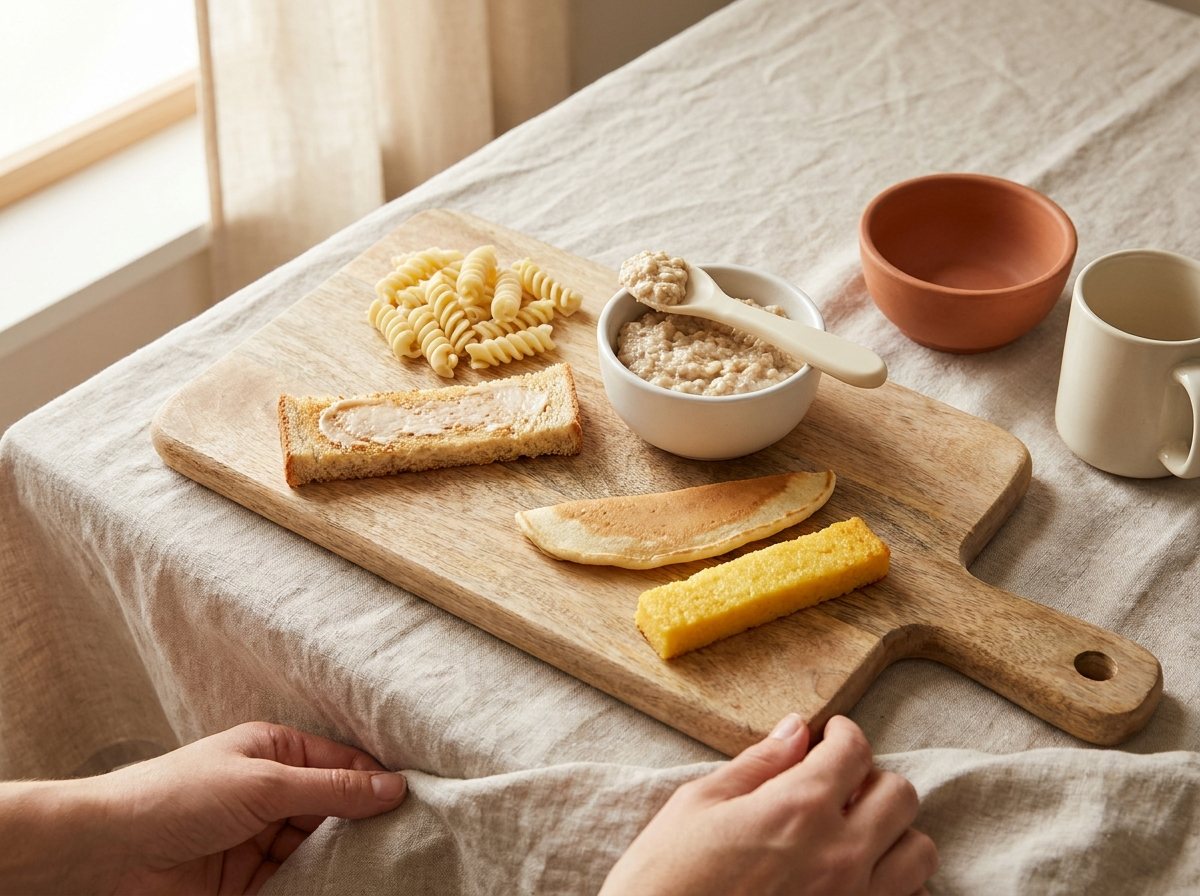
| ☐ | 55 | Oatmeal | Thick, preloaded on a spoon for baby to grab; or oat bars | Baked oatmeal squares |
| ☐ | 56 | Toast | Lightly toasted finger, thinly spread with a topping | Small pieces |
| ☐ | 57 | Pasta | Large shapes like rotini or penne, cooked very soft | Smaller shapes, with sauce |
| ☐ | 58 | Rice | Soft, loosely clumped rice on a spoon or a soft rice patty (keep any rice ball small and soft, never dense; no store-bought puffed rice cakes). Vary grains with oats, barley, quinoa and millet rather than relying on rice | Loose rice, scoop-and-eat |
| ☐ | 59 | Quinoa | Mixed into patties or stirred into yogurt | Loose quinoa on a spoon |
| ☐ | 60 | Barley | Cooked soft, mixed into soups | Loose, pre-loaded spoon |
| ☐ | 61 | Millet | Cooked soft, formed into balls | Loose, in porridge |
| ☐ | 62 | Pancakes | Strips, thin and plain | Mini pancakes |
| ☐ | 63 | Couscous | Pre-loaded spoon or clumped | Loose |
| ☐ | 64 | Polenta | Baked into fingers | Soft cubes |
| ☐ | 65 | Tortilla (soft) | Soft strip wrapped around mashed beans | Small quesadilla triangles |
| ☐ | 66 | Oat rings (puffed cereal) | Dissolvable rings only; they must melt fully in the mouth. Seated, supervised babies only | Pincer-grasp practice |
| ☐ | 67 | Low-sodium crackers | Dissolvable teething-style crackers only | Soft whole-grain crackers |
| ☐ | 68 | Naan or pita | Soft strip, lightly toasted if needed | Small torn pieces |
Dairy (8)
| ☐ | # | Food | Serving shape, 6-8 months | Level up, 9-12 months |
|---|---|---|---|---|
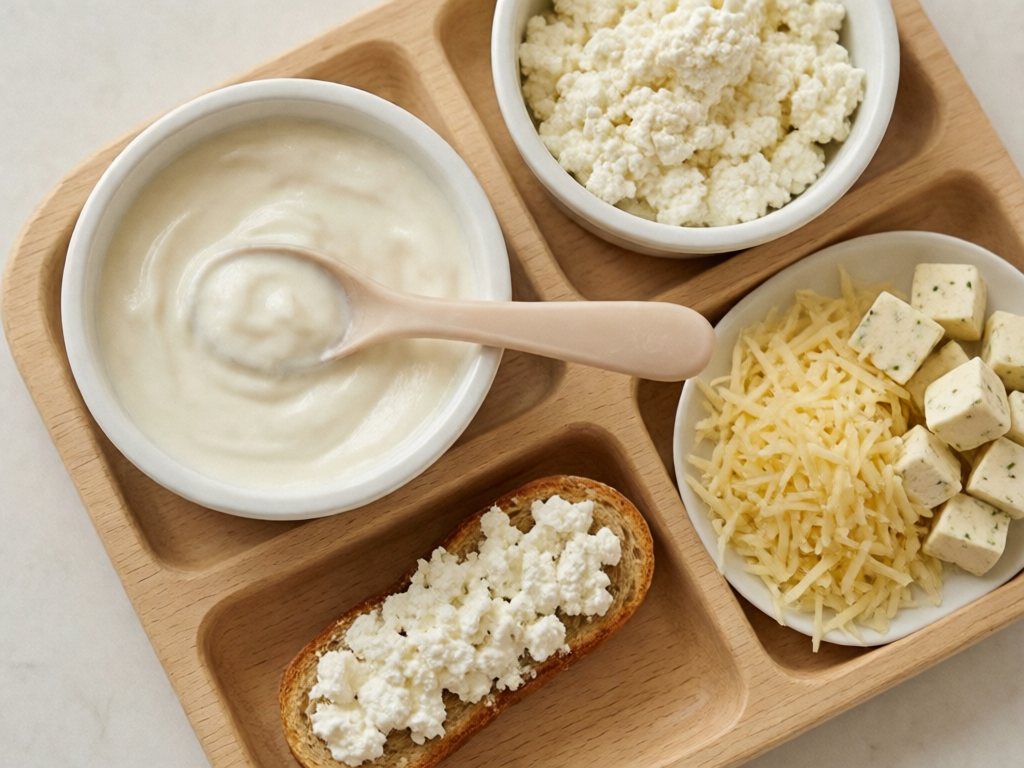
| ☐ | 69 | Plain whole-milk yogurt | Pasteurized, thick, on a pre-loaded spoon | Dips, smoothies |
| ☐ | 70 | Cheese | Pasteurized cheese only: thin shreds melted on food or a thin soft slice, not a thick chunk (lower-sodium options like Swiss or fresh mozzarella) | Small shreds melted on foods |
| ☐ | 71 | Cottage cheese | Plain, pasteurized, low-sodium | Mixed into pasta, eggs |
| ☐ | 72 | Ricotta | Pasteurized; spread thin on toast or stirred into purees | Pasta filling, pancakes |
| ☐ | 73 | Plain kefir | Pasteurized; a spoonful stirred into oatmeal | Spoonfuls stirred into food; skip sips from a cup until your pediatrician okays it |
| ☐ | 74 | Cream cheese | Pasteurized; thin layer on toast | Dip |
| ☐ | 75 | Butter | Melted onto veg or toast | Cooking fat |
| ☐ | 76 | Paneer | Soft cubes of cooked paneer, from a pasteurized source | Small cubes in curries |
Nuts, Seeds, and Other Allergen Foods (9)
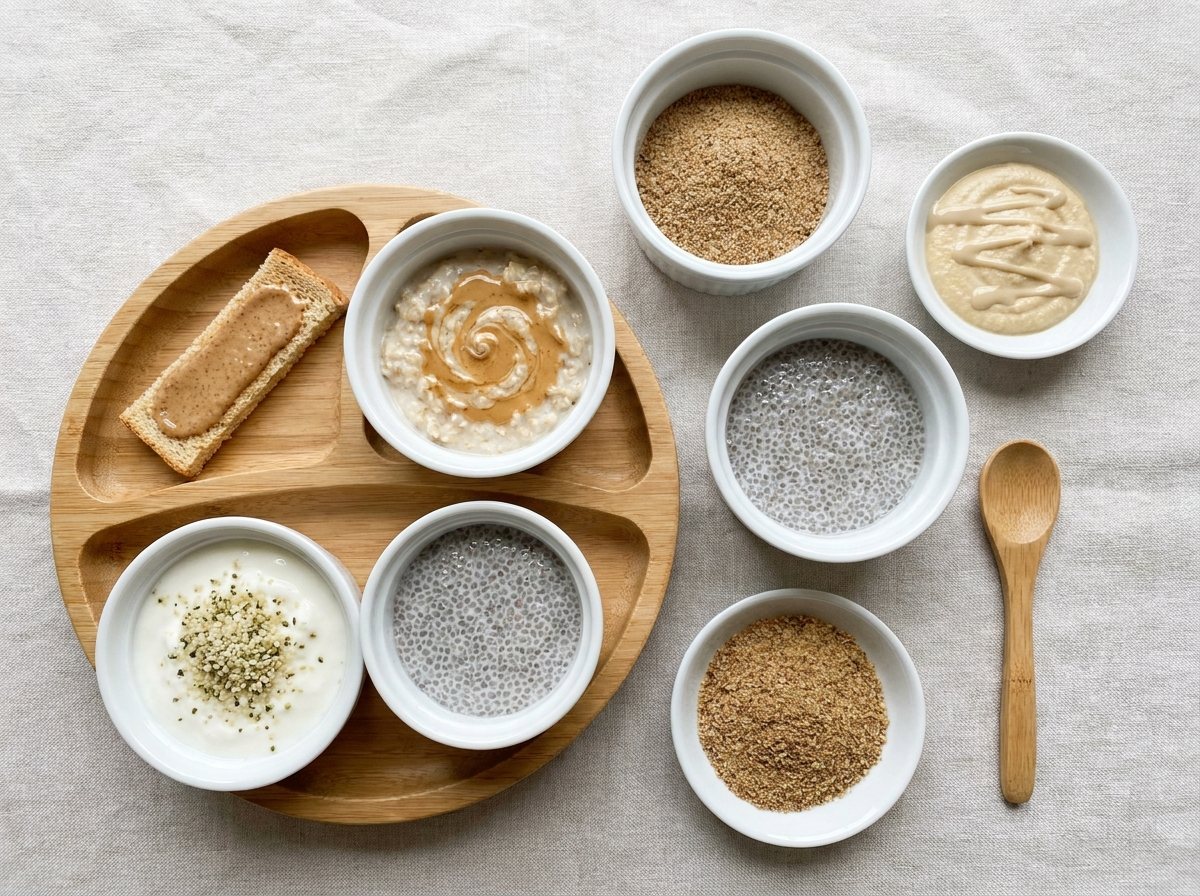
Most of these are foods your pediatrician may suggest introducing early, not late. Current guidance generally encourages early introduction of peanut and egg for many babies, especially those with severe eczema or an existing food allergy, who should get medical guidance first. Always serve nuts as thin butters, powders, or flour. Never whole or in chunks.
| ☐ | # | Food | Serving shape, 6-8 months | Level up, 9-12 months |
|---|---|---|---|---|
| ☐ | 77 | Peanut | Thinned peanut butter stirred into oatmeal or yogurt; or peanut puffs that dissolve fully (seated, supervised baby only) | Thin spread on toast |
| ☐ | 78 | Almond | Thinned almond butter stirred into food, or almond flour in pancakes | Thin spread |
| ☐ | 79 | Cashew | Thinned cashew butter | Thin spread |
| ☐ | 80 | Walnut | Finely ground walnut, mixed in | Ground into baked goods |
| ☐ | 81 | Sesame (tahini) | Thin tahini stirred into hummus or yogurt | Drizzled on veg |
| ☐ | 82 | Sunflower seed butter | Thinned, stirred into oatmeal | Thin spread |
| ☐ | 83 | Chia seeds | Always soaked until gel-like first, never dry; stirred into pudding or oatmeal | Same: always soaked first, never dry |
| ☐ | 84 | Hemp seeds | Sprinkled on avocado or yogurt | Same |
| ☐ | 85 | Ground flaxseed | Ground flaxseed only, never whole seeds; stirred into oatmeal or muffins | Same: ground only, never whole |
Herbs, Spices, and Flavor Builders (15)
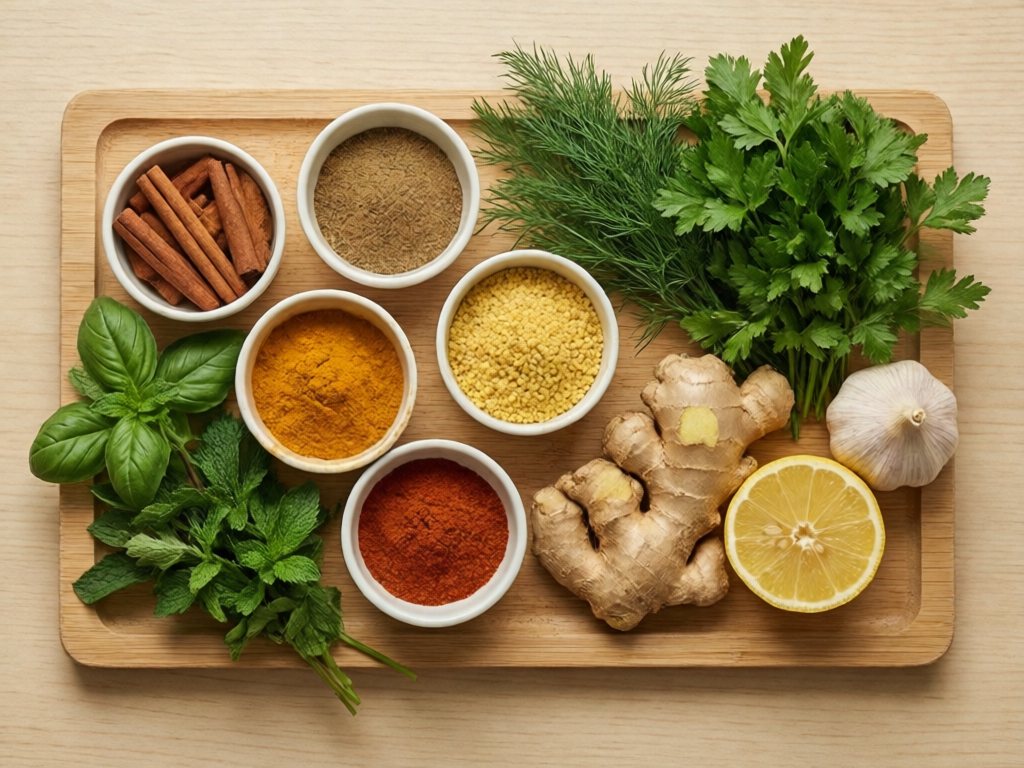
This group is the secret to hitting 100 without cooking 100 separate meals. A pinch of cumin on roasted carrots counts. Babies don’t need bland food, just low-salt food.
| ☐ | # | Food | How to use it |
|---|---|---|---|
| ☐ | 86 | Cinnamon | A pinch in oatmeal or yogurt |
| ☐ | 87 | Cumin | Roasted carrots, sweet potato, lentils |
| ☐ | 88 | Turmeric | Scrambled eggs, rice |
| ☐ | 89 | Mild paprika | Roasted potatoes, chicken |
| ☐ | 90 | Garlic | Cooked into any savory dish |
| ☐ | 91 | Onion | Cooked soft, blended into sauces and patties |
| ☐ | 92 | Ginger | A little grated into stir-fries or squash soup |
| ☐ | 93 | Basil | Torn into pasta, pesto stirred into rice |
| ☐ | 94 | Mint | Chopped into yogurt or fruit |
| ☐ | 95 | Dill | Salmon, cucumber yogurt dip |
| ☐ | 96 | Parsley | Meatballs, scrambled eggs |
| ☐ | 97 | Olive oil | Drizzle on veg and pasta |
| ☐ | 98 | Lemon juice | A squeeze on fish, roasted veg |
| ☐ | 99 | Coconut (unsweetened) | Shredded into oatmeal or coconut milk in curries |
| ☐ | 100 | Nutritional yeast | Sprinkled on pasta, popcorn-style flavor with no choking hazard |
Total: 16 fruits + 20 vegetables + 18 proteins + 14 grains + 8 dairy + 9 nuts and seeds + 15 flavor builders = 100.
A note on the count: fats, citrus and seasonings are included to make 100 achievable, so it’s a mix of foods and flavor builders.
Allergen Foods: How to Introduce Them Safely
Allergen foods deserve extra care. The most common culprits are egg, peanut, tree nuts, sesame, dairy, wheat, soy, fish, and shellfish. Here is where each one shows up in this checklist, so you can log the date offered:
| Allergen | Checklist items |
|---|---|
| Egg | #37 (and #62 pancakes if made with egg) |
| Fish | #44-46 (choose low-sodium canned sardines) |
| Shellfish | #47 |
| Soy | #48 (tofu), #54 (edamame); check labels on #66 and #67, which can contain soy |
| Wheat | #56, 57, 62, 63, 65, 68 (check labels on #66 and #67, which often contain wheat) |
| Dairy | #69-76 |
| Peanut | #77 |
| Tree nuts | #78-80 |
| Sesame | #81 (and hummus, #52, contains tahini) |
Sunflower, hemp and flax (#82, 84, 85) are less common allergens but still worth watching.
One allergen at a timeOffer one new allergen at a time and wait a few days before the next. Don’t pair a new allergen with other brand-new foods on the same day, or you won’t know what caused a reaction. Tray combos are great for foods your baby already knows.
Crackers (#67) and some puffed cereals often contain wheat, milk or soy. Read labels and log them under the matching allergen.
On allergen-introduction day, run through this quick list:
- Baby is well and not teething-cranky or sick
- It’s morning, so you can watch through the day
- Offer a small amount first, then a normal portion if all looks fine
- Stay close and watch for two hours
- Log the date next to the food on the checklist
- Afterward, keep it in rotation: many pediatricians suggest offering it regularly (a few times a week) rather than once and done
And two safety rules that apply to every allergen:
- Know the signs of a reaction: hives, swelling of the lips or face, vomiting, repeated coughing, sudden lethargy or paleness, or trouble breathing. Trouble breathing or swelling is an emergency, so call 911. Milder signs are worth a call to your pediatrician.
- If your baby has severe eczema or a known food allergy, ask your pediatrician or an allergist before introducing peanut or egg. Don’t start at home without guidance.
A lot of parents find a mixed-allergen powder easier than cooking each one. That’s fine, but a tiny pinch of real food on real food also works and costs nothing.
Building Meals Around the List (Without Losing Your Mind)
When I first printed the checklist, I thought I’d need to cook something new every day. I didn’t. Here’s what saved me.
Think in “tray combos”
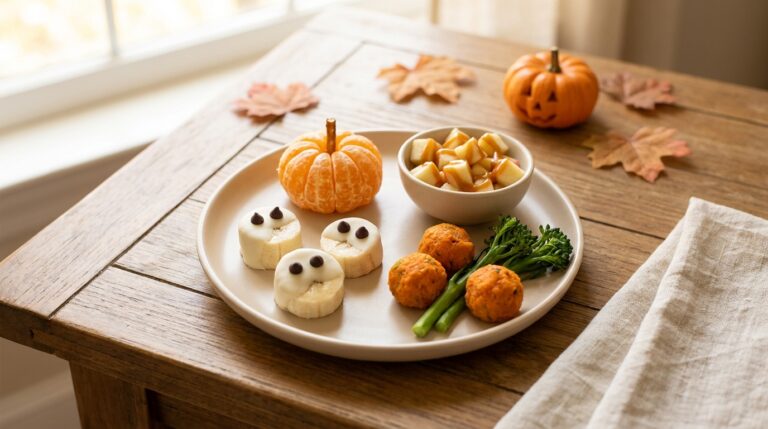
A BLW tray works well with 3 things: something soft and starchy, something with iron, and something colorful. For example:
| Meal | Tray |
|---|---|
| Breakfast | Banana half + egg strips + oat toast finger with thin almond butter |
| Lunch | Meatball log + steamed broccoli floret + avocado wedge |
| Dinner | Salmon patty + roasted sweet potato spear + steamed green beans |
| Snack | Plain yogurt on a pre-loaded spoon with a smashed raspberry |
Each of those trays knocks off four or five checklist items. A week of similar trays can cover 15 to 20 foods, with leftovers feeding the adults too.
Use the family dinner
Most of what you cook for yourself can be baby-safe with a small tweak: pull baby’s portion before adding salt, hot sauce, or soy sauce. A chicken-and-veggie stir-fry, a pot roast, a lentil soup, a baked pasta: these are all fair game when you cook without salt first and season the adult plates at the table.
If you’re craving the structure of a plan, my Baby-Led Weaning Grocery List for Beginners (2-Week Plan) maps out what to buy for your first two weeks so you aren’t wandering the produce aisle in a daze.
Batch-prep one afternoon a week
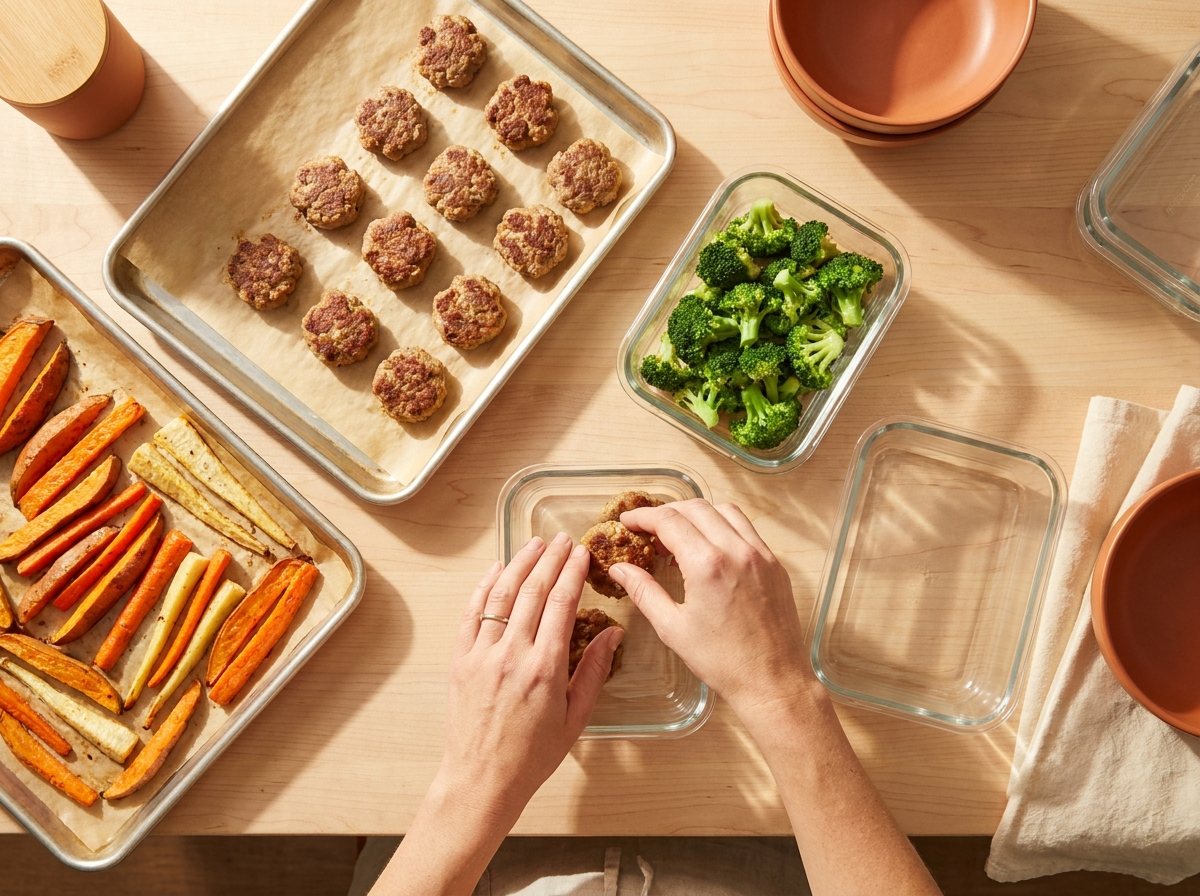
On Sunday, I’d roast a tray of sweet potato, carrot, and parsnip spears, steam a batch of broccoli, and bake a dozen mini meatballs. Spears keep in the fridge for 3 days; meatballs freeze for a couple of months. Having five foods ready on a Tuesday evening is what makes the difference between “we did it” and “she had banana again.”
Don’t forget purees and spoons
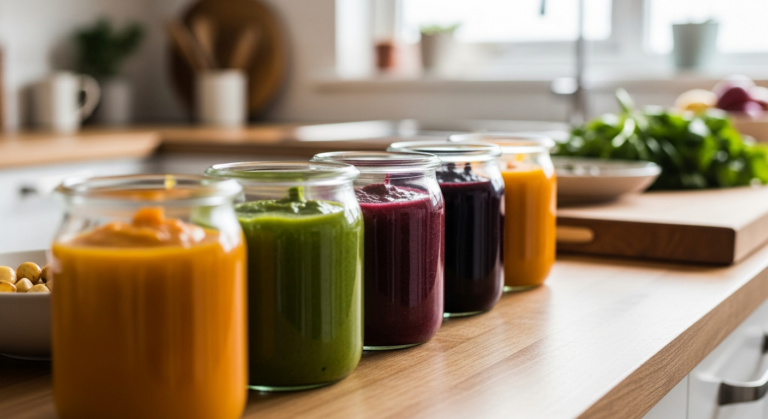
Baby-led weaning doesn’t have to mean no spoons. Plenty of families do a mix: finger foods on the tray, plus a loaded spoon of yogurt, oatmeal, or hummus. If you want homemade options, my homemade baby food recipes are a good place to start, and many of them double as dips or spreads for finger foods.
First Finger Foods for the First Two Weeks
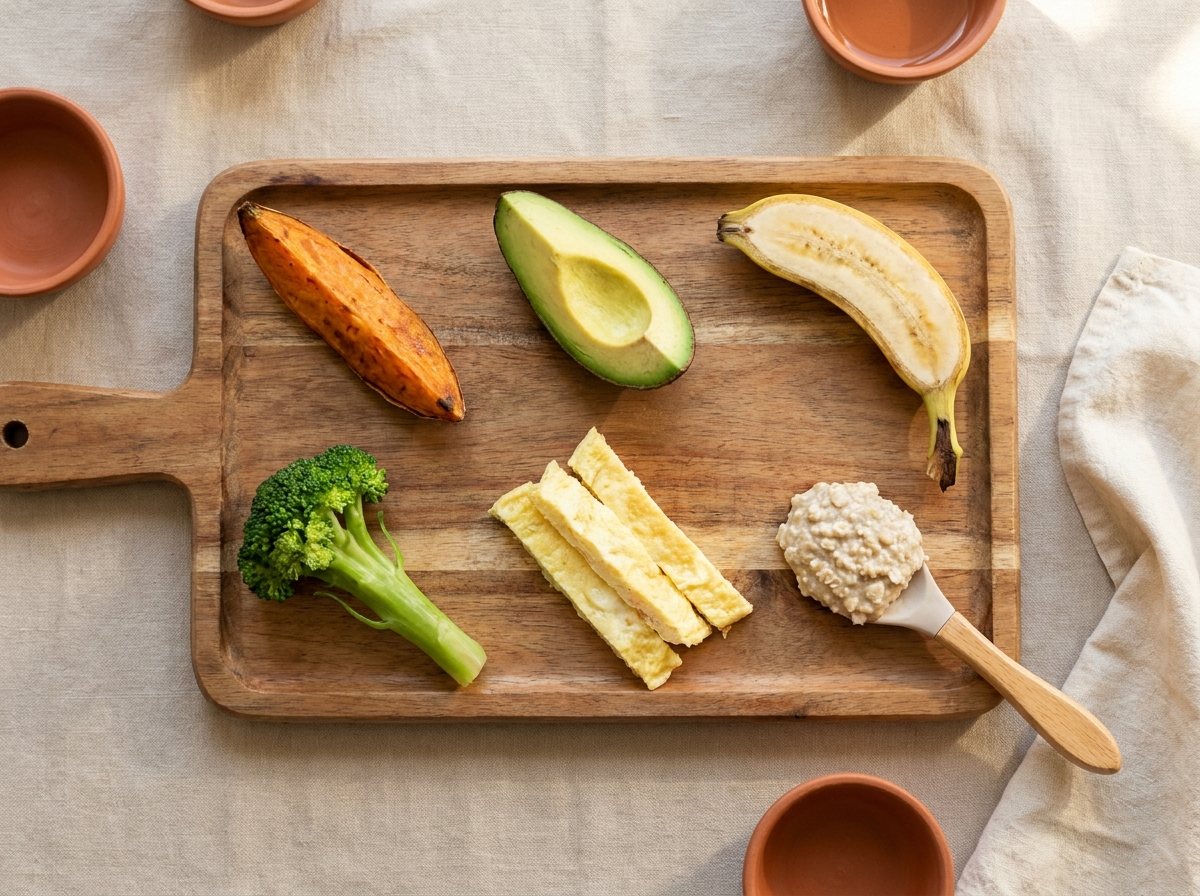
If you’re staring at the checklist and wondering where to begin, don’t start at #1. Start where the textures are easiest. For most babies, that means:
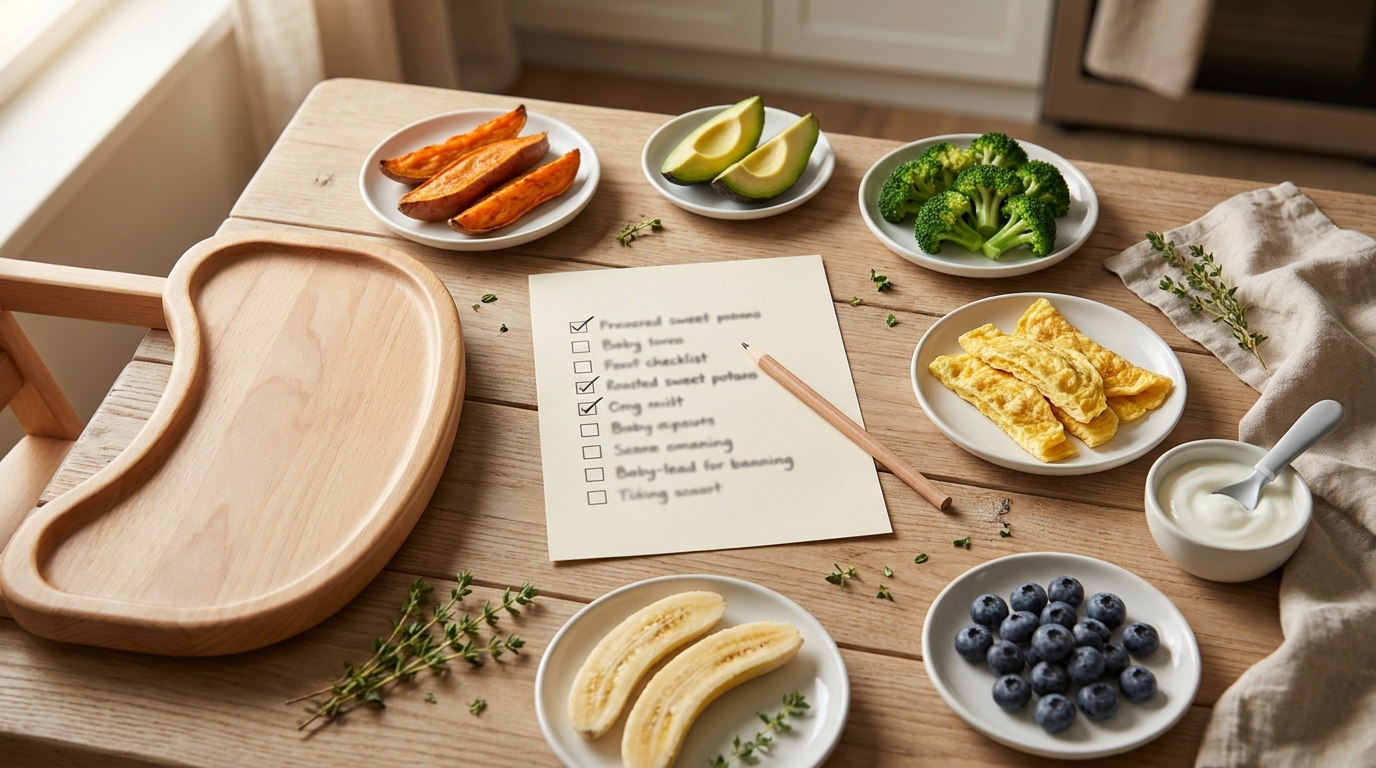
- Soft, roasted sweet potato spears
- Ripe avocado wedges
- Banana halves
- Steamed broccoli florets
- Soft omelet strips
- Thick oatmeal on a pre-loaded spoon
These get the muscle memory going: grab, mouth, gum, spit out, repeat. I wrote a full rundown of first finger foods for babies if you want the extended list with more shape guidance.
The checklist rewards a slow start. Your baby will be on the fast track by week four or five. I promise.
When Your Baby Refuses a Food
This is the part that surprises people. You’ll tick a box and your baby will turn their head, toss the food, and look at you like you’ve committed a crime. Don’t cross it off the “retry” list.
Babies often need many exposures to a new food, sometimes a dozen or more, before they accept it. That’s not a failure. It’s how acceptance builds. Some tips:
- Re-serve in a different form. If they refused steamed carrots, try roasted carrots, or shredded carrot in a pancake.
- Pair with a favorite. A bit of avocado next to the unfamiliar food lowers the stakes.
- Eat it yourself. Babies watch you more than you think.
- Serve without comment. No “just one bite,” no airplane noises, no bribes. The most reliable approach is calm and boring.
- Rest it for a week, then try again.
If your baby refuses almost everything for weeks, or gags constantly, or isn’t gaining weight as expected, talk with your pediatrician. A feeding therapist can help if needed.
And if you’re curious what’s happening with a toddler who’s already gone picky on you, the picky eater quiz can help you understand their eating style.
A Sample Day for a 9-Month-Old on a Checklist Mission
This is a sample day from around week 12 of solids (about 9 months if you started at 6), not a prescription. Follow your baby’s hunger cues, and remember milk or formula still comes first at this age.
| Time | What happens | Checklist wins |
|---|---|---|
| 7:00 a.m. | Milk feed | |
| 8:30 a.m. | Breakfast: thick oatmeal with cinnamon + peach wedge | Oatmeal, cinnamon, peach |
| 10:30 a.m. | Milk feed | |
| 12:00 p.m. | Lunch: lentil patty + steamed zucchini spear + avocado | Lentils, zucchini, avocado |
| 2:30 p.m. | Milk feed | |
| 4:00 p.m. | Snack: banana spear with a smashed blueberry | Banana, blueberries |
| 5:30 p.m. | Dinner: salmon patty + roasted sweet potato spear + cooked peas smashed | Salmon, sweet potato, peas |
| 7:00 p.m. | Milk feed and bedtime |
That’s 11 foods in one day, mostly repeats, which is a ceiling, not a target. A typical day has one or two new foods and never more than one new allergen (salmon is the only allergen here, and it’s one your baby would already have tried).
For more on schedules, my 8-month-old feeding schedule shows how meals and milk fit together as babies get a little older.
What to Do When the Checklist Isn’t Going to Plan
Real life gets in the way. Here are the situations I hear about most.
| Problem | What helps |
|---|---|
| “My baby only eats three things.” | Keep offering new foods alongside those three. Don’t remove the favorites; use them as an anchor. |
| “I’m at 40 foods and baby is 10 months old.” | That’s fine. Focus on variety across food groups, especially iron. Add flavor-builders (herbs, spices) to catch up fast. |
| “We’re going on vacation.” | Pack pouches and finger foods, or just tick what you can. The list will be there when you get back. |
| “Daycare is feeding my baby.” | Share the checklist with your provider so you don’t double-up or miss allergens. |
| “My baby seems to react to a food.” | Stop the food, note it, and call your pediatrician. Emergency symptoms mean 911. |
| “I feel guilty about the foods I skipped.” | Please don’t. The goal is a baby who enjoys food, not a perfect score. |
Beyond 12 Months: What to Feed After the 100 Foods Checklist
When you reach 12 months, the checklist doesn’t expire. Many of these foods will look a little different on a one-year-old’s plate. At that point, you can offer whole cow’s milk in a cup, and you can start loosening some of the shape rules as your child’s chewing improves.
If you’re heading into the toddler years, my breakfast ideas for 12-month-olds is a natural next step, and it uses many of the same foods you’ve already introduced. And for the inevitable days when a toddler decides they only eat noodles, food chaining can help. Start from the food they accept and move one small step at a time.
One more thing: it’s fine to carry your tracking habit past the first birthday. A “foods my toddler likes” list is a surprisingly useful thing to have when a babysitter asks.
Frequently Asked Questions
Do I really need to reach 100 foods before my baby turns 1?
No. The number is a motivational goal, not a medical target. Offering a wide variety is helpful, but a baby who has tried 60 foods and eats well is doing great. Focus on covering the major food groups, getting iron-rich foods in regularly, and introducing common allergens on your pediatrician’s guidance. Use the 100 as a guide, not a grade.
Do herbs and spices really count as foods on the list?
Yes, in my book. They expose your baby to different flavors, and flavor variety matters for developing taste. Just keep them mild and use small amounts: a pinch of cumin or cinnamon, not hot chili. Skip the salt. If you’d rather stick to whole foods only, you can swap in other fruits, vegetables, or grains to reach your own 100.
Can I use this checklist if I’m doing purees instead of BLW?
Absolutely. The food list works for any style of feeding. Use the “Level up” or puree-friendly notes and adjust the texture to your baby’s stage. Many families do a combination: purees from a spoon plus finger foods on the tray. Whichever way you feed, the key is to progress to lumpier, more varied textures over time rather than staying on smooth purees too long.
How do I know whether my baby is gagging or choking?
Gagging is noisy: coughing, sputtering, a red face, watery eyes. It’s a protective reflex, and the baby is usually working the food forward. Choking is typically silent or high-pitched, with little air moving and a pale or blue face. If you suspect choking, act immediately with infant back blows and chest thrusts and call emergency services. Taking an infant CPR and choking class before you start solids is the best preparation, and I’d encourage every caregiver to do so.
When should I introduce peanut and egg?
Current guidance for many babies is to introduce peanut and egg early, around 6 months or when your baby is developmentally ready for solids, rather than delaying. But babies with severe eczema, an existing food allergy, or other risk factors may need medical guidance first, sometimes including testing. Talk with your pediatrician before you start. When you do, serve peanut as a thinned butter or dissolvable puff, never whole peanuts or thick globs.
My baby has only eaten a few bites of most foods. Do those count?
Yes. At 6 to 8 months, the goal is exploring: touching, smelling, mouthing, gumming. Even if most of it ends up on the floor, your baby is learning. I count a food as “tried” when it was offered and your baby had a real chance to interact with it. Eating larger amounts comes gradually through the second half of the first year.
Is it okay to offer the same food multiple ways to count it once?
Sure. Rotating textures and preparations (roasted carrot, shredded carrot, carrot in a muffin) is a smart approach, and it counts as one checklist item. It also helps babies who reject a food in one form. The real win is repeated, low-pressure exposure.
Final Tips for Your 100 Foods Checklist
That coffee-stained sticky note on my fridge turned into a little family ritual. Every time my daughter tried something new, she got to watch me draw a check mark, and I swear she started to understand it was a celebration. Some foods she loved right away. Some took ten tries. A few (looking at you, beets) were gloriously messy hits.
Print the checklist, tape it somewhere you’ll see it, and tick off foods as you go. Skip the guilt and stay curious. The first year of eating is about exploring, and you’re giving your baby a wonderful head start. Happy munching, mama.