Easy No-Bake Diwali Sweets Kids Can Help Make
You'll find five easy no-bake Diwali sweet recipes that kids aged 3-8 can help make, complete with nut-swap options, age-appropriate tasks, and make-ahead tips. You can also download a free printable kit to simplify your festive preparations.
- Discover five no-bake Diwali sweet recipes for kids aged 3-8.
- Learn about nut and dairy swaps for dietary needs.
- Find age-appropriate tasks for kids in the kitchen.
- Get make-ahead and storage tips for your sweets.
- Download a free printable kit with recipes, charts, and planners.
This post contains affiliate links. As an Amazon Associate I earn from qualifying purchases.
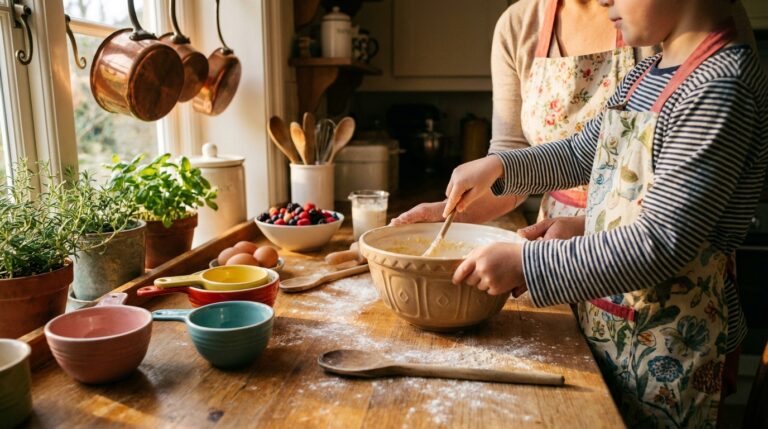
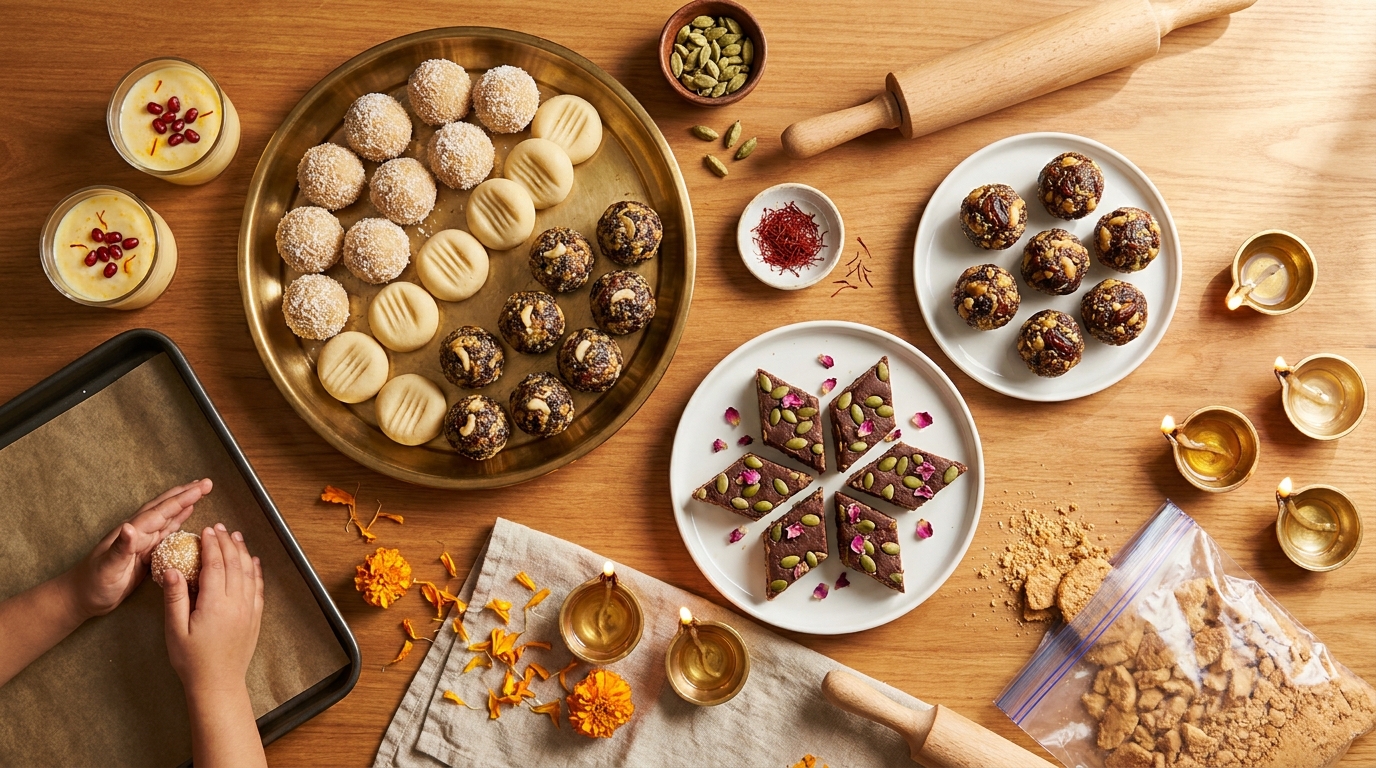
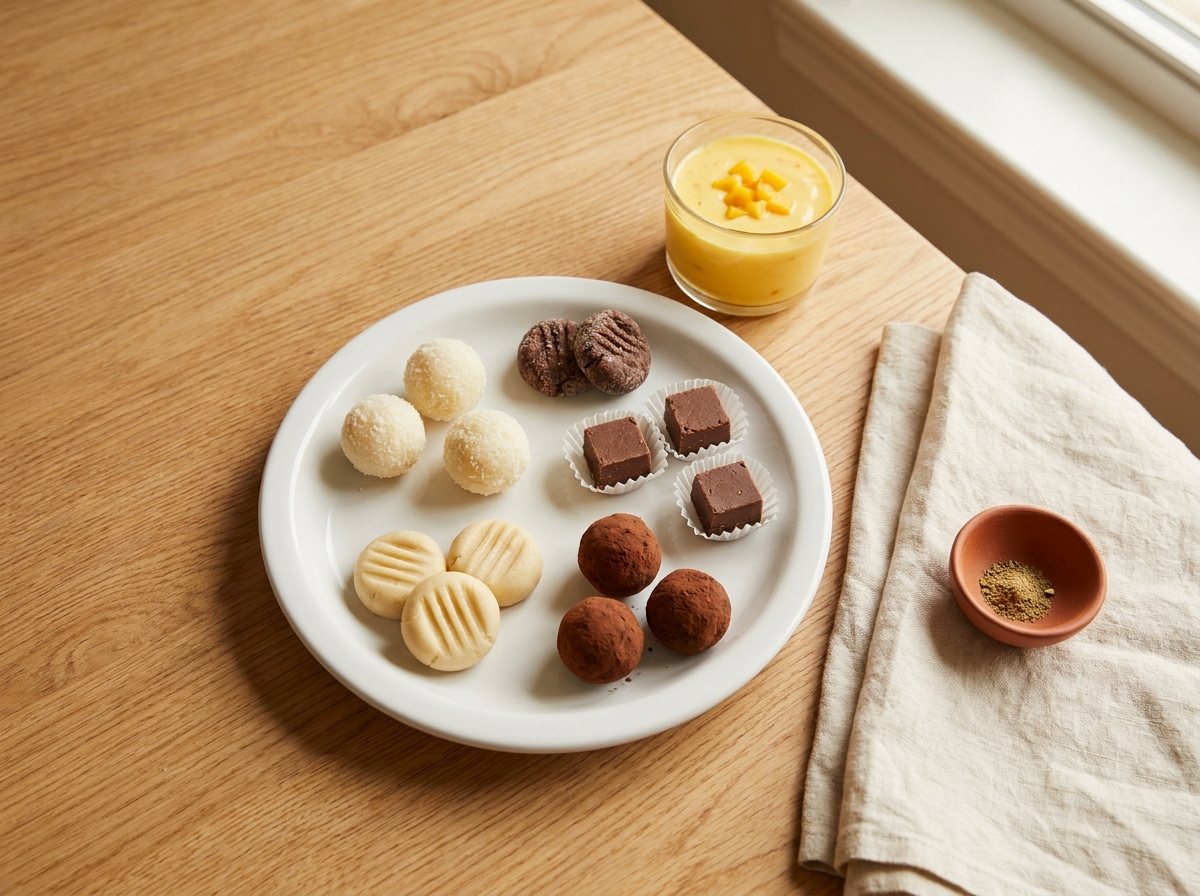
Last year my neighbor Priya brought over a tin of homemade sweets, and my six-year-old asked if she could make them next year. Priya laughed and said the best ones don’t even need a stove. So this year we made a whole plate of Diwali sweets without turning on a burner. Below you’ll find five no-bake recipes for ages 3 to 8, a nut-swap table, jobs by age, and make-ahead and storage tips.
Free printable · 6 pages
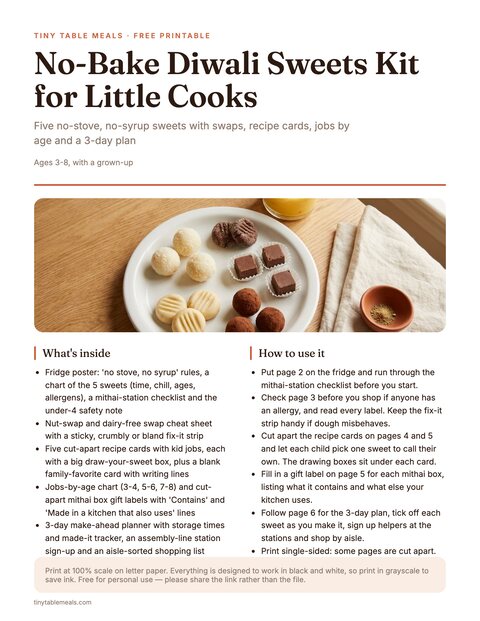
No-Bake Diwali Sweets Kit for Little Cooks
A fridge poster with a chart of all five no-bake sweets, nut and dairy swaps with a fix-it strip, five cut-apart recipe cards with big draw-your-sweet boxes plus a blank family-favorite card, mithai box gift labels, a jobs-by-age chart, an assembly-line sign-up, and a 3-day make-ahead planner with made-it tracker and aisle-sorted shopping list.
Free. Your download link appears right here. You'll also join the Sunday Supper Plan. Unsubscribe anytime. Privacy
In this article (15 sections)
- Why No-Bake Works So Well for Diwali with Kids
- Before You Start: Setup, Safety, and Sanity
- The Nut-Swap Table: Making Traditional Flavors Allergy-Friendly
- Recipe 1: Coconut Ladoo (3 Ingredients, All Rolling)
- Recipe 2: Milk Powder Peda (Soft, Rose-Scented, Stamp-Able)
- Recipe 3: Date and Seed Ladoo (Naturally Sweet, No Tree Nuts or Peanuts)
- Recipe 4: Chocolate Biscuit Barfi (The Press-and-Slice Project)
- Recipe 5: Saffron Yogurt Cups (Shrikhand-Style, Just Stir)
- Who Does What: Jobs by Age
- Building a Mithai Box Kids Can Be Proud Of
- Planning, Make-Ahead, and Storage
- Making the Whole Thing Feel Like Diwali (Not Just Cooking)
- Troubleshooting Common Problems
- Frequently Asked Questions
- Your Diwali Table, Made by Small Hands
Why No-Bake Works So Well for Diwali with Kids
Traditional sweets like kaju katli, jalebi, soan papdi, and chikki depend on sugar syrup cooked to a specific stage. That’s where the thermometer comes in, and it’s also where the safety problem is. Sugar syrup runs far hotter than boiling water, sticks to skin, and doesn’t give much warning. It’s not a place for a four-year-old, and honestly it’s a stressful place for the adult too.
No-bake versions skip that entirely by swapping the cooked-sugar “glue” for something that is already sticky and safe to handle cold:
- Sweetened condensed milk binds coconut and milk powder into dough you can roll. It is very sweet, so keep portions small.
- Dates blend into a natural, caramel-like paste that holds seeds and spices together.
- Nut or seed butter acts as the binder for firmer, fudgy sweets.
- Crushed biscuits plus a little melted chocolate or cocoa create a barfi-style slab you can press into a pan and slice.
- Thick strained yogurt makes a shrikhand-style cup that only needs stirring.
You get the flavors that say “Diwali” (cardamom, rose, saffron, coconut, pistachio-green) with a fraction of the risk and almost none of the fuss.
What you give up (and why it’s okay)
Let’s be honest about the trade-off. No-bake sweets are softer and a bit less shelf-stable than the classic cooked versions, and they won’t have the exact same texture as a halwai-made piece of kaju katli. They’re a kid-sized, family-kitchen interpretation. What you gain is kids who actually touch the food, stay at the counter for the whole project, and walk away proud of the plate they made.
I’m a family cook, not an authority on any one tradition, and Diwali sweets vary from home to home. Treat these as simplified starting points and swap in your family’s favorites.
If your family also makes the traditional cooked sweets, make those yourself and let kids handle the assembly, decorating, and boxing. Everybody gets a job, and nobody gets near the syrup. For more kid-run treats, see our no-bake Halloween treats kids make.
Before You Start: Setup, Safety, and Sanity
A little prep makes the difference between a joyful project and a sticky standoff. Here’s the setup I use.
Set up a “mithai station”
- Wash hands together for 20 seconds before you start.
- Put everything on a rimmed baking sheet. It contains the mess and makes it easy to carry to the table.
- Pre-measure ingredients into small bowls. Kids love “pouring in” and this keeps accuracy under control.
- Keep a damp towel and a dry towel within reach. Ladoo dough clings to everything.
- Have a small bowl of cold water nearby for rinsing sticky fingers between rolls.
- Line a tray with parchment so finished sweets have somewhere to go.
Safety notes that matter for ages 3-8
Safety firstChildren under 4 get no whole nuts, large chunks, or coarse or whole seeds. For them, grind seeds to a fine meal and roll teaspoon-size sweets. On ladoos, pedas, and barfi, use only finely ground pepitas or a dusting of cocoa, with no coconut coatings or hard sprinkles. Keep other toppings, like mango, pea-size or smaller. Cut barfi and date diamonds into pea-size bits, or crumble a piece onto the plate, and have them sit to eat with an adult watching. These sweets are not designed for babies under 12 months. For toddlers under 2, limit added sugar and skip sticky balls, nuts, and seeds.
- Honey: No honey for a child under 12 months. These recipes don’t use any.
- Edible silver leaf (varak): It’s delicate and tricky for small hands, and traditional varak may be processed with animal products. If you use it, buy only varak labeled edible and vegetarian, and never craft metallic leaf. It’s optional, and I skip it with young kids.
- Uncooked ingredients: Nothing here is cooked, and uncooked milk powder, spices, seeds, cocoa, and dates can carry a small risk of contamination. Buy reputable brands and keep dairy sweets refrigerated. Never add raw flour; if you use the oat flour swap, heat-treat it first as the nut-swap table explains. Pregnant or immunocompromised guests who avoid uncooked foods may want to skip them; check with their doctor.
- Cross-contact: If anyone eating has a food allergy, use clean bowls and tools, and read every label even on products you buy often. Brands change formulas.
A word on sugar
Diwali is a celebration, and sweets are the point. I don’t try to make them “health food.” What I do is keep the portions small (mini ladoos, small squares) and make sure the plate has a few fruit-and-seed options as well. A handful of dates-and-seed ladoos next to a coconut ladoo is a nice balance without any lecture.
The Nut-Swap Table: Making Traditional Flavors Allergy-Friendly
So many classic sweets are built on cashews (kaju katli), almonds (badam barfi), or pistachios (pista rolls and toppings). If you’re feeding a child with a tree nut or peanut allergy, or sending sweets to a school or friend’s house, you need a plan.
This table gives you swaps that keep texture and flavor close to the original. Always check labels. Seeds, sesame, and coconut are separate allergens, and some children are allergic to them. The FDA no longer lists coconut as a tree nut for labeling, but individual coconut allergy is possible, so ask your child’s allergist what is safe for your family.
| Traditional ingredient | What it does in the sweet | Nut-free swap | Notes |
|---|---|---|---|
| Ground cashews | Creamy, mild base for katli and barfi | Finely ground roasted sunflower seeds or pumpkin seeds (pepitas) | Grind to a fine meal in a blender; stop before it turns to butter |
| Almond flour / ground almonds | Soft, slightly grainy body | Finely ground sunflower seeds or pepitas, or heat-treated oat flour (certified gluten-free if needed) | Oat flour is raw flour, so an adult heat-treats it first. Microwave it in short bursts, stirring between, until it reaches 165°F (74°C), then cool completely. It’s blander, so add a pinch more cardamom |
| Chopped pistachio topping | Green color, crunch | Pepitas, finely chopped, or a sprinkle of green-tinted desiccated coconut | Under 4: grind pepitas to a fine meal and skip coarse toppings. Ages 4-5: pieces no bigger than a pea |
| Slivered almonds on top | Decoration | Toasted sesame seeds or tiny pieces of dried cranberry | Skip sesame if it’s an allergen in your house. For children under 4, skip sesame and cranberry bits |
| Almond or cashew paste as binder | Holds the sweet together | Sunflower seed butter or tahini | Tahini is more bitter; balance with extra date or condensed milk |
| Peanuts (as in chikki) | Crunch and protein | Roasted pumpkin seeds or puffed rice | Chikki itself needs cooked syrup, so use the no-cook “bar” idea in the dates section |
| Marzipan-style almond sweets | Smooth, sweet center | Sweetened coconut + milk powder dough | Coconut is a separate allergen from tree nuts, so ask your allergist if your child has a coconut allergy |
| Walnuts in date rolls | Chew and richness | Pepitas (fine meal for under 4) or raisins for ages 4 and up | Skip raisins for children under 4; soak them briefly if very dry |
| Almond milk in drinks or doughs | Liquid | Oat milk (certified gluten-free if needed) or regular milk | Choose unsweetened, so you control sweetness |
The dairy and egg question
Plenty of families also manage milk allergies. Most of these sweets lean on condensed milk and milk powder, so here’s a quick guide.
| Ingredient | Dairy-free swap |
|---|---|
| Sweetened condensed milk | Sweetened condensed coconut milk (check allergen labels) |
| Milk powder | Oat milk powder (certified gluten-free if needed) or coconut milk powder (texture varies, so add in small amounts) |
| Ghee | Coconut oil or dairy-free butter |
| Yogurt | Thick coconut or oat-based yogurt |
None of these recipes use eggs, which is a nice bonus for egg-allergic families. Dairy-free products can still contain tree nuts or be made on shared equipment, so check the label every time. For everyday swaps beyond Diwali, my dairy-free recipes for kids collect our family favorites.
If you’re building a bigger spread or sending sweets to a gathering, my post on allergy-friendly party food goes deeper on labeling, separate serving utensils, and how to keep a mixed table safe.
Recipe 1: Coconut Ladoo (3 Ingredients, All Rolling)
This is the gateway sweet. It’s soft, fragrant, and so forgiving that even a three-year-old can’t really ruin it. It’s also the one my daughter requested the most after the first batch.
Ingredients
- 2 cups unsweetened desiccated coconut, plus about ½ cup extra for rolling
- ½ cup sweetened condensed milk, plus up to ¼ cup more as needed
- ½ teaspoon ground cardamom
- Pinch of salt
- Optional: a few drops of rose water, or a few strands of saffron soaked in 1 teaspoon warm milk
Steps
- Mix the base. In a large bowl, combine the coconut, cardamom, and salt. Let a child stir this dry mix with a spoon or clean hands.
- Add the condensed milk. Pour in ½ cup first. Mix until the coconut looks glossy and clumps when squeezed.
- Test the dough. Squeeze a spoonful in your fist. If it holds together, you’re done. If it crumbles, add condensed milk a tablespoon at a time.
- Chill briefly. Cover and refrigerate for 15 to 20 minutes. Cold dough rolls cleaner and holds its shape.
- Roll. Scoop about a teaspoon at a time and roll between palms into a small ball. Wet hands lightly if it sticks. Children under 4 should eat these seated.
- Coat. Roll each ladoo in the extra coconut. For children under 4, skip the coconut coating and leave the ladoos plain or dust them lightly with cocoa or finely ground pepitas. Place on the parchment-lined tray.
- Set. Chill another 10 minutes before serving.
Kid jobs
- Ages 3-4: Stir the dry mix, squeeze-test the dough, and roll the balls. Three-year-olds leave their ladoos plain or dust them with cocoa or finely ground pepitas. Four-year-olds can roll theirs in the coconut coating (they love this part).
- Ages 5-6: Measure with cups and spoons, scoop the dough, roll the balls.
- Ages 7-8: Add flavorings, judge the dough texture, and be the “quality control” manager.
Make it nut-free
Plain coconut ladoo has no tree nuts in the recipe, but check labels for “may contain” warnings on desiccated coconut. Coconut itself is a separate allergen, so if your child is allergic, use the date and seed ladoo in Recipe 3 instead.
TipDo the squeeze test. If a spoonful holds together in your fist, stop adding condensed milk. The troubleshooting table below covers sticky or crumbly dough.
Recipe 2: Milk Powder Peda (Soft, Rose-Scented, Stamp-Able)
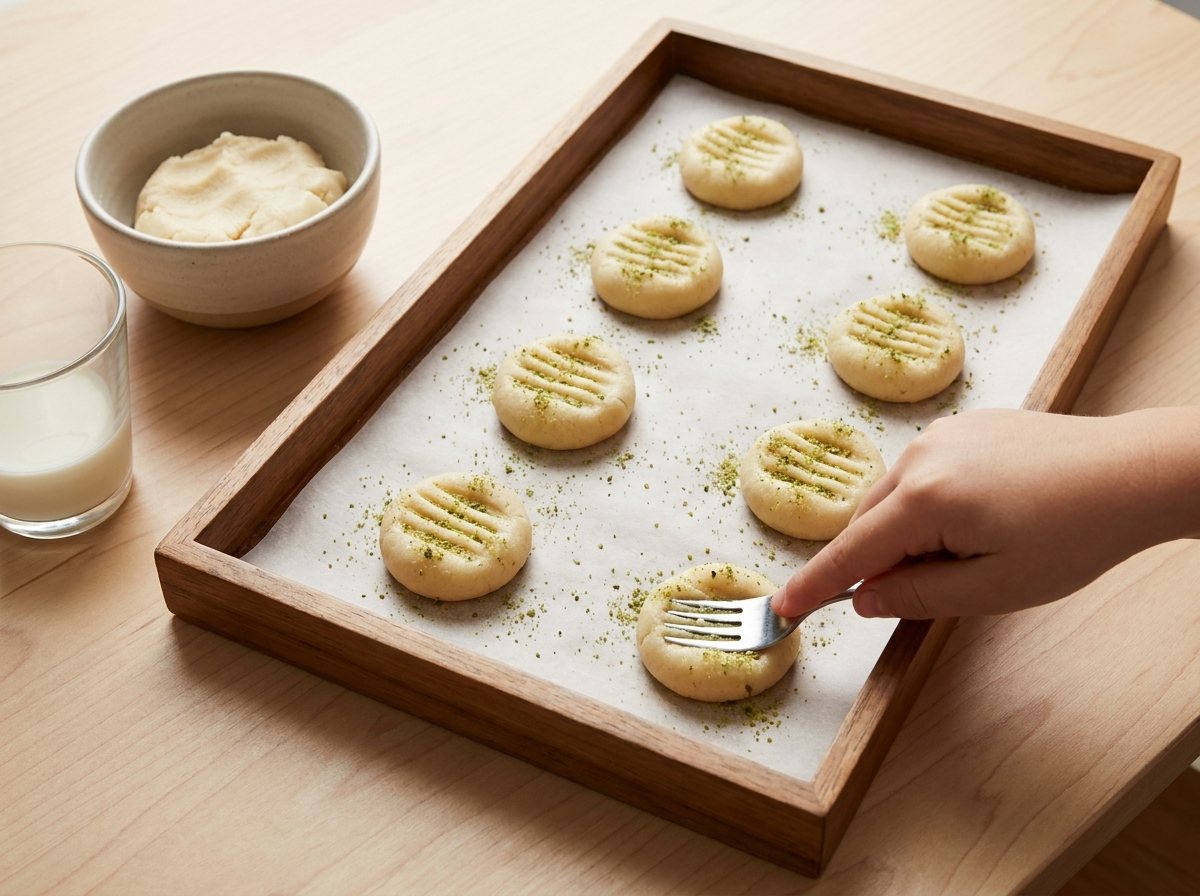
Pedas are traditionally made by slowly cooking down milk until it becomes a thick, fudgy mass. This shortcut uses milk powder and condensed milk so there’s no stirring over heat. The texture is soft and slightly chewy, and it’s lovely pressed into little rounds.
Ingredients
- 1½ cups full-fat milk powder
- ½ cup sweetened condensed milk
- 2 tablespoons soft ghee or unsalted butter
- ½ teaspoon ground cardamom
- Optional: a few drops of rose water, a pinch of saffron in a teaspoon of warm milk
- For topping: finely ground pepitas or a few sprinkles of tinted coconut (see the nut-swap table). For children under 4, use only finely ground pepitas or skip the topping.
Steps
- Combine. Add the milk powder and cardamom to a bowl. Whisk or stir to break up lumps.
- Add the wet. Add the condensed milk, ghee, and any rose water or saffron milk.
- Knead. Mix with a spoon first, then use clean hands to knead for a minute or two until it forms a smooth, soft dough. It should feel like play dough and not stick heavily to your palms.
- Adjust. If it’s too dry, add a teaspoon of milk. If it’s too sticky, add a tablespoon of milk powder.
- Shape. Roll teaspoon-size balls (a bit bigger for ages 5 and up), then flatten gently between your palms or with the bottom of a glass into a disc.
- Stamp or decorate. Press a fork or a large food-only cookie stamp into the center to make a pattern, and count tools in and out. Add a pinch of topping.
- Rest. Chill for 20 minutes to firm up. Children under 4 should eat pedas seated, in small pieces.
Why kids love it
It’s basically edible play dough. The flattening and stamping gives younger children a job that feels like art class, and the finished pedas look “professional” with almost no skill.
Make it dairy-free
Swap in sweetened condensed coconut milk, coconut milk powder (add gradually, it absorbs differently), and coconut oil. The texture will be a bit softer, so chill longer before shaping.
Recipe 3: Date and Seed Ladoo (Naturally Sweet, No Tree Nuts or Peanuts)
This is the recipe I make for the “other plate,” the one that works for the kid with a nut allergy, the grandparent watching sugar, and the child who just wants something chewy. It is sweetened mostly by dates and has a warm, toffee-like flavor.
Good to knowThis recipe has no tree nuts or peanuts, but it uses seeds, sesame (tahini), and coconut, which are separate allergens. Coconut is no longer a tree nut for FDA labeling, though individual coconut allergy is possible. Ask your allergist.
Ingredients
- 1½ cups pitted soft dates (Medjool or similar), roughly chopped
- ½ cup roasted sunflower seeds
- ¼ cup roasted pumpkin seeds (pepitas)
- 2 tablespoons sunflower seed butter or tahini
- ½ teaspoon ground cardamom
- ¼ teaspoon ground cinnamon (optional)
- Pinch of salt
- ¼ cup unsweetened desiccated coconut or unsweetened cocoa powder, for rolling (skip the coconut if it’s an allergen)
Steps
- Soak if needed. Check every date for pits. If the dates feel dry or firm, cover with hot water for 10 minutes, then drain well and pat dry.
- Grind the seeds. An adult pulses the sunflower seeds and pepitas in a food processor. For children under 4, grind to a fine meal; for older kids, coarse like breadcrumbs is fine. Do not over-process or it turns to paste.
- Add dates and flavor. Add dates, seed butter, cardamom, cinnamon, and salt. Pulse until the mixture clumps together when pinched.
- Test. Squeeze a spoonful. It should hold firmly. If it’s too dry, add another date or a teaspoon of warm water.
- Roll. Kids roll teaspoon-size balls. This mixture is stickier than coconut dough, so lightly dampen hands.
- Coat. Roll in coconut or a light dusting of cocoa powder. For children under 4, coat only in cocoa or leave the ladoos uncoated, and skip coconut and sesame.
- Chill. Refrigerate for 30 minutes to firm up.
The “katli-style” shortcut
For a kaju-katli-inspired treat without cashews:
- Press the date and seed mixture, without the rolling coating, into a parchment-lined small pan about ½ inch thick.
- Chill for an hour.
- Cut into diamonds with a butter knife. For children under 4, cut each diamond into pea-size bits or crumble it onto their plate.
- Top with a pinch of finely ground pepitas.
It won’t taste like the original, but the diamond shape makes it feel like part of the mithai box, and kids are delighted to cut shapes.
Kid jobs
- Ages 3-5: Squeeze-test the mix, roll, and coat. Children under 4 coat theirs in cocoa only or leave them plain.
- Ages 6-8: Pit and chop dates (with a kid-safe knife and supervision), press the diamond slab, cut shapes.
If your child is working on real knife skills, my age-by-age guide to teaching kids to cook lays out which tools and tasks fit which stage, so you can pick the right job for the right kid.
Recipe 4: Chocolate Biscuit Barfi (The Press-and-Slice Project)
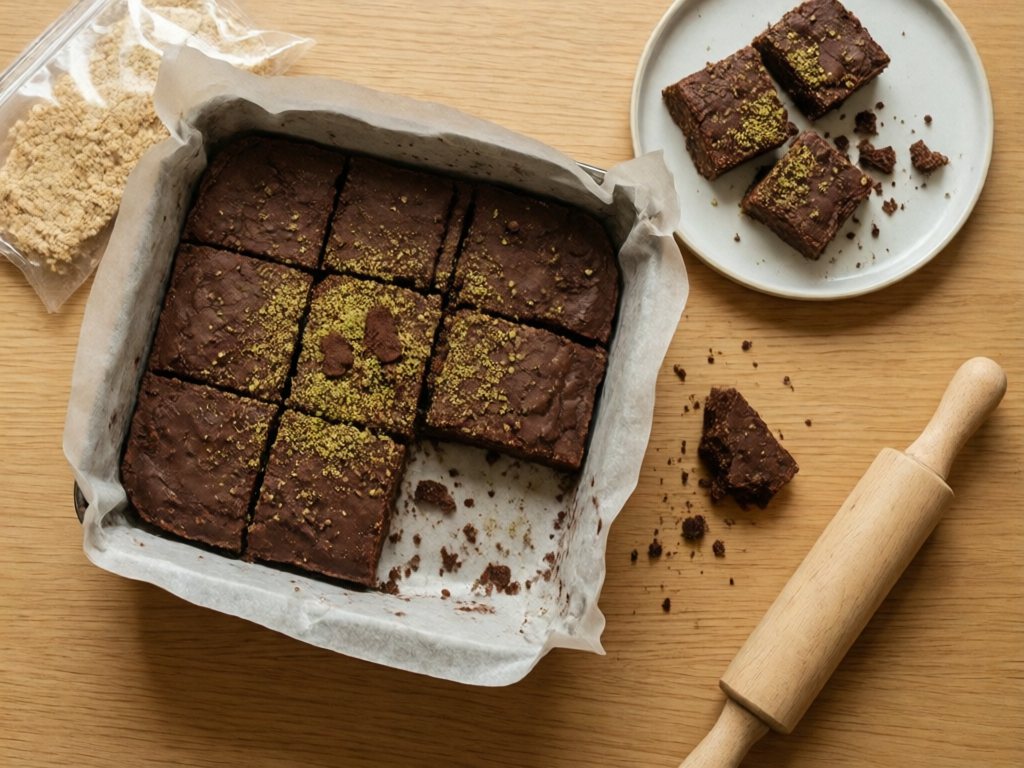
This one is for the kid who loves smashing things. It’s inspired by the biscuit-and-condensed-milk barfi many families make as a quick treat, and it uses a zip bag and a rolling pin as the main tool.
Ingredients
- 2 cups plain tea biscuits or digestive-style crackers (about 10 to 12 biscuits)
- ⅓ cup sweetened condensed milk
- 3 tablespoons unsweetened cocoa powder
- 2 tablespoons butter or coconut oil, softened (not hot)
- ½ teaspoon vanilla
- Pinch of cardamom
- Topping: sprinkles, finely ground pepitas, or tinted coconut. For children under 4, use only finely ground pepitas or skip the topping, and skip hard sprinkles.
Steps
- Line a pan. Line a small square pan (about 6 or 8 inches) with parchment, leaving overhang on two sides.
- Smash. Put the biscuits in a zip bag, press out the air, and let the kids crush them with a rolling pin until they look like coarse sand. This is the best part.
- Mix. Pour the crumbs into a bowl. Add cocoa powder and cardamom and stir.
- Add the wet. Add condensed milk, softened butter, and vanilla. Mix until it comes together like thick, damp sand.
- Press. Tip the mixture into the pan and press firmly, using the bottom of a measuring cup to even it out.
- Decorate. Scatter toppings and gently press them in.
- Chill. Refrigerate for at least 2 hours, until firm.
- Cut. Lift out using the parchment and cut into squares or diamonds. For children under 4, cut a square into pea-size bits or crumble a portion onto their plate, and have them eat seated with an adult watching.
Making it nut-free and allergy-aware
Check biscuit labels carefully. Many cookies are made in facilities that handle tree nuts, peanuts, wheat, and milk. If your family avoids gluten, use a certified gluten-free cookie.
If you’re planning around more than one allergy, my guide to managing multiple food allergies at mealtime has more help.
Why this works at Diwali
The chocolate squares sit nicely beside the other sweets on a plate, and they’re the item that most often disappears first at our house. Kids who think “traditional sweets” are boring will take one without hesitation.
Recipe 5: Saffron Yogurt Cups (Shrikhand-Style, Just Stir)
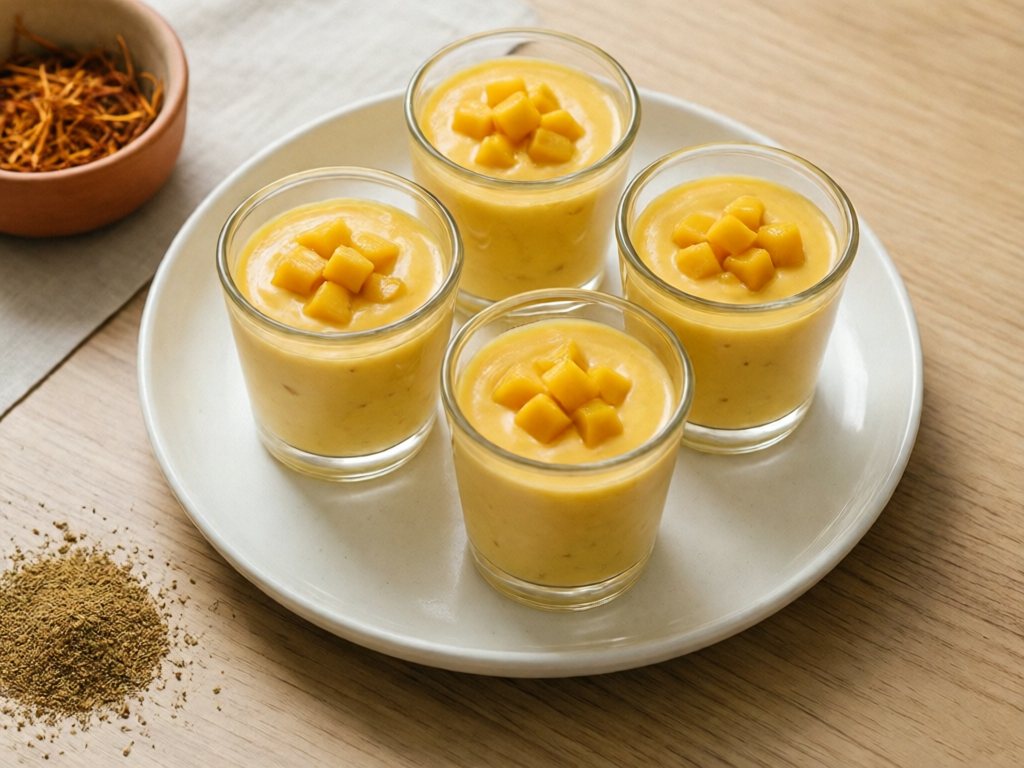
Shrikhand is a creamy, strained-yogurt dessert flavored with saffron and cardamom. The traditional version involves hanging yogurt in muslin overnight, but a thick Greek-style yogurt gets you most of the way there with zero hanging.
Ingredients
- 1½ cups thick plain Greek-style yogurt
- 3 to 4 tablespoons powdered sugar, or to taste
- ¼ teaspoon ground cardamom
- A pinch of saffron soaked in 1 tablespoon warm milk (optional but beautiful)
- Toppings: mango in pea-size or smaller pieces, a few pomegranate seeds (crushed, or skipped, for children under 4), or finely ground pepitas
Steps
- Soak the saffron. An adult warms the milk, stirs it to even out hot spots, and lets it cool to lukewarm. Then kids drop in the saffron threads and watch the color bloom.
- Stir. Combine yogurt, powdered sugar, cardamom, and saffron milk. Stir until smooth.
- Taste. Let kids taste and decide if it needs more sweetness. Adjust a spoonful at a time.
- Spoon into cups. Divide among small cups or jars.
- Top. Decorate with small mango pieces or crushed pomegranate seeds, with kids seated and an adult nearby.
- Chill. Refrigerate for at least 30 minutes before serving.
Why it matters
This is the “fresh” counterpart on a plate of rich, dense sweets, and it brings some protein and calcium to the table. For a heavy festival week, my list of high-protein meals and snacks for kids helps balance out the sweets. You’ll find more everyday family food on the Tiny Table Meals home page.
Dairy-free version
Use a thick coconut or oat yogurt, and a little extra powdered sugar since plant yogurts can be tangy.
Who Does What: Jobs by Age
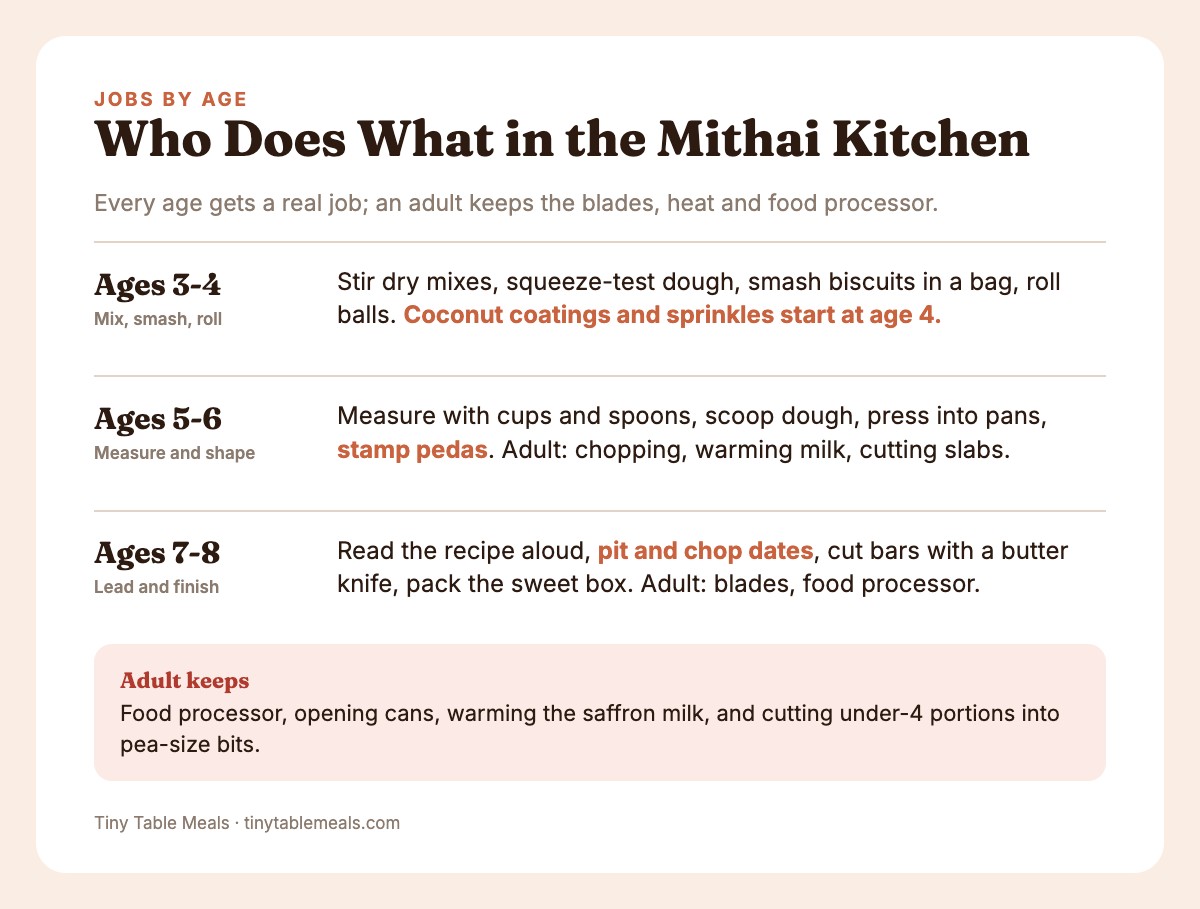
Kids stay engaged when they have a real job that fits their hands and attention span. Here’s the cheat sheet I use for the whole project.
| Age | Great jobs | Keep an adult for |
|---|---|---|
| 3-4 | Stirring dry mixes, squeezing dough to test it, smashing biscuits in a bag, rolling balls, dusting with cocoa or finely ground pepitas, washing fruit. Coconut coatings and sprinkles start at age 4 | Food processor, opening cans, warming the saffron milk, ground-spice measuring near faces, cutting under-4 portions into pea-size bits |
| 5-6 | Measuring with cups and spoons, scooping dough, rolling balls, pressing dough into pans, stamping pedas, peeling the parchment | Chopping, warming the milk (kids add saffron once it’s lukewarm), cutting slabs |
| 7-8 | Reading the recipe aloud, pitting and chopping dates, cutting bars with a butter knife, running the “quality control” taste test, packing the sweet box | Food processor and anything with blades |
A sample “assembly line” for a group
If you’ve got multiple kids (or cousins visiting), set up stations:
- Station 1: Dough. One kid mixes the coconut ladoo dough.
- Station 2: Rolling. Two kids roll and coat.
- Station 3: Stamping. One kid presses pedas.
- Station 4: Box packing. One kid fills the sweet box with paper liners.
Rotate every ten minutes so nobody gets bored or territorial.
Building a Mithai Box Kids Can Be Proud Of
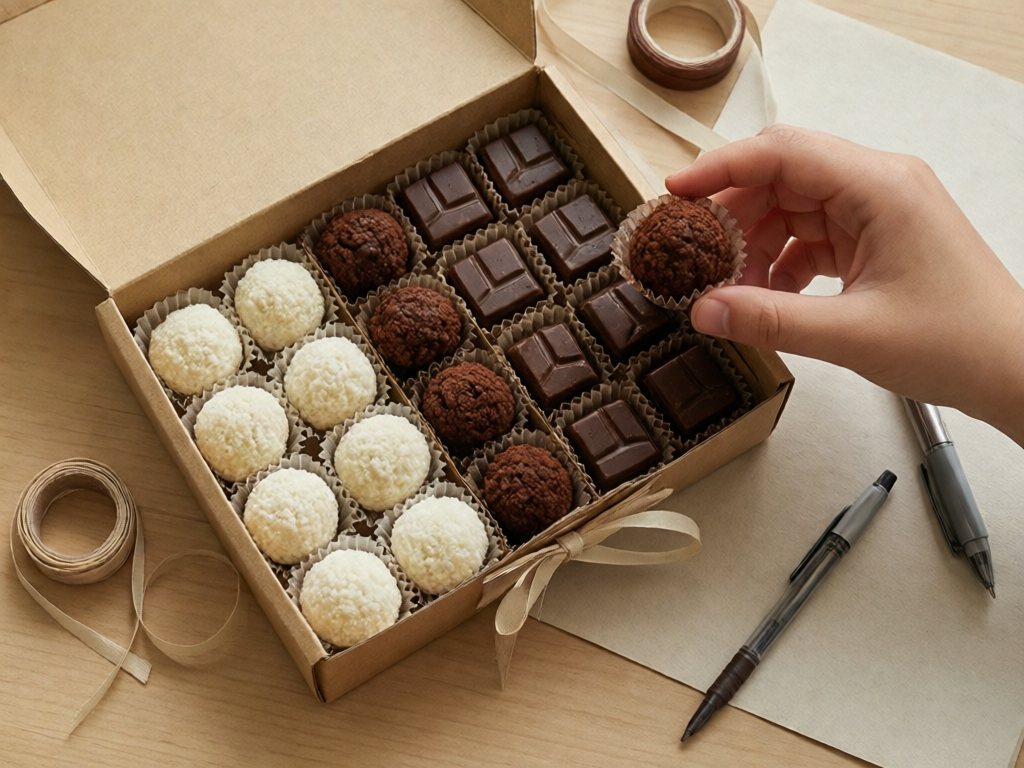
Half the joy of Diwali sweets is giving them. Packing a small box for a neighbor or a teacher turns this from a kitchen activity into a gift project.
What you need
- Small gift boxes or clean takeout containers
- Mini paper liners (cupcake or candy cups)
- Parchment or wax paper
- A pen for labels
- Ribbon or string
Steps
- Liner first. Place a paper liner for each sweet. This prevents sticking and looks polished.
- Arrange by color. Alternate white coconut, brown date, and chocolate squares for a pretty pattern.
- Add a label. Have older kids write what’s inside. This is essential if allergies are in play.
- Tie it up. Ribbon is a great fine-motor job.
The allergy label that saves a lot of worry
On the lid, list the allergens in the recipe (milk, coconut, sesame, seeds, wheat, soy, tree nuts, peanuts, as they apply) plus kitchen cross-contact, such as:
- “Contains: milk, coconut”
- “Made in a home kitchen that also uses: wheat, soy, sesame, tree nuts”
If you’re gifting to a family you don’t know well, it’s kinder to ask in advance or to skip anything that could be risky. A label helps but isn’t a guarantee, so still check with the family before giving to an allergic child. When in doubt, include a date-seed box with no tree nuts or peanuts and label it clearly.
Planning, Make-Ahead, and Storage
Diwali week is busy. Here’s how to spread the work so you aren’t doing everything the day of.
| Sweet | Make-ahead window | Storage | Notes |
|---|---|---|---|
| Coconut ladoo | Up to 3-4 days ahead | Airtight container in fridge | Bring to room temperature 10 minutes before serving |
| Milk powder peda | Up to 3-4 days ahead | Fridge, with parchment between layers | Stamp patterns the day you make them |
| Date and seed ladoo | Up to 3-4 days ahead | Fridge | Dairy-free, but I keep the same conservative window. Can be frozen up to 1 month; thaw in the fridge |
| Chocolate biscuit barfi | Up to 3-4 days ahead | Fridge | Slice cold for cleaner edges |
| Saffron yogurt cups | Make the same day or day before | Fridge, covered | Add toppings just before serving |
A realistic schedule
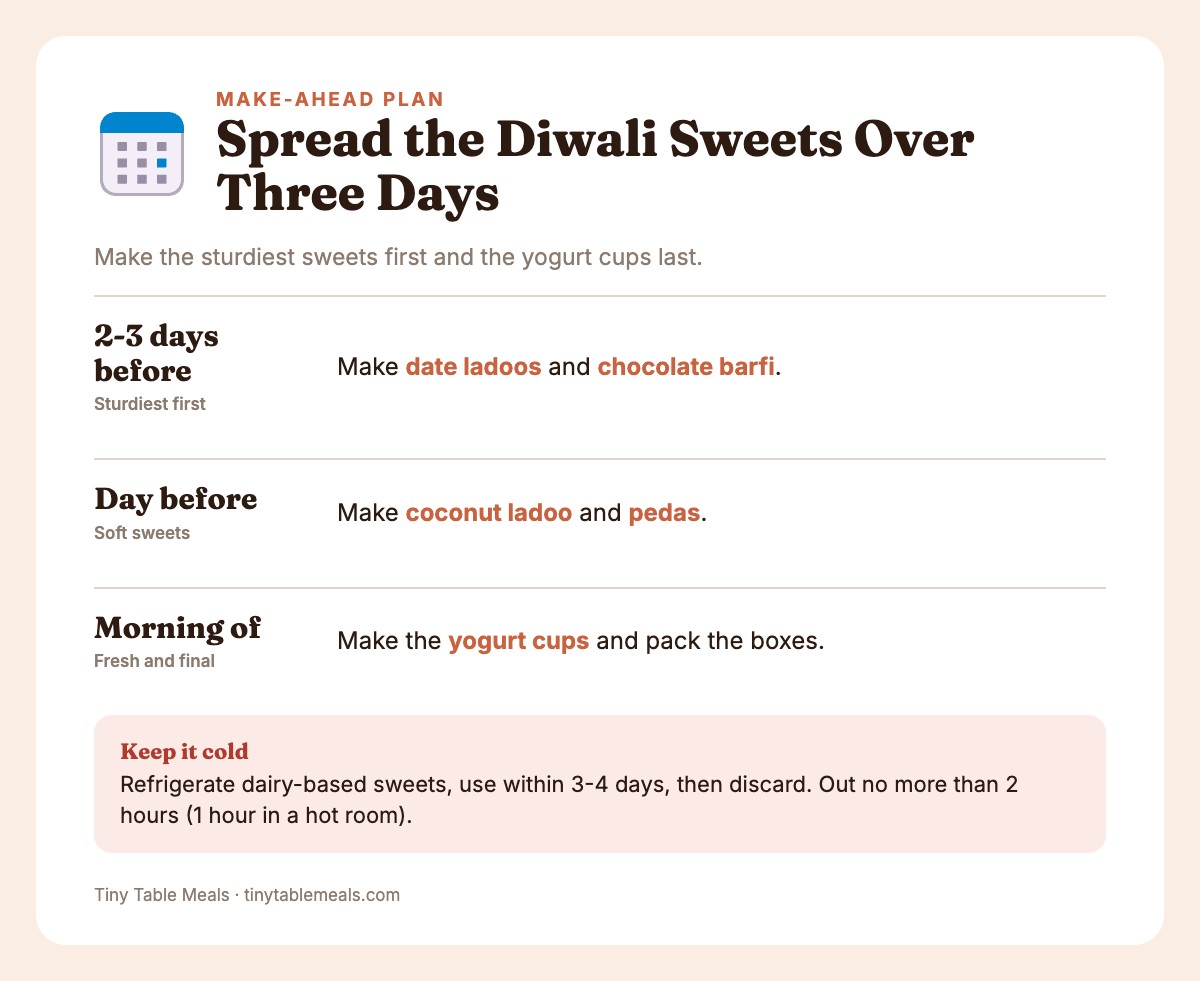
- Two or three days before: Make date ladoos and chocolate barfi (the sturdiest).
- The day before: Make coconut ladoo and pedas.
- The morning of: Make yogurt cups and pack the boxes.
Good to knowRefrigerate the dairy-based sweets, use them within 3-4 days, and discard after that. Don’t leave them out more than 2 hours (1 hour in a hot room). For a party, keep the tray in the fridge and bring out a portion at a time.
Freezing
The date and seed ladoos freeze reasonably well for up to 1 month. Layer them with parchment in a container and thaw in the fridge overnight. I don’t recommend freezing the yogurt cups or the coconut ladoos, since texture changes.
Making the Whole Thing Feel Like Diwali (Not Just Cooking)
The sweets are the star, but a few little touches turn the afternoon into a memory.
- Tell the story together. Keep it simple. Diwali is the festival of lights, and families celebrate with lamps, rangoli, food, and time together. If your family has its own traditions, this is the moment to share them.
- Make a rangoli plate. Use small mango pieces, crushed pomegranate seeds (skip them for children under 4), and coconut to design a pattern on a plate. Kids love making edible art, and everyone should be seated while they nibble.
- Play music while you work. A playlist your family loves makes the kitchen feel festive.
- Let kids choose a “signature sweet.” Give each child one sweet to call their own, like “Maya’s ladoo.” Ownership often makes kids prouder and more curious to taste.
- Taste mindfully. Offer small portions and invite kids to describe what they notice. This is a gentle way to teach food awareness without rules.
A note for picky eaters
Sweets can be a gentle bridge for kids who are cautious with new flavors. Cardamom, saffron, and rose can taste unfamiliar. Start with a very small amount, let the child sniff the spice first, and don’t push.
Kids who help make a food often seem more willing to taste it. For more low-pressure ideas, see my guide to introducing new foods without pressure.
Troubleshooting Common Problems
| Problem | Likely cause | Fix |
|---|---|---|
| Dough is too sticky to roll | Too much condensed milk or dates are very wet | Chill 20 minutes; add coconut, milk powder, or ground seeds a tablespoon at a time |
| Dough is crumbly | Not enough binder | Add condensed milk by the tablespoon, or another date |
| Sweets taste bland | Spices are old or salt is missing | Add a pinch of salt and fresh cardamom |
| Barfi won’t hold together | Crumbs too coarse or pan not pressed firmly | Crush finer and press hard with a flat-bottomed cup |
| Pedas are greasy | Too much ghee | Add a tablespoon of milk powder |
| Everything is too sweet | Condensed milk is very sweet | Make smaller pieces and serve one or two per child alongside the yogurt cups. Don’t cut the condensed milk, since it holds the dough together |
| Kids lose interest halfway | Project is too long | Break into two sessions: mix and chill one day, shape the next |
Two habits prevent most problems: keep batches small, since half batches are less overwhelming and the kids finish before they fade, and rinse bowls as you go, because sticky dough hardens.
Want more kid-run kitchen projects? Try our after-school snacks kids can make, holiday cookie baking with kids, or this list of gifts for kids who love to cook.
Frequently Asked Questions
What are the easiest Diwali sweets for kids to make with no cooking?
Coconut ladoo is the easiest starting point: coconut, condensed milk, and cardamom, mixed and rolled. Date and seed ladoos and chocolate biscuit barfi are close behind. All of them involve mixing, squeezing, rolling, or pressing, so even a three-year-old has a real job.
How can I make Diwali sweets for a child with a nut allergy?
Swap ground cashews and almonds for finely ground roasted sunflower seeds or pumpkin seeds, use sunflower seed butter instead of nut butter, and top with pepitas instead of pistachios. Read every label for “may contain” warnings, use clean tools and bowls, and ask your child’s allergist about seeds, sesame, and coconut, which are separate allergens. Label any sweets you share.
At what age can kids help make Diwali sweets?
Kids as young as three can stir, squeeze dough, crush biscuits in a bag, and roll balls, leaving them plain or dusting them with cocoa. Coconut coatings and sprinkles can wait until age 4, and children under 4 get barfi and date diamonds cut into pea-size bits, eaten seated with an adult watching. Five- and six-year-olds can measure and shape, while seven- and eight-year-olds can chop soft ingredients like dates with supervision and cut bars. An adult should handle blades, food processors, and anything warm.
Can I make these sweets dairy-free or vegan?
Yes, with swaps. Use sweetened condensed coconut milk, coconut milk powder or oat milk powder, coconut oil instead of ghee, and thick plant-based yogurt. The date and seed ladoos are naturally dairy-free as written (skip any butter). Texture is usually a little softer with plant swaps, so chill the dough longer before shaping.
How far ahead can I make no-bake Diwali sweets?
Keep all of these refrigerated and eat them within 3-4 days, then discard. Yogurt cups are best made the same day or the day before. Don’t leave dairy sweets out more than 2 hours, and bring them out in small portions at a party.
Can I use honey in these sweets?
Not for babies under 12 months, because of the risk of infant botulism. It’s fine after age 1, though these recipes don’t need it, since condensed milk and dates provide the sweetness. These sweets aren’t designed for babies under 12 months at all, and toddlers under 2 should have limited added sugar and no sticky balls, nuts, or seeds.
My ladoo dough is too sticky. What do I do?
Chill it for 15 to 20 minutes, since cold dough is much easier to handle. Then add a tablespoon of dry ingredient at a time, whether that’s coconut, milk powder, or ground seeds, until it holds a shape. Lightly dampening your hands also keeps it from clinging to your palms.
Your Diwali Table, Made by Small Hands
You don’t need a thermometer, a heavy pot, or a lifetime of mithai experience to put a beautiful plate of sweets on the table. A bowl of coconut, a tin of condensed milk, a handful of dates, and a few eager helpers are plenty. Start with the coconut ladoo, let the kids lead the rolling, and enjoy the lopsided, sticky, delicious results. The best part isn’t how the sweets look. It’s the little hands that made them and the moment your child hands a box to a neighbor and says, “I made these.”
Happy Diwali, from my kitchen to yours.