Pumpkin Recipes for Kids That Aren’t Pumpkin Pie
Discover how to use pumpkin beyond just desserts with these kid-friendly savory and healthier sweet recipes. You'll find easy dinner, breakfast, and snack ideas to incorporate this nutritious vegetable into your family's meals.
- Embrace pumpkin's mild flavor for savory dinners, not just sweet treats.
- Boost your child's Vitamin A and fiber intake with versatile pumpkin recipes.
- Integrate pumpkin into meals twice a week for its nutritional benefits and creamy texture.
- Find specific recipes for pumpkin mac and cheese, quesadillas, chili, and more.
- Involve your kids in meal prep with simple tasks for many pumpkin recipes.
This post contains affiliate links. As an Amazon Associate I earn from qualifying purchases.
Last October, my kid’s preschool sent home a fall snack sign-up sheet, and I swear every pumpkin item on it was a dessert. Pumpkin muffins. Pumpkin bread. Pumpkin cookies with a cream cheese smear. Somebody signed up for “pumpkin pie dip,” which as far as I can tell is pie eaten with a spoon and a little more confidence.
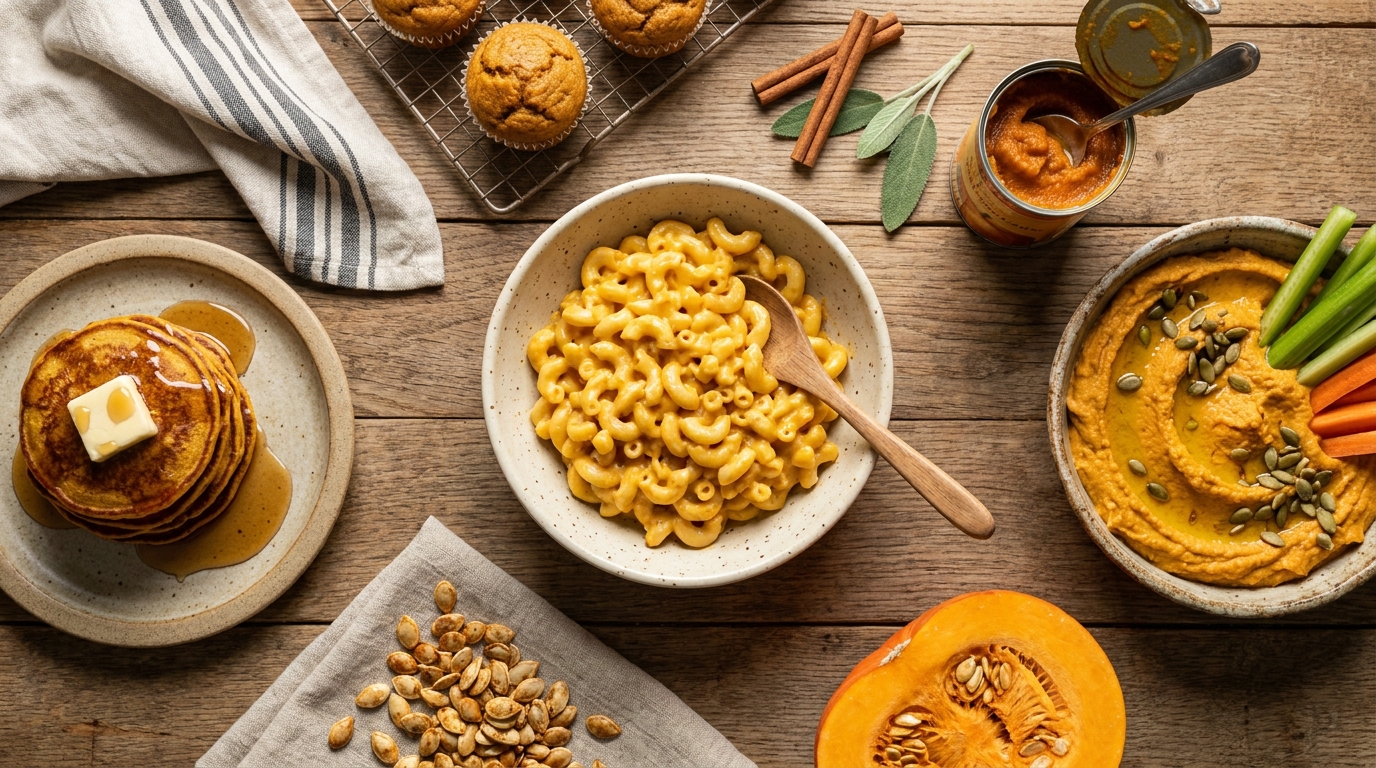
That same week I had an open can of pumpkin purée in the fridge and no plan for it. So on Tuesday night I stirred some into a pot of mac and cheese and set it on the table without a speech. My five-year-old ate a full bowl, asked for “more of the orange kind,” and then wanted to know why pumpkin had never been dinner before.
Fair question. Pumpkin is one of the mildest, creamiest, cheapest vegetables you can buy this time of year, and most of us only think to bake it into something sweet. This post is my answer to my kid’s question. You’ll find a sweet-versus-savory split of pumpkin recipes, the exact dinners, breakfasts, and snacks I make on repeat, and a few healthier sweet treats for when pumpkin dessert is exactly what the moment calls for. Everything here works for ages 1 to 8, and most of it has a job a small helper can do.
In this article (11 sections)
- Why Pumpkin Belongs at Dinner, Not Just Dessert
- Sweet vs. Savory: Your Pumpkin Recipe Split at a Glance
- Getting the Pumpkin Right: Canned, Fresh, and Frozen
- Savory Pumpkin Dinners Kids Will Actually Eat
- Pumpkin Pancakes and Other Breakfasts
- Healthy Pumpkin Snacks for Kids
- Pumpkin Desserts for Kids That Stay on the Healthy Side
- Pumpkin Recipes Kids Can Make Themselves
- Getting a Skeptical Kid to Try Pumpkin (and Keeping It Fun)
- Frequently Asked Questions
- Pumpkin Is Just a Cozy Vegetable
Why Pumpkin Belongs at Dinner, Not Just Dessert
Pumpkin doesn’t taste like pie. Pie tastes like pie, thanks to sugar, cinnamon, nutmeg, and cloves. Plain pumpkin purée is mild, faintly sweet, and earthy, somewhere between butternut squash and sweet potato. That makes it a great background ingredient. It melts into cheese sauce, tomato sauce, bean dip, and pancake batter and adds body and color without shouting.
Here’s what you get from it:
- Vitamin A. Pumpkin is loaded with beta-carotene, which the body converts to vitamin A. A half cup of canned purée delivers well over a young child’s daily target.
- Fiber. Canned pumpkin has roughly 7 grams of fiber per cup. Kids need about 19 grams a day at ages 1 to 3 and about 25 grams at ages 4 to 8, and most kids I know fall short.
- Body and creaminess. A scoop of purée lets you use less butter, cream, or oil in a sauce and still get a silky texture.
- A mild flavor. Kids who reject strong green vegetables often accept pumpkin because there isn’t much to object to.
Pumpkin is low in protein and fat, so it works best paired with cheese, beans, yogurt, eggs, or meat. This is the real argument for savory pumpkin. Most sweet pumpkin recipes are mostly flour and sugar with a spoonful of purée for color. At dinner, pumpkin sits next to real protein and does its job as a vegetable.
If you want to see where pumpkin sits among the rest of the season’s produce, my Fall Produce Guide for Families covers what’s at its best right now and how to use it.
Sweet vs. Savory: Your Pumpkin Recipe Split at a Glance
Below is every recipe in this post, sorted by whether it leans sweet or savory. Use it to plan a week, or to grab something fast when you’re standing in front of an open can.
| Recipe | Sweet or Savory | Best Time to Serve | Kid Job | Total Time |
|---|---|---|---|---|
| Pumpkin mac and cheese | Savory | Weeknight dinner | Sprinkle cheese, stir the pasta | 25 min |
| Creamy pumpkin pasta sauce | Savory | Dinner | Measure and whisk | 20 min |
| Pumpkin black bean quesadillas | Savory | Dinner or lunch | Mash the filling, sprinkle cheese | 20 min |
| Pumpkin turkey chili | Savory | Dinner, freezer batch | Rinse beans, dump and stir | 40 min |
| Pumpkin hummus | Savory | Snack, lunchbox | Press the blender button (with help), dip | 10 min |
| Roasted pumpkin seeds | Savory | Snack, topping | Scoop, rinse, and toss seeds | 35 min |
| Pumpkin pancakes | Sweet-leaning (easy savory swap) | Breakfast or breakfast-for-dinner | Whisk and stir | 25 min |
| Pumpkin baked oatmeal cups | Sweet | Breakfast, snack | Stir, fill liners | 35 min |
| Pumpkin yogurt dip | Sweet | Snack | Stir, dip apple slices | 5 min |
| Pumpkin oat muffins | Sweet | Snack, breakfast | Stir, fill the tin | 30 min |
| Pumpkin pudding cups | Sweet | Dessert | Crush crackers, layer cups | 10 min |
| Pumpkin banana “nice cream” | Sweet | Dessert, snack | Break bananas, scoop | 5 min |
My rule of thumb: put pumpkin on the dinner table at least twice a week during the season, and let the sweet stuff be the occasional treat. When pumpkin is a regular dinner ingredient, the muffin on Saturday morning doesn’t feel like the only time pumpkin shows up.
Getting the Pumpkin Right: Canned, Fresh, and Frozen
Before any recipe, one mistake to avoid.
Canned Purée vs. Pie Filling
The can you want says “100% pure pumpkin” and the ingredient list says one word: pumpkin. The can you don’t want says “pumpkin pie filling” or “pie mix” and contains sugar, spices, and sometimes thickeners. If you put pie filling into mac and cheese, you get sweet cheese sauce, which is the fastest way I know to ruin a Tuesday. Check the label at the store and again in your pantry, because the two cans sit right next to each other and look nearly identical.
Canned pumpkin is often made from a tan-skinned squash variety rather than the orange jack-o’-lantern kind. It’s still labeled pumpkin, it’s still nutritious, and it’s a lot more consistent than what you’ll get from most fresh pumpkins. I use canned for most weeknight cooking.
Roasting Your Own
If you want to use fresh, buy a sugar pumpkin (also sold as a pie pumpkin). They’re small, dense, and sweet. Carving pumpkins are watery and stringy, and they taste like very little. To roast:
- Poke a few holes in the pumpkin and microwave it for 3 to 4 minutes to soften the skin. This makes cutting much safer, and it’s a job for an adult only. A raw pumpkin is hard and slippery.
- Halve it, scoop out the seeds (save them, see the snack section), and place the halves cut-side down on a lined baking sheet.
- Roast at 400°F for 40 to 50 minutes, until a fork slides in easily.
- Scoop out the flesh and purée it in a blender or food processor until smooth.
- If the purée looks watery, let it drain in a fine strainer for 15 minutes.
A 2-to-3-pound pie pumpkin gives you roughly 2 cups of purée.
One Can, Four Dishes
A 15-ounce can holds about 1¾ cups of purée, which is more than most recipes call for. Here’s how I split one can across the week so nothing gets wasted:
| Dish | Pumpkin Used | Running Total |
|---|---|---|
| Pumpkin pancakes | ½ cup | ½ cup |
| Pumpkin mac and cheese | ½ cup | 1 cup |
| Pumpkin hummus | ½ cup | 1½ cups |
| Pumpkin yogurt dip | ¼ cup | 1¾ cups |
Storing Leftover Purée
Don’t leave leftovers in the open can. Transfer them to an airtight container, where they’ll keep in the fridge for about a week. For longer storage, freeze the purée in ½-cup portions using a muffin tin or silicone cups. Once frozen, pop the pucks into a freezer bag. They keep well for about 3 months, and each puck is exactly one recipe’s worth. Thaw in the fridge overnight or drop a frozen puck straight into a pot of chili.
Savory Pumpkin Dinners Kids Will Actually Eat
These are the recipes that made pumpkin a weeknight regular in my house. They all put the pumpkin next to something familiar: cheese, pasta, beans, tortillas. That’s deliberate. Kids trust foods that look and taste like what they already know.
Pumpkin Mac and Cheese
This is the one that started it all. The pumpkin makes the sauce silkier and adds a warm orange color. What you taste is cheese.
Serves: 4 kids plus a hungry adult, with leftovers if you’re lucky
Ingredients
- 8 ounces (about 2 cups) elbow macaroni or small shells
- 1 tablespoon butter
- 1 tablespoon all-purpose flour
- 1 cup whole milk
- ½ cup pumpkin purée (not pie filling)
- 1½ cups freshly shredded sharp cheddar (about 6 ounces)
- ¼ teaspoon garlic powder
- Pinch of mustard powder (optional, it sharpens the cheese flavor)
- Salt, to taste
Steps
- Cook the pasta according to the package. Drain, saving ¼ cup of the pasta water.
- In the same pot over medium heat, melt the butter. Whisk in the flour and cook for 1 minute.
- Slowly whisk in the milk. Simmer gently for 2 to 3 minutes, until the sauce coats the back of a spoon.
- Whisk in the pumpkin, garlic powder, and mustard powder.
- Take the pot off the heat. Add the cheese a handful at a time, stirring until each addition melts.
- Add the pasta back in and toss. If the sauce is too thick, loosen it with a splash of the reserved pasta water.
Tips from my kitchen
- Shred your own cheese. Bagged shreds have an anti-caking coating that can make the sauce grainy.
- If your kid is suspicious, start with ¼ cup of pumpkin and work up to ½ cup over a few batches.
- For a protein boost, stir in a cup of small white beans or serve with sliced chicken sausage on the side.
- Leftovers reheat well with a splash of milk. Stir gently to bring the sauce back.
Creamy Pumpkin Pasta Sauce
Think of this as a friendlier cousin of Alfredo. It’s made with pantry staples and takes about 20 minutes.
Serves: 4 to 5
Ingredients
- 1 tablespoon olive oil
- 2 garlic cloves, minced
- 1 cup pumpkin purée
- 1 cup low-sodium chicken or vegetable broth
- ½ cup milk or half-and-half
- ¼ cup grated Parmesan
- Salt and pepper to taste
- 12 ounces pasta (I like rotini or shells because the sauce catches in the curves)
Steps
- Cook the pasta and drain, reserving a little water.
- Warm the oil in a large skillet over medium heat. Cook the garlic for 30 seconds, until fragrant.
- Add the pumpkin, broth, and milk. Whisk and simmer for 8 minutes, until slightly thickened.
- Stir in the Parmesan and season lightly.
- Toss with the pasta, adding reserved water if needed.
For protein, add shredded rotisserie chicken, browned sausage, or a can of drained white beans. For a green vegetable, stir in a handful of baby spinach at the end and let it wilt.
This sauce works beautifully as one option on a Build-Your-Own Noodle Bar Dinner night. Put out a bowl of it next to plain butter noodles and a tomato sauce, and let kids mix and match. Having the pumpkin sauce on the table with no pressure to eat it gets more tastes than any coaxing I’ve tried.
Pumpkin Black Bean Quesadillas
The pumpkin and black bean filling is thick and creamy, with a mild smoky flavor. The combination gives kids fiber and plant protein in the same bite.
Makes: 6 quesadillas
Ingredients
- 1 can (15 ounces) black beans, drained and rinsed
- ¾ cup pumpkin purée
- ½ teaspoon ground cumin
- ½ teaspoon mild chili powder or smoked paprika
- 1½ cups shredded Monterey Jack or cheddar
- 6 flour tortillas (8-inch)
- A little oil or butter for the pan
Steps
- Mash the beans and pumpkin together in a bowl with a fork or potato masher. Stir in the spices. It’s fine if a few beans stay partly whole.
- Spread about ⅓ cup of the filling over half of each tortilla. Top with ¼ cup cheese and fold over.
- Cook in a lightly oiled skillet over medium heat for 2 to 3 minutes per side, until golden and the cheese is melted.
- Cut into wedges or strips.
Kid job: this is the best recipe on the list for a 3-to-5-year-old. Mashing is satisfying, and sprinkling cheese is the most popular job in any kitchen.
Serving ideas: plain yogurt or sour cream for dipping, sliced avocado, or a little mild salsa. For toddlers, cut the quesadilla into thin strips and skip any whole beans that are hard to squish.
Pumpkin Turkey Chili
This is my batch-cooking pumpkin recipe. It’s mild, a little sweet, and hearty, and it freezes beautifully. It’s also a good use for cooler evenings when everyone wants something warm.
Serves: 6 to 8
Ingredients
- 1 tablespoon oil
- 1 pound ground turkey
- 1 small onion, finely diced
- 2 garlic cloves, minced
- 1 tablespoon mild chili powder
- 1 teaspoon ground cumin
- 1 can (15 ounces) pumpkin purée
- 1 can (15 ounces) diced tomatoes
- 1 can (15 ounces) black beans, rinsed
- 1 can (15 ounces) kidney beans, rinsed
- 2 cups low-sodium broth
- Salt to taste
Steps
- Heat the oil in a large pot over medium heat. Cook the onion for 4 to 5 minutes, until soft.
- Add the turkey and break it up as it browns, about 6 minutes. Stir in the garlic, chili powder, and cumin for 1 minute.
- Add the pumpkin, tomatoes, beans, and broth. Stir well.
- Bring to a gentle simmer and cook, partly covered, for 25 to 30 minutes.
- Taste, then add salt if needed.
Slow cooker: combine everything (browning the turkey first if you have time) and cook on low for 6 to 8 hours or high for 4.
For toddlers: mash some of the beans against the side of the pot, or ladle a portion into a bowl and blend it with an immersion blender. Serve it with a little shredded cheese on top.
Toppings that help: shredded cheddar, a spoonful of plain yogurt, crushed tortilla chips, or diced avocado. Let kids build their own bowl, and they’ll be more invested in eating it.
This chili freezes well for about 3 months in flat freezer bags. If you like stocking the freezer for busy weeks, my Freezer-to-Instant-Pot Dump Meals for Busy Families post has more make-ahead ideas.
Pumpkin Pancakes and Other Breakfasts
Pancakes are the bridge recipe in this post. They’re sweet enough for a kid who thinks pumpkin is only for dessert, but they’re still mostly batter, with the pumpkin acting as a moist, tender base.
Pumpkin Pancakes
Makes: about 8 four-inch pancakes
Ingredients
- 1 cup flour (all-purpose, or half all-purpose and half whole wheat)
- 2 teaspoons baking powder
- ½ teaspoon cinnamon
- ¼ teaspoon salt
- ¾ cup milk
- ½ cup pumpkin purée
- 1 egg
- 1 tablespoon maple syrup
- 1 tablespoon melted butter or oil
Steps
- Whisk the dry ingredients in a large bowl.
- In a second bowl, whisk the milk, pumpkin, egg, maple syrup, and melted butter.
- Pour the wet ingredients into the dry and stir just until combined. A few lumps are fine. Overmixing makes tough pancakes.
- Heat a lightly oiled griddle or skillet over medium-low heat. Pumpkin batter browns faster than regular pancake batter, so lower heat gives you a cooked center.
- Scoop ¼ cup of batter per pancake. Cook until bubbles form and pop on the surface, about 2 to 3 minutes, then flip and cook another 2 minutes.
Notes
- The batter is thicker than plain pancake batter. If it’s too stiff to spread, add a tablespoon or two of milk.
- Serve with plain yogurt and a light drizzle of maple syrup instead of a heavy pour. The pancakes already have some sweetness.
- Egg-free: replace the egg with 1 tablespoon ground flaxseed mixed with 3 tablespoons water, left to sit for 5 minutes.
- Freezer plan: freeze cooled pancakes flat on a baking sheet, then transfer to a bag. Reheat in the toaster. Breakfast on a school morning is now 90 seconds.
- Honey warning: if you serve any to a baby under 12 months, skip honey completely. Maple syrup is fine in small amounts for older babies, but plain pumpkin pancakes usually don’t need any.
The Savory Pancake Swap
Want pumpkin at dinner? Make the same batter with these changes: leave out the cinnamon and maple syrup, and stir in ½ cup shredded cheddar and ¼ teaspoon garlic powder. Serve the pancakes with a fried egg and some fruit on the side. Breakfast-for-dinner is a reliable winner in our house, and this version tastes closer to a cheddar biscuit than anything sweet.
Pumpkin Baked Oatmeal Cups
These are soft, portable, and freeze well. They’re also easy for a one-year-old to hold and gum through.
Makes: 12
Ingredients
- 2 cups old-fashioned rolled oats
- 1 teaspoon baking powder
- 1 teaspoon cinnamon
- ¼ teaspoon salt
- 1 cup pumpkin purée
- 1 cup milk
- 1 egg
- 2 tablespoons maple syrup
- 1 teaspoon vanilla
Steps
- Heat the oven to 350°F and line a 12-cup muffin tin with paper liners or grease it well.
- Stir the oats, baking powder, cinnamon, and salt together.
- In another bowl, whisk the pumpkin, milk, egg, maple syrup, and vanilla. Combine with the dry mix.
- Divide among the cups and bake 20 to 25 minutes, until set and lightly golden at the edges.
For babies and toddlers, cut a cup into quarters or strips. For older kids, top with a spoonful of yogurt or a few blueberries. For more breakfast ideas at the one-year mark, my toddler breakfast post is a good next stop.
Healthy Pumpkin Snacks for Kids
Snacks are where pumpkin gets easy. You don’t need a recipe for half of them.
Pumpkin Hummus
This is the recipe I make when I need something orange and dippable for a lunchbox or after-school plate. The pumpkin gives the hummus a mild sweetness, and it’s creamier than plain hummus.
Makes: about 1¾ cups
Ingredients
- 1 can (15 ounces) chickpeas, drained (save the liquid)
- ½ cup pumpkin purée
- 2 tablespoons tahini
- 2 tablespoons lemon juice
- 1 small garlic clove
- 2 tablespoons olive oil
- ½ teaspoon ground cumin
- ½ teaspoon salt
- 2 to 4 tablespoons chickpea liquid or water
Steps
- Blend everything except the liquid until it’s a thick paste, scraping down the sides once or twice.
- With the blender running, add the liquid a tablespoon at a time until the hummus is as smooth as you like it.
- Taste and adjust the lemon and salt.
Dippers: carrot sticks (cooked until soft for toddlers), cucumber spears, pita triangles, whole-grain crackers, bell pepper strips, or soft roasted potato wedges.
For toddlers: spread a thin layer on toast or a soft wrap instead of serving thick dollops to scoop up.
Allergy note: sesame is now one of the major food allergens in the United States. If your family avoids it, replace the tahini with 2 more tablespoons of olive oil and 2 tablespoons of plain Greek yogurt.
Pumpkin Yogurt Dip
You can make this in five minutes. Stir together 1 cup plain whole-milk Greek yogurt, ¼ cup pumpkin purée, 1 tablespoon maple syrup, and ½ teaspoon cinnamon. It tastes like a pumpkin pie yogurt, but with no crust and far less sugar. Serve with apple slices, banana coins, graham crackers, or pear wedges. For children under four, slice apples thinly or use cooked, soft pear. My Toddler-Safe Halloween Snacks post has a full rundown of safe shapes and sizes if you have a little one at the table.
Roasted Pumpkin Seeds
If you carve or roast a pumpkin, don’t throw out the seeds.
- Scoop the seeds into a colander and rinse off the strings. A 4-year-old will happily do this all afternoon.
- Pat dry with a towel.
- Toss with 1 teaspoon oil and ¼ teaspoon salt.
- Spread on a baking sheet and roast at 325°F for 20 to 25 minutes, stirring halfway, until golden and crisp.
Safety for young kids: whole seeds are a choking hazard for children under four. For toddlers and preschoolers, grind the cooled seeds in a blender or food processor into a coarse “pepita dust” and sprinkle it on mac and cheese, yogurt, or oatmeal. Older kids can snack on them whole.
Five No-Recipe Pumpkin Snacks
- Pumpkin cream cheese: mix ½ cup cream cheese with ¼ cup pumpkin. Add a pinch of cinnamon for sweet or garlic powder for savory. Spread on toast or bagel bites.
- Pumpkin oatmeal: swirl 2 tablespoons pumpkin into a bowl of cooked oatmeal with a shake of cinnamon.
- Pumpkin cheese quesadilla bites: spread a thin layer of purée under the cheese in any quesadilla.
- Pumpkin smoothie: blend a frozen banana, ¼ cup pumpkin, ½ cup milk, and a spoonful of yogurt.
- Pumpkin and peanut butter dip: stir ¼ cup pumpkin into 2 tablespoons peanut butter (or sunflower seed butter for a nut-free version) with a splash of milk to thin. Serve with apple slices for kids over four.
Pumpkin Desserts for Kids That Stay on the Healthy Side
I’m not anti-dessert. I just think pumpkin dessert should taste like pumpkin, not like the sugar around it. These three recipes cut the added sugar way down and let the pumpkin be the star.
A note on sugar: the American Heart Association suggests that children ages 2 and up stay under about 25 grams (6 teaspoons) of added sugar a day, and that kids under 2 avoid added sugar completely. Those are useful numbers to keep in your back pocket when you bake.
Pumpkin Oat Muffins
Makes: 12 standard muffins
Ingredients
- 1½ cups flour (half whole wheat works well)
- 1 teaspoon baking powder
- ½ teaspoon baking soda
- 1 teaspoon cinnamon
- ¼ teaspoon salt
- ¾ cup pumpkin purée
- ⅓ cup maple syrup
- ¼ cup oil (or melted butter)
- 1 egg
- ½ cup milk
Steps
- Heat the oven to 350°F and line a muffin tin.
- Whisk the dry ingredients in a large bowl. In another bowl, whisk the wet ingredients.
- Fold the wet into the dry until just combined.
- Fill the cups about ¾ full. Bake standard muffins for 18 to 20 minutes, or mini muffins for 10 to 12, until a toothpick comes out clean.
The sugar math: with ⅓ cup of maple syrup across 12 muffins, each one has about 6 grams of added sugar. A bakery-case pumpkin muffin can easily hold 25 grams or more. A muffin that size fits into a kid’s day without pushing them over the line.
Pumpkin Pudding Cups
No baking needed. Whisk together 1 cup plain Greek yogurt, ½ cup pumpkin purée, 1½ tablespoons maple syrup, and ½ teaspoon cinnamon. Spoon into small cups (this makes 2 to 3 kid-size servings), layering with crushed graham crackers if you like. It’s the flavor of pumpkin pie with the protein of yogurt, and it takes about ten minutes.
Pumpkin Banana “Nice Cream”
Blend 2 frozen, sliced ripe bananas with ½ cup chilled pumpkin purée, ¼ teaspoon cinnamon, and a splash of milk in a food processor or high-speed blender. Scrape down the sides a few times. Within a couple of minutes it turns into a soft-serve texture. Eat immediately, or freeze in a container for 30 minutes if you want it scoopable. It’s naturally sweet enough to skip added sugar completely.
Pumpkin Recipes Kids Can Make Themselves
Kids are far more likely to eat food they helped make, and pumpkin is forgiving. It’s already soft, it doesn’t need to be cooked to be safe, and it hides mistakes. Here are age-appropriate jobs. If you want the full picture of skills by age, my guide to teaching kids to cook goes step by step from toddlerhood on.
| Age | Good Pumpkin Jobs | Best Recipes to Start With |
|---|---|---|
| 1 to 2 | Mash cooked pumpkin with a fork, stir a cooled batter, dip food | Yogurt dip, oatmeal swirl |
| 3 to 4 | Scoop seeds, dump measured ingredients, sprinkle cheese, mash beans | Quesadillas, hummus (with an adult at the blender), muffin liners |
| 5 to 6 | Measure with cups and spoons, whisk, crack eggs (with practice), press the blender button with supervision | Pancakes, muffins, pudding cups |
| 7 to 8 | Read the recipe aloud, stir on the stove with supervision, roast seeds, make a full recipe with an adult nearby | Mac and cheese, pasta sauce, chili |
A few safety notes:
- Cutting a raw pumpkin is an adult job every time. It’s hard, round, and slippery.
- Hot stovetop work needs an adult beside a young cook, including stirring a cheese sauce.
- Blenders and food processors need an adult to handle the blades, though a child can press the button while you hold the lid.
- Scooping seeds is a mess and it’s wonderful. Put down a rimmed baking sheet and let them go.
Getting a Skeptical Kid to Try Pumpkin (and Keeping It Fun)
I’ll say something that might surprise you: I don’t sneak pumpkin into food. I tell my kids exactly what’s in it. When I made the mac and cheese, I said, “This has pumpkin in it, that’s why it’s orange.” No drama and no trick. If you’d like to try the stealth approach instead, my hidden veggie recipes for kids has plenty of ideas. But I’ve found that honesty pays off. When kids find out they’ve been eating a food they claimed to hate, it can backfire. When they know from the start, pumpkin becomes just another ingredient.
Here’s what works in my house:
- Start with a familiar food. Mac and cheese, pancakes, and quesadillas are all foods most kids already like. Pumpkin joins the party. It doesn’t replace it.
- Keep the first version smooth. Purée in sauces and batters is easier than chunks of roasted pumpkin.
- Serve without pressure. Put a small spoonful of hummus or dip on the plate. No “just one bite.” Research on picky eating suggests kids often need many exposures to a new food, sometimes ten or more, before they accept it.
- Let them pick the pumpkin. A trip to the market to choose a sugar pumpkin gets kids invested before you even cook.
- Make it a dipping game. Dips are the most reliable way I know to get kids to try something new. They control the pace.
- Don’t announce it as a health food. “This is good for you” rarely lands. “This is the orange pasta” does.
If you suspect your child’s pickiness goes deeper than a fall-flavor phase, my Picky Eater Quiz helps you figure out their eating style and what tends to work for it.
A Week of Pumpkin Without Pumpkin Fatigue
Too much of any one ingredient gets old fast. Here’s a sample week that spreads pumpkin out and keeps it interesting. I like to alternate savory and sweet, and I never do pumpkin two dinners in a row.
| Day | Meal | Pumpkin Dish |
|---|---|---|
| Monday | Breakfast | Pumpkin pancakes (freeze the extras) |
| Tuesday | Dinner | Pumpkin mac and cheese with steamed broccoli |
| Wednesday | Snack | Pumpkin hummus with veggie sticks |
| Thursday | Dinner | Something completely pumpkin-free (I mean it) |
| Friday | Dinner | Pumpkin black bean quesadillas |
| Saturday | Breakfast | Pumpkin baked oatmeal cups |
| Sunday | Dinner and dessert | Pumpkin chili, then pumpkin pudding cups |
If you only have time for one thing, do the mac and cheese. It’s the recipe that convinced my most skeptical eater.
Frequently Asked Questions
When can babies start eating pumpkin?
Plain pumpkin purée is a great early food, and most babies can start it around 6 months, once they’re showing signs of readiness for solids and have started eating other foods. Serve it plain, with no added salt, sugar, or honey. You can thin it with breast milk, formula, or water, or spread a thin layer on a preloaded spoon. Once babies are eating a variety of foods, pumpkin can move into oatmeal, pancakes, and soft baked goods. Always check with your pediatrician if your baby has allergies or eczema and you’re unsure about introducing foods.
Is canned pumpkin as healthy as fresh?
Yes, for most purposes. Canned pumpkin is cooked and puréed at peak ripeness, and it’s just as high in beta-carotene and fiber as home-roasted pumpkin. It’s actually more concentrated, because canned purée has less water than fresh, so a cup of canned holds more fiber and vitamin A than a cup of fresh. The only thing that matters is that the ingredient list says 100% pumpkin. Roast your own if you enjoy it, but don’t feel guilty about the can.
Can I use pumpkin pie filling instead of pumpkin purée?
Not in savory recipes, and I’d avoid it in sweet ones too. Pie filling is pre-sweetened and pre-spiced, so it will throw off the flavor of mac and cheese, hummus, or chili, and it adds sugar you can’t control. If you accidentally bought pie filling, use it for a dessert where you can skip any other sugar, or save it for an actual pie. For everything in this post, look for the can that says “100% pure pumpkin.”
Can kids eat too much pumpkin?
It’s very hard to overdo it with normal servings. One quirk to know about: eating lots of beta-carotene-rich foods, like pumpkin, carrots, and sweet potatoes, can give a child’s skin a faint yellow-orange tint, especially on the palms and soles. It’s harmless and fades when intake drops back to normal. It’s different from jaundice, which also affects the whites of the eyes. If you’re ever unsure about a color change in your child’s skin, call your pediatrician. And because pumpkin has so much fiber, a sudden big jump can cause gas or loose stools in some kids, so add it gradually.
Are pumpkin seeds safe for toddlers?
Whole pumpkin seeds are a choking hazard for children under four, so don’t serve them whole to toddlers or preschoolers. Ground seeds, pumpkin seed butter, and finely chopped pepitas mixed into food are safer ways to include them. They’re a good source of zinc, magnesium, and iron, so they’re worth including in a smoother form. Also watch for shells: whole, unshelled seeds are fibrous and hard to chew even for older kids.
Can I swap butternut squash or sweet potato for pumpkin?
Yes, in most of these recipes. Butternut squash is the closest substitute, with a very similar flavor and texture when roasted and puréed. Sweet potato is a little sweeter and denser, so you may need to thin the batter or sauce with a bit more milk. Kabocha and acorn squash also work. The main thing to watch is moisture. If a purée feels watery, drain it in a fine strainer before using it in pancakes or muffins.
Pumpkin Is Just a Cozy Vegetable
The next time you open a can of pumpkin, remember that dessert is only one thing it can do. Stir it into a pot of mac and cheese, blend it into hummus, fold it into pancake batter, or swirl it into yogurt for a snack. Your kids may say “orange food” with a raised eyebrow at first, and that’s fine. Give it a few tries, keep the pressure low, and let them stir, mash, and dip. You might find, like I did, that a kid who once thought pumpkin was only for pie is now asking for seconds on a Tuesday night.