Freezer Muffins for Toddlers: Make-Ahead Savory and Sweet Batches
Discover how to make and freeze toddler-friendly savory and sweet muffins, saving you time on busy mornings. You'll learn specific recipes, freeze/thaw times, and safety notes for ages 1-3.
- Learn why muffins are ideal for toddlers: soft, portable, and a great vehicle for veggies.
- Understand what makes a muffin toddler-appropriate: low sugar/salt, real food, soft texture, small size.
- Get specific recipes for savory (cheddar-zucchini) and sweet (banana-apple) toddler muffins.
- Find exact instructions for freezing, thawing, and reheating your homemade toddler muffins.
- Access a free printable kit with recipes, thaw charts, safety cards, and a weekly planner.
This post contains affiliate links. As an Amazon Associate I earn from qualifying purchases.
Last fall, at 7:40 on a Tuesday, I had a toddler on one hip, a half-empty cracker box in my hand, and a drop-off in twenty minutes. Then I found a zip bag of forgotten muffins in the freezer.
Ninety seconds later she was eating a warm cheddar-zucchini muffin with both hands and humming.
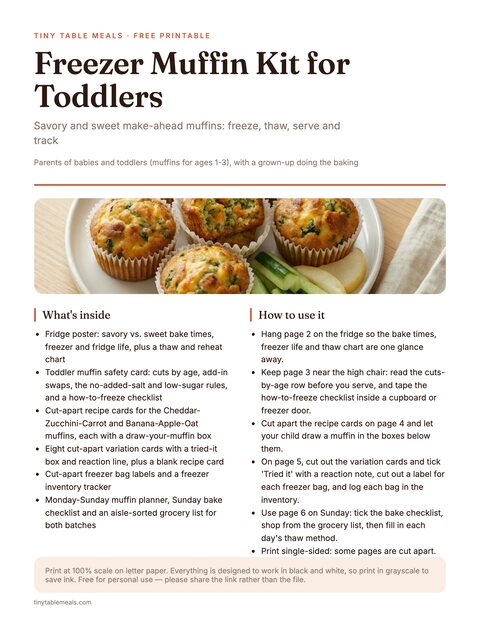
Free printable · 6 pages
Freezer Muffin Kit for Toddlers
A fridge poster comparing the savory and sweet batches with a thaw and reheat chart, a toddler muffin safety card with a how-to-freeze checklist, cut-apart recipe and variation cards with draw-your-muffin boxes, freezer bag labels with an inventory tracker, and a weekly muffin planner with bake checklist and grocery list.
Free. Your download link appears right here. You'll also join the Sunday Supper Plan. Unsubscribe anytime. Privacy
Freezer muffins for toddlers are that rescue, made ahead. This post gives you one savory and one no-added-sugar recipe, exact freeze, thaw and reheat times, and safety notes for ages 1 to 3.
In this article (14 sections)
- Why Freezer Muffins Work So Well for Toddlers
- Savory vs. Sweet Freezer Muffins: Side-by-Side Comparison
- Ground Rules Before You Bake
- The Savory Batch: Cheddar-Zucchini-Carrot Muffins
- The Sweet Batch: Banana-Apple-Oat Muffins with No Added Sugar
- How to Freeze Muffins So They Don’t Come Out Soggy
- Thawing and Reheating: Times and Methods
- Making Muffins Healthier Without Making Them Weird
- Using Your Freezer Stash: A Week of Muffin Moments
- Troubleshooting: Common Muffin Problems
- A Few Honest Notes About Toddlers and Muffins
- Quick-Start Checklist for Your First Muffin Day
- Frequently Asked Questions
- Your Freezer Is Waiting
Why Freezer Muffins Work So Well for Toddlers
A muffin is one of the few foods that checks nearly every toddler-feeding box at once.
- Soft but holds together. Little hands can grip it, and a one-year-old with a handful of teeth can mash it.
- A good vehicle for vegetables. Grated zucchini, carrot, and sweet potato disappear into the crumb in a way they never will on a plate.
- Portable. A muffin goes in a diaper bag or a lunchbox without a spoon.
- Forgiving. Toddlers eat half, abandon the rest, and come back in ten minutes. A muffin doesn’t mind.
- Freezer-friendly. Muffins freeze and reheat well because of their moisture and fat.
The big payoff is that you bake once and feed a child many times. If you’ve ever done a weekly cook-up, you know how much calmer a morning feels when something is already finished. If you want the whole-week version of that idea, my post on toddler-friendly meal prep and a week of lunches in under an hour follows the same logic. Muffins are just the breakfast-and-snack arm of it.
What Makes a Muffin “Toddler-Appropriate”
Not every muffin is a good muffin for a one- to three-year-old. The bakery kind is basically cake with a hat on: heavy on sugar, often high in sodium, and sometimes studded with whole nuts or hard bits. When I say “muffins for toddlers,” I mean muffins built on a few rules:
- Little or no added sugar. The American Heart Association recommends avoiding added sugars for children under two, and keeping them minimal after that. Ripe fruit does the sweetening.
- Low in added salt. Toddlers need far less sodium than adults. The National Academies set the upper limit at about 1,200 mg per day for ages 1 to 3. Cheese and baking powder already contribute, so skip the extra salt shaker.
- Real food in them. Vegetables, fruit, whole grains, eggs, yogurt, healthy fats.
- Soft texture, no choking hazards. More on that below.
- Small size. A mini muffin is a toddler-sized portion. A standard muffin is closer to two toddler servings.
Savory vs. Sweet Freezer Muffins: Side-by-Side Comparison
This is the table I wish I’d had when I started. Both batches are made from the base recipes later in this post, and the numbers assume you freeze them properly (flash-frozen, then bagged with the air pressed out).
| Savory batch (cheddar, zucchini, carrot) | Sweet batch (banana, apple, oat) | |
|---|---|---|
| Added sugar | None | None (sweetness from ripe banana and apple) |
| Best for | Lunch sides, snacks, “dinner is late” bridges, breakfast with fruit on the side | Breakfast, mid-morning snack, travel |
| Main protein / fat sources | Eggs, cheese, yogurt, olive oil | Eggs, yogurt, oats |
| Vegetable or fruit load | About 1 1/2 cups of grated veg per dozen | About 1 1/2 cups banana plus 3/4 cup apple per dozen |
| Bake time (mini) | 13 to 15 min at 375°F | 13 to 15 min at 350°F |
| Bake time (standard) | 18 to 22 min at 375°F | 20 to 24 min at 350°F |
| Flash-freeze before bagging | 1 to 2 hours, until firm | 1 to 2 hours, until firm |
| Best quality in freezer | Up to 2 months (cheese and veg texture fades after that) | Up to 3 months |
| Fridge storage after baking | 3 to 4 days, covered | 3 to 4 days, covered |
| Thaw on counter (mini) | 20 to 30 min | 20 to 30 min |
| Thaw on counter (standard) | 45 to 60 min | 45 to 60 min |
| Thaw in fridge | Overnight (8 hours) | Overnight (8 hours) |
| Microwave from frozen (mini) | 15 to 20 seconds | 15 to 20 seconds |
| Microwave from frozen (standard) | 30 to 40 seconds | 25 to 35 seconds |
| Oven or toaster oven from frozen | 300°F, wrapped in foil, 15 to 20 min (standard) or 10 to 12 min (mini) | 300°F, wrapped in foil, 15 to 20 min (standard) or 10 to 12 min (mini) |
| Texture after thawing | Moist, a little denser; cheese stays tender | Very moist, slightly sticky top (that’s fine) |
| Pairs well with | Fruit, cucumber quartered lengthwise and thinly sliced, plain yogurt, scrambled egg | Plain yogurt, a thin scrape of smooth nut butter, thinly sliced pear |
Savory muffins taste a little freezer-flat after about two months, though they stay safe at 0°F. Microwaves vary, so start low and check the center.
Ground Rules Before You Bake
Choking Safety for Ages 1 to 3
Safety firstRound, firm foods like whole berries, grapes, and cheese cubes are choking hazards until about age 4. Halve or quarter grapes and berries lengthwise, shred the cheese, and skip whole nuts and chunks of nuts. Keep your child seated and supervised, and never feed muffins in the car.
Soft baked goods are generally a good texture for toddlers, but a few add-ins change the picture.
- Skip whole nuts, big seed clusters, and chunks of raw hard fruit or veg. Grate or finely chop instead. Raw apple, even in thin slices, is a choking hazard under age 4, so grate it or cook it soft.
- Berries: Whole berries are a choking hazard under age 4. Halve or quarter blueberries, and chop larger berries. A muffin hides whole berries from you, so prep them first.
- Dried fruit: Neither recipe uses it. Skip dried fruit, or chop it very finely, for children under 4.
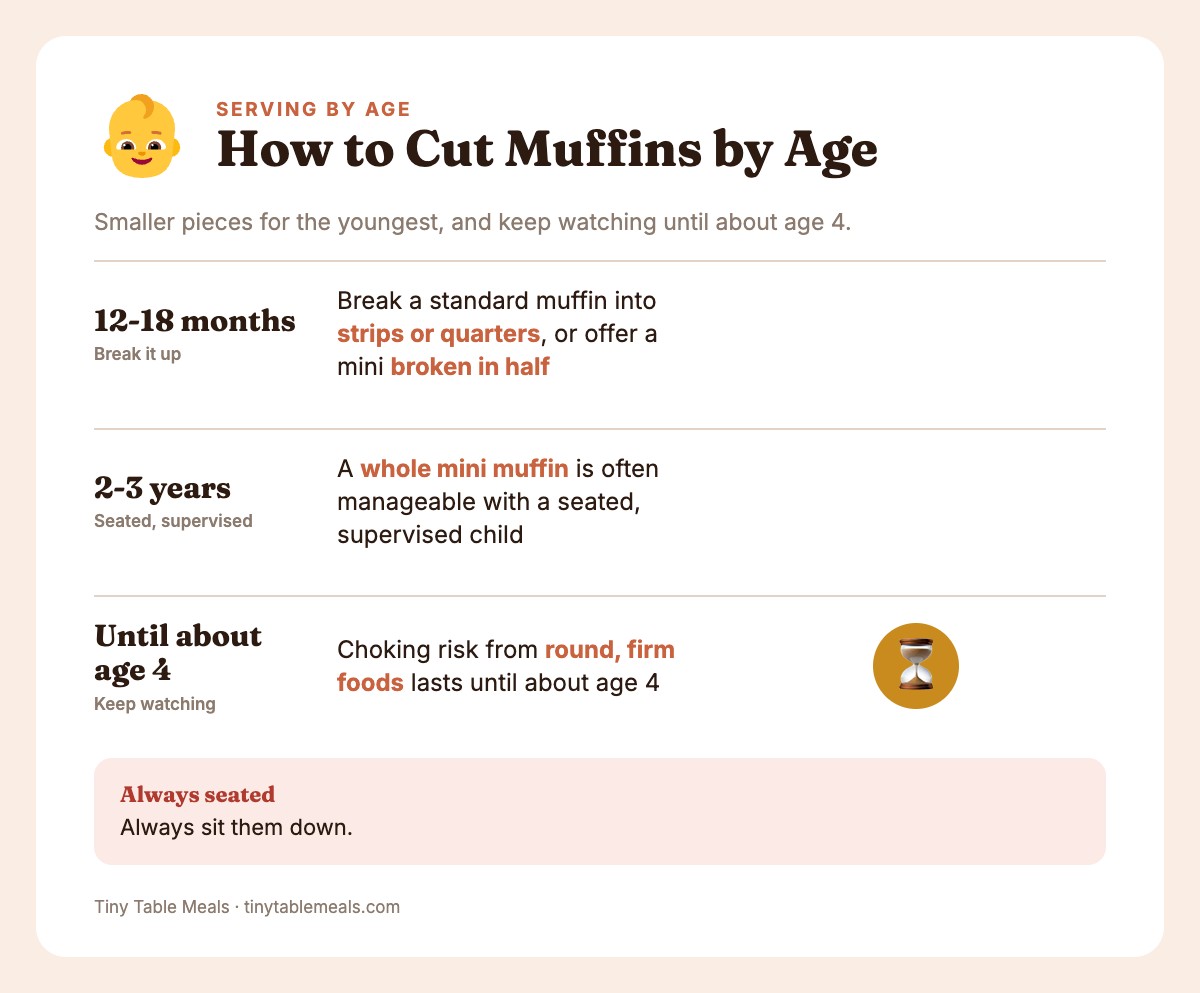
- Cut for the age. For a 12 to 18-month-old, break a standard muffin into strips or quarters, or offer a mini broken in half. By two to three years, a mini muffin is often manageable whole with a seated, supervised child. Keep watching, since choking risk from round, firm foods lasts until about age 4.
- Always sit them down. No eating while walking, crawling, or riding in the car where you can’t watch their face. This matters more than any recipe tweak.
Allergens
Eggs, dairy, and wheat are all in my base recipes, and one variation uses peanut. Current AAP guidance is to introduce common allergens like these individually in infancy, not for the first time in a muffin, so you know what you’re looking at if there’s a reaction. My post on introducing allergens to baby walks through how. If your child has an allergy, check the swaps in the FAQ at the end, and talk with your pediatrician or allergist for anything specific to your child.
Honey and Other Reminders
Honey is not safe before 12 months, and many parents choose to skip it for muffins anyway, because ripe banana and apple make it unnecessary. If your baby is just turning one and you’re still working through basics, my guide to breakfast ideas for 12-month-olds is a good companion to these muffins.
Equipment
You don’t need anything fancy:
- A 12-cup standard muffin tin or a 24-cup mini tin (mini is my default for toddlers)
- Silicone or paper liners. Silicone ones peel off frozen muffins more easily; paper ones are cheaper and fine if you spray them lightly.
- A box grater, or the grater disc of a food processor
- A clean kitchen towel or fine-mesh strainer for squeezing zucchini
- A rimmed baking sheet that fits in your freezer, for flash freezing
- Freezer bags (quart size is perfect) and a marker
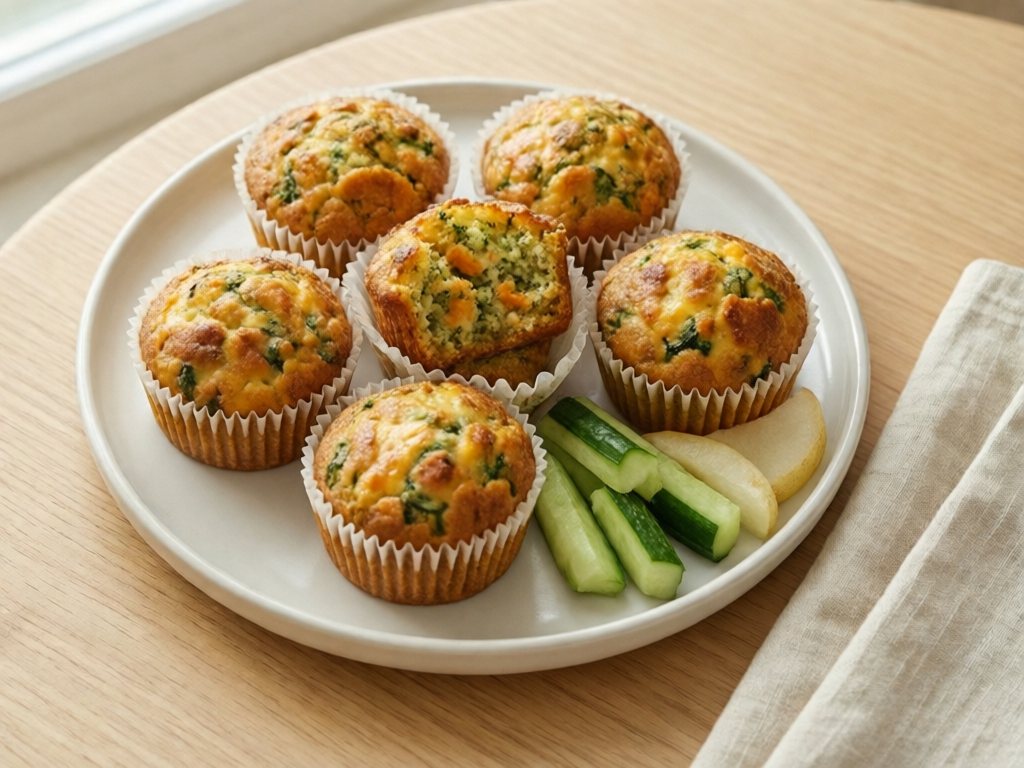
The Savory Batch: Cheddar-Zucchini-Carrot Muffins
This is the muffin that rescued my Tuesday morning. The batter is plain yogurt and olive oil, with cheese for flavor and fat. There’s enough grated vegetable to see. I like that, because a toddler who gets used to seeing orange flecks in food may be more willing to try soft cooked carrot later.
Makes: 12 standard muffins or about 24 mini muffins
Prep: 20 minutes
Bake: 18 to 22 minutes (standard) or 13 to 15 minutes (mini)
Ingredients
- 3/4 cup whole wheat flour
- 3/4 cup all-purpose flour
- 2 teaspoons baking powder
- 1/2 teaspoon garlic powder
- 1/2 teaspoon dried dill or 1 tablespoon finely snipped chives (optional)
- 1 cup finely grated zucchini, squeezed very dry (about 1 small zucchini)
- 1/2 cup finely grated carrot
- 3/4 cup shredded sharp cheddar
- 2 large eggs
- 3/4 cup plain whole-milk yogurt
- 1/4 cup olive oil
- 1/4 cup whole milk (or any milk your toddler drinks)
There is no added salt. The cheese and baking powder carry enough sodium for little bodies, and the garlic and herbs make up the flavor difference. If you grew up salting everything, this will taste a touch mild to you. Your toddler won’t mind.
Instructions
- Heat and prep. Heat the oven to 375°F. Line or lightly grease your tin.
- Squeeze the zucchini. This is the step that decides whether your muffins are tender or gummy. Wrap the grated zucchini in a clean towel and wring it hard over the sink. You should get a surprising amount of water out. Dry zucchini = fluffy muffins.
- Mix the dry. In a large bowl, whisk both flours, baking powder, garlic powder, and dill.
- Mix the wet. In a second bowl, whisk the eggs, yogurt, olive oil, and milk until smooth.
- Combine. Pour the wet into the dry. Add the zucchini, carrot, and cheese. Fold with a spatula until just combined. A few flour streaks are fine. Overmixing makes tough muffins.
- Fill the tin. Fill each cup about three-quarters full. A cookie scoop makes mini muffins fast.
- Bake. Standard muffins take 18 to 22 minutes, minis 13 to 15. They’re done when the tops spring back lightly and a toothpick comes out clean, with maybe a moist crumb but no wet batter.
- Cool completely. Let them rest in the tin for 5 minutes, then move to a wire rack. Do not freeze warm muffins. Trapped steam turns into ice crystals and soggy tops.
Why It Works
The yogurt adds moisture and a little protein, and its acidity helps the baking powder lift. In my experience, olive oil keeps the crumb tender through freezing better than butter, which firms up and can taste dry after thawing. The cheese gives toddlers the salty-savory flavor they tend to love without a ton of added sodium.
Savory Variations
Once the base is in your hands, it’s a template. Swap about the same total volume of grated vegetable and keep the rest the same.
| Variation | Swap in | Notes |
|---|---|---|
| Sweet potato and sage | 1 cup grated raw sweet potato in place of the zucchini | Sweet potato holds less water than zucchini, so skip the squeezing, and if the batter looks stiff, stir in 1 to 2 tablespoons of milk. Add 1/4 teaspoon rubbed sage. |
| Spinach and feta | 1 cup finely chopped, squeezed-dry cooked spinach in place of zucchini; swap cheddar for 1/2 cup crumbled feta | Feta is saltier, so use a smaller amount than cheddar. |
| Broccoli and cheddar | 1 cup very finely chopped steamed broccoli (florets only) in place of zucchini | Chop it small so it doesn’t leave large chunks. |
| Corn and bell pepper | 3/4 cup thawed frozen corn (mashed lightly) and 1/4 cup finely diced red pepper | Red pepper should be diced very small for younger toddlers. |
| Pizza muffin | Add 2 tablespoons tomato paste to the wet, 1/2 teaspoon oregano, swap cheddar for mozzarella | A big hit with 2- and 3-year-olds. |
| Egg-boosted | Add a third egg and cut the milk to 2 tablespoons | More protein, slightly more custardy. |
For the toddler who is deep in a “no green things” phase, the pizza muffin and the sweet-potato version are the two I’d start with. If you’re hunting for more ways to tuck vegetables into food without a fight, my collection of hidden veggie recipes for kids has plenty of company for these.
The Sweet Batch: Banana-Apple-Oat Muffins with No Added Sugar
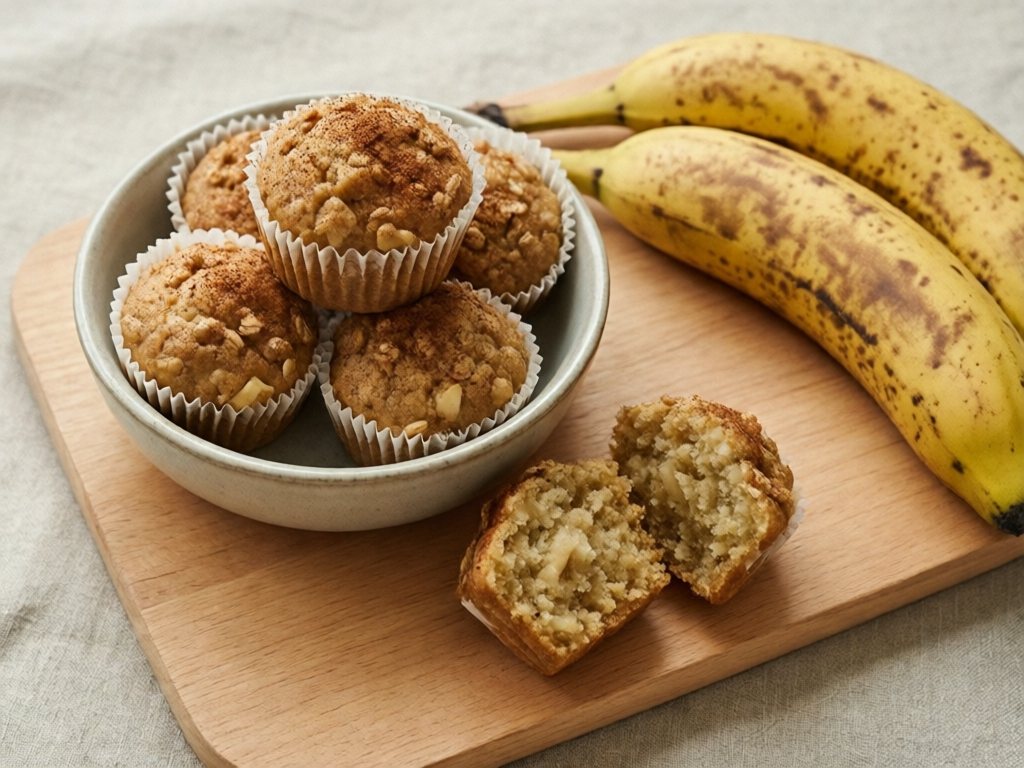
This is the muffin I bake when I want something that tastes like dessert but behaves like breakfast. The sweetness is entirely ripe banana and apple, with cinnamon and vanilla to make it taste sweeter than it is. Even my cookie-loving daughter ate these without complaint.
Makes: 12 standard muffins or about 24 mini muffins
Prep: 20 minutes
Bake: 20 to 24 minutes (standard) or 13 to 15 minutes (mini)
Ingredients
- 1 cup old-fashioned rolled oats, blended into a coarse flour (or use 1 cup store-bought oat flour)
- 1/2 cup whole wheat flour
- 2 teaspoons baking powder
- 1 teaspoon ground cinnamon
- 3 very ripe bananas, mashed (about 1 1/2 cups)
- 3/4 cup finely grated apple, peel on (about 1 medium apple)
- 2 large eggs
- 1/2 cup plain whole-milk yogurt
- 1/4 cup melted butter or coconut oil, slightly cooled
- 1 teaspoon vanilla extract
“Very ripe” is doing real work here. You want bananas that are heavily spotted, even mostly brown. That’s where the sweetness comes from. If your bananas are still yellow with a green tip, the muffins will taste flat, and you’ll be tempted to add sugar. Stick a few overripe bananas in the freezer when they go past eating stage; thaw them and they turn into a sweet puree that’s perfect for this recipe.
Instructions
- Heat and prep. Heat the oven to 350°F. Line or grease your tin.
- Make oat flour. Pulse the oats in a blender or food processor until mostly powdery with a few flecks.
- Mix the dry. Whisk the oat flour, whole wheat flour, baking powder, and cinnamon together.
- Mix the wet. In a separate bowl, mash the bananas until almost smooth. Stir in the apple, eggs, yogurt, melted butter, and vanilla.
- Combine. Fold the dry into the wet until just mixed. The batter will be wetter than a classic muffin batter, which is normal for fruit-sweetened muffins.
- Fill and bake. Fill cups about three-quarters full. Standard muffins take 20 to 24 minutes, minis 13 to 15. A toothpick should come out clean or with a few moist crumbs.
- Cool completely on a rack before freezing.
A Note on “No Sugar”
When parents search for muffins for toddlers with no sugar, they usually mean no added sugar, and that’s what this recipe is. Bananas, apples, and yogurt contain natural sugars, and that’s fine. They come packaged with fiber, vitamins, and water, and they’re a very different thing from a spoonful of refined sugar. If you want to go a step further, replace the vanilla with an extra 1/2 teaspoon cinnamon, or add a pinch of nutmeg. You can also stir in a spoonful of unsweetened applesauce in place of some of the grated apple.
Sweet Variations
| Variation | Swap in | Notes |
|---|---|---|
| Blueberry-banana | Fold in 3/4 cup blueberries, halved or roughly chopped first | Frozen berries work. Chop them while still partly frozen, then fold in straight from the freezer so the batter doesn’t turn purple. |
| Pear and ginger | Replace apple with grated ripe pear; add 1/4 teaspoon ground ginger | Gentle, warm flavor. |
| Pumpkin-oat | Replace banana with 1 cup pumpkin puree plus 1 mashed banana; add 1/2 teaspoon pumpkin pie spice | Great in fall. |
| Peanut butter-banana | Add 1/4 cup smooth peanut butter to the wet; reduce butter to 2 tablespoons | Only if you’ve already introduced peanut and your child tolerates it. Check with your pediatrician first if your child has eczema or another food allergy. Smooth only, never chunky. |
| Carrot-cake | Replace apple with finely grated carrot; add 1/4 teaspoon nutmeg | Carrot adds moisture and a little sweetness. |
| Strawberry-yogurt | Fold in 1/2 cup finely chopped strawberries; use plain whole-milk yogurt as in the base recipe | Chop small; strawberries release a lot of water. |
If you’re coming into the season with pumpkin on the brain, you might also like my post on pumpkin recipes for kids that aren’t pumpkin pie. The pumpkin-oat muffin above is a cousin of those.
How to Freeze Muffins So They Don’t Come Out Soggy
I’ve frozen muffins badly and well. The bad way is to toss warm muffins in a bag and shove them in. The good way takes five extra minutes.
Step-by-Step
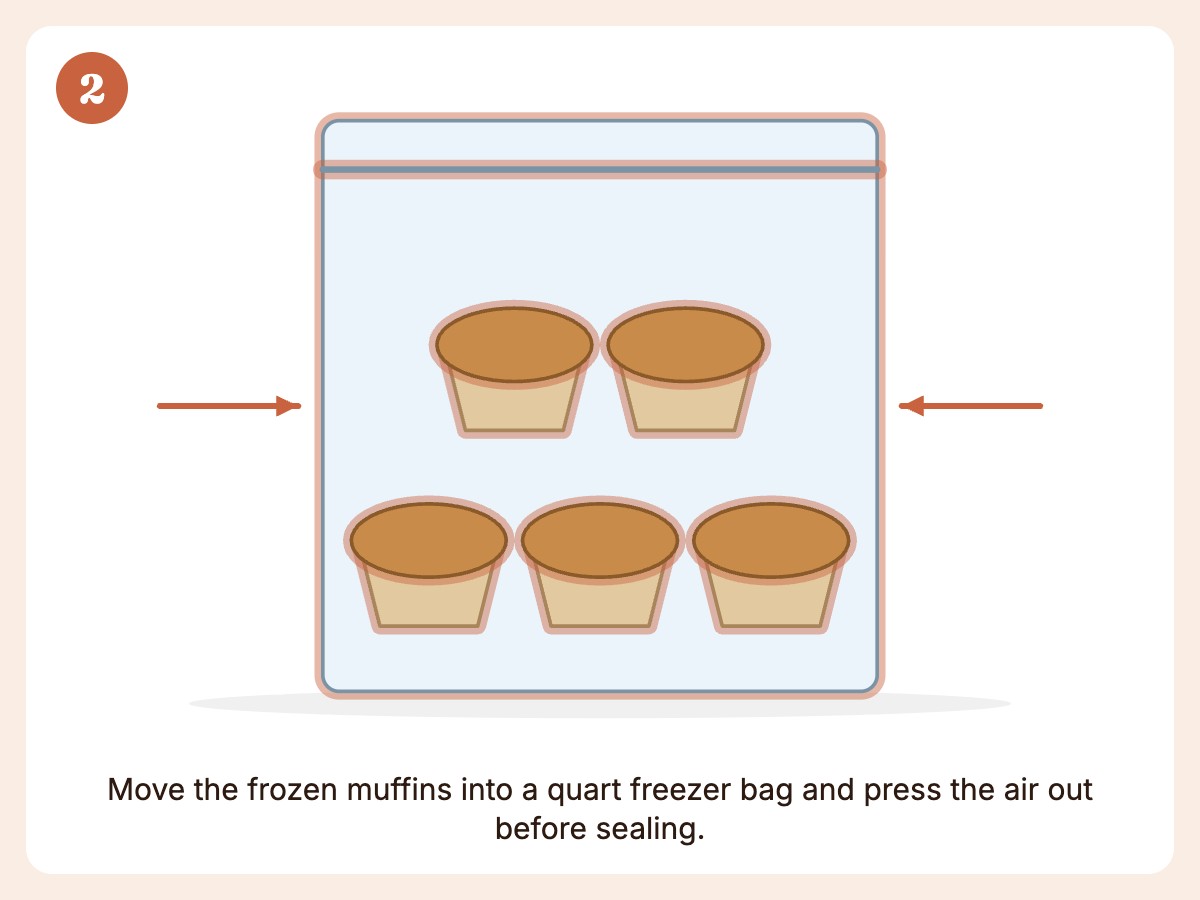
- Cool completely. At least an hour on a wire rack. Warm muffins sweat in the bag.
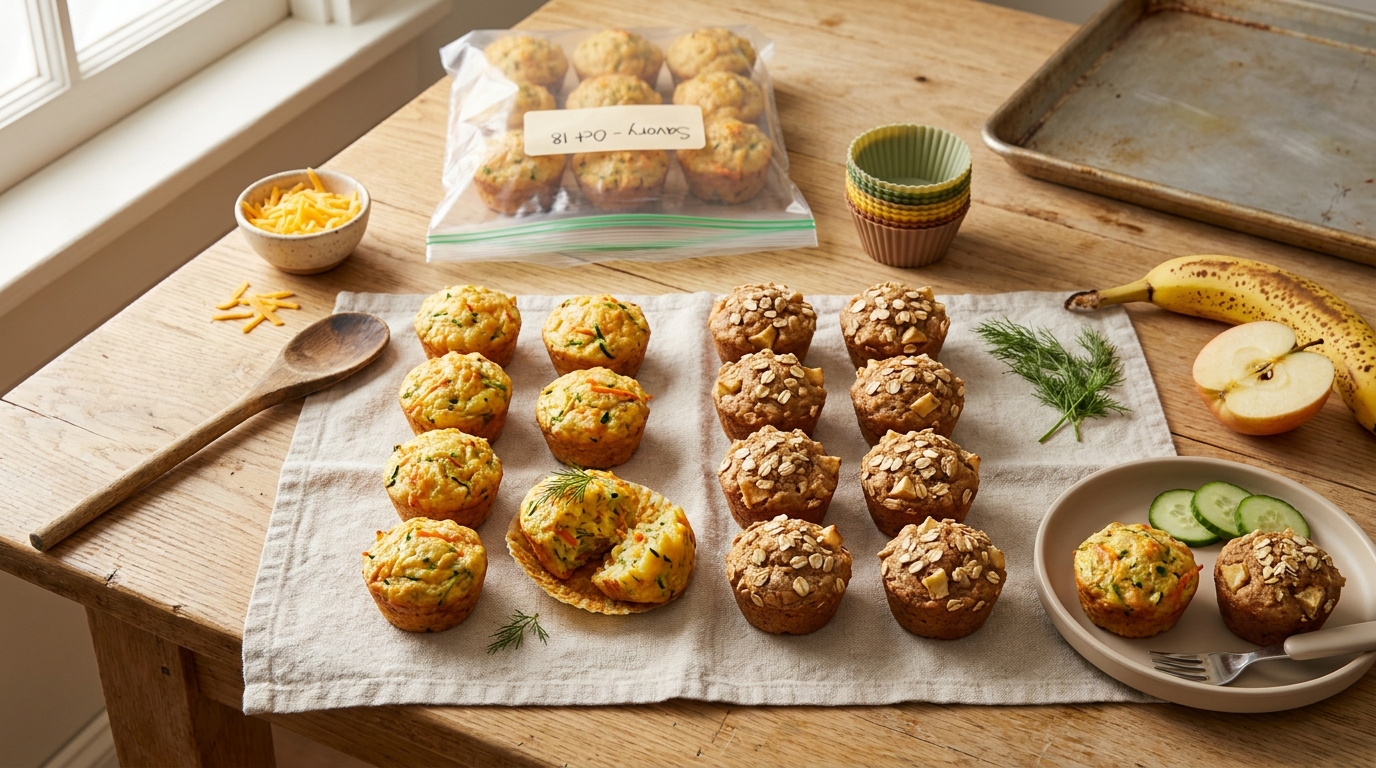
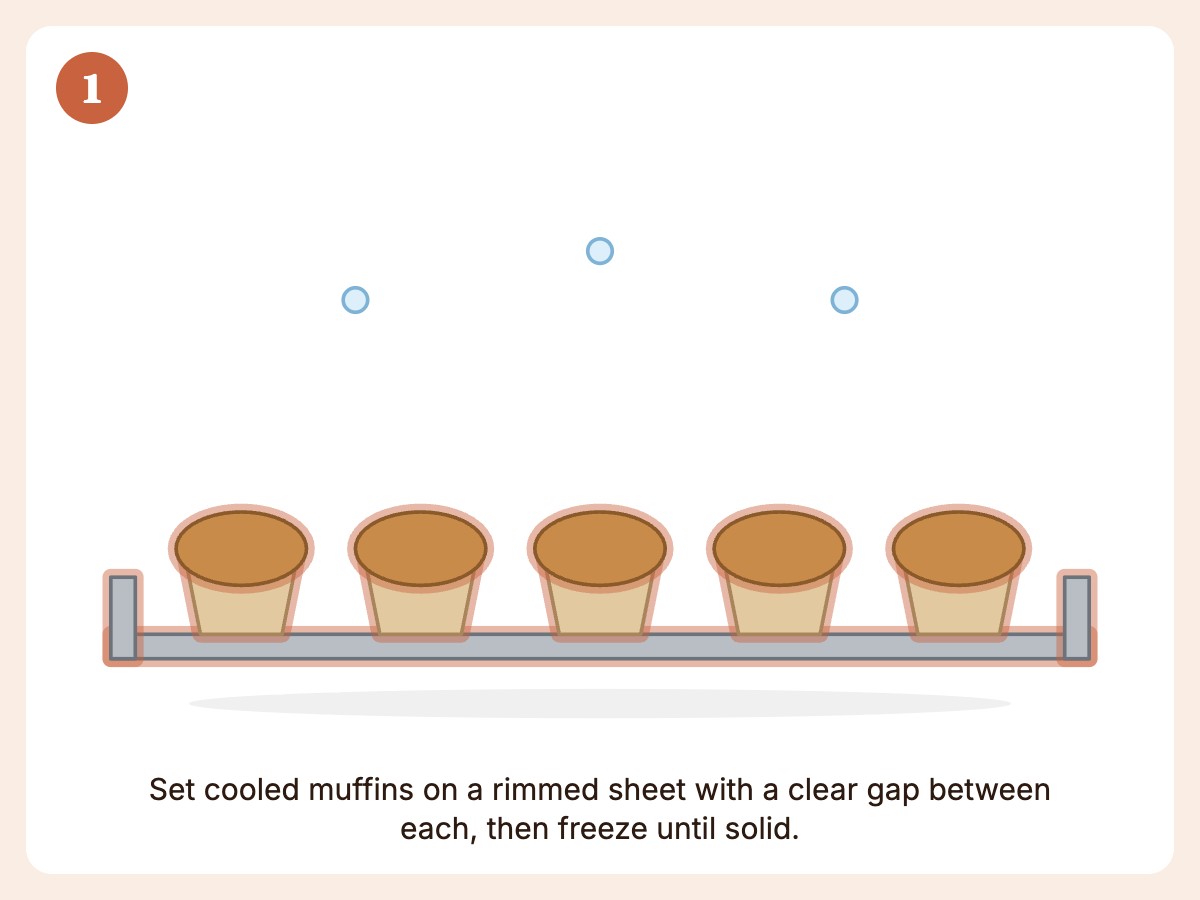
- Flash-freeze. Arrange muffins on a rimmed baking sheet, not touching. Freeze 1 to 2 hours, until solid. This keeps them from fusing into one muffin-brick.
- Bag in portions. Transfer to freezer bags. I do 4 to 6 per bag, because that’s what I’ll defrost at one go. Press out as much air as you can. A straw works well: seal the bag almost all the way, suck out the air, and zip.
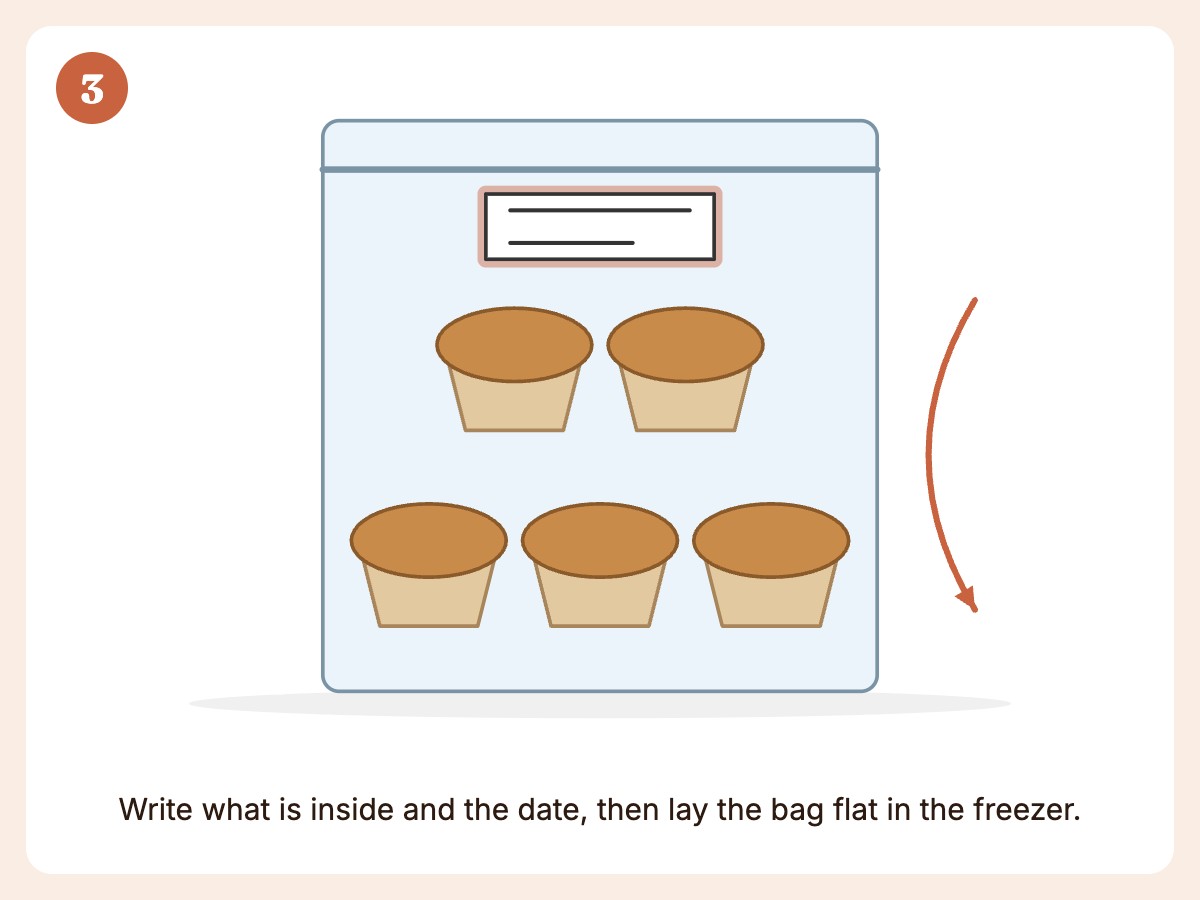
- Label. Write what’s inside and the date. “Savory – 10/18” saves you from the eternal “what is this?” mystery.
- Store flat. Lay bags flat on a shelf until frozen, then stack them. Flat bags thaw faster and use less space.
Wrapping Individually
If your toddler eats one muffin at a time, you can wrap each in a small piece of parchment or plastic wrap before bagging. It takes longer but makes grabbing one for a diaper bag effortless. For mini muffins, I skip individual wrapping and just bag in fours.
Savory and Sweet in the Same Bag?
Don’t. Cheese-and-garlic flavors travel. A banana muffin that tastes faintly of garlic is a lesson I only needed to learn once. Use separate bags, and, if you can, separate zones of the freezer.
Thawing and Reheating: Times and Methods
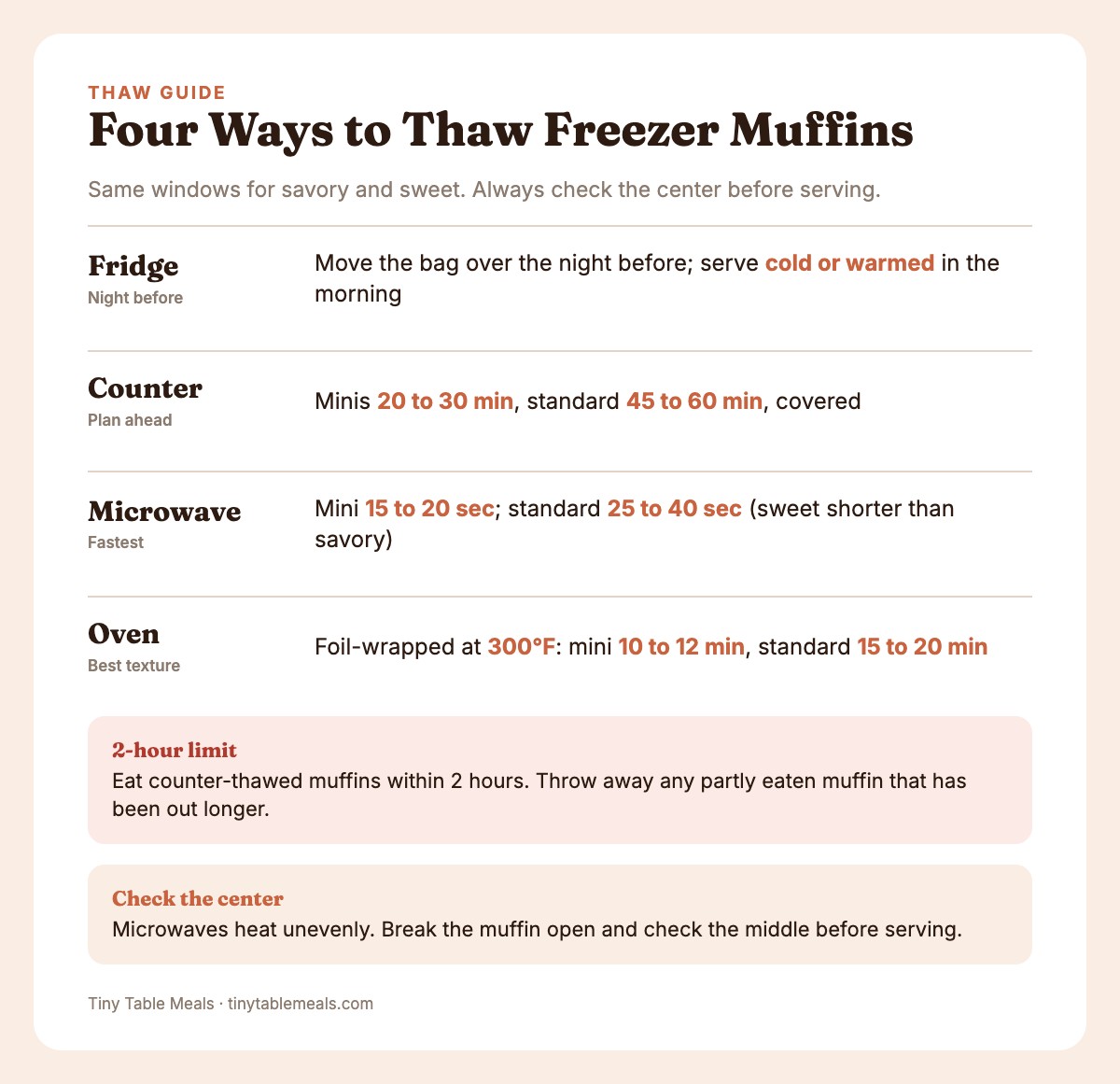
Both batches thaw in similar windows, which is why the table above puts them side by side. Here’s how I think about each method.
Good to knowEat counter-thawed muffins within 2 hours. Throw away any partly eaten muffin that has been out longer. After any microwaving, break the muffin open and check the center.
Counter Thaw (Best for Planning Ahead)
Pull muffins out when you wake up or when you start breakfast. Minis are ready in 20 to 30 minutes, standard in 45 to 60. Leave them in the bag or on a plate, covered. Eat them within 2 hours, and throw away any partly eaten muffin that has been out longer.
Fridge Thaw (Safest and Easiest)
Move the bag you’ll need to the fridge the night before. By morning they’re soft and ready to serve cold, or warm for about 10 seconds in the microwave (check the center first). This is the method I use for the savory batch most weeks, because it avoids any question about how long they’ve been sitting out.
Microwave From Frozen (Fastest)
Place the muffin on a microwave-safe plate, ideally wrapped loosely in a damp paper towel to prevent drying.
- Mini: 15 to 20 seconds
- Standard: 25 to 35 seconds (sweet) or 30 to 40 seconds (savory)
Let the muffin sit for 30 seconds afterwards. Microwaves heat unevenly, so break the muffin open and check the center before giving it to your toddler. The outside can be fine while the middle is scalding. Cool to warm, never hot.
Oven or Toaster Oven (Best Texture)
Wrap the frozen muffin in foil and warm at 300°F for 15 to 20 minutes (standard) or 10 to 12 minutes (mini). Unwrap for the last 2 minutes if you want a slightly crisp top. This is the winner for texture, but it’s the slowest, so I save it for weekends.
Foil-wrapped muffins come out very hot. Let it cool 5 minutes, then break it open and check the center before serving.
Air Fryer
If you have one, 300°F for 5 to 7 minutes from frozen, on a liner, works well. Let it cool 5 minutes, then break it open and check the center before serving.
Making Muffins Healthier Without Making Them Weird
“Healthy” can mean anything, so here’s what I look for and how to nudge a batch in that direction.
Add Protein and Iron
Toddlers need iron, and many of them don’t get enough, especially picky ones who’ve dropped meat. Eggs in these muffins help a bit. If you suspect low iron, ask your pediatrician about screening. To go further:
- Stir 2 tablespoons of ground flaxseed or hemp hearts into the dry ingredients, once you’ve introduced them on their own first.
- Swap some flour for finely ground oats or chickpea flour in the savory batch.
- Serve a muffin alongside an iron-friendly food: mashed beans, soft-cooked lentils, finely shredded tender meat, or a vitamin C fruit like mashed strawberries or small orange pieces to help absorption.
If iron is a worry for you, my guide to iron-rich meals and snacks for kids by age walks through it in more depth.
Add Fiber
Whole wheat flour, oats, grated fruit with the peel, and vegetables all add fiber. If your toddler struggles with constipation, the sweet batch with pear or prune puree is a gentle option. For prune, replace the grated apple with 1/2 cup prune puree. If constipation is persistent or painful, talk to your pediatrician. If you want more ideas along these lines, there’s a full post on fiber-rich meals and snacks kids will actually eat.
Add Healthy Fats
Toddlers’ brains are growing fast, and they need fat. Whole-milk yogurt, olive oil, butter, avocado, and nut butters all help. Don’t reach for low-fat substitutes in a toddler muffin, unless your pediatrician advises otherwise for age 2 and up.
Watch the Sodium
If you’re buying packaged muffins or mixes, check the label. Many store-bought muffins carry several hundred milligrams of sodium apiece, along with a lot of added sugar. Homemade muffins let you control both.
Skip the “Sprinkle on Top” Habit
Streusel, sugar crystals, and chocolate chips make muffins a treat food. There’s nothing wrong with a treat, but if the aim is a muffin that can sit in the rotation as an everyday snack, keep the toppings minimal. A small sprinkle of oats or a pinch of cinnamon is plenty.
Using Your Freezer Stash: A Week of Muffin Moments
Baking a big batch is easy. Remembering you have it is where the system usually breaks. Here’s how muffins fit into an actual week at my house.
| Day | Muffin moment | What I pair it with |
|---|---|---|
| Monday | Sweet muffin at breakfast | Plain yogurt and sliced pear |
| Tuesday | Savory mini in the diaper bag for the park | Thin cheese strips or shredded cheese, and cucumber quartered lengthwise and thinly sliced |
| Wednesday | Savory muffin as a lunch side | Leftover pasta and peas |
| Thursday | Sweet mini as a snack | Grated apple, soft cooked apple, or ripe pear sliced very thin (grate or cook raw apple for children under 4) |
| Friday | Savory muffin for the “dinner is late” gap | Warm, with scrambled egg |
| Saturday | Sweet muffin, warmed in the toaster oven | Fruit and a dollop of yogurt |
| Sunday | Bake a fresh batch |
For more breakfast company, my toddler breakfast ideas post has easy, quick options that pair nicely with a muffin on the side. And for between-meal moments, there’s a stack of options in healthy toddler snack ideas that will give you things to put next to the muffin without extra work.
Portion Sizes
A rough rule of thumb is that a mini muffin or half a standard muffin is a reasonable serving for a one- to three-year-old, alongside other foods. Toddlers’ appetites swing wildly from day to day, so offer a portion and let them decide how much to eat. If a muffin is all they want at breakfast, pair it with a protein or fruit and move on.
A Few Ways to Use Them Beyond “Just a Muffin”
- Savory muffin “sandwich”: Split a thawed savory muffin and add a thin smear of hummus or cream cheese.
- Sweet muffin yogurt parfait: Crumble a thawed sweet muffin into yogurt for a parfait texture.
- Muffin croutons: Skip croutons for children under 4. For older kids, cube a dry savory muffin small, toast it in the oven for 8 to 10 minutes, and let the cubes soften fully in the soup before serving.
- Lunchbox filler: Pack a mini muffin in an insulated lunchbox with a real ice pack, since egg-and-cheese muffins shouldn’t sit unrefrigerated for hours.
Troubleshooting: Common Muffin Problems
Even a reliable recipe misbehaves sometimes. Here’s what I’ve run into.
| Problem | Likely cause | Fix |
|---|---|---|
| Muffins are gummy or dense | Overmixed batter, or zucchini not squeezed dry | Fold until just combined; squeeze zucchini hard. |
| Savory muffins taste bland | No salt, mild cheese | Use a sharp cheddar, add garlic powder, herbs, or a pinch of mustard powder. |
| Sweet muffins aren’t sweet enough | Bananas not ripe enough | Use very spotty bananas, or add extra cinnamon and a splash of vanilla. |
| Muffins stick to the liners | Paper liners with low-fat batter | Spray the liners lightly, or switch to silicone. |
| Tops are soggy after freezing | Frozen while warm, or air in the bag | Cool completely, flash-freeze, and press out air. |
| Freezer-burned edges | Too long in the freezer, or a loose bag | Savory within 2 months, sweet within 3; double-bag if needed. |
| Muffins sink in the middle | Oven too cool, or too much liquid | Verify your oven temperature with a thermometer; measure wet ingredients carefully. |
| Toddler picks out the veggies | Pieces too large | Grate finer, or blend the vegetables into the wet ingredients. |
| Muffins dry out when reheated | Microwaved too long | Use shorter bursts, cover with a damp paper towel. |
A Few Honest Notes About Toddlers and Muffins
I’d be misleading you if I made this sound like every toddler will take a bite and say thank you. Mine didn’t. At first she licked the cheese off and left the muffin. Then she ate the muffin and left the carrot. Then one day she ate the whole thing, no commentary.
Here’s what helped.
- Keep offering. Repeated exposure over many weeks matters more than any single meal.
- Serve them with something familiar. A new savory muffin next to a favorite fruit feels safer.
- Let them touch it. Breaking it apart and squishing it is part of learning to eat it.
- Don’t hide everything. It’s okay to tuck veggies into muffins, but also serve vegetables in plain form. The goal is a child who eats vegetables, not one who’s been tricked into it.
- Model it. Eat one yourself, preferably out loud (“mmm, cheesy!”). Toddlers watch.
If your child is a seriously selective eater, or you’re worried about how little they eat, bring it up with your pediatrician. My picky eater quiz can also help you see what kind of eater you’re working with, which makes it easier to know where to start.
Quick-Start Checklist for Your First Muffin Day
If you only have an hour and want to be done with a freezer stocked for the week, this is the order I’d go in.
- Pull out eggs, yogurt, and cheese to take the chill off.
- Grate the zucchini and carrot; start squeezing the zucchini.
- Mash bananas and grate the apple.
- Mix the savory batter and fill the tin. Pop it in the oven.
- While the savory muffins bake, mix the sweet batter.
- Swap tins when the first batch comes out (or use a second tin if you have one).
- Cool both batches on racks.
- Flash-freeze on baking sheets.
- Bag, label, and date.
- Put a note on your fridge or calendar: “Muffins in freezer, savory by [date + 2 months], sweet by [date + 3 months].”
That last step sounds silly, but I’ve lost a lot of good food to the back of the freezer. A note on the door keeps them in play.
Frequently Asked Questions
What are the best muffins for toddlers that are actually healthy?
Look for whole grains (whole wheat or oat flour), real fruit or vegetables, and eggs or yogurt for protein. Add a healthy fat like olive oil or butter, and keep added sugar and added salt low or out. The two base recipes in this post, the cheddar-zucchini-carrot muffin and the banana-apple-oat muffin, follow that formula. Bakery and grocery-store muffins are often much higher in sugar and sodium, so reading labels is worthwhile.
How do I make muffins for toddlers with vegetables that they’ll actually eat?
Grate vegetables finely so there are no big pieces, and start with mild, slightly sweet ones like carrot, sweet potato, and zucchini. Pair them with cheese, which toddlers tend to like, and add a familiar flavor such as garlic powder or tomato paste for a pizza-style muffin. Serve alongside something familiar, and keep offering even if they refuse at first. Toddlers often need many exposures before they accept a new food.
Are savoury muffins for toddlers okay if they have cheese? What about salt?
Yes, savory muffins with cheese are fine for most toddlers who tolerate dairy. The thing to watch is sodium. Toddlers ages 1 to 3 should stay under about 1,200 mg of sodium per day (the upper limit set by the National Academies), and cheese and baking powder both contribute. That’s why the savory recipe here leaves out added salt and uses herbs and garlic powder for flavor. Choose a sharp cheddar so you can use less, and avoid very salty cheeses in large amounts.
Can I make muffins for toddlers with no sugar at all?
You can make muffins with no added sugar, which is what most parents mean. Ripe bananas, grated apple, pear, pumpkin, and sweet potato provide natural sweetness, plus cinnamon and vanilla make them taste sweeter. They still contain the natural sugars found in fruit, which come with fiber and nutrients. The AHA advises avoiding added sugars for children under two, and these muffins fit that guidance.
How long do freezer muffins last, and how do I thaw them safely?
Properly cooled, flash-frozen, and sealed with the air pressed out, the sweet muffins keep their best quality for up to 3 months and the savory ones for about 2 months. They remain safe longer at 0°F, but the texture and flavor decline. Thaw in the fridge overnight, on the counter for 20 to 30 minutes (minis) or 45 to 60 minutes (standard), or microwave from frozen for 15 to 40 seconds depending on size. Check the center for hot spots and serve warm, not hot. Eat counter-thawed muffins within 2 hours, and throw away any partly eaten muffin that has been out longer.
What can I use instead of eggs, dairy, or wheat in these muffins?
For eggs in the sweet batch, use 1/4 cup unsweetened applesauce or a flax “egg” (1 tablespoon ground flaxseed plus 3 tablespoons water, rested 5 minutes) per egg. Either makes a denser muffin.
For dairy, use plain unsweetened dairy-free yogurt and swap the butter for olive or coconut oil. Use dairy-free cheese in the savory batch, or skip it. If your child is tree-nut allergic, ask your allergist about coconut oil.
For wheat, use a 1-to-1 gluten-free flour blend. For celiac disease, choose certified gluten-free flour and oats. Test a small batch first, and ask your child’s doctor or allergist about any diagnosed allergy or celiac disease.
At what age can toddlers have these muffins, and what size should I serve?
Soft muffins are commonly offered from around 12 months, once a child eats a range of solids and has tried each main ingredient. Following AAP guidance, introduce egg, dairy, wheat, and peanut individually in infancy, not first in a muffin.
For 12 to 18 months, halve a mini muffin or cut a standard one into strips or quarters. At two to three years, a whole mini or half a standard muffin is a typical portion.
Keep your child seated and supervised, since choking risk from round, firm foods lasts to about age 4. Leave out whole nuts, whole berries, and sticky dried fruit.
Your Freezer Is Waiting
If you take one thing from this post, let it be this: you do not need a perfect recipe, or a perfect toddler, to make this work. You need an hour, a muffin tin, and a spot in the freezer. The first time I pulled that forgotten bag out on a hectic Tuesday, it felt like a gift from a version of myself who had her life together. That version of me was just a tired mom who happened to bake on a Sunday.
Bake one savory and one sweet batch this weekend, tuck them away, and let future-you have an easy morning. Your toddler might eat the whole muffin, half of it, or only the crumbs off the floor. All of those count. You’re feeding a small person, one warm, slightly squished muffin at a time, and that is plenty.