Build-Your-Own Noodle Bar Dinner Kids Can Customize
Learn how to create a customizable build-your-own noodle bar dinner that satisfies picky eaters and reduces mealtime stress. This system offers kids ages 3-8 control over their plates, making dinner easy and repeatable.
- Set up a deconstructed noodle bar to let kids customize their meals and avoid food touching.
- Empower kids aged 3-8 with bounded choices to reduce mealtime power struggles.
- Use the four-station blueprint (noodles, sauce, protein/veg, fun toppings) for an organized setup.
- Start with a simple lineup like spaghetti, butter/marinara, chicken, peas, and cheese.
- Save time with this system that takes 25-30 minutes and is repeatable with pantry staples.
This post contains affiliate links. As an Amazon Associate I earn from qualifying purchases.
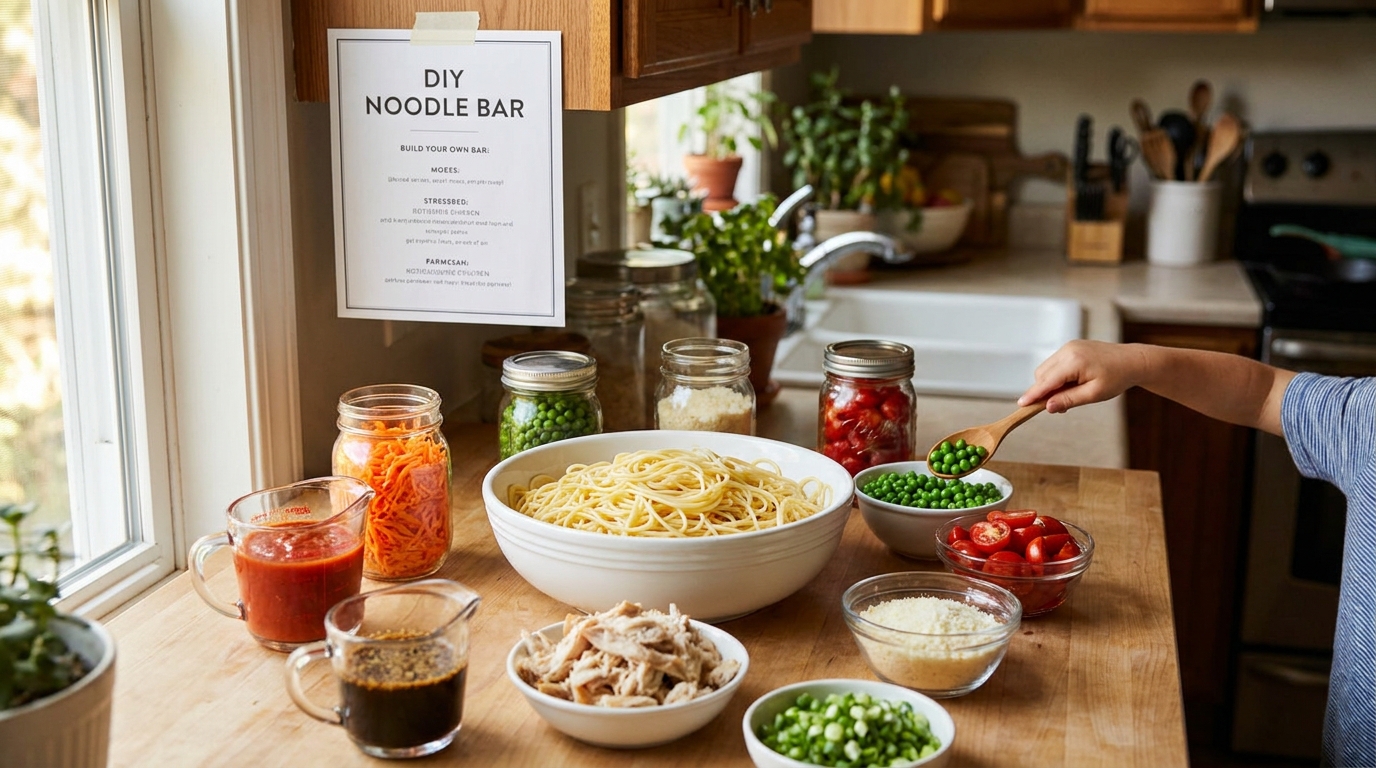
Last Tuesday I had one kid who wanted plain butter noodles. Another was “only eating orange food today,” and a third wanted spicy sauce in a separate cup. Instead of cooking three dinners, I put out cooked spaghetti and a row of little dishes. “Build your own,” I said. Nobody cried, and I ate sitting down.
That night the noodle bar became a permanent part of our rotation. This post covers the four stations, sauces, safe toppings by age, and a printable chart for picky eaters. It works on a weeknight and doesn’t leave you scrubbing six extra bowls at 8 p.m.
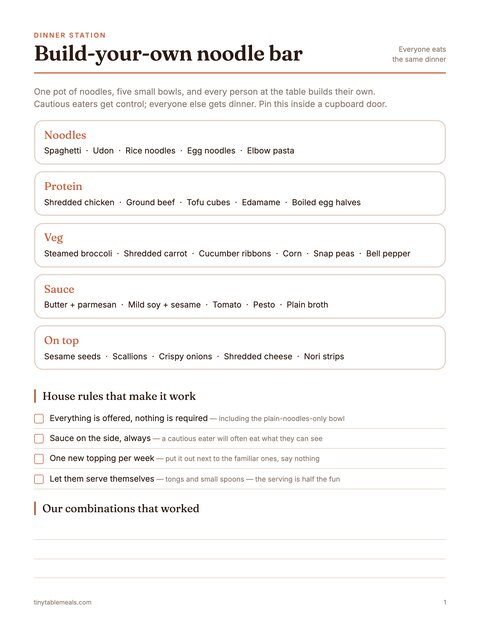
Free printable · 1 pages
Noodle Bar Station Chart
The five-bowl setup that lets everyone build their own dinner, with house rules that keep it calm.
Free. Your download link appears right here. You'll also join the Sunday Supper Plan. Unsubscribe anytime. Privacy
In this article (13 sections)
- What Is a Kid-Friendly Noodle Bar?
- Why This Format Works So Well for Kids Ages 3-8
- The Noodle Bar Blueprint: Four Stations
- Noodle Bar Ideas by Theme
- The Printable Noodle Bar Station Chart
- Set Up Without Wrecking the Kitchen
- Picky Eater Rules: Do and Don’t at the Noodle Bar
- Make Noodle Bar Night Feel Like an Event
- Age-by-Age: What to Expect at Each Station
- Meal Prep and Leftover Strategy
- Common Mistakes That Turn a Noodle Bar Into Chaos
- Noodle Bar FAQ
- Make Noodle Bar a Weekly Habit
What Is a Kid-Friendly Noodle Bar?
If you love one-pot pasta recipes for busy families on fixed-dinner nights, the noodle bar is the flexible cousin. It takes about 25-30 minutes (20 with pre-cooked toppings) and suits a table of different appetites.
A noodle bar is a deconstructed meal. You cook the noodles, toppings and sauces separately, and each person builds their own bowl. Unlike a one-pot pasta, nothing is mixed until it hits an individual plate.
The point of a noodle bar is separation before serving. That is what works for picky eaters. Nobody has to eat a sauce that’s “touching” something they dislike, because they controlled every ingredient in their own bowl.
A noodle bar isn’t a recipe so much as a system. Once you build the system, you can run it with spaghetti, ramen noodles, rice noodles, or shells — whatever’s in the pantry. That’s what makes it repeatable instead of a one-off Pinterest project you never do again.
Why This Format Works So Well for Kids Ages 3-8
Between ages 3 and 8, kids assert independence over what goes in their mouths. That’s developmentally normal, and exhausting for the cook. The noodle bar leans into it instead of fighting it.
A few reasons it clicks for this age range specifically:
- Control without chaos. Preschoolers and early elementary kids crave autonomy, but a free-for-all is too much choice. A noodle bar gives bounded choice. It fits the Division of Responsibility idea: you decide what is offered and when, and your child decides whether and how much.
- Lower pressure around new foods. A kid who won’t touch broccoli on a shared plate will sometimes put a single floret on their own bowl just because they chose it themselves. Self-selection reduces the power struggle that pressure creates.
- Built-in exposure without a fight. Even if they don’t eat a new topping tonight, seeing it and touching it counts as exposure. So does choosing whether to add it. It often takes many tries, sometimes a dozen or more.
If you’re navigating a rough picky-eating stretch right now, this format pairs well with the ideas in Picky Eater Quiz: Understand Your Child’s Eating Style. Knowing your child’s eating style helps you choose which toppings go out first.
The Noodle Bar Blueprint: Four Stations
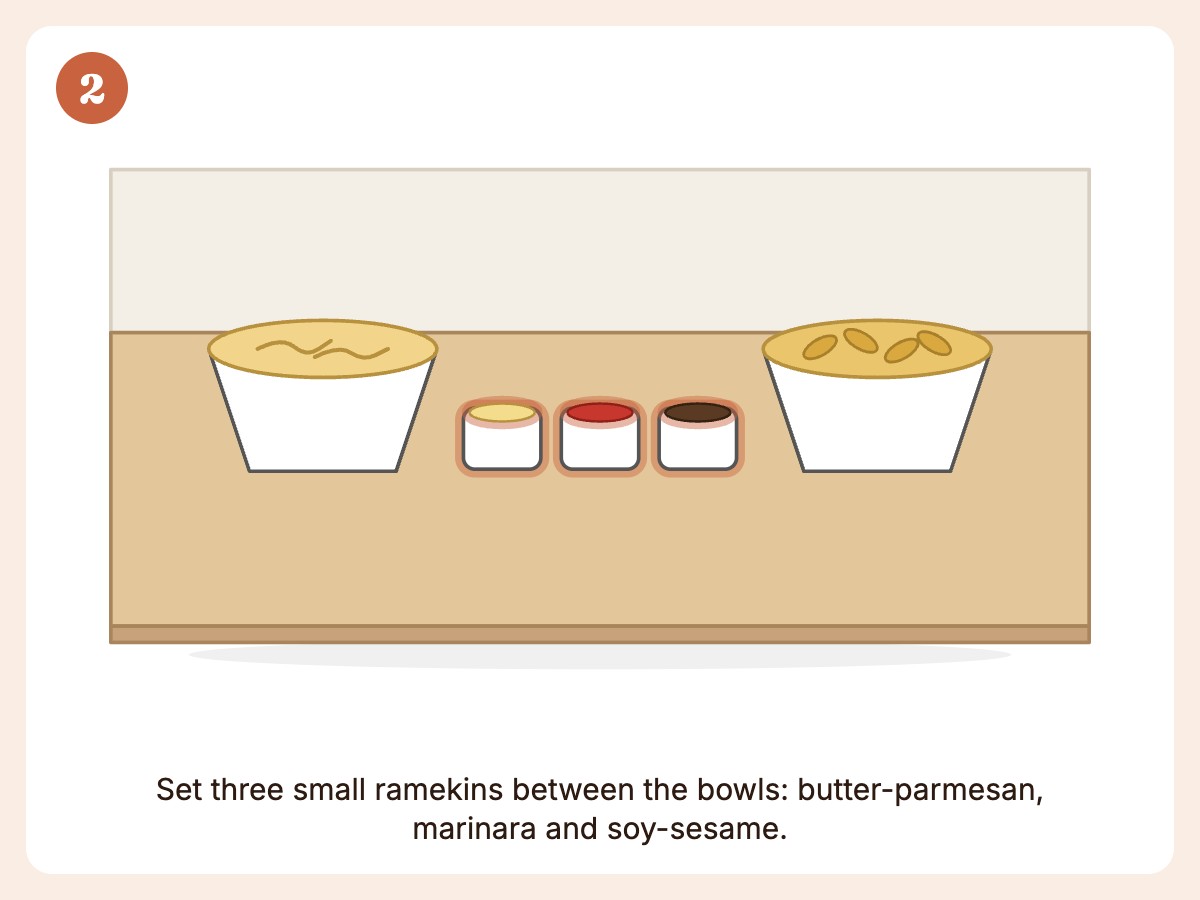
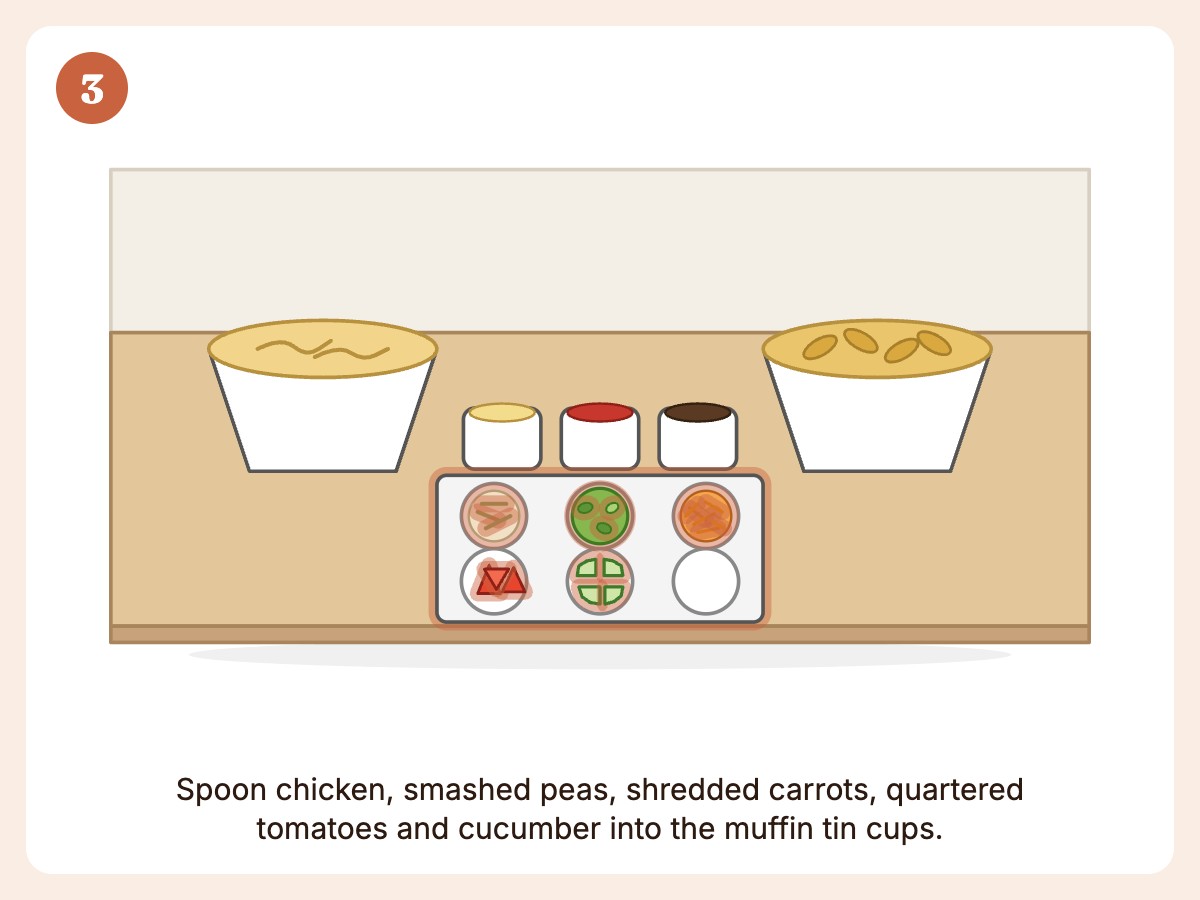
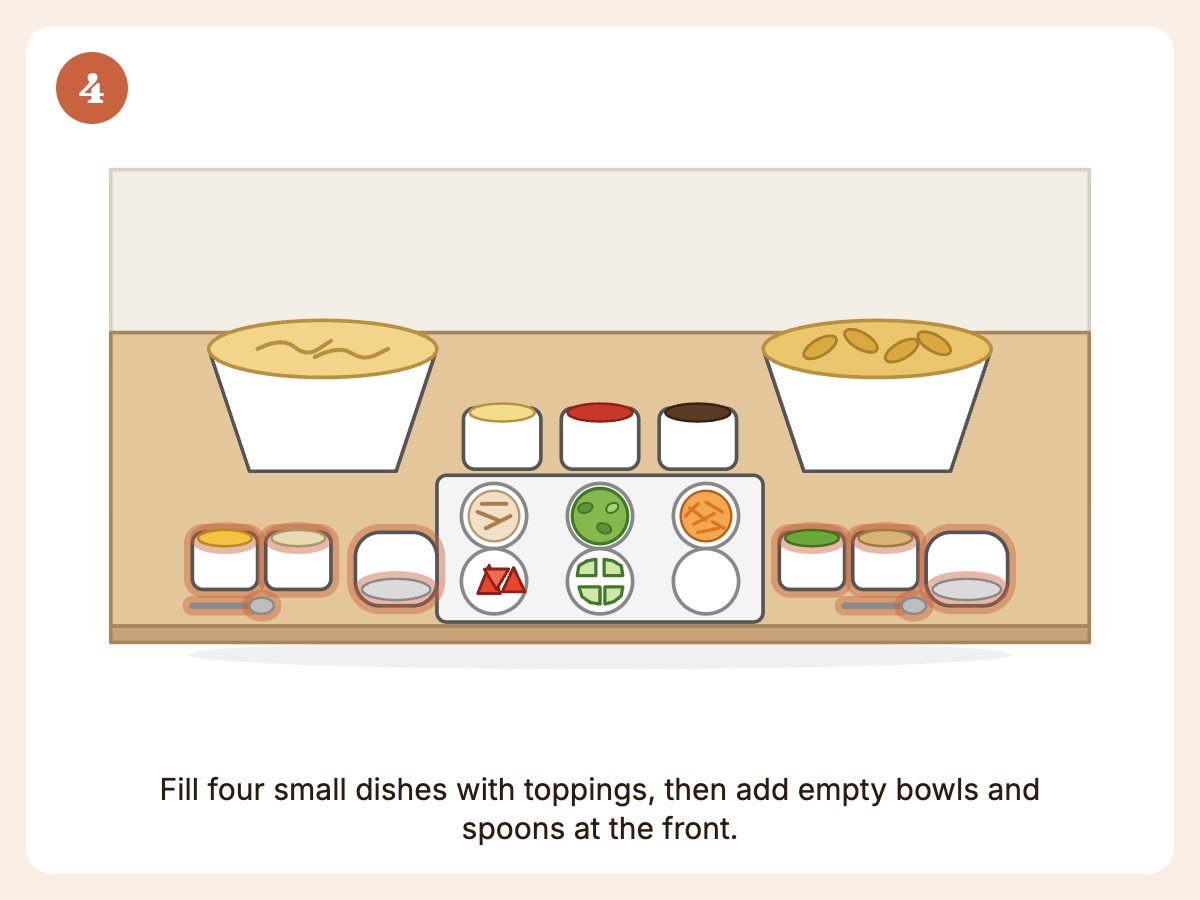
Every noodle bar I’ve ever made breaks down into four stations. You don’t need all four every night, but this is the mental model that keeps it from turning into a chaotic buffet of 15 random dishes.
Easy First-Night Lineup
New to this? Keep the first night small. Here’s my starter lineup.
Start the water first. While it heats, spend about 10 minutes shredding chicken, warming peas and slicing cucumber. Cook the noodles for about 10 minutes, cut them short for ages 3-4, and set out the bowls.
Station 1: The Base (Noodles)
Pick one or two noodle types per night — more than that and you’re just adding dishes to wash.
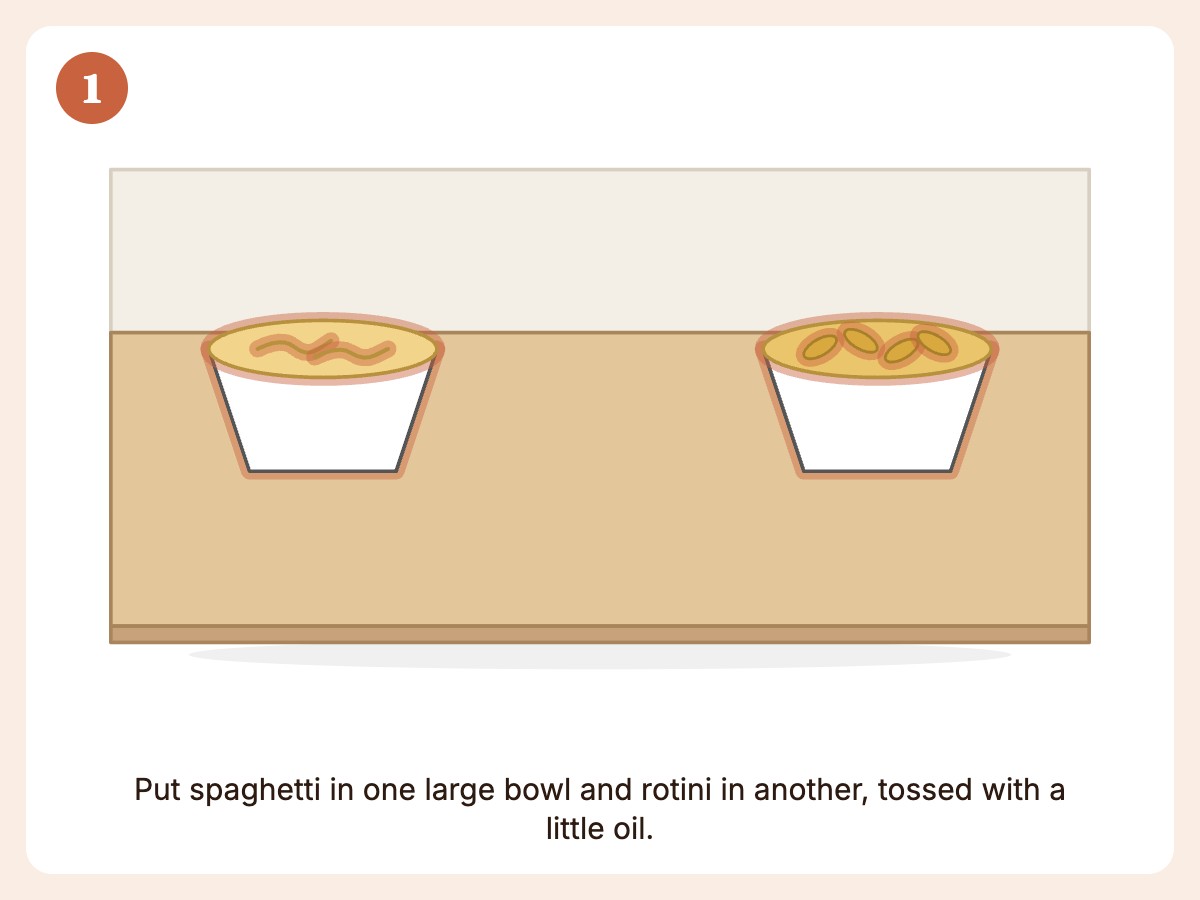
- Spaghetti or angel hair.
- Rotini or shells, great for younger kids who struggle to twirl.
- Instant ramen bricks, cooked without the seasoning packet. They are fried and salty, so save them for occasional nights.
- Rice noodles or vermicelli.
- Udon, thick and chewy for a fun texture change.
- Egg noodles.
TipCook pasta soft for ages 3-4. For older kids, slightly under al dente holds up better if the noodles wait 10-15 minutes. Toss with a little oil and keep them covered.
Safety firstFor ages 3-4, cook noodles soft and cut every long noodle into bite-length pieces after cooking. That includes spaghetti, angel hair, ramen, rice noodles, vermicelli, egg noodles and udon. Long, slippery or chewy strands are a choking and gagging risk. Cook udon very soft and cut it short, or serve short shapes like rotini or shells instead.
Station 2: The Sauce Bar
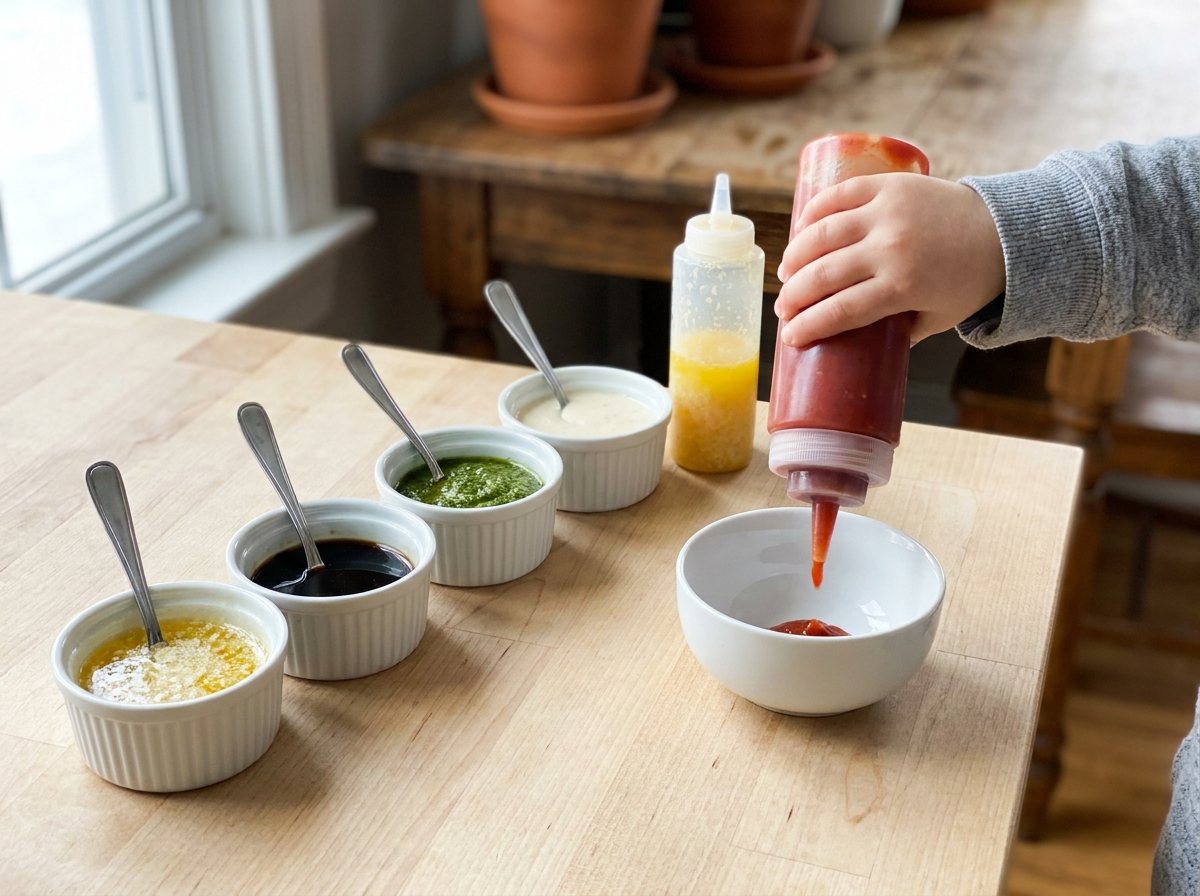
This is where most of the flavor differentiation happens, and it’s the station most likely to cause a “but I don’t want THAT on mine” moment if you skip separation. Keep sauces in small squeeze bottles, ramekins, or little dipping cups — not poured over the noodles.
| Sauce | Flavor profile | Kid-friendly notes |
|---|---|---|
| Butter + parmesan | Mild, classic | The safe default almost every kid will eat. |
| Marinara | Tomato, mild acid | Good for dipping, not just topping. |
| Soy sauce (low-sodium, about 1 tsp per bowl) + sesame oil | Salty, savory | A gateway to more “grown-up” flavors. |
| Alfredo (jarred or quick homemade) | Creamy, rich | Popular but heavier, good for cold weeknights. |
| Peanut sauce (thinned) | Nutty, slightly sweet | Thin peanut butter well for young kids. Skip it entirely if anyone has a peanut allergy (see FAQ). |
| Pesto | Herby, green | Divisive, so don’t force it. Usually contains pine nuts and cheese. |
| Plain olive oil + garlic | Light, mild | Great neutral option for very cautious eaters. |
TipAlways include one “plain but slightly better than plain” sauce. Butter and parmesan is my go-to. It is the safety net that means nobody goes to bed hungry, even when every new topping gets rejected.
Station 3: Protein and Veggie Noodle Bar Toppings for Kids
This is where you sneak in nutrition without a fight, because kids are choosing it, not being told to eat it.
Safety firstCook eggs firm, ground meat to 160°F, and poultry to 165°F. Reheat leftover proteins to 165°F. Keep cooked chicken, shrimp, egg and cheese in the fridge until serving. Put out small amounts and refill from the fridge, since kid meals run long. Noodles and perishable toppings can be out for 2 hours at most (1 hour above 90°F). Discard anything left out longer.
For protein, pre-cook everything and cut it small. Good options:
- Shredded rotisserie chicken.
- Ground beef or turkey, cooked plain or taco-seasoned.
- Diced ham.
- Tofu cubes, soft and cut small for kids under 5.
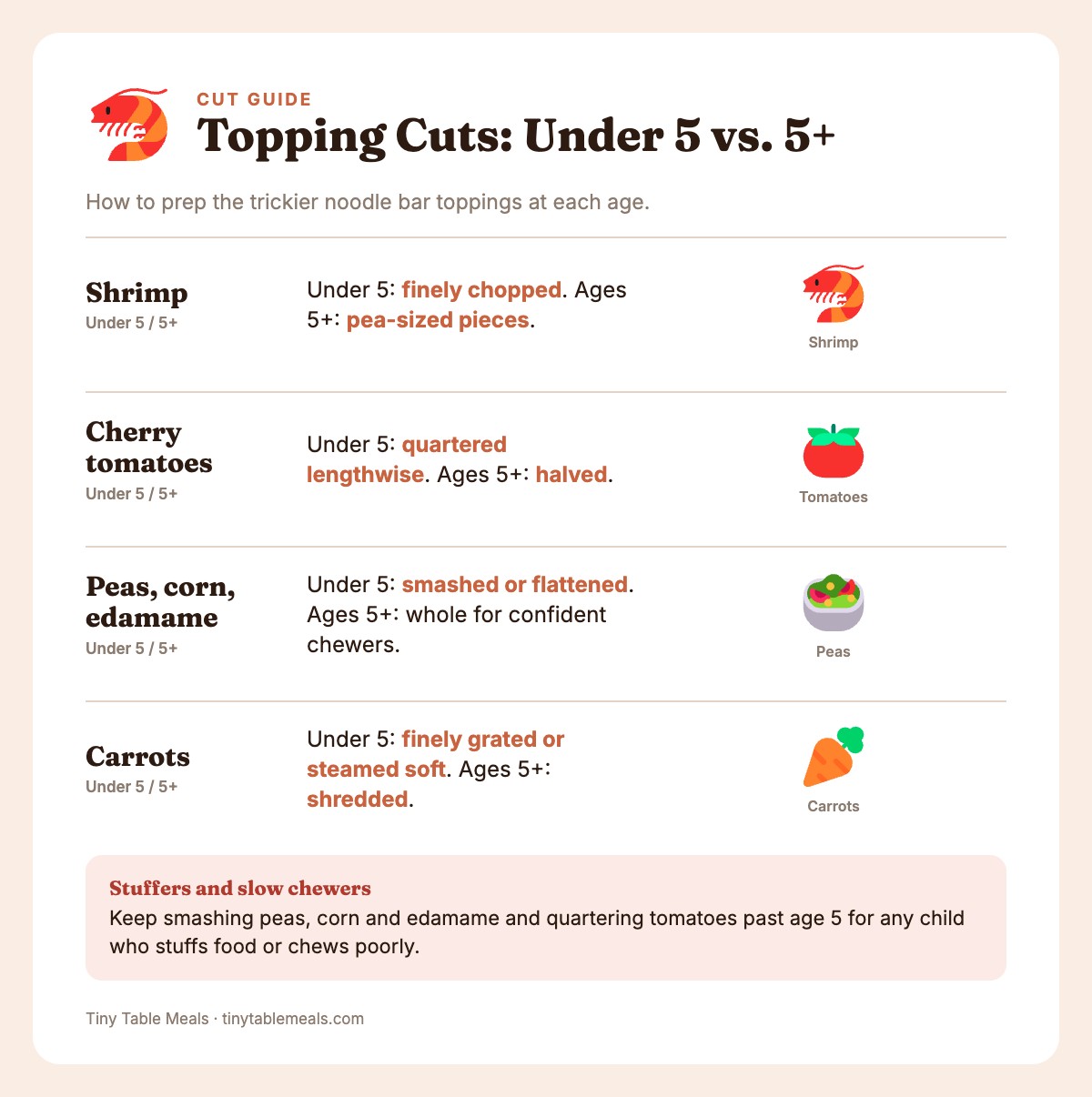
- Cooked shrimp, chopped into pea-sized pieces (finely chopped for under 5).
- Scrambled egg, cooked firm and chopped.
- Shelled edamame, smashed or flattened for under 5.
For veggies, go raw or lightly cooked and keep pieces small. Good options:
- Steamed peas or corn. Smash or flatten them for kids under 5 and for any child who stuffs food or chews poorly; serve whole from 5 for confident chewers.
- Carrots, finely grated or lightly steamed for kids under 5.
- Thinly sliced cucumber.
- Cherry tomatoes, quartered lengthwise under 5 and halved from age 5. Keep quartering for kids who stuff food or chew poorly.
- Steamed broccoli florets, chopped small.
- Sautéed mushrooms, finely chopped and cooked soft, for the adventurous.
- Roasted bell pepper strips.
A good rule: put out at least one protein and two vegetables, even if you suspect they won’t get eaten tonight. The choosing matters more than the eating on any single night — this is a long game, not a one-dinner fix.
Here’s how I cut the trickier toppings by age.
| Topping | Under 5: cut and prep | Ages 5+ |
|---|---|---|
| Shrimp | Finely chopped | Pea-sized pieces. |
| Peas, corn, edamame | Smashed or flattened | Whole only for confident chewers; keep smashing if they stuff food or chew poorly. |
| Cherry tomatoes | Quartered lengthwise | Halved; keep quartering if they stuff food or chew poorly. |
| Carrots | Finely grated or steamed soft | Shredded. |
| Cucumber | Peeled, quartered, thin slices | Thin slices. |
| Mushrooms | Finely chopped, cooked soft | Chopped. |
| Tofu | Soft, small pieces | Small cubes, crisped if you like. |
| Crunchy toppings | Finely crushed to crumbs | Crispy onions, croutons, wonton strips. |
Station 4: The Fun Toppings (Keep the Buy-In High)
This is the station that gets kids actually excited to come to the table, and it costs you almost nothing.
- Shredded cheese (mozzarella, cheddar, parmesan).
- Finely crushed crackers for crunch. Crispy onions are for ages 5+ only.
- Sesame seeds.
- Chopped scallions.
- A drizzle of honey, never for children under 12 months.
- A tiny amount of sriracha in a separate small dish, ages 6+ only.
- Croutons, ages 5+ only, or crushed to crumbs for younger kids.
- A sprinkle of everything bagel seasoning, which contains sesame.
I’ve found the “fun toppings” station is what actually gets a reluctant 4-year-old to the table without a battle. It reframes dinner as a project instead of a demand.
Safety firstThis bar can include wheat, milk, egg, soy, sesame, fish, shellfish, peanuts and tree nuts, and pesto usually has pine nuts. Give every dish its own utensil so nothing crosses over. Never give honey to a child under 12 months, and keep the bottle away from any baby at the table.
How Much to Make
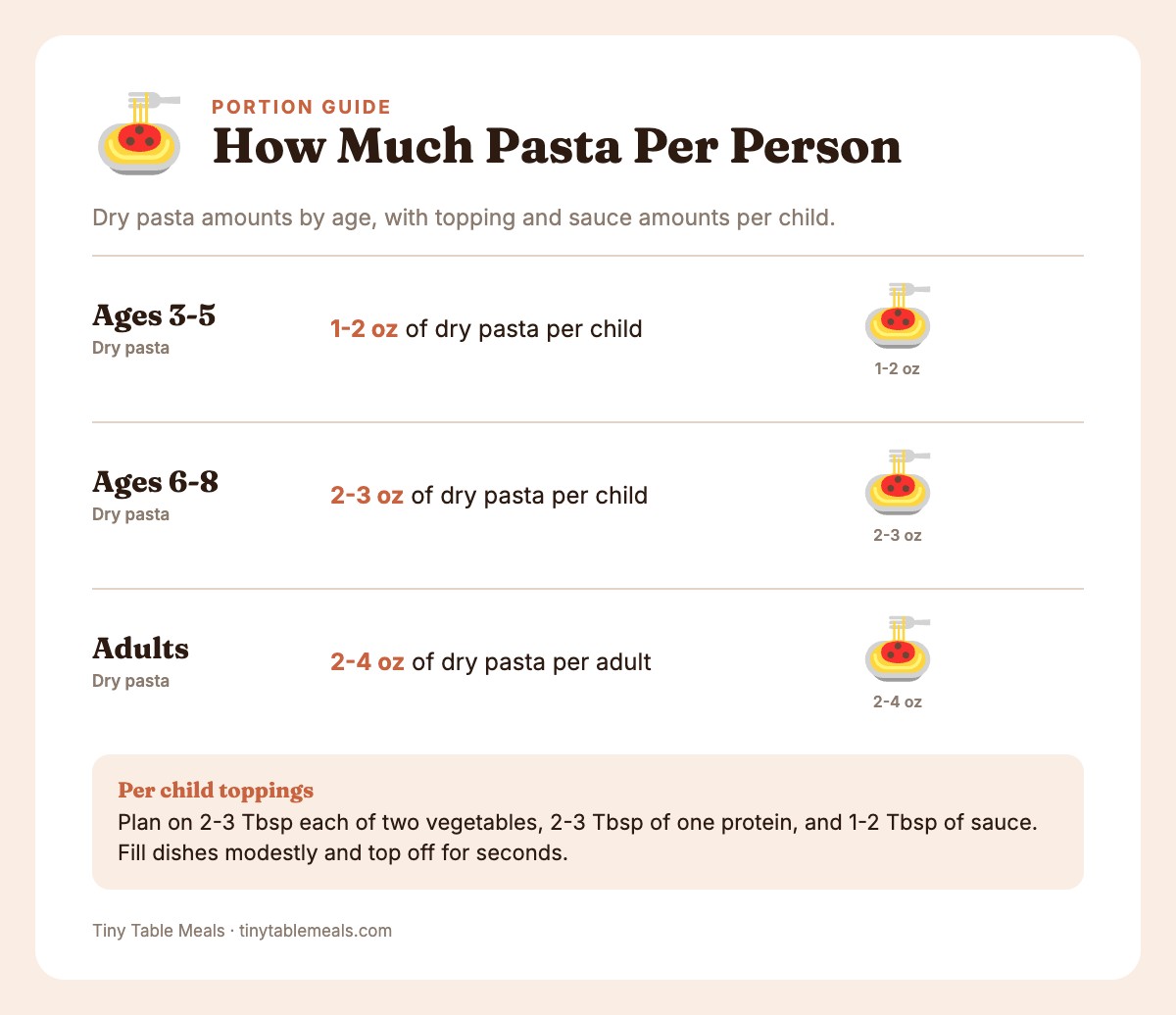
| Item | Per person | 2 adults + 3 kids |
|---|---|---|
| Dry pasta | 1-2 oz ages 3-5, 2-3 oz ages 6-8, 2-4 oz adults | Roughly 1 lb. |
| Vegetables | 2-3 Tbsp each of two kinds | About 1 cup of each. |
| Protein | 2-3 Tbsp | About 1 cup. |
| Sauce | 1-2 Tbsp | About 1/2 cup. |
Noodle Bar Ideas by Theme
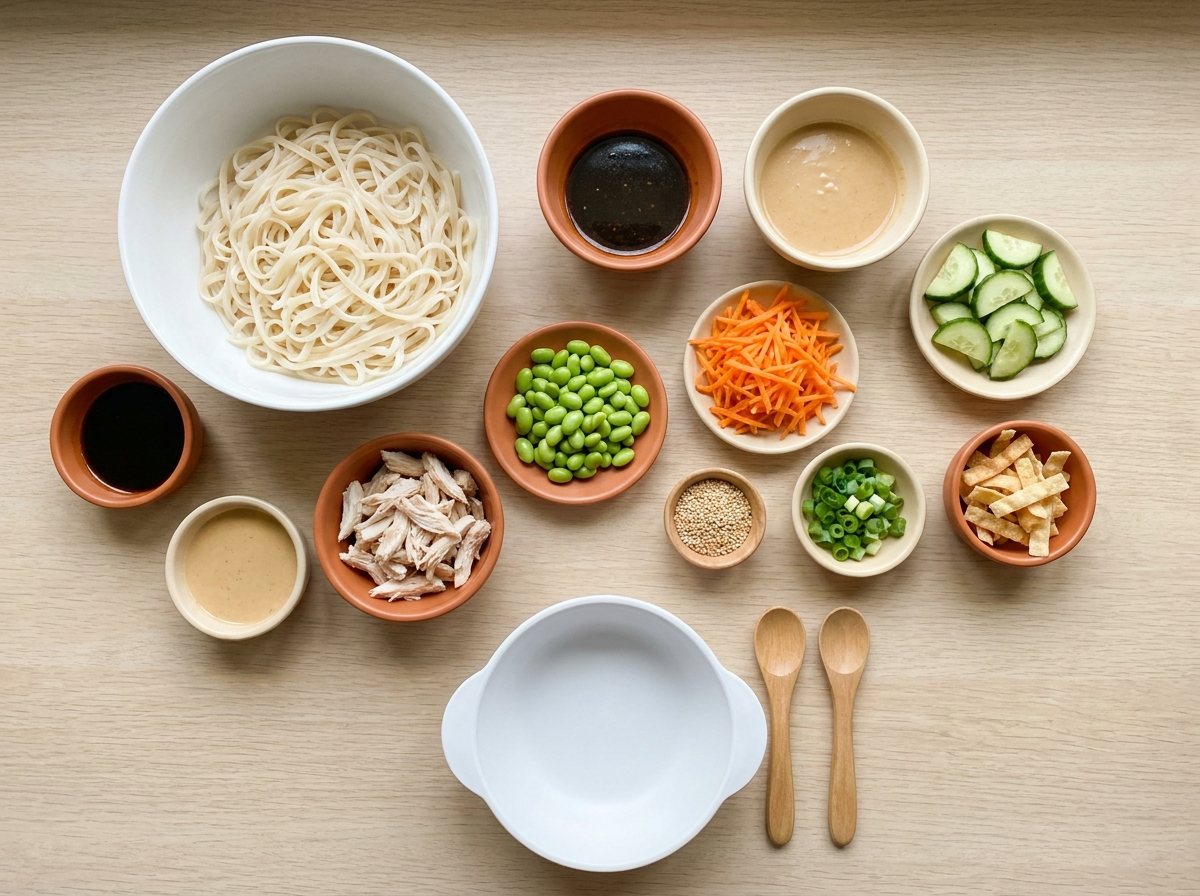
Once the four-station system clicks, you can theme the whole thing without extra work — same structure, different flavor direction. Here are three lineups I rotate through.
Italian Night
- Base: spaghetti + rotini.
- Sauce: marinara, butter/parmesan, pesto.
- Protein: ground beef, cooked plain or lightly seasoned.
- Veggies: cherry tomatoes, sautéed mushrooms, peas.
- Fun toppings: mozzarella, parmesan, garlic bread crumbs.
Asian-Inspired Bowl Night
- Base: rice noodles or ramen.
- Sauce: soy-sesame, peanut (thinned with warm water), plain sesame oil.
- Protein: shredded chicken, edamame, scrambled egg.
- Veggies: shredded carrots, cucumber, steamed broccoli.
- Fun toppings: sesame seeds, scallions, wonton strips (ages 5+, or crushed to crumbs for younger kids).
“Mac Bar” (Cheesy Comfort Night)
- Base: shells or elbow macaroni.
- Sauce: cheese sauce (thinned slightly for pouring), butter/parmesan.
- Protein: diced ham, crispy tofu.
- Veggies: peas, roasted broccoli, corn.
- Fun toppings: crushed crackers, extra shredded cheese, everything seasoning.
If you’re already doing Around-the-World Dinner Nights with your family, the noodle bar slots in as your Asian noodle night or Italian night. It’s the same global-cuisine exposure, built for mixed eaters.
The Printable Noodle Bar Station Chart
I made this because I got tired of re-explaining the system to my husband every time he ran dinner solo. Grab the Noodle Bar Station Chart printable on this page and stick it on the fridge. Any adult (or older kid) can then run noodle bar night without you narrating it.
The chart walks kids through five picks: base, sauce, protein, two veggies, and toppings. The rule of the table is that anyone can always ask for plain noodles and butter. No pressure, just building.
How to use it: slip a copy into a cheap page protector and keep it on the fridge at kid eye level. Use large magnets, never small ones a little kid could swallow.
Kids can point to their picks instead of making you narrate five options while a pot boils over behind you.
Set Up Without Wrecking the Kitchen
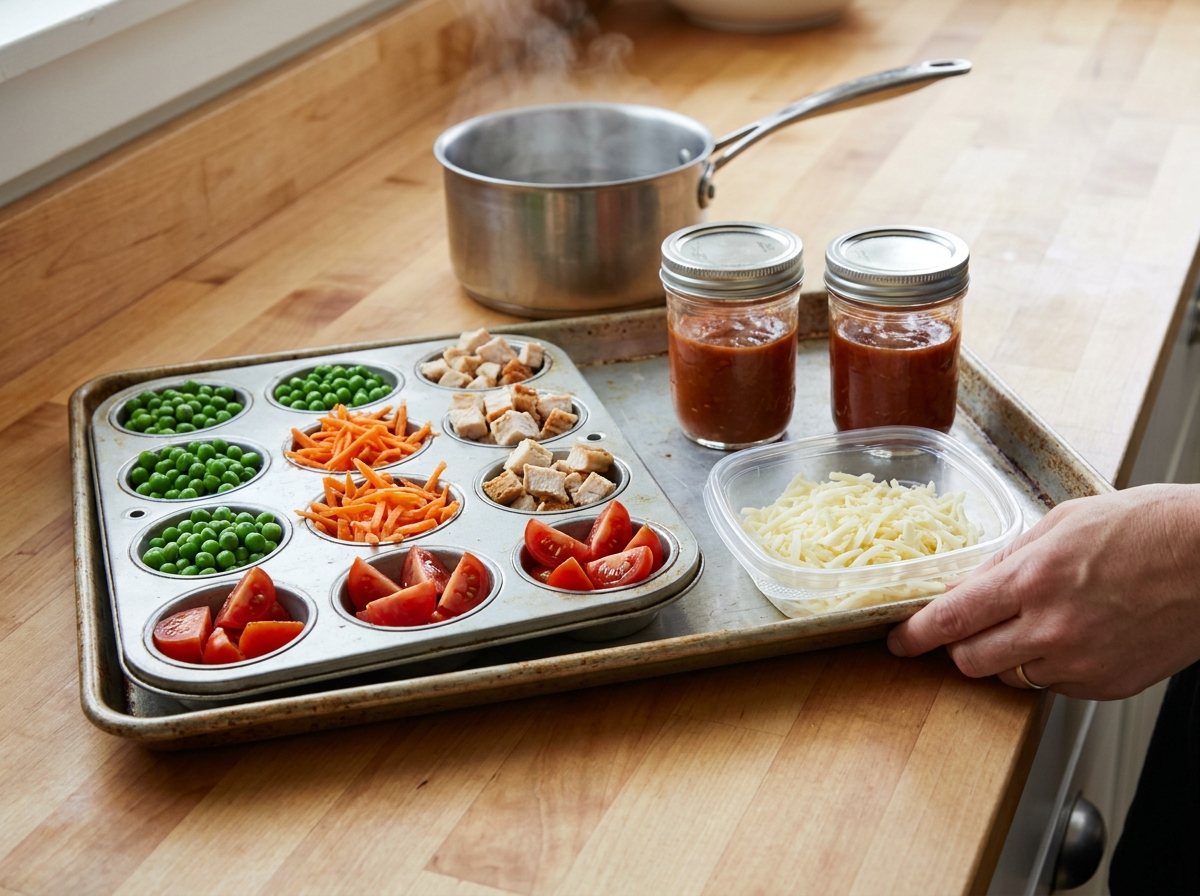
The biggest fear I hear from parents about noodle bars is “that sounds like six extra dishes and a disaster.” It doesn’t have to be. Here’s the order I follow on an actual weeknight:
- Start the water. An adult handles the boiling pot.
- Prep toppings and sauces. Cut, reheat, and portion while the water heats.
- Cook the noodles. Cook them soft for ages 3-4 and cut long noodles short. Toss with a little oil.
- Load one sheet pan or tray. Carry everything to the table in one trip.
- Serve and start the clock. Perishables get put away within 2 hours.
A few more ways to keep cleanup small:
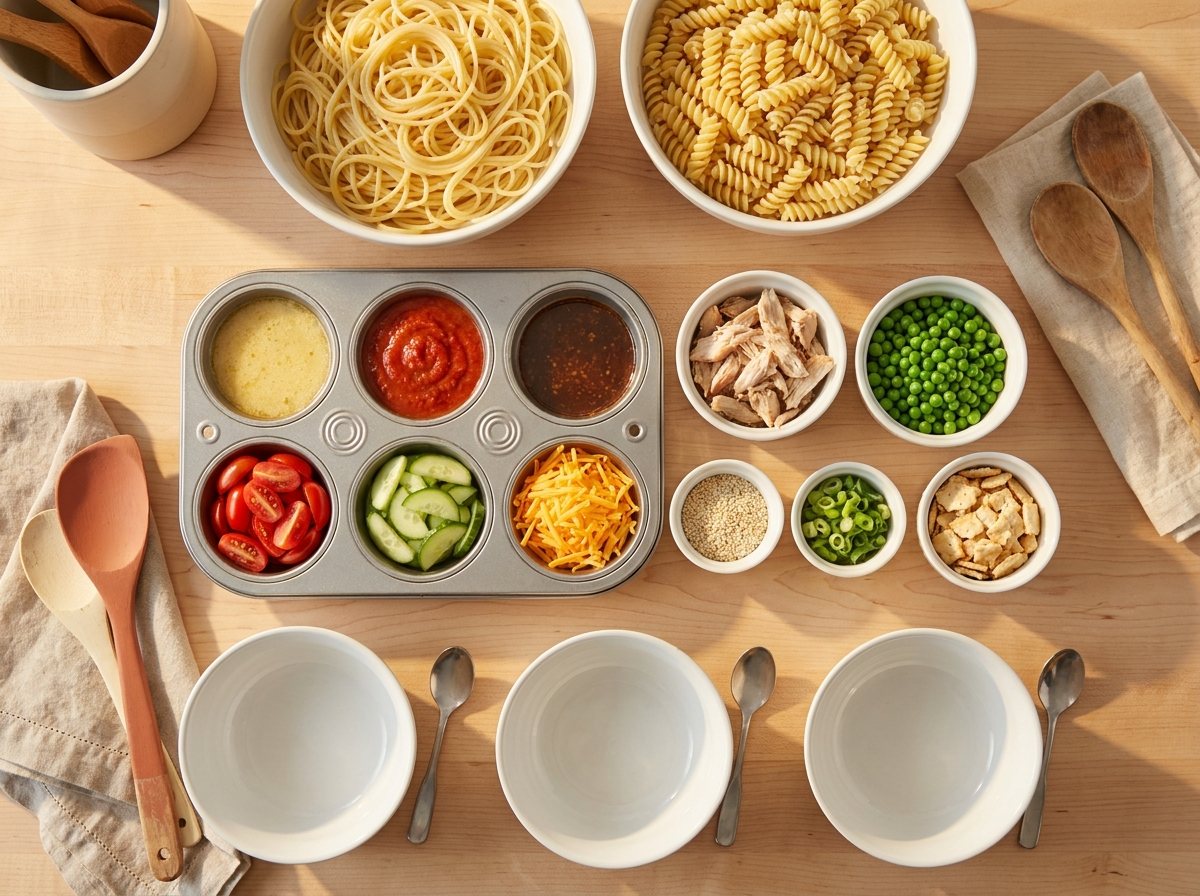
- Use what you already have. Muffin tins, small bowls, or takeout container lids work as topping dishes. Use unbreakable dishes for anything kids carry. You don’t need a matching set.
- Use up fridge odds and ends. Half a bag of shredded carrots, the last handful of peas and leftover chicken all work as toppings.
Already batch-cooking proteins? Try Freezer-to-Instant-Pot Dump Meals and thaw a bag of shredded chicken in the fridge for the protein station. It cuts prep time in half.
Picky Eater Rules: Do and Don’t at the Noodle Bar
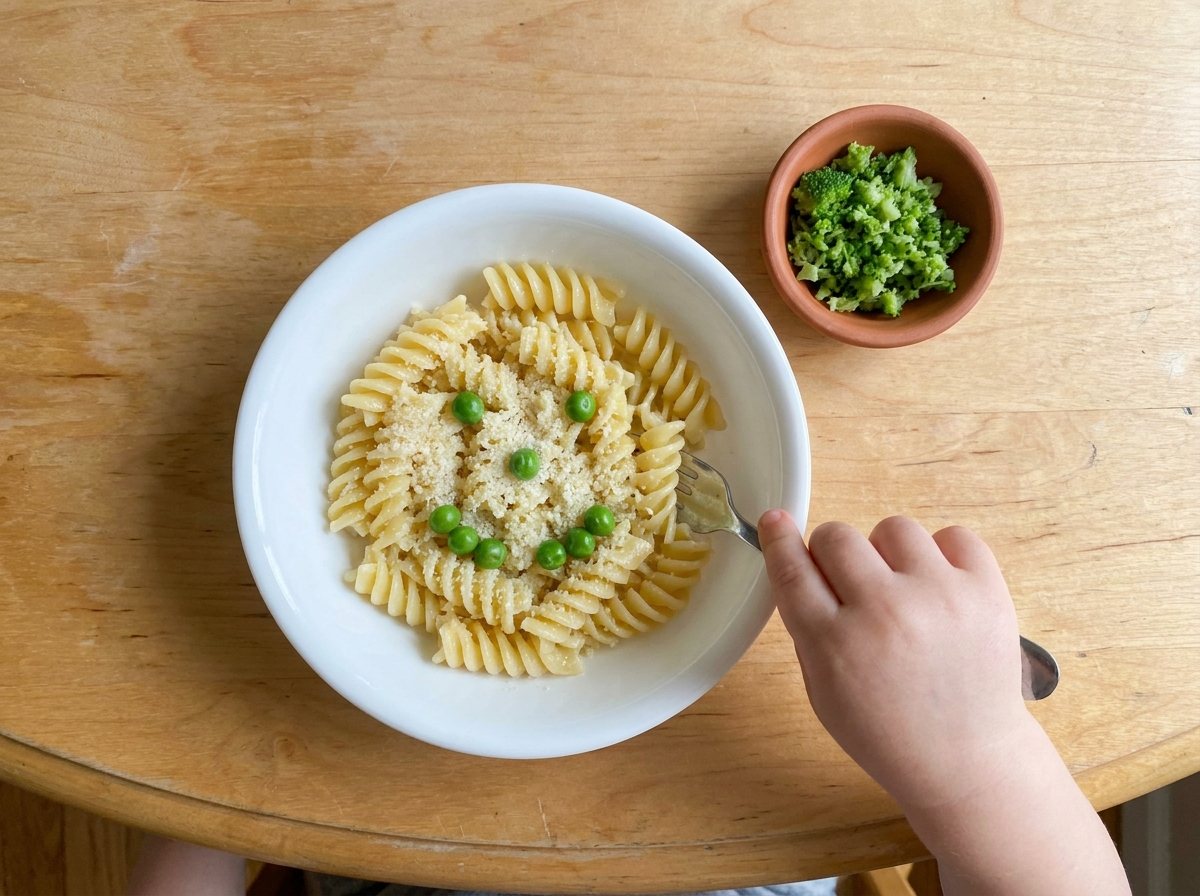
Noodle bars help picky eaters, but they don’t fix everything. Some nights a kid will still eat only plain noodles. Here’s how to set expectations so the night still feels like a win.
Do:
- Always have one “safe” combo available with zero pressure (usually plain noodles + butter, or noodles + plain olive oil).
- Put one new or less-familiar item on the table alongside the familiar ones, without commentary. No “just try it” pressure — let it sit there as an option.
- Let them build a “weird” combo if they want to. Ketchup on ramen noodles is not a crime against food. The goal is engagement, not your idea of a balanced bowl.
- Praise the building, not the eating. “I love that you made your own bowl!” lands better than “Good job eating your vegetables.”
Don’t:
- Don’t require they take a certain number of toppings before they can eat. That turns a low-pressure format into a high-pressure one and undoes the whole point.
- Don’t comment on what other siblings chose (“Your brother tried the broccoli, why won’t you?”). Comparison is a fast way to make a kid dig in on refusal.
- Don’t hide vegetables inside sauces at a noodle bar. The entire value of this format is transparency — kids can see and choose everything. Hiding food undermines the trust that makes the format work.
For more on why separating foods (rather than forcing them to touch or mix) helps picky eaters specifically, this connects directly to the ideas in Separate Meals for Picky Eaters. A noodle bar is that same keep-it-separate idea, made into a fun weekly event.
Good to knowIf your child eats fewer than about 15-20 foods, gags often, is losing weight, or is very distressed at meals, talk to your pediatrician or a feeding therapist.
Make Noodle Bar Night Feel Like an Event
One thing I didn’t expect when we started doing noodle bars: my kids started asking for “noodle bar night” the way they’d ask for pizza night. Turning dinner into an interactive event — rather than a plate that appears in front of them — changes the emotional tone of the whole meal.
A few small things that boost the “event” feeling without extra work:
- Give it a name and put it on your visible weekly menu (even a whiteboard on the fridge). “Noodle Bar Night” sounds like an occasion in a way “pasta” doesn’t.
- Let kids help set up. Carrying unbreakable bowls and filling sauce cups are jobs most kids can do from age 3.
- Sit down together and build your own bowl in front of them. Modeling trying a new topping (without pressure or narration) does more than any amount of encouragement.
Mealtime tension at your house? Pair this with Positive Mealtime Environment. A noodle bar removes common friction points like forced bites and mixed plates.
Age-by-Age: What to Expect at Each Station
Kids ages 3-8 span a huge range of independence, so here’s how I adjust the noodle bar by age without changing the core system.
| Age | What they can do independently | What you’ll still help with |
|---|---|---|
| 3-4 | Point to or scoop toppings with a spoon into their own bowl. Choose 1-2 items. | Portioning sauce, cutting long noodles short, carrying hot items. |
| 5-6 | Serve themselves most toppings with light supervision. Use tongs for veggies. | Pouring sauce from a bottle, handling anything hot. |
| 7-8 | Build the entire bowl start to finish, including sauce. Help set up stations before dinner. | A final check that protein is fully cooked, portion sizing if needed. |
For the youngest builders, pre-portion sauces into squeeze bottles rather than bowls with spoons — a 3-year-old with a ladle and marinara is a floor-cleaning event waiting to happen. For 7-8 year olds, this is a low-stakes way to build cooking independence. Next step: Teaching Kids to Cook: The Complete Age-by-Age Guide.
Meal Prep and Leftover Strategy
Noodle bars are surprisingly good leftovers material because everything stays separate until it’s eaten — no soggy sauce-soaked noodles sitting in the fridge overnight.
- Store components separately. Keep noodles (tossed with a little oil), sauces, proteins and veggies in their own containers. Refrigerate within 2 hours and use within 3-4 days.
- Reheat noodles with a splash of water. Microwave, stirring halfway, until steaming hot throughout (165°F on a food thermometer). Reheat leftover proteins to 165°F too, and let everything cool before serving kids.
- Repurpose leftover noodle bar components into lunch. Cold noodles + low-sodium soy-sesame sauce + finely grated carrots make a good next-day lunchbox item. Pack with an ice pack in an insulated lunchbox, or use a preheated thermos for hot noodles.
- Double the protein and veggie prep on nights you’re already cooking chicken or ground beef for something else. Freeze half for a later noodle bar night, and thaw it in the fridge, not on the counter.
| Component | Fridge life | Reheat |
|---|---|---|
| Noodles (tossed with oil) | 3-4 days | Microwave with a splash of water to 165°F. |
| Cooked proteins | 3-4 days | Reheat to 165°F. |
| Cooked veggies | 3-4 days | Microwave until steaming hot. |
| Sauces | 3-4 days | Warm gently or serve cold. |
Noodle bars also use up fridge odds and ends, so they fit well with Budget Meal Planning for Families.
Common Mistakes That Turn a Noodle Bar Into Chaos
I learned most of these the hard way, so consider this the shortcut version:
- Too many choices, too fast. Six sauces and eight toppings is overwhelming for a 4-year-old. Start with 3-4 toppings and 2 sauces your first few times, then expand once everyone gets the rhythm.
- Noodles sitting out too long and clumping. Toss with a little oil right after draining. If they’ll wait more than 10-15 minutes, keep them covered and give a quick toss before dishing out.
- Sauces poured, not portioned. Squeeze bottles or small pitchers keep control in the kid’s hands and prevent the “I have too much sauce now” meltdown.
- No safe option. If every item is new, dinner feels risky to a cautious eater. Anchor the bar with one food you know they’ll eat.
Noodle Bar FAQ
What’s the difference between a noodle bar and just serving pasta with toppings on the side?
The difference is structure. A noodle bar has distinct stations (base, sauce, protein, veggies, fun toppings) offered the same way each time, so kids learn the system. A jar of parmesan next to a pot of spaghetti is a start, but it lacks that repeatable routine.
How do I make a noodle bar work for a picky eater who won’t try anything new?
Keep one “safe” combination available every time, usually plain noodles with butter or olive oil. Never require a set number of toppings. Put one unfamiliar item on the table without commentary and let them decide.
What noodles work best for younger kids ages 3-4?
Shorter shapes like rotini, shells, or elbow macaroni are easiest for little hands. Long, slippery or chewy strands can cause gagging or choking, so cut every long noodle into short lengths after cooking. That includes spaghetti, angel hair, ramen, rice noodles, vermicelli, egg noodles and udon. Cook all pasta soft for ages 3-4 and udon very soft; slightly under al dente is for older kids.
How do I keep this nut-free for school or allergy concerns?
Skip the peanut sauce and any nut toppings. Traditional pesto usually contains pine nuts and cheese, so skip it or check the label, and read every store-bought sauce label. Give every dish its own utensil, since shared spoons cause cross-contact. Sesame oil and seeds are a common allergen too, so swap in olive oil and skip the seeds if needed. The bar also includes wheat, milk, egg, soy, fish and shellfish. For a true allergy, read labels and skip the bar format, or serve the allergic child first from clean utensils.
Can I do a noodle bar for a bigger group, like a playdate or birthday dinner?
Yes. Everyone builds their own bowl, so nobody has to like the same thing. Set up the stations buffet-style with larger bowls and a sturdy utensil for each topping. Label each dish with an index card so guest parents know what’s in it, which helps with allergies in a mixed group. Keep hot food hot and cold food cold, and follow the 2-hour rule (1 hour above 90°F).
How much noodles and toppings should I prep per person?
As a starting point, plan on about 1-2 ounces of dry pasta for ages 3-5, 2-3 ounces for ages 6-8, and 2-4 ounces per adult. For toppings, plan on 2-3 tablespoons each of two vegetables and one protein per child, plus 1-2 tablespoons of sauce. Fill serving dishes modestly and top off for seconds so nothing goes to waste.
What if my kids want completely different noodle types on the same night?
Cook two types in separate pots, or stagger them — boil one, drain and set aside, then reuse the same pot of water for the second. It adds about 10-15 extra minutes (an adult should handle the boiling water) but gives you the flexibility to satisfy a spaghetti-lover and a ramen-lover on the same night without cooking two entirely separate dinners. You may find that after a few nights, kids start trying each other’s noodle choices.
Make Noodle Bar a Weekly Habit
After four or five noodle bars, kids stop dreading “what’s for dinner” and start asking if it’s noodle bar night. Print the Noodle Bar Station Chart above, stock a few staples, and try it this week.