
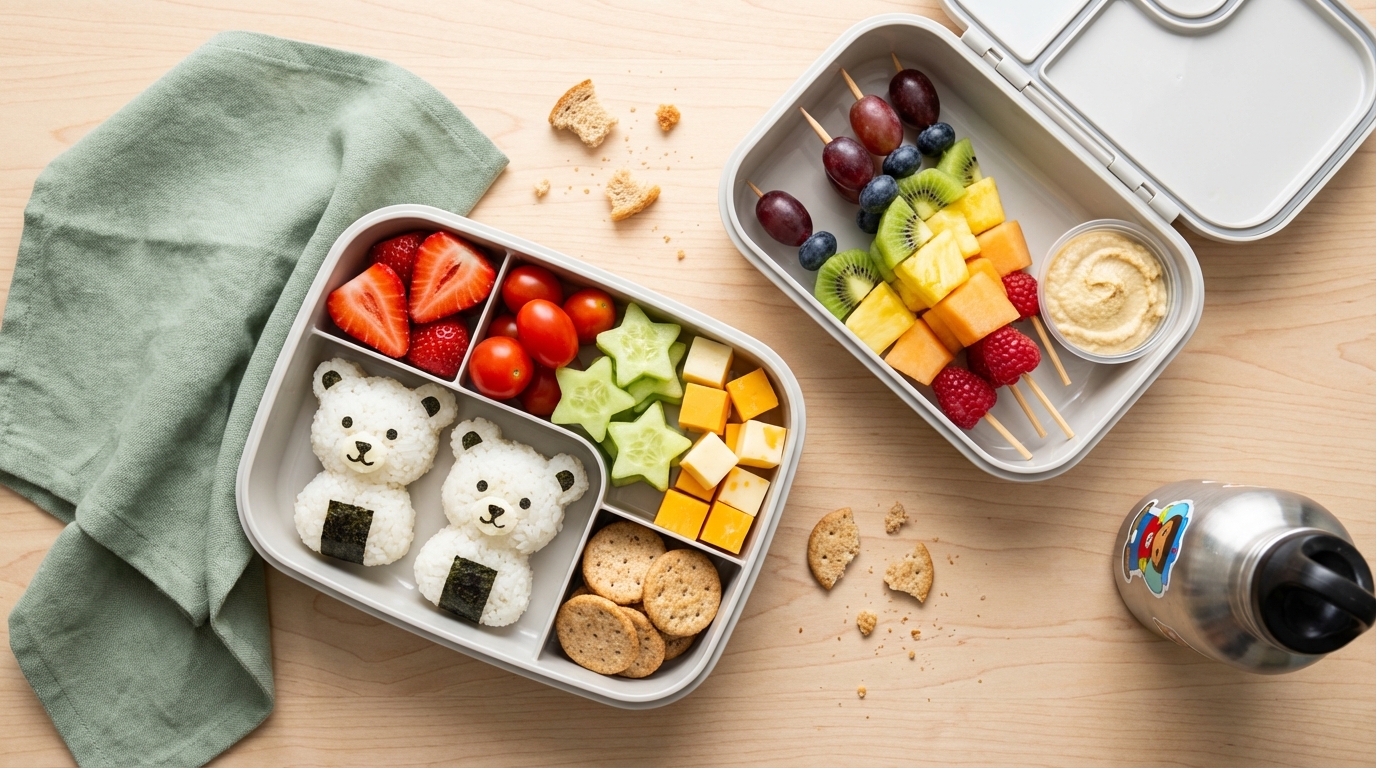
Bento Box Lunch Ideas for Kids: Creative Combos They’ll Actually Eat
Combat school-lunch fatigue with bento box ideas! This guide provides 23 creative combos, a 5-compartment formula, and container recommendations by age to help your kids eat more and reduce your stress.
- Choose the right bento box for your child's age, grip strength, and appetite.
- Utilize a 5-compartment formula to offer variety and prevent food overwhelm.
- Explore 23 creative bento combos by theme to inspire your weekly lunch packing.
- Involve older kids (10-13) in choosing their bento container for better buy-in.
This post contains affiliate links. As an Amazon Associate I earn from qualifying purchases.
By lunch number 87, I was out of ideas. I stood at the counter staring at a loaf of bread and a jar of peanut butter with zero creative energy left.
My daughter confirmed it when she came home with her lunchbox still half-full and announced, “Mom, Lily’s mom makes her lunch look like a rainbow.”
That was the week I ordered my first bento box. I never became an Instagram-worthy lunch artist, but the compartments did the creative work for me. Suddenly “throw a few different things in the box” looked intentional, my kids ate more, and I stopped stressing.
If you’re deep in school-lunch fatigue, this guide covers 23 bento combos by theme, a simple 5-compartment formula, portions and containers by age, a Sunday prep plan, and age-safe packing rules. Want the combos right now? Jump to the 23 combos.
In this article (9 sections)
- Why Bento Boxes Actually Work for Kids
- Best Bento Box Containers by Age
- The 5-Compartment Formula: Building a Balanced Bento Every Time
- Bento Box Lunch Ideas: 23 Combos by Theme
- Bento Boxes for Picky Eaters: Strategies That Actually Help
- Bento Box Meal Prep for the Week (Sunday Plan)
- Keeping Bento Box Food Safe
- Frequently Asked Questions
- How to Keep Packing Bento Lunches Long Term
Why Bento Boxes Actually Work for Kids
Five small, different foods feel less overwhelming than one big sandwich. Your child gets to choose what to eat first, what to save, and what to skip. The compartments keep portions right-sized and keep wet foods away from the crackers.
If you’ve been struggling with lunches your kids actually eat, a bento-style approach might be the simplest upgrade you can make.
Best Bento Box Containers by Age
The right container depends on your child’s age, grip strength, appetite, and whether their school has a microwave.
Good to knowHow I chose these: I’ve used the Bentgo Kids and Bentgo Modern myself. Every other box is picked from its listed features, not first-hand testing.
Prices are approximate as of September 2026. Makers also change compartment counts and sizes between versions, so check the current product page for capacity, latch style, and dishwasher and microwave safety before you buy.
Toddlers and Preschoolers (Ages 2-4)
At this age, you need a box that’s easy to open, leak-resistant, and small enough that it doesn’t overwhelm tiny eaters.
| Container | Price | Compartments | Best Feature | Watch Out For |
|---|---|---|---|---|
| OmieBox | $40 | 3 + thermos | Built-in insulated thermos for warm foods | Heavier than other options; some kids need help opening |
| Bentgo Kids | $28 | 5 | Leak-proof, rubber-sealed lid, drop-tested | Compartments are small — great for toddlers, limiting for big eaters |
| Yumbox Original | $30 | 6 | Single latch, illustrated tray shows food groups | Not microwave-safe; lid doesn’t fully detach |
My pick for this age: The Bentgo Kids. My kids could open it on their own after a couple of days of practice, and the leak-proof seal meant I could pack yogurt and hummus without disasters.
Elementary School (Ages 5-9)
These kids need more food, more independence, and something that survives being dropped on a cafeteria floor three times a week.
| Container | Price | Compartments | Best Feature | Watch Out For |
|---|---|---|---|---|
| Yumbox Tapas | $35 | 4-5 | Larger compartments than Original, still single-latch | Not ideal if your child likes big sandwiches |
| PlanetBox Rover | $55 | 5 | Stainless steel, virtually indestructible, dishwasher-safe | Expensive; not leak-proof without separate containers |
| Bentgo Kids Chill | $35 | 4 + removable ice pack | Built-in ice pack keeps food cold until lunch | Ice pack takes up space; fewer compartments |
Best pick on features: The PlanetBox Rover. I haven’t used this one myself, but it’s built to last, and the stainless steel goes straight in the dishwasher. It is pricey, though.
Tweens and Middle Schoolers (Ages 10-13)
Older kids need bigger portions, containers that don’t look “babyish,” and ideally something they had a say in choosing.
| Container | Price | Compartments | Best Feature | Watch Out For |
|---|---|---|---|---|
| Bentgo Modern | $25 | 4 | Sleek design, doesn’t scream “kid lunchbox” | Compartments aren’t leak-proof |
| PlanetBox Launch | $50 | 3 | Larger compartments, fits a full sandwich | Only 3 sections; less variety-friendly |
| Yumbox Presto | $35 | 5 | Stainless steel tray, large enough for teen appetites | Single latch can feel childish to some tweens |
Pro tip: Let your tween pick their own container. The buy-in matters. My oldest chose the Bentgo Modern in slate gray and suddenly cared about what went inside it.
The 5-Compartment Formula: Building a Balanced Bento Every Time
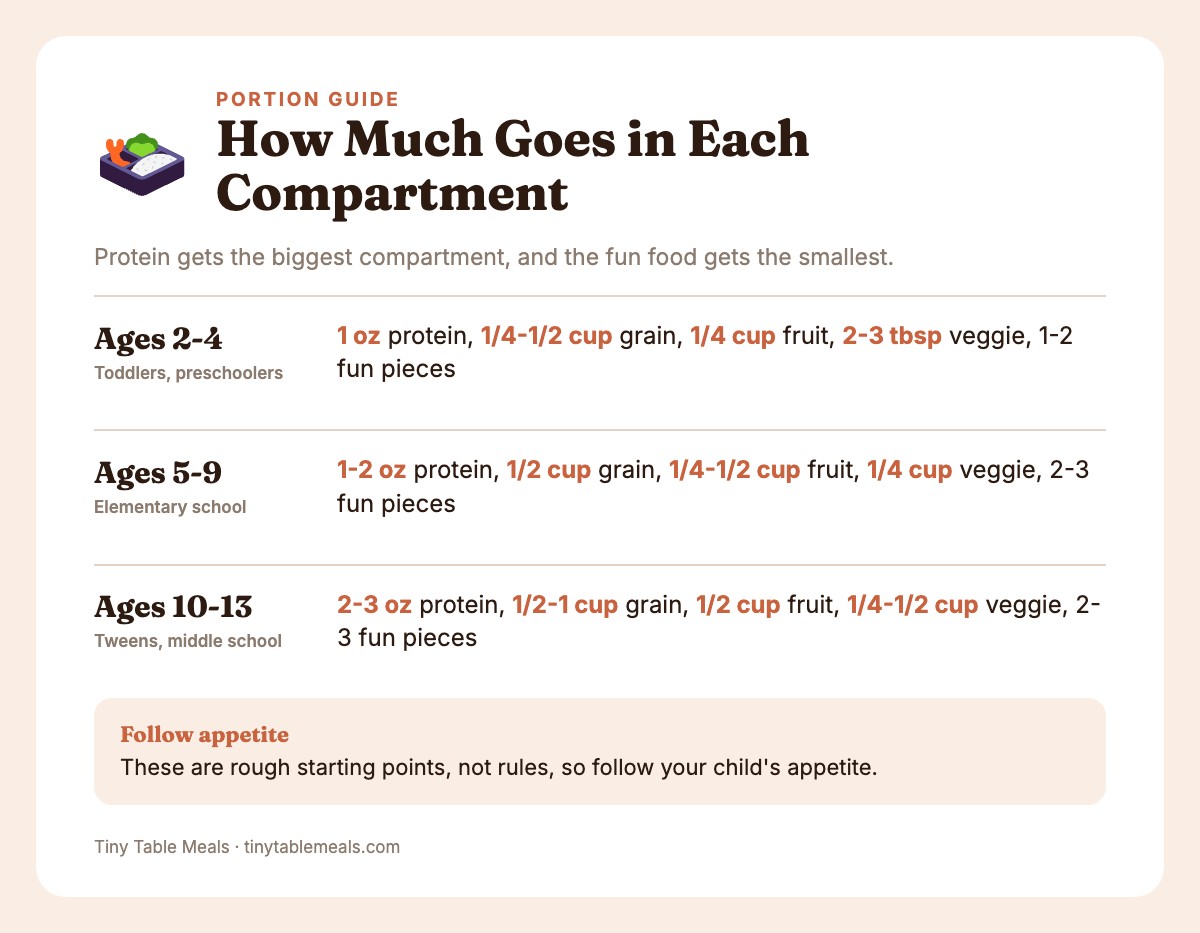
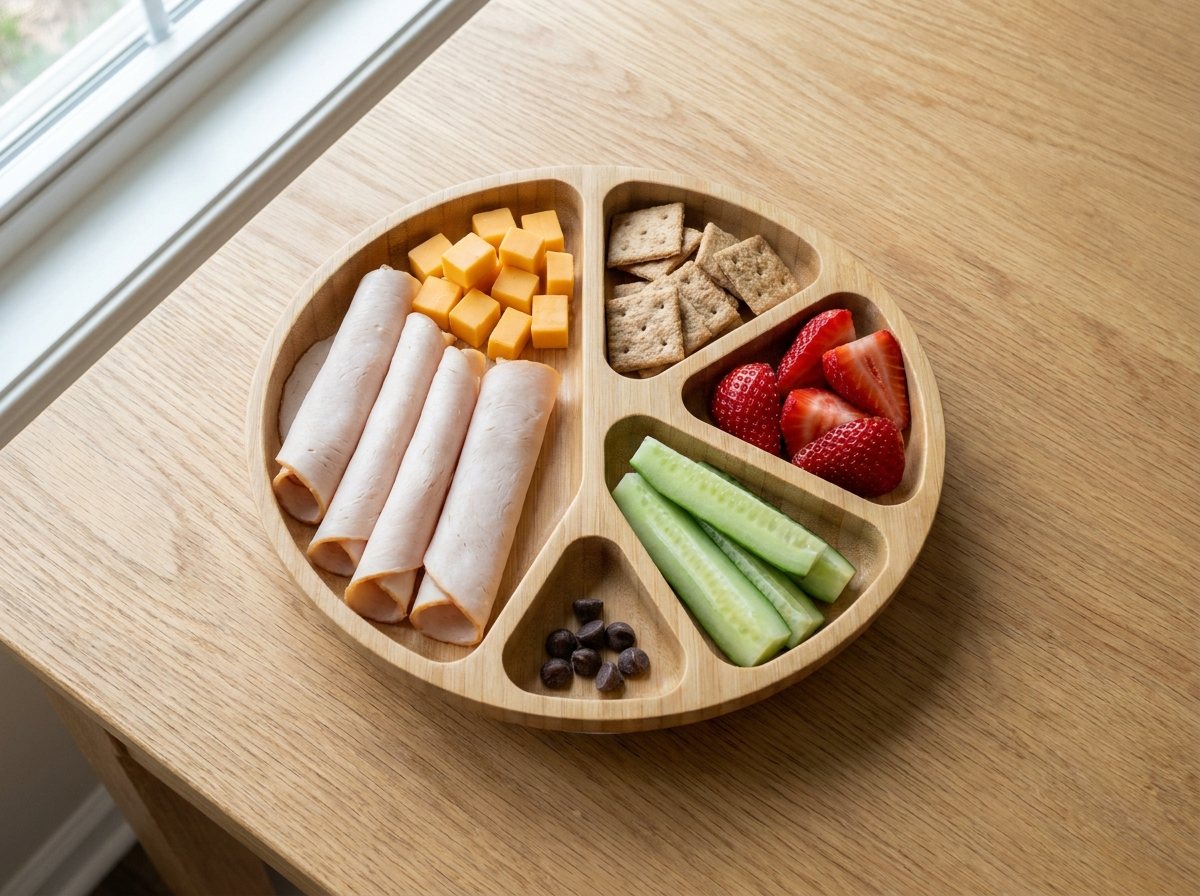
This is the framework that saves you from decision fatigue. Every bento box you pack follows the same simple formula:
Protein + Grain + Fruit + Veggie + Fun
That’s it. Five categories, five compartments. Here’s roughly how much goes in each, by age.
TipWant this on the fridge? The Bento Box Formula + Sunday Prep Planner printable has a fill-in bento diagram, the portion table, and a cut guide.
| Compartment | Ages 2-4 | Ages 5-9 | Ages 10-13 |
|---|---|---|---|
| Protein | About 1 oz, or 2 tbsp hummus | 1-2 oz, or 1 egg | 2-3 oz |
| Grain | 1/4-1/2 cup, or a few crackers | 1/2 cup | 1/2-1 cup |
| Fruit | 1/4 cup | 1/4-1/2 cup | 1/2 cup |
| Veggie | 2-3 tbsp | 1/4 cup | 1/4-1/2 cup |
| Fun (smallest) | 1-2 pieces | 2-3 pieces | 2-3 pieces |
These are rough starting points, not rules, so follow your child’s appetite. If you’re unsure, see how much toddlers really eat.
Safety firstPacking for a child under 5? Skip these until at least age 5 (many families wait longer):
- Whole nuts or seeds, or trail mix
- Popcorn, hard chips, hard taco shells, or hard pretzels
- Gummies, fruit leather, caramels, hard candy, or chocolate-covered raisins
- Toothpicks or food picks (skip under 6)
Cut everything else as shown below. School lunchrooms are less supervised than your kitchen, so lean cautious, and have little kids eat seated.
How to cut common bento foods:
| Food | Under 5 | Ages 5+ |
|---|---|---|
| Grapes, cherry tomatoes | Quarter lengthwise | Halved, or whole for confident chewers |
| Blueberries | Halve or quarter | Whole |
| Melon, mango, pineapple, kiwi, mandarin segments | Small, soft pieces | Bite-size chunks |
| Apple, Asian pear | Very thin slices, or cooked soft | Slices |
| Dried fruit, pomegranate seeds | Chop small, or skip | Whole |
| Cucumber | Thin sticks or quartered rounds | Rounds or sticks |
| Carrots, celery, snap peas, bell pepper, jicama | Cooked soft or shaved thin | Raw sticks and strips |
| Edamame, chickpeas, peas, corn | Cooked and lightly smashed | Whole |
| Cheese, mozzarella balls | Thin sticks, small pieces, or shredded; halve mozzarella balls | Cubes; whole mozzarella balls |
| String cheese | Small pieces or thin lengthwise strips; never a whole stick | Whole stick, or pulled into strings |
| Pepperoni, salami, sausage | Quartered or cut small | Slices and bites |
| Nut or seed butter | Thin spread, never a spoonful | Thin spread |
| Olives | Pitted and sliced | Pitted |
Good to knowCheck your school’s nut and sesame policy, and introduce any new allergen at home before it goes in a lunchbox. Read labels, since cross-contact varies by brand. Tahini is sesame, so it’s not an option for sesame-allergic kids.
1. Protein (Largest Compartment)
This is the anchor of the lunch. It helps keep energy steady through the afternoon. Use the portion table above as a starting point.
- Meat and egg: deli turkey rolls, hard-boiled egg, leftover chicken strips, leftover meatballs
- Dairy: cheese pieces or sticks, string cheese (small pieces or thin strips for under 5, never a whole stick), yogurt tube (with a cold pack; protein varies by brand, so check labels)
- Plant-based: hummus with dippers, black bean dip, edamame (smashed for under 5), nut or seed butter spread thin on crackers
For more protein-packed ideas, check out our high-protein meals and snacks guide — many of those snack ideas work perfectly in a bento compartment.
2. Grain or Starch
The energy source. Whole grains are ideal, but any grain counts.
- Bread and wraps: pita triangles, mini bagel, tortilla pinwheels, naan strips
- Crackers: whole wheat crackers, rice cakes, pretzels (5+), granola (5+)
- Cooked grains: rice balls (onigiri), pasta salad
3. Fruit
Color and sweetness. This compartment usually gets eaten first, which is totally fine.
- Berries and grapes: strawberries, blueberries (halved for under 5), grapes (quartered lengthwise for under 5)
- Slices and chunks: apple slices (toss in lemon water to prevent browning), mandarin segments, watermelon, kiwi, mango, banana coins
- Dried: dried cranberries (chopped for under 5)
4. Veggie
This compartment often comes home untouched. That’s okay. Consistent exposure matters more than daily consumption. Serve it, don’t pressure, and over time it becomes normal. Check out our guide to getting kids to eat more vegetables for more strategies.
- Soft or cooked: steamed broccoli florets, corn kernels, cucumber (thin sticks for under 5), edamame (double duty as protein)
- Crunchy raw (cooked soft or shaved thin for under 5): baby carrots with ranch, snap peas, bell pepper strips, celery with cream cheese, jicama sticks
- Tomatoes: cherry tomatoes (quartered lengthwise for under 5)
5. The Fun Compartment
One small treat your child genuinely looks forward to makes the whole lunch feel exciting rather than obligatory. It isn’t a reward for eating vegetables. It just makes lunch a positive experience.
- Any age: a few chocolate chips, a small square of chocolate, animal crackers, a mini muffin, two Oreos, cheese cut into a fun shape
- Ages 5+: fruit leather, a fortune cookie, or yogurt-covered pretzels
The balance matters here. The fun compartment is the smallest one. It’s a finishing touch, not the main event.
Bento Box Lunch Ideas: 23 Combos by Theme
Each combo follows the 5-compartment formula, so you can rotate through them for weeks without repeating.
Packing for a child under 5? Cut every food as shown in the cut guide above, including cheese cubes into thin sticks and string cheese into small pieces or thin strips (never a whole stick). Items marked (5+) are hard, crunchy, or sticky, so leave them out or swap in a soft food for younger kids.
Safety first(5+) is the earliest age, not a target. If your child isn’t a confident chewer yet, skip those items a while longer, and have them eat seated.
Good to knowBrand names in these combos are examples, so read the current label for your child’s allergens.
Rainbow Bento Boxes
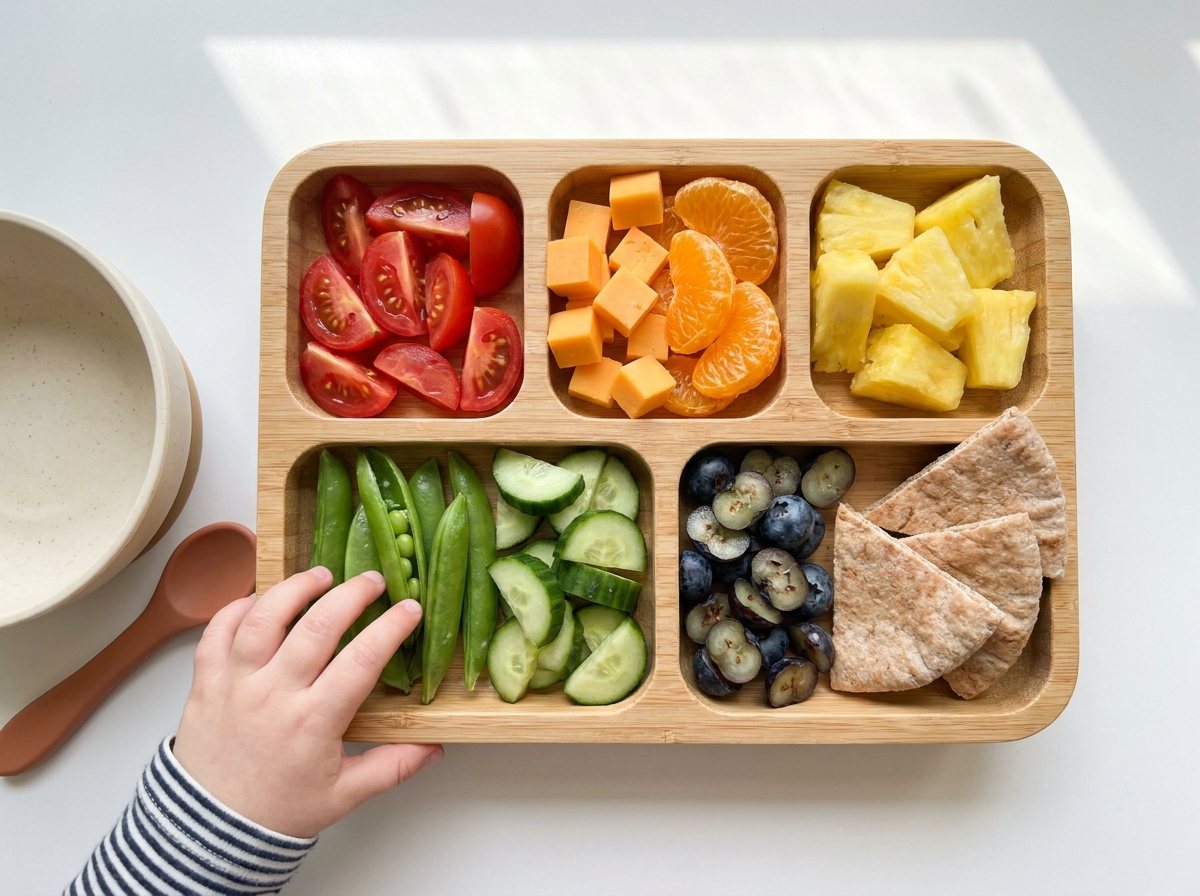
These are all about hitting as many colors as possible. Kids love them because they look exciting.
| Combo | Protein | Grain | Fruit | Veggie | Fun |
|---|---|---|---|---|---|
| 1. The Full Rainbow | Cheddar cubes | Whole wheat pita triangles | Mandarin segments, pineapple, blueberries | Cherry tomatoes, cucumber, snap peas | A small square of dark chocolate |
| 2. Pink and Purple Power | Strawberry cream cheese pinwheels | Purple corn tortilla chips (5+) | Raspberries, red grapes | Purple cabbage slaw + a tiny cup of dressing | Yogurt-covered blueberries (5+) |
| 3. Green Machine | Edamame + a hard-boiled egg | Spinach tortilla pinwheels with turkey and cheese | Green grapes, kiwi | Cucumber, snap peas | A green fruit leather roll-up (5+) |
Around-the-World Bento Boxes
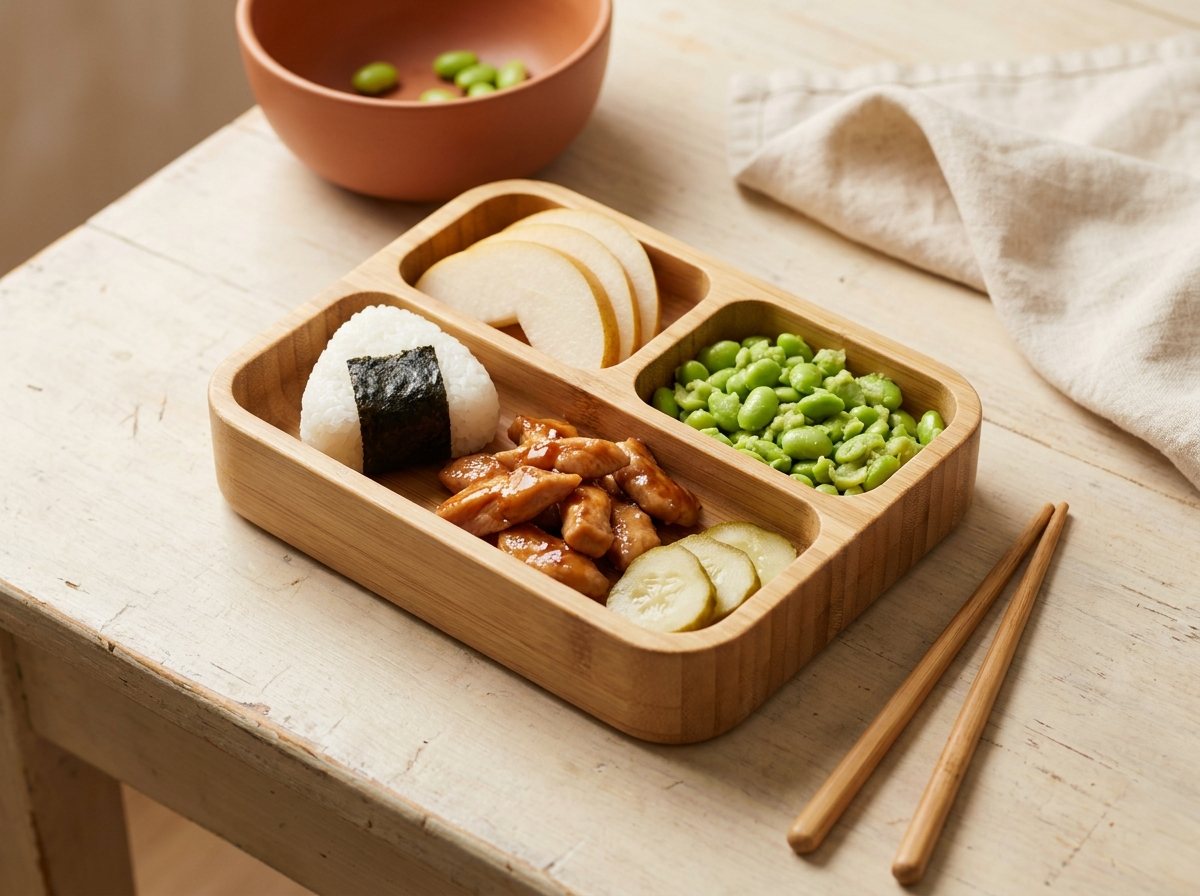
One of our favorite dinner strategies is global cuisine nights, and the concept works beautifully for lunch too.
| Combo | Protein | Grain | Fruit | Veggie | Fun |
|---|---|---|---|---|---|
| 4. Japanese Bento | Leftover teriyaki chicken strips (use within 3-4 days) | Rice ball (onigiri) with a nori strip | Asian pear slices | Steamed edamame, pickled cucumber | A Pocky stick or two |
| 5. Mediterranean Mezze | Hummus + crumbled feta | Warm pita triangles | Dried apricots | Cucumber, cherry tomatoes, pitted sliced olives | A couple of graham crackers |
| 6. Mexican Fiesta | Black beans + a sprinkle of cotija | Tortilla chips (5+) or soft tortilla strips | Mango + a squeeze of lime | Corn, jicama sticks, bell pepper strips | A few cinnamon graham cracker pieces |
| 7. Italian Antipasto | Salami roll-ups + mozzarella balls | Breadsticks or mini focaccia | Red grapes | Marinated artichoke hearts, cherry tomatoes | A small soft cookie |
Sandwich-Free Bento Boxes
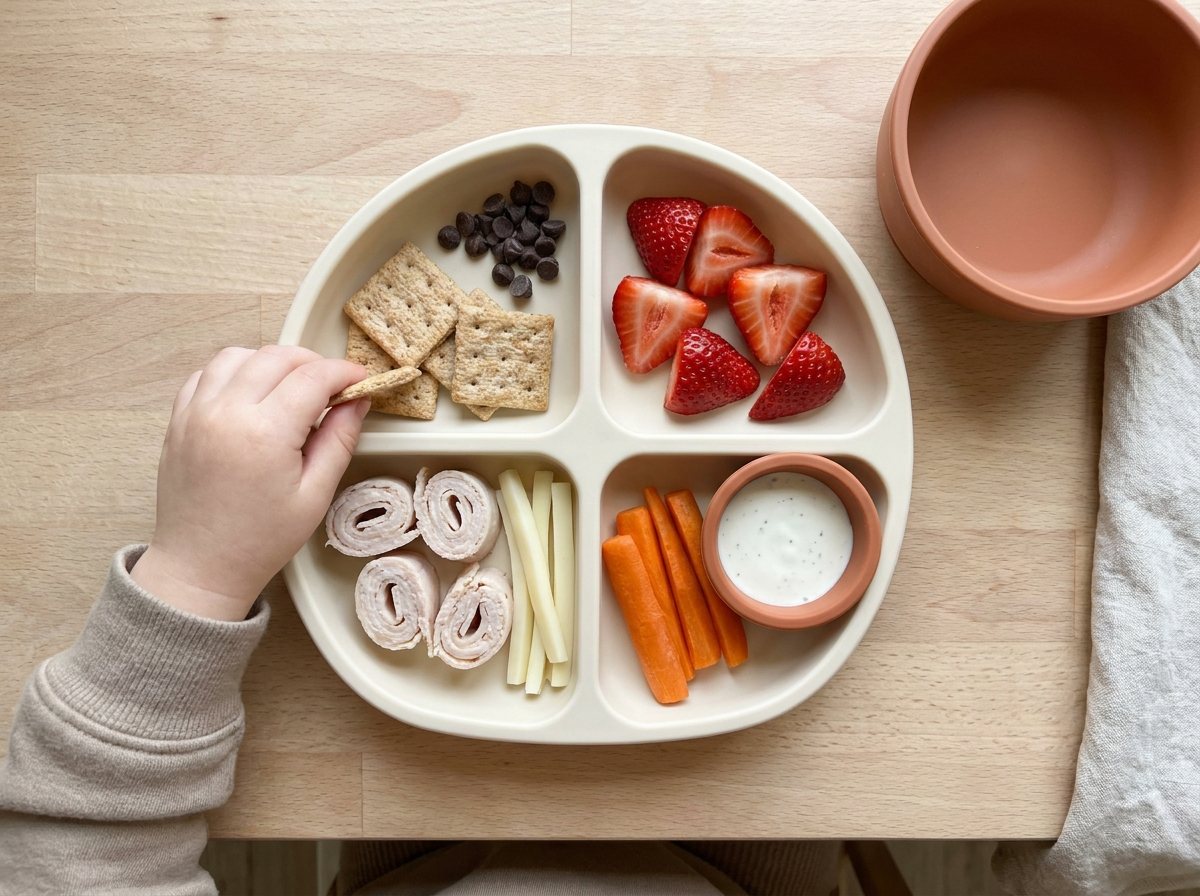
For the kid who’s done with sandwiches (or never liked them).
| Combo | Protein | Grain | Fruit | Veggie | Fun |
|---|---|---|---|---|---|
| 8. The Snack Plate | Deli turkey roll-ups + string cheese (small pieces for under 5) | Whole wheat crackers | Strawberries | Baby carrots + a ranch dip cup | A few dark chocolate chips |
| 9. Breakfast for Lunch | Hard-boiled egg + turkey sausage bites | Mini pancakes (frozen, thawed overnight in the fridge) | Banana coins + a tiny cup of maple syrup | Cherry tomatoes (yes, they’re a breakfast food now) | A small handful of granola (5+) |
| 10. Build Your Own Nachos | Shredded chicken + black beans | Tortilla chips (5+) or soft tortilla strips | Diced mango salsa | Corn, diced tomatoes, shredded lettuce | A few sour cream & onion chips (5+) |
| 11. Charcuterie Bento | Pepperoni + cheddar cubes (thin sticks for under 5) | Mini breadsticks + water crackers | Dried cranberries, apple slices | Celery sticks, cherry tomatoes | A couple of dark chocolate squares |
Protein-Packed Bento Boxes
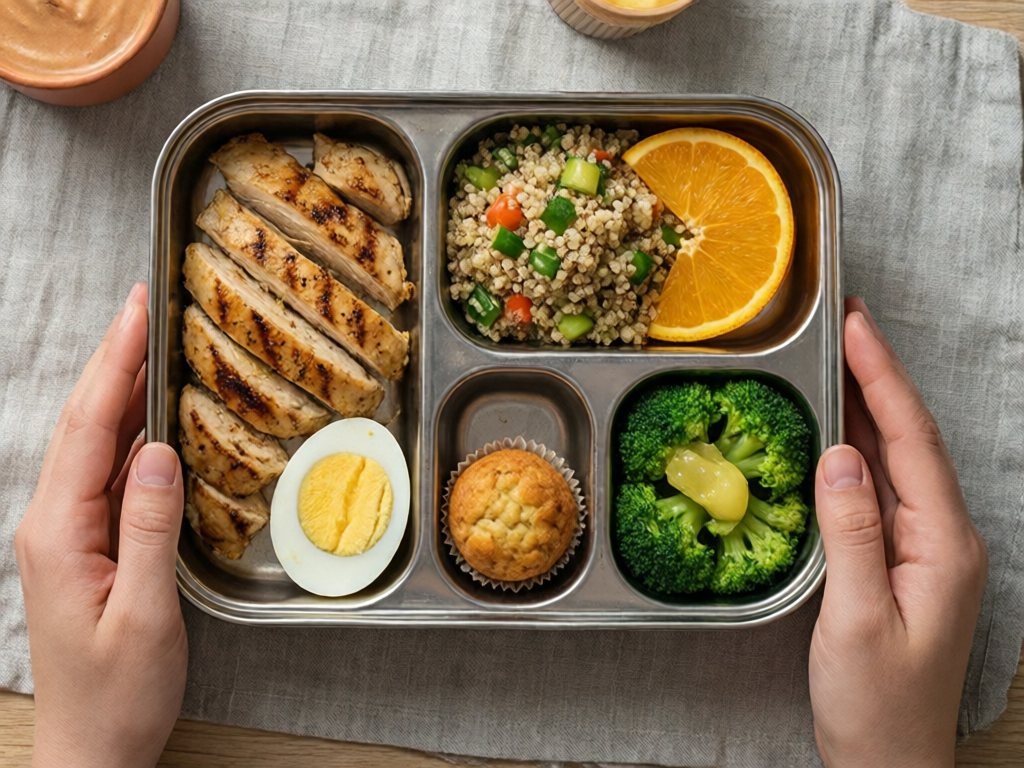
For active kids, athletes, or kids who need sustained energy through afternoon activities.
| Combo | Protein | Grain | Fruit | Veggie | Fun |
|---|---|---|---|---|---|
| 12. The Powerhouse | Grilled chicken strips + hard-boiled egg | Quinoa salad with diced veggies | Orange slices | Steamed broccoli + a squeeze of lemon | A mini muffin |
| 13. Greek Athlete | Greek yogurt (kept cold) + sunflower seeds (5+) | Whole wheat pita chips (5+) | Pomegranate seeds, sliced figs | Cucumber and tomato salad with olive oil | Maple syrup to drizzle on the yogurt |
| 14. PB Power Box | Peanut butter and banana tortilla roll-up (spread thin; introduce peanut at home first) + string cheese (small pieces for under 5) | Whole grain pretzels (5+) | Apple slices | Celery sticks + a little extra PB for dipping | A few chocolate-covered raisins (5+) |
Allergy-Friendly Bento Boxes
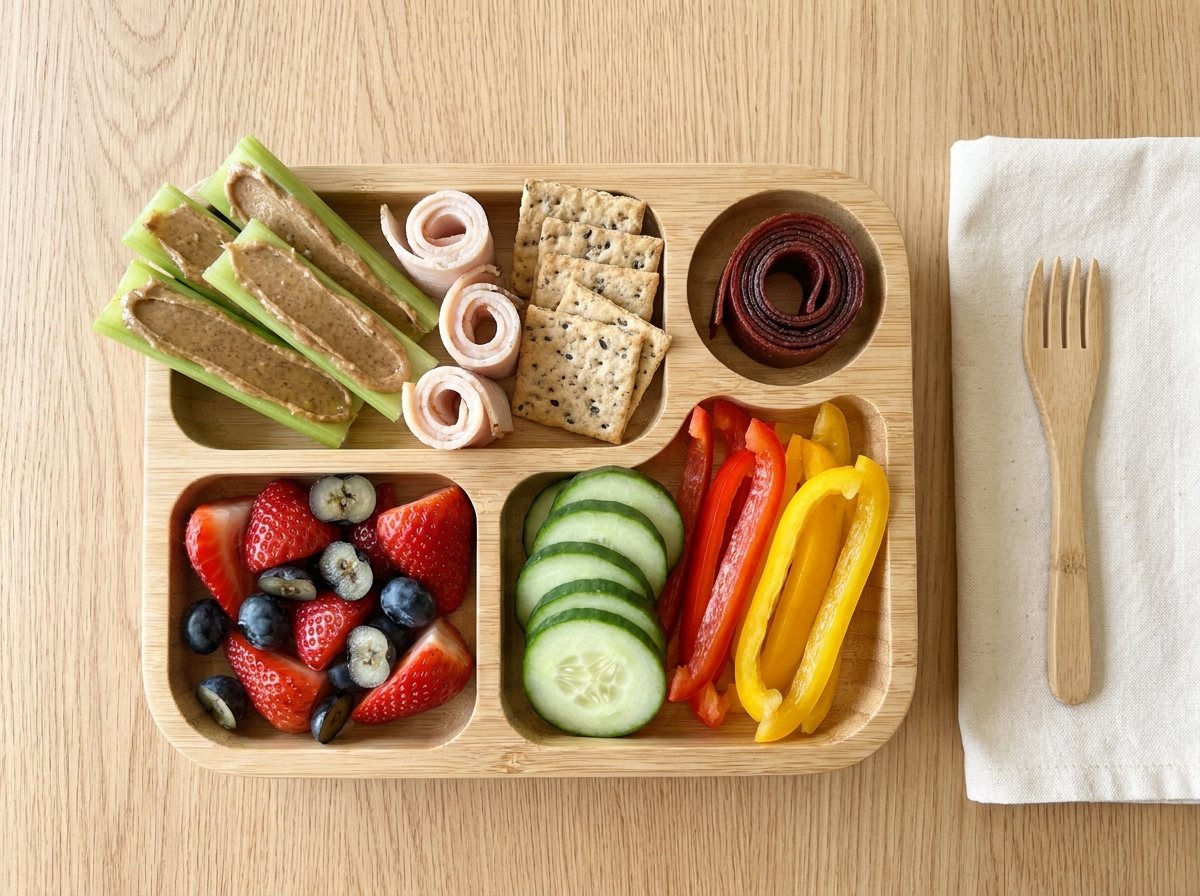
Nut-free, dairy-free, and gluten-free options that are still packed with flavor.
Brand names here are examples only. Always read the current label for your allergen, since crackers, deli meats, pretzels, and cookies can carry cross-contact warnings.
Safety firstIf your child has a diagnosed food allergy, run these ideas past their allergist and follow the allergist’s safe-food list and emergency plan. Make sure the school has a copy of that plan too.
| Combo | Protein | Grain | Fruit | Veggie | Fun |
|---|---|---|---|---|---|
| 15. Nut-Free Zone | Sunflower seed butter on celery + turkey roll-ups | Seed crackers labeled nut-free | Strawberries, blueberries | Cucumber, bell pepper strips | A fruit leather strip (5+) |
| 16. Dairy-Free Delight | Chicken strips + chickpeas | Rice cakes | Watermelon, grapes | Carrot sticks + guacamole | Dairy-free chocolate chips (such as Enjoy Life) |
| 17. Gluten-Free Goodness | Deli meat roll-ups + cheese cubes | Rice crackers + GF pretzels (such as Snyder’s; 5+) | Mango chunks | Snap peas, cherry tomatoes | A gluten-free cookie (check the label) |
Warm Bento Boxes
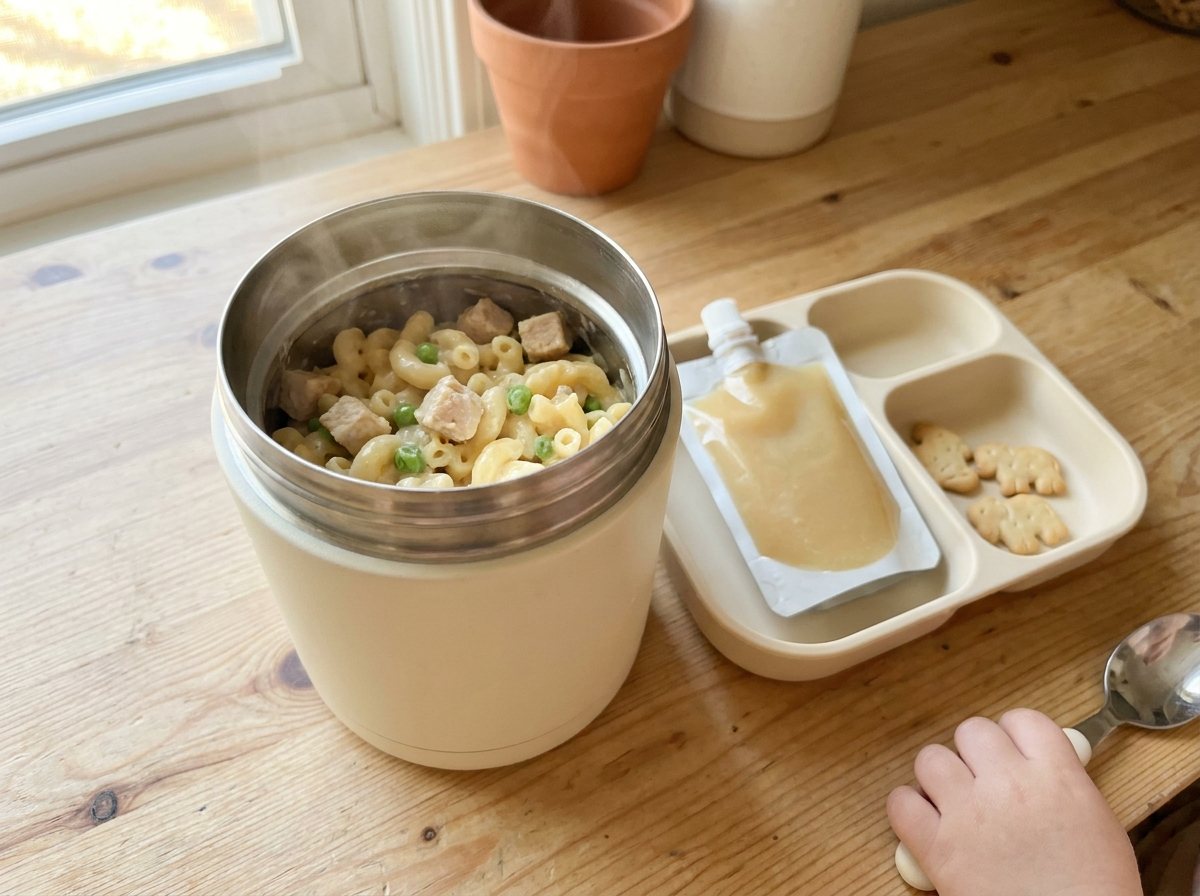
If your child has an OmieBox or thermos-style container, warm lunches are a big win in the cooler months. Some kids prefer warm food year-round. For more, see our hot thermos lunch ideas.
Safety firstHot soup or mac and cheese can scald little kids. For ages 2-6, use a wide-mouth thermos and a lid that isn’t pressurized, teach careful opening, and ask the teacher to help if needed.
| Combo | Protein | Grain | Fruit | Veggie | Fun |
|---|---|---|---|---|---|
| 18. Mac and Cheese Plus | Mac and cheese with chicken chunks (thermos) | The pasta counts | Applesauce pouch | Steamed peas, stirred into the mac | A few animal crackers |
| 19. Soup and Dippers | Chicken noodle or tomato soup (thermos) | A crusty roll or breadstick for dipping | Grapes | Carrot and celery sticks | A few Goldfish crackers |
| 20. Fried Rice Box | Leftover fried rice with egg and chicken (thermos) | The rice counts | Mandarin segments | Steamed edamame | A fortune cookie (5+) |
Themed Fun Bento Boxes
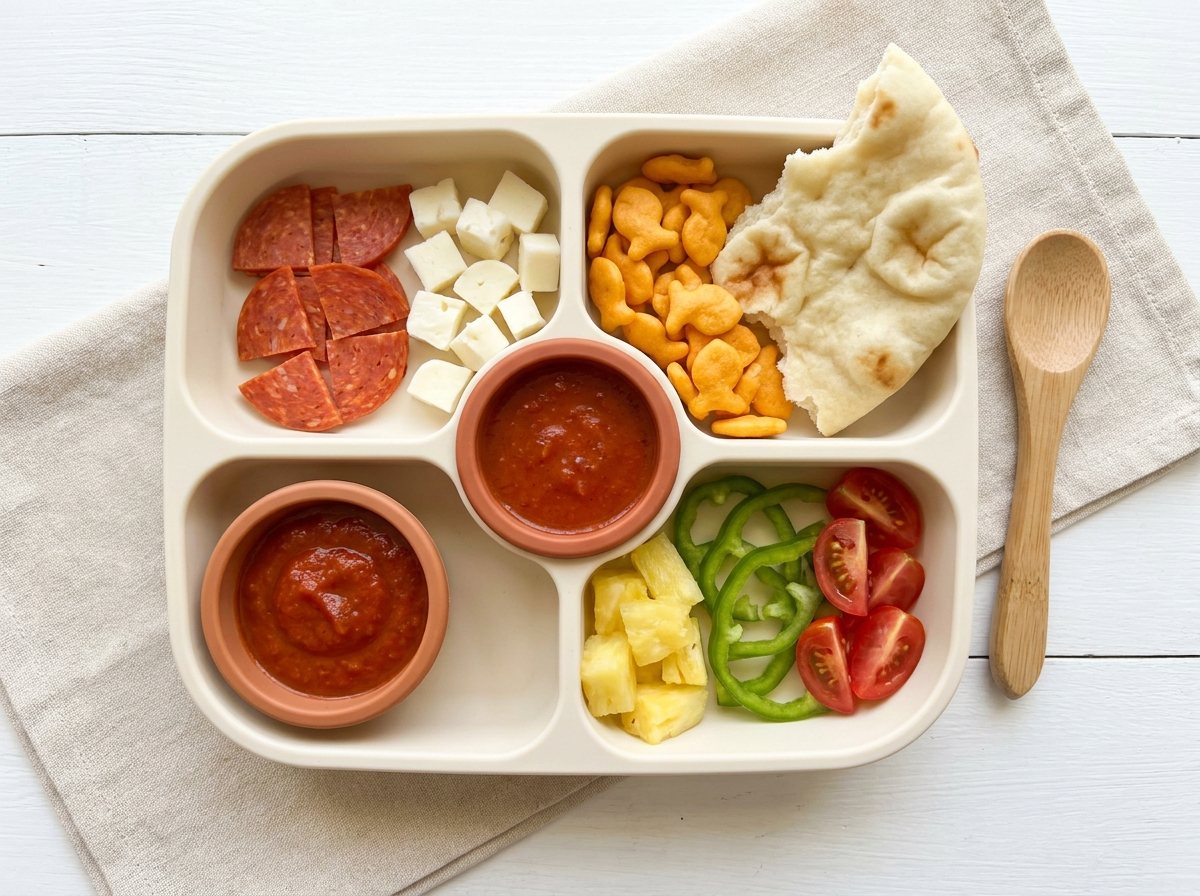
For special occasions, holidays, or just when you want to make a kid’s day.
| Combo | Protein | Grain | Fruit | Veggie | Fun |
|---|---|---|---|---|---|
| 21. Pizza Party | Pepperoni + mozzarella cubes + marinara for dipping | Pizza-flavored Goldfish + a small piece of naan or flatbread | Pineapple (controversial, I know) | Bell pepper rings, cherry tomatoes | A few chocolate chips |
| 22. Taco Tuesday (Any Day) | Seasoned ground beef or turkey (thermos) + shredded cheese | Mini flour tortillas cut into strips | Sliced strawberries | Shredded lettuce, diced tomatoes, corn | A few cinnamon chips (5+) |
| 23. The “Movie Snack” Bento | String cheese (small pieces for under 5) + trail mix (5+; sunflower seed mix for nut-free schools) | Popcorn (5+) or soft crackers | Fresh mango cubes | Cucumber slices + veggie straws (5+) | A few M&Ms (5+) |
Bento Boxes for Picky Eaters: Strategies That Actually Help
If you have a picky eater, bento boxes can be either your greatest ally or your greatest frustration. Here’s how to make them work.
The “One New, Four Safe” Rule
Every bento should contain at least four foods your child reliably eats plus one new or challenging food in a small portion. The familiar foods provide security. The new food provides exposure without pressure. Never make the new food the protein or the main event — tuck it into a small compartment as a side character.
Over time, that one new food becomes familiar. It can take many repeated, pressure-free tries before a child accepts a new food. And “exposure” includes seeing, smelling, and touching it, and watching others eat it, not just tasting it. For more, see how to introduce new foods without pressure.
If you’re trying to figure out your child’s specific eating patterns, our picky eater quiz can help you tailor your approach.
Use the Compartments Strategically
- Put the new food next to a favorite food, not isolated in its own compartment
- Keep portions of the new food tiny — 2-3 pieces max
- Include a familiar dip (ranch, ketchup, hummus) near the new food
- Don’t comment on whether they ate the new food when the box comes home
Foods Even the Pickiest Kids Tend to Accept in Bento Boxes
These are reliable building blocks that tend to work. For kids under 5, cut them as shown in the cut guide and skip the hard ones, like pretzels.
- Plain pasta (rotini and penne are favorites)
- Cheese in any form (cubed, string, shredded, sliced)
- Crackers (Ritz, Goldfish, wheat thins)
- Strawberries and grapes
- Bread or rolls
- Dry cereal (Cheerios, Chex)
- Baby carrots (especially with ranch)
- Plain chicken (strips, nuggets, diced)
- Yogurt tubes
- Pretzels
Start with a bento box filled entirely with safe foods. Once your child associates the bento box with positive lunchtime experiences, slowly begin introducing one new item per week.
The Deconstructed Approach
Many picky eaters reject assembled foods (sandwiches, wraps, salads) but will eat the individual components happily. This is where bento boxes shine. Instead of a turkey sandwich, offer:
- Turkey slices in one compartment
- Bread cubes or crackers in another
- Cheese in a third
- Lettuce leaves (optional) in a fourth
Let your child assemble, combine, or eat things separately. The autonomy makes all the difference.
Bento Box Meal Prep for the Week (Sunday Plan)
The number one reason parents abandon bento boxes is prep time. Making five different items every morning before school is not sustainable. Here’s how to make it work in the real world.
The Sunday Batch Prep Session (60-90 Minutes)
Block out 60-90 minutes on Sunday and put on a podcast. Here’s what you’re prepping, plus a 15-minute midweek top-up for the foods that don’t keep all week:
Proteins (pick 2-3):
- Hard-boil 6-8 eggs
- Cook and slice chicken breast for Monday-Tuesday (freeze extra in lunch portions for Wednesday-Friday)
- Make a batch of mini meatballs (freeze half)
- Portion hummus into small containers from a freshly opened tub or a fresh homemade batch
Grains (pick 2):
- Cook a pot of rice or quinoa
- Make a batch of mini muffins or pancakes (freeze in portions)
Fruits and veggies (wash, cut, store):
- Wash and slice strawberries (store with a paper towel to absorb moisture)
- Quarter grapes lengthwise
- Slice cucumbers and bell peppers
- Portion baby carrots into snack bags
- Wash cherry tomatoes and snap peas
Fun items:
- Portion chocolate chips or animal crackers into small containers or bags
How long prepped food keeps in the fridge:
| Prepped item | Fridge | Freeze? | Pack for |
|---|---|---|---|
| Hard-boiled eggs (in shell) | Up to 7 days; peeled eggs within 1-2 days | No | Monday-Friday; peel just before packing |
| Cooked chicken, meatballs | 3-4 days | Yes | Monday-Tuesday (Wednesday is day 4, the limit); freeze portions for the rest |
| Cooked rice or quinoa | 3-4 days | Yes | Monday-Tuesday; freeze the rest |
| Hummus | Store-bought: check the label, usually about 7 days after opening. Homemade: 3-4 days | No | Store-bought opened Sunday: Monday-Friday if the label allows. Homemade: Monday-Tuesday |
| Sliced strawberries, cucumber | 2-3 days | No | Monday-Tuesday; cut again midweek |
| Quartered grapes, pepper strips, snap peas | 3-4 days | No | Monday-Wednesday; cut again midweek |
| Mini muffins, pancakes | Freeze | Yes | Any day, thawed overnight in the fridge |
TipCook chicken twice: on Sunday for Monday-Tuesday, then a small batch Tuesday night (or thaw frozen portions in the fridge) for Wednesday through Friday. Use that same 15 minutes to cut fresh fruit and veggies for the rest of the week.
For the full weekly system, see our lunchbox meal prep guide.
The 3-Minute Morning Assembly
With your prepped ingredients ready, here’s the actual morning routine:
- Open the box. Set it on the counter (10 seconds).
- Protein. Grab a prepped protein from the fridge (30 seconds).
- Grain. Crackers from the pantry, or prepped rice or bread (20 seconds).
- Fruit. Grab from the prepped container (20 seconds).
- Veggie. Grab from the prepped container (20 seconds).
- Fun. Drop in the treat (10 seconds).
- Pack it. Close the box, add the ice pack, and go (10 seconds).
Total: about 2-3 minutes once everything is prepped.
Freezer-Friendly Bento Components
These freeze well. Thaw frozen items in the fridge overnight, not on the counter. Cool cooked rice quickly and keep it cold.
- Mini muffins (banana, blueberry, pumpkin)
- Pancakes and waffles (whole grain)
- Meatballs (any variety)
- Pinwheel sandwiches (cream cheese-based fillings freeze best)
- Cooked rice portions
- Baked cookies
- Quesadilla triangles
The Rotation System
To avoid repeating combos, I use a simple rotation:
- Monday: Around-the-world theme (combos 4-7)
- Tuesday: Protein-packed (combos 12-14)
- Wednesday: Sandwich-free snack plate (combos 8-11)
- Thursday: Warm thermos option (combos 18-20)
- Friday: Fun/themed (combos 21-23, or breakfast-for-lunch, combo 9)
Put it on your fridge: the Bento Box Formula + Sunday Prep Planner printable has a Mon-Fri rotation with tick-boxes for each compartment. After two weeks, it becomes automatic.
Keeping Bento Box Food Safe
Food safety isn’t glamorous, but it matters. Lunchboxes sit in cubbies and backpacks for hours before your child eats.
The Temperature Danger Zone
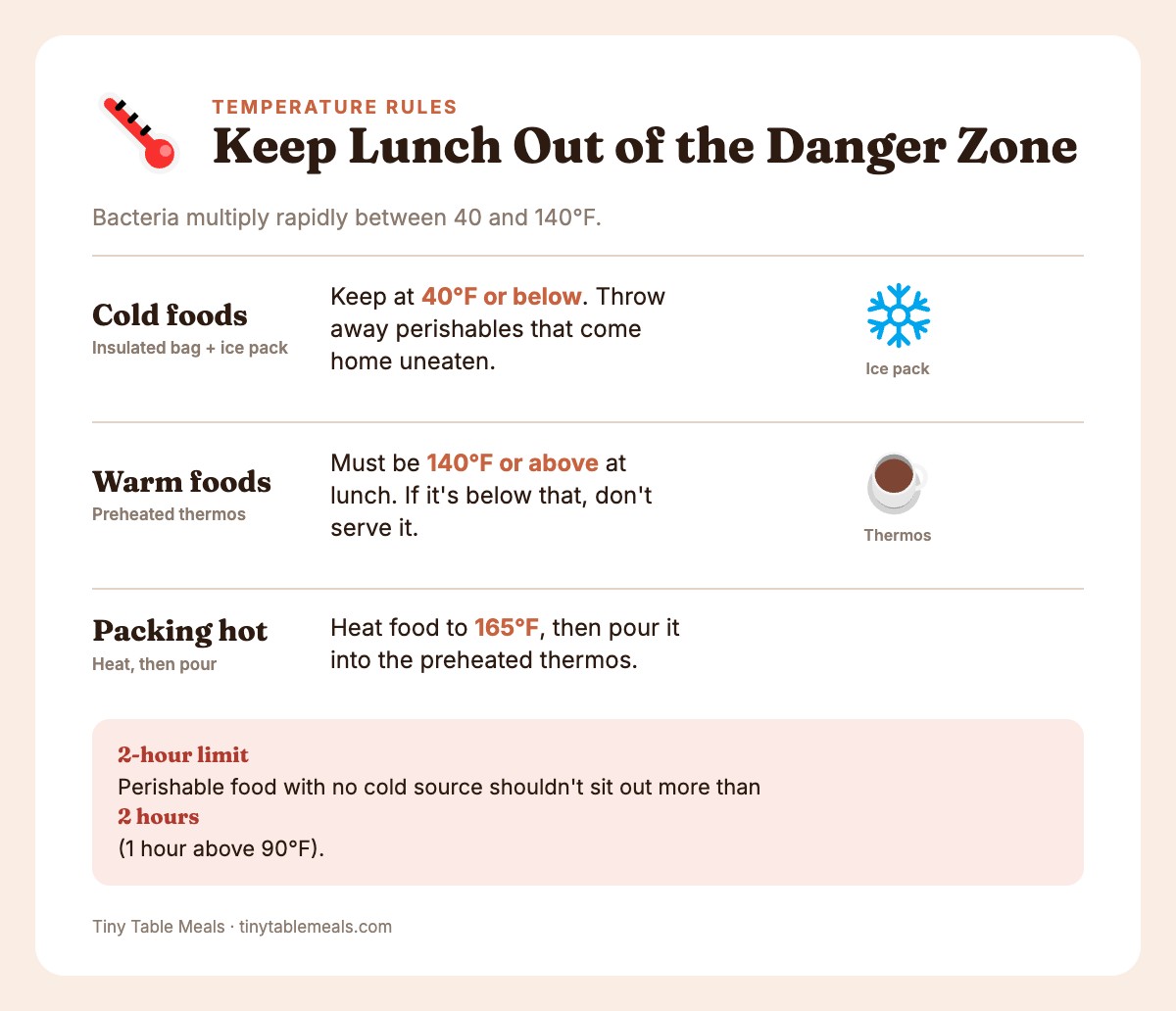
Bacteria multiply rapidly between 40 and 140°F, and lunches can sit for hours before they’re eaten. Here’s the quick version:
| Packing | Target | Tool | Rule |
|---|---|---|---|
| Cold foods | 40°F or below | Insulated bag + frozen ice pack | Throw away perishables that come home uneaten |
| Warm foods | 140°F or above at lunch | Preheated thermos | If it’s below 140°F at lunch, don’t serve it |
Safety firstPerishable food with no cold source shouldn’t sit out more than 2 hours (1 hour above 90°F). A lunch packed at 7:30 and eaten at noon is out of the fridge for over 4 hours, so the insulated bag and frozen ice pack are what keep it safe. Test your setup once at home: pack it the way you would for school, and after 4-5 hours a food thermometer in the yogurt or deli meat should read 40°F or below. Throw away perishables that come home uneaten.
For cold foods:
- Use an insulated lunch bag (not just the bento box alone)
- Include an ice pack — always. Even if your kid complains it takes up space
- Use a proper ice pack; a frozen sealed water bottle works only as a backup
- Yogurt, deli meats, cheese, and hard-boiled eggs all need to stay cold
For warm foods:
- Preheat your thermos by filling it with boiling water for 5 minutes before adding food
- Heat food to 165°F, pour it into the preheated thermos, and it should still be 140°F or above at lunch. If it’s not, don’t serve it
- Test your thermos at home: fill it as you would for school, then check the temperature with a food thermometer after 4 hours before trusting it
- Pack it hot. Teach little kids (and ask the teacher) to let it sit open only a few minutes and test a small bite first
Foods That Hold Up Well Without Refrigeration
If your child’s school doesn’t allow ice packs or you forget one occasionally, these foods are safer at room temperature:
- Whole fruits (apple, banana, orange; grapes quartered for under 5)
- Dried fruits
- Crackers, pretzels, dry cereal
- Nut butter (or seed butter) packets
- Genuinely shelf-stable hummus packs (check the label, or use an ice pack)
- Bread, muffins, granola bars
- Crunchy veggies like carrots, celery, and snap peas (cut produce such as cherry tomatoes is perishable, so add an ice pack)
Frequently Asked Questions
What’s the best bento box for kids who can’t open latches?
Fewer latches are easier for small hands. The Yumbox (Original or Tapas) closes with a single latch, and my kids mastered our Bentgo Kids after a couple of days of practice. Whatever you buy, practice opening it at home before the first school day.
How do you keep bento box food from getting soggy?
Keep wet foods (hummus, dips, dressings, cut fruit) in silicone cups or small sauce containers, away from crackers and bread. Pat washed produce completely dry before packing. In a sandwich or wrap, a lettuce leaf between the bread and wet fillings acts as a moisture barrier. For boxes that aren’t fully leak-proof, like PlanetBox, the silicone cups are essential.
My kid only eats the “fun” compartment and ignores everything else. What do I do?
This is common and usually temporary. Keep the fun compartment small (2-3 pieces at most) and consistent, and don’t take it away as punishment, which only makes the treat more desirable. Instead, offer two choices for the other compartments (“Turkey or chicken tomorrow?”) so your child owns the whole box, not just the treat.
Are bento boxes worth the cost compared to regular lunchboxes?
If you factor in the cost of sandwich bags, plastic wrap, paper bags, and small disposable containers that you’d use with a regular lunchbox, a bento box can offset some of that cost over time. To check your own math, add up what you spend monthly on bags, wrap, and disposable containers, then divide the box price by that number to see how many months it takes to pay for itself.
How do I pack a bento box for a child with multiple food allergies?
Separate compartments make it easier to keep foods apart, but no lunchbox removes every risk. Ask your child’s allergist which foods are safe and for a written emergency plan, and share it with the school. Sunflower seed butter works for nut-free schools (tahini is sesame, so skip it for sesame allergies). Rice crackers and GF pretzels fill the grain slot, and Enjoy Life chocolate chips are made without many common allergens. Read every label every time, and check your school’s policy, since some schools are also sesame-free or soy-free. Our nut-free school lunch ideas have more swaps, and our multiple food allergies guide covers everyday meals.
Can I make bento boxes the night before?
Yes, and I recommend it. Packing the night before means no morning rush, and the food chills thoroughly in the fridge overnight, which is better for food safety. Add banana slices (they brown), crackers that might get soft, and anything warm for the thermos in the morning. Proteins, cheese, cut veggies, grapes, and berries all pack well the night before.
How do I get my child excited about bento box lunches?
Let them help: even a three-year-old can place strawberries in a compartment. The night before, offer two choices per compartment (“Grapes or strawberries? Crackers or pretzels?”), or use a simple fridge chart they can check off. A tiny note or a banana-slice smiley face takes five seconds and doesn’t need to be Pinterest-perfect.
What’s the ideal number of compartments for a bento box?
For most kids ages 3-10, five compartments gives enough variety without making packing complicated. Younger toddlers do well with 3-4 larger compartments. Tweens and teens may prefer 3-4 compartments with bigger portions. If you’re just starting out, keep it simple. A 3-compartment box with protein, fruit, and a grain is a perfectly good lunch.
How to Keep Packing Bento Lunches Long Term
By week three, the artistic arrangements fade, and simplicity is what keeps bento lunches going. You need five compartments filled with real food your child will eat. Some days that’s teriyaki chicken and sushi rice. Other days it’s crackers, cheese, turkey, grapes, and two Oreos. Both are good lunches.
Use the box to cut waste and give your kid something to look forward to. If it stops feeling helpful, take a break and come back to it.
For more ideas on building a sustainable lunchbox system, check out our healthy lunchbox ideas roundup. And if you’re looking for the best containers to organize all your prepped ingredients, our meal prep containers guide covers everything from glass to stainless steel.
Happy packing, Mama. You’ve got this.