One-Handed Meals for New Parents: 20 Easy Recipes You Can Eat While Holding a Baby
You'll discover 20 easy, one-handed recipes for new parents, designed to be eaten while holding your baby, along with essential postpartum nutrition guidance and a free survival kit to help you stay fed and energized.
- Access 20 easy, one-handed recipes for all meals, perfect for eating while holding your baby.
- Download a free printable 'Survival Kit' with meal charts, freezer cards, and a partner checklist.
- Understand your postpartum nutritional needs for calories, protein, iron, fluids, and fiber.
- Follow safety notes for eating around your baby, like avoiding hot foods and choking hazards.
- Prepare meals that are mostly freezer-friendly, require no knife, and are good warm or cold.
This post contains affiliate links. As an Amazon Associate I earn from qualifying purchases.
It’s 2:15 p.m., and you haven’t eaten since half a granola bar at 7 a.m. Your partner left a plate of pasta on the counter, but the baby has been cluster feeding since 10 and you can’t put them down.
You are starving. You are exhausted. And you have exactly one free hand.
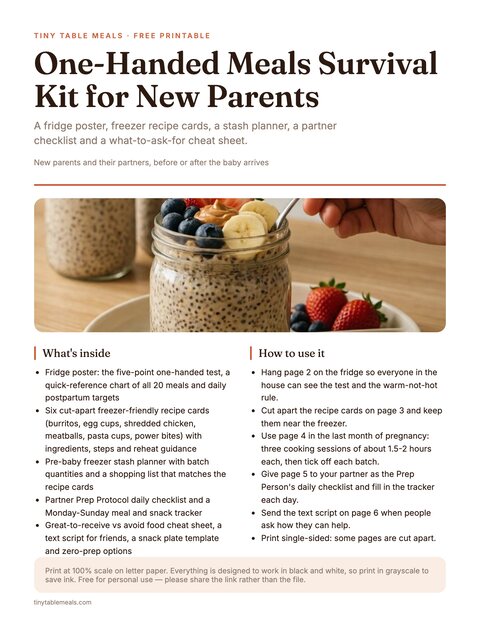
Free printable · 6 pages
One-Handed Meals Survival Kit for New Parents
A fridge poster with the five-point one-handed test, a chart of all 20 meals and daily postpartum targets, plus cut-apart freezer recipe cards, a pre-baby freezer stash planner with shopping list, a Partner Prep checklist with a Monday-Sunday tracker, and a what-to-ask-for-when-people-offer-food cheat sheet with a text script and snack plate template.
Free. Your download link appears right here. You'll also join the Sunday Supper Plan. Unsubscribe anytime. Privacy
Here are 20 one-handed recipes for breakfast, lunch, dinner and snacks, plus make-ahead plans and what to ask visitors to bring. Breakfasts are 1-6, lunches 7-12, dinners 13-17 and snacks 18-20, with a quick-reference table after the recipes.
No recipe needs a knife to eat, and most are fine warm or cold. Three need a fork (#9, #15 and #17), and I’ve flagged them in their headings. Two have fillings that can get messy (#7 and #13), and I say so in those recipes.
In this article (12 sections)
- Safety Notes Before You Start
- Why One-Handed Eating Matters More Than You Think
- The One-Handed Test: How We Qualify These Meals
- Breakfast: 6 One-Handed Recipes to Start the Day
- Lunch: 6 One-Handed Recipes for Midday
- Dinner: 5 One-Handed Recipes for the Evening
- Snacks: 3 One-Handed Options for Anytime
- The Complete One-Handed Meal Reference
- Meal Prep Strategies for the Newborn Phase
- What to Ask for When People Offer to Bring Food
- Frequently Asked Questions
- Eat Something: A Quick Recap
Safety Notes Before You Start
Safety firstThese are adult recipes, so keep baby feeding separate from your plate.
- Honey: never give honey to a baby under 12 months. Recipes #2, #4 and #18 can contain it, so they’re for adults only.
- Choking hazards: whole nuts, grapes, raw apple slices, spoonfuls of nut butter and sticky bites like the power bites (#18) are not safe for babies and toddlers. Keep them out of reach and don’t share.
- Holding a baby who is starting solids: don’t feed them from your plate.
- Hot food and drinks: while you’re holding the baby, eat food that is warm, not hot. Keep your plate and a lidded drink on a table beside you, out of the baby’s reach.
- If you’re pregnant: heat deli meats to steaming (165°F), skip dry-cured salami and choose pasteurized cheeses.
Good to knowIf you feel persistently low, anxious, hopeless or unable to cope, call your doctor or midwife. In the US, the National Maternal Mental Health Hotline is 1-833-852-6262.
Why One-Handed Eating Matters More Than You Think
Regular meals can help your recovery, energy and mood. Many new parents skip meals, and under-eating can make fatigue and low mood harder to manage.
What Your Body Needs Postpartum (General Estimates)
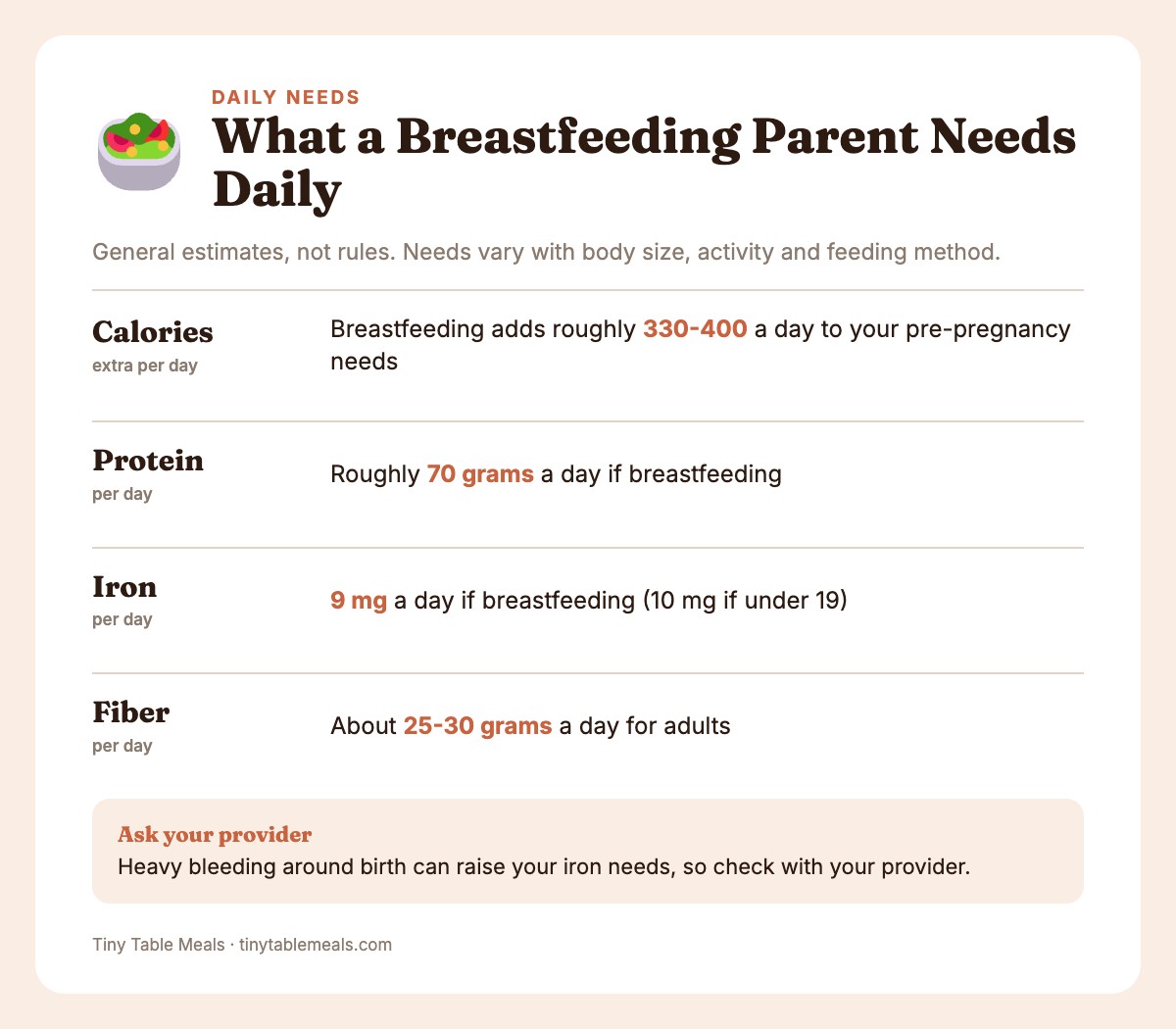
These are commonly cited general figures for a birth parent, not rules. The calorie figure is from CDC breastfeeding guidance. The protein and iron figures are US recommended dietary allowances (iron as listed by the NIH Office of Dietary Supplements).
Needs vary with body size, activity and feeding method, and a doctor or dietitian can tailor them. Non-birthing partners’ needs differ.
- Calories: breastfeeding adds roughly 330-400 a day to what you needed before pregnancy (CDC). Your baseline depends on your size and activity
- Protein: roughly 70 grams a day if breastfeeding (the US recommended allowance is 71 grams)
- Iron: 9 mg a day if breastfeeding (10 mg if under 19). If you’re not breastfeeding, the standard figure for women 19-50 is 18 mg; it isn’t postpartum-specific. Heavy bleeding around birth can raise your needs, so ask your provider
- Fluids: plenty of water; drink to thirst, a bit more if breastfeeding
- Fiber: about 25-30 grams a day is the commonly cited range for adults (your postpartum digestive system will thank you)
Why Meals Get Skipped
When you can’t put the baby down, meals slip. You eat less, your energy drops and you feel more overwhelmed. Then you eat even less.
The “I’ll Eat When the Baby Sleeps” Myth
Right up there with “sleep when the baby sleeps” is the advice to “eat when the baby sleeps.” In a 45-minute nap window, you’re choosing between eating, showering, sleeping and laundry. The unread texts are waiting too.
Eating shouldn’t require a nap window. It should be something you can do while holding your baby, while nursing, or while bouncing on the yoga ball at 3 a.m. The meals in this guide are designed for that.
Safety firstWhile you’re holding the baby, eat food that is warm, not hot. Let anything reheated cool until it’s comfortable to hold, and check the middle. Keep your plate and a lidded insulated cup on a table beside you, out of the baby’s reach and never over their head. Save steaming-hot meals and hot drinks for when the baby is in a bassinet, bouncer or someone else’s arms.
If you might doze during a night feed, put the baby on a flat, firm sleep surface (crib or bassinet) first, and avoid sofas and armchairs when drowsy (AAP). If you’re that sleepy, put the baby down before you eat, too.
The One-Handed Test: How We Qualify These Meals
Not every “easy” recipe works one-handed. A bowl of soup sounds simple until broth drips onto the baby in your carrier. Here are my criteria.
To make this list, every meal has to pass all five:
- Edible with one hand — No knife and no two-utensil situations. The three fork recipes are flagged
- Low-mess — Thick or self-contained, so little can drip or fall on a baby below your chin. Where a filling can get messy (#7 and #13), I say so
- Fine warm or cold — Still tastes good if you get interrupted (refrigerate perishables if the wait is long)
- Nutrient-dense — Provides meaningful protein, complex carbs, and at least one serving of fruits or vegetables
- Make-ahead or quick-prep — Either made ahead in a batch (30 minutes or less of hands-on work) or thrown together in about 10 minutes
Three recipes (#9, #15 and #17) bend the rules because they need a fork. I kept them because they reheat well and are filling. Eat them from a mug or deep container with a spoon or fork once the baby is settled.
Which Recipes to Eat When
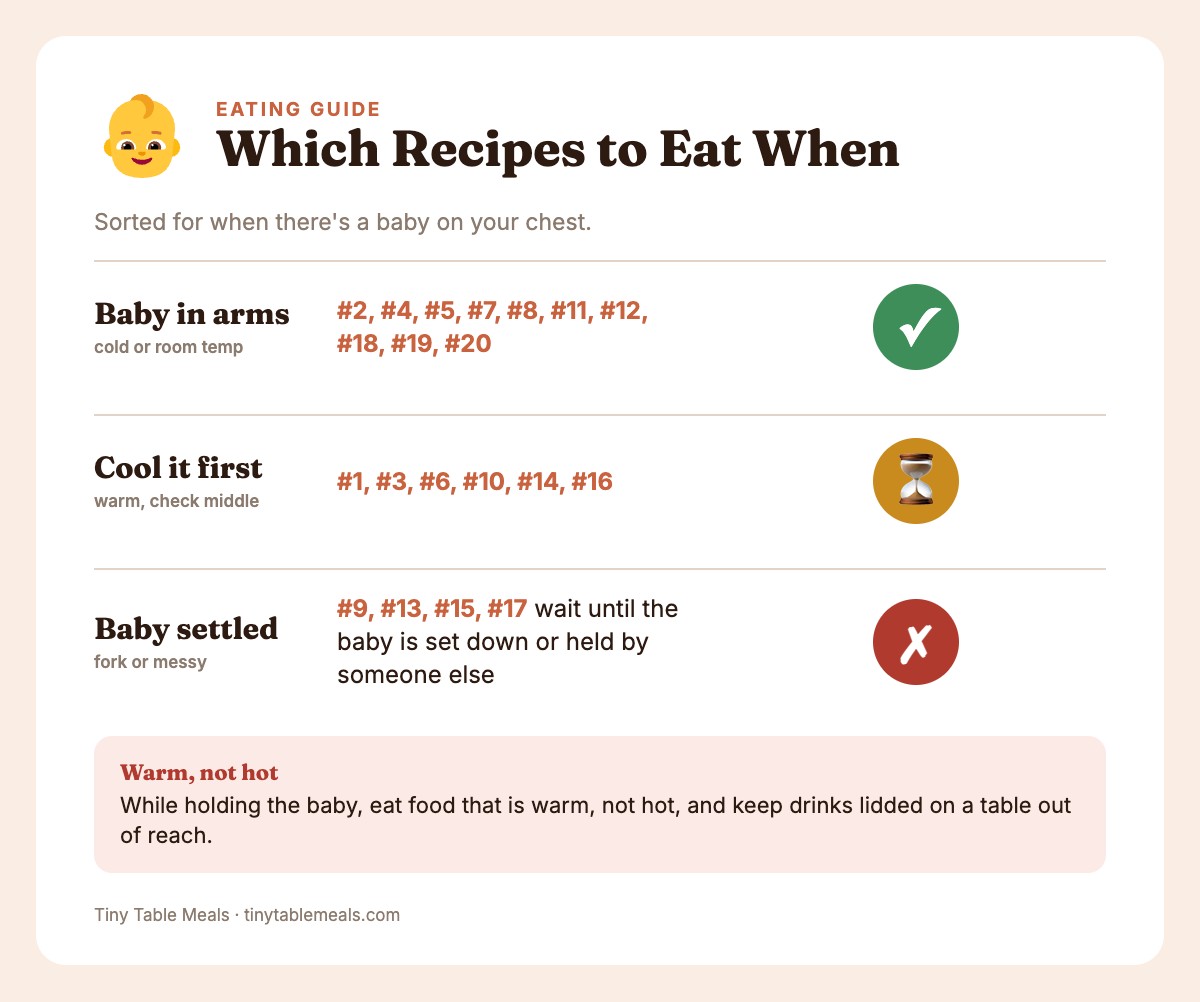
Several of these are served warm, so here is how I’d sort them when there’s a baby on your chest.
| How to eat it | Recipes |
|---|---|
| Cold or room temp, baby in arms | #2, #4, #5, #7, #8, #11, #12, #18, #19, #20 |
| Warm or room temp, cooled first (check the middle) | #1, #3, #6, #10, #14, #16 |
| Baby settled or set down (fork or messy filling) | #9, #13, #15, #17 |
Breakfast: 6 One-Handed Recipes to Start the Day
Breakfast is an easy meal to lose when the morning starts with a feed. Starting the day with protein and complex carbs helps your energy and mood through the morning. Four of these six can be made ahead and grabbed from the fridge or freezer, and the other two (#4 and #5) take about 3 minutes.
1. Protein-Loaded Breakfast Burritos (Freezer-Friendly)
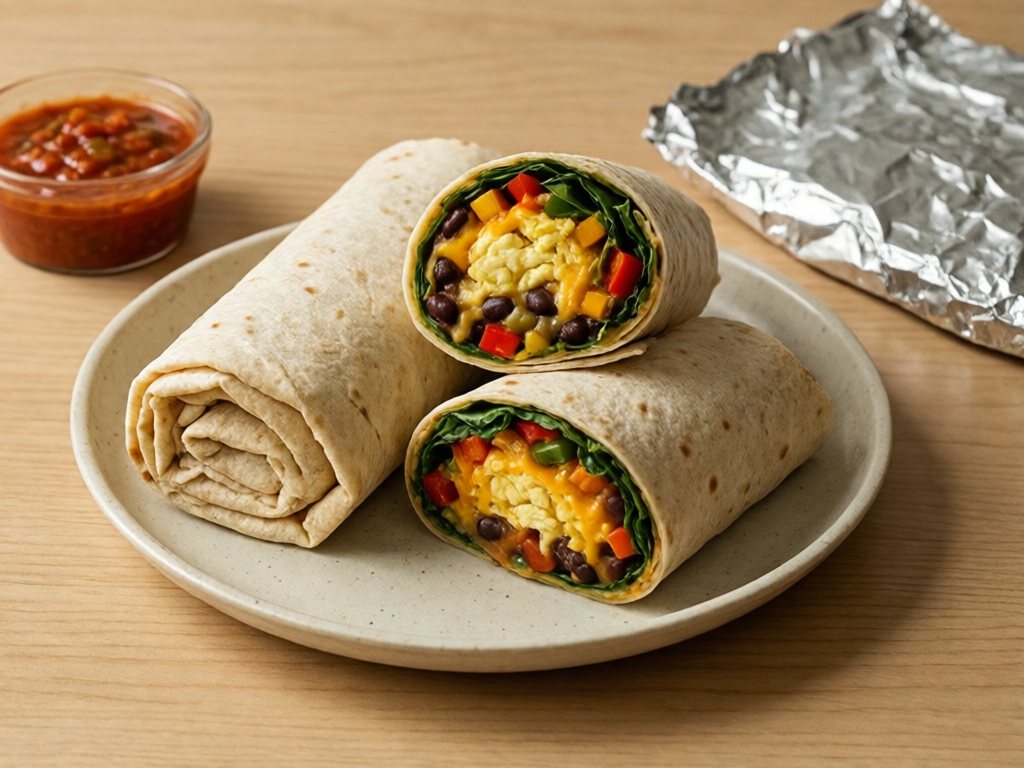
A top pick for new parents. Make a batch of 10, freeze them individually wrapped, and reheat one each morning. For more make-ahead ideas, see freezer meals for busy families.
Ingredients:
- 12 large eggs, scrambled
- 1 1/2 cups cooked black beans
- 1 1/2 cups shredded cheddar cheese
- 1/2 cup diced bell peppers, sauteed
- 1/2 cup baby spinach, wilted
- 10 large flour tortillas
- Optional: salsa, hot sauce, diced avocado
Method:
- Scramble eggs with salt and pepper
- Divide eggs, beans, cheese, peppers, and spinach among tortillas
- Roll burrito-style, tucking in the ends tightly
- Wrap each in foil, then place in a freezer bag
- To serve: Remove the foil, wrap in a damp paper towel, and microwave 90 seconds to 2 minutes, flipping halfway. Let it cool a minute and check the middle
Per burrito (rough estimate): 20-22g protein, 400-480 calories, 4-6g fiber
Why it works one-handed: Compact, self-contained, no drips if rolled tightly. Can be eaten in sections — put it down, pick it back up. Tastes great at room temperature if you get distracted.
2. Overnight Oats in a Jar
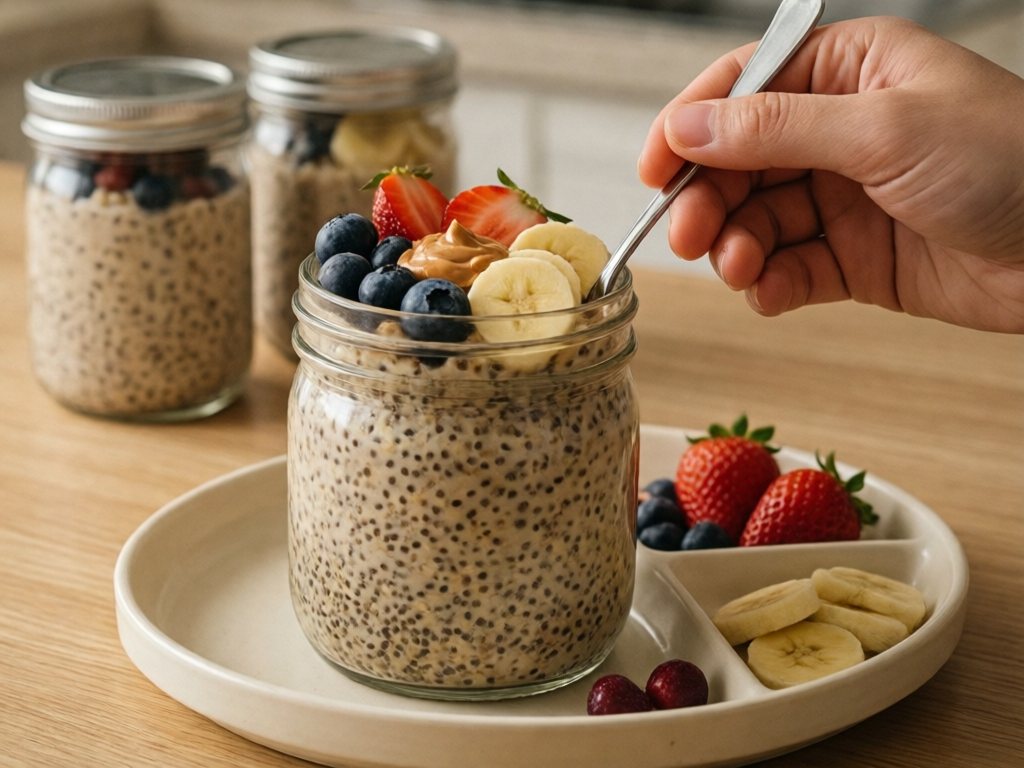
Zero morning prep required. Make 3-4 jars on Sunday night, grab one each morning.
Ingredients (per jar):
- 1/2 cup rolled oats
- 1/2 cup milk (any kind)
- 1/4 cup Greek yogurt
- 1 tablespoon chia seeds
- 1 tablespoon maple syrup or honey (honey is for adults only, never for a baby under 12 months)
- Pinch of cinnamon
- Toppings: berries, sliced banana, nut butter, granola
Method:
- Combine oats, milk, yogurt, chia seeds, sweetener, and cinnamon in a mason jar
- Stir, seal, and refrigerate overnight (or up to 4 days)
- Add toppings before eating
Per jar (rough estimate, before toppings): 16-18g protein, 350-400 calories, 8-9g fiber
Why it works one-handed: Eat directly from the jar with a spoon. Thick consistency means no dripping. Grab it straight from the fridge.
3. Egg Muffin Cups (Freezer-Friendly)
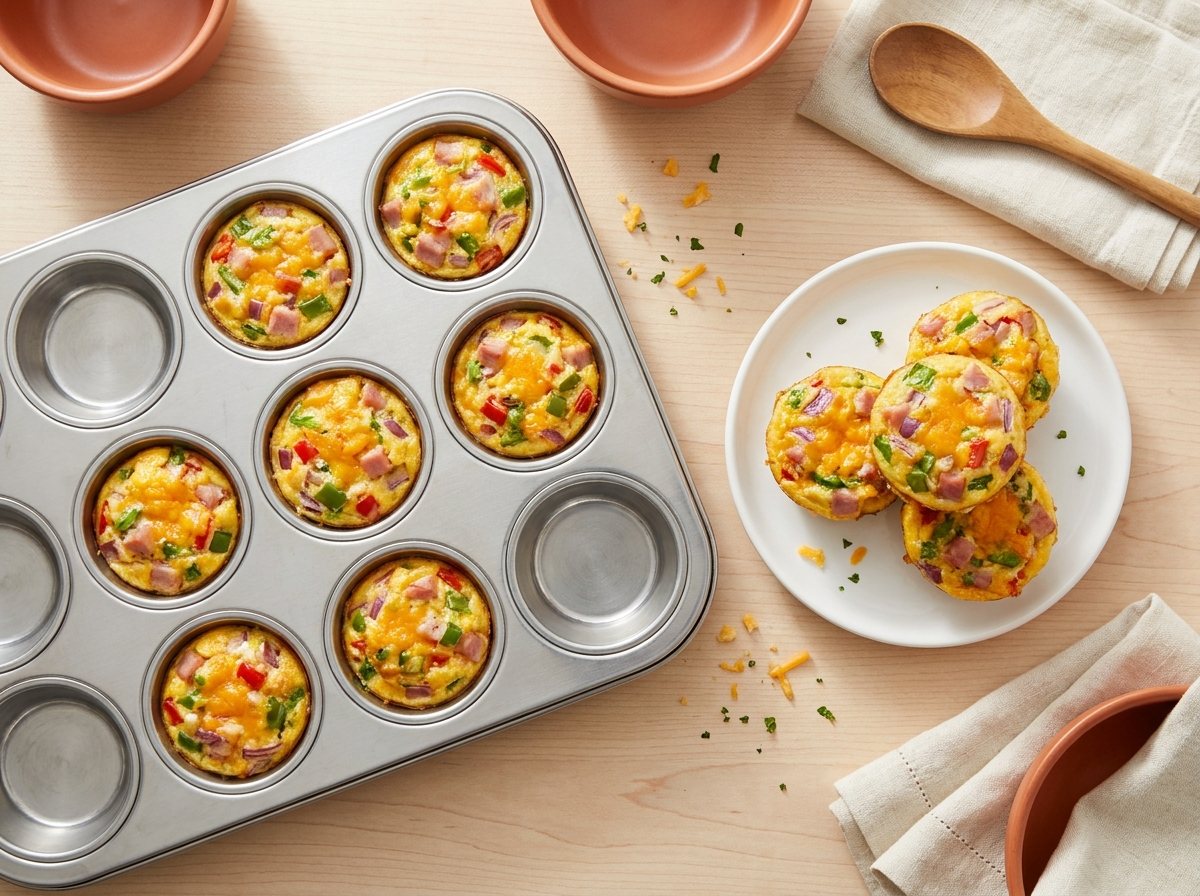
Essentially a portable omelet. Make a dozen, freeze them, and reheat two each morning.
Ingredients:
- 12 large eggs
- 1/2 cup diced ham or cooked turkey sausage
- 1/2 cup shredded cheese
- 1/4 cup diced onion
- 1/4 cup diced bell pepper
- Salt, pepper, garlic powder
Method:
- Preheat oven to 375 degrees F
- Grease a 12-cup muffin tin generously
- Whisk eggs with seasonings
- Divide ham, cheese, onion, and pepper among muffin cups
- Pour egg mixture over fillings
- Bake 20-22 minutes until set and the eggs reach 160°F
- Cool, then freeze in a bag. Reheat 45-60 seconds in the microwave, let cool a minute, and check the middle
Per 2 muffins (rough estimate): 16-18g protein, 200-220 calories
Why it works one-handed: True finger food. No utensils needed. Compact and drip-free. Pop one in your mouth whole or take bites between baby bounces.
4. Peanut Butter Banana Toast Fingers
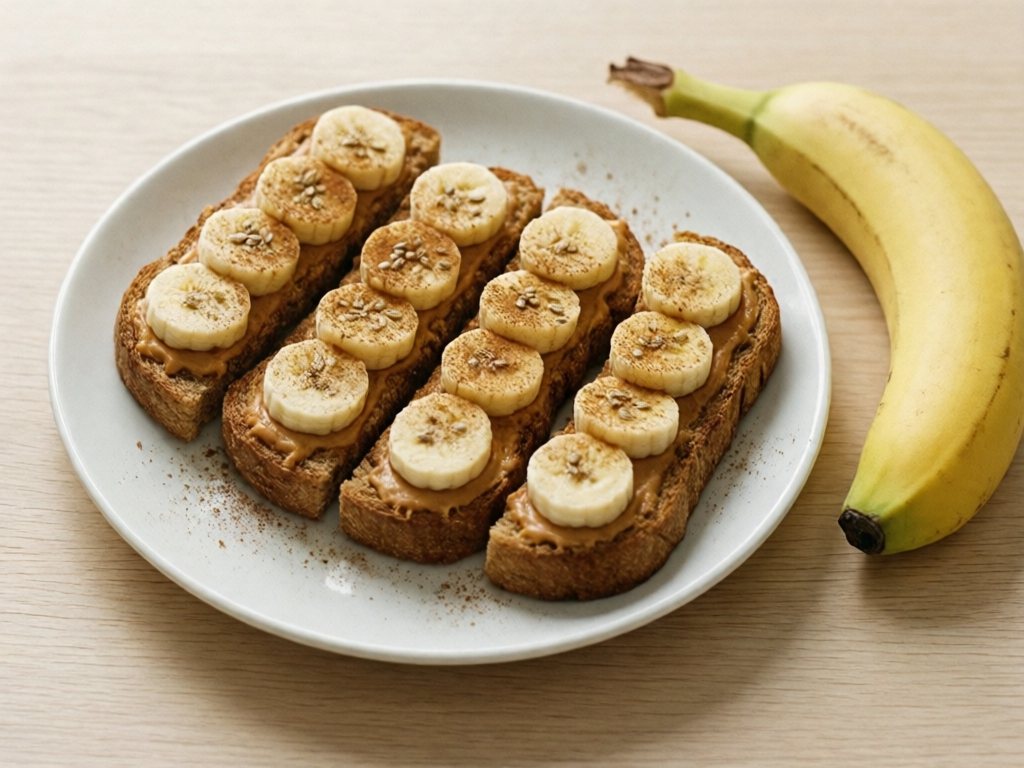
The simplest breakfast that actually provides real nutrition.
Ingredients:
- 2 slices whole-grain bread, toasted
- 2 tablespoons peanut butter (or any nut/seed butter)
- 1 banana, sliced
- Optional: drizzle of honey (adults only, never for a baby under 12 months), sprinkle of cinnamon, hemp seeds
Method:
- Toast bread
- Spread peanut butter
- Top with banana slices and any extras
- Cut into strips (fingers)
Per serving (rough estimate): 15-18g protein, 430-500 calories, 8-10g fiber
Why it works one-handed: Strips are easy to pick up and eat in bites. Peanut butter holds the banana in place. No drips. Can be made in 3 minutes or prepped the night before (toast in the morning).
5. Savory Yogurt Bowl with Crackers
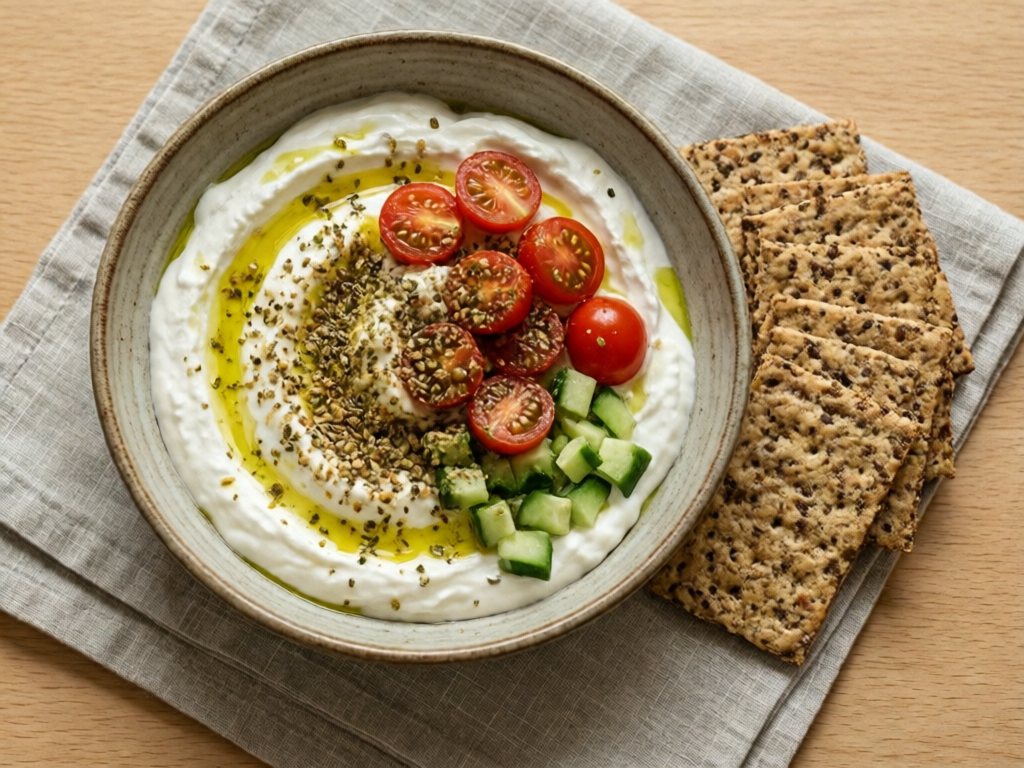
Not all yogurt bowls need to be sweet. This savory version provides more protein and keeps you full longer.
Ingredients:
- 1 cup full-fat Greek yogurt
- 2 tablespoons everything bagel seasoning
- 1/4 cup cherry tomatoes, halved
- 1/4 cup cucumber, diced small
- 2 tablespoons olive oil
- Handful of whole-grain crackers or pita chips for scooping
Method:
- Scoop yogurt into a bowl
- Top with everything bagel seasoning, tomatoes, cucumber, and olive oil
- Eat with crackers as scoops (no spoon needed) or use a spoon
Per serving (rough estimate): 22-25g protein, 580-660 calories. The olive oil accounts for about 240 of those, so use 1 tablespoon if you want a lighter bowl.
Why it works one-handed: Thick yogurt won’t splash or drip. Using crackers as scoops means you can dip one-handed. Tastes great at any temperature.
6. Make-Ahead Breakfast Sandwich Wraps
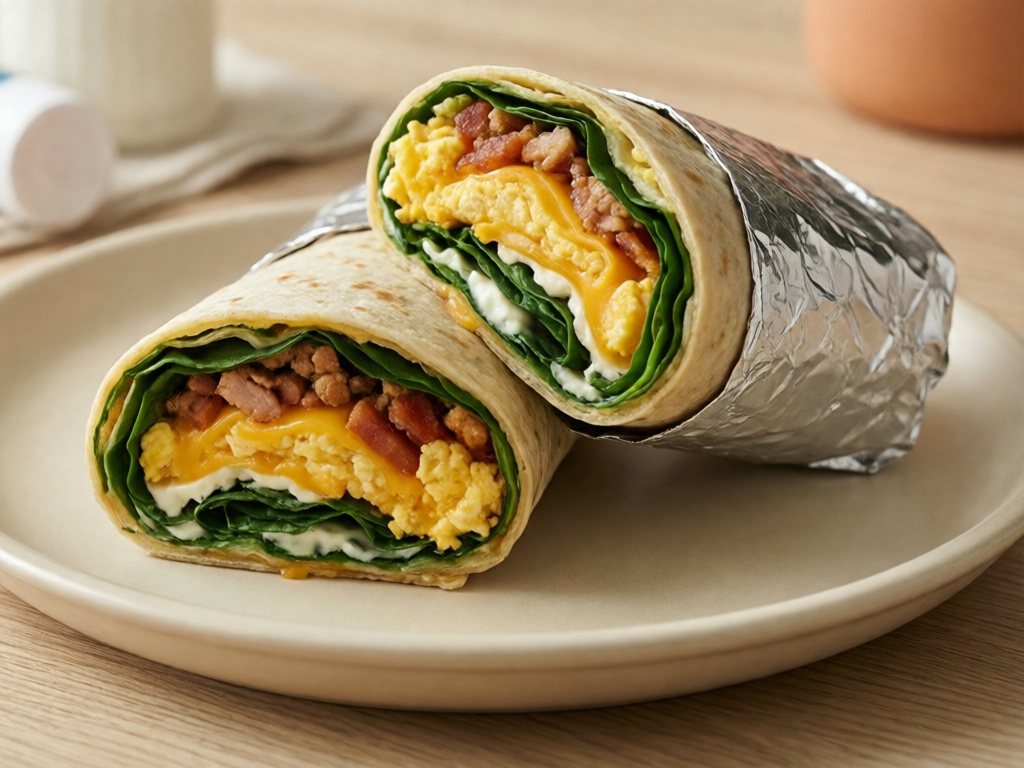
All the satisfaction of a breakfast sandwich without the structural instability.
Ingredients:
- 1 large flour tortilla
- 2 scrambled eggs
- 2 slices turkey bacon, cooked and crumbled
- 1 slice cheddar cheese
- 1 tablespoon cream cheese, spread on tortilla
- Handful of baby spinach
Method:
- Spread cream cheese on tortilla
- Layer cheese slice, scrambled eggs, bacon, and spinach
- Roll tightly, cut in half
- Wrap in foil for grab-and-go
- To reheat from the fridge or freezer, remove the foil first, then microwave 60-90 seconds. Let it cool a minute and check the middle
Per wrap (rough estimate): 30-34g protein, 550-650 calories
Why it works one-handed: Wrapped tight, no falling apart. Cream cheese acts as glue. Foil makes it portable. Eat half now and keep the other half in the fridge.
Lunch: 6 One-Handed Recipes for Midday
Lunch is the danger zone. It’s when you’re deep in the day, possibly home alone with the baby, and most likely to default to whatever requires zero effort. These recipes ensure you eat a real lunch.
7. Loaded Chicken Salad Lettuce Wraps
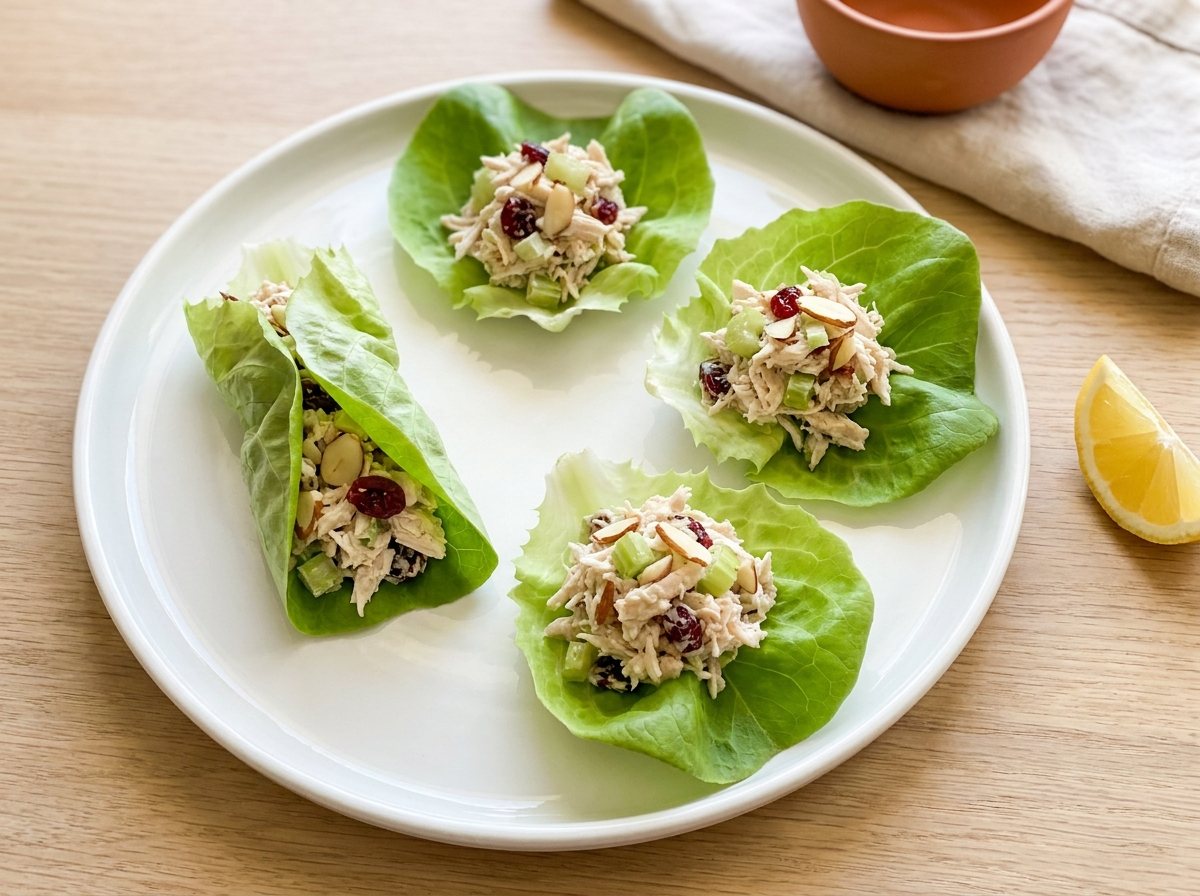
Protein-packed, crunchy, and no heating required.
Ingredients:
- 2 cups shredded rotisserie chicken
- 1/3 cup plain Greek yogurt (instead of mayo for extra protein)
- 1/4 cup diced celery
- 1/4 cup dried cranberries
- 2 tablespoons slivered almonds
- Salt, pepper, squeeze of lemon
- Large butter lettuce or romaine leaves for wrapping
Method:
- Mix chicken, yogurt, celery, cranberries, almonds, and seasonings
- Scoop into lettuce leaves
- Fold and eat like a taco
Makes about 4 wraps. Per 2 wraps (rough estimate): 38-45g protein, 350-430 calories
Why it works one-handed: Lettuce wraps are sturdy enough to hold one-handed but soft enough to bite through easily. Greek yogurt base is less drippy than mayo. Honest note: filling can still fall out the back of the leaf, so scoop small and eat over a plate, or use a tortilla when the baby is in a carrier.
Make the chicken salad in bulk on Sunday; it keeps 3-4 days in the fridge. More ideas: rotisserie chicken meal ideas.
8. Turkey and Avocado Pinwheels
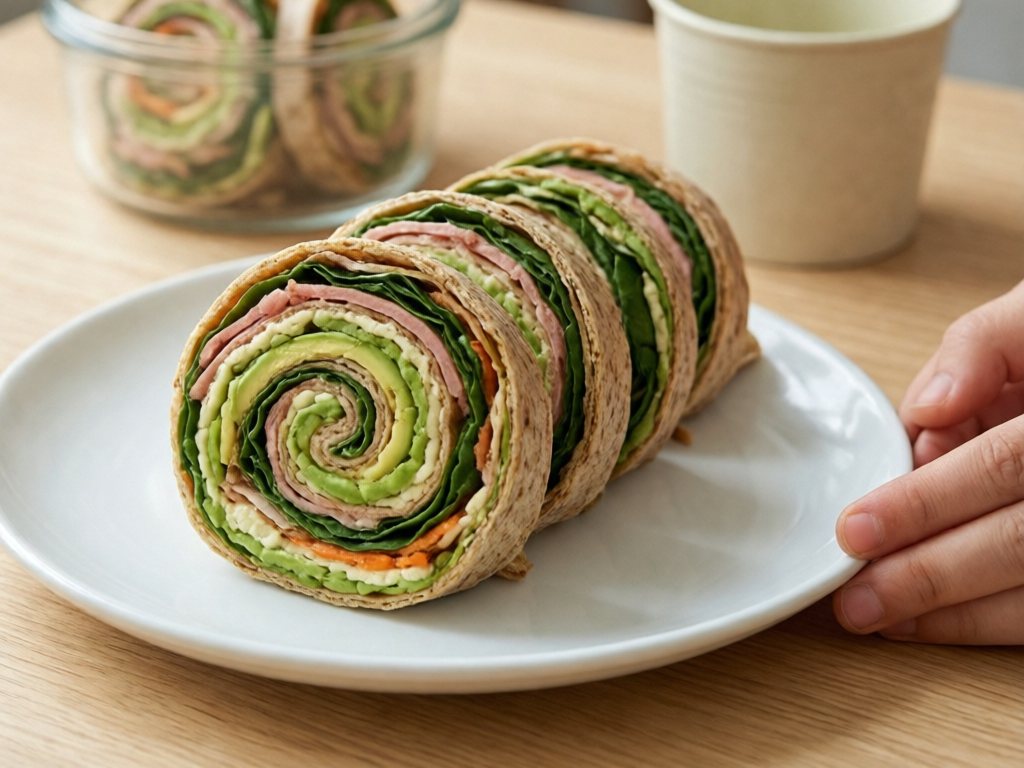
A cold lunch classic that never gets old.
Ingredients:
- 2 large whole-grain tortillas
- 4 oz sliced deli turkey
- 1/2 avocado, mashed
- 2 tablespoons cream cheese
- Handful of baby spinach
- Optional: shredded carrots, thin cucumber strips
Method:
- Spread cream cheese and mashed avocado on tortillas
- Layer turkey, spinach, and any extras
- Roll tightly, slice into 1-inch rounds
- Store in an airtight container — good for 2 days
Per serving (1 tortilla’s worth, rough estimate): 17-20g protein, 350-400 calories
Why it works one-handed: Pinwheel rounds are bite-sized and need no utensils. Pop them in one at a time between baby tasks. Still pregnant? Heat the deli turkey to steaming (165°F) and cool it before rolling, or use cooked chicken.
9. Hearty Grain Bowl (fork; prep once, eat three days)
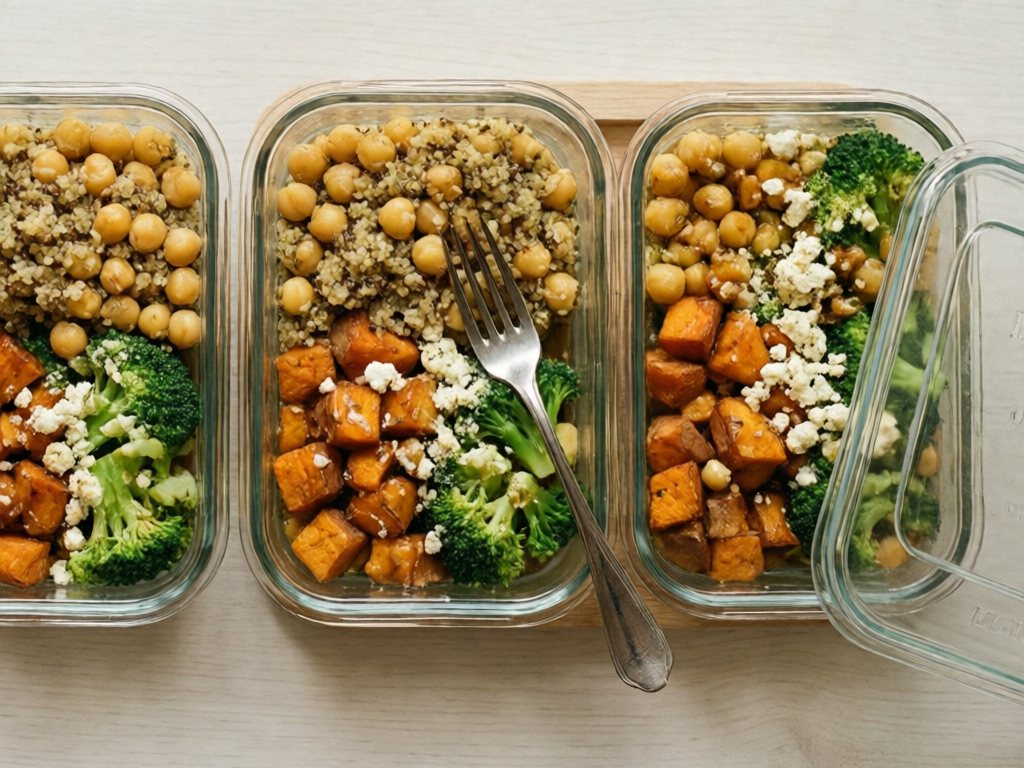
This one takes 20 minutes of prep and gives you three lunches.
Ingredients:
- 2 cups cooked quinoa or brown rice
- 1 can (15 oz) chickpeas, drained and rinsed
- 1 cup roasted sweet potato cubes
- 1 cup steamed broccoli
- 1/4 cup crumbled feta cheese
- Dressing: 3 tablespoons olive oil, 2 tablespoons lemon juice, 1 teaspoon garlic, salt and pepper
Method:
- Cook quinoa according to package directions
- Roast sweet potato cubes at 400 degrees F for 20 minutes
- Steam broccoli
- Combine everything in a large container, drizzle with dressing
- Divide into 3 portions
Per portion (rough estimate): 12-16g protein, 450-500 calories, 10-12g fiber
Why it works one-handed: Eat with a fork directly from the container. Components are all soft and bite-sized — no cutting needed. Tastes equally good cold, room temp, or warmed up. Thick enough that nothing slides off the fork easily.
10. Quesadilla Wedges with Salsa
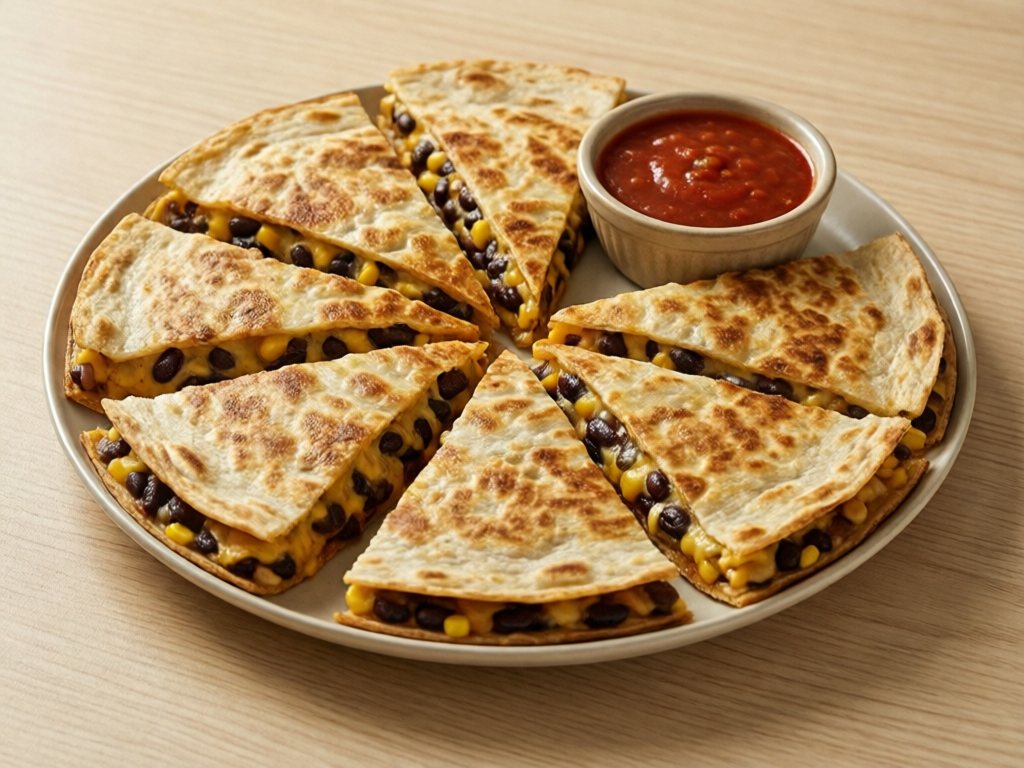
Melted cheese is the universal comfort food of new parenthood.
Ingredients:
- 2 large flour tortillas
- 1 cup shredded Mexican blend cheese
- 1/2 cup canned black beans, rinsed
- 1/4 cup corn kernels (frozen, thawed)
- Optional: diced cooked chicken for extra protein
- Salsa for dipping
Method:
- Sprinkle cheese, beans, corn, and chicken on one tortilla
- Top with second tortilla
- Cook in a dry skillet over medium heat, 3 minutes per side
- Cut into 8 wedges
- Store in fridge — reheat 20 seconds in microwave or eat cold
Per 4 wedges (rough estimate, before the optional chicken): 22-26g protein, 480-580 calories
Why it works one-handed: Wedges are perfectly hand-held. Skip the salsa if you’re worried about drips (the quesadilla is plenty flavorful on its own). Make 2-3 at once and store them — they reheat beautifully.
11. Hummus and Veggie Pita Pockets
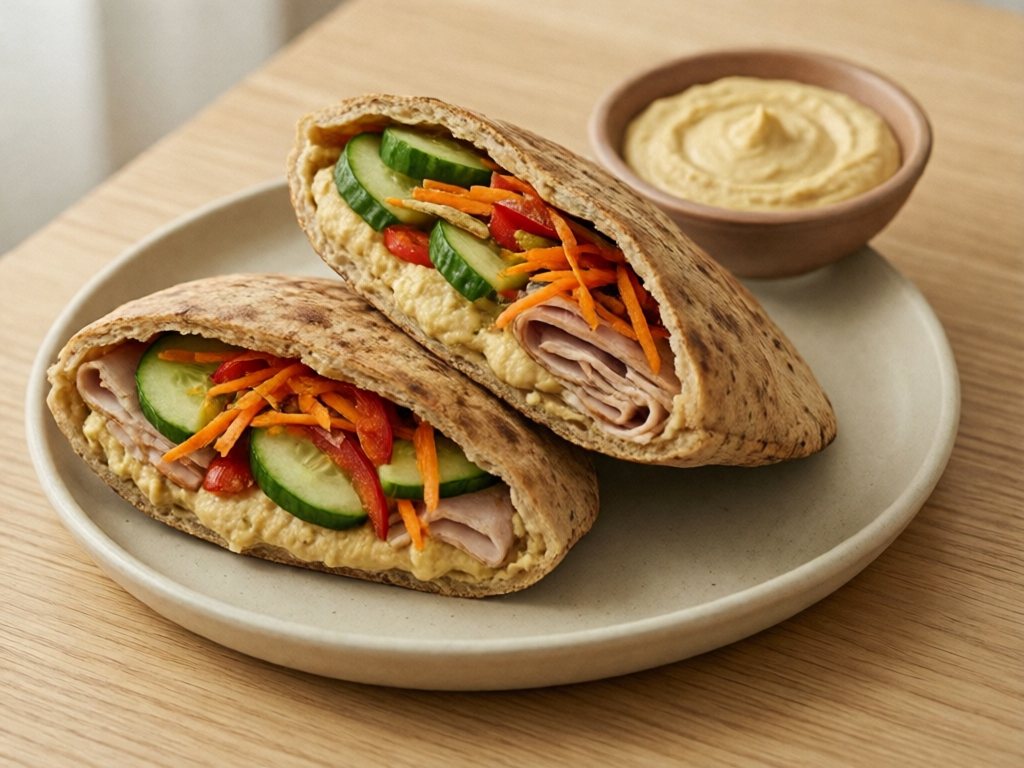
Crunchy, fresh, filling, and ready in 3 minutes if you have hummus in the fridge.
Ingredients:
- 1 whole-wheat pita, halved to create 2 pockets
- 1/4 cup hummus
- Sliced cucumber, shredded carrots, bell pepper strips
- 2 oz sliced turkey or grilled chicken strips
- Optional: sprinkle of feta, drizzle of olive oil
Method:
- Spread hummus inside each pita half
- Stuff with veggies and turkey
- Eat immediately or wrap tightly for later
Per serving (2 halves, rough estimate): 20-23g protein, 340-400 calories
Why it works one-handed: The pita pocket contains everything — no spillage. Hummus acts as the “glue” keeping fillings in place. Can be prepped the night before and grabbed from the fridge. Still pregnant? Use cooked chicken instead of deli turkey, or heat the turkey to steaming first.
12. Energy-Boosting Egg and Veggie Snack Plate
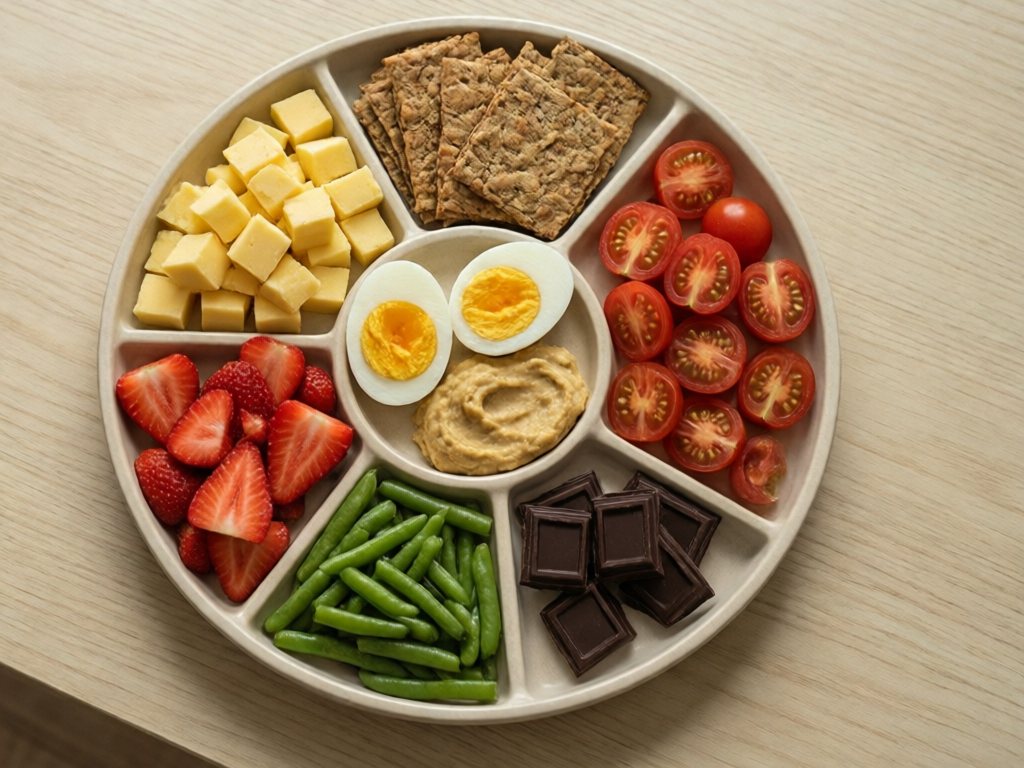
Sometimes you don’t want a “meal” — you want to graze. That’s completely valid, especially during the newborn phase. A well-constructed snack plate can provide the same nutrition as a composed meal.
Build your plate with:
- Protein: 2 oz cheese cubes + 2 hard-boiled eggs
- Carbs: Whole-grain crackers + a handful of berries (keep grapes out of little ones’ reach)
- Veggies: Cherry tomatoes + sugar snap peas
- Fat: 2 tablespoons hummus or guacamole
- Bonus: A few squares of dark chocolate (you’ve earned it)
Per plate (rough estimate): 30-34g protein, 650-750 calories
Why it works one-handed: Everything is finger food, so you can eat one item at a time over an hour. Keep it in the fridge and graze whenever you have a free moment. Cheese and eggs shouldn’t sit out more than 2 hours. This is the most realistic lunch format for the first few weeks.
Dinner: 5 One-Handed Recipes for the Evening
Dinner is often the meal when a partner, family member, or friend might be around to help hold the baby. But not always. And even when someone else is home, you might be nursing or settling the baby during dinner hour. These recipes work whether you’re solo or have backup.
13. Slow Cooker Pulled Chicken Tacos
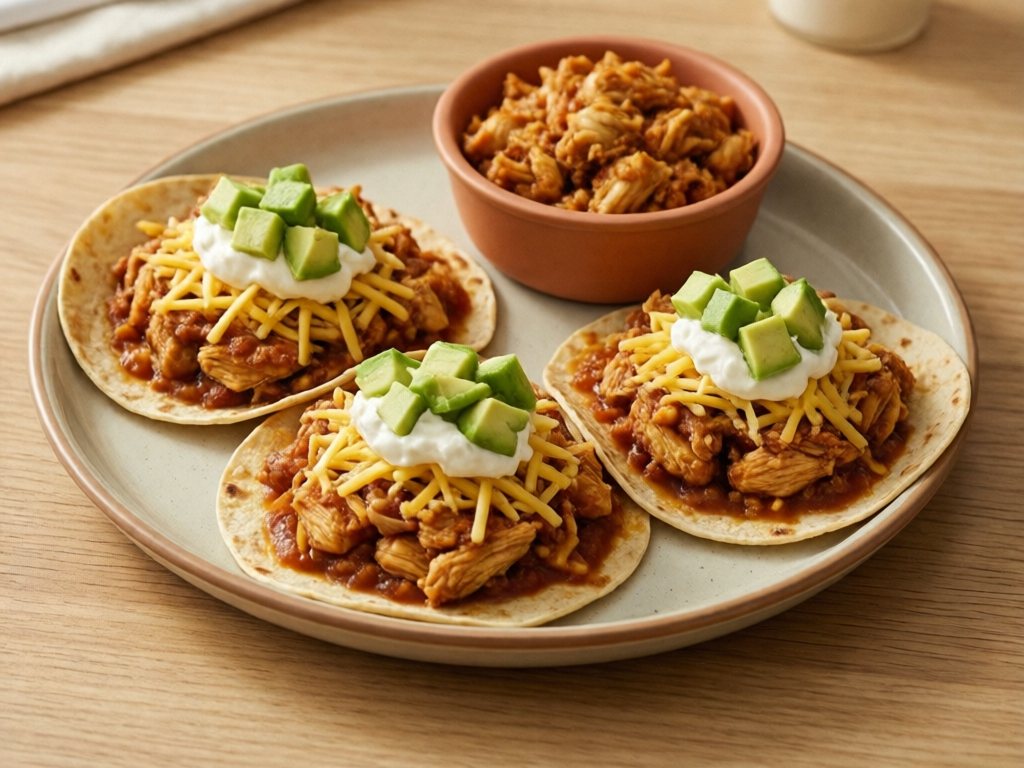
Set it in the morning, eat it one-handed at night.
Ingredients:
- 1.5 pounds boneless skinless chicken thighs
- 1 cup salsa
- 1 tablespoon taco seasoning
- 1/2 cup chicken broth
- Small flour or corn tortillas
- Toppings: shredded cheese, sour cream, diced avocado
Method:
- Place chicken in slow cooker
- Add salsa, taco seasoning, and broth
- Cook on low 6-8 hours or high about 4 hours, until the chicken reaches 165°F
- Shred with two forks
- Serve in small tortillas with toppings
Per 2 tacos (rough estimate, with toppings): 26-32g protein, 350-450 calories
Why it works one-handed: Street taco-sized tortillas fit in one hand, as long as you don’t overfill them. Honest note: this is the messiest recipe on the list. Lift the chicken out with a slotted spoon so the juices stay behind, let it cool to warm, and eat over a plate once the baby is settled or in someone else’s arms.
The slow cooker does the work while you manage baby duty, and leftover chicken keeps 3-4 days in the fridge.
14. Sheet Pan Meatballs with Roasted Veggies
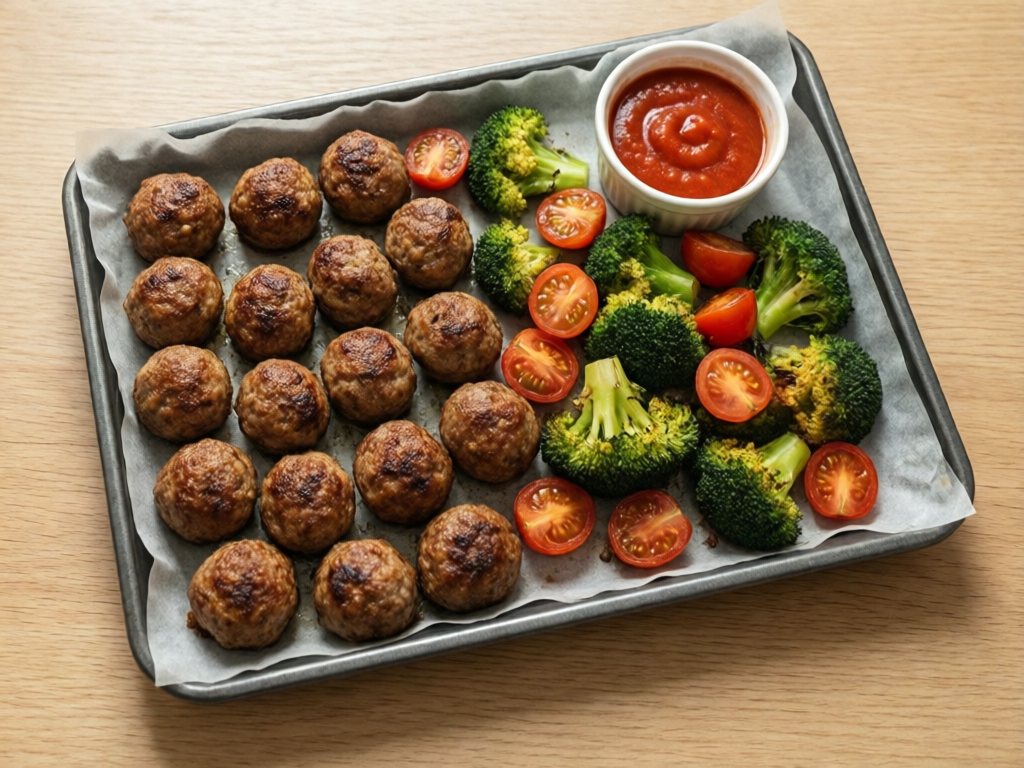
One pan, one hand, one satisfying dinner.
Ingredients:
- 1 pound ground turkey or beef
- 1/4 cup breadcrumbs
- 1 egg
- 1 teaspoon Italian seasoning
- 2 cups broccoli florets
- 1 cup cherry tomatoes
- 1 tablespoon olive oil
- Optional: marinara for dipping
Method:
- Mix ground meat, breadcrumbs, egg, and seasoning
- Roll into 1-inch balls (about 20-24)
- Arrange on one half of a sheet pan
- Toss veggies with olive oil and arrange on other half
- Bake at 400 degrees F for 18-22 minutes, until the meatballs reach 160°F inside (165°F for turkey)
- Let cool slightly before eating — pop meatballs one by one
Per serving (6-8 meatballs + veggies, rough estimate): 30-35g protein, 350-450 calories (lower with turkey)
Why it works one-handed: Meatballs are the ultimate one-handed food. Stab with a fork or eat with fingers. Make a double batch, refrigerate what you’ll eat in 3-4 days and freeze the rest.
15. Stuffed Sweet Potatoes (fork; prep and grab)
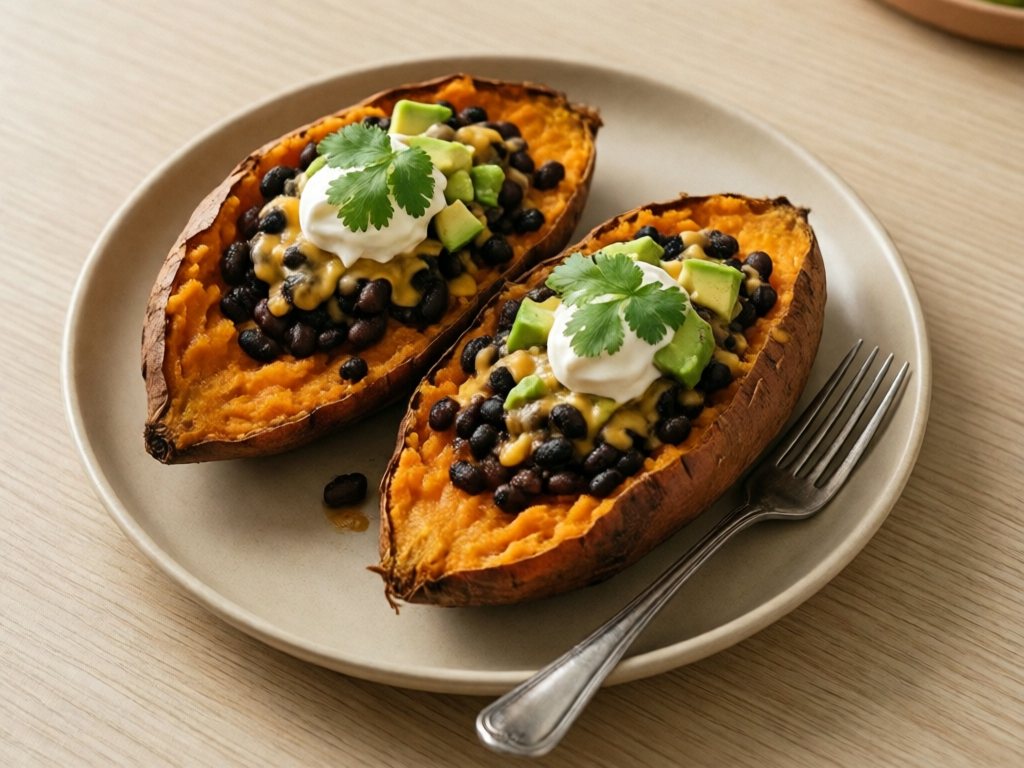
Hearty, warm, satisfying, and surprisingly easy to eat one-handed.
Ingredients:
- 4 large sweet potatoes
- 1 can (15 oz) black beans, seasoned with cumin and lime
- 1/2 cup shredded cheddar
- 1/4 cup sour cream or Greek yogurt
- Optional: diced avocado, cilantro
Method:
- Bake sweet potatoes at 400 degrees F for 45-50 minutes (or microwave 5-6 minutes per potato, until soft)
- Slice open, fluff insides with fork
- Top with beans, cheese, sour cream
- Eat directly from the skin with a fork
Per stuffed potato (rough estimate): 13-15g protein, 340-440 calories, 11-14g fiber
Why it works one-handed: The sweet potato skin acts as its own bowl — no plate needed. Everything stays contained. Use a fork to scoop. Can be prepped in advance — bake the potatoes and season the beans on Sunday, assemble and microwave when hungry.
16. Pasta Bake Cups (Freezer-Friendly)
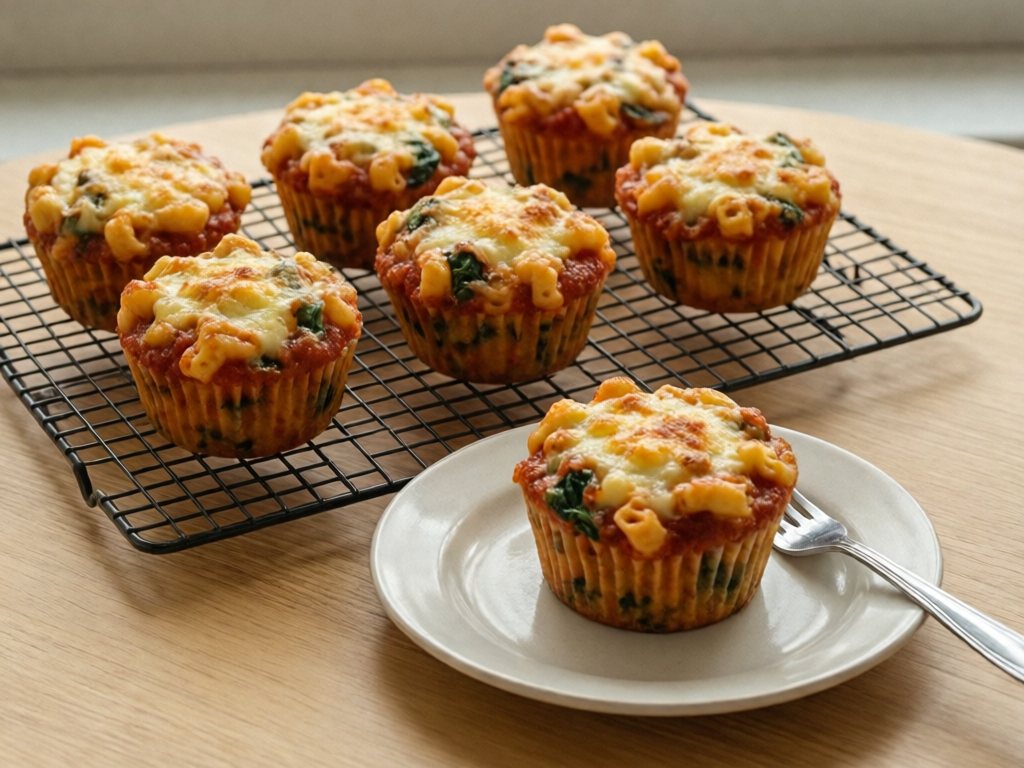
Individual portions of cheesy pasta, baked in a muffin tin for grab-and-eat convenience.
Ingredients:
- 8 oz small pasta (penne, rotini, or elbows), cooked
- 1 cup marinara sauce
- 1 cup ricotta cheese
- 1 cup shredded mozzarella
- 1/2 cup frozen spinach, thawed and squeezed dry
- 1 egg
- Salt, pepper, garlic powder
Method:
- Mix cooked pasta with marinara, ricotta, half the mozzarella, spinach, egg, and seasonings
- Grease a 12-cup muffin tin generously
- Divide pasta mixture among cups, press down firmly
- Top with remaining mozzarella
- Bake at 375 degrees F for 20-25 minutes, until golden and the center of a cup reaches 160°F
- Cool 5 minutes, then run a knife around edges to pop out
- Freeze individually. Reheat 60-90 seconds in the microwave, let cool a minute, and check the middle
Per 3 cups (rough estimate): 23-25g protein, 410-460 calories
Why it works one-handed: Each cup is a self-contained, no-mess portion. Pick it up and eat it like a muffin, or use a fork. Make a batch of 12 and you’ve got 4 dinners (or 4 lunches, or any combination) ready in the freezer.
17. Chicken and Rice Casserole (fork; dump and bake)
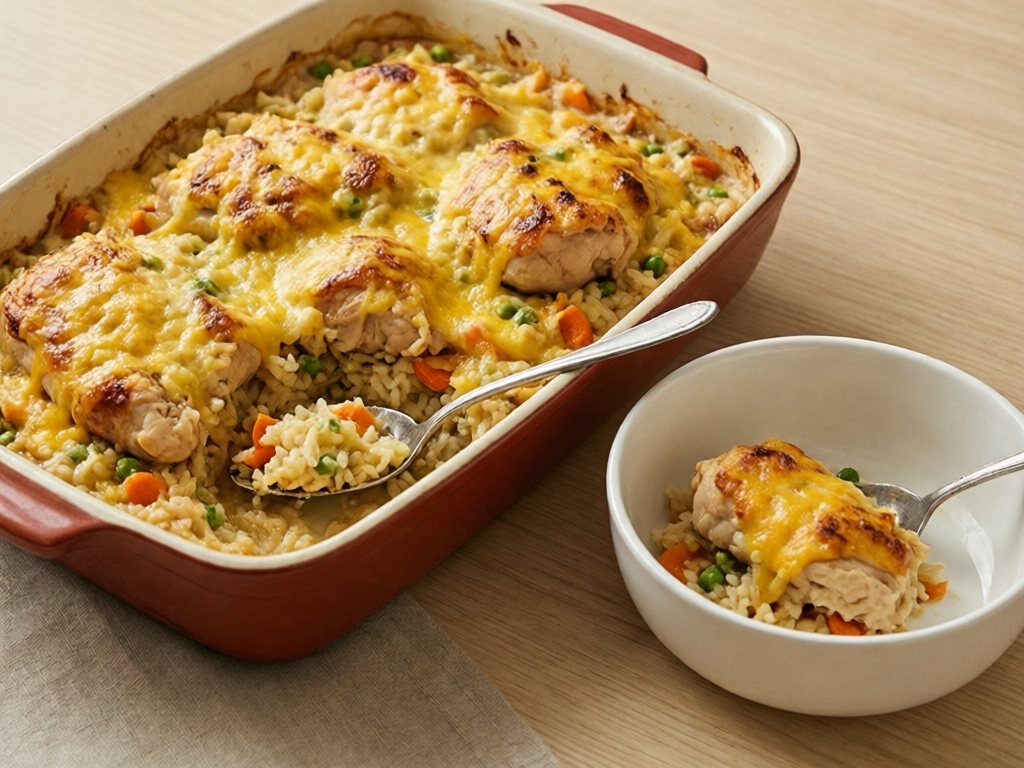
The ultimate “I have zero energy” dinner.
Ingredients:
- 1.5 pounds chicken thighs
- 1.5 cups uncooked white rice
- 1 can cream of mushroom soup
- 1.5 cups chicken broth
- 1 cup frozen mixed vegetables
- 1 cup shredded cheddar
- Salt, pepper, onion powder
Method:
- Spread rice in the bottom of a 9×13 baking dish
- Pour soup and broth over rice, stir to combine
- Add frozen vegetables
- Place chicken thighs on top, season generously
- Cover tightly with foil
- Bake at 375 degrees F for 60-75 minutes, until the rice is tender and the chicken reaches 165°F
- Uncover, sprinkle cheese, bake 5 more minutes
- Scoop into a bowl and eat with a fork
Makes about 6 servings. Per serving (rough estimate): 30-33g protein, 440-470 calories
Why it works one-handed: Fork-only meal — everything is soft and scoopable. No cutting needed because the chicken falls apart after long baking. Make the full pan and eat from it for 3-4 days.
Snacks: 3 One-Handed Options for Anytime
Snacks aren’t optional during the newborn phase. They’re survival fuel. Keep these prepped and within your reach: next to the nursing chair, on the nightstand, in the diaper bag.
Safety firstWithin your reach means out of the baby’s. Nuts, nut-butter bites and apple slices are choking hazards for babies and toddlers, so keep them in a lidded container on a table, not on your lap, and don’t share. Cheese, meat and eggs stay in the fridge until you eat them.
18. Trail Mix Power Bites (No-Bake)
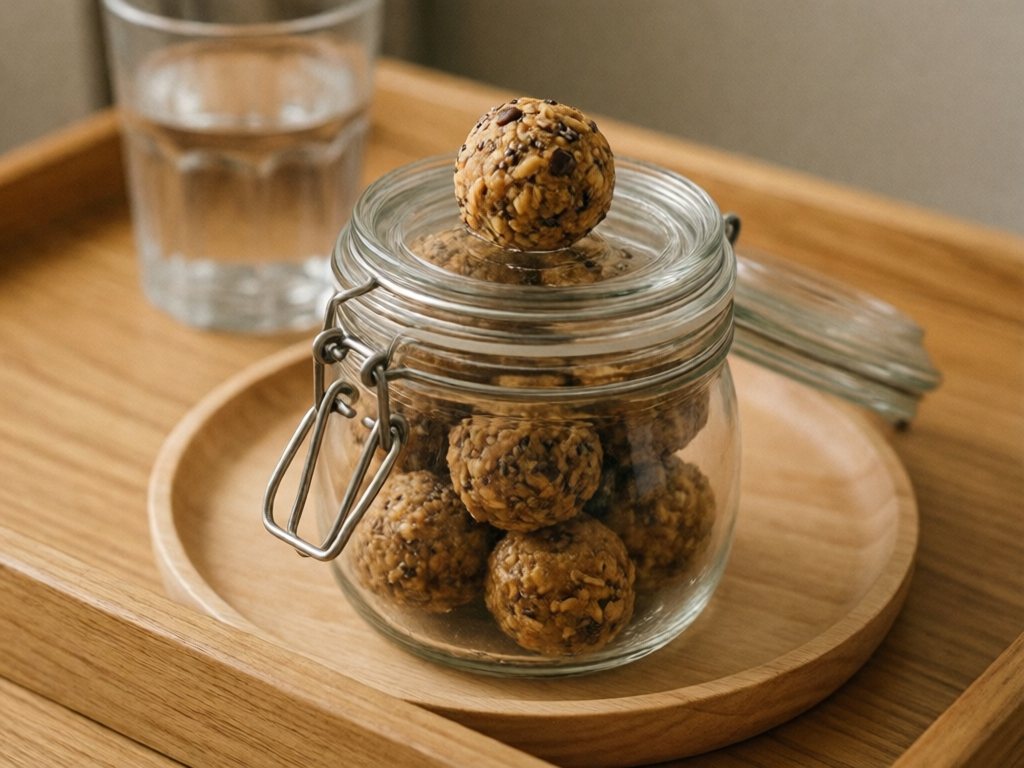
Energy balls that deliver real nutrition, not just sugar.
Adults only: these contain honey, so never give one to a baby under 12 months. They’re sticky and dense, which makes them a choking hazard for babies and toddlers. Keep the container out of reach and don’t share.
Ingredients:
- 1 cup rolled oats
- 1/2 cup peanut butter
- 1/3 cup honey
- 1/2 cup mini chocolate chips
- 1/4 cup ground flaxseed
- 2 tablespoons chia seeds
Method:
- Mix everything in a large bowl
- Refrigerate 30 minutes until firm enough to handle
- Roll into 1-inch balls (makes about 20-24)
- Store in the fridge for up to 1 week (or freeze)
Per 2 bites (rough estimate): 4-6g protein, 170-210 calories
Why it works one-handed: Truly a one-bite food. No wrapper, no crumbs, no mess. Put the day’s few in a lidded container on the coffee table or nightstand, out of the baby’s reach.
19. Apple Slices with Nut Butter and Granola
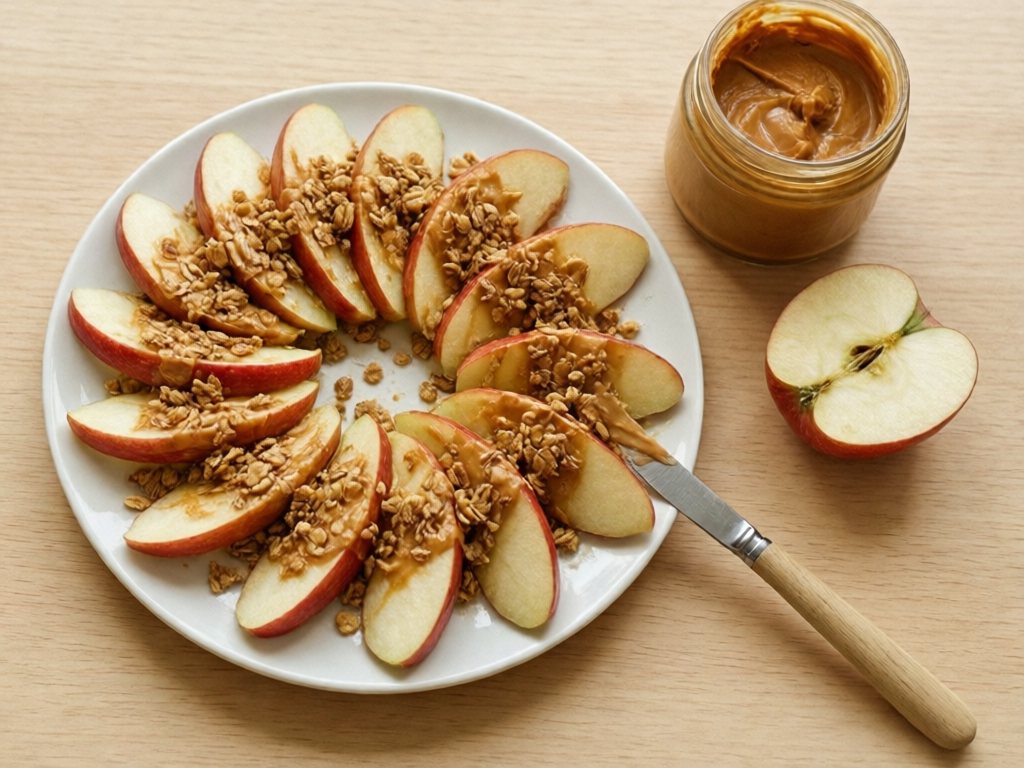
Crunchy, sweet, satisfying, and surprisingly filling.
Keep it out of reach: raw apple slices, nut butter and granola are choking hazards for babies and toddlers, so don’t share this plate. For little ones, see toddler-safe apple recipes.
Ingredients:
- 1 apple, sliced
- 2 tablespoons peanut or almond butter
- 2 tablespoons granola
Method:
- Slice apple
- Spread nut butter on slices (or dip — but spreading is less messy one-handed)
- Sprinkle granola on top
Per serving (rough estimate): 8-10g protein, 340-370 calories
Why it works one-handed: Each slice is a self-contained bite. Nut butter holds the granola in place. No dripping if you spread rather than dip. Can be prepped and plated in advance — squeeze lemon on apple slices to prevent browning.
20. Cheese, Meat, and Fruit Snack Box
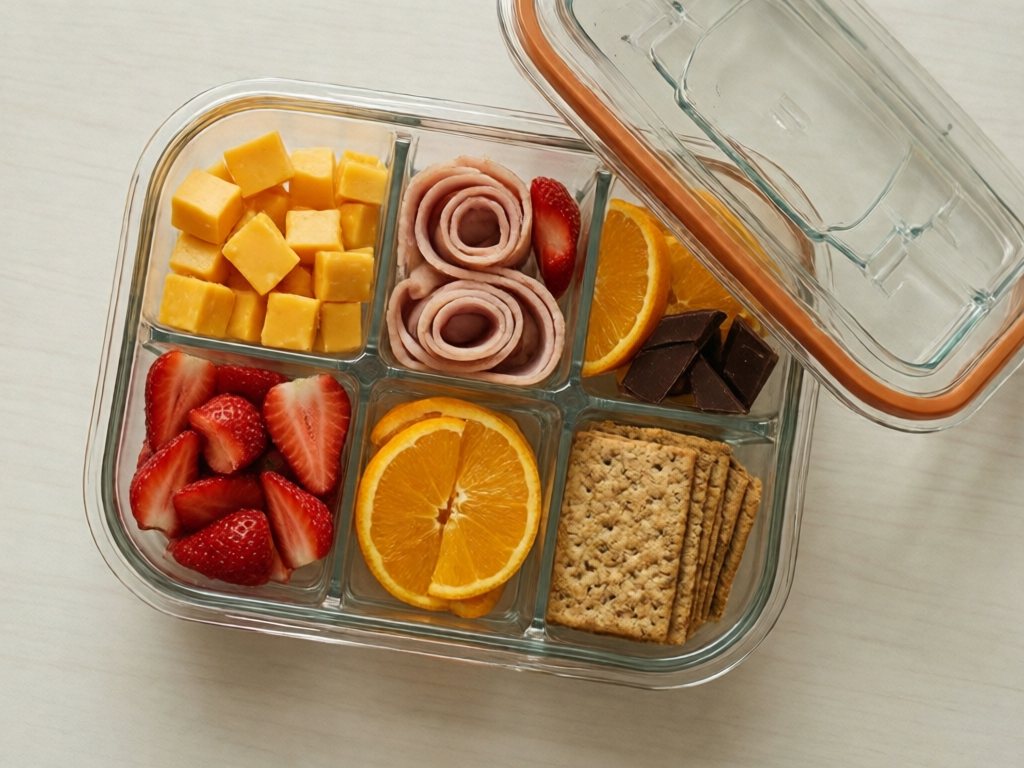
A grown-up lunchbox you can build in five minutes.
Keep it out of reach: nuts, cheese cubes and whole berries are choking hazards for babies and toddlers. Eat this with the box set on a table beside you, and don’t share.
Build your box:
- 2 oz aged cheddar or gouda, cubed
- 2 oz sliced salami or turkey
- Handful of berries or orange segments (keep grapes and nuts away from the baby)
- Small handful of whole-grain crackers
- 2 tablespoons mixed nuts
- A few pieces of dark chocolate
Per box (rough estimate): 29-33g protein, 600-780 calories. Turkey is at the low end and salami at the high end.
Why it works one-handed: Pure finger food. Every component is grab-and-eat. Assemble 3-4 boxes at the beginning of the week and store in the fridge. Grab one whenever you’re hungry — no preparation, no heating, no cleanup. Still pregnant? Use cooked turkey or skip dry-cured salami, and choose pasteurized cheese.
The Complete One-Handed Meal Reference
Protein and calorie ranges are rough estimates per serving, based on the ingredient lists. They shift with brands, tortilla sizes and portions.
| # | Recipe | Type | Protein | Calories | Prep Time | Make Ahead? |
|---|---|---|---|---|---|---|
| 1 | Breakfast Burritos | Breakfast | 20-22g | 400-480 | 30 min (batch) | Freezer |
| 2 | Overnight Oats | Breakfast | 16-18g | 350-400 | 5 min | 4 days fridge |
| 3 | Egg Muffin Cups | Breakfast | 16-18g | 200-220 | 25 min (batch) | Freezer |
| 4 | PB Banana Toast Fingers | Breakfast | 15-18g | 430-500 | 3 min | No |
| 5 | Savory Yogurt Bowl | Breakfast | 22-25g | 580-660 | 3 min | No |
| 6 | Breakfast Sandwich Wrap | Breakfast | 30-34g | 550-650 | 25 min (batch) | Freezer |
| 7 | Chicken Salad Lettuce Wraps | Lunch | 38-45g | 350-430 | 15 min | 3-4 days fridge |
| 8 | Turkey Avocado Pinwheels | Lunch | 17-20g | 350-400 | 10 min | 2 days fridge |
| 9 | Hearty Grain Bowl | Lunch | 12-16g | 450-500 | 20 min | 3 days fridge |
| 10 | Quesadilla Wedges | Lunch | 22-26g | 480-580 | 10 min | 3 days fridge |
| 11 | Hummus Veggie Pita Pockets | Lunch | 20-23g | 340-400 | 3 min | Next day |
| 12 | Energy Snack Plate | Lunch | 30-34g | 650-750 | 5 min | Prep components |
| 13 | Slow Cooker Pulled Chicken Tacos | Dinner | 26-32g | 350-450 | 10 min active | 3-4 days fridge |
| 14 | Sheet Pan Meatballs | Dinner | 30-35g | 350-450 | 15 min | Freezer |
| 15 | Stuffed Sweet Potatoes | Dinner | 13-15g | 340-440 | 15 min | Prep components |
| 16 | Pasta Bake Cups | Dinner | 23-25g | 410-460 | 20 min | Freezer |
| 17 | Chicken Rice Casserole | Dinner | 30-33g | 440-470 | 10 min active | 3-4 days fridge |
| 18 | Trail Mix Power Bites | Snack | 4-6g | 170-210 | 15 min (batch) | 1 week fridge |
| 19 | Apple with Nut Butter | Snack | 8-10g | 340-370 | 3 min | No |
| 20 | Cheese Meat Fruit Box | Snack | 29-33g | 600-780 | 5 min | 3-4 days fridge |
Meal Prep Strategies for the Newborn Phase
Having 20 recipes is great. Having them prepped when you need them is what makes the difference. Here’s how to do it when you barely have time to breathe.
Good to knowRefrigerate perishable food within 2 hours (1 hour if it’s warm out). Egg dishes should reach 160°F and reheated leftovers 165°F. Keep snack plates, hard-boiled eggs, deli meat and cheese in the fridge until you eat them.
The Pre-Baby Freezer Stash
If you’re reading this before the baby arrives, a freezer stash is one of the most helpful things you can do. In the last month of pregnancy, spread the cooking over three sessions of about 1.5-2 hours each.
| Session | Batch | Quantity |
|---|---|---|
| 1 | Breakfast burritos, egg muffin cups | 10 burritos, 12 egg cups |
| 2 | Pasta bake cups, meatballs | 12 cups, 24 meatballs |
| 3 | Slow cooker chicken, power bites (fridge) | 3-4 portions, 20-24 bites |
That covers roughly 1-2 weeks of breakfasts and a good share of dinners. For more batch ideas, see freezer-to-Instant-Pot dump meals, slow-cooker dinners and our meal prep guide for new moms.
The Weekly Replenishment System (After Baby Arrives)
Once the freezer stash runs low, switch to a simple weekly routine. Pick Sunday, or whichever day someone can hold the baby for 45 minutes.
- Make one batch of a freezer-friendly recipe (20 minutes)
- Prep components for 3 days of lunches (15 minutes)
- Assemble 3-4 snack boxes (10 minutes)
That’s 45 minutes of prep covering the meals you’re most likely to skip that week.
The Partner Prep Protocol
If you have a partner at home, designate them as the Prep Person. This is a concrete, defined role that doesn’t require cooking expertise and makes an enormous difference.
The Prep Person’s daily checklist (10 minutes total):
- Morning: Pull tomorrow’s breakfast from freezer to fridge (2 minutes)
- Morning: Fill a large water bottle and place it next to the nursing/feeding station (1 minute)
- Before leaving for work or at lunch: Assemble today’s lunch and place in the fridge with a note saying “EAT THIS” (5 minutes)
- Evening: Put a shelf-stable snack (crackers, a granola bar, a banana) in a lidded container on the nightstand for night feeds, out of the baby’s reach. Snack boxes with cheese or meat stay in the fridge (2 minutes)
This requires no cooking, no creativity, and no special skills. But it is the difference between a well-fed parent and one who’s running on fumes by 3 p.m.
What to Ask for When People Offer to Bring Food
When friends and family say “let me know if you need anything,” it’s easy to say “we’re fine!” Be specific instead. Ask for rotisserie chickens, pre-cut veggies with hummus, muffins, individual-portion casseroles, or a bag of good granola bars and fruit. Skip soup, elaborate salads and anything that has to be eaten hot and right away. Here’s a quick reference:
| Great to Receive | Why | Avoid Receiving | Why |
|---|---|---|---|
| Burritos/wraps | One-handed, reheatable | Lasagna | Needs cutting, plate, table |
| Muffins/banana bread | Finger food, shelf stable | Soup | Two hands, drip risk |
| Casserole in individual cups | Grab and reheat | Elaborate salads | Wilt quickly, need assembly |
| Rotisserie chicken | Shred and use all week | Sushi | Must eat immediately |
| Cut fruit and cheese platter | Instant finger food | Stir fry | Needs utensils, best hot |
| Energy bites/granola bars | No prep snacking | Multi-dish meals | Too many components |
| Frozen burritos/meatballs | Stock the freezer | Fresh bread that stales | Short window to eat |
Mama Munch
Mama Munch is a food-obsessed parent of two who believes every family deserves simple, nutritious meals — even on the busiest weeknights. With a background in nutrition education and years of navigating picky eaters, allergies, and toddler taste buds, she creates practical recipes and meal strategies that actually work for real families.
Frequently Asked Questions
I’m breastfeeding. Do I need to eat more than these portions suggest?
Probably. Most people need roughly 330-400 extra calories a day while breastfeeding, about two snacks. Let hunger guide you, and aim for roughly 70 grams of protein a day. If these portions leave you hungry, add more. This is not the time to restrict calories, and your provider or a registered dietitian can tailor advice to you.
Are these recipes safe for breastfeeding? Any foods I should avoid?
Yes, these are everyday foods. Keep caffeine to about 300 mg a day or less while breastfeeding (per CDC guidance; dark chocolate has a little), limit alcohol, and avoid high-mercury fish. Some babies are sensitive to dairy, soy or spicy foods, but this varies. Ask your doctor or pediatrician about your own situation, especially if your baby is unusually fussy after certain foods.
My partner and I are both new parents. Can these meals work for two adults?
Absolutely. For the batch recipes (burritos, meatballs, egg cups, pasta cups), simply double the quantities. For assembled meals, prep two sets of components. For the freezer stash, double the batches if you’re feeding two.
I’m recovering from a C-section and can’t stand for long periods. How do I manage meal prep?
Sitting prep is your friend. Most assembly tasks (rolling pinwheels, assembling snack boxes, mixing overnight oats, rolling energy bites) can be done seated at a table. For cooking tasks, ask your partner or a visitor to handle the stovetop and oven. Alternatively, lean on no-cook options: overnight oats, snack plates, lettuce wraps with rotisserie chicken, pita pockets, and energy bites.
These recipes are great, but I’m too exhausted to prep anything. What are the absolute bare minimum options?
Go straight from the package. Try string cheese with nuts and an apple (roughly 12-15g protein), or a Greek yogurt cup with a granola bar (roughly 14-18g). A pre-made protein shake with a banana gives roughly 20-30g, depending on the label. Deli turkey rolled around a cheese stick (roughly 14-17g) works too. If you’re pregnant, use cooked chicken or heat the turkey to steaming first. Store-bought hummus with baby carrots and crackers (roughly 6-8g) is another easy one.
No shame in any of these. Eating something always beats eating nothing.
When does the one-handed eating phase actually end?
It varies widely by baby, and there’s no right timeline. Some babies are content in a bouncer by 3-4 months, giving you both hands back. Others are velcro babies through 6-8 months. Quick, healthy meals stay useful long after that.
I’m a non-birthing partner. Is this guide relevant to me?
Completely. New parent exhaustion and nutritional neglect hit all caregivers, not just the birthing parent. If you’re waking for night feeds, holding the baby during the day, or supporting a recovering partner, your needs are elevated too. These recipes serve anyone caring for a newborn. Make enough for both of you.
Eat Something: A Quick Recap
Eating well isn’t selfish; it’s part of caring for your baby. Newborn care can’t run on granola bar fragments and cold coffee.
These 20 recipes aren’t about being a perfect parent. They’re about making it possible for you to eat enough food to get through the day. Some days, that means a beautiful grain bowl. Other days, that means string cheese and an apple eaten over the sink at midnight. Both count. Both matter.
Make the freezer stash if you can. Accept the rotisserie chicken from your neighbor. Let your partner handle the prep checklist. You’re doing an incredible job. Now please eat something.