Allergy-Friendly Halloween Classroom Treats (Nut & Dairy-Free)
Learn how to plan allergy-friendly Halloween classroom treats by first checking school rules. This guide offers nut-free and dairy-free recipes and key questions to ask teachers.
- Always check classroom allergy rules first.
- Ask teachers about specific allergens & homemade rules.
- Discover nut-free, dairy-free treat recipes.
- Consider non-food treats for easy compliance.
- Use the provided teacher message template.
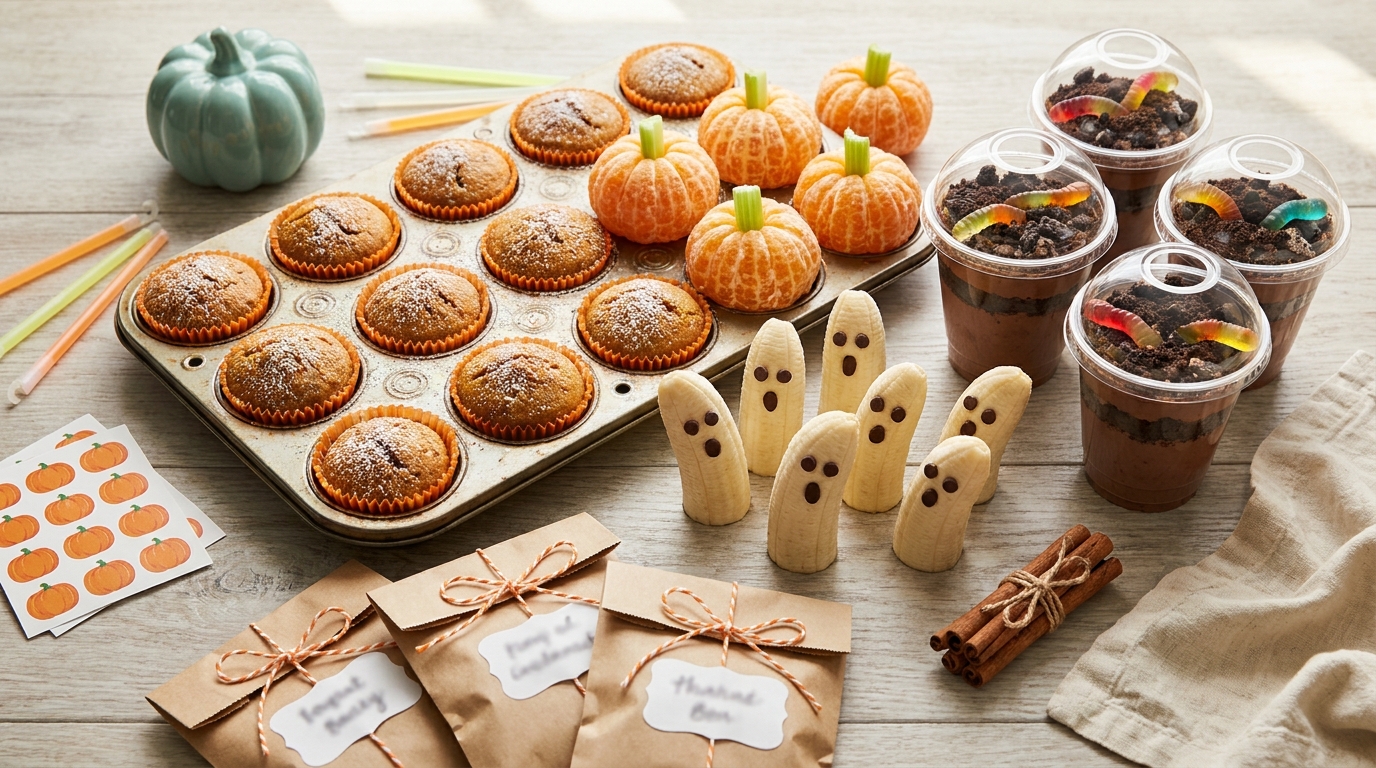
The short answer: clementine pumpkins, banana ghosts, and egg-free, dairy-free pumpkin muffins. Those are my top Halloween class party picks made without nuts or dairy. Check the room’s rules before you make any of them.
Picture the night before the party. The ghost cupcakes are frosted, and they’re full of butter, eggs, and “may contain tree nuts” sprinkles. Then you reread the teacher’s email. The room is peanut- and tree-nut-free, and two classmates have dairy and egg allergies.
Free printable · 6 pages
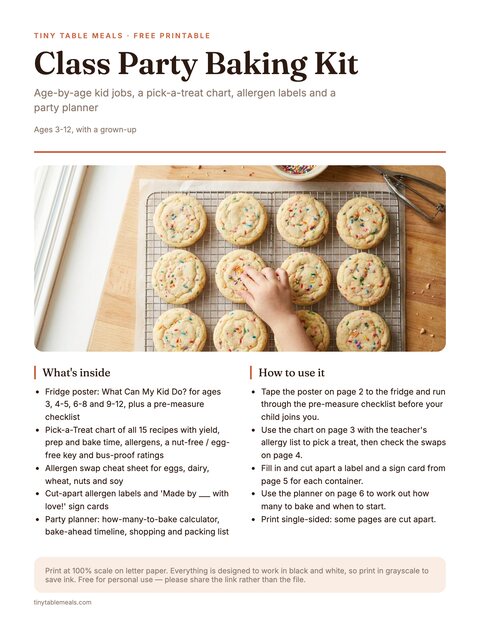
Class Party Baking Kit
A fridge poster of baking jobs by age, a chart of all 15 class-party treats with allergens, an allergen swap cheat sheet, cut-apart allergen labels and sign cards, and a how-many-to-bake planner with a bake-ahead timeline and packing list.
Free. Your download link appears right here. You'll also join the Sunday Supper Plan. Unsubscribe anytime. Privacy
Classroom allergy planning starts with the room’s rules, not with a recipe. This guide covers those rules, an allergen swap chart, seven treats made without nuts or dairy, and copy-and-paste label wording for treat bags.
Jump straight to a treat:
- Clementine pumpkins: no cooking, ages 4+.
- Banana ghosts: 5 minutes, chip or raisin eyes for ages 5+.
- Egg-free, dairy-free pumpkin muffins: all ages, contains wheat.
- Crispy rice spider web treats: ages 4+, check the cereal and marshmallows.
- Dirt cups: gummy worm for ages 4+ only, not soy-free.
- Popcorn cups: only if every child in the room is 5+.
- Apple monster mouths: seed-allowed rooms only, ages 4+.
Store-bought-only room? Go straight to non-food treats and the label wording.
In this article (11 sections)
- Start With the Room, Not the Recipe
- The Allergen Swap Chart (Built for a Classroom, Not a Home Kitchen)
- Nut- and Dairy-Free Classroom Treats That Actually Work
- Non-Food Treats Teachers Love
- Classroom-Safe Labeling You Can Copy Onto Treat Bags
- A Kitchen Plan for Keeping Cross-Contact Low
- Halloween Party Treat Timeline: What to Do Each Week
- If You’re the Allergy Parent
- Shopping List: Muffin + Clementine Plan for 24
- Frequently Asked Questions
- One Last Thought Before You Bag Up the Treats
Start With the Room, Not the Recipe
Most allergy-friendly lists assume a party at your house. A classroom is different. It has a written policy, a teacher juggling 24 kids, a shared snack table, and sometimes a no-homemade rule.
Before you buy a single ingredient, find out what the rules are. According to Food Allergy Research & Education (FARE), about 1 in 13 US children (roughly 8%) has a food allergy. That’s about 2 kids in a class of 24. It’s the normal shape of a class, not a rare edge case.
Here’s what I’ve learned to ask, and in what order.
The five questions that save you a redo
Send these to the teacher or room parent. Short and specific gets answered faster than a long “what can I bring?” message.
- Which allergens are off the table? Peanuts and tree nuts are the usual ones, but many rooms also avoid milk, egg, sesame, wheat, or soy for a specific child.
- Does the food have to be store-bought in sealed packaging? Many schools require a full ingredient label and don’t allow homemade food at all.
- Is there a “may contain” or “made in a facility with” rule? Some classrooms are fine with it; others only allow products with no precautionary statements.
- Are non-food treats welcome? Many teachers love these. They also take the guesswork out completely.
- Who’s handing it out? If the teacher is serving, label wording matters even more because they’ll be reading your bag in a hurry.
Here’s a message you can copy:
Message to send“Hi Ms. R! I’m bringing treats for the Halloween party. Could you tell me which allergens to avoid? And are homemade items okay, or does everything need to be sealed and store-bought with a label? I’d love to make sure every kid can enjoy it.”
Ask once, write the answer on a sticky note, and stick it on your fridge.
What the common rules actually mean
Teachers and school nurses use shorthand. Here’s a plain-English decoder.
| Rule you might see | What it usually means | What you do |
|---|---|---|
| “Nut-free classroom” | No peanuts or tree nuts, and often no products with “may contain” nut warnings. | Check every label, including sprinkles, chocolate, and cereal. |
| “Peanut-free” | Peanuts only. Tree nuts may be allowed, but ask. | Don’t assume. Confirm tree nuts. |
| “Allergen-friendly” | The class has specific kids’ allergens to avoid, often listed by name. | Ask for the list. |
| “Store-bought only” | Sealed, labeled, commercially made. No homemade. | Skip the kitchen and focus on label reading. |
| “Top 9 free” | Free of milk, egg, peanut, tree nut, wheat, soy, fish, shellfish, and sesame. | Hardest to meet. Non-food or fruit-based is easiest. |
| “No sharing food” | Kids don’t trade or share items. | Individually portioned treats only. |
A quick note on that “Top 9” row. Sesame became the ninth major US allergen on January 1, 2023 (FASTER Act). Some products now contain it on purpose, so read the label.
If the room is nut-free and homemade is allowed
This is the easiest setup. Bake from simple ingredient lists and read every label, including the vanilla and the baking powder. Skip the grab-bag of leftover chocolate chips.
Good fits: pumpkin muffins, crispy rice treats, fruit treats, and dirt cups.
If the room is also dairy- and egg-free
Pick a recipe made without milk, egg, and nuts as ingredients. Label it clearly so the teacher can verify it at a glance.
Good fits: egg-free, dairy-free pumpkin muffins, clementine pumpkins, and banana ghosts made with verified dairy- and soy-free chips (or raisins).
If everything must be store-bought and sealed
Skip the recipe. Bring sealed treats from allergen-aware brands in the original packaging so the teacher can check the label. Add a non-food item to make the bag feel like a treat.
The same label habits carry over to lunches. Our nut-free lunchbox ideas cover everyday school food, and the nut-free school lunch ideas give you more to pack.
The Allergen Swap Chart (Built for a Classroom, Not a Home Kitchen)
A home-kitchen chart says “use any dairy-free milk.” In a classroom, oat milk might be fine while soy milk isn’t. The swap you choose can’t create a new problem for another child.
Screenshot this chart. Then, for any recipe you want to bring, swap out the red-flag ingredient on the left.
| Common treat ingredient | Why it’s a problem | Classroom-safe swap | Watch out for |
|---|---|---|---|
| Peanut butter / nut butters | Peanut and tree nut allergy. | Sunflower seed butter (if seeds are allowed). | Some schools restrict seed butters too, so ask. Check for cross-contact on the label. |
| Butter | Milk allergy. | Dairy-free baking sticks, or neutral oil in baked goods. | Many dairy-free sticks contain soy. Pick a soy-free version if soy is on the list. |
| Cow’s milk | Milk allergy. | Oat milk or water. | Skip soy and almond milk, and check the carton for nut or soy cross-contact. Ask about oat allergy (use water) and celiac (use gluten-free oat milk). |
| Eggs (in baking) | Egg allergy. | Applesauce, flax “egg,” or vinegar plus baking soda. | The egg-free baking substitutes guide shows which swap works where. |
| Milk chocolate chips | Milk, and often nut cross-contact. | Allergy-friendly dark or “free-from” chocolate chips. | “Dark” chocolate often has milk traces. Read the whole label. |
| Chocolate candy bars | Nuts, milk, and cross-contact. | Skip, or use a certified allergy-friendly candy brand. | Many mini candies are produced on shared lines. |
| Marshmallows | Usually nut- and dairy-free, but cross-contact varies. | Check the label for “may contain” lines. | Some contain egg-derived ingredients or are made in nut facilities. Most contain gelatin, which may not suit vegetarian, halal, or kosher families. |
| Sprinkles | Often “may contain” nuts, milk, or soy. | Allergy-friendly sprinkles or fruit pieces. | Rarely thought about, frequently a trap. |
| Wheat flour | Wheat allergy or celiac. | Gluten-free flour blend (if needed). | Not all GF blends are free of oats, soy, or nuts. |
| Whipped cream / frosting | Milk, sometimes egg. | Coconut cream or a simple powdered-sugar glaze. | The FDA’s January 2025 labeling guidance no longer counts coconut as a tree nut. Some schools still avoid it, so ask the teacher first. |
| Granola / trail mix | Nuts. | Pumpkin seeds, dried fruit, or allergen-free cereal. | Check the seed policy and cross-contact. Whole seeds and dried fruit are choking risks under 4. |
| Gelatin or gummy candies | Facility cross-contact varies. Sticky gummies are a choking risk under 4. | Fruit snacks labeled free from top allergens, for ages 4 and up. | Formulas change, so read every pack. Gelatin may not suit vegetarian, halal, or kosher families. |
The one rule underneath all of it: a swap is only a swap if the new ingredient is also safe for that specific classroom. Oat milk is a good example. It solves a dairy problem and creates nothing new for most kids. If a child in the class has a gluten issue, though, “oat” becomes a question mark.
How to read a label like a classroom pro
Labels are your best friend when you can’t see the child’s full allergy list. A few habits help.
- Read the “Contains” line first. In the US, the major allergens must be listed in plain language, either in the ingredient list or in a “Contains:” statement.
- Then read the whole ingredient list anyway. The Contains line won’t tell you about every ingredient a particular child reacts to.
- Treat “may contain” as real. These statements are voluntary, so a product without one isn’t guaranteed to be free of cross-contact. When a classroom is strict, I choose brands that make allergen-free products on dedicated lines.
- Re-read the label every time you buy. Recipes and facilities change. The box you bought in September might not match the one you buy in October.
A reminder worth keeping on your phone: same brand ≠ same label.
Nut- and Dairy-Free Classroom Treats That Actually Work
These are the treats I bring to class parties. Each is made without nuts or dairy as ingredients, and most are made without egg too. Check every label, because chips, cereal, cookies, and marshmallows can carry milk, soy, or “may contain” warnings. I’ve noted where each one fits younger kids and where it doesn’t.
One of them comes with a hard limit. The popcorn cups are only for a room where every child is 5 or older.
Safety firstSome party foods are choking risks for kids under four. That covers whole grapes, popcorn, hard and gummy candies, and raw apple chunks. It also covers whole clementines, celery, chocolate chips, raisins, and seeds. Follow the age on each recipe, and use the under-4 version if younger siblings will be in the room. If your class includes preschoolers or toddlers, our guide to toddler-safe Halloween snacks keeps the shapes and sizes safe.
Which treat fits my room?
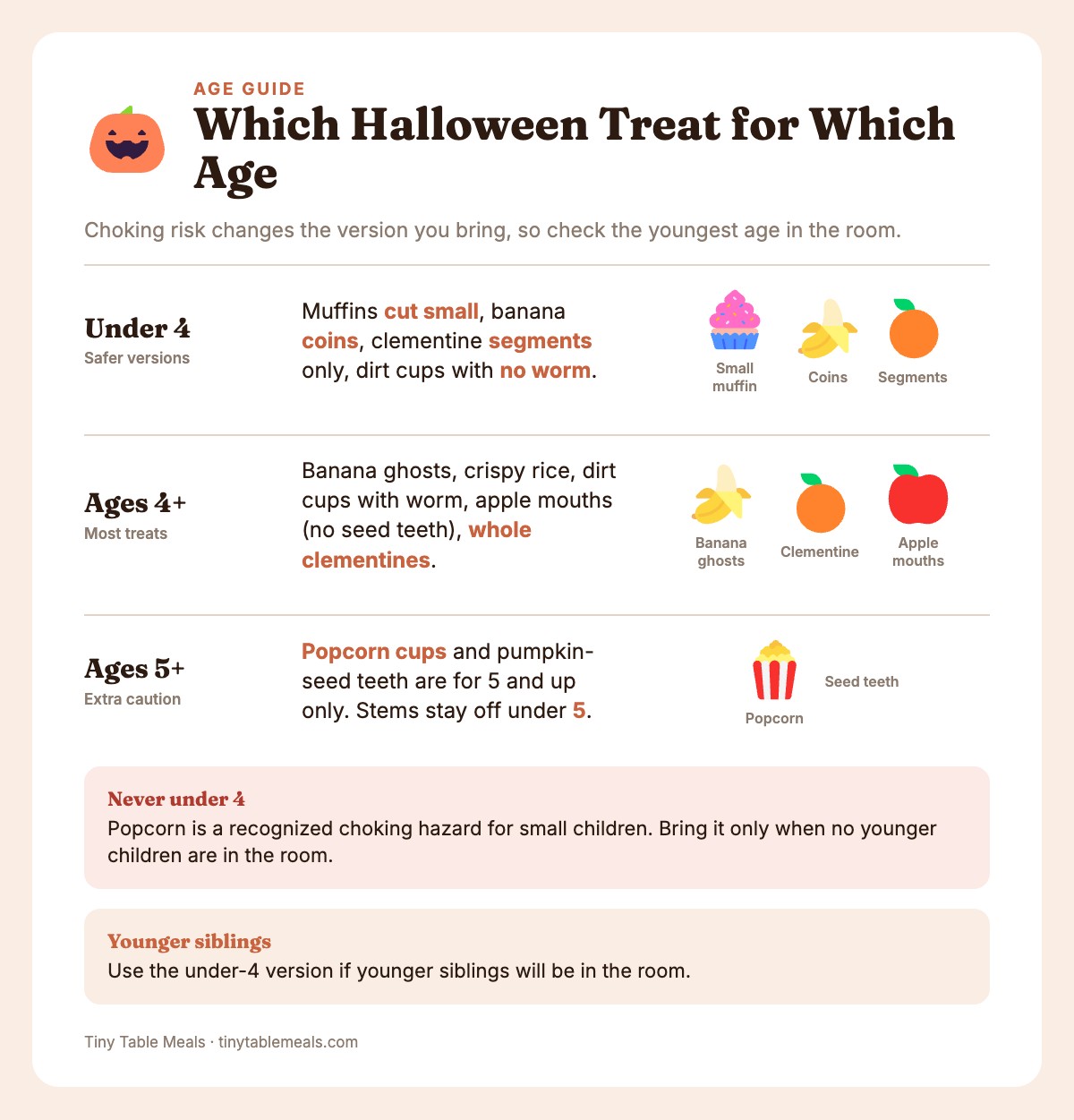
All seven are homemade. In a store-bought-only room, skip to the non-food treats and sealed, labeled snacks.
Safety firstKeep perishable treats cold until the party. That means dirt cups, banana ghosts, apple wedges, and peeled or segmented clementines. If the room has no fridge, pack them in an insulated bag with an ice pack. Discard anything left out for more than 2 hours.
| Treat | Top-9 allergens / other notes | Egg-free? | Youngest age | Time |
|---|---|---|---|---|
| Clementine pumpkins | None of the top 9. The stem is celery. | Yes. | 4+ whole. Under 5, an adult removes the stem. Under 4, segments only. | 10 min for 24. |
| Banana ghosts | None of the top 9 only if chips are dairy- and soy-free (check the label). Raisins have none. | Yes. | 5+ with chip or raisin eyes. Under 5, plain halves. Under 4, coins. | 5 min. |
| Pumpkin muffins | Wheat. | Yes. | All ages, cut small under 4. | About 15 min, plus 18-20 min baking. |
| Crispy rice treats | None of the top 9 with coconut oil or a soy-free stick. Has barley malt gluten unless the cereal is labeled gluten-free. | Yes with most marshmallows. Check the bag for egg and “may contain” lines. | 4+. | About 10 min, plus 30 min cooling. |
| Dirt cups | Wheat and soy, from the cookies. | Yes. Check the cookie label. | 4+ with the gummy worm. Leave it off under 4. | About 20 min, plus 2 hrs chilling. |
| Popcorn cups | None of the top 9. | Yes. | Only if every child in the room is 5+. Never under 4. | About 10 min for 12 cups. |
| Apple monster mouths | None of the top 9. Has sunflower seed butter, plus pumpkin seeds if used. | Yes. | 4+ (seed teeth 5+). | About 15 min. |
1. Clementine Pumpkins (no cooking, none of the top 9)
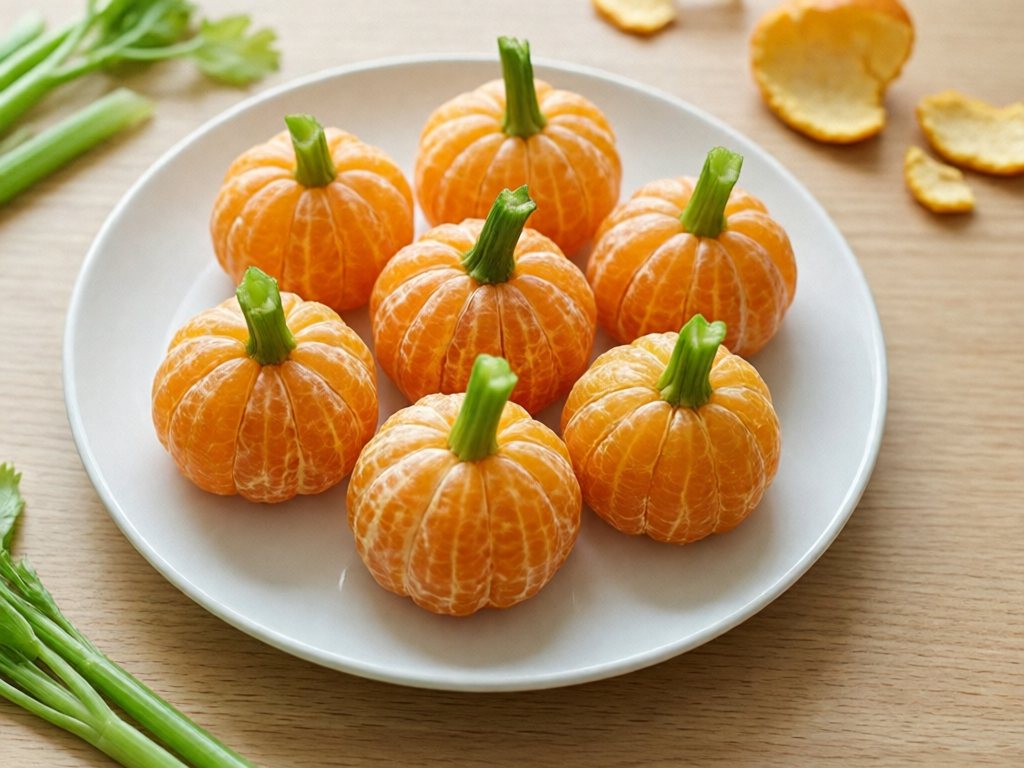
The easiest crowd-pleaser. Peel a clementine, then have an adult press a small piece of celery into the top to look like a pumpkin stalk. Whole clementines are for ages 4 and up.
The celery stem is decoration, not a snack, and it’s optional. An adult removes it before serving any child under 5. For children under 4, also separate the clementine into segments.
If you can’t be sure an adult will pull the stems at serving time, leave them off the whole batch. The label wording further down carries the same under-5 rule.
Good to knowCelery isn’t one of the US top 9 allergens, but some children are allergic to it. Name it on the label, and skip the stem if celery is on your class list.
- Makes: as many as you have clementines.
- Prep: 10 minutes for a class of 24.
- Ages: 4 and up whole. Under 5, an adult removes the stem. Under 4, segments only.
- Allergens: none of the top 9 as ingredients.
- Tip: Pack them in a lidded container and add the stems the morning of so they stay crisp.
2. Banana Ghosts
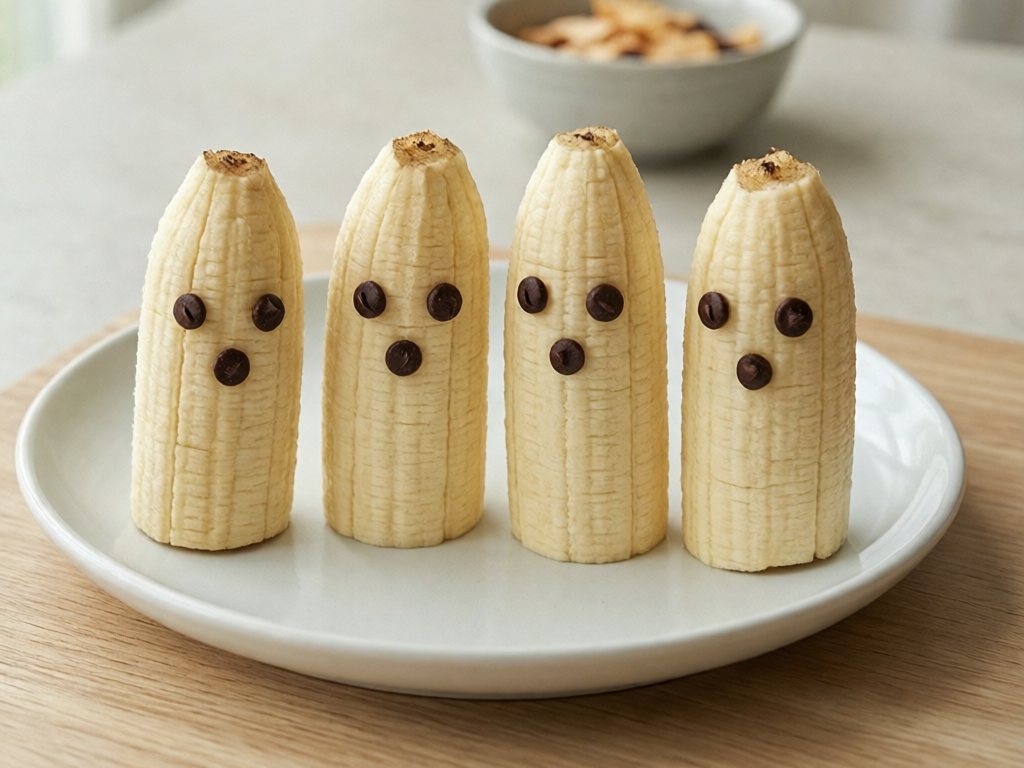
Cut a peeled banana in half crosswise and stand each half upright. An adult presses two mini chocolate chips (or raisins) in firmly for eyes and one for a mouth. Use chips labeled dairy- and soy-free, because standard chocolate chips often contain milk or soy.
The chip or raisin eyes are for ages 5 and up, since both are choking risks for younger kids. For kids under 5, skip the eyes and serve plain banana halves. For kids under 4, slice the banana into coins.
- Makes: 2 ghosts per banana.
- Prep: 5 minutes.
- Ages: 5 and up with eyes. Under 5, plain halves. Under 4, coins.
- Allergens: none of the top 9 only if your chips are labeled dairy- and soy-free. Raisins have none, but check both labels for “may contain” lines.
- Tip: Brush with a little lemon juice to slow browning, and assemble them as close to party time as you can.
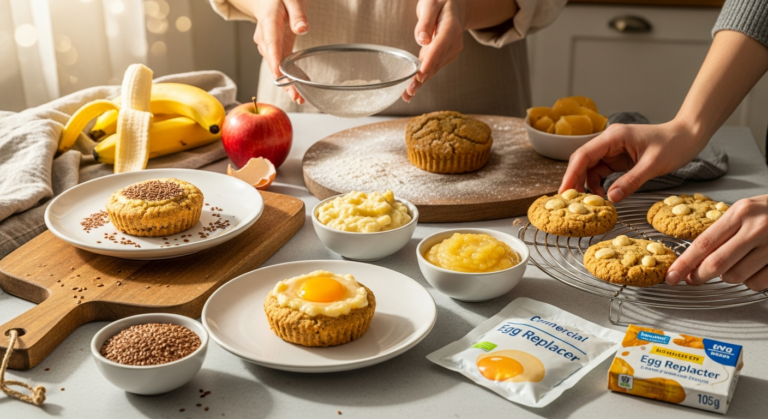
3. Egg-Free, Dairy-Free Pumpkin Muffins
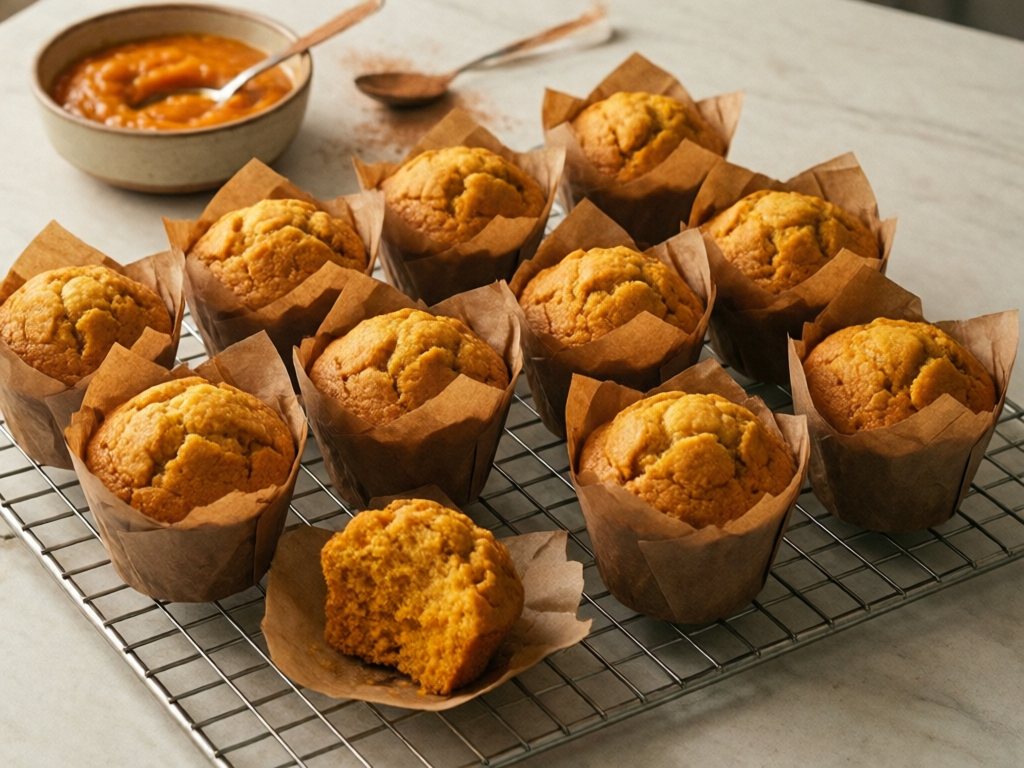
These bake up soft and not-too-sweet, which is exactly what you want when the rest of the party table is sugar.
Ingredients (makes 12):
- 1¾ cups all-purpose flour
- 1 teaspoon baking powder
- ¾ teaspoon baking soda
- 1½ teaspoons cinnamon
- ½ teaspoon salt
- 1 cup canned pumpkin puree (not pie filling)
- ½ cup brown sugar
- ⅓ cup neutral oil (sunflower or canola)
- ⅓ cup oat milk or water
- 2 tablespoons maple syrup
- 1 teaspoon vanilla extract
- 1 tablespoon apple cider vinegar
Directions:
- Heat the oven to 350°F and line a muffin tin with paper liners.
- Whisk the flour, baking powder, baking soda, cinnamon, and salt in a large bowl.
- In a second bowl, stir the pumpkin, brown sugar, oil, oat milk, maple syrup, and vanilla until smooth. Stir in the vinegar last. It reacts with the baking soda and gives the muffins lift in place of eggs.
- Fold the wet ingredients into the dry until just combined. Over-mixing makes tough muffins.
- Divide the batter among the 12 cups and bake 18 to 20 minutes, until a toothpick comes out clean.
- Cool completely before bagging.
Allergens: free of milk, egg, peanut, tree nut, and sesame as written. Contains wheat. Check the vanilla, oil, and oat milk labels for “may contain” lines.
Curious why the vinegar-and-baking-soda trick works, and when it doesn’t? The egg-free baking substitutes guide breaks down each swap by recipe type.
4. Crispy Rice “Spider Web” Treats
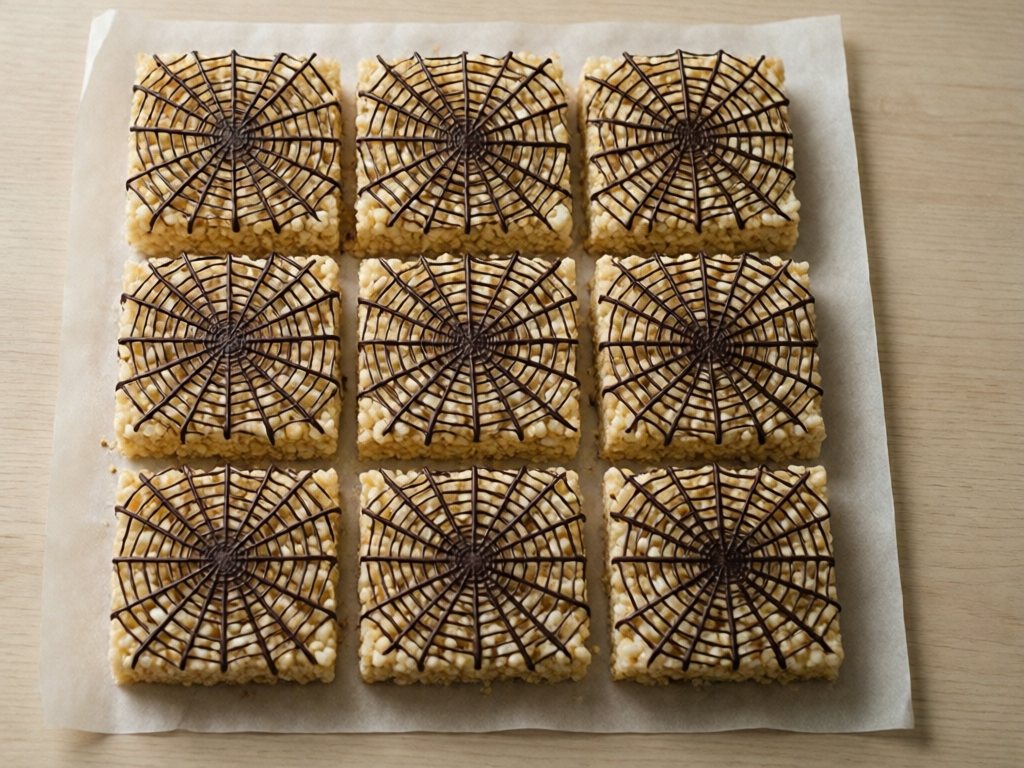
A classic that’s easy to make allergy-friendly, as long as you’re careful with the cereal and marshmallows.
Ingredients (makes about 16 squares):
- 6 cups crispy rice cereal (check “may contain” lines)
- 10 ounces marshmallows
- 3 tablespoons dairy-free baking stick or refined coconut oil
- Pinch of salt
Directions:
- An adult does the stove steps. Melt the dairy-free butter in a large pot over low heat.
- Add the marshmallows and stir until smooth, about 3 minutes.
- Remove from the heat, stir in the salt and cereal, and mix until coated.
- Let the mixture cool a minute or two, then press into a lined 9×9 pan with damp hands or a sheet of parchment.
- Cool 30 minutes, then cut into squares. Press a thin line of allergy-friendly frosting or melted allergy-friendly chocolate into a web pattern on top if you like.
Allergens: none of the top 9 as ingredients when you use coconut oil or a soy-free, dairy-free stick. Most bagged marshmallows have no egg. A few brands use egg white, so check the bag.
Most crispy rice cereal is made with barley malt. Barley isn’t wheat, but it does contain gluten. Use a cereal labeled gluten-free if a child in the class has celiac disease.
Heads up: not all marshmallows are made on nut-free lines. Most also contain gelatin, which may not suit vegetarian, halal, or kosher families.
5. Dirt Cups (Dairy-Free, Egg-Free)
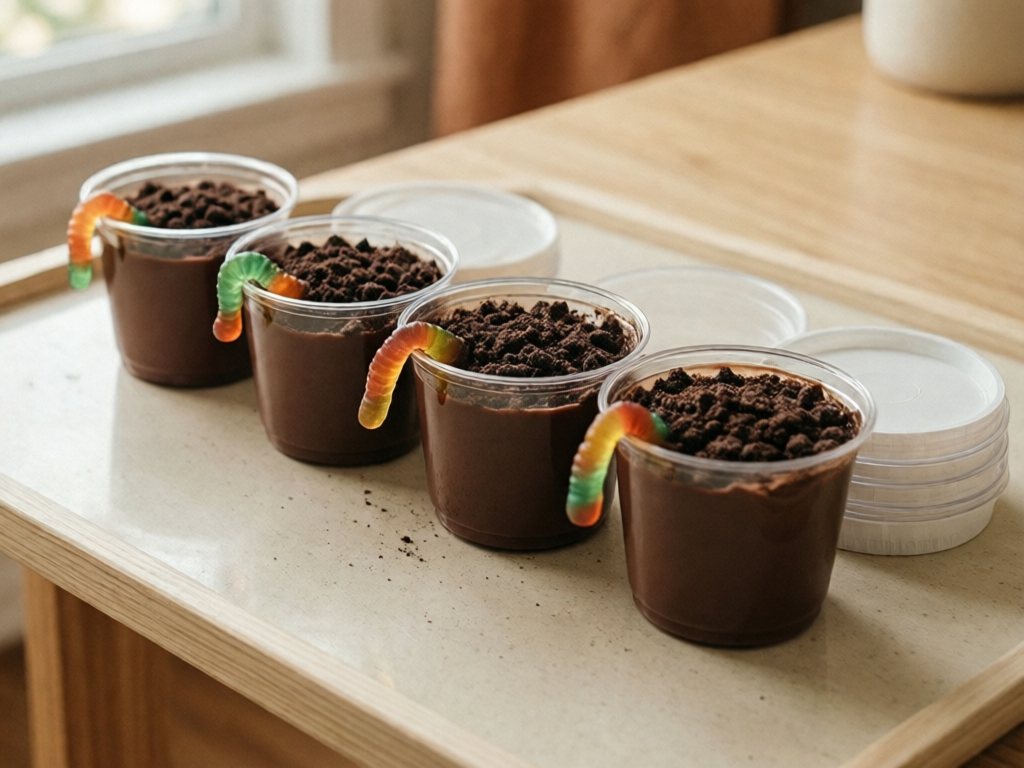
Kids go wild for these. They portion neatly into individual lidded cups, which suits a “no sharing” rule.
Ingredients (makes 12 small cups):
- ½ cup granulated sugar
- ¼ cup cornstarch
- ¼ cup unsweetened cocoa powder
- ¼ teaspoon salt
- 3 cups oat milk
- 1 teaspoon vanilla extract
- 12 allergen-friendly chocolate sandwich cookies, crushed
- Gummy worms labeled free from the allergens in your class (ages 4 and up only; most contain gelatin)
Directions:
- Whisk the sugar, cornstarch, cocoa, and salt in a saucepan. Slowly whisk in the oat milk until smooth.
- Cook over medium heat, whisking constantly, until it thickens and bubbles, about 6 to 8 minutes.
- Stir in the vanilla and cool 10 minutes.
- Spoon into 12 small cups and chill at least 2 hours.
- Top with crushed cookie “dirt” and tuck a gummy worm in right before the party. Leave the worm off for kids under 4, since sticky gummies are a choking risk.
Allergens: no milk, egg, peanut, or tree nut ingredients as written. These are not soy-free, because chocolate sandwich cookies usually contain soy. Contains wheat (from the cookies). Check the cookie, cocoa, oat milk, and gummy worm labels for milk, soy, and nut warnings.
Storage: the keep-cold rule above matters most for these. Ask the teacher ahead of time if there’s fridge space. If there isn’t, drop them off right before the party.
6. Spiced “Ghost Corn” Popcorn Cups (ages 5 and up)
Air-popped popcorn tossed with a little oil, cinnamon, and sugar. Double the recipe for a class of 24.
Ingredients (makes 12 small cups):
- 8 cups plain air-popped popcorn (from about ¼ cup kernels)
- 1 tablespoon neutral oil (sunflower or canola)
- 1 tablespoon granulated sugar
- 1 teaspoon cinnamon
- Pinch of salt
Directions:
- Air-pop the kernels into a large bowl. Pick out any unpopped kernels.
- Drizzle the oil over the warm popcorn and toss to coat.
- Stir the sugar, cinnamon, and salt together. Sprinkle over the popcorn and toss again.
- Cool completely, then portion about ⅔ cup into each of 12 small paper cups.
Safety firstBring these only if every child in the room is 5 or older. If the class has mixed ages, or younger siblings may come to the party, choose a different treat.
Start from plain kernels, because flavored popcorn and seasoning blends can contain milk.
- Allergens: none of the top 9 when made with plain kernels and neutral oil.
- Not for: kids under four. Popcorn is a recognized choking hazard for small children. Hulls can also bother kids with braces or loose teeth, so pack a fruit option for them.
7. Apple “Monster Mouths”
Ages 4 and up, and only for rooms that allow seeds. Slice an apple into thin wedges, spread a thin layer of sunflower seed butter on one, and press a second wedge on top.
Pumpkin-seed “teeth” are for kids 5 and up only. Whole seeds are a choking risk for younger children, so leave them off if you aren’t sure of every child’s age.
For kids under 4, leave off the seeds and grate or cook the apple instead of serving raw wedges.
- Allergens: none of the top 9, but it has sunflower seed butter. Some nut-free rooms restrict all seed butters, so skip this recipe if yours does.
- Tip: Toss the apple slices in lemon water to keep them bright, and pat them dry before assembling so the seed butter sticks.
Non-Food Treats Teachers Love
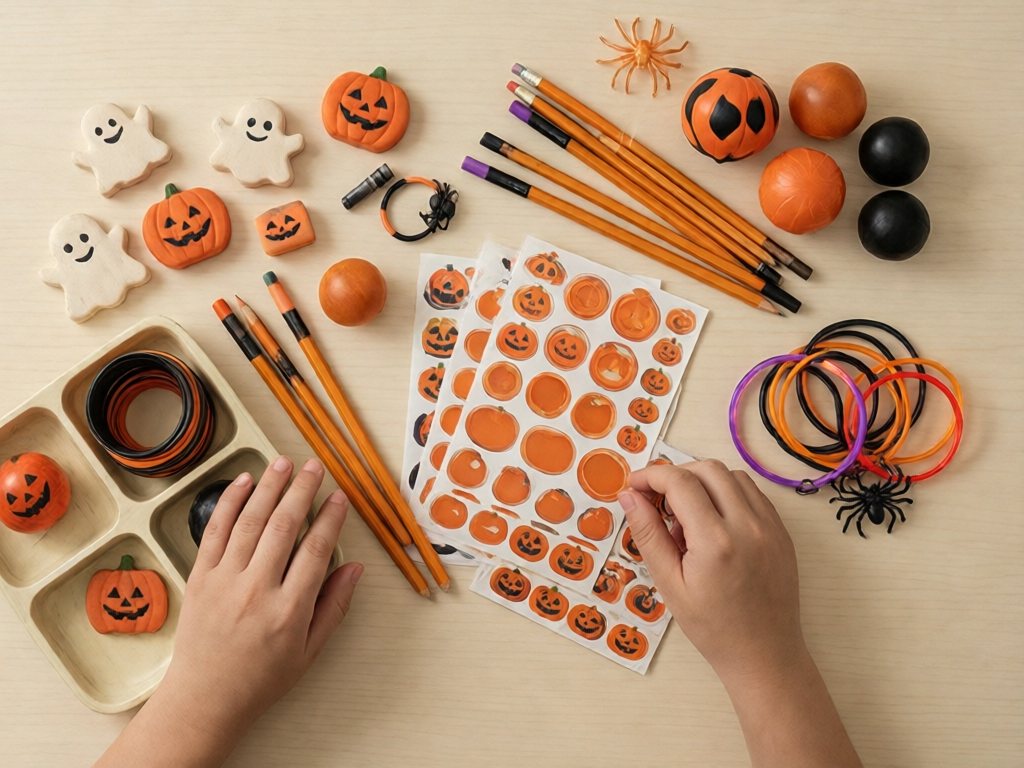
If your room is strict, or you want a zero-risk option, non-food treats are the answer. They also happen to be the ones kids remember, because a glow stick outlasts any cupcake.
- Halloween stickers and temporary tattoos
- Pencils with pumpkin or bat toppers
- Mini notepads
- Glow sticks and glow bracelets
- Bouncy balls
- Small erasers shaped like ghosts or pumpkins
- Spider rings
- Bookmarks
Safety firstSmall parts alert. Bouncy balls, spider rings, and erasers are not for children under 4, and younger siblings may be in the room. Never let kids chew glow sticks or bracelets. Check age labels and ingredients: some bouncy balls contain latex, and play dough usually contains wheat. I skip slime for young kids.
The Teal Pumpkin Project uses a teal pumpkin to signal that non-food treats are available. A small stash of these in your Halloween bowl does double duty for trick-or-treaters and classroom parties.
A mixed bag, with one fruit treat and one non-food item, tends to work best. Kids get something to eat, and the child who can’t have most treats gets the same sparkly extras as everyone else.
Classroom-Safe Labeling You Can Copy Onto Treat Bags
This is the part that saves you from a night-before scramble. A good label does three jobs. It tells the teacher what’s in the bag. It tells an allergic child’s family what to check. And it keeps you honest about your kitchen.
A few principles first.
- Be factual, not reassuring. “Made without peanuts or tree nuts” is a statement of fact. “Totally safe for allergies!” is a promise you can’t keep.
- Be honest about your kitchen. A home kitchen is almost never allergen-free, and cross-contact is possible. Saying so is what makes the label trustworthy.
- List the ingredients. Teachers and parents can double-check a list. They can’t double-check a slogan.
- Keep it readable. Aim for large, clear type on a plain sticker or cardstock tag.
Copy-and-paste label wording
Pick the one that matches your treat, fill in the blanks, and print.
Homemade, free of the main class allergens:
Make this label match what you actually used. Circle the oil and the liquid you baked with. If a child in the class has an oat allergy, bake the batch with water and cross out the oat milk.
Keep the “Made without” line only after you’ve checked every ingredient label, including the oat milk.
Label: Pumpkin MuffinMade without peanuts, tree nuts, milk, or egg as ingredients.
Contains: wheat.
Ingredients: flour, pumpkin, brown sugar, sunflower or canola oil (circle one), oat milk or water (circle one), maple syrup, baking powder, baking soda, cinnamon, vanilla, apple cider vinegar, salt.
Made in a home kitchen that is not allergen-free, so cross-contact is possible. Prepared [date] by [parent name], [child’s name]’s family.
Homemade, with a note on your kitchen:
Label: kitchen noteMade without peanuts, tree nuts, milk, or egg as ingredients. Add this next sentence only if it is true: prepared in a home kitchen where these foods are not used. Ingredient list attached.
Store-bought and sealed:
Label: sealedOriginal packaging with ingredient label. Not opened. Sent by [parent name] for [child’s name]’s class.
Fruit-only treat:
Label: fruitFresh fruit only: clementine with a celery stem. No other ingredients.
The celery stem is decoration. Please remove it before eating. Adults remove the celery stem before serving children under 5. Children under 4 get segments only.
Made without any of the top 9 allergens as ingredients. Prepared in a home kitchen that is not allergen-free, so cross-contact is possible.
Non-food:
Label: non-foodNon-food treat. Choking hazard: small parts. Not for children under 4.
A “please check” line for sensitive rooms:
Label: please checkPlease check the ingredient list against your classroom’s allergy list before serving. Happy to answer any questions: [phone or email].
Where to put the label
- On every individual bag, not only on the container. Kids will separate them, and a bag without a label is a bag a teacher can’t confidently hand out.
- On the outside, where it can be read without opening the bag.
- A full ingredient card can go in the box or in a sleeve for the teacher.
A few things I never write on a label
- “Allergy-free.” There’s no such thing as a guarantee. Use “made without.”
- “Nut-free” unless you’ve confirmed every ingredient and your kitchen practices. If you can’t verify the facility, say “made without nuts as ingredients.”
- “Safe for all kids.” A label can describe what’s in the food. It can’t promise safety for someone else’s child.
Not sure whether a particular child reacts to trace amounts? Have that conversation with the teacher or the child’s parent directly. A labeled bag is an excellent start. It’s not a substitute for the family’s own judgment.
A Kitchen Plan for Keeping Cross-Contact Low
Even if every ingredient is safe, a shared spatula can undo your work. These are the habits that matter most when you’re baking for a classroom with allergies.
- Clean first. Wash counters, cutting boards, bowls, and utensils with hot soapy water before you start. Wipe down the handles of the fridge and the oven.
- Use fresh ingredients. Open a new bag of flour or a new carton of oil if yours have been near nuts or other allergens. Flour bags get scooped with nut-contaminated measuring cups more often than we like to admit.
- Bake the allergy-friendly batch first. Before anything with nuts, milk, or eggs touches the counter.
- Skip shared pans. A muffin tin that’s baked a pecan loaf can hold traces. Use fresh liners and a clean tin.
- Wash your hands. Especially after eating anything containing allergens, and before you touch the food you’re packing.
- Pack separately. Don’t put your allergy-friendly treats in the same container as other snacks.
- Keep the packaging. Save the labels from the ingredients you used. If a teacher or parent has a question, you can answer in 10 seconds.
Feeding guests with different needs at home? The allergy-friendly party food guide goes deeper on setting up a full table.
Halloween Party Treat Timeline: What to Do Each Week
The best classroom treat is the one that doesn’t cost you your sanity. Here’s how I break it down.
| When | What to do |
|---|---|
| 2 weeks before | Email the teacher with the five questions. Ask for the allergen list and whether homemade is okay. |
| 10 days before | Choose your treat and write your shopping list. Read labels in the store, not at home. |
| 1 week before | Buy non-perishables. Order or print your labels and stickers. |
| 2 days before | Bake muffins or crispy rice treats. Cool completely, bag, and label. |
| Night before | Assemble dirt cups and keep them in the fridge. Pack non-food extras. Check labels one more time. |
| Morning of | Add fresh fruit and last-minute pieces (banana ghosts, clementine stems). Pack a copy of the ingredient list. |
| At drop-off | Hand the teacher the bag and the label. Add a quick “let me know if anything is unclear.” |
On a tight schedule? Our no-bake Halloween treats kids can make themselves get your own kids involved without turning on the oven. For Halloween night itself, our fast Halloween dinners get everyone fed before trick-or-treating.
If You’re the Allergy Parent
Sometimes you aren’t the one bringing treats. You’re the parent of the child with the allergy, and you want the day to go well.
- Send a labeled backup treat. The teacher can keep it in the room, so your child isn’t left out if something unexpected shows up.
- Share the allergen list with the room parent. Keep it short and specific. “No peanuts, tree nuts, or sesame” is easier to follow than a long paragraph.
- Confirm the emergency plan. Make sure the teacher has your child’s written allergy action plan and knows where the epinephrine is kept.
Safety firstKeep your child’s epinephrine auto-injector accessible at school and at parties. At the first signs of anaphylaxis, give epinephrine and call 911, following the child’s action plan.
Shopping List: Muffin + Clementine Plan for 24
This list covers the muffins and the clementine pumpkins for a class of 24. Adding dirt cups or crispy rice treats? Double those recipes and add their ingredients.
Muffins (24, double batch):
- 3½ cups all-purpose flour
- 2 cups canned pumpkin puree
- 1 cup brown sugar
- ⅔ cup sunflower or canola oil
- ⅔ cup oat milk
- ¼ cup maple syrup
- Baking powder, baking soda, cinnamon, salt, vanilla, apple cider vinegar
- 24 paper liners
Fruit pumpkins:
- 24 clementines
- 1 bunch celery
Packaging:
- 24 small treat bags
- 24 labels (see wording above)
- 1 ingredient card for the teacher
Non-food extras:
- 24 stickers or pencils
Time for this plan: about 30 minutes of hands-on work for the double batch of muffins. Baking adds 18 to 20 minutes per tin. Add 10 minutes for the clementines and roughly 20 minutes to bag and label.
That’s about an hour of hands-on time, spread over two days.
Frequently Asked Questions
What are the safest Halloween treats for kids with food allergies?
The safest options have the fewest ingredients. Think fresh fruit, like clementine pumpkins and banana ghosts, or non-food items like stickers, pencils, and glow sticks. For a baked treat, choose a simple recipe made without the allergens your classroom avoids. Read every label and put a full ingredient list on the bag.
Can I write “nut-free” on a homemade treat bag?
Only if you’re confident about every ingredient and your kitchen practices. A safer phrase is “made without peanuts or tree nuts as ingredients.” Pair it with a note that it was prepared in a home kitchen that is not allergen-free. That wording is accurate and lets families decide for themselves.
What can I use instead of eggs and butter in classroom treats?
For egg-free baking, a mix of baking soda and vinegar works well in muffins and cupcakes. Applesauce or ground flax can stand in for eggs in denser recipes. For butter, a neutral oil works in muffins, and a dairy-free baking stick works in crispy rice treats. Check that your substitute is also safe for the class, because many dairy-free sticks contain soy. Our egg-free baking substitutes guide covers which swap fits which recipe.
Is sunflower seed butter okay in a nut-free classroom?
Often, but not always. Sunflower seed butter is a common peanut-butter alternative, and many nut-free rooms allow it. Some schools restrict all seed butters, and some brands are made on shared equipment with nuts. Ask the teacher and read the label before you pack it.
Are store-bought treats safer than homemade for allergy-friendly classrooms?
Not automatically, but they come with a legally required ingredient label, which makes them easier for teachers to verify. If your school requires sealed, store-bought food, follow that rule. If homemade is allowed, a clear label with the ingredient list and a note about your kitchen is a good way to be transparent.
What should I do if I’m not sure about a child’s allergy list?
Ask the teacher or room parent. They can usually share which allergens to avoid without sharing a child’s name. When in doubt, choose fruit-based or non-food treats. They’re the least likely to cause a problem and the easiest to approve.
Are there good Halloween snacks for school parties that work for toddlers and preschoolers?
Yes, but shape and size matter as much as allergens. Avoid whole grapes, popcorn, hard candies, and raw apple chunks for children under four. Soft muffins cut into small pieces, banana coins, and clementine segments are better choices. See our guide to toddler-safe Halloween snacks for age-appropriate shapes.
One Last Thought Before You Bag Up the Treats
The goal on party day isn’t a flawless spread. It’s a classroom where the kid with the allergy reaches for the same bag as everyone else. Nobody has to think about it. A fruit pumpkin, a muffin with a clear label, and a sparkly pencil are plenty.
You don’t need to bake from scratch or master every swap. Ask the teacher what the room needs, read the labels, and write down what’s in the bag.
If you forget something this year, you’ll know what to ask next time.