Meal Prep for New Moms: A Complete Weekly Guide
Learn how to master meal prep for the newborn stage with a realistic weekly plan, 20 one-handed meals, and a freezer stash checklist to ensure you stay nourished with minimal effort.
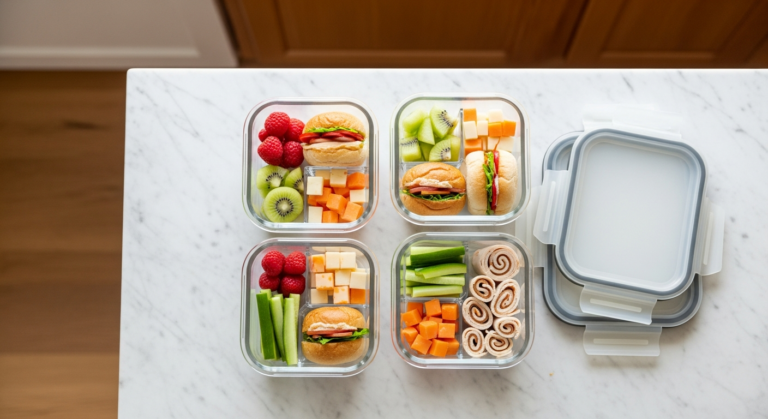
- Make meals one-handed for easy eating while holding or nursing your baby.
- Stock your freezer with 10-15 dinners, breakfasts, and snacks before baby arrives.
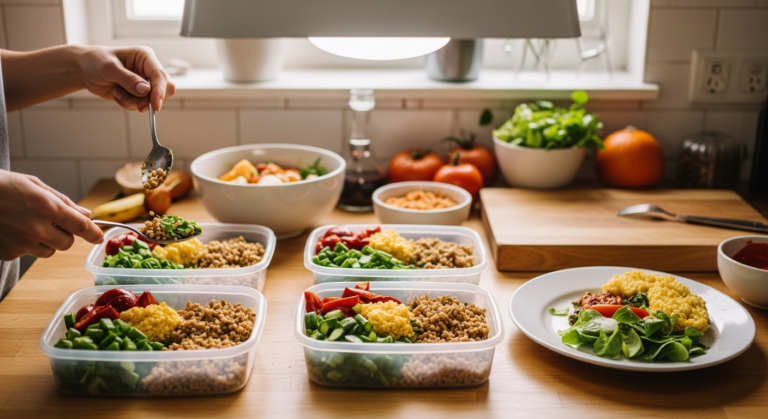
- Set aside 90 minutes to 2 hours weekly for basic prep of proteins, carbs, and produce.
- Lower your expectations; focus on edible and nourishing meals, not gourmet.
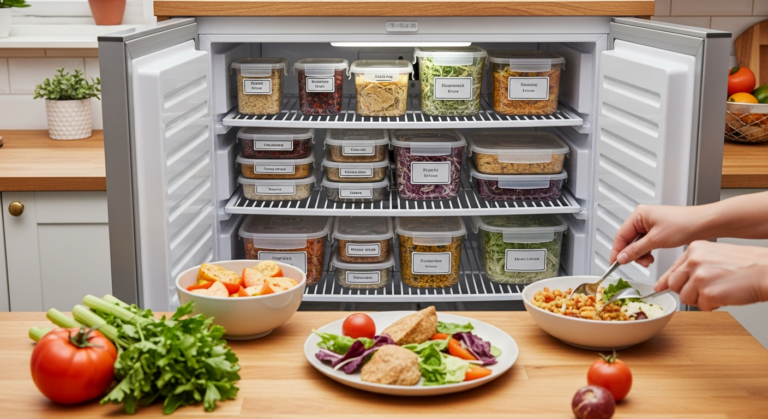
- Always label freezer meals with contents and date; your sleep-deprived brain will thank you.
This post contains affiliate links. As an Amazon Associate I earn from qualifying purchases.
It’s 3 p.m., the baby is finally asleep on your chest, and you realize you’ve had nothing but cold toast and coffee. Feeding yourself is one of the hardest parts of the newborn stage.
With my first baby, I waited until I was hungry to think about food, and we ate a lot of cereal for dinner. With my second, I doubled our dinners in the third trimester and froze the extra half. I wrapped burritos one by one and froze soup in single portions I could drink from a mug. Dinner was already waiting, and that was the whole point.
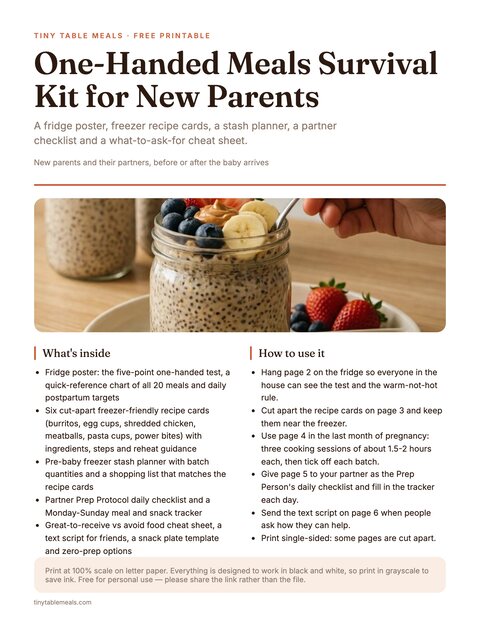
Free printable · 6 pages
One-Handed Meals Survival Kit for New Parents
A fridge poster with the five-point one-handed test, a chart of all 20 meals and daily postpartum targets, plus cut-apart freezer recipe cards, a pre-baby freezer stash planner with shopping list, a Partner Prep checklist with a Monday-Sunday tracker, and a what-to-ask-for-when-people-offer-food cheat sheet with a text script and snack plate template.
Free. Your download link appears right here. You'll also join the Sunday Supper Plan. Unsubscribe anytime. Privacy
This guide gives you a realistic weekly plan, 20 one-handed meals, a freezer stash checklist, and safe storage times for the newborn stage, when time, energy, and free hands are scarce.
In a hurry? Here’s the order. The freezer stash, weekly prep basics, and storage times table come first. The 20 one-handed meals are next. The sample weekly plan, shopping list, and Sunday prep session come after the meals.
In this article (8 sections)
Why Postpartum Meal Prep Matters
On broken sleep, food drops to the bottom of the list. Your body still needs fuel for healing, energy, mood, and milk supply if you’re nursing. Meal prep takes the daily decision out of food, so you actually eat.
Safety firstFood is only part of postpartum recovery. Contact your provider promptly if any of these apply.
- You can’t eat.
- You feel persistently low, anxious, or hopeless.
- You have thoughts of harming yourself or your baby.
In the US, call or text 988. You can also call Postpartum Support International at 1-800-944-4773.
Three Rules for New Mom Meal Prep
You don’t need seventeen matching containers. New mom meal prep is survival-mode nourishment with minimal effort. Three rules carry it.
- Make it one-handed. You’ll often be holding or nursing a baby, so meals need to work with just a fork or your fingers.
- Cook a few big batches. Two or three big-batch foods beat ten separate recipes.
- Lower the bar. Edible and nourishing is the goal. Gourmet can wait.
Building Your New Mom Meal Prep System
Freezer Meals for After Baby (Prep Before the Birth)
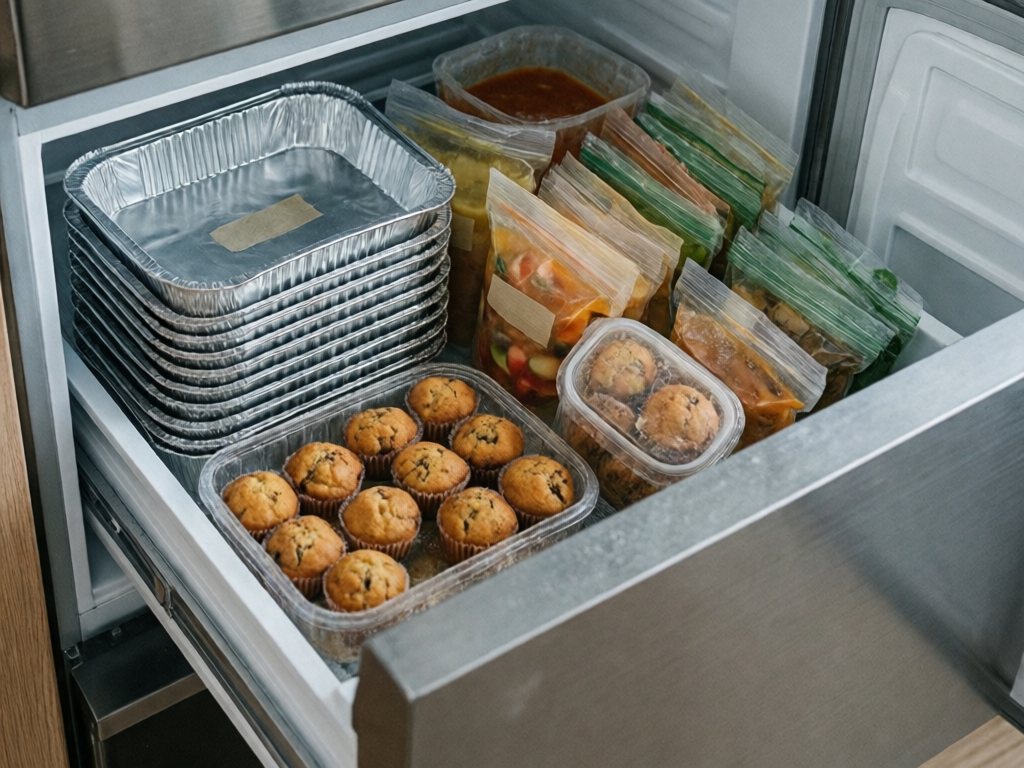
If you’re reading this before baby arrives, you have a head start. The third trimester is a good time to build your freezer stash, and my 30 freezer meals list is a good place to find recipes. For a one-day cooking marathon, see how to stock your freezer in one day. Aim for:
- 10-15 freezer meals (casseroles, soups, stews). That covers roughly one and a half to two weeks of dinners.
- Breakfast items (muffins, burritos, pancakes).
- Snacks (energy balls, lactation cookies).
- Smoothie packs (pre-portioned fruit and veggies in freezer bags).
- Labels with the name and date on every container.
Don’t skip the labels. Your sleep-deprived brain will not remember what’s in that unlabeled foil container.
The Weekly Prep (Ongoing)
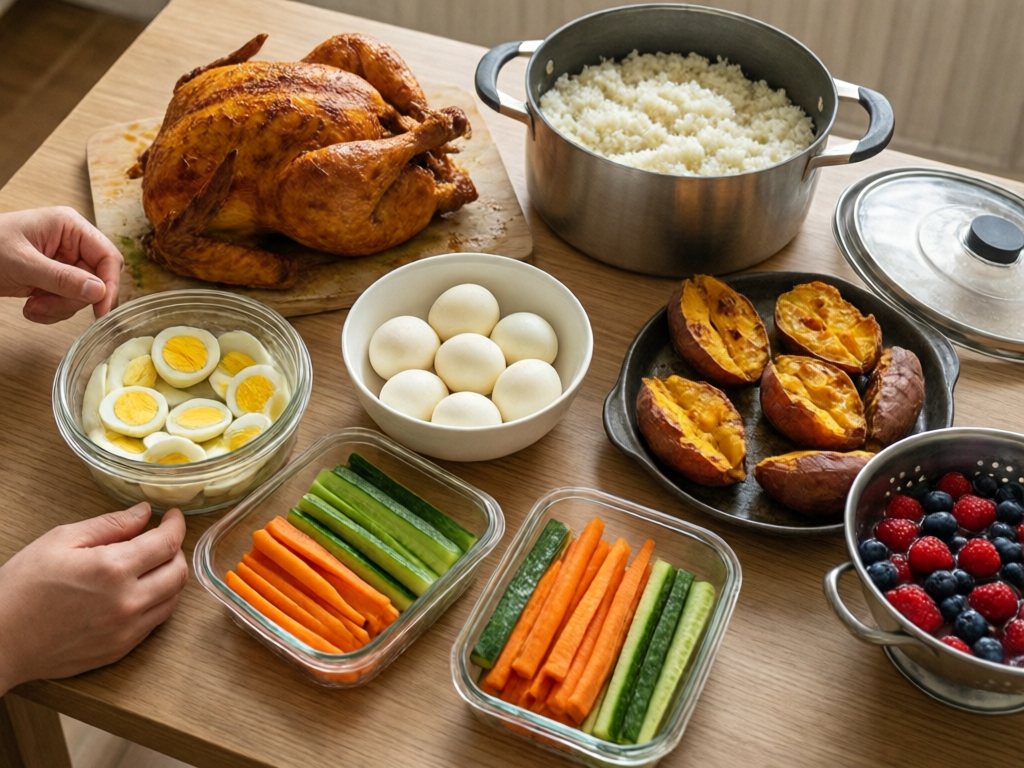
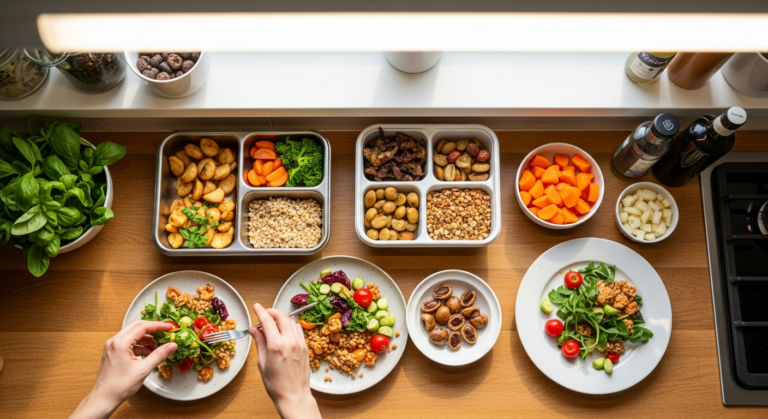
Once baby is here, set aside one chunk of time each week for basic prep. Try it when your partner has the baby or during a longer nap. My second-baby lesson: shredded chicken in the fridge got used at nearly every meal. For more protein ideas, see batch cooking proteins.
Proteins to prep:
- Roast a whole chicken, or buy a rotisserie one.
- Make a batch of hard-boiled eggs.
- Cook a pound of ground beef or turkey with basic seasonings. Use it within 3-4 days or freeze portions.
Carbs to prep:
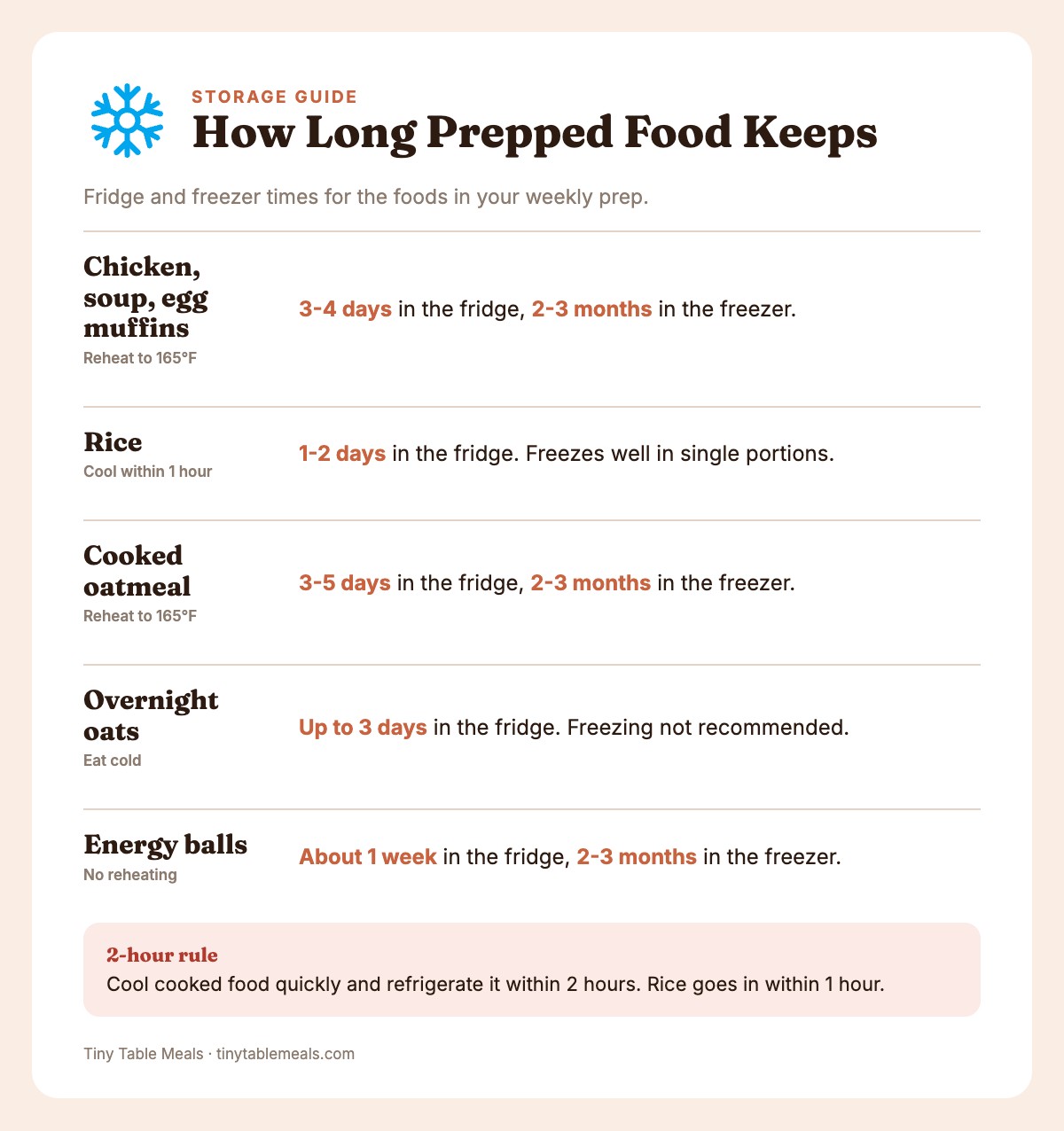
- Cook a pot of rice or quinoa. Cool it within 1 hour and eat it within 1-2 days. Cook a second small pot midweek, or freeze single portions.
- Bake a batch of sweet potatoes.
- Cook plain oatmeal in two small batches (Sunday and Wednesday), or freeze single portions.
Produce to prep:
- Wash and cut vegetables for snacking.
- Wash berries and grapes for yourself. Quarter grapes lengthwise if a toddler will share.
- Prep smoothie bags: 1 cup fruit and a handful of spinach per bag, then freeze.
Good to knowCool cooked food quickly and refrigerate it within 2 hours (rice within 1 hour). That’s why this plan uses a second mini-batch midweek and the freezer.
- Cook chicken and turkey, including ground, to 165°F.
- Cook ground beef, pork, fresh sausage, and egg dishes to 160°F.
- Chicken sausage reaches 165°F. Reheat pre-cooked sausage to 165°F.
- Cook fish to 145°F.
- Reheat leftovers to 165°F, until steaming hot.
| Food | Fridge | Freezer | Reheat |
|---|---|---|---|
| Cooked chicken or ground meat | 3-4 days | 2-3 months | 165°F |
| Rice (cool within 1 hour) | 1-2 days | Freezes well in single portions | Until steaming hot, 165°F |
| Soup | 3-4 days | 2-3 months | 165°F |
| Egg muffins | 3-4 days | 2-3 months | 165°F |
| Oatmeal (cooked) | 3-5 days | 2-3 months | 165°F |
| Overnight oats | Up to 3 days | Not recommended | Eat cold |
| Energy balls | About 1 week | 2-3 months | None |
| Smoothie packs (raw) | Not needed | 2-3 months | None |
| Freezer casseroles | 3-4 days after thawing | 2-3 months | 165°F |
Easy Meals for New Moms: 20 One-Handed Ideas
These meals need minimal prep, can mostly be eaten one-handed, and are actually nourishing. For more ideas, see one-handed meals for new parents and rotisserie chicken meal ideas.
| Meal | Active prep | Make-ahead | Eat with |
|---|---|---|---|
| 1. Overnight oats | 5 min | Fridge 3 days | Spoon |
| 2. Egg muffins | 10 min | Fridge 3-4 days, freezer | Hand |
| 3. Smoothie packs | 5 min | Freezer | Straw |
| 4. Peanut butter banana toast | 2 min | None | Hand |
| 5. Yogurt parfait jars | 5 min | Fridge 3 days | Spoon |
| 6. Mason jar salads | 10 min | Fridge 3 days | Fork |
| 7. Grain bowls | 5 min | Uses prepped rice and chicken | Fork |
| 8. Quesadillas | 5 min | None | Hand |
| 9. Soup in a mug | 2 min to reheat | Fridge 3-4 days, freezer | Mug |
| 10. Hummus plate | 5 min | None | Hand |
| 11. Sheet pan everything | 10 min | Leftovers 3-4 days | Fork |
| 12. Slow cooker pulled chicken | 5 min | Fridge 3-4 days, freezer | Hand or fork |
| 13. Pasta with sauce and chicken | 15 min | Leftovers 3-4 days | Fork |
| 14. Stir-fry vegetables with rice | 10 min | Uses prepped rice | Fork |
| 15. Build-your-own burritos | 10 min | Freezer | Hand |
| 16. Trail mix | 5 min | Pantry | Hand |
| 17. Energy balls | 10 min plus chilling | Fridge 1 week, freezer | Hand |
| 18. Cheese and apple slices | 2 min | None | Hand |
| 19. Greek yogurt with honey | 1 min | None | Spoon |
| 20. Nut butter on apple or crackers | 2 min | None | Hand |
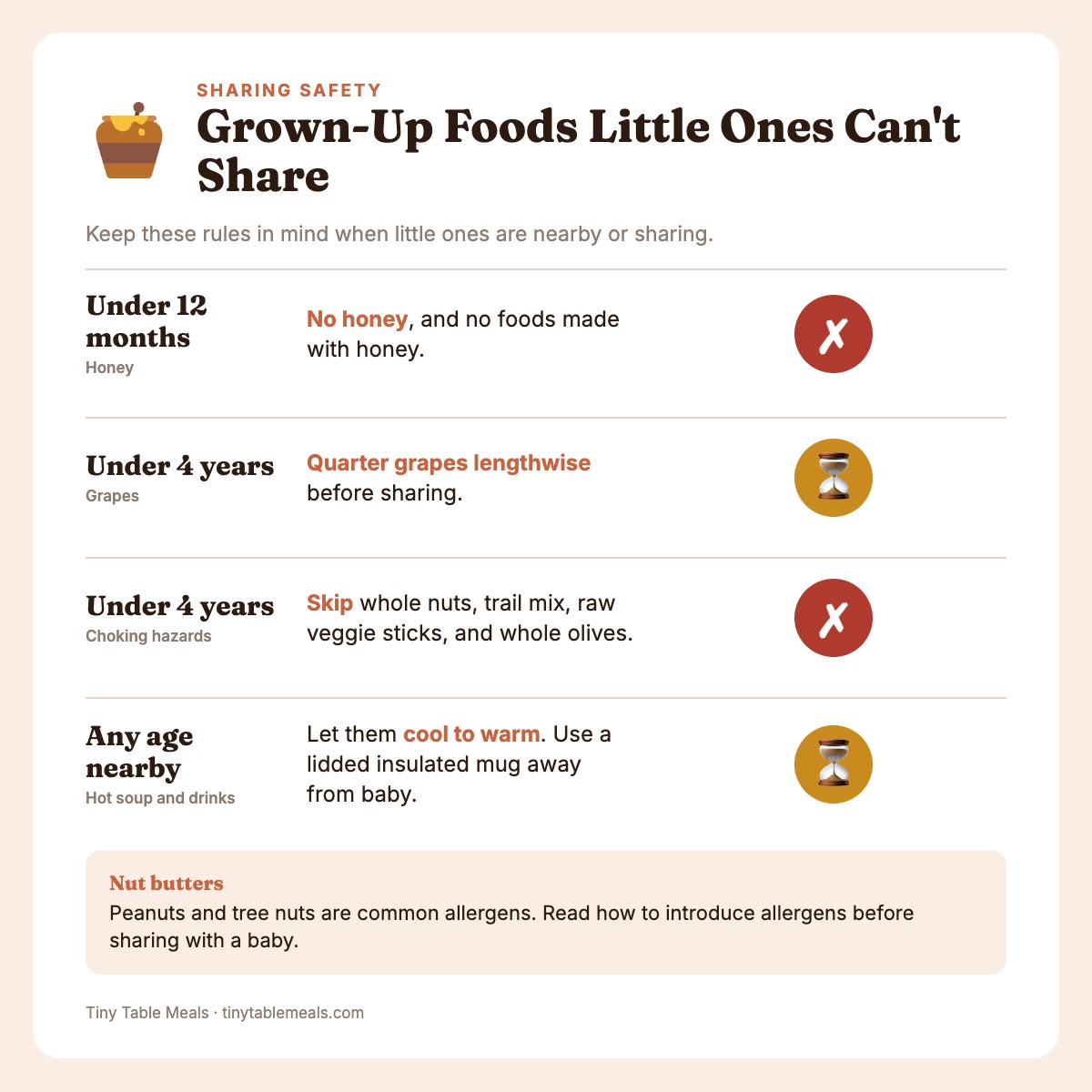
Safety firstSome of these are grown-up foods. Keep these rules in mind when little ones are nearby or sharing.
- Under 12 months: no honey, and no foods made with honey.
- Under 4 years: quarter grapes lengthwise. Skip whole nuts, trail mix, raw veggie sticks, and whole olives. They are choking hazards.
- Nut butters: peanuts and tree nuts are common allergens. Before sharing with a baby, read how to introduce allergens.
- Hot liquids: let soup and drinks cool to warm. Use a lidded insulated mug and keep it away from the baby while you hold or nurse.
Breakfast Ideas
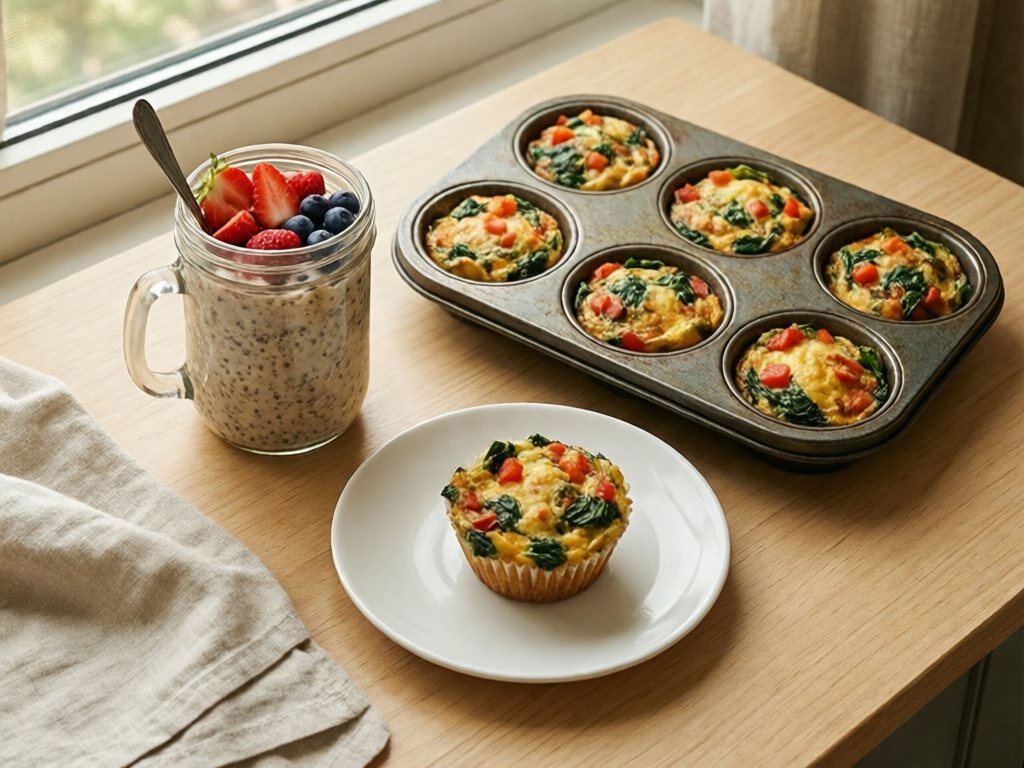
1. Overnight Oats
Before bed, stir together 1/2 cup oats, 1/2 cup milk, 1/4 cup yogurt, and 1 tablespoon chia seeds. Add washed fruit in the morning and eat straight from the jar with one hand.
Don’t eat dry chia seeds by the spoonful. They swell and can cause choking. Soaking in liquid for 15-20 minutes avoids that, and overnight is easy.
Jars keep up to 3 days in the fridge, so make 2-3 at a time.
2. Egg Muffins
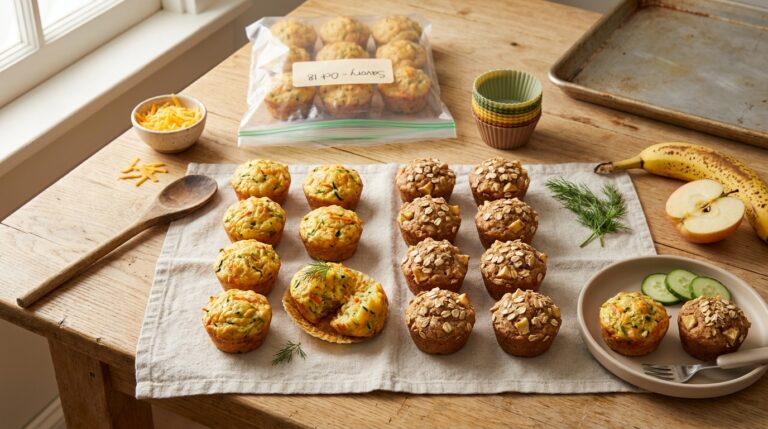
Whisk 12 eggs with 1 cup chopped veggies and a handful of cheese. Pour into a greased muffin tin and bake at 350°F for about 20 minutes. They are done when the centers are set, about 160°F. Eat cold or microwave until hot. See the storage table for keeping times.
3. Smoothie Packs
Bag 1 cup of fruit, a handful of spinach, and a scoop of protein powder per pack. Add liquid and blend. Drink with a straw while nursing.
4. Peanut Butter Banana Toast
Spread 1-2 tablespoons of peanut butter on toast and top with half a sliced banana. It takes two minutes and one hand. Add a spoonful of hemp seeds if you have them.
5. Yogurt Parfait Jars
Layer about 3/4 cup yogurt and a handful of fruit in each jar. Make 2-3 jars and eat them within 3 days. Keep the granola in a separate bag and add it as you eat, so it stays crunchy.
Lunch Ideas
6. Mason Jar Salads
Put 2 tablespoons of dressing in the bottom of the jar. Add hearty ingredients next, like chickpeas, cucumber, and shredded chicken, then greens on top. Shake and eat with a fork. Make 2-3 jars and eat them within 3 days.
7. Grain Bowls
Scoop about 1 cup of prepped rice or quinoa into a bowl. Add a palm-sized portion of shredded chicken or ground meat, any vegetables, and a spoonful of sauce. Reheat until steaming hot and eat with a fork.
8. Quesadillas
Fill a tortilla with a handful of cheese and whatever protein you have. Heat it in a dry pan for 2-3 minutes per side, until the cheese melts. Cut it into triangles and eat with one hand.
9. Soup (in a mug)
Make a big batch, heat a portion, and drink it from a mug. Let it cool to warm first, and use a lidded insulated mug if the baby is in your arms.
10. Hummus Plate
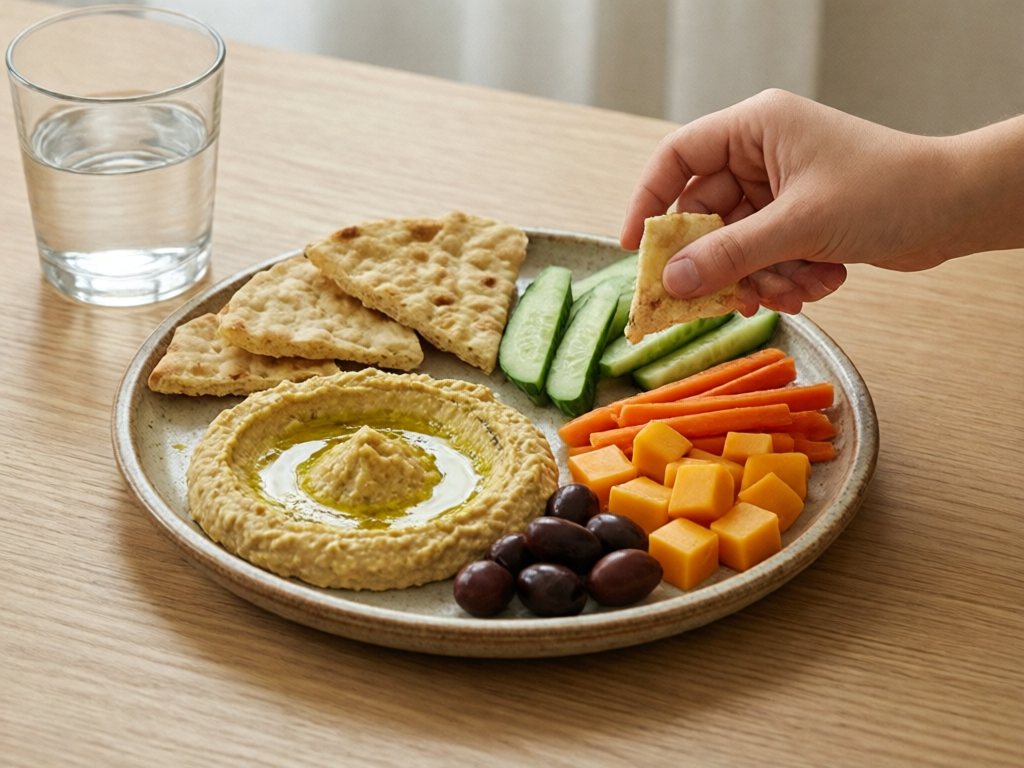
Put a few spoonfuls of hummus on a plate with pita, cut vegetables, cheese cubes, and olives. It’s all finger food and takes five minutes with no cooking. If toddlers share your plate, cook veggies until soft or cut them small. Pit and quarter the olives. Cut cheese into thin strips or small pieces rather than cubes.
Dinner Ideas
11. Sheet Pan Everything
Spread protein and chopped vegetables on one pan. Toss with oil and seasoning, then roast at 400°F for 20-30 minutes. It works with chicken, salmon, or sausage. Cook to the temperatures in the note above the storage table. For more combinations, see sheet pan dinners for busy weeknights.
12. Slow Cooker Pulled Chicken
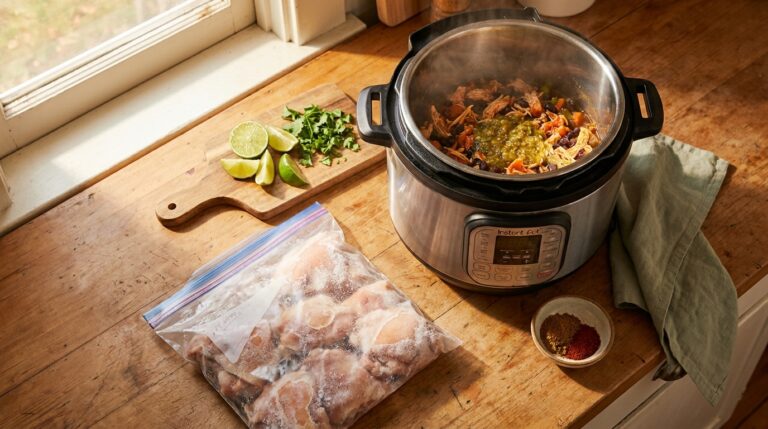
Put 2 lb chicken breasts and 1 cup salsa or broth in the slow cooker. Cook 6-8 hours on low, until the chicken reaches 165°F, then shred. Use it in tacos, bowls, and sandwiches.
Take the chicken out of the cooker when it’s done. Freeze half in portions and refrigerate the rest within 2 hours. Don’t leave it on warm overnight.
13. Pasta with Jarred Sauce and Rotisserie Chicken
Boil pasta, then stir in a jar of sauce and 1-2 cups of shredded chicken until hot. It counts as cooking. Add a handful of frozen spinach if you’re feeling ambitious.
14. Frozen Stir-Fry Vegetables with Rice
Scramble 2 eggs in a hot pan and add a bag of frozen stir-fry vegetables. Stir in rice from your latest batch and a splash of soy sauce. Cook until everything is steaming hot. Dinner takes about ten minutes.
15. Build-Your-Own Burritos
Set out warm rice, a can of beans (rinsed and heated), cheese, salsa, and sour cream. Everyone rolls their own. Wrap yours in foil so you can eat it with one hand.
Snacks That Count
16. Trail Mix
Mix equal parts nuts, seeds, dried fruit, and chocolate chips. Portion it into small jars, about 1/4 cup each, and park one by your nursing chair. Keep it for grown-ups when children under 4 are around.
17. Energy Balls
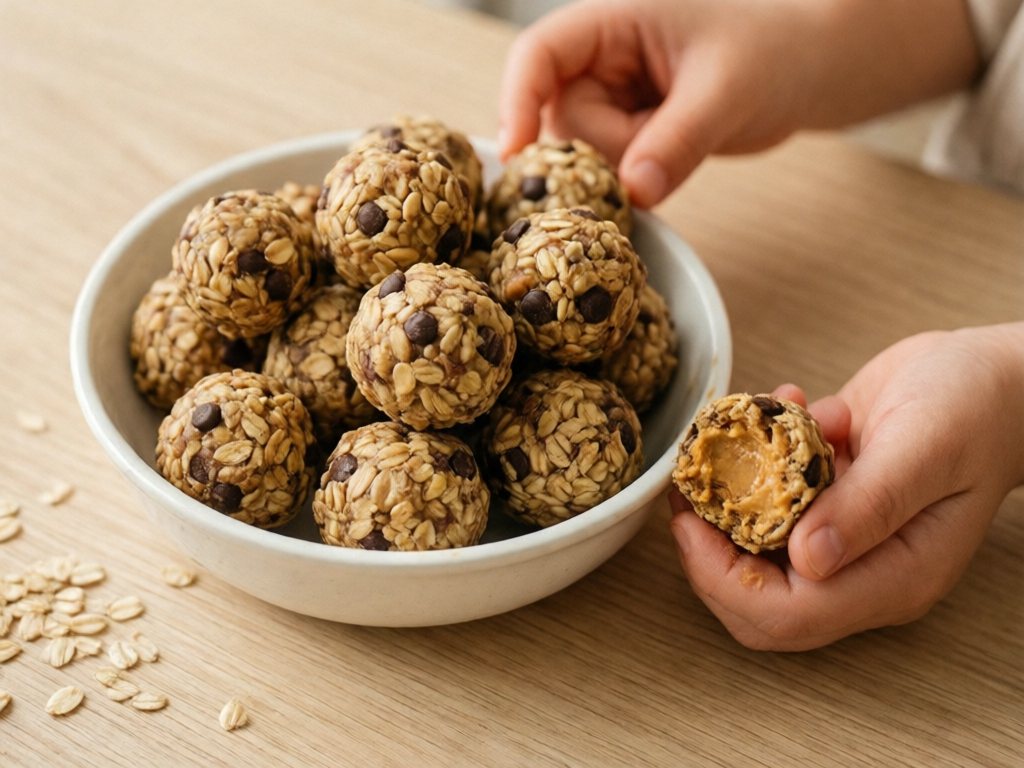
Stir together 1 cup oats, 1/2 cup nut butter, 1/3 cup honey, and 1/4 cup chocolate chips. Chill for 20 minutes, then roll into balls. They keep about a week in the fridge and freeze well.
If little ones will share, swap the honey for mashed dates or maple syrup. Babies under 12 months should never have honey.
18. Cheese and Apple Slices
Slice an apple and pair it with a cheese stick or a few small pieces of cheese. You get protein and fiber, and you can eat it anywhere. For toddlers, slice raw apple paper-thin or cook it soft. See toddler-safe apple recipes.
19. Greek Yogurt with Honey
Stir a teaspoon of honey into about 3/4 cup Greek yogurt. Add granola for crunch. Babies under 12 months should never have honey, so keep this bowl for yourself.
20. Nut Butter on Apple Wedges or Crackers
Spread 1-2 tablespoons of nut butter on apple wedges, a banana, or whole-grain crackers. Keep a jar and a butter knife where you feed the baby. For toddlers, spread it thinly on banana or toast instead of raw apple.
Sample Weekly Meal Plan for the Newborn Stage
Here’s what an easy week might look like, built from the 20 ideas above. Rice never sits more than two days. Sunday’s pot covers Sunday and Monday, and Wednesday’s pot covers Wednesday and Thursday.
| Day | Breakfast | Lunch | Dinner | Snacks |
|---|---|---|---|---|
| Sunday | Peanut butter banana toast | Quesadilla | Sheet pan sausage and veggies | Energy balls, fruit |
| Monday | Egg muffins | Grain bowls (Sunday rice) | Slow cooker chicken tacos (cooked Sunday, chilled, reheated to 165°F) | Cheese and crackers |
| Tuesday | Overnight oats | Hummus plate | Pasta night | Trail mix (adults) |
| Wednesday | Egg muffins (second batch or freezer) | Soup in a mug (freezer stash) | Chicken fried rice (thawed frozen chicken, fresh Wednesday rice) | Yogurt |
| Thursday | Smoothie | Grain bowls (Wednesday rice) | Burritos (Wednesday rice) | Energy balls |
| Friday | Overnight oats (Wednesday jars) | Soup in a mug (freezer stash) | Takeout | Veggies and hummus |
| Saturday | Yogurt parfait | Quesadilla | Freezer meal | Whatever’s left |
One-Trip Shopping List
This covers the week above. Skip anything already in your pantry or freezer.
- 2 lb chicken breasts, plus salsa or broth.
- 2 dozen eggs.
- Rice, oats, and chia seeds.
- Milk, yogurt, and shredded cheese.
- Tortillas and a can of beans.
- Sausage and vegetables for the sheet pan.
- Pasta and a jar of sauce.
- Frozen stir-fry vegetables, frozen spinach, and smoothie fruit.
- Hummus, pita, and snacking vegetables.
- Bananas, apples, bread, and nut butter.
Weekly Prep Session (90 Minutes to 2 Hours)
Start Sunday morning, because the chicken needs 6-8 hours. Work in this order so things cook while you chop. The chicken is for Monday, and Sunday dinner is the sheet pan.
- Start the slow cooker chicken. Set it going first. It cooks for 6-8 hours on low while you do everything else.
- Cook the rice. Spread it out, cool it within 1 hour, then refrigerate and eat it within 1-2 days.
- Bake the egg muffins. They bake while you prep. They are done when the centers are set, about 160°F.
- Assemble the overnight oats jars. Make 2-3 jars; they keep up to 3 days.
- Roll the energy balls. Use dates or maple syrup instead of honey if little ones will share.
- Cut vegetables and wash fruit.
- Cool, label, and store. Get everything except the chicken into the fridge or freezer within 2 hours. Rice goes in within 1 hour.
- Finish the chicken later. When it reaches 165°F, take it out of the cooker and shred it. Portion it and chill it within 2 hours of removing it. Freeze half and refrigerate the rest. Don’t keep it on warm overnight.
On Wednesday, take 20-30 minutes for a mini-batch. Cook a fresh small pot of rice and stir together 2 new jars of overnight oats. Bake a second batch of egg muffins, or pull some from the freezer.
Move a portion of frozen chicken to the fridge on Tuesday night. It will be thawed in time for Wednesday’s fried rice.
Getting Others to Help
This is not the time for independence. Here’s how to actually use the help that’s offered:
Create a meal train: Services like MealTrain.com let people sign up to bring meals on specific days. Be specific about dietary needs and preferences.
Accept freezer meals: When people say “let me know if you need anything,” say “we’d love a freezer-friendly casserole.”
Grocery delivery: Even if you’ve never used it, now is a good time to try. Order the shortcuts: pre-cut vegetables, a rotisserie chicken, microwave rice pouches, and frozen fruit. Some services offer free trials or first-order discounts, so check current terms.
Stock the pantry: Before baby arrives, fill your pantry with non-perishables you can throw together into meals.
TipCopy this text for friends who ask how to help: “We’d love a freezer-friendly casserole, soup in a labeled container, or a grocery drop-off. No need to visit.”
Be specific with partners: “Can you make dinner?” is vague. Try a clear ask instead: “Please heat the lasagna from the freezer and make a salad.”
Mama Munch
Mama Munch is a food-obsessed parent of two who believes every family deserves simple, nutritious meals — even on the busiest weeknights. With a background in nutrition education and years of navigating picky eaters, allergies, and toddler taste buds, she creates practical recipes and meal strategies that actually work for real families.
Frequently Asked Questions
How many freezer meals should I make before baby?
Aim for 10-15 main dishes, plus breakfast items and snacks. That covers roughly one and a half to two weeks of dinners before you need to think about cooking.
What if I don’t have time to meal prep?
Simplify further. Stock up on healthy convenience foods: rotisserie chickens, pre-cut vegetables, frozen meals, canned soups. There’s no shame in easy mode.
I’m breastfeeding. Do I need to eat differently?
Many guidelines suggest about 330-400 extra calories a day while breastfeeding. The right amount varies with your age, activity, and how much you nurse. Your provider or a registered dietitian can give you a number.
Include calcium-rich foods, iron-rich foods, and omega-3s when you can. Choose low-mercury fish such as salmon and sardines.
Many providers say about 200-300 mg of caffeine a day (roughly 2-3 cups of coffee) is fine while nursing. Check with your provider if you’re unsure. Skip crash diets and meal skipping while you recover.
Ask your provider about iron (postpartum anemia), vitamin D, and a postnatal vitamin.
What foods help with milk supply?
There is little good evidence that specific foods boost supply. Drink to thirst, eat enough regularly, and remember that frequent, effective milk removal is what drives supply. Plenty of moms enjoy oats and flaxseed as part of a balanced diet. If you’re worried about your supply or your baby’s weight gain, contact an IBCLC or your pediatrician.
Conclusion
Feeding yourself well as a new mom doesn’t take elaborate plans or hours in the kitchen. A little planning, some batch cooking, and simple food are enough.
This week, pick one step: stock the freezer, cook one batch of chicken and rice, or put better snacks within reach of your nursing chair. Build from there.
Now go eat something.
More reading: Energy Boosting Tips for Exhausted Moms, for ideas on low-energy days.