Fiber-Rich Meals and Snacks Kids Will Actually Eat
Learn your child's daily fiber goals by age and discover fiber-rich meals and snacks they'll actually eat. This guide also includes a two-week ramp-up plan and a free printable kit to help you boost their fiber intake.
- Find daily fiber goals for your child, ranging from 19g (1-3 years) to 38g (teen boys).
- Discover age-appropriate, high-fiber foods and recipes kids will enjoy.
- Use the two-week ramp-up plan to gradually introduce high-fiber foods.
- Download a free 'Fiber Fridge Kit' with goals, swaps, and meal planners.
- Understand why fiber is crucial for your child's digestion and overall health.
This post contains affiliate links. As an Amazon Associate I earn from qualifying purchases.
Most U.S. kids fall short of their fiber goal, according to national survey data cited in the Dietary Guidelines for Americans.
This guide starts with fiber goals and the best foods for each age. Then come breakfasts, lunches, dinners and snacks kids will eat, plus fiber-per-serving tables for building your own meals.
If your child is new to high-fiber foods or prone to constipation, start with the two-week ramp-up and swap cheat sheet near the end.
Safety firstThese recipes are for ages 1 and up, and some foods wait until age 4 or 5. Check “Safe Textures for Fiber Foods by Age” below, and stay with kids while they eat.
Free printable · 6 pages
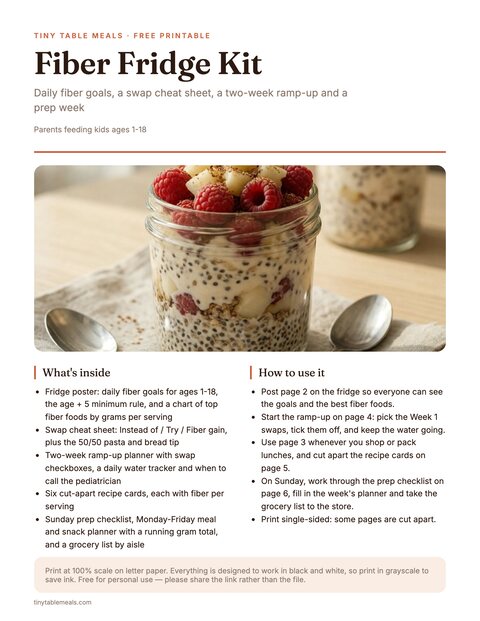
Fiber Fridge Kit: Goals, Swaps & Meal Planner
A fridge poster of daily fiber goals by age and top fiber foods, an Instead of / Try / Fiber gain swap sheet, a two-week ramp-up planner with a water tracker, six cut-apart high-fiber recipe cards, and a Sunday prep checklist with a Monday-Friday planner and an aisle-sorted grocery list.
Free. Your download link appears right here. You'll also join the Sunday Supper Plan. Unsubscribe anytime. Privacy
In this article (13 sections)
- Why Fiber Matters So Much for Growing Kids
- Fiber Needs by Age: Daily Goals for Kids
- Safe Textures for Fiber Foods by Age
- High-Fiber Breakfast Ideas for Kids
- High-Fiber Lunch Ideas for Kids
- High-Fiber Dinner Ideas Kids Will Eat
- High-Fiber Snacks for Kids
- High-Fiber Foods for Kids: Fiber per Serving
- How to Add Fiber Gradually: A Two-Week Ramp-Up
- Meal Planning for a High-Fiber Week
- Common Fiber Mistakes and How to Avoid Them
- Frequently Asked Questions
- The Bottom Line
Why Fiber Matters So Much for Growing Kids
The Dietary Guidelines for Americans list fiber as a nutrient of public health concern. Fiber feeds the gut bacteria that keep digestion running smoothly. It also slows how quickly sugar is absorbed and takes longer to chew and digest, so kids feel full longer.
Constipation is common in kids, and it is often functional, meaning they hold stool in. Low fluid and low fiber can add to it. Adding fiber gradually, along with water, can help some kids. If it keeps happening, talk to your pediatrician.
Most research linking fiber to heart and blood sugar health comes from adults. Still, habits formed in childhood tend to carry forward.
Fiber Needs by Age: Daily Goals for Kids
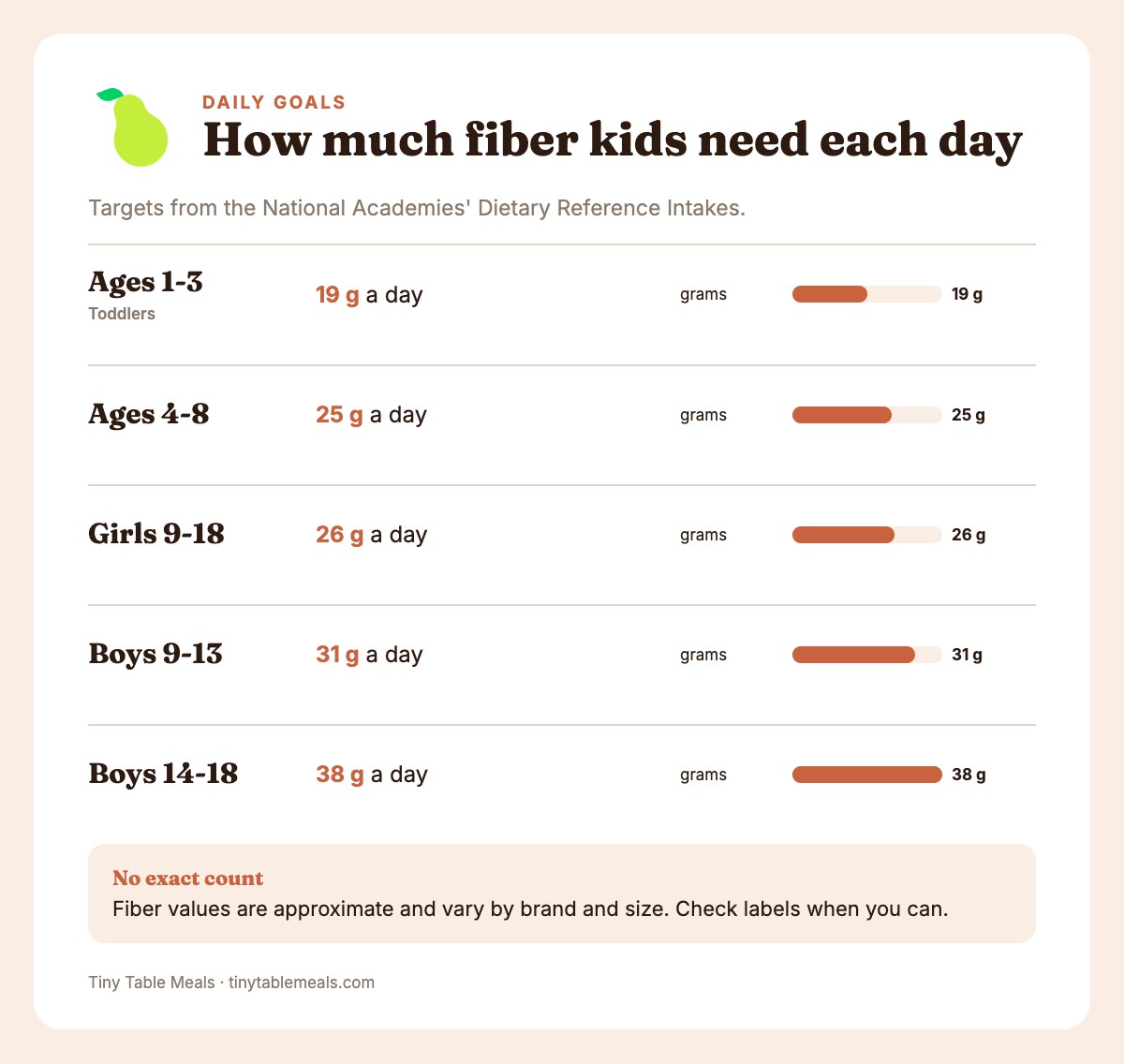
How much fiber does a child need each day? About 19 grams for ages 1-3 and 25 grams for ages 4-8. From age 9, it is 26 grams for girls and 31-38 grams for boys.
These targets come from the National Academies’ Dietary Reference Intakes, as used in the Dietary Guidelines for Americans.
Fiber Recommendations by Age
| Age Group | Daily Fiber Goal | What That Looks Like |
|---|---|---|
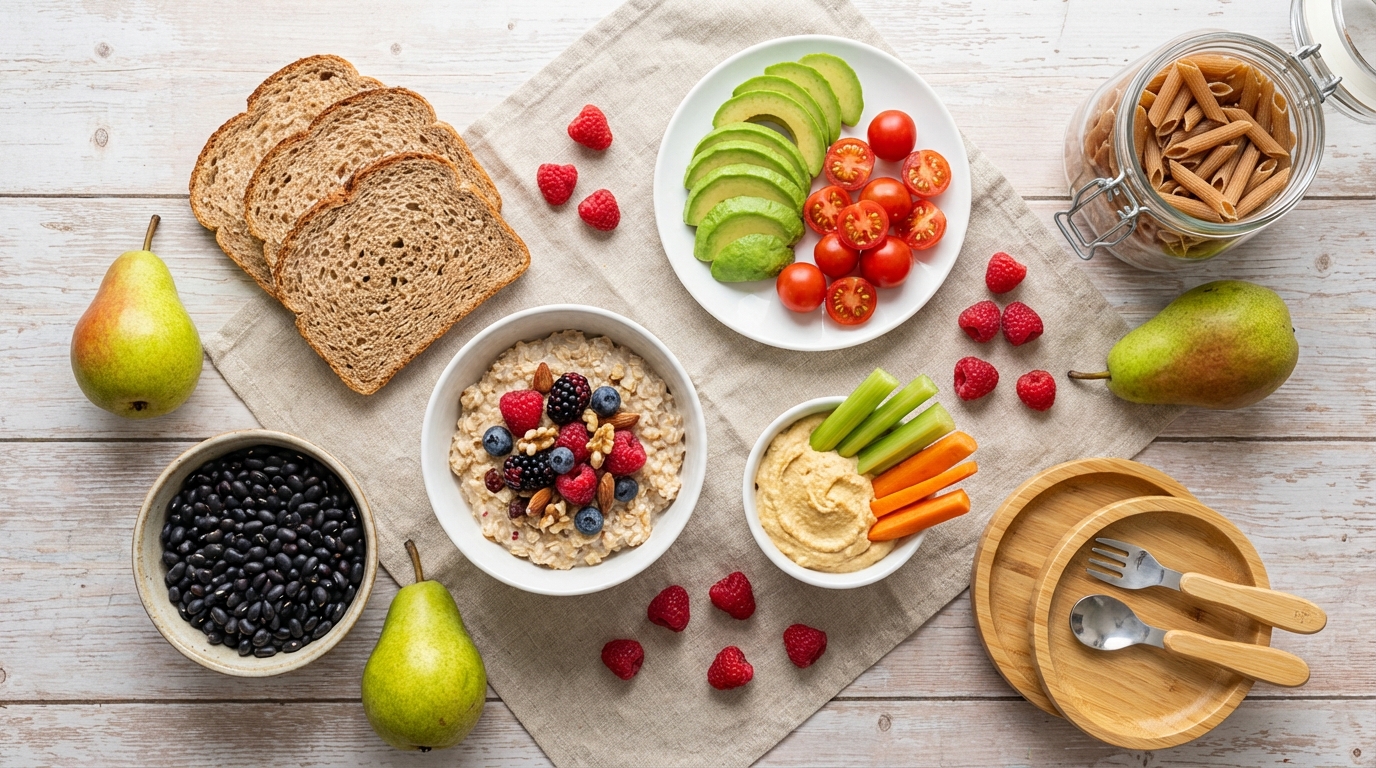
| 1-3 years (toddlers) | 19 grams | 1 soft, ripe pear + 1/2 cup black beans + 1/2 cup oatmeal + 1/2 cup green peas |
| 4-8 years | 25 grams | 1 apple + 1 pear + 1/2 cup lentils + 2 slices whole wheat bread + 1/2 cup broccoli (grate or cook the fruit for under 5) |
| 9-13 years (girls) | 26 grams | Similar to above with slightly larger portions |
| 9-13 years (boys) | 31 grams | Add an extra serving of beans or whole grains to the girls’ example |
| 14-18 years (girls) | 26 grams | Same as 9-13 girls |
| 14-18 years (boys) | 38 grams | Same as adult men |
Good to knowFiber values in this article are approximate and vary by brand and size. Check labels when you can.
A Simpler Way to Think About It
An older rule of thumb (Williams et al., 1995) is age plus 5 grams as a minimum. A 6-year-old would start from about 11 grams, a 10-year-old from 15. Use it only as a starting floor and build toward the official targets above.
Best High-Fiber Foods by Age
What works for a toddler won’t work for a teenager. Here is the short version for each stage.
| Age | Best 3 foods | Safety note |
|---|---|---|
| Toddlers (1-3) | Mashed beans on toast or as a dip; mashed avocado on toast; peas, corn and soft diced sweet potato | Grate or cook apples and firm pears, quarter grapes and berries lengthwise, and serve chia soaked |
| School-age (4-8) | Overnight oats; whole wheat sandwiches with hummus; fruit with the skin on | Popcorn, granola, whole nuts, trail mix, whole grapes and raw apple, firm pear, carrot or broccoli wait until age 5 |
| Tweens and teens (9-18) | Smoothies with soaked chia and frozen fruit; popcorn or trail mix; whole wheat pasta with bean sauce | Raise fiber gradually and keep water handy |
Toddlers: Servings are small, so every bite counts. Increase fiber gradually and offer small sips of water with meals and snacks. Milk can crowd out food, so keep it within the range the AAP suggests for ages 1-2: about 2-3 cups (16-24 oz) a day.
School-age kids: Let them build their own tacos, pizzas and bowls. Bake muffins and banana bread with whole wheat flour, flaxseed and oats. Share a fun fact, like “Did you know popcorn is a whole grain?”
Tweens and teens: Teens often have the biggest gap, since they eat more meals away from home. Stock grab-and-go options like popcorn, trail mix, fruit, whole wheat crackers and hummus. Keep a blender, frozen fruit, chia and spinach within reach.
Skip the lecture. “This snack will keep you full through practice” lands better than “You need more fiber.”
Safe Textures for Fiber Foods by Age
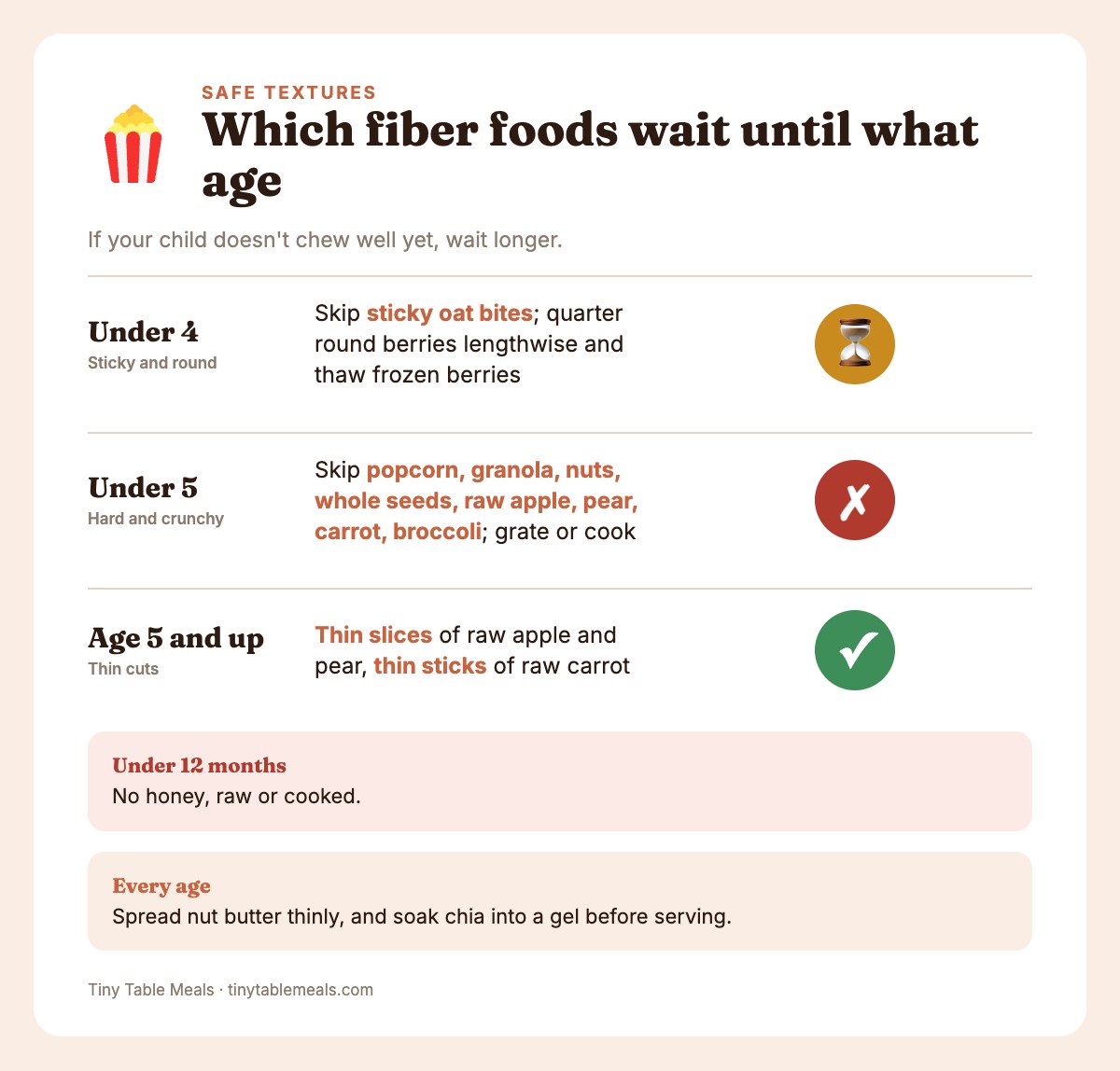
Some high-fiber foods are hard, round or sticky, which makes them choking risks for young kids. These are the cutoffs used in every recipe and table in this guide.
Safety firstAge cutoffs differ by food: under 4 for sticky bites, whole round berries and frozen berries; under 5 for whole grapes, popcorn, granola, nuts, whole seeds and raw hard produce such as apple, firm pear and carrot. If your child doesn’t chew well yet, wait longer.
- Under 12 months: no honey, raw or cooked.
- Under age 4: skip sticky oat bites. Quarter blueberries and other round berries lengthwise, and thaw frozen berries.
- Under age 5: quarter grapes lengthwise, and smash shelled edamame.
- Under age 5: skip popcorn, granola, whole or sliced nuts, whole seeds, trail mix and crunchy roasted chickpeas.
- Under age 5: skip raw apple slices, firm raw pear slices, raw carrot sticks and raw broccoli. Grate them or cook them until soft. Very ripe, soft pear is fine in small pieces.
- Age 5 and up: cut raw apple and pear into thin slices and raw carrot into thin sticks.
- Every age: spread nut butter thinly, and soak chia into a gel before serving.
For soft ways to serve apples to little ones, see toddler-safe apple recipes.
High-Fiber Breakfast Ideas for Kids
Breakfast is the easiest meal to change. A fiber-rich morning meal helps kids feel full longer and gives you a head start on the daily goal.
Fiber and protein together keep kids full even longer. Our high-protein meals and snacks guide has more breakfast ideas.
Overnight Oats (The Weekday Hero)
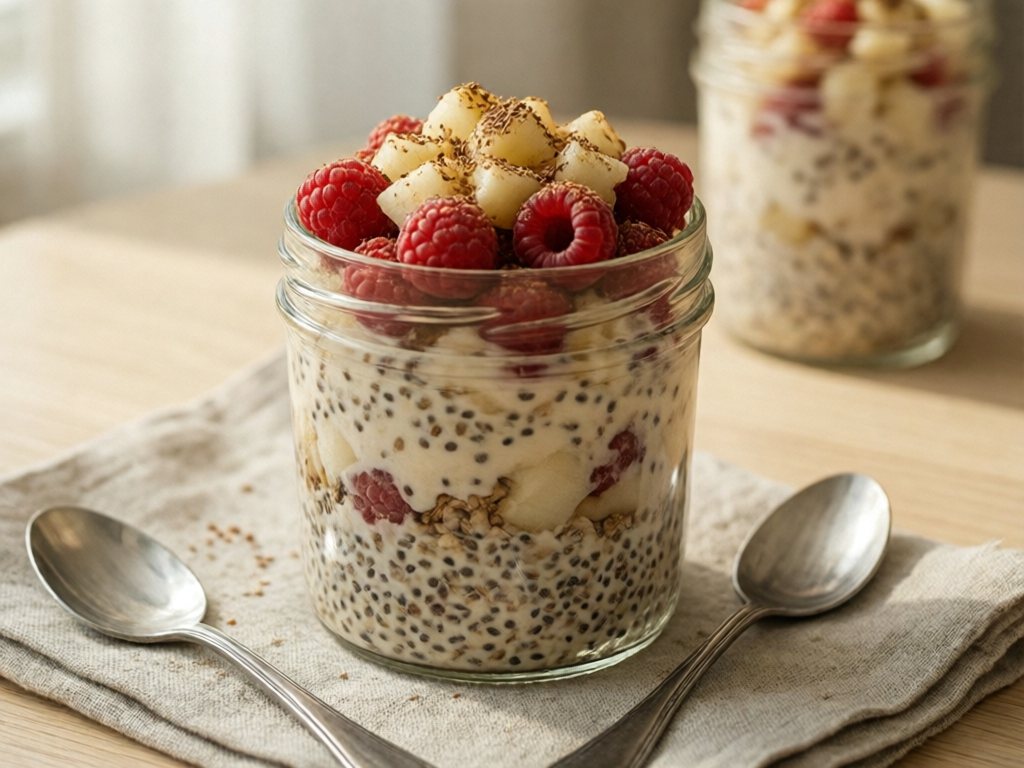
Overnight oats take five minutes the night before, and breakfast is ready when you wake up. I let my kids pick the topping, and that choice does most of the selling.
Base recipe (per serving):
- 1/2 cup old-fashioned oats (4g fiber).
- 1/2 cup milk, dairy or fortified plant-based.
- 1 tablespoon chia seeds (about 5g fiber). Use 2 tablespoons for ages 4+.
- 1 tablespoon maple syrup.
Mix in a jar and refrigerate overnight so the chia gels fully. Never serve chia dry.
TipBuild toppings with child-size portions. A quarter cup of berries goes a long way.
In the morning, add one topping combo:
- 1/4 cup raspberries + 1 tbsp sliced almonds (almonds for ages 5+): about +3g fiber.
- 1/2 diced pear (soft and ripe, or cooked, for under 5) + 1 tbsp ground flaxseed: about +4-5g fiber.
- 1/2 banana + a thin swirl of peanut butter + 1 tsp hemp seeds: about +2-3g fiber.
- 1/4 cup blueberries (quartered for under 4) + coconut flakes: about +1-2g fiber.
Total fiber per jar with toppings: about 10-14 grams with 1 tablespoon chia. With 2 tablespoons (ages 4+), it’s 15-19 grams. A toddler may eat only half a jar, which is half the fiber.
Whole Grain Pancakes with Hidden Fiber
Regular pancakes have almost no fiber. This batter swaps in whole wheat flour, ground flaxseed and banana. I make a double batch and freeze the extras for school mornings.
Base batter (makes about 12 small pancakes; 1 serving = 3 pancakes):
- 1/2 cup whole wheat flour.
- 1/2 cup all-purpose flour.
- 2 tablespoons ground flaxseed.
- 2 teaspoons baking powder and a pinch of salt.
- 1 cup milk.
- 1 egg.
- 1 ripe banana, mashed.
- 1 tablespoon oil or melted butter.
- Mix. Whisk the dry ingredients in one bowl and the wet ingredients in another. Stir them together until just combined.
- Cook. Spoon small rounds onto a lightly oiled pan over medium heat. Cook 2-3 minutes per side, until cooked through.
- Top. Serve with 1/2 cup berries instead of syrup. Quarter the berries for under 4.
Fiber per serving: about 4 grams, or 6-8 grams with the berries. Add a glass of milk and scrambled eggs for protein and calcium.
The Smoothie Bowl That’s Actually High-Fiber
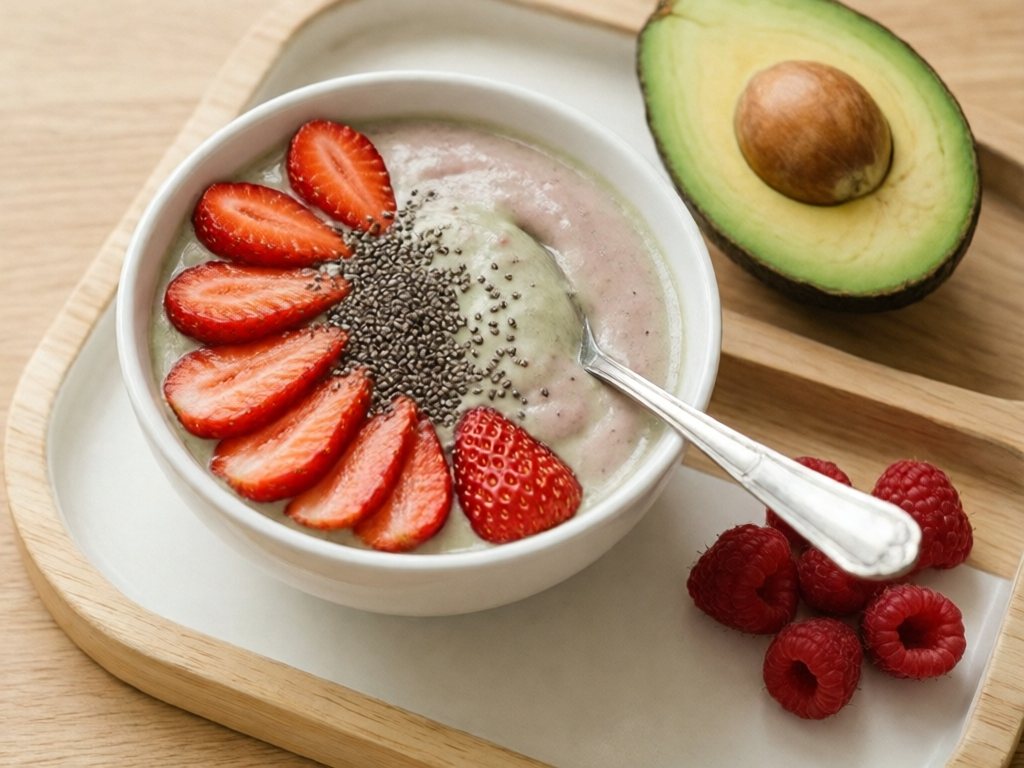
A smoothie keeps its fiber when you blend whole fruit. Juicing is what removes it. A smoothie made mostly of juice, or just banana and milk, is low in fiber to start. Chia, raspberries and avocado are what make this one high-fiber.
High-Fiber Smoothie Bowl:
- 1 frozen banana (3.1g fiber).
- 1/2 cup frozen raspberries (4g fiber).
- 1/2 avocado (5g fiber).
- 2 tablespoons chia seeds (9.8g fiber).
- 1 cup spinach (0.7g fiber).
- 1/2 cup milk.
Soak the chia in the milk for 10 minutes before blending so it gels. Blend thick. Top with sliced strawberries, plus a little granola for ages 5+. Add a drizzle of honey or maple syrup if it needs sweetening.
Whole batch: about 22 grams. That makes two kid-size servings of about 11 grams each.
If your picky eater resists anything visibly green, smoothie recipes for picky eaters has flavor-masking combinations.
Quick High-Fiber Breakfast Ideas (Under 5 Minutes)
Some mornings there’s no time for a recipe. These take under 5 minutes. Fiber is for a full serving, such as 2 slices of toast, so halve it for small kids.
- Whole wheat toast with peanut butter and banana slices: 7-8g fiber.
- High-fiber cereal (look for 5g+ per serving) with milk and berries: 8-11g fiber.
- Whole wheat English muffin with almond butter and chia jam: 8-10g fiber.
- Greek yogurt parfait with granola (ages 5+), ground flax and fruit: 6-9g fiber.
- Thin pear slices with sunflower seed butter (ages 5+; soft ripe or cooked pear for younger kids): 7-8g fiber.
High-Fiber Lunch Ideas for Kids
Lunch is where fiber often drops. A white bread sandwich with deli meat and a bag of chips might have 2-3 grams total. A few swaps can roughly triple that.
The High-Fiber Sandwich Overhaul
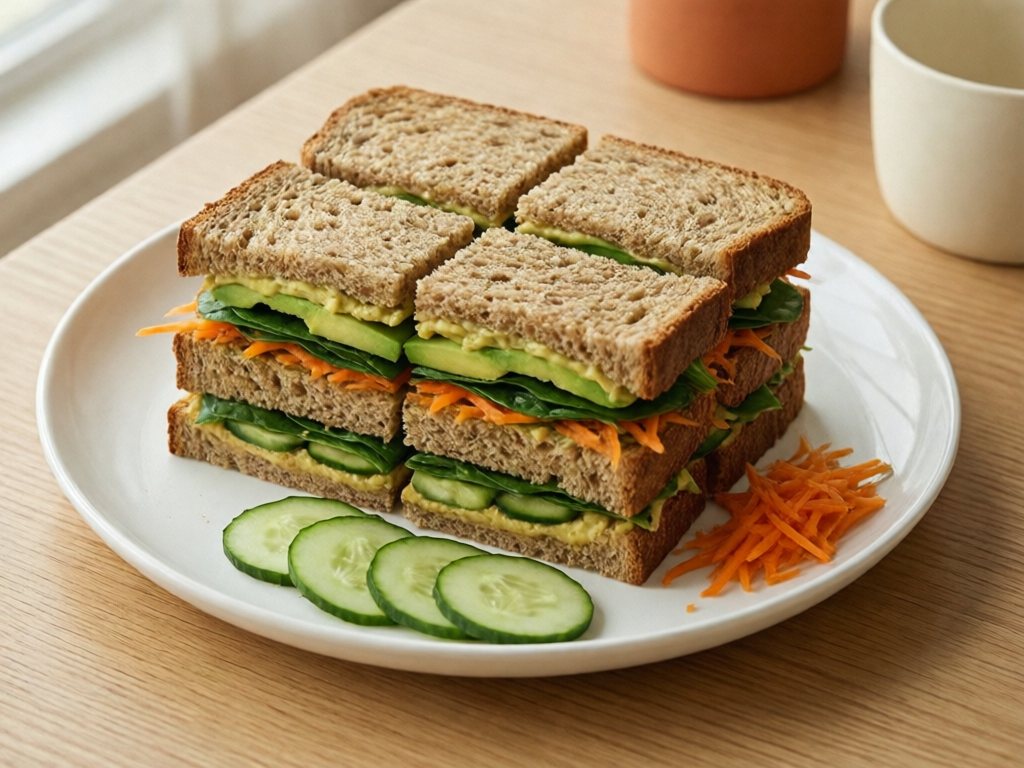
Start with the bread. Whole wheat bread has 2-3 grams of fiber per slice versus 0.5-1 gram for white bread. That’s about 2-4 extra grams per sandwich.
Look for “whole wheat flour” as the first ingredient. “Enriched wheat flour” is just white flour.
Add fiber-rich spreads:
- Hummus instead of mayo adds about 1g fiber per tablespoon.
- Avocado adds 2-3g fiber per quarter.
Layer in vegetables:
- Spinach leaves, shredded carrots, sliced cucumber or thin bell pepper strips.
Total for a revamped sandwich: about 6-10g fiber. The white bread version has 2-3g.
Bean-Based Lunches Kids Won’t Reject
Beans work at lunch when they are either hidden or the star. Fiber is for a full tortilla or about 1 cup. Small kids often eat half.
| Lunch | Make it | Fiber (g) | Age notes |
|---|---|---|---|
| Black bean quesadilla | Mash 1/4 cup black beans into cheese inside a whole wheat tortilla; crisp in a pan | 8-10 | Cut into small strips for under 4 |
| Hummus wrap | Hummus, shredded carrot, cucumber and turkey or chicken in a whole wheat tortilla; slice into pinwheels | 7-9 | Cut pinwheels small for under 4 |
| Lentil soup in a thermos | Red lentils cook in 15 minutes and dissolve into the broth; make a pot on Sunday | 8-10 | Good for texture-sensitive kids |
| White bean and cheese pasta | Whole wheat pasta, olive oil, garlic, cannellini beans, parmesan and lemon; warm or cold | 7-9 | Mash some beans for under 4 |
Lunchbox Fiber Boosters
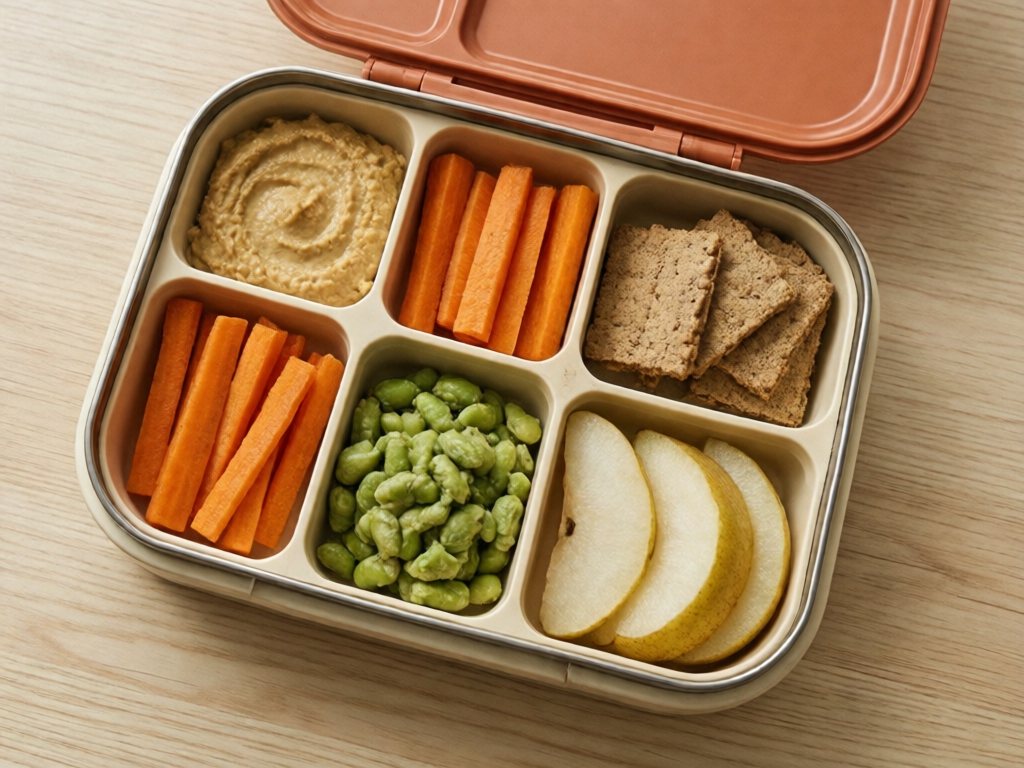
Each of these adds 2-5 grams of fiber to a lunchbox.
- Raw carrot sticks cut thin, with hummus (ages 5+; cook until soft or grate for younger kids): about 3-4g fiber.
- Thin raw apple slices (ages 5+; grate or cook for younger kids): 4.4g fiber per medium apple.
- Thin pear slices (ages 5+; soft ripe, cooked or grated pear for younger kids): 5.5g fiber per medium pear.
- Popcorn in place of chips (ages 5+): 3.5g fiber per 3 cups.
- Shelled edamame (ages 5+, or smashed for younger kids): 4g fiber per 1/2 cup.
- Trail mix with almonds and dried fruit (ages 5+): 3-4g fiber.
- Whole wheat crackers: 2-3g fiber per serving.
High-Fiber Dinner Ideas Kids Will Eat
Dinner is where you have the most control and the most time. In this table, a kid portion is roughly what a 4-8-year-old eats. An adult plate is a full bowl or plate.
| Dinner | Fiber boost | Kid portion | Adult plate | Under-4 adaptation |
|---|---|---|---|---|
| Pasta night | Whole wheat or legume pasta, bean-blended sauce, grated veggies | 6-8g (1/2 cup pasta with sauce and veggies) | 14-20g | Cook pasta soft; blend the sauce smooth |
| Tacos | Half beans, corn tortillas, veggie toppings | 4-5g per taco | 12-15g (3 tacos) | Mash the beans; chop toppings small |
| Sheet pan chicken | Sweet potato, broccoli, chickpeas, brown rice | 5-7g (half an adult plate) | 12-16g with brown rice | Smash chickpeas; cut sweet potato small |
| Three-bean chili | Black, kidney and pinto beans plus corn | 7-9g (3/4 cup) | 15-18g (1.5 cups) | Serve cooled and mash some beans |
| Minestrone | White beans, whole wheat pasta, vegetables | 5-7g (3/4 cup) | 10-14g (1.5 cups) | Cut vegetables small and cook soft |
The Hidden-Fiber Pasta Night
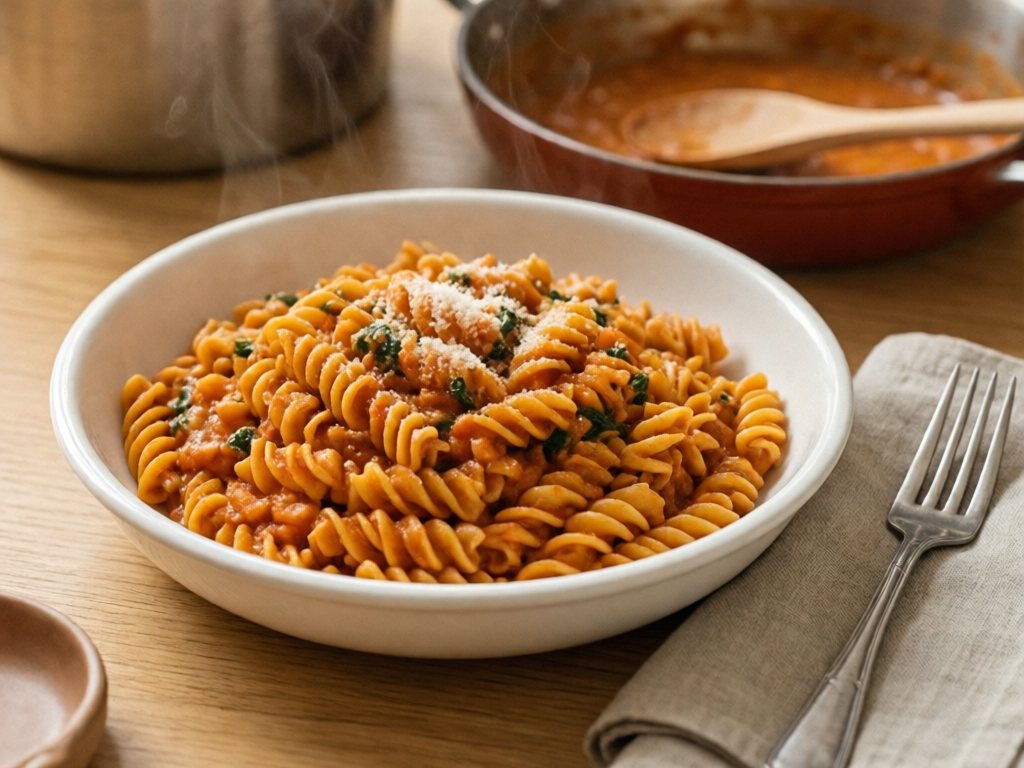
Three changes turn a regular pasta night into a high-fiber dinner.
- Swap the pasta. Whole wheat pasta has 6.3 grams of fiber per cup versus 2.5 grams for regular. Chickpea, lentil and black bean pastas have 8-13 grams per serving and a similar texture.
- Blend beans into the sauce. Puree a half cup of white beans or cooked lentils into a pot of marinara. That adds 6+ grams of fiber to the whole batch and makes the sauce creamier. In my kitchen, it usually goes unnoticed.
- Grate in vegetables. Finely diced zucchini, spinach and grated carrots all but disappear into tomato sauce. Each adds 1-3 grams of fiber per serving.
TipIf your kids resist whole wheat pasta, start with a 50/50 blend. Raise the whole wheat share over a few weeks. That blend is what worked at my table.
For more ways to work vegetables into meals your kids already love, see hidden veggie recipes for kids.
Fiber: 14-20g for an adult plate. A kid portion (1/2 cup pasta with sauce and veggies) has about 6-8g.
Taco Tuesday Gets a Fiber Upgrade
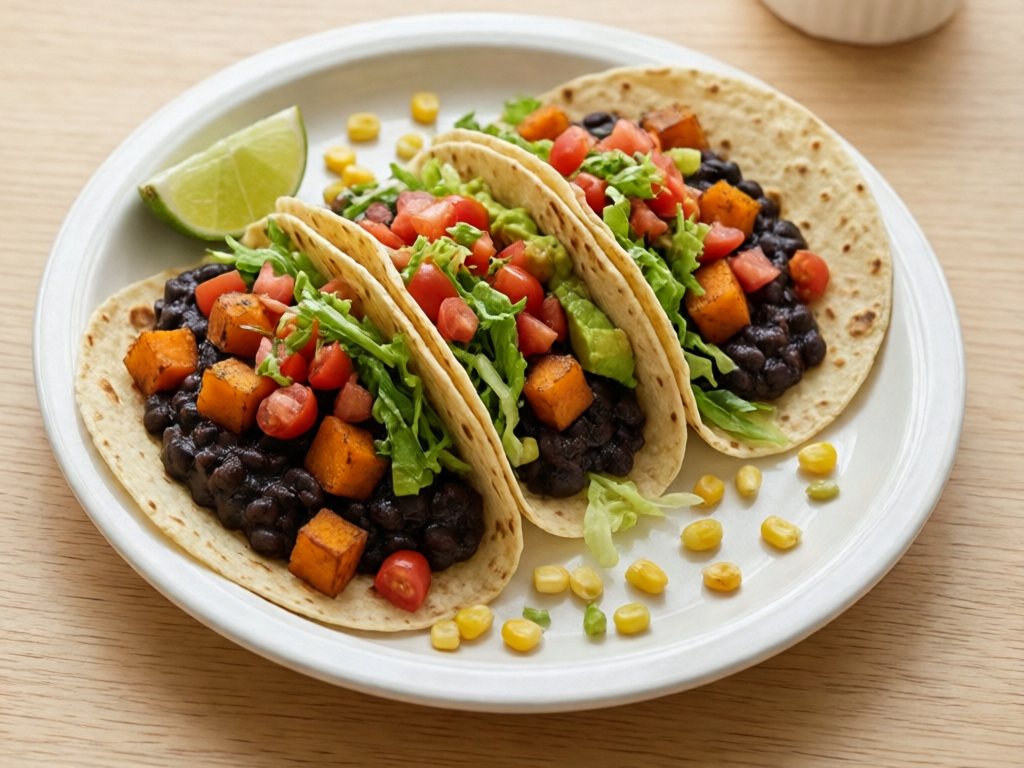
Tacos are customizable, and most kids like them. A few changes add fiber.
The protein: For a recipe that uses 1 pound of ground beef, use 1/2 pound of beef and 1 can (15 oz) of black beans, drained and rinsed. Cooked lentils work too. Both soak up taco seasoning and blend into the meat. This fills about 12 small tacos.
The shell: Corn tortillas have about 1.5g fiber each versus 0.8g for small flour tortillas. Or use whole wheat tortillas for burritos at 4-5g fiber each.
The toppings: Shredded lettuce, diced tomatoes, avocado and corn each add fiber. One taco with beans, a corn tortilla and veggie toppings has about 4-5g. A plate of three has 12-15g.
Black bean and sweet potato taco filling: Dice 1 medium sweet potato small and toss it with oil, cumin and chili powder. Roast at 400°F for 25-30 minutes, until soft. Mix with 1 can (15 oz) of black beans, drained and rinsed, and a squeeze of lime.
This fills about 10 tacos, with 2-3 grams of fiber per taco from the filling alone.
Sheet Pan Dinners with Fiber Built In
Sheet pan dinners save busy weeknights. For fiber, add a starchy vegetable, a green vegetable and a bean.
Chicken and veggie sheet pan (serves 4):
- 1 1/2 pounds boneless chicken thighs or breasts.
- 2 medium sweet potatoes, cut in 1/2-inch cubes (3.8g fiber per potato).
- 3 cups broccoli florets (2.6g per 1/2 cup cooked).
- 1 can (15 oz) chickpeas, drained (6.3g per 1/2 cup).
- 2 tablespoons olive oil, salt and your usual spices.
- Start the sweet potato. Toss the cubes with oil and roast at 400°F for about 15 minutes.
- Add chicken and broccoli. Roast about 20-25 minutes more, until the chicken reaches 165°F.
- Add the chickpeas. Toss them with oil and spices and add them for the last 15 minutes.
Crispy chickpeas are for ages 5+. Leave them softer or smash them for younger kids.
Fiber: 12-16g for an adult plate with 1 cup of brown rice. The rice adds 3.5g. A kid portion, about half that, has 5-7g.
Soup and Chili Night
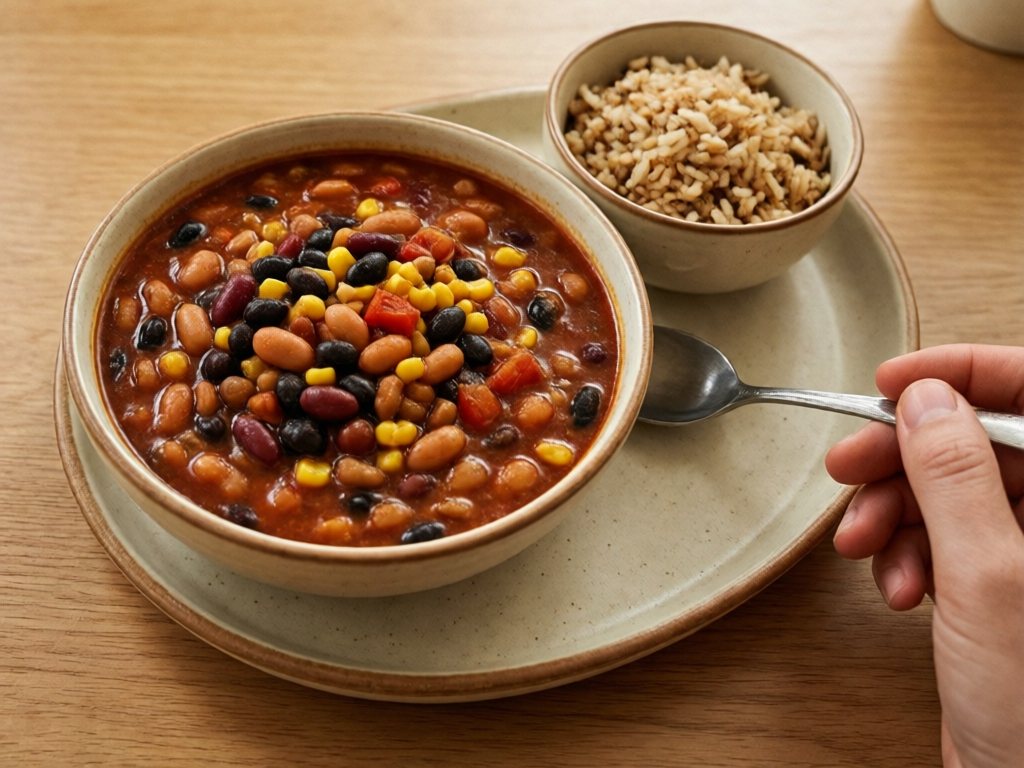
Soups and chilis are easy places to pack in beans, lentils and vegetables.
Turkey and three-bean chili: Ground turkey, black beans, kidney beans, pinto beans, diced tomatoes, corn and chili seasoning. An adult bowl (about 1.5 cups) has 15-18 grams of fiber. A kid portion (3/4 cup) has about 7-9 grams.
Make it on Sunday and serve it three ways over the next 3-4 days: plain, over brown rice, or inside burritos. Burrito night is the one my kids ask for.
Minestrone soup: White beans, whole wheat pasta or barley, zucchini, carrots, celery, tomatoes and spinach go in one pot. An adult bowl (about 1.5 cups) has 10-14 grams of fiber. A kid portion (3/4 cup) has about 5-7 grams.
High-Fiber Snacks for Kids
Most kid snacks are low in fiber: crackers, cheese sticks, fruit snacks, granola bars. Swapping one daily snack for a higher-fiber option can add 3-8 grams.
For the youngest eaters, healthy toddler snack ideas covers age-appropriate textures and portion sizes.
The Snack Fiber Scoreboard
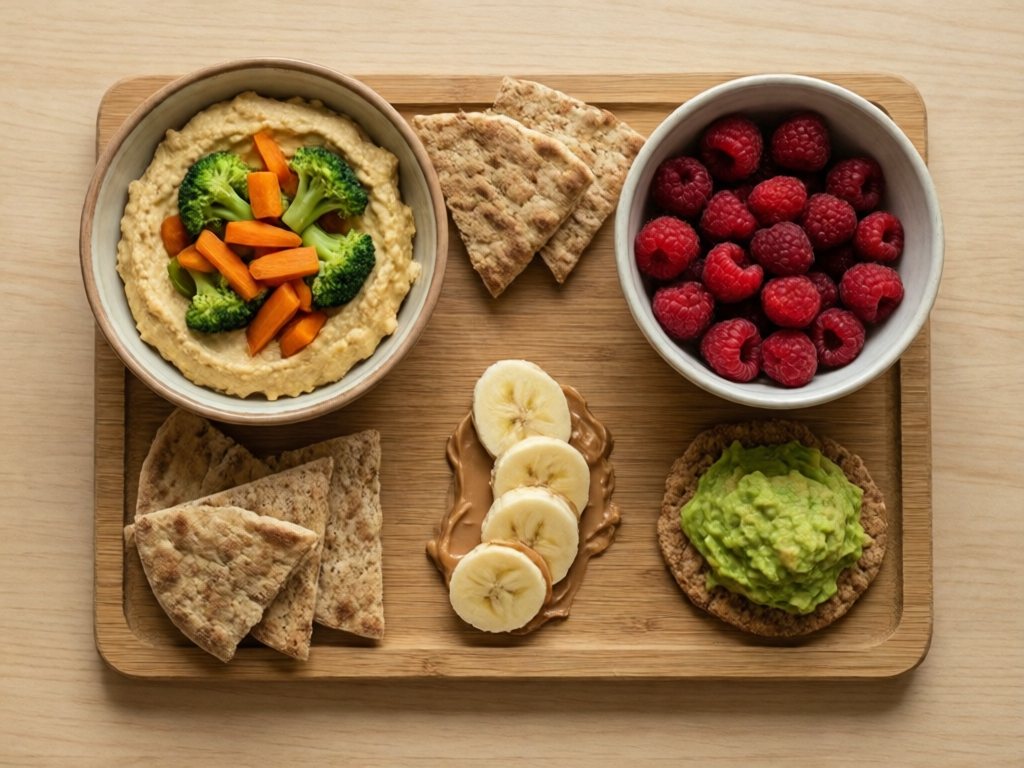
| Snack | Fiber (g) | Why Kids Like It |
|---|---|---|
| Popcorn (3 cups, air-popped; ages 5+) | 3.5 | Crunchy, salty, fun to eat |
| Apple with peanut butter (thin raw slices ages 5+; grated or cooked apple for younger kids) | 6-7 | Sweet + salty combo |
| Hummus with veggies and whole wheat pita (steam the veggies soft for under 5) | 5-7 | Dippable and customizable |
| Trail mix (almonds, dried fruit, seeds; ages 5+) | 4-5 | Feels like a treat |
| Raspberries (frozen for ages 4+; thawed or mashed for younger kids) | 8 (per cup) | Like little frozen candies |
| Banana with almond butter and soaked chia (spread the nut butter thin for under 4) | 6-7 | Filling and sweet |
| Roasted chickpeas (crunchy ones ages 5+; soft or smashed for younger kids) | 6 (per 1/2 cup) | Crunchy like chips |
| Pear slices with cheese (1 medium pear; thin raw slices ages 5+, soft ripe or cooked pear for younger kids) | 5-6 | The sweet-savory thing works |
| Whole wheat crackers with avocado | 5-6 | Creamy and satisfying |
| Oat energy bites (pressed flat; ages 4+) | 3 (per 2 bites) | Portable, sweet, customizable |
Three Snack Recipes Worth Making
Safety firstCrispy roasted chickpeas are hard, so they are for ages 5+. Oat bites are dense and sticky, so press them flat and keep them for ages 4+. For younger kids, serve soft smashed chickpeas and the oatmeal version of the bites below. For a nut allergy, use sunflower seed butter.
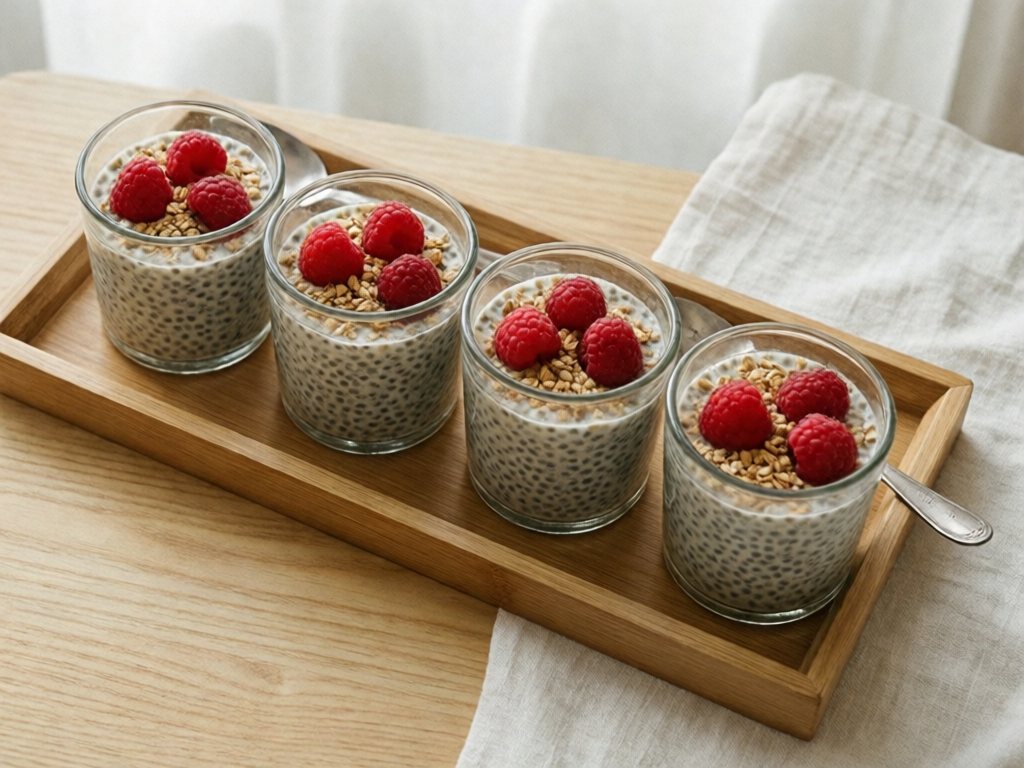
Chia pudding cups (make-ahead, keeps up to 3-4 days in the fridge):
- 1/4 cup chia seeds (19.6g fiber).
- 1 cup milk.
- 1 tablespoon maple syrup.
- 1/2 teaspoon vanilla.
Mix and refrigerate for at least 4 hours so the chia gels fully. Divide into 4 small cups. Top with berries, quartered for under 4. Add a sprinkle of granola for ages 5+.
Fiber per serving: about 5g from the pudding, or 7-8g with berries.
Crispy roasted chickpeas (ages 5+, hard and crunchy):
- Dry. Drain and rinse a can of chickpeas, then pat them very dry. Dry chickpeas crisp up.
- Season. Toss with olive oil, salt and a seasoning your kid likes. Ranch powder, cinnamon sugar and everything bagel seasoning all work.
- Roast. Roast at 400°F for 25-30 minutes, shaking the pan halfway through.
Fiber per 1/2 cup serving: 6g. These replace chips or crackers in the lunchbox.
No-bake oat fiber bites (ages 4+):
- 1 cup old-fashioned oats.
- 1/2 cup peanut butter, or sunflower seed butter for nut-free.
- 1/3 cup honey or maple syrup.
- 2 tablespoons ground flaxseed.
- 2 tablespoons chia seeds, soaked in 3 tablespoons water for 10 minutes first.
- 1/4 cup mini chocolate chips.
Mix everything together. Roll into 1-inch balls, then press each one flat into a thin disc so it isn’t round. Refrigerate for 30 minutes to firm up. Makes about 20 bites. Fiber per 2 bites: about 3g.
Even pressed flat, these bites are dense and sticky, so they are for ages 4+. For ages 1-3, stir ground flaxseed, soaked chia and a thin swirl of nut butter into warm oatmeal instead.
The bites freeze well, so make a double batch.
High-Fiber Foods for Kids: Fiber per Serving
Use these lists to build your own meals and snacks. Every food here is high in fiber and has a fair chance of being eaten.
Fruits
| Fruit | Serving Size | Fiber (g) | Kid Appeal Notes |
|---|---|---|---|
| Raspberries | 1 cup | 8.0 | Sweet and soft; frozen for ages 4+, thawed for younger kids |
| Pear (with skin) | 1 medium | 5.5 | Mild and sweet; thin raw slices for ages 5+, soft ripe, cooked or grated for younger kids |
| Apple (with skin) | 1 medium | 4.4 | Leave the skin on; thin raw slices for ages 5+, grated or cooked soft for younger kids |
| Banana | 1 medium | 3.1 | Most kids like it; good in baking |
| Strawberries | 1 cup | 3.0 | Sweet and familiar |
| Orange | 1 medium | 3.1 | Eat the whole fruit, not just juice |
| Blueberries | 1 cup | 3.6 | Easy to add to oats and yogurt; quarter for under 4 |
| Mango | 1 cup | 2.6 | Sweet enough to feel like dessert |
| Avocado | 1/2 medium | 5.0 | Works in smoothies, on toast, or as “green butter” |
The peel trick: Much of the fiber is in the skin. An apple has 4.4 grams with the skin and about 2.1 grams without. Leave the skin on pears, apples, peaches and plums when you can. If your child won’t eat it, slice the fruit thinly so the skin is less noticeable. For under 5, grate or cook firm fruit with the skin on instead.
Vegetables
| Vegetable | Serving Size | Fiber (g) | Kid Appeal Notes |
|---|---|---|---|
| Green peas | 1/2 cup cooked | 4.4 | Sweet, fun size, easy to add to pasta or rice |
| Sweet potato | 1 medium baked | 3.8 | Naturally sweet; great as fries or mashed |
| Broccoli | 1/2 cup cooked | 2.6 | Raw with dip for ages 5+; steamed soft for younger kids |
| Carrots | 1/2 cup cooked | 2.3 | Sweet roasted or cooked soft; raw sticks cut thin for ages 5+ |
| Corn | 1/2 cup | 2.0 | Most kids like it |
| Edamame | 1/2 cup shelled | 4.0 | Pop out of the pods (pods aren’t eaten); smash for under 5; great protein too |
| Cauliflower | 1/2 cup cooked | 1.7 | Mild; hides well in mac and cheese or mashed |
For picky eaters who “don’t like anything green,” see how to get kids to eat more vegetables.
Beans and Legumes
Beans and legumes are among the highest-fiber foods you can buy. They are also cheap and shelf-stable.
| Legume | Serving Size | Fiber (g) | Best Kid-Friendly Uses |
|---|---|---|---|
| Black beans | 1/2 cup cooked | 7.5 | Quesadillas, burritos, brownies |
| Lentils | 1/2 cup cooked | 7.8 | Soups, pasta sauce, sloppy joes |
| Chickpeas | 1/2 cup cooked | 6.3 | Hummus, pasta, roasted crisp for snacking (ages 5+) |
| Kidney beans | 1/2 cup cooked | 5.7 | Chili, rice and beans |
| White beans (cannellini) | 1/2 cup cooked | 6.3 | Blends into soups and sauces invisibly |
| Pinto beans | 1/2 cup cooked | 7.7 | Refried beans, burritos, dip |
| Split peas | 1/2 cup cooked | 8.1 | Split pea soup |
Whole Grains
| Grain | Serving Size | Fiber (g) | Kid Appeal Notes |
|---|---|---|---|
| Oatmeal | 1 cup cooked | 4.0 | Breakfast workhorse; add toppings |
| Whole wheat bread | 1 slice | 1.9-3.0 | Varies widely by brand; check the label |
| Whole wheat pasta | 1 cup cooked | 6.3 | Mix 50/50 with regular pasta to transition |
| Brown rice | 1 cup cooked | 3.5 | Slightly nuttier than white; good in bowls |
| Popcorn | 3 cups popped | 3.5 | High-fiber snack for ages 5+; skip the movie butter |
| Quinoa | 1 cup cooked | 5.2 | Mild flavor; works in bowls and as a rice substitute |
| Whole wheat tortilla | 1 large (10″) | 4.0-5.0 | Wraps, quesadillas, pinwheels |
Seeds and Nuts
| Seed/Nut | Serving Size | Fiber (g) | Best Uses for Kids |
|---|---|---|---|
| Chia seeds | 2 tablespoons | 9.8 | Pudding, smoothies, oatmeal; always soaked |
| Flaxseed (ground) | 2 tablespoons | 3.8 | Baking, smoothies, pancake batter |
| Almonds | 1/4 cup | 3.5 | Almond butter spread thin for younger kids; whole almonds and trail mix ages 5+ |
| Sunflower seeds | 1/4 cup | 3.0 | Nut-free option for school lunches (whole seeds ages 5+) |
| Pumpkin seeds | 1/4 cup | 1.7 | Toasted with a little salt; whole seeds and trail mix ages 5+ |
How to Add Fiber Gradually: A Two-Week Ramp-Up
If you go from 10 grams a day to 25 overnight, expect gas, bloating and stomachaches. Then nobody wants a bean again. Go slowly.
Two-Week Fiber Ramp-Up Table
| Week | Add about | Pick 1-2 swaps | Water goal |
|---|---|---|---|
| Week 1 | 5 grams per day | Whole wheat bread instead of white (+2-4g per sandwich). A small handful of raspberries at breakfast (+2g). Popcorn instead of chips, ages 5+ (+2-3g). | Water at every meal and snack |
| Week 2 | Another 5 grams per day | 1/4 cup beans or lentils at one meal (+3-4g). 1 tablespoon soaked chia in oatmeal or yogurt (+5g). An extra serving of fruit (+3-5g). | Water at every meal and snack, plus a bottle within reach |
Safety firstSee your pediatrician for blood in the stool, fever, vomiting, a swollen belly, severe pain, weight loss, or constipation lasting more than 2 weeks. Don’t give laxatives or stool softeners unless the pediatrician directs it.
Offer Water With Every High-Fiber Meal
Fiber needs fluid to do its job. As you increase fiber, offer water at every meal and snack and keep a water bottle within reach.
Should You Hide Fiber or Tell Kids?
You can blend fiber into foods your kids already eat, or you can tell them what’s new. I do both.
I say so when a food looks different: “We’re trying whole wheat pasta tonight. I think you’ll like it with this sauce.”
I don’t announce the things nobody can see, like white beans in the marinara or ground flaxseed in the pancake batter. If my kids ask what’s in a dish, I always answer honestly.
Let kids help stir and name the ingredients. That keeps trust intact.
The Fiber Swap Cheat Sheet
| Instead of… | Try… | Fiber Gain |
|---|---|---|
| White bread | Whole wheat bread | +2-4g per sandwich |
| Regular pasta | Whole wheat or legume pasta | +4-10g per serving |
| White rice | Brown rice or quinoa | +2-3g per serving |
| Potato chips (popcorn swap is for ages 5+) | Popcorn | +2-3g per serving |
| Fruit juice | Whole fruit | +3-5g per serving |
| Sugary cereal | Oatmeal with berries | +5-10g per bowl |
| Flour tortillas | Whole wheat tortillas (corn adds less) | +2-3g per large tortilla; corn adds about 0.5-1g per small tortilla |
| Granola bar | Apple with peanut butter | +4-5g |
| Goldfish crackers | Whole wheat crackers with hummus | +3-4g |
| Fruit snacks | Raspberries (thawed for under 4) or chopped dried fruit (ages 4+) | +3-8g |
Meal Planning for a High-Fiber Week
Here’s one high-fiber day for a school-age child (ages 4-8, goal 25g).
Sample High-Fiber Day
| Meal | What’s on the Plate | Fiber (g) |
|---|---|---|
| Breakfast | One jar of overnight oats with 1 tbsp soaked chia and half a banana | About 10 |
| Lunch | Half a whole wheat turkey and hummus wrap, plus 1/2 cup cooked carrot sticks | 6-7 |
| Afternoon snack | Half a pear, in thin slices for ages 5+ (soft ripe or cooked for age 4) | About 3 |
| Dinner | Kid-size portion (1/2 cup) of whole wheat pasta with bean-boosted marinara, a few steamed broccoli florets | 6-8 |
Daily total: about 25-28 grams, right around the 25g goal for ages 4-8. For a toddler, smaller portions with a bean or fruit extra land near the 19g goal. You don’t need to hit an exact number daily. Aim for a healthy average across the week.
Beans, oats and seasonal produce are among the cheapest fiber sources. For more ways to keep costs down, see budget meal planning for families.
Weekly Prep That Makes Fiber Easy
About 30-40 minutes of hands-on time on Sunday sets up the week.
Safety firstDried kidney beans must be soaked, drained and boiled hard for at least 10 minutes before simmering until soft. Never cook them from raw in a slow cooker. Canned beans are already cooked.
- Cook beans or lentils (about 30 min). Red lentils cook in about 15 minutes, and canned beans need no cooking. Refrigerate cooked beans within 2 hours and use them within 3-4 days.
- Assemble overnight oats (5 min). Fill 3-4 jars for the first half of the week. Thursday and Friday can be cereal or toast mornings.
- Wash and cut fruit (10 min). Slice pears and apples thin for ages 5+, toss them in lemon juice so they don’t brown, and rinse the berries. For under 5, grate the fruit or cook it soft instead. Box it all for lunchboxes and snacks.
- Make oat bites or muffins (10 min for bites). A homemade high-fiber snack on hand beats grabbing a low-fiber one.
- Roast sweet potatoes (about 30 min, hands-off). Cubed, roasted sweet potato keeps 3-4 days in the fridge. Use it as a side, a taco filling, a salad topper or a snack.
Common Fiber Mistakes and How to Avoid Them
These four trip up most families, mine included.
Mistake #1: Too Much, Too Fast
A child used to 10 grams of fiber a day will have a rough time if you suddenly serve 30. The gut bacteria that ferment fiber need time to adapt. Ramp up over two weeks, not two days.
Mistake #2: Relying on Fiber Supplements or “Fiber-Enriched” Products
Those fiber gummy bears and “added fiber” snack bars aren’t the same as fiber from whole foods. Many use isolated fibers like inulin, which can cause gas in some kids. Whole foods are generally the better choice, and they also bring vitamins and minerals.
Mistake #3: Only Counting Fiber at Dinner
One meal can’t carry a full day of fiber. Spread it across meals and snacks. Breakfast and snacks are the easiest places to start.
Mistake #4: Giving Up After the First Rejection
Your child might not love whole wheat pasta the first time. That’s normal. Many kids need repeated, low-pressure exposures, often a dozen or more, before they accept a new food. The 50/50 blend (half regular, half whole wheat) helps most with grains.
Mama Munch
Mama Munch is a food-obsessed parent of two who believes every family deserves simple, nutritious meals — even on the busiest weeknights. With a background in nutrition education and years of navigating picky eaters, allergies, and toddler taste buds, she creates practical recipes and meal strategies that actually work for real families.
Frequently Asked Questions
Can a child eat too much fiber?
Yes, but it’s uncommon. Intakes well above the recommendations can cause gas and bloating and can reduce absorption of calcium, iron and zinc. Most kids are far below their goal, so it is rarely a real concern. If you’re worried, ask your pediatrician or a registered dietitian.
My child is constipated. Should I just add a lot of fiber right away?
No. A sudden jump in fiber can make constipation worse at first, especially without enough water. Offer more water first, then add about 3-5 grams of fiber at a time, roughly once a week. The red-flag list in the two-week ramp-up section above says when to call your pediatrician.
Are fiber supplements safe for kids?
Only under your pediatrician’s direction, with age-specific dosing and extra fluid. Some pediatricians recommend them for constipation or very limited diets. Whole foods are generally preferred because they bring other nutrients too.
Does cooking vegetables reduce their fiber content?
Very little. Most vegetables have about the same fiber raw or cooked. What removes fiber is peeling, juicing and choosing refined grains over whole grains. Cook vegetables however your child will eat them.
What about fruit juice? Does it have fiber?
Almost none. Juicing removes the pulp and skin, where most of the fiber lives.
The AAP advises no juice for babies under 12 months. After that, limit 100% juice to 4 ounces per day for ages 1-3, 4-6 ounces for ages 4-6, and 8 ounces for ages 7-18. Whole fruit is the better choice.
My kid only eats white bread and regular pasta. How do I transition them?
Use the 50/50 method. Cook half whole wheat pasta and half regular in the same pot, then raise the whole wheat share over 3-4 weeks. For bread, try white whole wheat first. It has the same fiber as regular whole wheat, with a lighter color and milder flavor.
Is the “fibermaxxing” trend actually backed by science, or is it just a fad?
The hashtag is new, but the advice isn’t: eating more fiber from whole foods is well supported. For kids, the sensible version is simple: go gradually and keep the food whole.
The Bottom Line
You don’t need to count every gram. Make three swaps: whole wheat for white, whole fruit for juice, and beans blended into the sauce. Start with breakfast, go slowly, and keep the water coming. Tomorrow morning, try one jar of overnight oats with soaked chia and a few berries.