Baby-Led Weaning Christmas Dinner: What Baby Can Eat
You'll learn how to safely share Christmas dinner with your 6- to 18-month-old by adapting portions before seasoning and adjusting food shapes.
- Pull your baby's portion before adding salt, gravy, or glazes to dishes.
- Never offer honey to your baby under 12 months due to infant botulism risks.
- Quarter round foods lengthwise and soften hard textures to avoid choking.
- Avoid introducing any new food allergens on Christmas Day.
- Seat your baby upright in a high chair within arm's reach during the meal.
This post contains affiliate links. As an Amazon Associate I earn from qualifying purchases.
At my first Christmas dinner with a baby, I stood over the ham with a fork, wondering what my nephew could actually eat. Here’s what I know now: most of the table works for a 6- to 18-month-old if you pull baby’s portion before the salt, gravy and glaze go on.
The short version, before the dish-by-dish table with cut sizes by stage and the day-of plan:
- Salt: none added in the first year, so pull baby’s portion before seasoning.
- Honey: none under 12 months, including glazes.
- Choking shapes: quarter round foods lengthwise, soften hard ones, skip whole nuts, popcorn and hard candy.
- Allergens: no new ones on the 25th.
New to baby-led weaning? Start with my baby-led weaning guide and first finger foods for babies, then come back. This assumes baby has already started solids.
In this article (13 sections)
- Christmas Dinner Safety Rules for Baby-Led Weaning
- The Dish-by-Dish Table: What Baby Can Eat at Christmas Dinner
- The Main Event: Turkey, Ham and Other Roasts
- Potatoes, Stuffing and Gravy: The Comfort Corner
- Vegetables: Where Baby Can Really Shine
- Cranberry Sauce, Rolls and the Little Extras
- Desserts and Sweet Treats
- What a Christmas Dinner Plate for Baby Actually Looks Like
- The Day-Of Plan: How to Make This Easy
- Talking to Relatives (Without Starting a Fight)
- Leftovers: Day-After Meals for Baby
- Frequently Asked Questions
- One Last Thing Before You Carve
Christmas Dinner Safety Rules for Baby-Led Weaning
Before the big table, it helps to know why a dish gets a yes, a “change it” or a no. Nearly every decision on the Christmas table comes down to four things.
1. Salt
The plain rule: offer no added salt in the first year. US guidance is the same: avoid adding salt to baby’s food.
Babies’ kidneys are still maturing. Health services like the UK’s NHS put the limit at about 1 gram of salt a day under 12 months, which is roughly one-sixth of a teaspoon from all food combined. A single slice of ham, a spoonful of packet gravy or a couple of pigs in blankets can use up that whole allowance.
Christmas is the day the salt shows up in places you don’t expect: brined turkey, stock-based gravy, stuffing mix, glazed ham, cured meats, cheese boards and bread rolls. The workaround is simple. Before you season anything for the grown-ups, pull the baby’s portion out.
2. Honey (and the other sweet stuff)
Honey is a firm “no” for babies under 12 months, because of the rare but serious risk of infant botulism. That includes honey-glazed ham, honey-roasted carrots, honey-mustard anything, and baked goods made with honey. After the first birthday, honey is considered safe.
Added sugar is a softer rule, but a real one: US guidance is to avoid it until age 2, and keep it to occasional small tastes after the first birthday. A lick of cake on the big day is no emergency, but desserts are where sugar hides.
3. Choking shape and texture
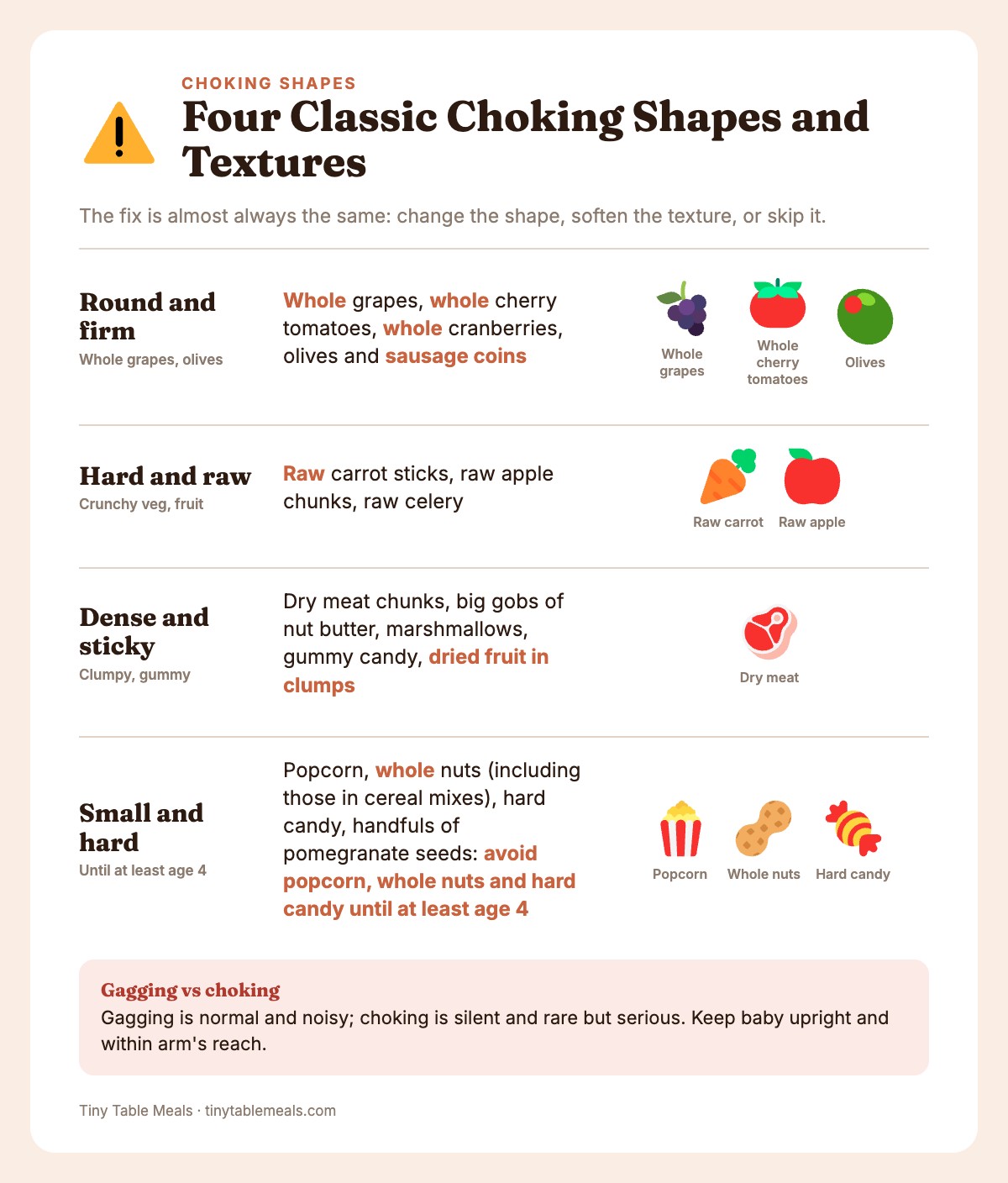
Gagging is normal and noisy; choking is silent and rare but serious. The Christmas table has a few classic choking shapes:
- Round and firm: whole grapes, whole cherry tomatoes, whole cranberries, olives, sausage coins
- Hard and raw: raw carrot sticks, raw apple chunks, raw celery
- Dense and sticky: chunks of dry meat, big gobs of nut butter, marshmallows, gummy candy, dried fruit in clumps
- Small and hard: popcorn, whole nuts (including those in cereal mixes), hard candy and handfuls of pomegranate seeds. Avoid popcorn, whole nuts and hard candy until at least age 4.
The fix is almost always the same: change the shape, soften the texture, or skip it.
Safety firstTake an infant choking first aid and CPR course (Red Cross or AHA) before starting solids. If a baby is truly choking, call emergency services right away. Stay within arm’s reach at the table.
A safe seat matters as much as the food. Keep baby upright in a high chair, at the table or at least in view. A baby on a lap in the middle of holiday chaos is the setup to avoid.
4. Allergens
Christmas is not the day for the first taste of peanut, egg, wheat, dairy, fish, shellfish, tree nuts, soy or sesame. If your baby hasn’t met an allergen yet, a crowded, distracting meal with relatives talking over you is a poor time to watch for a reaction.
Offer common allergens a few days before the 25th, in small amounts, earlier in the day, so you can watch calmly. My guide to introducing allergens to baby shows how. If your baby has eczema or a family history of food allergy, talk to your pediatrician, since the plan may be different for you.
The Dish-by-Dish Table: What Baby Can Eat at Christmas Dinner
How to read the tableServe means fine as is, unseasoned. Change means modify the shape or texture first. Skip means leave it for later.
The cut sizes in the big table follow these three stages:
| Stage | Piece size | Grip | Example |
|---|---|---|---|
| 6-9 months | Finger-length pieces about the width of two adult fingers, or thick mash on a pre-loaded spoon | Whole fist | Strips of dark turkey, soft roasted carrot sticks |
| 9-12 months | Thinner strips plus small soft pieces about the size of a pea or a fingertip | Developing pincer grasp (thumb and finger) | Shredded turkey, soft potato cubes, squished peas |
| 12-18 months | Soft, bite-size pieces about half an inch (roughly 1 cm); round foods always quartered lengthwise | Pincer grasp, early spoon use | Tender turkey bites, grapes quartered lengthwise |
| Dish | Verdict | 6-9 months | 9-12 months | 12-18 months | Why |
|---|---|---|---|---|---|
| Roast turkey (white meat) | Change | Moist strips from the thickest part, or shredded into a soft pile; no skin | Small shreds and thin soft strips | Bite-size, tender pieces, shredded if dry | Dry chunks are hard to chew; skin is salty and fatty |
| Roast turkey (dark meat) | Serve (unbrined, unsalted) | Soft, juicy strips about the size of two fingers, from an unbrined, unsalted portion | Shredded or small tender pieces | Small tender pieces | Dark meat is juicier and has more iron; brined or stock-basted meat is salty |
| Glazed ham | Skip under 12 months; small taste after | Skip; offer plain roast pork instead | Skip | A few small shreds, rarely | Very high in salt; glazes may contain honey or lots of sugar |
| Beef roast / prime rib | Change | Thin strip of well-cooked, tender meat to suck and gnaw; no chunks | Shredded tender meat | Small tender pieces, cut across the grain | Must be cooked through; tough meat is a choking risk |
| Mashed potatoes | Serve | Thick mash on a pre-loaded spoon or rolled into a ball | Thick mash, small potato “bites” | Mash or soft cubes | Soft and filling; set aside before adding salt |
| Roast potatoes | Change | Skip crispy edges; offer wedge of soft inside (cooked without salt) | Soft wedges with skin off | Soft quarters | Crunchy edges and extra salt aren’t baby-friendly |
| Sweet potato (no marshmallow) | Serve | Soft roasted wedges or strips | Small soft cubes | Half-inch soft pieces | Soft and naturally sweet |
| Stuffing / dressing | Change or skip | Skip store-bought; offer a homemade low-salt version if made soft | Small moist crumbly pieces | Small moist spoonfuls | Mixes and sausage stuffings are very salty; dry crumbs can be tricky to swallow |
| Gravy | Change | Skip packet or stock-cube gravy; offer unsalted homemade as a dip | Dip for soft foods, low-salt only | A little low-salt gravy | Most gravy is one of the saltiest items on the table |
| Brussels sprouts | Change | Roast until very soft, halve lengthwise, let baby squish | Soft quarters | Small soft quarters | Raw or firm sprouts are hard; whole ones are a round shape |
| Green beans | Change | Cook until very soft; whole beans as finger food | Soft beans snapped into 1-inch lengths | Soft bite-size pieces | Raw beans are tough and stringy |
| Carrots (roasted or steamed) | Change | Very soft sticks; never raw | Soft thin sticks or small soft cubes | Soft coins cut in quarters | Raw carrot is a classic choking hazard; honey-glazed carrots are out under 12 months |
| Parsnips | Change | Soft roasted sticks | Soft small pieces | Bite-size soft pieces | Sweet and tender when roasted |
| Peas | Change | Squished peas on a spoon or in mash | Lightly squished | Lightly squished or flattened | Round and firm if whole |
| Cranberry sauce | Change | Skip or a tiny smear without whole berries | Small taste of low-sugar sauce | Spoonful of lightly sweetened sauce | Whole cranberries are round and firm; shop sauces are high in sugar |
| Dinner rolls / bread | Change | Lightly toasted strip of bread, a small piece of soft roll | Small soft pieces | Bite-size soft pieces | Soft bread can form a doughy ball; rolls are salty |
| Yorkshire pudding | Change | Homemade without salt, soft inside torn into strips | Small torn pieces | Bite-size pieces | Contains egg, wheat and dairy; only after baby has tried all three |
| Pigs in blankets / sausages | Skip under 12 months; small taste after | Skip | Skip | Occasionally: low-salt sausage in thin lengthwise strips, never coins | Salty, processed and round coin shapes are a choking risk |
| Mac and cheese | Change | Homemade with a little grated cheese and no added salt; large pasta shapes or a spoon | Small soft pasta | Small soft pasta | Contains wheat and dairy; only after baby has tried both. Skip boxed or restaurant versions, which are salty |
| Cheese board | Change | Grated or a thin strip to gum (pasteurized hard cheese like mild cheddar) | Grated or thin strips | Thin slices cut into small pieces | Cheeses can be salty; avoid unpasteurized and some soft or moldy cheeses |
| Grapes, cherry tomatoes, olives | Change | Quarter lengthwise | Quarter lengthwise | Quarter lengthwise | Round and firm shapes are classic choking risks |
| Nuts (whole) | Skip | Skip whole nuts; ground nuts or a thin smear of smooth nut butter stirred into food, only if already introduced | Same | Same | Whole nuts are a choking hazard until at least age 4; not a day for a first nut exposure |
| Christmas pudding | Skip | Skip | Skip | Skip | Alcohol that doesn’t fully cook off, sticky dried fruit, sugar |
| Mince pies | Skip | Skip | Skip | Skip | Sugar, dried fruit and sometimes alcohol |
| Pumpkin pie | Change | Skip; offer plain mashed pumpkin or squash instead | A small taste of filling, no crust, only if egg and dairy are already tried | A spoonful of filling as an occasional taste | Filling contains egg and dairy plus added sugar; crust is dry |
| Gingerbread cookies | Change | Skip | Skip | A soft cookie, made without honey | Hard cookies are tough and sugary; some recipes use honey |
| Candy canes / chocolate | Skip | Skip | Skip | Skip | Hard candy is a choking hazard; sugar and caffeine |
| Eggnog / mulled wine | Skip | Skip | Skip | Skip | Alcohol and raw egg |
| Fruit (clementines, pears, berries) | Change | Peeled clementine, pith and seeds removed, membrane opened and each segment torn into small pieces; ripe soft pear strips | Torn small pieces | Quartered berries and soft fruit | Easy swap for dessert |
The Main Event: Turkey, Ham and Other Roasts
Turkey
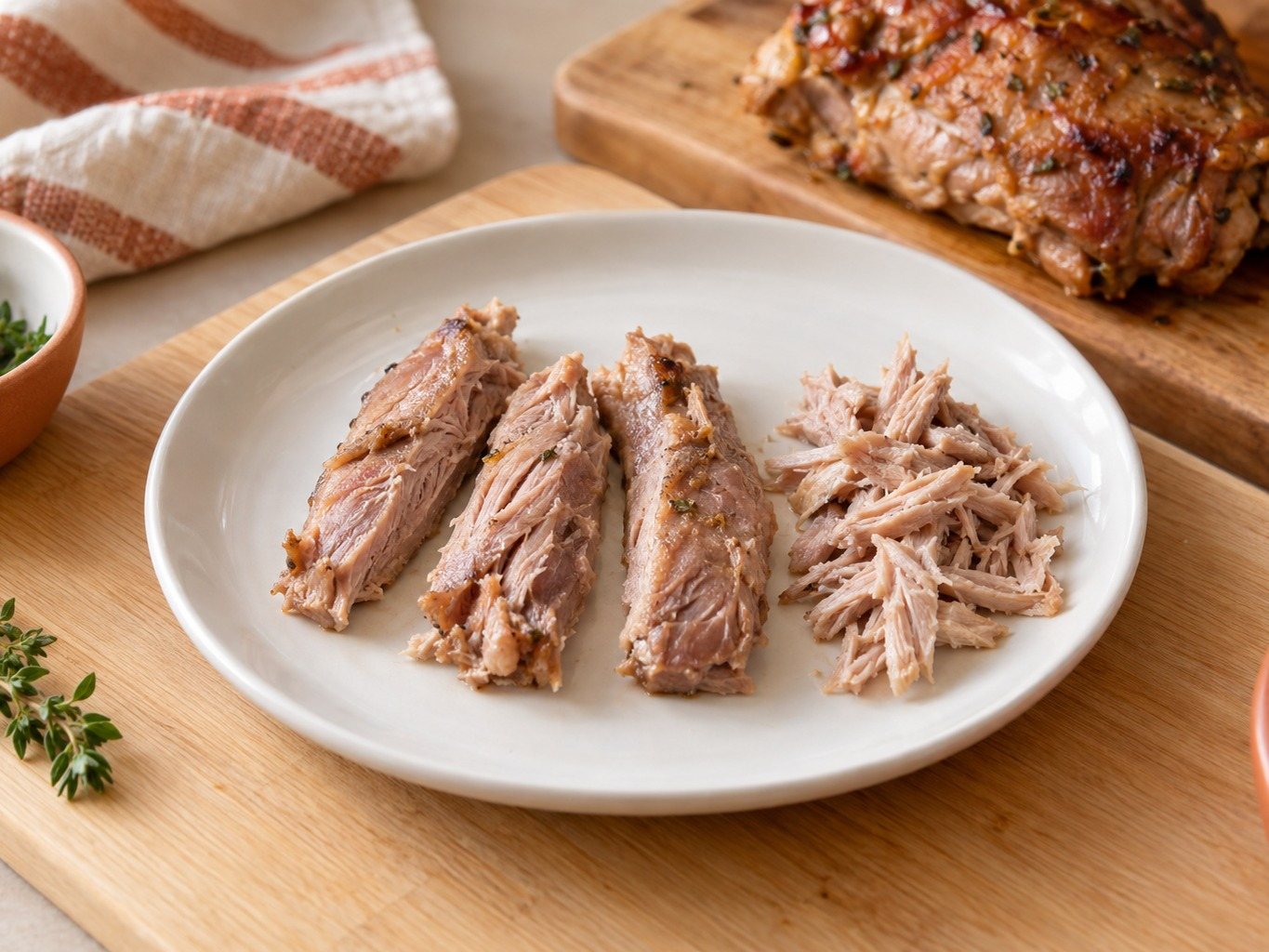
Turkey is one of the best Christmas foods for babies. It’s a good source of protein, and the dark meat has more iron and zinc than white, which matters in the second half of the first year, when babies’ iron stores from birth start running low.
What to do:
- Pull the baby’s portion before carving at the table, so it stays warm and juicy.
- Choose the juiciest pieces: thigh, drumstick meat or the underside of the breast.
- For 6-9 months, cut into thick strips about the size of two adult fingers, or give a big juicy drumstick piece (with all bones and gristle removed) for them to suck and chew. For 9-12 months, shred into small bits and cut thin strips. For 12-18 months, offer bite-size tender pieces.
- Leave off the skin. It’s salty, fatty and chewy.
The salt trapIf you brine your turkey or baste it in stock, the meat itself can be quite salty. Roast a separate turkey thigh or a few drumsticks with just herbs and a little olive oil, unsalted, for baby. The grown-ups can still enjoy a fully seasoned bird.
Safety firstCook turkey to 165°F (74°C) in the thickest part. Leftover storage rules are in the leftovers section below.
Ham
I know ham is a holiday staple. But for babies it’s the trickiest meat on the table. Cured and glazed ham is very high in salt, and many glazes use honey (a firm no under 12 months) or lots of sugar. Even deli ham and sliced cooked ham can blow through a baby’s salt allowance in a couple of slices.
What to do: For babies under 12 months, skip the ham and offer extra turkey or plain roast pork instead. For 12-18 months, a few small shreds once in a while is a reasonable taste. Honey is fine after 12 months, but glazed ham is still very salty and sweet, so treat it as a taste, not a main course.
Roast beef, lamb or pork
Any roast can work for baby if the meat is cooked all the way through and the pieces are tender. For a 6-9 month old, offer a thin strip of well-cooked meat to gnaw and suck on, or a finger of slow-cooked beef that pulls apart easily. For older babies, shred it. Avoid tough, chewy or rare slices, and don’t offer big chunks.
Vegetarian and other mains
If your table has a nut roast, a mushroom wellington or a lentil loaf, these can be baby friendly, but check the ingredient list. Many contain whole or chopped nuts (grind or skip), lots of salt, stock cubes and sometimes honey or wine. A lentil or bean-based dish with no added salt, shaped into soft fingers, is a lovely option.
Potatoes, Stuffing and Gravy: The Comfort Corner
Mashed potatoes
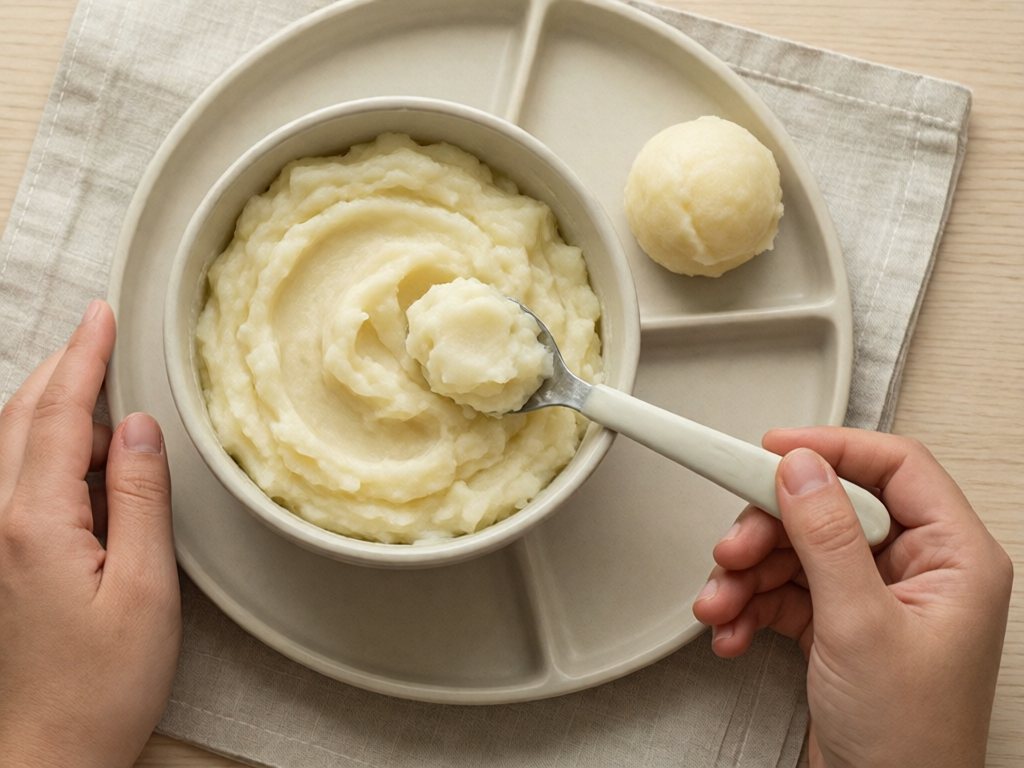
This is the easiest win on the whole table. Mashed potato is soft, filling and calorie-dense, and it can carry other foods: stir in some pureed carrot, a little butter or olive oil, or a bit of cooked, mashed turkey.
- 6-9 months: Thick mash on a pre-loaded spoon, or rolled into a ball or flattened into a “potato pancake” they can hold. Runny mash is hard for a young baby to scoop.
- 9-12 months: Mash plus a spoon for practice; let them make a mess.
- 12-18 months: Mash, or soft cubes of boiled potato.
TipScoop the baby’s mash into a bowl before you add salt, cream and cheese. Then stir the milk or butter into the rest.
Roast potatoes
Roast potatoes are a hard sell for babies because the best part, the crunchy edges, is the part they shouldn’t have. But a roast potato has a soft, fluffy inside. Break one open and scoop out the middle, or par-boil a few extra potatoes, roast them without salt, and cut them into soft wedges. For 6-9 months, large soft wedges with skin removed; for 9-12 months, soft wedges, skin off; for 12-18 months, soft quarters.
Stuffing and dressing
Stuffing is a salt and sage trap. Packet mixes can be very high in salt, and sausage stuffing even more so. Dry crumbly stuffing can also be a texture problem for a young baby.
If you want baby to try it: Make a small batch from soft bread, onion cooked until very soft, a few chopped herbs, an egg and low-salt stock or water.
Bake until moist. Serve small crumbly spoonfuls, or press into soft patties for older babies. Skip any version with whole nuts, big pieces of chestnut or whole dried cranberries.
Gravy
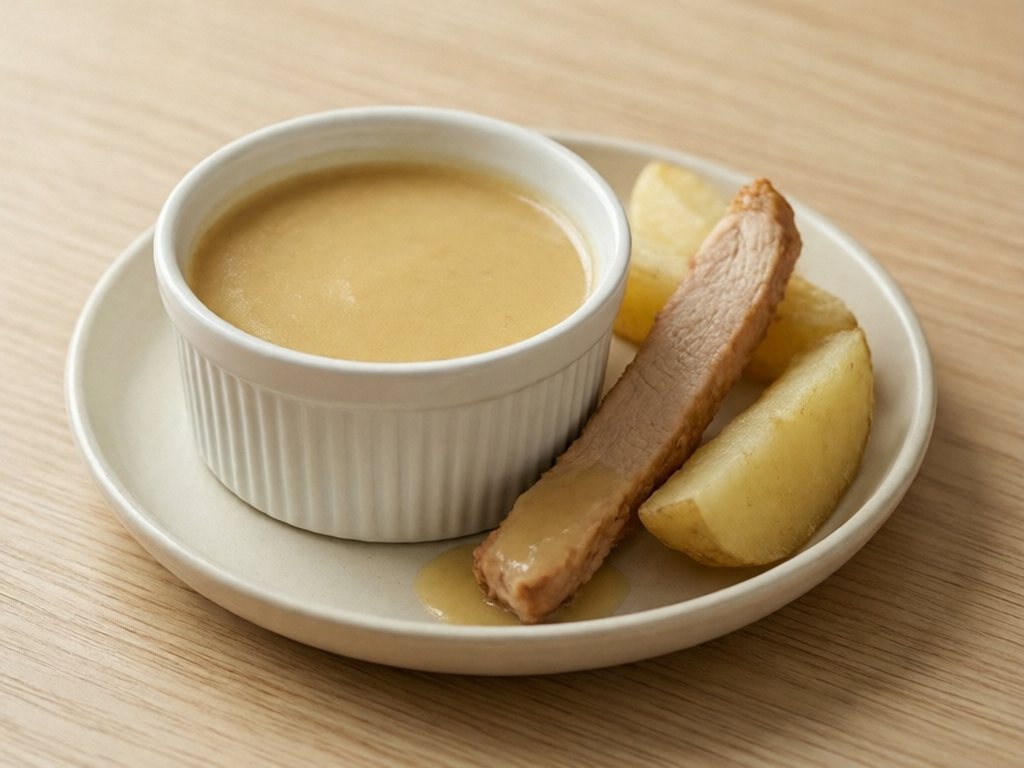
Packet gravy and stock-cube gravy are some of the saltiest foods on the Christmas table. But gravy is also a great way to make dry turkey and potatoes easier to eat, so I don’t want to just say “skip it”.
Make a baby gravy: Simmer the pan juices (before adding any salt) with a little water, a splash of low-salt stock, and a small spoon of flour or cornstarch to thicken.
Use it as a dip for soft strips of turkey, potato wedges and veg. It won’t taste like the grown-ups’ gravy, and your baby won’t mind.
Vegetables: Where Baby Can Really Shine
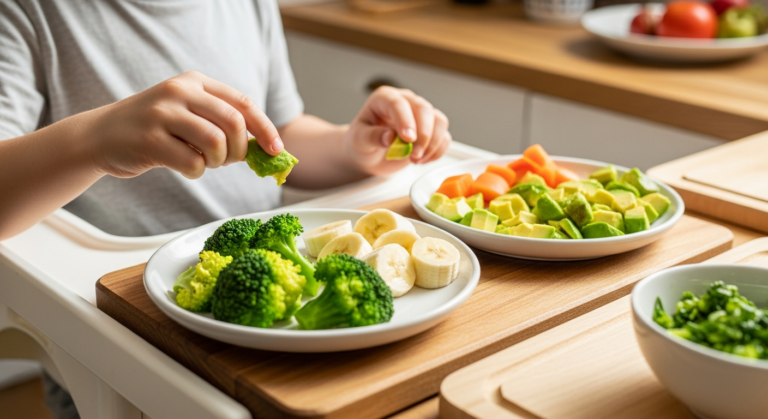
Vegetables are the easiest part of Christmas dinner for babies, as long as they’re cooked soft. A good rule: if you can squish it easily between your thumb and finger, it’s ready for a 6-month-old. For a more complete list of foods to try in the first months, see the first finger foods guide.
Carrots and parsnips
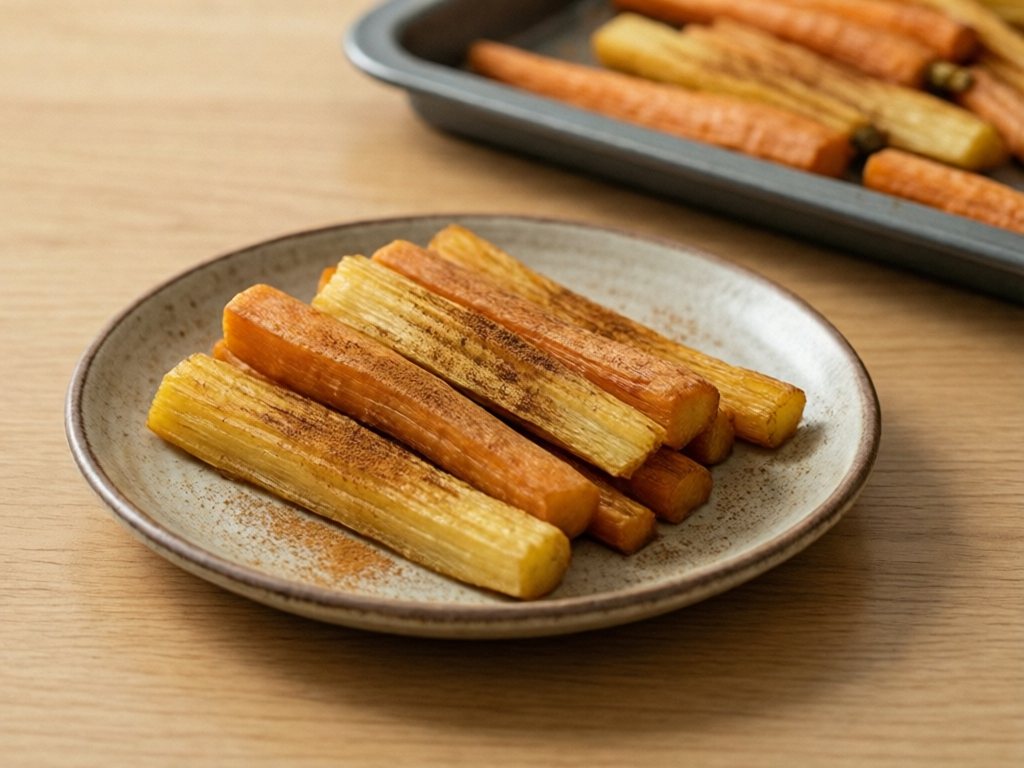
Cut into long sticks about the size of two fingers and roast or steam until very soft. For 9-12 months, cut thinner sticks or small soft cubes. For 12-18 months, soft coins quartered. Skip honey glazes under 12 months; instead, roast them with a little olive oil and a sprinkle of cinnamon.
Brussels sprouts
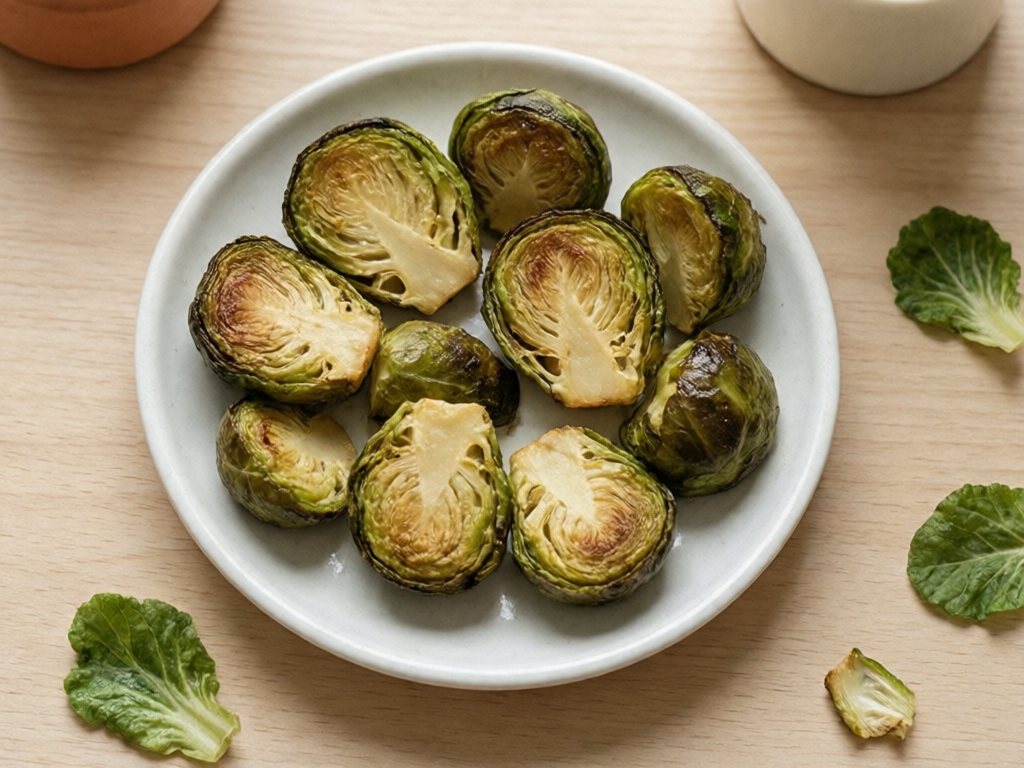
Brussels sprouts are surprisingly popular with babies, because they have a nice shape for little fists and a soft, squishy inside after roasting. Roast until tender and skip the bacon and salt for baby’s portion. Halve them lengthwise for 6-9 months, and quarter them from 9 months on, as in the table.
Green beans
Steam or roast until fully soft. For 6-9 months, whole green beans make a great grabbing shape. Older babies can have them snapped into short lengths.
Peas and corn
Peas and corn kernels are tiny, round and slippery. For 6-9 months, squish peas lightly and serve them in mash or on a spoon. For 9-12 months, lightly squished peas work well for practicing the pincer grasp. Loose whole corn kernels are a choking risk under 12 months unless they’re mashed or in creamed corn. From about 12 months, offer a few soft kernels with close supervision. Skip corn on the cob at the table.
Broccoli and cauliflower
Steam florets until soft. The “tree” shape is easy for babies to hold. Roasted cauliflower is a good one for babies, too.
Squash and sweet potatoes
Any roasted squash or sweet potato is baby friendly, as long as you skip the marshmallow topping, brown sugar and butter-heavy casserole sauce. Soft wedges for 6-9 months; small cubes for 9-12 months.
Salad and raw vegetables
Raw lettuce and crunchy raw veg like celery and raw carrot are best left for later. Cherry tomatoes need quartering lengthwise. If there’s a salad on the table, offer avocado spears or cooked vegetables from the spread instead of raw cucumber, which is firm and slippery.
Cranberry Sauce, Rolls and the Little Extras
Cranberry sauce
Canned or jarred cranberry sauce has lots of sugar, and homemade sauces often have whole berries that are round and firm. If you make your own, cook the berries until they’ve burst, add a little orange juice or a spoonful of mashed apple and go light on sugar. Offer a small spoonful on a pre-loaded spoon or mixed into yogurt for babies 9 months and older. Even homemade sauce is sweet, so keep it to a spoonful.
Rolls and bread
Soft bread can turn into a gummy ball in a baby’s mouth. If you offer a roll, give a lightly toasted strip that holds its shape, and avoid soft, untoasted doughy pieces that can clump. Bread is also surprisingly salty, so don’t make it a main item on baby’s plate.
Yorkshire puddings
Made from egg, milk and flour, a Yorkshire pudding is one of the more baby-friendly things on a British table, as long as your baby has already tried egg, wheat and dairy. Tear the soft, eggy center into strips.
Pigs in blankets, sausages and cured meats
These are the “skip for now” foods. They’re salty, processed and often cut in coin shapes. For a toddler over 12 months, offer a small amount of a low-salt sausage sliced lengthwise into thin strips and then again into pieces, never as round coins.
Cheese board and starters
The cheese board is full of choices, but only some are right for babies:
- Good: pasteurized hard cheeses like mild cheddar or Swiss, in thin strips or grated. Full-fat plain cream cheese spread thinly. Mozzarella in small pieces.
- Skip: unpasteurized cheese, mold-ripened soft cheeses like brie and camembert (a listeria concern for babies), blue cheese and very salty cheeses like feta or halloumi in large amounts.
- Change: grapes quartered lengthwise, crackers softened or skipped (too salty), and nuts replaced with soft fruit.
For more ideas that need no cutlery, my kid-friendly Thanksgiving appetizers list works just as well for holiday grazing tables.
Desserts and Sweet Treats
Christmas desserts are rich, sugary and often made with alcohol, whole nuts or dried fruit. But your baby can still be part of the sweet moment.
Christmas pudding and mince pies
Both traditionally contain a lot of dried fruit (sticky and clumpy), sugar, suet and often brandy or other alcohol. The alcohol doesn’t fully cook off. Skip both for babies and toddlers. Wait until your child is past 2 and chews reliably, or offer only a homemade, alcohol-free version with no whole nuts or sticky dried-fruit clumps. Baked pear with cinnamon is an easy swap.
Pumpkin pie
The filling is soft, orange and full of vitamin A, but it contains egg and dairy and has added sugar. Under 9 months, I offer plain mashed pumpkin or roasted squash with a pinch of cinnamon instead.
From 9 months, if baby has already tried egg and dairy, a small taste of filling on a spoon is fine. Skip the crust and any sweetened whipped cream, and keep it an occasional taste.
Gingerbread, cookies and candy
Safety firstHard candy, candy canes and gummy sweets are a choking hazard until at least age 4, so skip them. Candy canes can also snap into sharp, hard pieces.
Chocolate coins are a sugar-heavy treat with a little caffeine, so skip them for under-2s. Hard cookies are tough and sugary, so they’re a no for under-ones too.
For a toddler over 12 months, bake a soft ginger cookie with molasses (not honey), and let it soften or dunk it in milk first. Keep it an occasional treat, since added sugar is best limited until age 2.
Baby-friendly dessert ideas
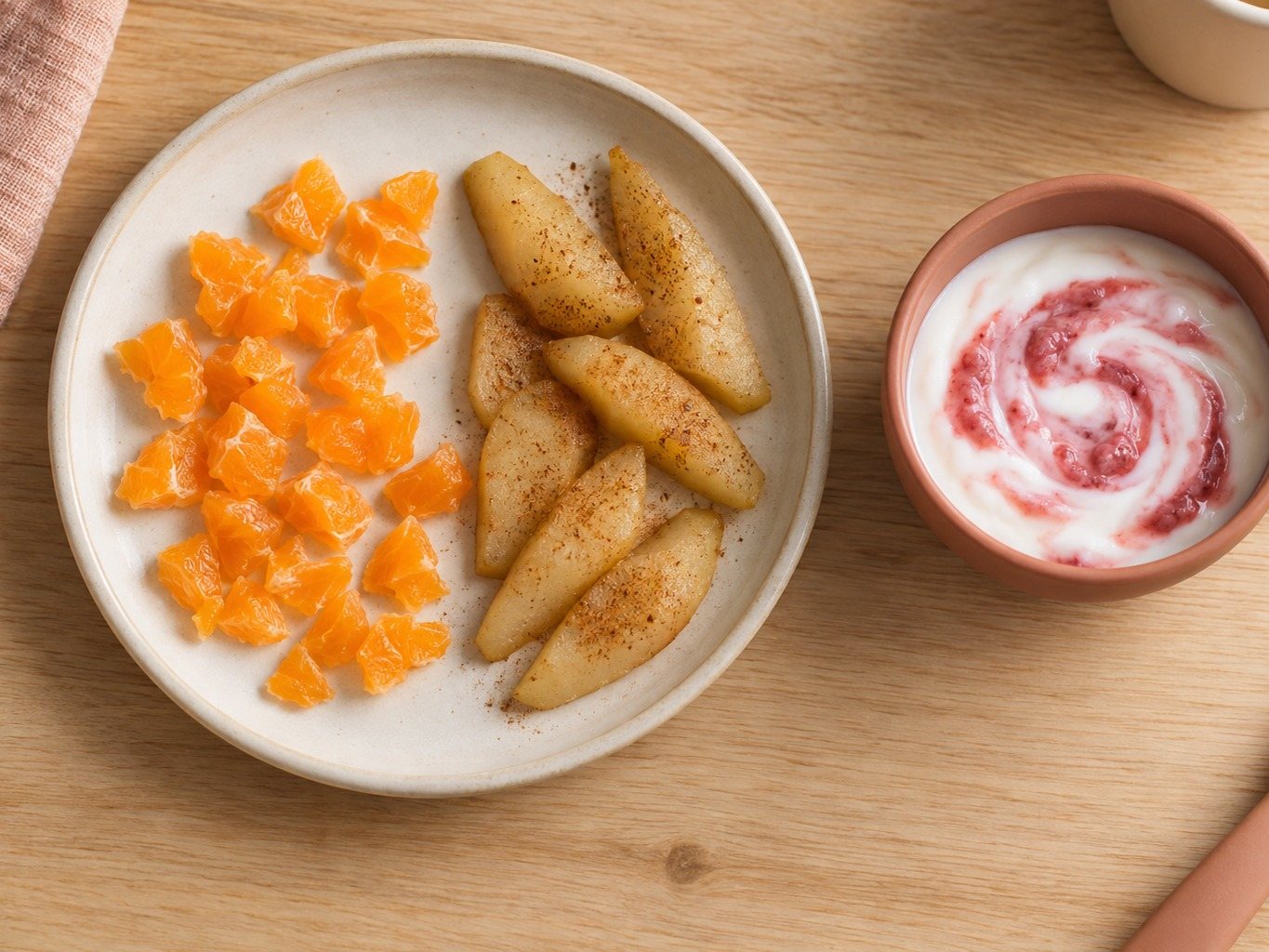
- Clementine segments (remove pith and seeds, open the membrane and tear into small pieces for under 12 months)
- Baked apple or pear with cinnamon, served soft
- Plain full-fat yogurt with a swirl of pureed fruit
- Banana “ice cream” blended from frozen banana
- Roasted sweet potato wedges dusted with cinnamon
- Soft ripe pear or mango slices
For more soft fruit ideas, my easy apple recipes for toddlers have safe shapes that work well in winter.
Drinks
Offer water in an open cup or a straw cup. Skip eggnog (raw egg, alcohol and lots of sugar), mulled wine, cider with alcohol and fizzy drinks. Plain cow’s milk as a main drink waits until 12 months, though small amounts used in cooking are okay before.
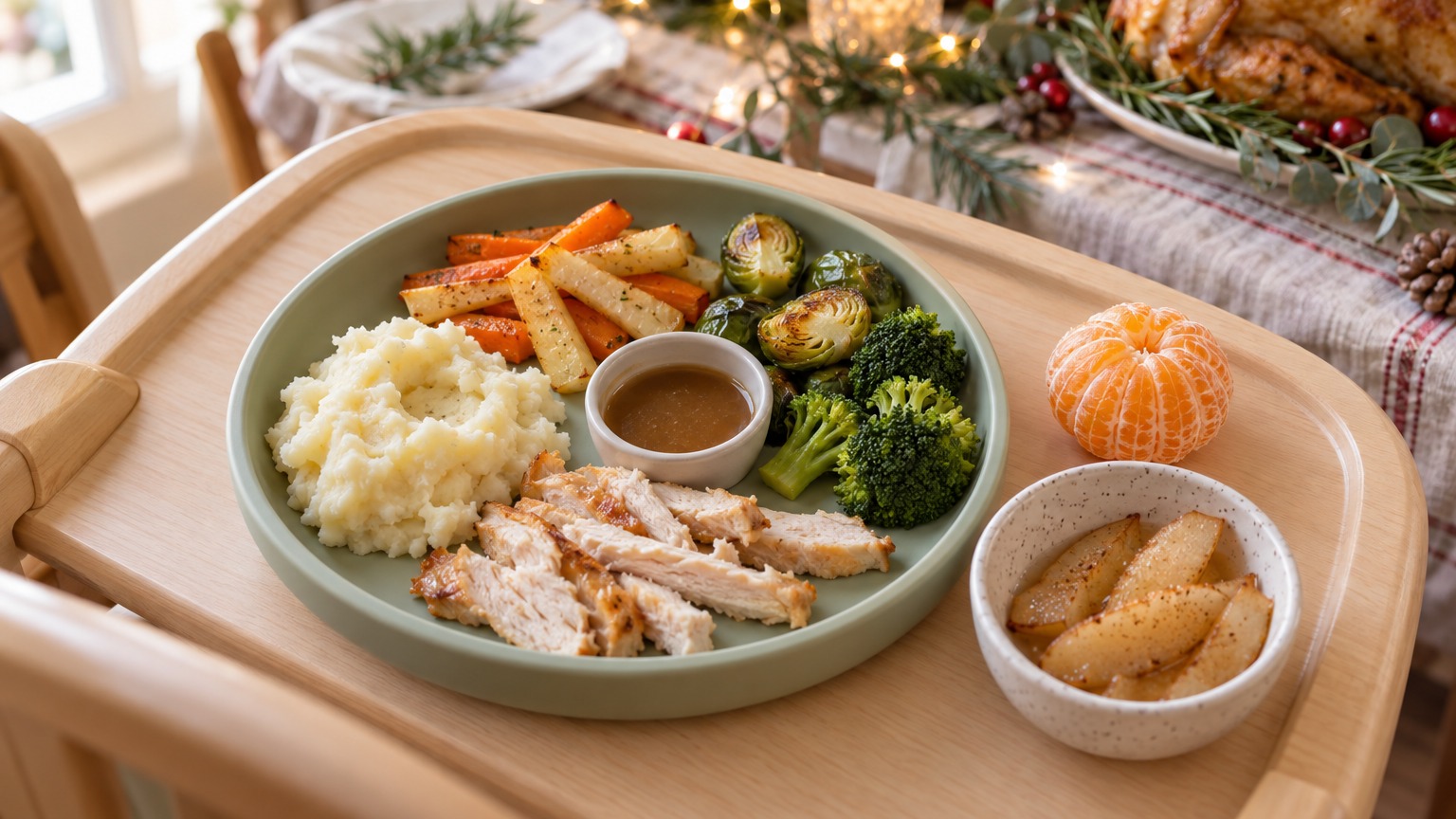
What a Christmas Dinner Plate for Baby Actually Looks Like
If you’re picturing a tiny turkey dinner, here’s what that can look like at each stage. Aim for variety, a protein, an iron-rich food, something soft and starchy, and a vegetable.
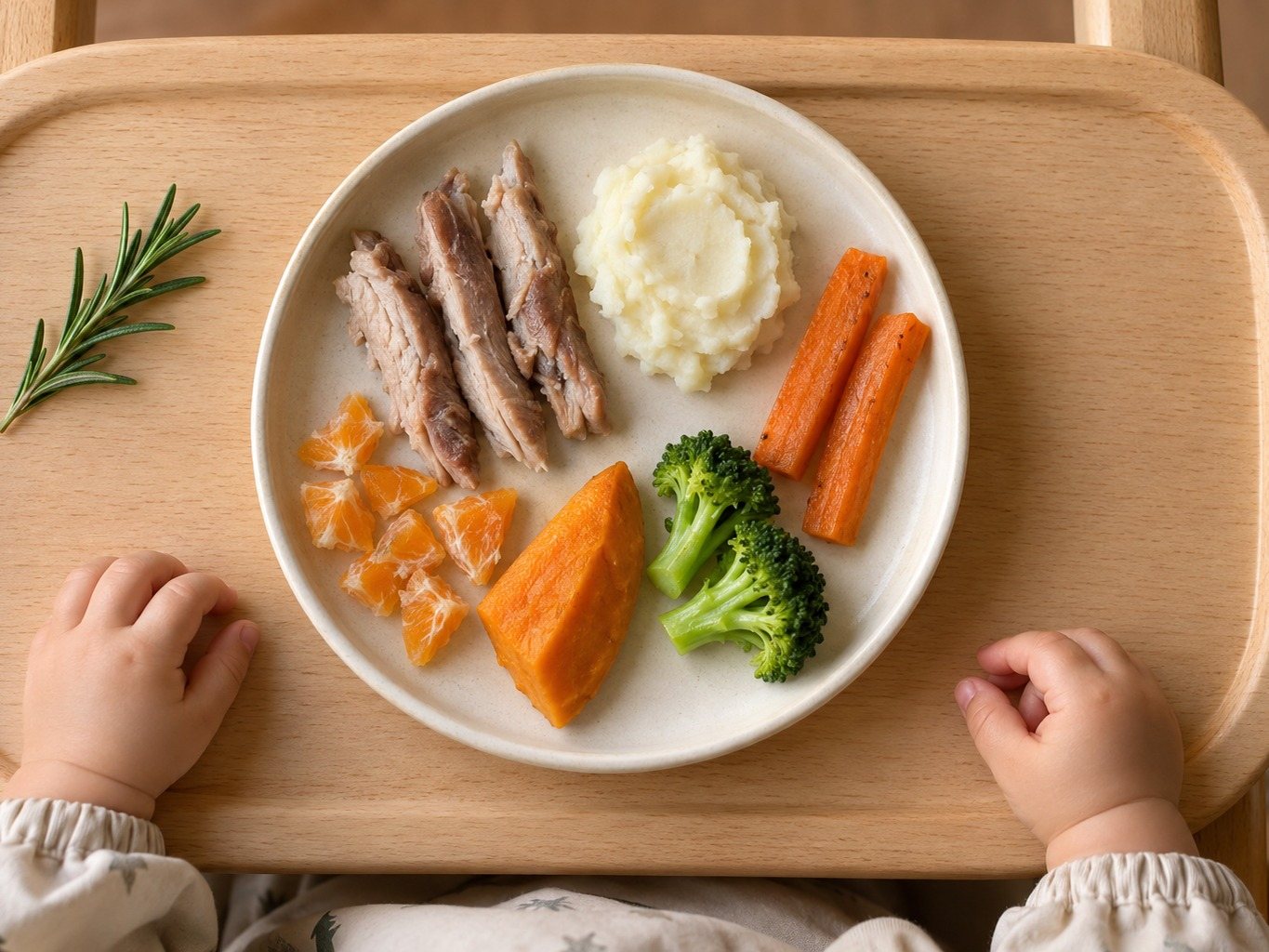
A 6-9 month plate
- 2-3 finger-sized strips of juicy dark turkey meat
- A thick scoop of mashed potato on a pre-loaded spoon
- 2 soft roasted carrot sticks
- 2 steamed broccoli florets or a soft green bean
- A wedge of soft sweet potato
- A few clementine segments, peeled, seeded and torn into small pieces
At this age it’s mostly about exploring. Most of it will end up on the floor, in the hair and on the tray, and that is a perfectly good outcome.
A 9-12 month plate
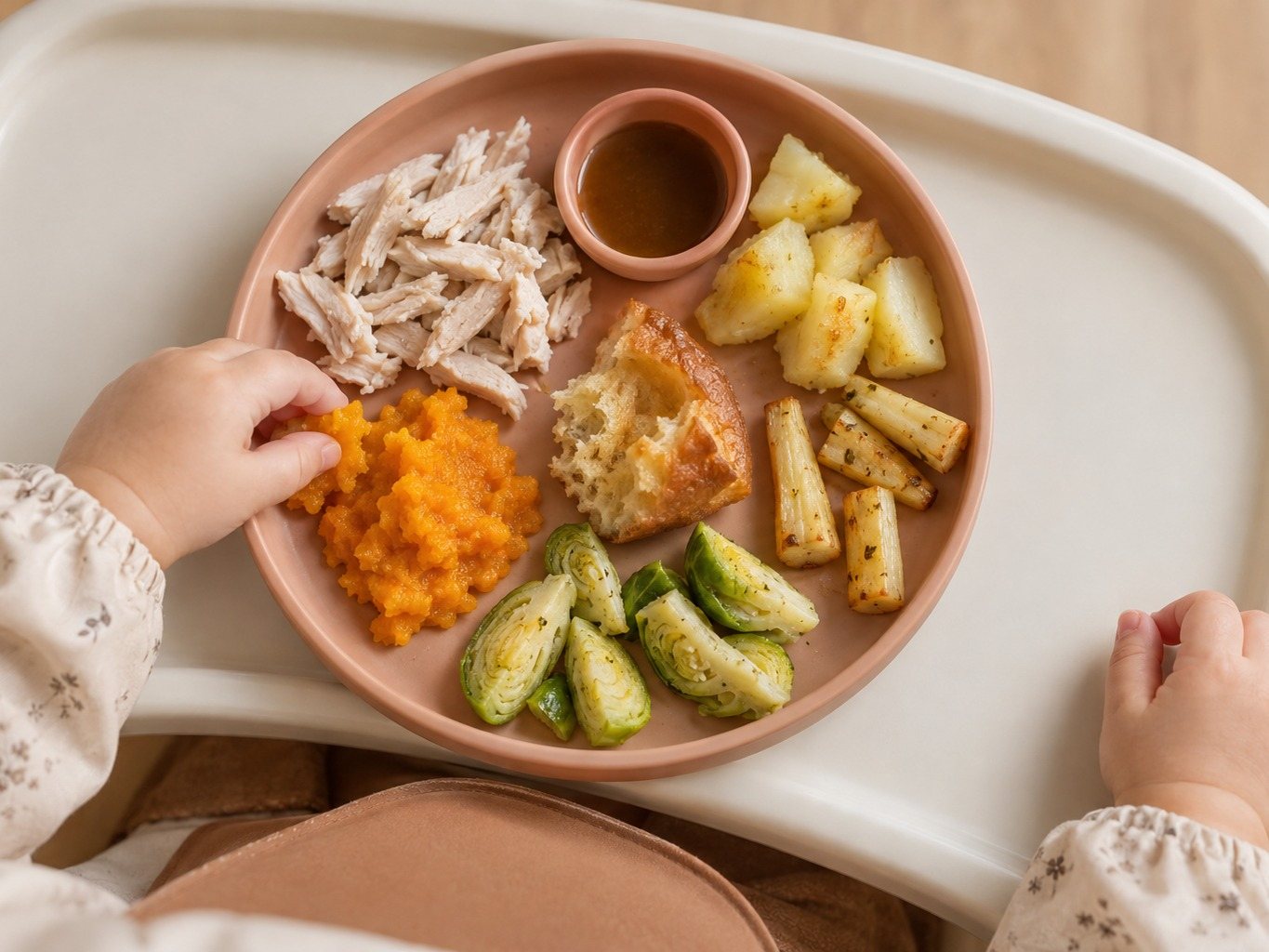
- A small pile of shredded turkey with a dip of homemade low-salt gravy
- A few soft potato cubes
- 3-4 small soft roasted parsnip pieces
- A few quartered Brussels sprouts, roasted soft
- A torn piece of Yorkshire pudding
- A spoonful of mashed pumpkin or baked apple
A 12-18 month plate
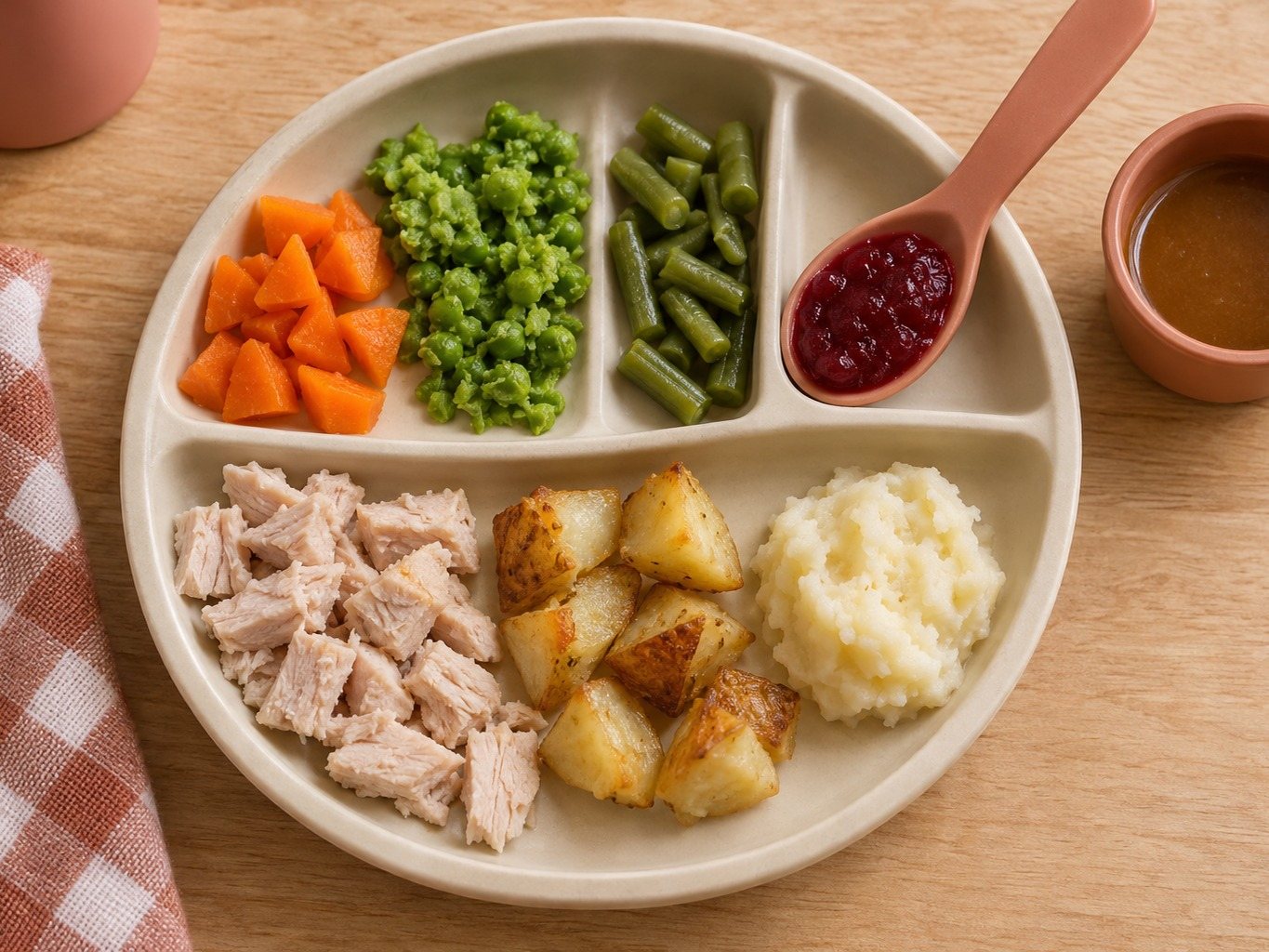
At this stage, a 1-year-old can eat most of the family meal in smaller, softer pieces. A plate at this age might include:
- Bite-size tender turkey pieces
- Soft roast potato quarters
- A spoonful of mashed potato
- Soft carrot coins, quartered
- Peas, lightly squished or served in mash
- A few green beans cut short
- A small spoon of low-sugar cranberry sauce
- A little low-salt gravy
- A spoon of pumpkin pie filling or soft baked fruit for dessert
For a 1-year-old, the big change is more variety and slightly smaller pieces. The rules about salt, added sugar and choking shapes still apply, though honey is fine after the first birthday.
Most toddlers want to eat what everyone else is eating. Set aside their portion before the salt and glaze go on, and everyone’s happy.
Got a pickier toddler at the table? See my Christmas dinner tips for picky eaters.
The Day-Of Plan: How to Make This Easy
The biggest challenge with a baby-led weaning Christmas dinner isn’t the food. It’s the timing, the noise and the pile of tasks all happening at once. Here’s how to keep it low stress.
| When | Task | Owner |
|---|---|---|
| Night before | Pick shared dishes, prep baby gravy, confirm no new allergens | Cook |
| Morning | Normal breakfast and milk feed; plan meal near usual mealtime | Parent |
| While cooking | Scoop baby’s portion before salt and glaze; cool it | Cook |
| At the table | Upright high chair, 2-3 foods at a time, one dedicated watcher | Designated adult |
The Night Before
- Choose which dishes baby will share, using the table above, and check the baby-led weaning grocery list for easy unsalted extras.
- Make or prep the baby gravy and a small unsalted portion of veg.
- Peel and par-boil extra potatoes for unsalted roasting, if you like.
- Check any new allergen exposures happened days ago, not today.
Christmas Morning
- Feed baby a normal breakfast and milk feed. Don’t let them arrive at the table starving or overtired. A very hungry baby gets frustrated, and a tired or distracted baby may manage food less well, so watch closely.
- Aim to schedule the meal around baby’s usual meal time if you can, or give a small snack beforehand.
While You Cook
- As each dish finishes, scoop baby’s portion before seasoning or glazing.
- Let baby’s portion cool. Babies burn easily, and hot roast potatoes retain heat.
- Cut and soften things, and put the baby’s portion on a separate plate.
At the Table
- Strap baby in an upright, stable high chair. Not on someone’s lap, not in a bouncer.
- Put just two or three foods on the tray at a time, so it isn’t overwhelming.
- Pick one person whose only job is watching baby eat. With a crowd talking, it’s easy for everyone to assume someone else is looking.
- Tell relatives the rules ahead of time: no feeding baby from their plate, no sneaky bites of ham or candy, no handing over a whole grape.
Talking to Relatives (Without Starting a Fight)
Holiday meals are full of well-meaning people. A grandparent holds out a mince pie, or someone swears their baby ate whole peanuts at that age. Here are a few easy scripts:
- “We’re keeping salt low for him right now, so we’ve made his plate separately. He’s loving the turkey and sweet potatoes!”
- “Thank you! We’ve got a special baby gravy, so he can dip too.”
- “We don’t do honey until after his first birthday. That’s the official guidance for babies.”
- “I’d rather you give her a hug than a cracker. She’s already full!”
If it helps, hand them a job: “Could you help me peel her a clementine?” People who are busy helping are less likely to slip in a bite of something unsafe.
Leftovers: Day-After Meals for Baby
Safety firstCarve the turkey off the bone and spread leftovers into shallow containers so they cool quickly. Refrigerate within two hours of cooking and use within three to four days. Reheat until steaming hot all the way through, then let baby’s portion cool before serving.
By the 26th you’ll have cooked turkey, roast vegetables and potatoes already waiting in the fridge, which makes baby’s next few meals easy.
- Turkey and veg hash: Chop leftover turkey, potato and veg into small soft pieces and fry lightly in olive oil.
- Turkey and mashed potato patties: Mix leftover mash with shredded turkey and an egg (if tolerated), shape into small patties and bake or pan-fry.
- Turkey soup: Simmer the turkey carcass with water, vegetables and herbs, with no added salt. Strain through a fine sieve, discard all bones, and add only picked, bone-free meat. Serve it as a soft, brothy meal with soft pasta.
- Roast veg frittata fingers: Chop leftover vegetables and bake them in whisked eggs, then cut into strips.
For more post-holiday ideas, my Thanksgiving leftovers breakfast ideas work just as well on December 26th.
Frequently Asked Questions
Can a 6-month-old have Christmas dinner?
Yes, in a baby-friendly form. If your baby has started solids and is sitting well in a high chair, they can share soft cooked vegetables, strips of juicy turkey, mashed potato and soft fruit. Skip the salt, gravy from packets, honey, ham and anything hard or round. Keep the portion small and treat it as practice, not a full meal. Breast milk or formula still provides most of their nutrition at this age.
Is turkey safe for baby-led weaning?
Yes, when it’s cooked through to 165°F (74°C), unbrined and unsalted (herbs are fine), and served in a baby-friendly shape. For 6-9 months, offer moist strips about the size of two adult fingers, preferably dark meat, with the skin and bones removed. For older babies, shred or cut into small tender pieces. Dry white meat is harder for babies to chew, so add a little low-salt gravy or serve it with mashed potato.
Can my 1-year-old eat ham at Christmas?
Skip ham under 12 months, because of the salt and because many glazes contain honey. After that, a few small shreds occasionally is fine, but ham is still very salty, so keep it small. If you’re unsure, offer extra turkey, which is lower in salt and easier to chew.
Can babies have gravy and stuffing?
Not the usual versions. Packet gravy, stock-cube gravy and boxed stuffing are very high in salt. You can make a low-salt baby gravy from the unsalted pan juices, water and a little cornstarch, and a simple homemade stuffing from soft bread, cooked onion and herbs. Offer them in small amounts as a dip or soft crumbles.
What Christmas foods should babies avoid completely?
Under 12 months, skip honey (including honey-glazed foods), alcohol and anything containing it (eggnog, mulled wine, some puddings), raw or undercooked egg, and unpasteurized cheeses. Also skip very salty or processed meats like pigs in blankets.
Several choking foods stay off the list much longer: whole nuts, popcorn, hard candy and candy canes, whole grapes, whole cranberries and raw hard vegetables. Avoid whole nuts, popcorn and hard candy until at least age 4, and cut the round foods up until your child chews reliably.
How do I cut Christmas foods safely for a baby?
For 6-9 months, serve finger-shaped pieces about the width of two adult fingers, or mashed food on a spoon. For 9-12 months, offer thin strips plus small soft pieces about the size of a pea as the pincer grasp develops. From 12 months, cut food into soft, bite-size pieces about half an inch (1 cm), and always slice round foods like grapes, tomatoes and Brussels sprouts lengthwise into quarters. Soften vegetables until they squish easily between your fingers.
Is it okay to introduce new foods on Christmas Day?
It’s best not to introduce a new major allergen, such as egg, peanut, tree nuts, dairy, wheat, fish or shellfish, on Christmas Day. A busy, noisy meal makes it harder to watch for a reaction, and you may be far from your usual routine. Offer new allergens a few days ahead, early in the day, so you can monitor calmly. Plain new vegetables and fruits are usually less of a concern, but if your baby has eczema or a family history of allergy, check with your pediatrician.
One Last Thing Before You Carve
Pull baby’s portion before the salt goes on, cut things soft and the right shape, and keep an eye on the high chair. Do that and most of the table is theirs to explore.