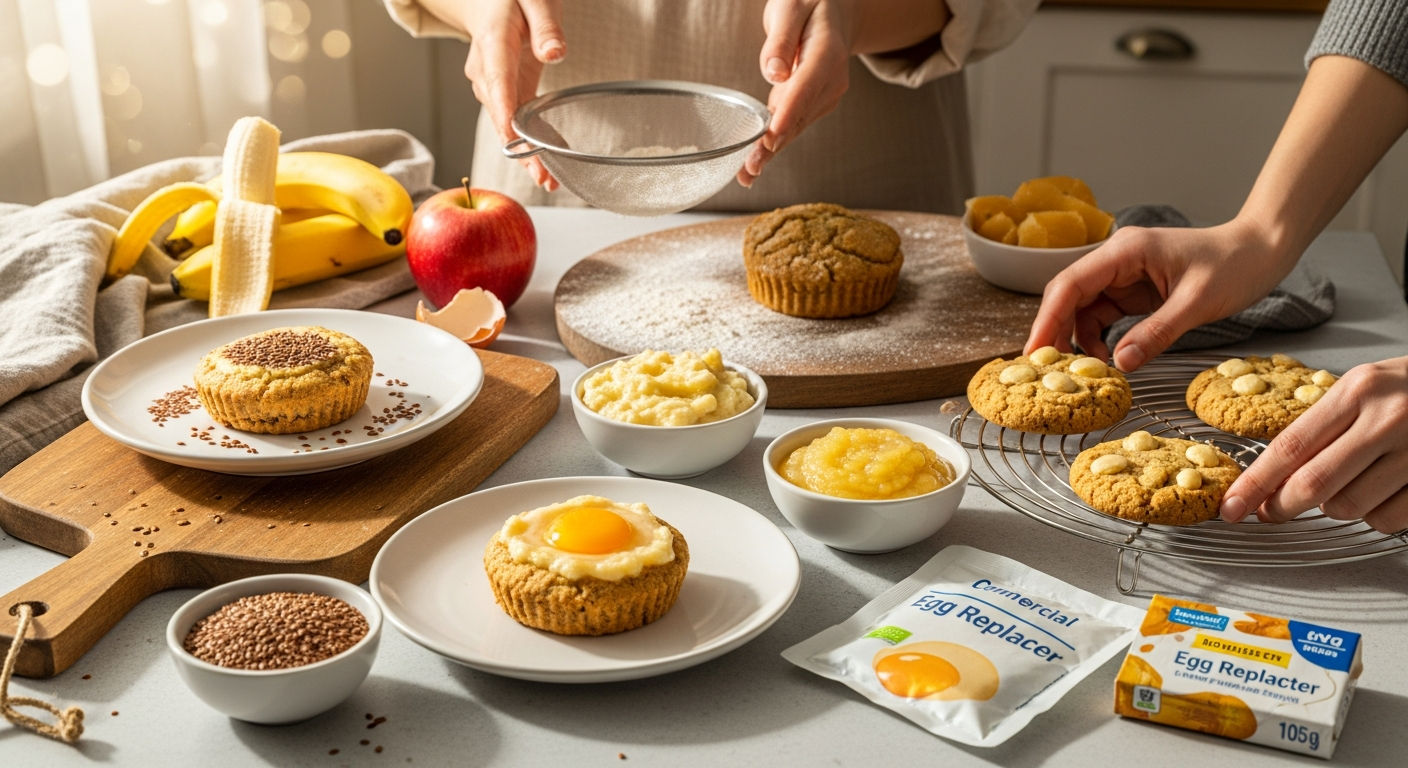
Egg-Free Baking Substitutes That Actually Work
This article teaches you how to master egg-free baking by understanding what eggs do in recipes and choosing the right substitute. You'll learn which substitutes, like applesauce and flax eggs, work best for different baking needs.
- Understand egg functions (binding, moisture, leavening) to pick the best substitute.
- Use ¼ cup unsweetened applesauce per egg for moist muffins, quick breads, and cakes.
- Always use unsweetened applesauce to avoid altering your recipe's sugar balance.
- Flax and chia eggs are excellent binding champions for cookies and bars.
Picture this: it’s Sunday afternoon, your kitchen smells like vanilla and cinnamon, and you’re pulling a batch of golden muffins from the oven. Your daughter takes a bite and declares them “the best ever!” – and she has no idea they’re completely egg-free. This scene plays out in my kitchen more often than you might think, because egg allergies, dietary restrictions, and those inevitable moments when you’re out of eggs mid-recipe have made me a master of egg substitutions.
Here’s what I’ve learned after years of experimenting (and yes, a few kitchen disasters): not all egg substitutes are created equal. Some work beautifully in cookies but turn cakes into hockey pucks. Others are perfect for binding but terrible for leavening. The key is understanding what eggs actually do in your recipe – and then choosing the right substitute to do that same job.
Whether you’re dealing with food allergies, following a vegan lifestyle, or just caught egg-less at the worst possible moment, these tried-and-true substitutes will save your baking day. I’ve tested each one extensively in my own kitchen, often with my kids as willing (and honest) taste testers.
In this article (7 sections)
Understanding What Eggs Do in Baking
Before we dive into substitutes, let’s talk about why eggs are baking superstars in the first place. In my chocolate chip cookies, eggs bind the dough together so it doesn’t crumble into a mess on the baking sheet. In my banana bread, they provide moisture and help create that tender crumb we all love. And in my weekend pancakes, they work as a leavening agent, creating those fluffy, airy pockets that make mornings feel special.
Eggs also act as emulsifiers – think of how they help oil and water-based ingredients play nicely together in cake batter. Plus, they add richness and contribute to that beautiful golden color in baked goods. When you’re choosing a substitute, consider which of these jobs is most important in your specific recipe.
For binding-heavy recipes like cookies and bars, you’ll want something with good adhesive properties. For cakes and muffins where moisture and tenderness matter most, focus on substitutes that add liquid and fat. And for recipes that depend on eggs for lift – like some quick breads and pancakes – you’ll need options with natural leavening power.
Applesauce: The Moisture Master
Unsweetened applesauce has become my go-to substitute for moist, tender baked goods. I use ¼ cup of applesauce to replace each egg, and the results are consistently excellent in muffins, quick breads, and cakes. My kids’ favorite cinnamon apple muffins actually taste better with applesauce instead of eggs – the extra apple flavor creates this lovely depth that pairs perfectly with warm spices.
The magic of applesauce lies in its natural pectin content, which provides gentle binding while adding moisture. It works especially well in recipes that already include fruit flavors or warm spices that complement its subtle sweetness. I’ve had great success using it in banana bread (where it practically disappears flavor-wise), carrot cake, and even chocolate zucchini muffins.
Best Practices for Applesauce Substitution
Always use unsweetened applesauce to avoid throwing off your recipe’s sugar balance. I learned this the hard way when my first attempt at egg-free brownies turned out cloyingly sweet – I’d used the sweetened variety without adjusting the sugar content. Store-bought works perfectly fine, but if you have homemade applesauce, even better.
Keep in mind that applesauce will make your baked goods slightly denser and more moist than traditional egg versions. This isn’t necessarily a bad thing – my applesauce chocolate chip muffins stay fresh for days longer than the egg version. However, avoid using it in recipes where you need significant lift, like angel food cake or soufflés.
Flax and Chia Eggs: The Binding Champions
When I first heard about “flax eggs,” I was skeptical. How could a tablespoon of ground flaxseed mixed with water possibly replace a real egg? But after watching this mixture sit for five minutes and transform into a gel-like consistency, I became a believer. This substitute excels in recipes where binding is crucial – think cookies, granola bars, and dense quick breads.
To make one flax egg, I combine 1 tablespoon of ground flaxseed with 3 tablespoons of water and let it sit for 5-10 minutes until it becomes thick and gooey. The mixture should look almost slimy – that’s exactly what you want. Chia eggs work the same way: 1 tablespoon of chia seeds (ground or whole) mixed with 3 tablespoons of water.
Flax vs. Chia: When to Use Which
Ground flaxseed creates a smoother texture and virtually disappears in dark batters like chocolate brownies or gingerbread cookies. I always keep a bag of pre-ground flaxseed in my freezer – it stays fresh longer and I don’t have to remember to grind it myself on busy baking days.
Chia seeds, on the other hand, add interesting texture and work beautifully in lighter-colored baked goods where their tiny black specks create visual interest. My lemon chia muffins look like they’re studded with poppy seeds, and the chia adds a subtle nutty flavor that complements the bright citrus perfectly. Whole chia seeds provide more textural interest, while ground chia seeds blend in more seamlessly.
Both options add healthy omega-3 fatty acids and fiber to your baked goods – a bonus that my nutrition-conscious mom friends always appreciate when I share recipes at school events.
Commercial Egg Replacers: The Reliable Workhorses
Sometimes you need a substitute that works consistently across different types of recipes, and that’s where commercial egg replacers shine. Products like Ener-G Egg Replacer and Bob’s Red Mill Egg Replacer have saved me countless times when I’m baking for potlucks or school events where I need predictable results.
These powdered replacers typically combine starches, leavening agents, and gums to mimic eggs’ multiple functions. I use them according to package directions – usually 1.5 teaspoons of powder mixed with 2-3 tablespoons of water per egg. The mixture doesn’t look like much, but it performs reliably in everything from sugar cookies to vanilla cake.
What I love about commercial replacers is their neutrality – they don’t add any flavor or significantly change the texture of your finished product. This makes them perfect for delicate recipes like vanilla cupcakes or sugar cookies where you want clean, pure flavors to shine through. They also have excellent shelf stability, so I always keep a box in my pantry for egg emergencies.
Maximizing Commercial Replacer Success
Let the powder fully hydrate before adding it to your recipe – I usually mix it and let it sit for 2-3 minutes while I measure other ingredients. This small step prevents any grittiness in the final product. Also, these replacers work best in recipes that call for 1-3 eggs; beyond that, you might notice some textural changes.
Aquafaba: The Whipping Wonder
The liquid from a can of chickpeas might seem like an unlikely baking ingredient, but aquafaba has revolutionized my egg-free baking, especially when I need something that can whip up like egg whites. Three tablespoons of this magical liquid replace one whole egg, but where aquafaba really shines is in recipes that require whipped egg whites.
I’ve successfully made egg-free meringues using aquafaba, and while they take longer to whip than egg whites (we’re talking 10-15 minutes with my stand mixer), the results are impressively similar. The peaks hold their shape, and the finished meringues have that same crispy exterior and chewy interior that makes them irresistible.
For regular baking applications, aquafaba works beautifully in light, airy cakes and muffins. It adds moisture without heaviness, and because it’s virtually flavorless, it doesn’t compete with other ingredients. My vanilla bean cupcakes made with aquafaba are so tender and springy that guests never suspect they’re egg-free.
Aquafaba Tips and Tricks
Use the liquid from canned chickpeas rather than cooking your own – the canned version has the perfect consistency and concentration. I save aquafaba in ice cube trays, freezing portions equivalent to 1-2 eggs for future use. Frozen aquafaba works just as well as fresh once thawed.
If you’re whipping aquafaba for meringues or to fold into batters, add a pinch of cream of tartar to help stabilize the foam. The whipped aquafaba won’t hold as long as whipped egg whites, so use it immediately after whipping for best results.
Fruit and Vegetable Purees: The Flavor Enhancers
Beyond applesauce, other fruit and vegetable purees can work magic in egg-free baking while adding their own delicious flavors and nutritional benefits. Mashed banana is probably the most familiar – ¼ cup replaces one egg and brings natural sweetness plus incredible moisture to quick breads and muffins.
My kids request my banana chocolate chip muffins weekly, and they have no idea that the mashed banana is doing double duty as both flavoring and egg replacement. The banana adds natural sweetness, so I can reduce the sugar slightly, and the potassium and fiber make these muffins feel less indulgent and more like a reasonable breakfast choice.
Pumpkin puree works similarly – ¼ cup per egg – and creates incredibly moist results in spice cakes, muffins, and quick breads. I use it year-round, not just during fall, because it pairs beautifully with chocolate and creates such rich, tender baked goods. My pumpkin chocolate chip bread stays moist for nearly a week wrapped on the counter.
Creative Puree Options
Sweet potato puree works just like pumpkin and adds a lovely orange color plus extra vitamins. I roast sweet potatoes in bulk and freeze the puree in ice cube trays for easy baking access. Mashed avocado might sound strange, but it creates incredibly fudgy brownies and chocolate cakes – the flavor completely disappears behind the chocolate.
Even silken tofu, when pureed until completely smooth, makes an excellent egg substitute in dense, moist cakes. Use ¼ cup of pureed silken tofu per egg, and blend it thoroughly to avoid any lumps. It works particularly well in chocolate recipes where its neutral flavor won’t be detected.
Combining Substitutes for Best Results
Sometimes the magic happens when you combine different egg substitutes to tackle multiple jobs at once. In recipes calling for 3 or more eggs, I often use a combination approach – maybe one flax egg for binding, plus some applesauce for moisture, plus a bit of extra baking powder for lift.
My go-to egg-free vanilla cake uses this strategy: I replace three eggs with one flax egg, ¼ cup applesauce, and an extra ½ teaspoon of baking powder. The result is a cake that’s tender, moist, and has excellent structure – honestly better than many egg versions I’ve made.
For cookies that need to hold together but not be too cakey, I might combine a tablespoon of ground flaxseed with 2 tablespoons of non-dairy milk instead of water. This creates binding power while keeping the texture dense and chewy rather than fluffy. My oatmeal chocolate chip cookies made this way have the perfect texture – they hold together beautifully but aren’t cake-like at all.
The key is understanding what each substitute brings to the party and not being afraid to experiment. Start with recipes you know well, make one substitution at a time, and take notes about what works. Before you know it, you’ll have a whole arsenal of egg-free baking tricks that will serve you well whether you’re dealing with allergies, dietary choices, or just an empty egg carton on baking day.
Mama Munch
Mama Munch is a food-obsessed parent of two who believes every family deserves simple, nutritious meals — even on the busiest weeknights. With a background in nutrition education and years of navigating picky eaters, allergies, and toddler taste buds, she creates practical recipes and meal strategies that actually work for real families.