Meal Planning to Save Money: A Complete Guide
Discover how strategic meal planning can cut your grocery bill by 30-40% without sacrificing flavor. You'll learn to be intentional with purchases, maximize ingredients, and shop smart with sales.
- Track your food spending to identify waste and expensive convenience items.
- Use the 'Anchor Ingredient Method' by building meals around sale-priced proteins.
- Create shopping lists in store layout order and maintain a pantry inventory.
- Select recipes that use affordable proteins, maximize vegetables, and create leftovers.
This post contains affiliate links. As an Amazon Associate I earn from qualifying purchases.
Last Tuesday, I stood in the grocery store checkout line watching the total climb higher and higher—$187 for what felt like basic ingredients. The cashier handed me my receipt, and I felt that familiar knot in my stomach. Sound familiar? That moment sparked something in me, and I knew it was time to get serious about meal planning not just for convenience, but for our family’s budget.
Here’s what I’ve discovered after months of trial and error: strategic meal planning can cut your grocery bill by 30-40% without sacrificing flavor or nutrition. It’s not about eating beans and rice every night (though there’s nothing wrong with a good beans and rice dish!). It’s about being intentional with your purchases, maximizing ingredients across multiple meals, and timing your shopping with sales cycles.
The best part? Your family won’t even notice you’re spending less. In fact, they might start eating better than ever. Let me walk you through exactly how I transformed our family’s food budget while keeping everyone happy at the dinner table.
In this article (6 sections)
Understanding Your Current Food Spending
Before diving into meal planning strategies, you need to know where your money actually goes. For one week, save every grocery receipt, takeout order, and coffee shop purchase. I was shocked to discover we were spending $60 a week on “convenience” items—pre-cut vegetables, individual yogurt cups, and those expensive grab-and-go snacks.
Break down your spending into categories: proteins, produce, pantry staples, dairy, and what I call “impulse items.” Most families spend 25-30% of their grocery budget on proteins, but with smart planning, you can reduce this to 15-20% while actually eating more satisfying meals.
Track your food waste too. That half-used bunch of cilantro wilting in your crisper drawer represents about $2 down the drain. Multiply that by the forgotten bell peppers, the bread that went stale, and the leftovers that got pushed to the back of the fridge, and you’re looking at potentially $20-30 in weekly waste.
Building Your Money-Saving Meal Planning System
The key to successful budget meal planning lies in choosing anchor ingredients that work across multiple dishes. I start every planning session by checking what proteins are on sale, then build entire weeks around those deals. When chicken thighs drop to $0.99 per pound, I buy 10 pounds and plan five different meals.
The Anchor Ingredient Method
Here’s how this works in practice: Let’s say ground turkey is on sale for $2.49 per pound. I’ll buy 3 pounds and use it for Turkish-spiced meatballs with rice and yogurt sauce on Monday, turkey and black bean tacos on Wednesday, and a hearty turkey and vegetable soup on Friday. Each meal tastes completely different, but I’ve maximized my bulk purchase and saved on per-meal protein costs.
For vegetables, I focus on versatile options that store well and work in multiple preparations. A 3-pound bag of carrots can become roasted carrots with honey and thyme, carrot ginger soup, shredded carrots in tacos, and carrot sticks for lunches—all for about $2.
Strategic Shopping Lists
Create your shopping list in store layout order to avoid backtracking (and impulse purchases). Start with produce, where you’ll spend about 5 minutes selecting vegetables that complement your planned proteins. Then hit the meat department for your sale items, followed by dairy, pantry staples, and frozen goods last.
I keep a running “pantry inventory” on my phone, noting when staples like olive oil, rice, or canned tomatoes are running low. This prevents those expensive emergency trips where you grab whatever’s convenient rather than what’s economical.
Strategic Recipe Selection for Maximum Savings
The most budget-friendly meals share common characteristics: they use affordable proteins, incorporate filling starches, maximize vegetables, and create delicious leftovers. Focus on dishes where expensive ingredients like meat or cheese are supporting players rather than the main event.
One-Pot Wonders That Stretch Ingredients
My go-to money-saving dinner is a Spanish-inspired rice and chicken skillet that feeds six people for under $8. Heat 2 tablespoons olive oil in a large skillet, brown 1 pound of chicken thighs (skin-on for flavor), remove and set aside. In the same pan, sauté 1 diced onion and 3 minced garlic cloves until fragrant. Add 1½ cups bomba or short-grain rice, stirring for 2 minutes until lightly toasted. Pour in 3 cups chicken broth, add a pinch of saffron (or turmeric for budget-friendly color), return the chicken to the pan, and simmer covered for 20 minutes. Stir in 1 cup frozen peas and let stand 5 minutes before serving.
This meal costs approximately $1.35 per serving and provides complete nutrition with protein, complex carbs, and vegetables. The leftovers transform beautifully into fried rice the next day or can be packed into containers for quick lunches.
Bean and Grain Combinations
Don’t underestimate the power of legumes for budget-conscious families. A hearty white bean and kale soup starts with 2 cups dried navy beans (soaked overnight), 1 diced onion, 3 carrots, 2 celery stalks, and 6 cups vegetable broth. Simmer for 90 minutes until beans are tender, then stir in 4 cups chopped kale and season with salt, pepper, and a splash of apple cider vinegar. Total cost per serving: about $0.85.
Serve this soup with crusty bread (homemade costs about $0.50 per loaf) and a simple salad of whatever greens are seasonal and affordable. Your family gets a restaurant-quality meal for under $2 per person.
Batch Cooking and Freezer Strategies
Weekend batch cooking transforms both your schedule and your budget. When you cook in larger quantities, you use less energy per serving and can take advantage of bulk pricing. Plus, you avoid those expensive weeknight panic meals when everyone’s hungry and nothing’s planned.
Freezer-Friendly Staples
Every other Sunday, I make a double batch of my versatile turkey and vegetable meatballs. Combine 2 pounds ground turkey, 1 cup breadcrumbs, 2 eggs, 1 finely diced onion, 2 grated carrots, 3 minced garlic cloves, and seasoning. Form into 32 meatballs and bake at 400°F for 20 minutes until golden. Cool completely, then freeze in meal-sized portions.
These meatballs become Swedish meatballs with cream sauce and egg noodles, Italian-style with marinara and pasta, or Middle Eastern with yogurt sauce and rice. Having this protein foundation in your freezer means dinner is always 30 minutes away, eliminating the temptation to order takeout.
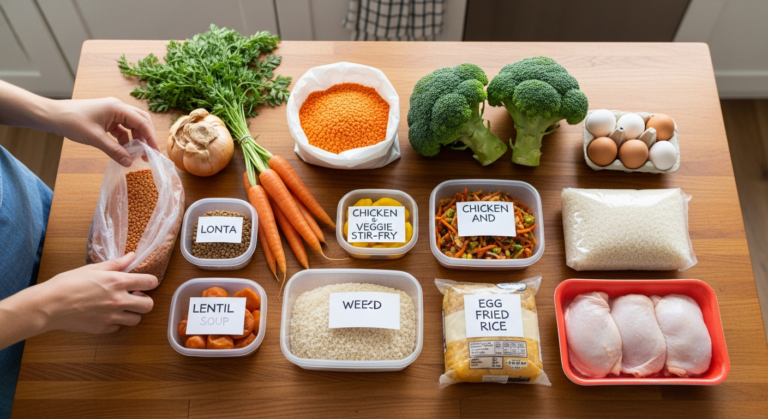
I also batch-cook grains and legumes. A big pot of brown rice, quinoa, or lentils can be portioned and frozen for up to 3 months. Frozen cooked grains reheat perfectly in the microwave with a splash of water, saving both time and the markup on those expensive microwaveable grain packets.
Strategic Leftover Management
Plan intentional leftovers that transform into new meals. Tuesday’s roast chicken becomes Wednesday’s chicken salad sandwiches and Thursday’s chicken and vegetable soup. The key is planning these transformations in advance rather than hoping you’ll figure it out later.
Roasted vegetables get a second life mixed into grain bowls, folded into frittatas, or blended into soups. That slightly wilted lettuce becomes the base for a warm wilted salad with bacon and vinaigrette. Train yourself to see ingredients with potential rather than items heading toward waste.
Shopping Smart: Timing, Stores, and Deals
Your shopping strategy impacts your budget as much as your meal choices. Most grocery stores follow predictable sale cycles—understanding these patterns helps you stock up when prices are lowest rather than paying premium prices when you’re running low.
Store Loyalty and Price Comparison
I shop three different stores strategically: the discount chain for pantry staples and frozen vegetables, the conventional grocery store for sale proteins and dairy, and the farmers market for seasonal produce. This might sound time-consuming, but I’ve streamlined it into one efficient Saturday morning routine.
At the discount store, I stock up on canned tomatoes, dried pasta, rice, frozen vegetables, and cleaning supplies—items where brand doesn’t significantly impact quality. The conventional grocery store is where I hunt for marked-down meat (usually late morning or early evening) and dairy products nearing their sell-by dates that I’ll use within two days.
The farmers market, surprisingly, often offers better prices on seasonal produce than the grocery store, especially if you shop in the last hour when vendors prefer to sell rather than pack up. Those “imperfect” tomatoes are perfect for sauce, and slightly soft peaches are ideal for cobblers or smoothies.
Seasonal Menu Planning
Align your meal planning with natural seasons to take advantage of peak flavors and lowest prices. In summer, build meals around zucchini, tomatoes, corn, and stone fruits. My family’s favorite summer dinner costs under $6 total: grilled zucchini and yellow squash with fresh corn salad (corn, diced tomatoes, basil, olive oil, and lime juice) and grilled chicken thighs marinated in lemon and herbs.
Winter calls for hearty stews, roasted root vegetables, and citrus-based salads. A warming beef and root vegetable stew using cheaper cuts like chuck roast becomes incredibly tender after slow braising and costs about $1.50 per generous serving when you factor in the potatoes, carrots, onions, and broth.
Making It Work Long-Term
The most perfectly planned budget meal system falls apart if your family won’t eat the food. Success comes from gradually shifting toward more economical ingredients while maintaining flavors everyone loves. Start with familiar dishes and make small substitutions—ground turkey instead of ground beef, chicken thighs instead of breasts, dried beans instead of canned.
Keep a running list of your family’s “budget favorites”—meals that cost under $8 to feed everyone and get enthusiastic responses. My kids request my lentil and sweet potato curry (which costs about $5 total) more often than any expensive restaurant meal. The secret is building big, bold flavors with affordable spices and aromatics rather than relying on premium ingredients.
Track your monthly grocery spending and celebrate the wins. When you see that number drop from $800 to $550 without anyone feeling deprived, you’ll understand why meal planning isn’t just about organization—it’s about financial freedom and the satisfaction of feeding your family incredibly well for less.
Remember, every family’s budget and preferences are different. Start with one or two strategies that feel manageable, then gradually incorporate others as they become habits. The goal isn’t perfection; it’s progress toward more intentional, economical, and delicious family meals that leave both your family and your bank account satisfied.
Mama Munch
Mama Munch is a food-obsessed parent of two who believes every family deserves simple, nutritious meals — even on the busiest weeknights. With a background in nutrition education and years of navigating picky eaters, allergies, and toddler taste buds, she creates practical recipes and meal strategies that actually work for real families.