Breakfast Ideas for 12-Month-Olds: First Birthday and Beyond
Don't panic about feeding your 12-month-old breakfast after their first birthday. This guide helps you understand what changes (and what doesn't) in their eating abilities, offering practical ideas for textures, portions, and troubleshooting for smooth mornings.
- Don't expect eating abilities to change instantly at 12 months.
- Introduce cow's milk and firmer textures, but stay vigilant for choking hazards.
- Prioritize iron-rich foods; small, varied portions are normal for your baby.
- Embrace the mess; it's part of developing self-feeding skills.
- Remember milk (breast/formula/cow's) is still a key calorie source.
This post contains affiliate links. As an Amazon Associate I earn from qualifying purchases.
The morning after my daughter’s first birthday party, I stood in the kitchen holding a spoon, a very unimpressed baby in a high chair, and absolutely no idea what to feed her. The day before, she’d smashed her face into a smash cake like it was her job. The day before that, she was still on purees and mushy oatmeal most mornings. Somewhere in my sleep-deprived brain, I had it in my head that turning one meant she was suddenly supposed to eat like a “real kid” — toast, eggs, maybe even those little waffles I saw other toddlers eating at daycare drop-off. But when I actually looked at her tiny hands and her four teeth, I realized nothing about her eating ability had changed overnight just because a candle got blown out (by me, since she just stared at it).
If you’re standing in that same kitchen moment, breathe. Turning 12 months is a milestone for the calendar, not a switch that flips in your baby’s mouth or belly. The good news is that this is actually one of the most fun stretches of feeding — babies this age are curious, they want to feed themselves, and they’re ready for way more texture and flavor than most of us realize. This post is your practical, no-guesswork guide to breakfast specifically sized and cut for right-after-first-birthday eaters, plus the swaps, timing, and troubleshooting that make those first few months of “real food mornings” go smoothly.
In this article (11 sections)
- What Changes (and What Doesn’t) at 12 Months
- How Much Should a 12-Month-Old Actually Eat for Breakfast?
- The 10 Breakfasts: Sized and Cut for Right-After-First-Birthday Eaters
- Cutting and Texture Guide for the 12-Month Mouth
- Building a Simple Weekly Breakfast Rotation
- Iron, Protein, and the Nutrients Breakfast Should Prioritize
- When Milk, Water, and Juice Fit Into Breakfast
- Common Breakfast Mistakes I Made (So You Don’t Have To)
- Adapting Breakfast for a Baby With Only a Few Teeth
- Frequently Asked Questions
- A Gentle Last Word
What Changes (and What Doesn’t) at 12 Months
Turning one is a big deal developmentally, but it helps to know exactly what’s actually different about your baby’s eating at this age versus, say, 10 or 11 months.
What typically changes around 12 months:
- Cow’s milk can usually be introduced as a drink (check with your pediatrician, especially if there’s a family history of dairy allergy)
- Many babies have 4-8 teeth, which allows for slightly firmer textures
- Pincer grasp is usually well-established, so smaller, more precise finger foods become manageable
- Babies often show more interest in “grown-up” foods and want to copy what’s on your plate
- Some babies transition off purees almost entirely; others still want them occasionally, and that’s fine too
What does NOT change overnight at 12 months:
- Choking risk. Grapes, whole nuts, popcorn, hard raw vegetables, and round hot dog coins are still hazards at 12, 15, and even 24 months. The one-candle birthday does not confer new chewing superpowers.
- The need for iron-rich foods. Babies’ iron stores from birth are typically depleted by 12 months, so breakfast is actually a prime opportunity to sneak in iron (more on that below).
- Portion expectations. A “meal” for a 1-year-old might be two tablespoons of oatmeal and three blueberry halves. That is a completely normal breakfast. It is not a sign anything is wrong.
- The mess. If anything, the mess gets worse before it gets better as self-feeding skills improve.
If your baby was doing baby-led weaning or a mix of purees and finger foods before their birthday, breakfast at 12 months looks a lot like breakfast at 11 months, just with a few new textures unlocked and a wider variety of proteins fair game (whole eggs, more dairy, more legumes). If you’re earlier in this journey and want the fuller context on how texture progresses from purees onward, this guide to moving from purees to table food walks through the whole arc — it pairs well with this post if you’re still working out timing.
How Much Should a 12-Month-Old Actually Eat for Breakfast?
This is the question I get asked most, and the honest answer is: less than you think, and it varies wildly day to day.
At this age, breast milk or formula (or cow’s milk, once introduced) is still providing a meaningful chunk of daily calories — somewhere in the range of 16-24 ounces per day for many babies, though this varies. Solid food breakfasts are meant to complement that, not replace it as the primary calorie source just yet. A realistic 12-month-old breakfast plate might include:
| Food Group | Typical Portion at 12 Months |
|---|---|
| Grain (oatmeal, toast, waffle) | 2-4 tablespoons or 1/2 slice |
| Protein (egg, yogurt, beans) | 2-3 tablespoons or 1 small egg |
| Fruit or veggie | 2-4 tablespoons, cut appropriately |
| Fat (nut butter thinned, avocado, whole milk yogurt) | 1-2 teaspoons |
| Milk (breast milk, formula, or whole cow’s milk) | 4-8 oz, offered separately |
Some mornings your baby will eat all of it. Some mornings they’ll eat three bites and fling the rest onto the dog. Both are normal. Division of responsibility still applies here: you decide what’s offered, when, and where — your baby decides whether and how much to eat. That’s not a cop-out, it’s actual pediatric nutrition guidance (Ellyn Satter’s model, if you want to look it up), and it takes so much pressure off breakfast time once you actually believe it.
The 10 Breakfasts: Sized and Cut for Right-After-First-Birthday Eaters
These are ten breakfasts I’ve made on repeat, each with exact cutting/texture notes for a baby who just turned one — not a 2-year-old, not a 6-month-old on first purees. I’m including the “why this works” detail because knowing the reasoning helps you adapt on the fly when you’re improvising with whatever’s in the fridge.
1. Soft Scrambled Eggs with Avocado Mash
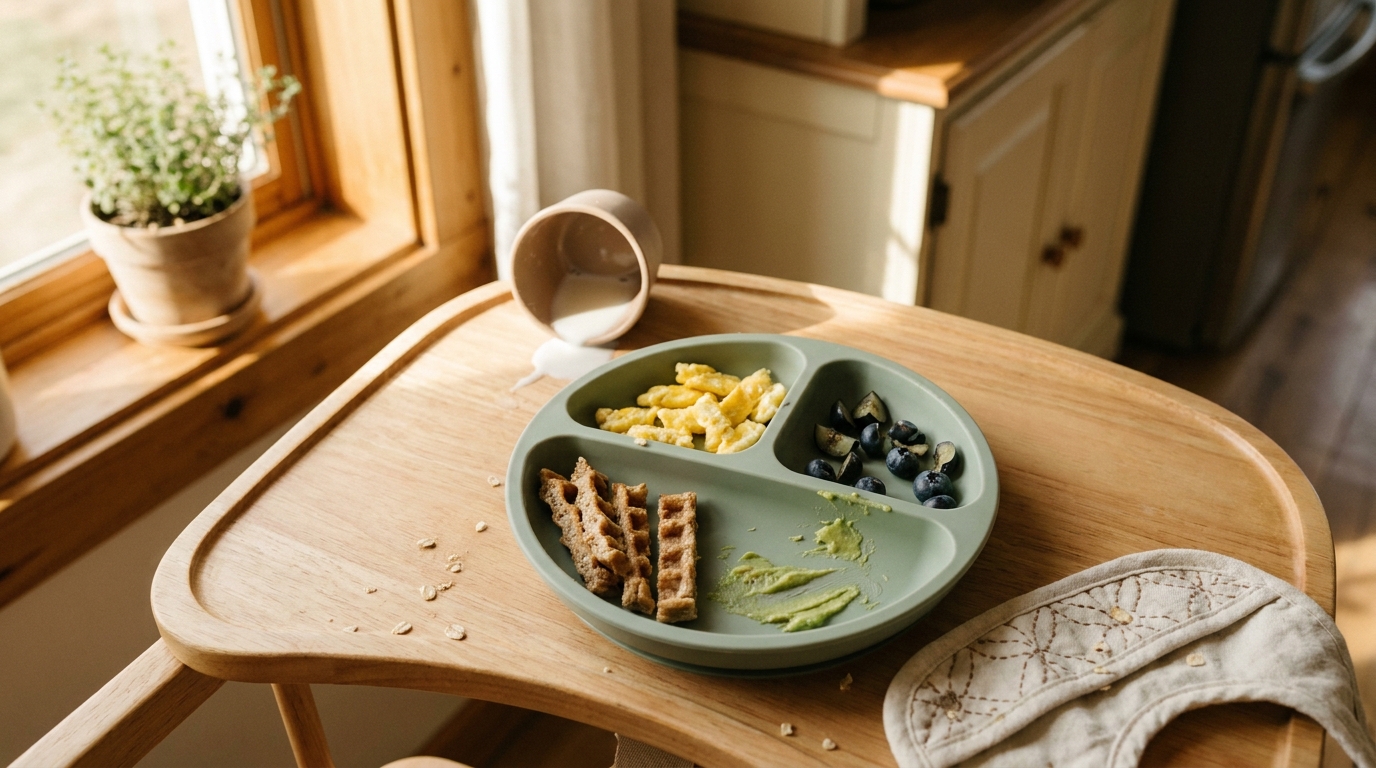
Scramble one whole egg low and slow in a little butter until just set but still soft and glossy — no browned, rubbery edges, which are harder for a beginner to manage. Mash a quarter of a ripe avocado alongside it. The egg breaks into pincer-sized curds naturally, and the avocado adds fat and a creamy texture that helps everything go down easier. This is one of the best iron-and-fat combos you can serve at breakfast, and whole eggs are no longer something to fear at this age — the “one egg yolk at a time” caution is for earlier introduction, not ongoing feeding.
2. Baked Oatmeal Bars, Cut into Fingers
Baked oatmeal (oats, mashed banana, egg, cinnamon, a splash of whole milk, baked in a small dish) sets up firm enough to cut into finger-width strips your baby can hold at both ends. This is a genuine toddler-breakfast staple in our house, and if you want more variations on the theme once your baby graduates past this exact recipe, our general toddler breakfast roundup has a bunch of follow-up ideas for the 18-24 month range.
3. Greek Yogurt with Mashed Berries and Wheat Germ
Plain, whole-milk Greek yogurt (unsweetened — the flavored tubes have way more sugar than you’d guess) with mashed strawberries or blueberries stirred through, plus a teaspoon of wheat germ or ground flax for extra nutrients. Berries should be smashed flat with a fork, not left whole or halved — whole blueberries and grape-sized berries are a classic choking hazard even well past 12 months.
4. Soft Whole-Grain Waffle Strips with Nut Butter Thin-Spread
Use a store-bought or homemade whole-grain waffle, toasted just enough to soften (not crisp), cut into strips about the width of two adult fingers. Spread a very thin layer of smooth peanut or sunflower seed butter — thin enough that it doesn’t ball up and stick to the roof of the mouth, which is the actual risk with nut butters at this age, not the allergen itself if already introduced safely.
5. Mini Veggie and Cheese Frittata Muffins
Whisk eggs with finely grated zucchini or shredded carrot, a spoonful of shredded cheese, and a pinch of oregano, then bake in a well-greased mini muffin tin for about 12 minutes. These come out as perfect two-bite ovals, freeze beautifully, and reheat from frozen in under a minute — a genuine lifesaver on chaotic mornings.
6. Ricotta Toast with Mashed Peach
Spread whole-milk ricotta on soft whole wheat toast, torn into strips rather than left as a whole slice (whole slices of toast are a known choking risk for babies who haven’t mastered biting off appropriate pieces yet). Top with finely mashed ripe peach.
7. Soft-Cooked Sweet Potato and Black Bean Mash
Roasted sweet potato mashed with well-rinsed, mashed black beans and a tiny drizzle of olive oil. This one leans more “savory breakfast” than most American babies get offered, but it’s a fantastic iron-and-fiber combo, and there’s genuinely no rule that breakfast has to look like cereal and toast — plenty of cultures start the day with beans and vegetables, something we touch on more in our global cuisines for family dinners piece if you want to expand the whole family’s palate together.
8. Banana Oat Pancake Fingers
A simple two-ingredient-plus base (mashed banana, egg, a few tablespoons of oats blended into flour) cooked as small silver-dollar pancakes, then cut into finger strips once cooled slightly. No added sugar needed — the banana does all the sweetening work.
9. Cottage Cheese with Soft Roasted Pear
Small-curd cottage cheese (or blend it briefly if the curds seem too big for your baby) topped with roasted pear, mashed with a fork until soft and spoonable. Cottage cheese is an underrated protein source at this age and a nice break from yogurt if your baby’s getting bored of the usual.
10. Soft Breakfast Quesadilla Strips
A small flour tortilla with a thin layer of refried beans and shredded cheese, warmed just until the cheese melts, then cut into thin strips. Soft, pliable, easy to gum even without many teeth, and it introduces a savory, slightly different flavor profile than the typical American breakfast lineup.
A quick note on rotation: you don’t need ten different breakfasts in ten days. Most families I know cycle through four or five of these on repeat for weeks at a time, which is completely fine — babies actually tend to do better with some repetition and predictability at meals, contrary to the Pinterest-perfect idea that every day needs a new creation.
Cutting and Texture Guide for the 12-Month Mouth
This is worth its own section because “cut appropriately” means something very specific at this age, and it’s different from what it’ll mean at 18 months or 2 years.
Safe shapes and cuts for 12-month-olds:
- Soft fruits: mashed or cut into thin, long strips (not rounds, not cubes bigger than a pea)
- Grapes, cherry tomatoes, blueberries: quartered lengthwise, always — this doesn’t change at 12 months, and it doesn’t fully change until closer to age 4
- Bread and toast: torn into strips, not left as a whole slice
- Meats and eggs: shredded, minced, or soft-scrambled rather than cubed
- Cheese: shredded or very thin slices, not cubed chunks (cubed cheese is a genuine choking risk at this age)
- Round foods (hot dogs, sausages, if ever offered): sliced lengthwise into quarters, never coins
Textures to avoid still, even at 12 months:
- Hard raw vegetables (raw carrot coins, celery)
- Whole nuts and large seeds
- Popcorn
- Thick globs of nut butter
- Hard candies or gummy fruit snacks
- Marshmallows
If you’re ever unsure whether something is an appropriate size, a helpful rule of thumb is comparing it to the width of your baby’s pinky finger — food pieces should generally be no wider than that, or soft enough to smoosh flat between two fingers.
Building a Simple Weekly Breakfast Rotation
Planning breakfast a week at a time takes an enormous amount of mental load off mornings. Here’s a sample rotation using the recipes above:
| Day | Breakfast |
|---|---|
| Monday | Soft scrambled eggs + avocado mash |
| Tuesday | Baked oatmeal fingers + banana |
| Wednesday | Greek yogurt with mashed berries |
| Thursday | Mini frittata muffins (from freezer) + toast strips |
| Friday | Waffle strips + thin nut butter |
| Saturday | Ricotta toast + mashed peach |
| Sunday | Family breakfast — small portions of whatever everyone’s having, cut safely |
Batch-cooking on a Sunday makes a huge difference here. The frittata muffins, baked oatmeal, and pancakes all freeze well, so a single hour of prep can cover breakfasts for most of the week. If freezer cooking is already part of your routine for family dinners, the same batching mindset from our freezer-to-Instant-Pot dump meals guide applies just as well to baby breakfasts — cook once, portion small, freeze flat or in muffin trays for easy grab-and-reheat mornings.
Iron, Protein, and the Nutrients Breakfast Should Prioritize
I mentioned earlier that iron stores from birth are typically running low by 12 months, and this is genuinely one of the most important — and most overlooked — nutrition facts of the first-birthday stretch. Breastmilk and formula both contain iron, but as milk volume naturally decreases and solid food intake increases, breakfast becomes a meaningful opportunity to close any gaps.
Iron-friendly breakfast additions:
- Eggs (especially the yolk)
- Fortified infant oatmeal or cereal
- Beans and lentils
- Dark leafy greens finely chopped into eggs or oatmeal
- Meat, if your family eats it — even a tablespoon of shredded, well-cooked ground beef or chicken mixed into oatmeal works
Pairing iron-rich foods with a source of vitamin C (a few mashed strawberries, a bit of orange segment, mashed kiwi) actually helps the body absorb non-heme iron more efficiently, which is a nice little hack if your baby’s diet leans more plant-based in the mornings. We go much deeper on this topic, with age-by-age breakdowns beyond just breakfast, in our full iron-rich meals and snacks guide if you want to make sure the rest of the day’s meals are pulling their weight too.
Protein matters here as well — not because 1-year-olds need bodybuilder portions, but because protein plus fat at breakfast tends to keep littles fuller and steadier until snack time, instead of crashing thirty minutes after a carb-only breakfast. If this is an area you want to dial in across the whole day, not just mornings, our high-protein meals and snacks age-by-age guide has more specifics tailored to different stages.
When Milk, Water, and Juice Fit Into Breakfast
Around 12 months is when a lot of families start the conversation about cow’s milk. A few practical notes:
- Whole milk (not reduced-fat) is generally recommended until age 2, since babies and toddlers need the fat for brain development
- Introduce cow’s milk gradually — some babies do fine with a full switch, others do better mixed with formula or breast milk for a week or two
- Offer water in an open cup or straw cup at meals; this is actually a great age to start practicing cup skills, even though it’ll be messy
- Juice isn’t necessary and the American Academy of Pediatrics recommends avoiding it before age 1 entirely, and limiting it after — a small piece of actual fruit gives more fiber and less sugar concentration anyway
If your baby is still nursing or taking a bottle first thing in the morning, that’s completely fine to keep doing alongside solid breakfast — there’s no rule that milk has to come after food, or vice versa. Follow whatever rhythm has been working.
Common Breakfast Mistakes I Made (So You Don’t Have To)
Mistake 1: Cutting food the way I cut it for myself. I once handed my daughter a whole strawberry, cut in half, and walked away for thirty seconds. Halved strawberries — especially small ones — are still round enough to be a hazard. Quartered, always, well past the first birthday.
Mistake 2: Assuming refusal meant dislike. My daughter refused scrambled eggs for what felt like two straight weeks after loving them for a month. Then, out of nowhere, she ate a full egg like she’d never had a problem in her life. Babies this age go through phases, and it often takes 10-15 exposures to a food before it’s accepted — refusal on day three doesn’t mean “cross it off forever.”
Mistake 3: Overcomplicating breakfast on busy mornings. Some days, “breakfast” was leftover dinner from the night before, slightly mashed. There is zero rule that breakfast has to look like a Pinterest board. Leftover rice and beans, a bit of last night’s chicken shredded fine, even cold pasta cut into strips — all completely legitimate breakfast food for a 1-year-old.
Mistake 4: Forgetting that mess is part of the process. I used to hover with a washcloth, wiping her hands mid-meal because I couldn’t stand the mess. It turns out that constant wiping actually interrupts self-feeding and exploration. A splat mat under the high chair and a “wipe at the end” policy saved my sanity and let her actually learn how food felt and worked.
Adapting Breakfast for a Baby With Only a Few Teeth
Tooth count varies enormously at this age — some babies have a full set of eight, others have two bottom teeth and nothing else. Gums are surprisingly effective at mashing soft foods, so a lack of teeth is not a reason to stick to purees indefinitely. That said, here’s how to adjust:
- Favor soft-cooked and mashed textures over anything that requires real biting-and-tearing (like tougher meats)
- Steam fruits and vegetables a touch softer than you would for an older toddler
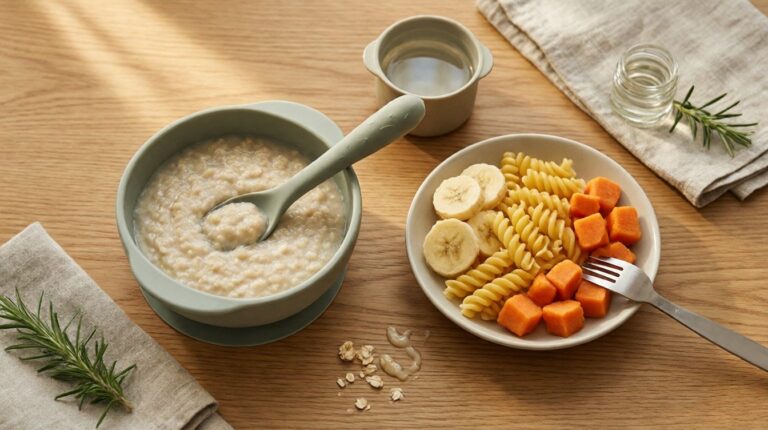
- Grains like oatmeal, soft rice, and well-cooked pasta are great gum-friendly options
- Watch for gagging versus choking — gagging (loud, coughing, red-faced) is a normal and protective reflex as babies learn to manage new textures; choking (silent, no sound, blue-tinged) requires immediate action. If you haven’t taken an infant/child CPR and choking course, this is a genuinely worthwhile hour to spend before pushing into more textures.
Frequently Asked Questions
What is a good breakfast for a 12-month-old who refuses to sit still?
Short, high-interest breakfasts work best for wiggly eaters: a few finger-strip pieces of egg or waffle, offered in small batches rather than a full plate at once, often keeps attention longer than a big spread. Some families find that eating breakfast together, even just sitting at the table with your own coffee, helps a squirmy baby stay seated longer because they’re modeling and mimicking you. If sitting is a consistent struggle, it can also help to shorten the expectation — five focused minutes of eating is a completely valid breakfast, even if it feels short.
How many breakfast options should I offer at once?
Two to three items is plenty — for example, egg, a piece of toast, and a bit of fruit. Offering too many components at once can overwhelm both the plate and the baby. It’s more useful to rotate variety across the week than to cram it all into a single meal.
Can a 1-year-old eat the same breakfast as the rest of the family?
In most cases, yes, with adjustments for cutting, salt, and added sugar. If the family breakfast is eggs and toast, your baby can absolutely eat a version of that — just hold off on heavily salted bacon or sugary syrup-drenched pancakes as a daily habit, and cut everything into baby-safe shapes. Eating the same meal as everyone else, just adapted, also tends to reduce the mental load of cooking separate meals every morning.
My 1-year-old barely eats breakfast — should I be worried?
Not usually. Appetite at this age fluctuates a lot, sometimes day to day and sometimes meal to meal, especially around teething, growth spurts, or minor illness. As long as your baby is generally growing along their curve, energetic, wetting diapers normally, and eating reasonably across the whole day (not just breakfast), an off morning or even an off week isn’t typically cause for concern. If low appetite persists for more than two to three weeks or comes with other symptoms, it’s worth a check-in with your pediatrician.
Is oatmeal or cereal still necessary every morning?
No — oatmeal and cereal are convenient and nutritious options, but they’re not required daily. Savory breakfasts (eggs, beans, leftover dinner) provide just as much nutritional value, and offering variety beyond the “cereal every morning” default actually helps expand your baby’s palate earlier rather than later.
What’s the difference between breakfast for a 12-month-old versus an 18-month-old?
The main differences are portion size (which grows gradually) and texture tolerance — an 18-month-old typically has more teeth and more chewing experience, so slightly firmer textures and marginally larger pieces become appropriate. The core safety rules (quartering round foods, avoiding whole nuts, thin nut butter layers) stay the same well beyond 18 months. Our broader toddler breakfast ideas post is a good next stop once your baby moves past the just-turned-one stage.
Do I need to avoid added sugar completely at breakfast?
The American Academy of Pediatrics recommends avoiding added sugars before age 2 entirely, which is more strict than most people expect. In practice, this means skipping flavored yogurts, sweetened cereals, and syrup, and instead relying on naturally sweet ingredients like ripe banana, mashed fruit, and cinnamon to add flavor. It’s a habit that gets easier once you build a rotation of naturally sweet, unsweetened options like the ones in this post.
A Gentle Last Word
If there’s one thing I wish someone had told me standing in that kitchen the morning after the first birthday party, it’s that there’s no finish line here — just a long, forgiving runway of trying things, watching what sticks, and adjusting as your baby’s skills grow. Some mornings will be a beautifully eaten frittata muffin and a proud, cheese-covered grin. Other mornings will be two bites of banana and a flung spoon. Both mornings count. You’re doing exactly what you need to be doing.