Baby-Led Weaning Grocery List for Beginners (2-Week Plan)
This guide offers a practical 2-week baby-led weaning grocery list, organized by aisle, showing you how to select and prepare safe, soft foods for your baby's first solids, along with essential non-food items.
- Choose foods soft enough to squish between your thumb and forefinger.
- Prepare foods in long, adult-finger-sized sticks for easy baby grasping.
- Avoid added salt, sugar, honey (under 12 months), and processed baby snacks.
- Gather essential gear like a high chair, silicone bib, and open/straw cup.
- Shop for regular groceries, adapting cuts and preparation for BLW readiness.
This post contains affiliate links. As an Amazon Associate I earn from qualifying purchases.
The first time I did a “real” baby-led weaning shop, I stood in the produce aisle for twenty minutes holding a bag of avocados like they were a physics problem. I’d read all the articles. I knew the theory — skip purees, offer whole foods cut into safe shapes, let the baby lead. What nobody told me was what to actually put in the cart. Do I need three kinds of squash? Is regular yogurt okay or does it have to be the baby kind? Am I supposed to buy a whole chicken? I left with a cart full of things I was only sort of sure about, half of which went bad in the crisper drawer before my daughter ever touched them.
That trip is the reason this list exists. Not a 100-foods-to-try checklist stretched over a whole year — a shopping list. Something you can screenshot on your phone or print before you walk into the store for your baby’s first two weeks of solids, organized the way a grocery store is actually organized, so you’re not doubling back to produce because you forgot the avocados were on the other side of the store. If you haven’t read the basics of how BLW actually works yet — textures, choking-hazard shapes, when to start — our baby-led weaning guide covers that groundwork. This post picks up exactly where that one leaves off: cart in hand, list in front of you.
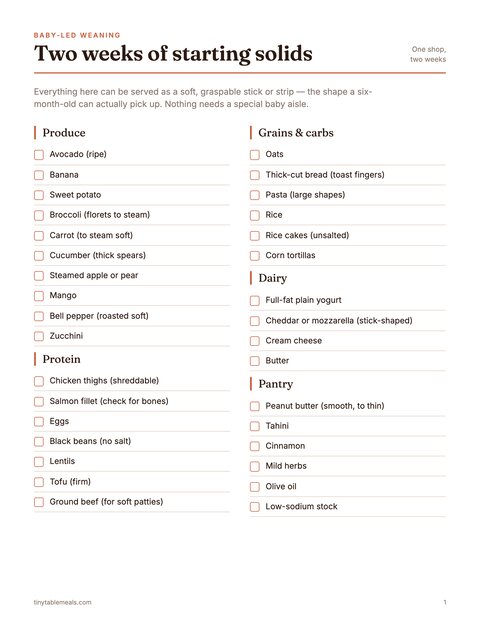
Free printable · 2 pages
Baby-Led Weaning Grocery List
Two weeks of starter foods sorted by aisle, with the shapes that work and the ones to avoid.
Free. Your download link appears right here. You'll also join the Sunday Supper Plan. Unsubscribe anytime. Privacy
In this article (10 sections)
- What “BLW-Ready” Actually Means at the Store
- Your BLW Starter Kit: The Non-Food Basics to Grab First
- The Printable 2-Week BLW Grocery List, Organized by Aisle
- How to Shop This List on a Budget
- What to Skip: Foods and Traps to Avoid in the Cart
- Turning This List Into Meals: A Sample Day from Week 1
- Prepping and Storing What You Buy
- What to Expect (So the List Doesn’t Feel Like It’s Failing)
- Frequently Asked Questions
- A Realistic Start, Not a Perfect One
What “BLW-Ready” Actually Means at the Store
Before you fill a cart, it helps to know what you’re actually shopping for, because “baby-led weaning food” isn’t a specific category at the grocery store — you’re buying regular groceries, just choosing and cutting them differently.
At six months, you’re generally looking for foods that are:
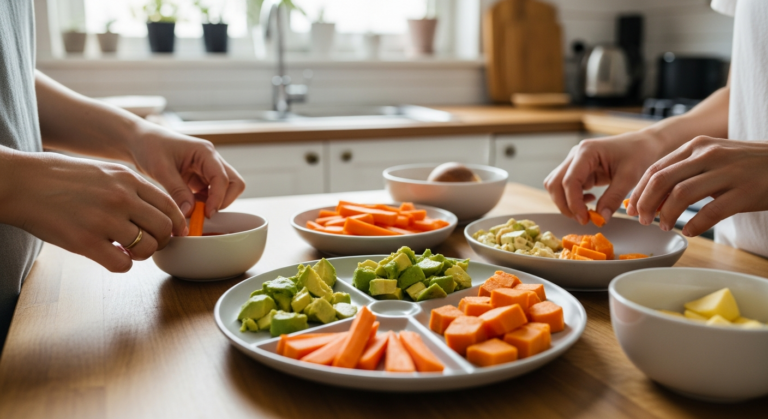
- Soft enough to squish between your thumb and forefinger without much effort — think ripe avocado, steamed-until-tender sweet potato, well-cooked pasta.
- Shaped so a fist can grab them. Long sticks about the size of an adult finger (roughly 2–3 inches, as wide as your pinky) work far better than cubes or coins at this stage, because a baby’s palmar grasp can’t yet pick a small object up between two fingers.
- Free of added salt, sugar, and honey. Honey is off the table entirely until 12 months (infant botulism risk), and most pre-made shelf items — crackers, breads, sauces — carry more sodium than you’d guess.
- Whole, not processed into shapes that mimic “baby snacks.” Puffs and dissolvable snacks have their place later, but the first two weeks are about real food, minimally altered.
Keep that filter running while you shop and the rest of this list will make a lot more sense — you’ll understand why it’s roasted sweet potato wedges instead of sweet potato fries, and ripe banana instead of banana chips.
Your BLW Starter Kit: The Non-Food Basics to Grab First
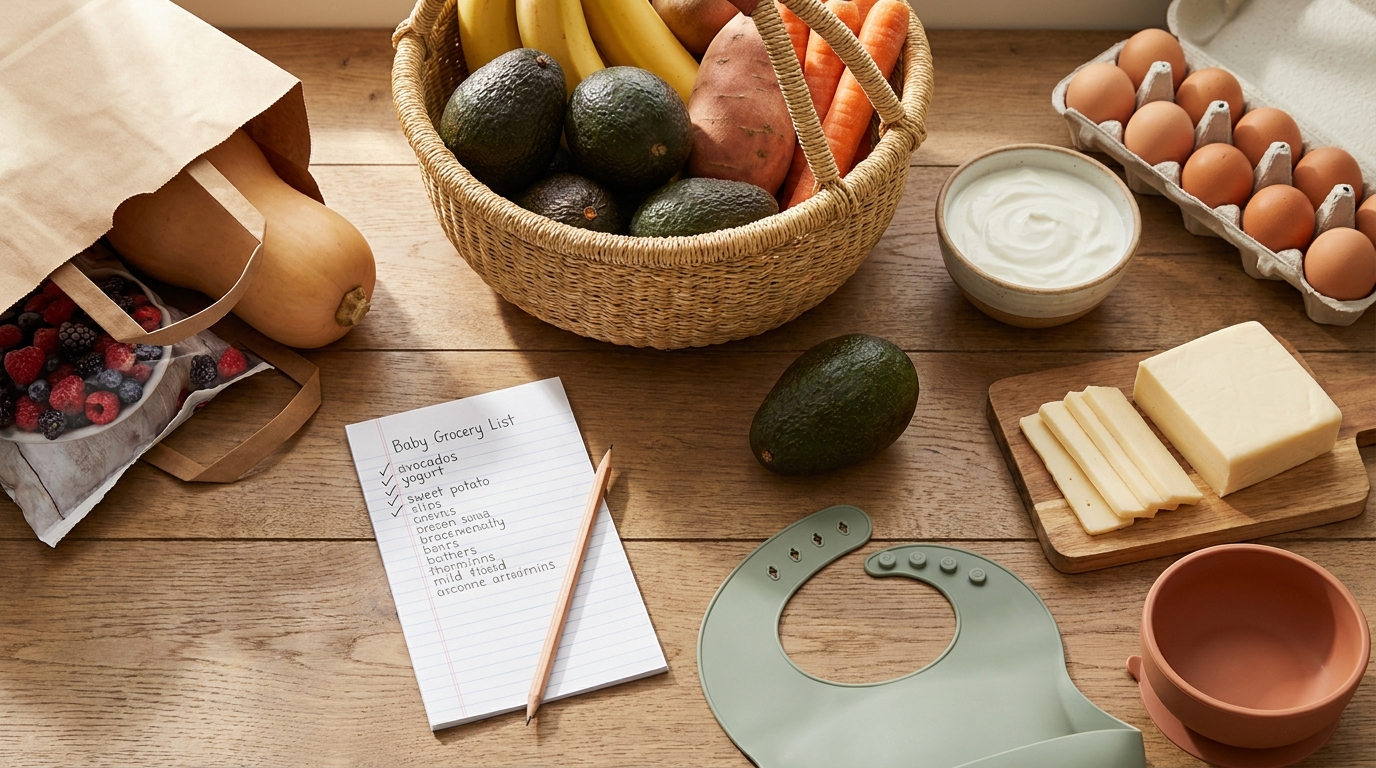
Before the food list, a short one for gear, because you genuinely do need a few things before that first meal — and most of them aren’t food at all, even though people search “baby led weaning starter kit” expecting a food list. Grab these once; you won’t need to rebuy them for months.
| Item | Why you need it | Skip-it-if |
|---|---|---|
| High chair with a tray that removes/wipes clean | You’ll be cleaning it after every meal for the next year | You already own one |
| Silicone bib with a food-catching pocket | Cloth bibs don’t catch the volume of food that ends up on the floor at first | — |
| Splat mat or old shower curtain under the chair | Saves your floor, saves your sanity | You have tile you don’t mind mopping |
| Open cup or straw cup (not a sippy with a hard spout) | BLW pairs with cup practice from the start; open cups build oral-motor skills sippy valves don’t | — |
| Soft-tip baby spoons (2–3) | Even in BLW, self-feeding with a pre-loaded spoon is allowed and helpful for yogurt/oatmeal | — |
| Suction bowl or plate | Slows down the fling-it-off-the-tray phase (doesn’t stop it) | Optional, not essential |
None of this is expensive or hard to find — most of it you can grab from the baby aisle in the same trip as your groceries. Now, to the actual list.
The Printable 2-Week BLW Grocery List, Organized by Aisle
This is the core of the post — bookmark this page or hit print (Cmd/Ctrl+P) before you head out, and shop it in order so you’re moving through the store once, not backtracking. I’ve broken it into Week 1 (the safest, softest, most forgiving foods to start with) and Week 2 (building on what your baby already handled well, with a few new textures added in).
A quick note on quantities: babies eat almost nothing by volume in the first couple of weeks of solids. This is about offering, not consuming. Buy small — one of most things, not a case.
Week 1 Grocery List
Produce aisle
- [ ] 4–5 ripe avocados (buy a mix of ripeness so you have one ready each day)
- [ ] 1 bunch bananas
- [ ] 2 sweet potatoes
- [ ] 1 bag carrots
- [ ] 1 bag frozen peas (also fine fresh if in season — see the fall produce guide for what’s actually at its best this month)
- [ ] 1 broccoli crown
- [ ] 2–3 ripe pears
- [ ] 1 bag baby spinach (for you, and for purée-blending into other soft foods later if you want)
Dairy & eggs
- [ ] 1 dozen eggs
- [ ] 1 container plain, whole-milk yogurt (unsweetened — check the label, “vanilla” and “fruit” yogurts almost always have added sugar)
- [ ] 1 block mild cheese (mozzarella or mild cheddar — easy to cut into strips)
Protein / meat counter
- [ ] 1 lb boneless, skinless chicken thighs (thighs stay moist and shred easily — better for beginners than breast)
- [ ] 1 can no-salt-added chickpeas
Pantry / dry goods
- [ ] Old-fashioned rolled oats
- [ ] 1 box whole wheat pasta (a short shape like penne or fusilli, not spaghetti)
- [ ] Olive oil
- [ ] Cinnamon (unsweetened flavor booster for oatmeal and fruit)
Bread / bakery
- [ ] 1 loaf soft whole grain bread (for toast strips)
Frozen aisle
- [ ] 1 bag frozen mixed berries (thawed and softened, or cooked down slightly for younger babies)
- [ ] 1 bag frozen butternut squash cubes (steam-softens faster than fresh — a time-saver, not a downgrade)
That’s the entire Week 1 list. It looks short because it should — you’re not trying to hit variety yet, you’re trying to get through the wobbly first attempts at self-feeding with foods that are hard to mess up.
Week 2 Grocery List
By week two, most babies have gotten the hang of picking food up and getting some of it to their mouth. You still won’t be buying in bulk, but you can start layering in a few new textures and flavors. Everything below assumes you still have staples like olive oil, oats, and cinnamon left over from Week 1 — this list only covers what’s new or needs restocking.
Produce aisle
- [ ] 1 bunch bananas (restock)
- [ ] 2–3 more avocados (restock)
- [ ] 1 zucchini
- [ ] 1 bell pepper (red, for sweetness and softness once roasted)
- [ ] 1 bag green beans
- [ ] 2–3 kiwis
- [ ] 1 mango (if available — very soft, easy to cut into strips)
- [ ] 1 apple (for cooked/baked apple slices, not raw at this stage)
Dairy & eggs
- [ ] 1 dozen eggs (restock)
- [ ] Plain whole-milk yogurt (restock, larger tub now that you know it’s working)
- [ ] Cottage cheese (small curd, whole milk)
Protein / meat counter
- [ ] 1 lb ground turkey or beef (for soft mini meatballs)
- [ ] 1 lb salmon fillet (wild-caught if it’s in your budget — soft, flakes into perfect BLW-sized pieces)
- [ ] 1 can lentils or dry red lentils (dry lentils cook down very soft and are budget-friendly)
Pantry / dry goods
- [ ] Quinoa
- [ ] Whole wheat flour or oat flour (for simple pancakes)
- [ ] Low-sodium vegetable or chicken broth
- [ ] Unsweetened applesauce (for baking, not as a standalone snack yet)
Bread / bakery
- [ ] Whole wheat tortillas or pita (soft, easy to tear into strips)
Frozen aisle
- [ ] 1 bag frozen mango or peach chunks
- [ ] 1 bag frozen edamame, shelled
Two weeks, two short lists, and by the end of it you’ll have a much clearer sense of what your particular baby likes to grab, what they ignore, and what makes them gag (normal!) versus choke (rare, but know the difference before you start — your pediatrician or an infant CPR class can walk you through it in ten minutes).
How to Shop This List on a Budget
BLW gets an undeserved reputation for being expensive because Instagram makes it look like every meal needs a matching silicone plate and a mango rose. In practice, this is one of the cheapest ways to feed a baby, because you’re mostly buying the same groceries you already buy for the rest of the family and just cutting a portion differently.
A few ways to stretch the list further:
- Buy proteins in bulk and freeze portions. A family pack of chicken thighs is cheaper per pound than a small package — portion it into freezer bags the day you buy it.
- Frozen produce is not a downgrade. Frozen peas, squash, and berries are flash-frozen at peak ripeness and often more nutrient-dense than the “fresh” produce that’s been sitting in a truck. They’re also faster to steam soft, which matters at 5pm.
- Cook once, serve baby and family from the same pot. Steamed carrot sticks, roasted sweet potato wedges, and shredded chicken thighs are dinner for everyone — just pull baby’s portion before you salt the rest. For a system that makes this even more automatic, our budget meal planning guide has a full framework for cooking for the whole crew at once.
- Skip the “baby food” aisle almost entirely for this list. Pouches, puffs, and pre-cut “toddler” produce cost significantly more per ounce than the same food from the regular aisle. The only true baby-specific item on either week’s list is the yogurt and cereal you’re choosing for sugar content, not packaging.
What to Skip: Foods and Traps to Avoid in the Cart
Just as useful as what to buy is what to walk past. A few things that look like reasonable BLW starter foods but aren’t, at least not yet:
- Whole grapes, cherry tomatoes, whole nuts, and popcorn — all classic choking hazards at this age regardless of ripeness or softness. Grapes and cherry tomatoes need to be quartered lengthwise even well into toddlerhood.
- Honey in any form, including honey graham crackers or honey-sweetened yogurt, before 12 months.
- Deli meat and unpasteurized cheeses — listeria risk applies to babies too.
- Added-sugar anything marketed as a “first food.” Check labels on baby cereals, yogurts, and pouches — many list sugar, juice concentrate, or “cane syrup” in the first three ingredients.
- Hard raw vegetables like raw carrot coins or raw apple slices — cook or shred these until your baby has more chewing experience.
- High-mercury fish — swap swordfish, king mackerel, or bigeye tuna for the salmon on the Week 2 list.
None of this needs to make you anxious in the aisle — it’s a short mental checklist, not a minefield. Read the label, cook it soft, cut it long, and you’re covering nearly every real risk.
Turning This List Into Meals: A Sample Day from Week 1
It helps to see the list actually plated. Here’s a realistic day using only what’s on the Week 1 grocery list — no extra shopping required.
| Meal | What’s on the tray |
|---|---|
| Breakfast | Oatmeal (oats + water or breast milk/formula, cinnamon), banana half sliced lengthwise |
| Lunch | Avocado strips, steamed carrot sticks, torn strip of toast |
| Dinner | Shredded chicken thigh, soft-cooked pasta, steamed broccoli florets (cut small enough that the “trees” break apart easily) |
| Snack (optional) | Cheese strip, a few thawed frozen berries mashed slightly |
Notice nothing here requires a recipe, a blender, or more than about ten minutes of hands-on cooking — most of it is steamed, roasted, or shredded from something you’d already be making for the rest of the family that day. If your baby is a little older than six months and you want a broader look at how a full day of meals and milk feeds fits together, our 8-month-old feeding schedule sample day is a good next stop once these two weeks are behind you.
Prepping and Storing What You Buy
Because you’re buying small quantities twice in two weeks rather than stocking up, a little prep goes a long way toward not wasting food or your evening.
- Batch-steam on shopping day. The day you buy carrots, sweet potato, and broccoli, steam all of it at once and portion into the fridge for the next 3–4 days. Reheat with a splash of water in the microwave for 15–20 seconds until soft again.
- Freeze shredded chicken and cooked lentils in ice cube trays, then transfer to a labeled freezer bag once solid — instant single-baby-portion protein for weeks when you’re too tired to cook from scratch. This is the same batch-and-freeze logic behind our freezer-to-Instant-Pot dump meals, just sized down for one small eater.
- Ripen avocados and bananas in a paper bag if you buy them firm — you want one ripe one available each day, not four ripening on the same afternoon and going brown before baby gets to the last two.
- Don’t pre-cut more than a day ahead. Cut fruit especially browns and softens unpleasantly fast; cut the morning of, not the night before.
If you want more from-scratch recipes to rotate in once the two weeks are up — mashed combinations, soft muffins, simple purée-adjacent dishes for the days BLW alone isn’t cutting it — our homemade baby food recipes post is a natural next stop.
What to Expect (So the List Doesn’t Feel Like It’s Failing)
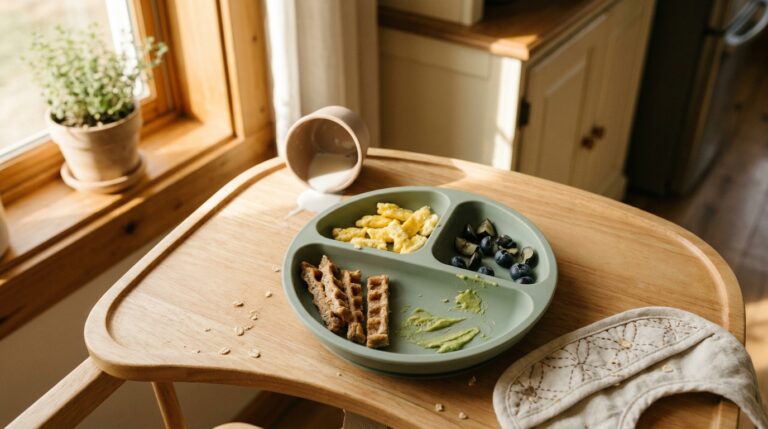
One more thing before the FAQ, because it changes how you’ll feel standing at that high chair: in the first two weeks, most of this food ends up on the floor, in the hair, or squeezed through a closed fist rather than eaten. That’s not a sign you bought the wrong things — it’s the actual process. Weight gain and nutrition in the first year still come primarily from breast milk or formula; solids at this stage are about exposure, practice, and building the skill, not calories. Buy small, expect mess, and don’t read low intake in week one as a reason to abandon the plan.
Frequently Asked Questions
How much food should I actually buy for two weeks of BLW?
Much less than feels intuitive. A single avocado, banana, or sweet potato can supply several meals once cut into small offerings, and most of what you put on the tray in week one won’t be eaten. Buy the small quantities listed above rather than family-sized bags — you can always restock mid-week if something’s a hit.
Do I need to buy anything different for BLW versus regular family groceries?
Almost nothing. The lists above are ordinary grocery items — the only real differences from your normal cart are choosing unsweetened, unsalted versions of things (plain yogurt instead of flavored, no-salt-added canned beans) and being intentional about how you cut them at home, not what you buy at the store.
What if my baby refuses everything on the list the first week?
Completely normal, and not a reason to switch foods constantly. It can take eight to fifteen exposures to a new food before a baby accepts it. Keep offering the same few items for several days in a row rather than introducing something new every single meal — repetition, not variety, is what builds acceptance at this stage.
Is it safe to skip purees entirely and go straight to this grocery list?
Yes, for most healthy, full-term babies showing readiness signs (sitting with minimal support, lost the tongue-thrust reflex, reaching for food). If your baby was born prematurely, has low muscle tone, or has a diagnosed swallowing difficulty, talk to your pediatrician or a feeding therapist before starting BLW — the timeline and food shapes may need to be adjusted for them specifically.
Can I use this same list if I’m doing a mix of purees and BLW, not pure BLW?
Absolutely — this is exactly what most families end up doing in practice, often called “baby-led purees” or a combo approach. Buy the same list, and simply mash or blend a portion of the avocado, sweet potato, or banana for pre-loaded spoon feeding while offering the rest as whole pieces for self-feeding.
What’s the single most useful item on this whole list for a beginner?
Avocado, without much competition. It’s soft enough from day one, needs zero cooking, cuts easily into finger-length strips, and is calorie-dense enough to matter nutritionally even in small amounts — it shows up on both weeks’ lists for a reason.
Do I need to buy a separate baby cereal, or can I use regular oats?
Plain old-fashioned rolled oats, cooked soft with water, breast milk, or formula, work just as well as a boxed infant oatmeal and cost a fraction of the price — just check that a store-bought infant cereal, if you do buy one, is iron-fortified and free of added sugar.
A Realistic Start, Not a Perfect One
You don’t need a pantry overhaul, a new appliance, or a cart full of specialty baby products to start baby-led weaning well — you need about fifteen grocery items, a working steamer basket or oven, and two weeks of patience while your baby figures out how their own hands work. Print this list, shop it once, and let the mess on the floor be proof that it’s going exactly the way it’s supposed to.