How to Introduce New Foods Without Pressure
Discover how to introduce new foods to your children without pressure by building on familiar foundations and offering consistent exposure without expectation, fostering natural curiosity.
- Remove pressure: Offer new foods without negotiation or explaining nutritional benefits.
- Build on familiar foundations: Incorporate new foods into dishes your child already loves.
- Match textures: Offer new vegetables in familiar forms, like crunchy baked parsnip chips.
- Offer consistent exposure: Place small portions of new foods regularly without expectation.
- Use a 'Rainbow Bowl' technique for passive exposure to varied colorful foods.
This post contains affiliate links. As an Amazon Associate I earn from qualifying purchases.
The plate hits the table with a defiant clink, followed by crossed arms and the dreaded phrase: “I’m not eating that.” Sound familiar? Last Tuesday, I watched my 6-year-old Emma stare down a perfectly innocent piece of roasted butternut squash like it had personally offended her entire existence. The golden, caramelized edges glistened with a touch of maple syrup, and I could smell the warm cinnamon I’d sprinkled on top. To me, it looked delicious. To her? It might as well have been alien food.
But here’s what I didn’t do: I didn’t launch into my usual “just try one bite” negotiation. I didn’t explain the nutritional benefits of beta-carotene. Instead, I simply said, “The squash is here if you want it,” and continued eating my own portion with genuine enjoyment. Twenty minutes later, Emma picked up a small cube, sniffed it, and took the tiniest nibble. No fanfare, no pressure, no battle won or lost – just curiosity finally getting the better of caution.
This moment crystallized something I’d been learning through years of feeding my family: pressure is the enemy of food exploration. When we remove the stress, expectation, and emotional charge around trying new foods, we create space for natural curiosity to flourish. It’s not about tricking kids or hiding vegetables – it’s about fundamentally shifting how we present and think about unfamiliar foods.
In this article (5 sections)
Start with Familiar Foundations
The secret to successful food introduction lies in building bridges from known to unknown, rather than presenting completely foreign dishes. When my youngest, Sam, refused to eat any vegetables except carrots, I didn’t abandon ship. Instead, I started incorporating finely grated carrots into foods he already loved, gradually expanding his orange vegetable repertoire.
My go-to bridge recipe became Sweet Potato Mac and Cheese. I steam one large sweet potato (about 45 minutes until fork-tender), then puree it with a splash of milk. This bright orange puree gets stirred into regular cheese sauce – about ½ cup puree to 2 cups of cheese sauce. The result tastes familiar but introduces new flavors subtly. The sweet potato adds natural sweetness that most kids love, while the familiar cheese masks any earthiness they might reject.
Another winning strategy involves texture familiarity. If your child loves crunchy snacks, introduce new vegetables in that same format. I make Baked Parsnip Chips by thinly slicing parsnips with a mandoline, tossing them with olive oil and a pinch of salt, then baking at 375°F for 12-15 minutes until golden and crispy. They look like potato chips, crunch like potato chips, but offer a slightly sweet, nutty flavor that’s completely different. Serve them alongside regular chips initially – no announcement needed.
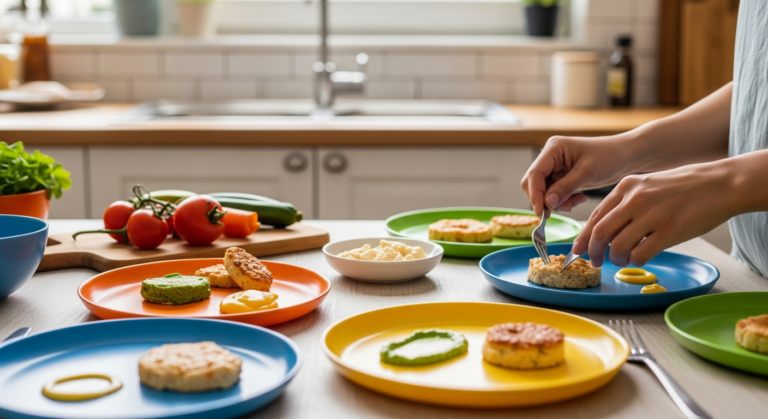
The key is consistency without pressure. I place small portions of these bridge foods on everyone’s plate regularly, treating them as normal parts of the meal rather than special “new” foods requiring commentary.
The Power of Food Exposure Without Expectation
Research shows children need 8-15 exposures to a new food before they’ll even consider trying it, but most parents give up after 2-3 attempts. The game-changer is removing any expectation that exposure equals consumption. I started thinking of new foods like decorative elements – they belong on the table, but nobody has to interact with them.
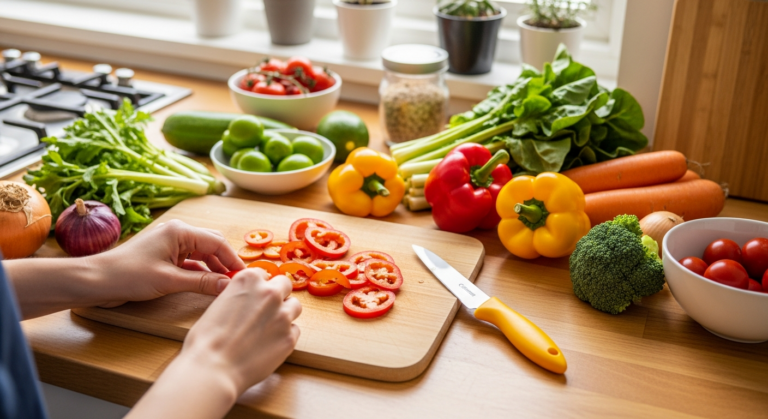
My Weekly Rainbow Bowl technique has revolutionized our dinner routine. Every Sunday, I prep seven small containers with different colored foods: purple cabbage ribbons, yellow bell pepper strips, orange cherry tomatoes, green snap peas, white cauliflower florets, and red radish slices. Throughout the week, I add small spoonfuls of these to everyone’s dinner plate alongside their main meal. No instructions, no “just try it,” no negotiations.
The magic happens in the peripheral vision. Kids notice these foods, observe parents eating them, and gradually become comfortable with their presence. Last month, my neighbor’s 4-year-old, who had never eaten a raw vegetable, started our dinner by immediately reaching for the snap peas. When his mom expressed amazement, he shrugged and said, “They’re crunchy like chips.”
Making Exposure Engaging Without Pressure
Create what I call “interaction opportunities” – ways kids can engage with new foods without the commitment of eating. Set up a Build-Your-Own Grain Bowl station with cooked quinoa as the base and 6-8 small bowls of toppings: diced avocado, corn kernels, black beans, cherry tomatoes, shredded carrots, cucumber rounds, and hemp seeds. Everyone constructs their own bowl, choosing only ingredients that appeal to them.
The beauty lies in the hands-on selection process. Kids handle, smell, and examine foods while building. Some ingredients might make it into mouths, others won’t – and that’s perfectly fine. Focus on the fun of building rather than the eating outcome.
Cooking Together: Hands-On Food Exploration
Nothing breaks down food barriers like involvement in preparation. When children participate in cooking, they develop ownership and familiarity that naturally leads to tasting – but only when we resist the urge to push for it.
Our Weekend Bread Baking tradition started when Emma refused all grains except white bread. We began with a simple focaccia recipe that takes just 30 minutes of active time. I measure 3 cups bread flour, 1 teaspoon salt, and 1 teaspoon instant yeast into a large bowl. Emma stirs while I add 1¼ cups warm water and 3 tablespoons olive oil. The dough comes together shaggy and sticky – perfect for little hands to poke and prod.
After a 2-hour rise, we press the dough into an oiled 9×13 pan. Here’s where food exploration becomes natural: Emma creates dimples across the surface while I drizzle olive oil and sprinkle coarse salt. We experiment with toppings – sometimes rosemary sprigs, sometimes halved cherry tomatoes, occasionally thin onion slices. The focaccia bakes at 425°F for 25-30 minutes until golden.
The sensory experience is key: flour between fingers, yeast’s distinctive smell, dough’s transformation from sticky to smooth. Emma tastes along the way – a pinch of salt here, a torn piece of fresh bread there – because curiosity drives the exploration, not parental expectation.
Simple Prep Tasks That Encourage Tasting
Assign age-appropriate tasks that naturally lead to food contact. Three-year-olds can tear lettuce leaves for salad, inevitably sampling pieces. Five-year-olds can snap green beans, discovering that fresh beans taste different from cooked ones. Eight-year-olds can zest lemons for recipes, experiencing how citrus oils smell and learning that tiny tastes of zest are intensely flavored.
My Sunday Soup Ritual exemplifies this approach. Kids choose vegetables from our prep containers, wash them in the big salad spinner (they love operating the pump), and help add ingredients to our slow cooker. I start with 6 cups vegetable or chicken broth, add 1 cup of whatever grain we’re exploring (barley, farro, or wild rice), then let kids contribute their chosen vegetables. Cooking time varies by grain – barley needs 4 hours on low, while farro finishes in 3 hours.
Throughout the day, they check the soup’s progress, stirring occasionally and inhaling the evolving aromas. By dinnertime, they’ve invested in this creation and naturally want to taste their work. No pressure needed – pride in accomplishment drives the desire to try.
Creating Positive Food Environments
The atmosphere surrounding food introduction matters enormously. Stress, rushed timing, and emotional tension all work against acceptance of new foods. I’ve learned to orchestrate not just ingredients and cooking techniques, but the entire eating environment.
Our Family Style Service eliminates the pressure of individual plating. I place serving bowls in the center of our table and let everyone construct their own plate. Large bowls of Moroccan-Spiced Lentils (1 cup red lentils simmered 15 minutes with cinnamon, cumin, and diced tomatoes) sit alongside familiar favorites like rice and roasted chicken. Kids serve themselves, naturally taking small exploratory portions when they control the amount.
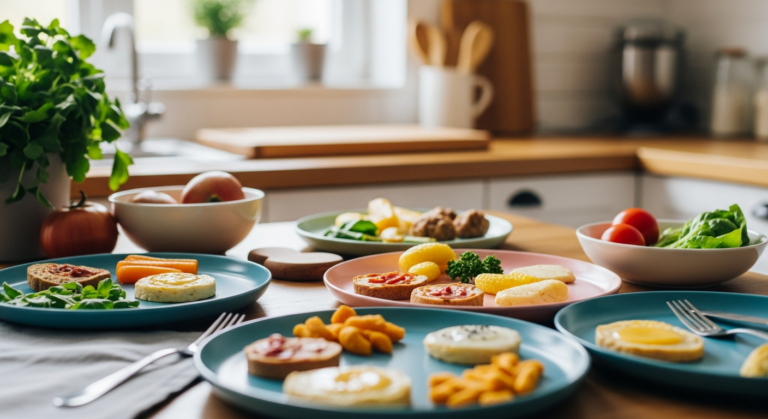
Timing matters too. I introduce new foods when everyone’s moderately hungry but not ravenous, usually serving unfamiliar items alongside beloved ones. A new roasted vegetable appears next to favorite pasta; an unusual fruit shows up with familiar cheese and crackers for snack time.
The Language of Food Freedom
Words carry tremendous power in food relationships. I’ve eliminated phrases like “just try one bite,” “you haven’t even tasted it,” and “you might like it if you give it a chance.” Instead, I use neutral descriptive language: “The beets are earthy and sweet,” or “These Brussels sprouts got crispy edges from roasting.”
When kids express dislike, I acknowledge their feelings without argument: “You don’t prefer mushrooms right now – that’s fine.” This removes food from the battlefield of wills and places it in the realm of personal preference, which can change over time without anyone losing face.
I also model enthusiastic eating without expecting imitation. When I genuinely enjoy my Roasted Delicata Squash (halved lengthwise, seeded, sliced into half-moons, and roasted 20 minutes at 400°F with olive oil and thyme), I express pleasure authentically: “This squash tastes like sweet potatoes and butterscotch had a baby.” No pressure for agreement – just sharing my own experience.
Strategic Meal Planning for Food Exploration
Successful food introduction requires intentional planning that balances novelty with security. I plan weekly menus that include one completely familiar meal, several meals with one new element, and maybe one more adventurous dinner when everyone’s relaxed and open to experimentation.
My Template Week might include Monday’s reliable spaghetti with meat sauce, Tuesday’s familiar grilled chicken with a new side of roasted rainbow carrots, Wednesday’s tried-and-true tacos with an optional new salsa, Thursday’s comforting chicken soup with an unfamiliar grain, Friday’s pizza night with adventurous topping options, Saturday’s breakfast-for-dinner with a new fruit variety, and Sunday’s slow cooker meal featuring vegetables chosen by the kids.
This rhythm provides security – kids know beloved foods appear regularly – while creating natural opportunities for expansion. The new elements don’t dominate meals, so there’s no sense that familiar foods are disappearing or being replaced.
Batch Cooking for Consistent Exposure
I dedicate Sunday afternoons to preparing components I’ll use throughout the week. My Versatile Vegetable Prep includes roasting three sheet pans of different vegetables: one pan of Brussels sprouts halved and tossed with balsamic vinegar, one pan of cauliflower florets with curry powder, and one pan of sweet potato cubes with smoked paprika. All roast at 425°F for 20-25 minutes until caramelized.
These prepared vegetables get repurposed throughout the week – added to grain bowls, stirred into pasta, tucked into quesadillas, or served alongside familiar proteins. The consistent presence without fanfare helps normalize them as regular food rather than special “healthy” foods requiring negotiation.
I also prepare what I call Gateway Grains – large batches of quinoa cooked in chicken broth instead of water for extra flavor, farro simmered with bay leaves, or brown rice cooked with a splash of coconut milk. These stay refrigerated up to five days and get added to various meals as neutral, familiar-but-different base ingredients.
The key to this approach is patience and consistency rather than pressure and expectation. Some weeks, new foods remain untouched. Other weeks, curiosity strikes and someone requests seconds of the “weird purple cabbage.” Both outcomes are success – we’re building comfort and familiarity that will pay dividends over months and years, not demanding immediate acceptance that creates stress and resistance.
By removing pressure, we allow children’s natural curiosity about food to flourish. We create environments where exploration feels safe, where unfamiliar foods become familiar through repeated exposure, and where family meals remain joyful rather than battlegrounds. The goal isn’t immediate consumption – it’s building lifelong positive relationships with varied, nourishing foods.
Mama Munch
Mama Munch is a food-obsessed parent of two who believes every family deserves simple, nutritious meals — even on the busiest weeknights. With a background in nutrition education and years of navigating picky eaters, allergies, and toddler taste buds, she creates practical recipes and meal strategies that actually work for real families.