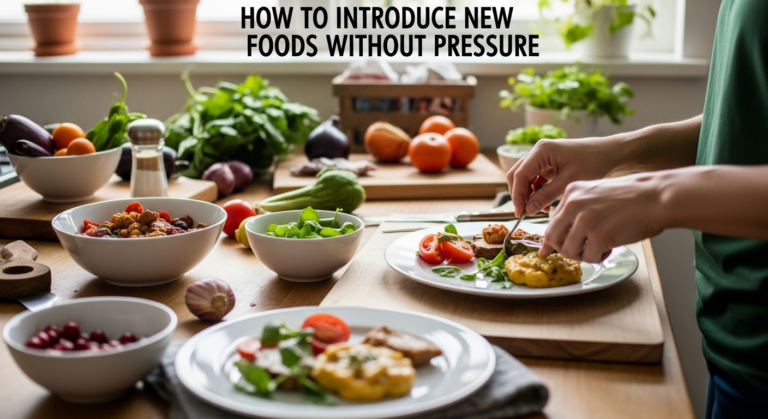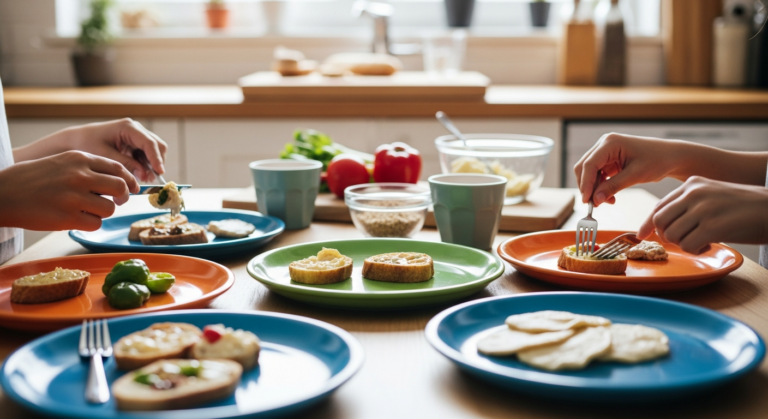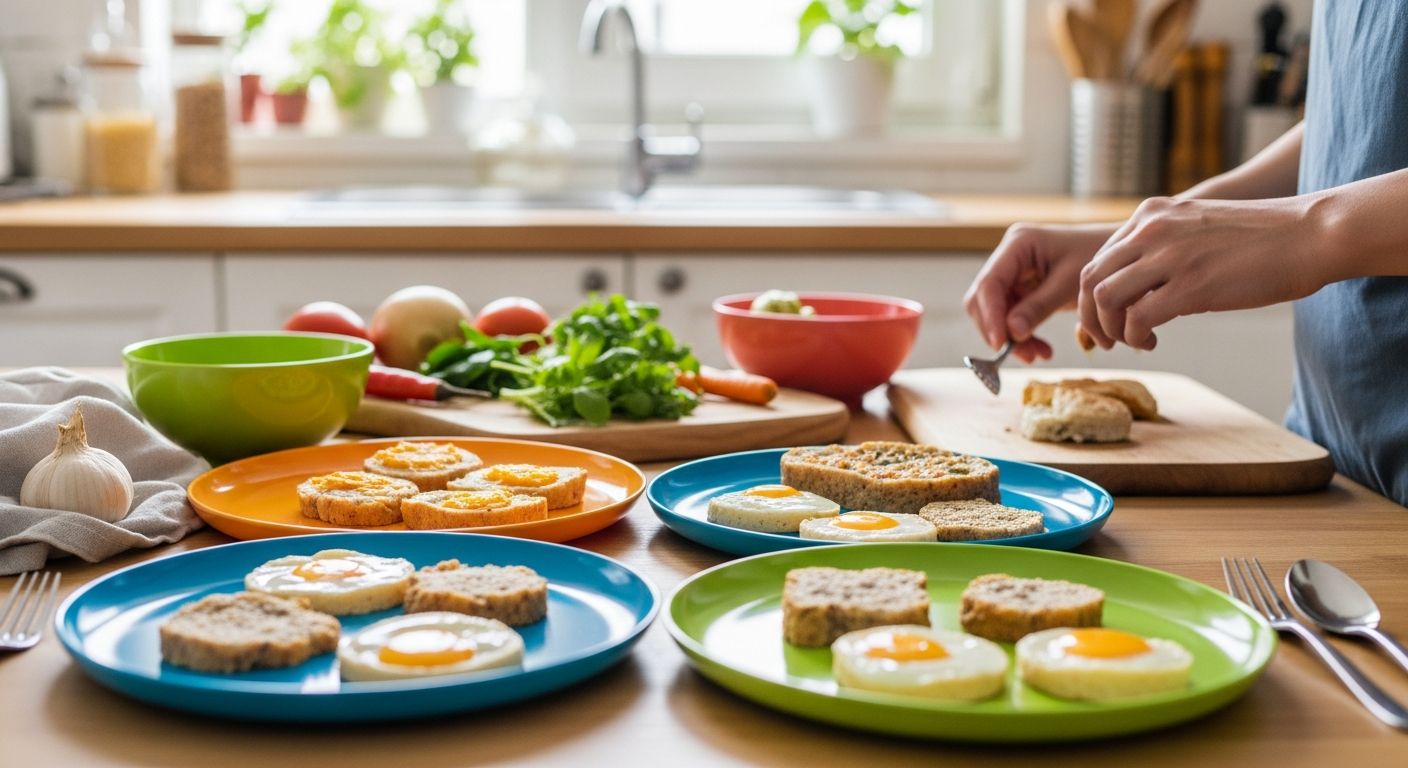
Should You Make Separate Meals for Picky Eaters?
Stop making separate meals for picky eaters. Learn how to serve one family meal with at least one safe food, empowering your child and reducing your stress at mealtime.
- Avoid making separate meals; they can shrink your child's menu.
- Serve one family meal with at least one safe food your child will eat.
- You decide what, when, and where; your child decides whether and how much.
- Understand why separate meals lead to burnout and less food exploration.
- Consult your pediatrician if your child's list of accepted foods shrinks.
It’s 5:30 on a Tuesday. You’ve spent 40 minutes making a perfectly good chicken and vegetable stir-fry. You set the plate down in front of your four-year-old. Before a single bite touches his lips, he pushes it away and declares, “I don’t like that. I want buttered noodles.”
Your two-year-old takes one look and drops her fork on the floor. Your stomach growls. The stir-fry is getting cold. And you find yourself standing at the stove again, boiling water for pasta because you just need everyone to eat something. Anything.
Should you make separate meals for a picky eater? Usually no. A second dinner tends to shrink your child’s menu and wear you out. The better plan is one family meal with at least one safe food on the table, and your child decides what and how much to eat from it. Here’s how to make that switch, plus the signs that mean it’s time to call your pediatrician.
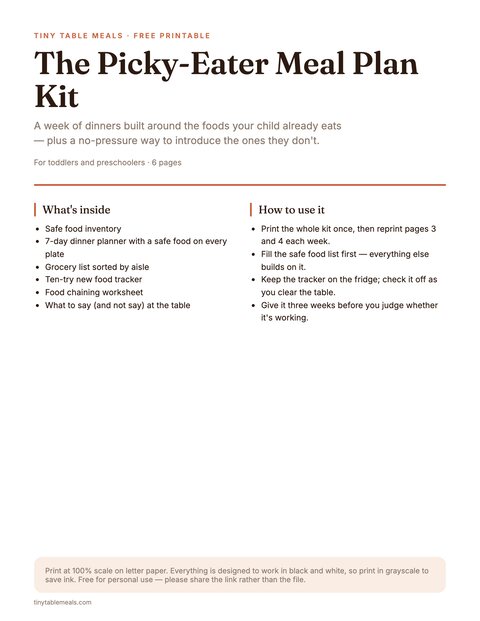
Free printable · 7 pages
The Picky-Eater Meal Plan Kit
A week of dinners built around the foods your child already eats, plus a no-pressure way to introduce new ones.
Free. Your download link appears right here. You'll also join the Sunday Supper Plan. Unsubscribe anytime. Privacy
In this article (9 sections)
- Why Separate Meals Backfire
- The One-Family, One-Meal Approach That Actually Works
- Safe Foods to Put on the Table (and How to Cut Them)
- Snack and Meal Timing
- How to Stop Making Separate Meals: A 5-Week Plan
- Dealing with the Guilt and the Grandparents
- When Separate Meals Are OK
- When to Talk to a Doctor
- Quick Answers
Why Separate Meals Backfire
Nobody makes separate meals for fun. Your toddler refuses dinner, you worry about them going to bed hungry, and you make something you know they’ll eat. Then it becomes the expectation.
Here’s what tends to happen when separate meals become routine:
- Your child learns they have veto power. Why try the stir-fry when buttered noodles are always available as a backup? There’s zero motivation to explore new foods when the alternative is guaranteed.
- Their food world shrinks instead of expanding. Instead of gradually accepting new foods through repeated exposure, they eat the same five “safe” foods over and over. In some children, even those safe foods can start getting rejected. A shrinking list of accepted foods is worth raising with your pediatrician or a feeding therapist.
- You burn out completely. Cooking two or three different dinners every night is exhausting, expensive, and demoralizing. It takes the joy right out of feeding your family.
If you’re currently making separate meals, there is nothing wrong with you. You did it because you love your child and you wanted them to eat. That instinct is good, and the plan below puts it to better use.
The One-Family, One-Meal Approach That Actually Works
A widely taught framework is the Division of Responsibility, developed by dietitian Ellyn Satter. The concept is simple:
You (the parent) decide what food is served, when meals happen, and where eating takes place.
Your child decides whether they eat and how much they eat.
In practice, this means you serve one family meal, and your child can eat as much or as little of it as they choose. No pressure, no bargaining, no separate meals—but also no forcing them to eat. This approach respects both your role as the food provider and your child’s ability to regulate their own appetite.
Now, I know what you’re thinking: “But my child won’t eat anything on the table. They’ll go to bed hungry.” That fear is real, and most parents feel it. The safe food strategy below is how you handle it.
Safe Foods to Put on the Table (and How to Cut Them)
The bridge between “short-order cooking” and “one meal, take it or leave it” is the safe food strategy. It fits Satter’s model, since it keeps a familiar food on the table, and it’s very practical for busy kitchens.
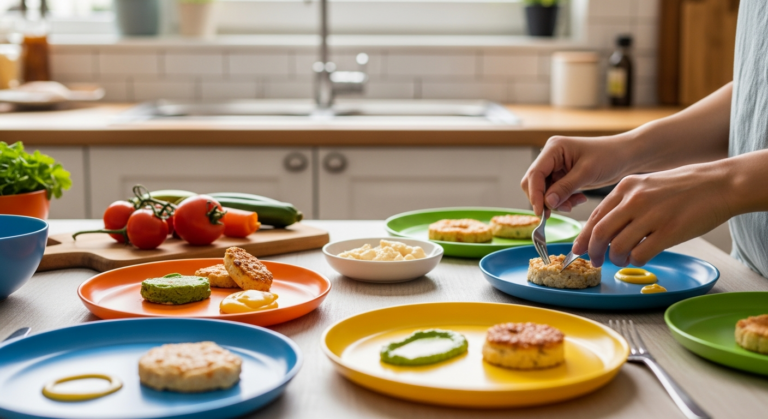
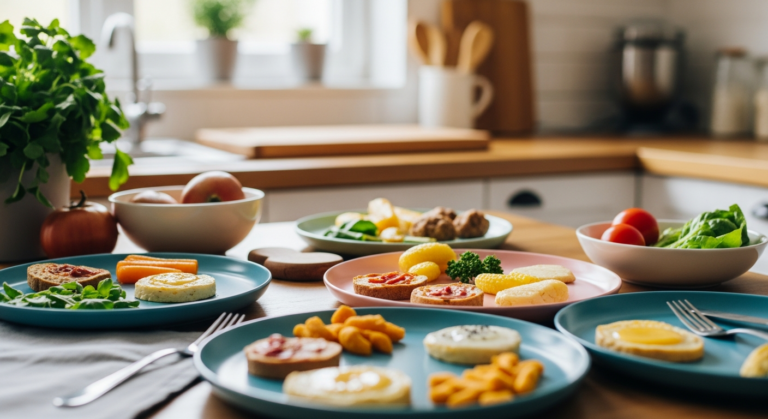
Here’s how it works: At every meal, include at least one food you know your child will eat. This isn’t making a separate meal—it’s building the family meal with your child in mind.
For example, if you’re serving that chicken stir-fry:
- Put plain rice on the table. Most kids will eat rice.
- Set aside some vegetables and protein before adding the sauce. Your child can try them plain.
- Add a small bowl of fruit on the side.
- Offer water or a serving of milk.
Your child now has the rice and fruit as their “safe” foods. If they eat only rice and fruit for dinner, that’s okay. They had access to the stir-fry, they saw everyone else eating and enjoying it, and they weren’t pressured.
Repeated exposure often helps, but it can take many calm tries. Some kids take longer than others.
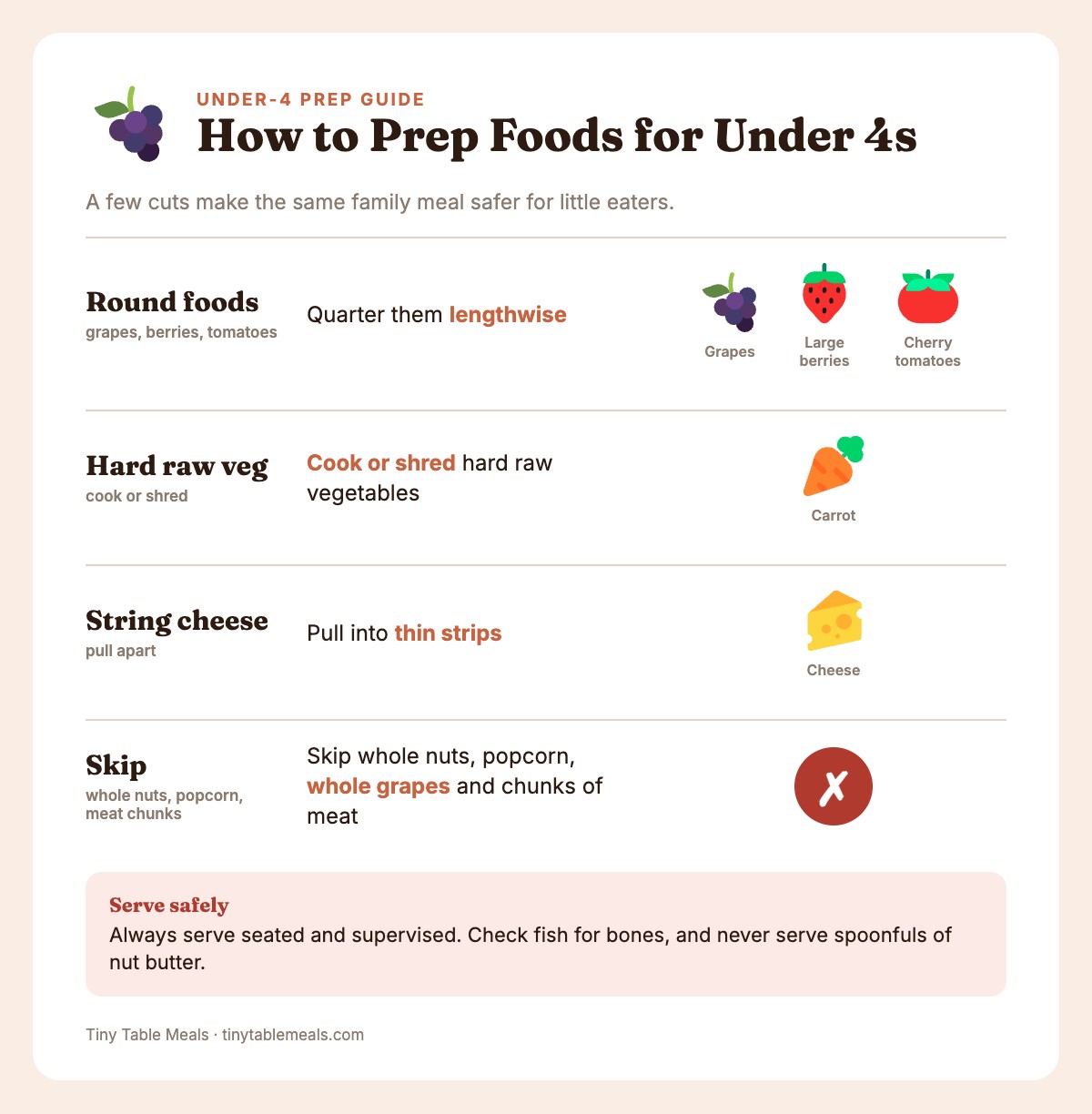
Safety firstFor children under 4, cook hard raw vegetables until soft or shred them finely, quarter round foods like cherry tomatoes, grapes and large berries lengthwise, and pull string cheese into thin strips. Save thin raw cucumber sticks for older toddlers, and give 12-18 month olds vegetables cooked soft instead of raw sticks. Skip whole nuts, popcorn, whole grapes, hard candy and gum, and raw hard fruit chunks. Cut hot dogs and sausages lengthwise, then into small pieces. Cut meat into small, soft, pea-size pieces for children under 3. Never serve spoonfuls of nut butter. Check fish for bones, and always serve seated and supervised.
Some reliable safe foods to keep in rotation, with prep notes for younger kids:
| Safe food | How to prepare for under 4 |
|---|---|
| Plain rice or pasta | Serve as is. |
| Bread or dinner rolls | Soft rolls, torn into small pieces. |
| Fresh fruit | Banana slices. Quarter grapes and large berries lengthwise. Remove seeds and membrane from clementine segments and cut them up. Grate apple or cook it until soft. |
| Vegetables with a dip | Carrot sticks steamed until soft, or finely shredded raw carrot. Thin, peeled cucumber sticks for older toddlers only. For 12-18 months, serve vegetables cooked soft instead of raw sticks. Cherry tomatoes quartered lengthwise. |
| Cheese | Thin strips or small slices. Pull string cheese into thin strings. |
| Plain yogurt | Serve as is. |
Snack and Meal Timing
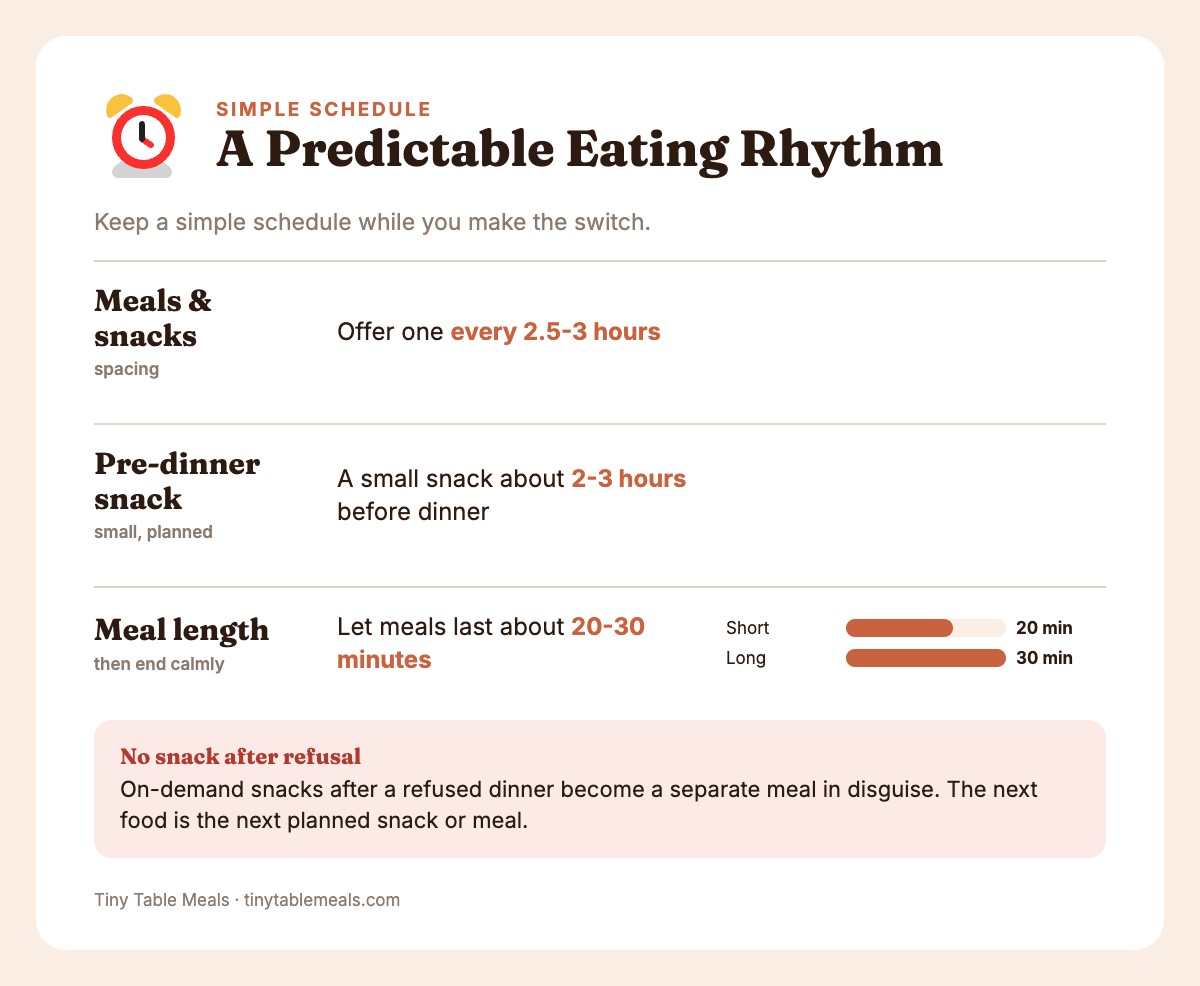
Keep a simple schedule while you make this change. Offer meals and snacks every 2.5-3 hours, with small snacks about 2-3 hours before dinner, adjusted to your dinner time. That way your child isn’t arriving at dinner absolutely famished, and a hungry child is a less flexible child.
Let meals last about 20-30 minutes, then end them calmly. Don’t offer on-demand snacks right after a refused dinner, because that becomes the new “separate meal” in disguise.
The next food is the next planned snack or meal. For toddlers and young children, that can be the small, planned bedtime option covered in the 5-week plan below.
How to Stop Making Separate Meals: A 5-Week Plan
If you’ve been making separate meals for a while, don’t stop cold turkey. That usually sets off a power struggle. Move gradually instead, and use the Picky-Eater Meal Plan Kit below to map out your weeks (our picky eater meal plan post has more ideas).
| Week | What you serve | What you say |
|---|---|---|
| Weeks 1-2: Bridge meals | Family meals close to their favorites | “Dinner is ready.” |
| Weeks 3-4: Safe-food plate | Adult-style meal plus one safe food | “Eat as much of anything on the table as you like.” |
| Week 5+: Hold the line gently | Same one meal, same safe food | “This is what’s for dinner. There’s rice and fruit if you’d like those.” |
Here’s each stage in more detail:
Weeks 1-2: The Bridge Meals
Start by planning family meals that naturally overlap with your child’s preferred foods. If they love pasta, make pasta with a sauce on the side, or try a build-your-own noodle bar. If they love chicken nuggets, make baked chicken tenders that the whole family eats. You’re not making separate meals, but you’re choosing family meals that aren’t too far from their comfort zone.
Weeks 3-4: Introduce the Safe Food Plate
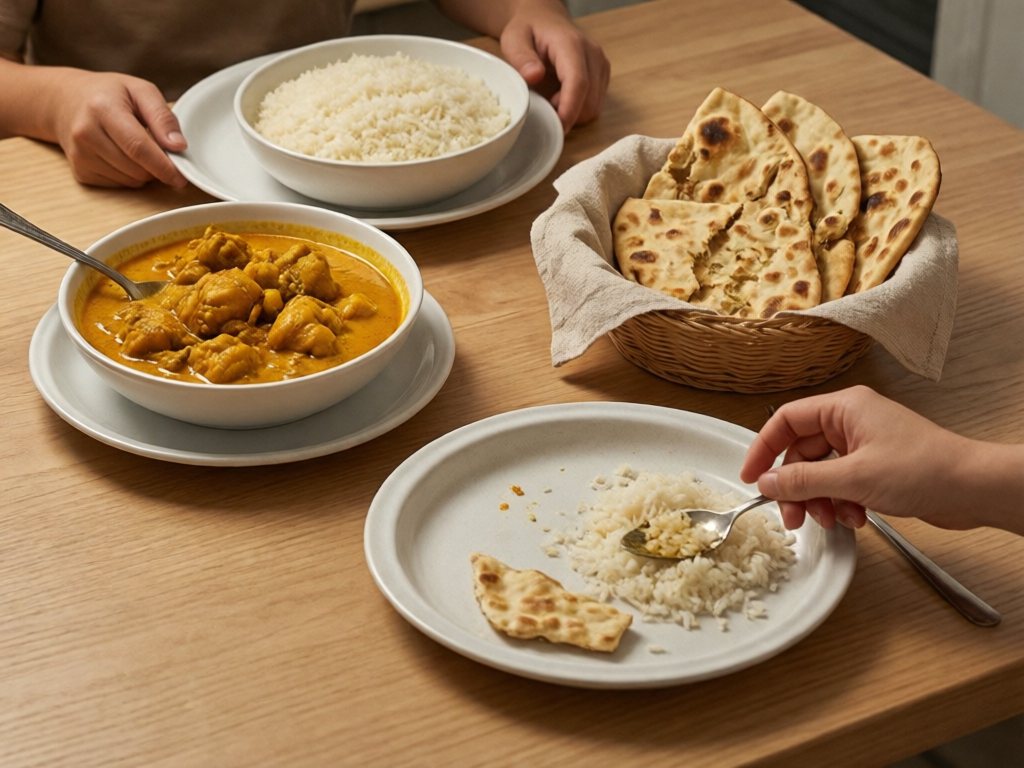
Start serving meals that are more “adult” with a safe food included. Make a curry, but put plain rice and naan bread on the table. Serve grilled salmon (flake it and check for bones) with dinner rolls and a soft side your child likes, such as mashed sweet potato. For children under 4, skip whole corn kernels or mash them.
Explain casually to your child: “This is what we’re having for dinner tonight. You can eat as much of anything on the table as you’d like.”
Week 5+: Hold the Line Gently
By now, your child understands the new normal. They might test it—expect some pushback. When they ask for buttered noodles instead of dinner, calmly say: “This is what’s on the menu tonight. There’s rice and fruit if you’d like those.” Then move on.
Two more short scripts: “You don’t have to eat it, and dinner is over at 6:00.” If they ask for food 30 minutes later: “The kitchen is closed for now. We’ll eat again at snack time.” Name whatever comes next on your schedule, the next planned snack or meal.
For toddlers and young children, that next stop is the planned bedtime option described below, so nobody goes from dinner to breakfast with nothing. If your older child has no evening snack on the schedule, say “We’ll eat again at breakfast.” Keep it brief and kind. If your partner caves, talk it through away from the table.
Don’t negotiate, don’t lecture, and don’t draw attention to what they are or aren’t eating. Keep the mood light.
For toddlers and young children, I keep a small, boring bedtime option on the schedule. It is planned ahead and offered whether or not dinner was eaten. Plain milk in a cup, not a bottle, or a few banana slices works for many toddlers. Mash the banana for the youngest eaters, and check with your pediatrician about what suits your child. Offer it seated, with a few minutes to eat, before teeth are brushed. After brushing, it’s water only. Offer the same thing every time, and don’t turn it into a reward or a second dinner.
Expect some tears and tantrums in the first week or two. Stay calm, repeat your script once, and let the meal end.
Dealing with the Guilt and the Grandparents
The emotional side of this shift can be harder than the practical side. You will feel guilty the first time your child eats only bread for dinner. Your mother-in-law might give you a look. Your partner might cave and make the separate meal behind your back. These are all normal bumps in the road.
Three things make the guilt easier to handle:
Good to knowOne meal doesn’t define their nutrition. Look at what your child eats across a week or two, not a single dinner. Most children, even picky ones, get enough that way. If you see the red flags listed below, or you’re simply worried, talk to your pediatrician. Whether a supplement is needed is their call.
Most typically developing children will eat enough when food is offered regularly. For most of them, intake tends to even out across several days rather than at each meal. Medical or feeding issues can change that, which is why the red flags below matter.
Get your partner on the same page. This approach only works if both caregivers are consistent. Have a conversation away from the dinner table about your plan, the reasoning behind it, and how you’ll both handle pushback. Present a united front.
Handle outside opinions with confidence. Try a simple “We’re working on trying new foods, and we have a plan.” Check with your own pediatrician first if you want to name their advice. That usually quiets well-meaning relatives. You don’t owe anyone a detailed explanation of your feeding philosophy.
A quick checklist before the first night:
- Talk with your partner away from the table.
- Pick the safe food for tonight.
- Set snack and meal times.
- Plan one calm script.
- Review what your child ate over the week, not one dinner.
When Separate Meals Are OK
Most families do well moving away from short-order cooking. A few situations call for accommodations:
| Situation | What to do | Who to involve |
|---|---|---|
| Sensory sensitivities, autism, or a feeding disorder such as ARFID | Certain textures, temperatures or flavors can be physically distressing, not just “picky.” The general advice in this article may not fully apply. | Your pediatrician for an evaluation, plus an occupational or feeding therapist for an individual plan |
| Food allergies and intolerances | Modify the meal and avoid cross-contact. A child with a dairy allergy needs a dairy-free mac and cheese. That’s a medical accommodation, not short-order cooking. | Your pediatrician or an allergist to diagnose and manage |
| Very young toddlers (12-18 months) | Adapt the family meal. Cut food smaller, mash it slightly, or remove very tough textures. Whole cow’s milk can be offered as a drink from 12 months. | Your pediatrician if chewing seems hard |
| Recovery from illness | Offer gentle, familiar foods. After a stomach bug, plain crackers and toast are fine even if everyone else has lasagna. | Your pediatrician if eating doesn’t bounce back |
The difference between accommodating and short-order cooking is intent and duration. Accommodations address a specific need. Short-order cooking caters to preference at the expense of food learning.
Knowing the difference helps you hold the line where it matters. It also helps you stay flexible where it counts.
When to Talk to a Doctor
Safety firstCall your pediatrician if you notice weight loss or faltering growth. Also call about a very short list of accepted foods, or one that keeps shrinking. Other red flags are gagging or vomiting with foods, fear of eating or extreme distress at meals, frequent choking, or a suspected nutrient deficiency. A pediatrician, feeding therapist or occupational therapist can evaluate. Supplements are the doctor’s decision.
To recap: serve one meal, include one safe food, stay calm, and call the pediatrician if red flags appear. Some nights your child will eat almost nothing, and that’s normal.
For more gentle ideas, see our posts on introducing new foods without pressure and the food chaining method. If your child is stuck on one food, our guide to food jags helps, and hidden veggie recipes can add nutrition while you work on exposure.
Quick Answers
Is it OK to make a separate meal for a picky eater?
Usually not. Serve one family meal with a safe food included, unless allergies, a feeding disorder, or illness call for an accommodation.
What if my child eats nothing at dinner?
Stay calm and offer the next planned snack or meal. For toddlers and young children, that can be the planned bedtime option. If it keeps happening or you see the red flags above, talk to your pediatrician.
How long does it take to stop short-order cooking?
Plan on about 3-5 weeks for the household to adjust, though some kids push back longer.
Should I force my child to eat one bite?
No. Pressure tends to backfire and makes meals tense. Invite them to touch, smell or lick a new food, and keep offering it calmly.
What if my toddler refuses everything but milk?
Don’t let milk fill up the space where meals should be. Offer it with or after meals in limited amounts, and talk to your pediatrician about how much is right for your child. Whole cow’s milk as a drink is for 12 months and up.
Mama Munch
Mama Munch is a food-obsessed parent of two who believes every family deserves simple, nutritious meals — even on the busiest weeknights. With a background in nutrition education and years of navigating picky eaters, allergies, and toddler taste buds, she creates practical recipes and meal strategies that actually work for real families.