Fall Soup Recipes Kids Will Eat (Not Too Chunky or Spiced)
Discover how to get your picky eater to enjoy soup by understanding the 'Soup Texture Spectrum.' You'll learn to introduce mild fall soups at 5 different texture levels, starting with what your child already accepts, to overcome common texture sensitivities.
- Use the 5-level Soup Texture Spectrum to find what your child accepts.
- Introduce mild fall soups, starting with fully blended textures for picky eaters.
- Avoid mixed textures, visible flecks, and strong spices to reduce rejection.
- Leverage fall ingredients like squash and carrots for naturally sweet, smooth soups.
This post contains affiliate links. As an Amazon Associate I earn from qualifying purchases.
Last October I made what I thought was the perfect pot of vegetable soup. My five-year-old took one spoonful, lifted the spoon to eye level, and said, “There’s things in it.”
I said, “It’s just vegetables, sweetie.” She wasn’t refusing the flavor, though. She was refusing the unpredictability: the same week she ate a whole bowl of butternut soup because every spoonful felt the same.
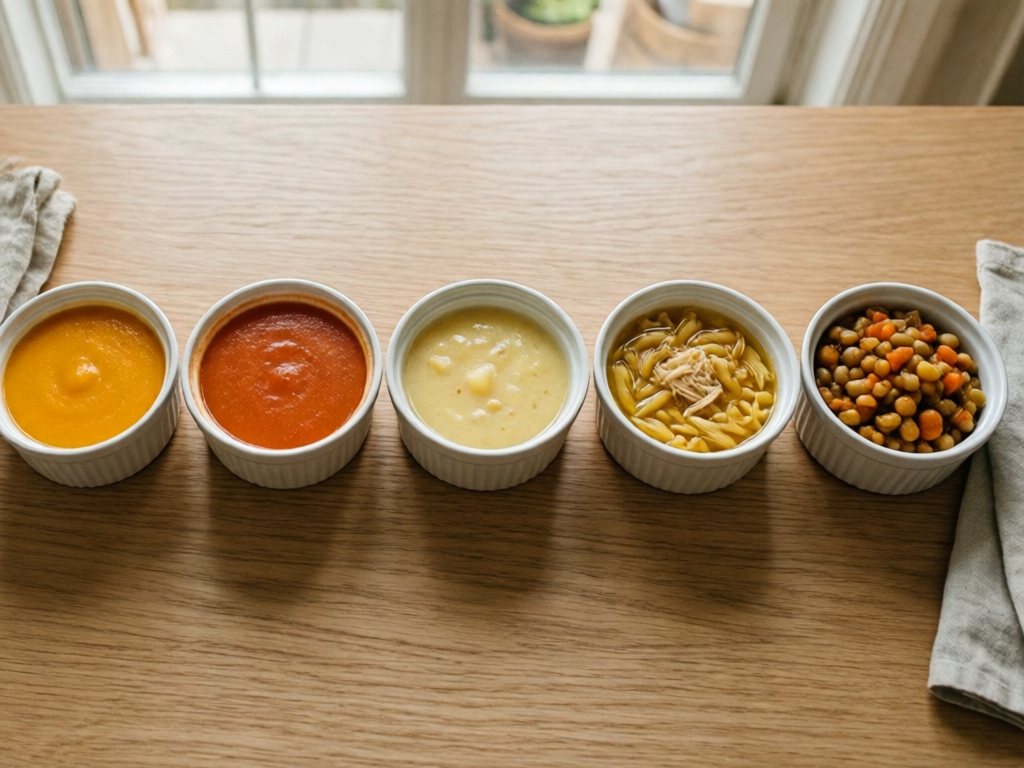
That’s the whole secret: soup isn’t one food, it’s a spectrum of textures. Kids who push away one soup often eat another if you start at the right point.
These fall soup recipes for picky eaters are built around that idea: a 5-level texture ladder plus seven mild soups for ages 1 to 8, each with ways to make it smoother or chunkier.
Free printable · 6 pages
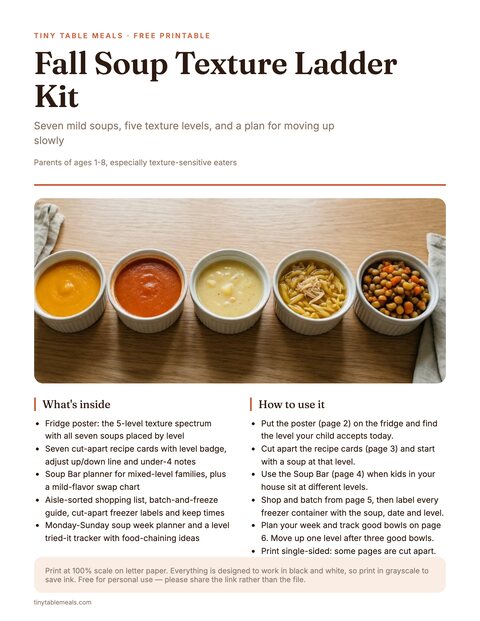
Fall Soup Texture Ladder Kit
A fridge poster of the 5-level Soup Texture Spectrum, cut-apart recipe cards for seven mild fall soups, a Soup Bar planner with a mild-flavor swap chart, a shopping list with freezer labels and keep times, and a soup week planner with a level tried-it tracker.
Free. Your download link appears right here. You'll also join the Sunday Supper Plan. Unsubscribe anytime. Privacy
In this article (13 sections)
- Why Soup Is Tricky for Texture-Sensitive Eaters
- The Soup Texture Spectrum (Start Here)
- Level 1: Smooth Blended Fall Soup Recipes
- Level 2: Smooth Soup Recipes With a Little Body
- Level 3: Creamy Soup Recipes With Soft, Tiny Bits
- Level 4: Brothy Soup Recipes With Small, Soft Pieces
- Level 5: Chunky Fall Soup Recipes
- Keeping Fall Soups Mild (Without Making Them Boring)
- How to Get Picky Eaters to Try Soup
- Moving Along the Spectrum (Slowly)
- Making Soup Work for a Busy Week
- Frequently Asked Questions
- Where to Start With Fall Soup Tonight
Why Soup Is Tricky for Texture-Sensitive Eaters
Most foods let kids inspect before they commit: a nugget is a nugget, and toast is toast. Soup hides things. One spoonful can carry liquid, a soft vegetable, a slippery noodle, and a surprise herb leaf, and the mouth has to handle them all at once.
That mixed-up spoonful can feel like a lot. Common patterns with texture-sensitive eaters, my own daughter included:
- Mixed textures in one bite. Liquid plus solid is harder to manage than either alone. Some kids gag or grimace because they can’t predict what’s coming.
- “Slimy” or “mushy” items. Cooked onions, zucchini, cooked spinach, and overcooked pasta get this label a lot.
- Visible green flecks. Many kids reject anything with herbs or leafy bits they can see.
- Temperature and steam. Soup that’s too hot is unpleasant and can be genuinely painful for small mouths.
- Strong smells. Heavily spiced soups, curry powder, lots of garlic, or cabbage-y cooking smells can end the meal before it starts.
None of this means your child is being difficult. It means soup asks a lot of a developing mouth and a cautious brain. If you want a deeper look at what’s going on, our guide on why some kids struggle with food textures explains the why behind it and what’s typical at different ages.
Fall helps here: squash, carrots, sweet potatoes, apples, and potatoes all blend into velvety, naturally sweet soups that most kids accept. For what’s typical at different ages, see our guide on why some kids struggle with food textures.
The Soup Texture Spectrum (Start Here)
This is the tool I now reach for first. Instead of asking “will my child eat soup?”, ask “which kind of soup does my child eat today?” Pick the level that matches their current comfort, serve it a few times, and then nudge one step along. The Fall Soup Texture Ladder Kit printable pairs with this table if you want a fridge-ready version.
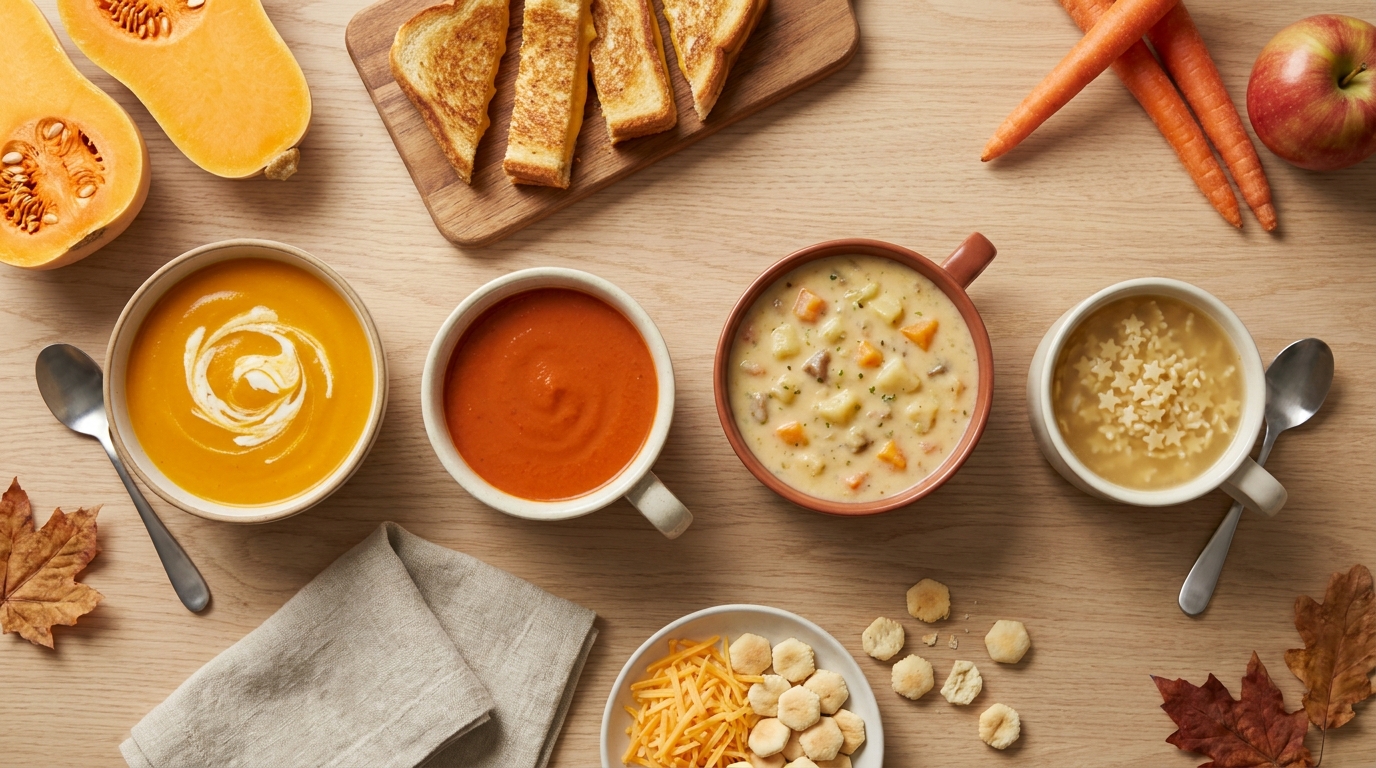
| Level | Texture | What It Looks and Feels Like | Best For | Recipe in This Article |
|---|---|---|---|---|
| 1 | Fully blended, silky | Smooth like a thick milkshake. No flecks, no bits, no surprises | Kids who gag on lumps, reject soup with visible pieces, or are new to soup | Silky Butternut Apple Soup; Carrot and Sweet Potato Cream Soup |
| 2 | Smooth with a little body | Blended but thicker, with a tiny bit of grain from tomato or roasted veg. Good for dipping | Kids who accept purées but want something that feels more “real” | Roasted Tomato Soup with Grilled Cheese Dippers |
| 3 | Creamy with soft, tiny bits | Partially blended so the base is smooth and a few soft, small pieces remain | Kids who tolerate soft textures like mashed potato and scrambled eggs | Cheddar Potato Soup; Sweet Corn Chowder (Mostly Smooth) |
| 4 | Brothy with small soft pieces | Clear-ish broth with small, uniform, very tender pieces. Mostly one or two ingredients | Kids who like chicken noodle but not big vegetable pieces | Chicken and Little Stars Soup |
| 5 | Chunky | Visible vegetables, beans, pasta, and varied bites | Kids who are comfortable with mixed textures or are working toward them | Mild Minestrone with Tiny Pasta |
A few ground rules for using the table:
- Start at the level your child already accepts, not the level you want them to reach. If they eat applesauce and smoothies, begin at Level 1.
- Stay put for a while. Two or three successful bowls at one level before you move up is a good rule of thumb.
- Move one step at a time. Jumping from Level 1 to Level 5 usually backfires.
- It’s fine if different kids in your house sit at different levels. I often make one pot and adjust bowls (see the “Soup Bar” section below).
Level 1: Smooth Blended Fall Soup Recipes
These are your gateway soups. Smooth, sweet, and predictable. If your child has never willingly eaten a bowl of soup, begin here.
Safety firstBlending hot soup: cool it 10 minutes, fill the blender no more than half full, vent the lid, and start on low. An immersion blender avoids the transfer altogether. Serve warm, never hot, and test a spoonful yourself.
Good to knowSalt is optional in every recipe, and a pinch is plenty for older kids. Leave it out entirely for children under 2. These recipes are written for ages 12 months and up.
Silky Butternut Apple Soup
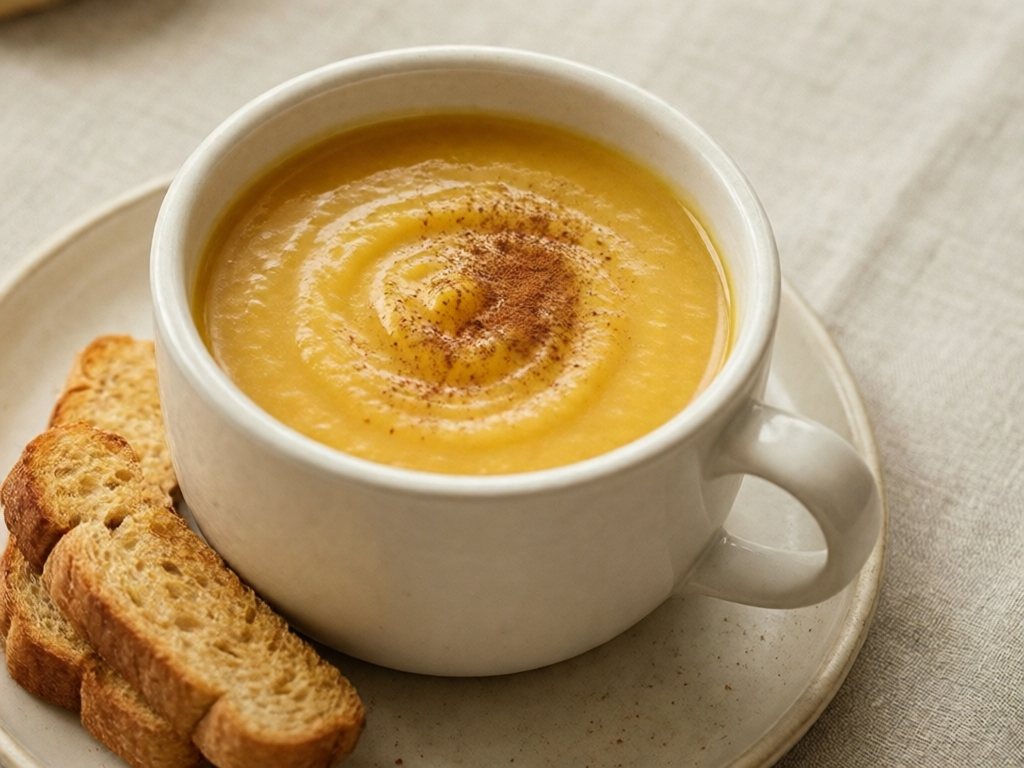
Butternut squash and a sweet apple make a soup that tastes more like dessert-adjacent comfort than “vegetable soup.” There’s no spice beyond a pinch of cinnamon you can skip entirely. If you want more squash ideas afterward, our squash recipes kids will eat post covers butternut, acorn, and spaghetti squash.
Ingredients
- 1 tablespoon butter or olive oil
- 1/2 yellow onion, chopped (or skip it for onion-averse kids and use an extra apple)
- 1 medium butternut squash (about 2 pounds), peeled and cubed. Pre-cut squash saves 15 minutes.
- 1 sweet apple (Gala or Honeycrisp), peeled and chopped
- 3 cups low-sodium chicken or vegetable broth
- 1/2 cup whole milk or a splash of coconut milk (optional, for creaminess)
- Pinch of cinnamon (optional)
- Salt to taste, very light
Directions
- Melt the butter in a large pot over medium heat. Cook the onion for 3 to 4 minutes until soft.
- Add the squash, apple, and broth. Bring to a boil, then reduce to a simmer and cook 20 to 25 minutes, until the squash is completely fork-tender.
- Let it cool for 10 minutes. Blend until absolutely smooth. An immersion blender works best. If using a countertop blender, fill it no more than halfway and vent the lid so steam can escape.
- Stir in the milk and cinnamon. Taste and add a tiny pinch of salt if it needs it.
- For picky texture detectors, pour through a fine-mesh strainer. It takes two minutes and removes any hidden fibers.
TipServe it in a mug or small cup for sipping, once it has cooled to lukewarm and you’ve tested it yourself. Some kids find a mug less intimidating than a bowl.
Carrot and Sweet Potato Cream Soup
This one is bright orange, naturally sweet, and the color alone gets points with a lot of kids. It also works well if your child has dipped a toe into food chaining, since sweet potato fries or carrot sticks they already accept are a direct link to this soup.
Ingredients
- 1 tablespoon olive oil or butter
- 1 pound carrots, peeled and sliced thin
- 1 large sweet potato (about 12 ounces), peeled and cubed
- 3 cups low-sodium vegetable or chicken broth
- 1/2 cup whole milk or plain whole-milk yogurt (stir in after cooling)
- Salt to taste, very light
Directions
- Heat the oil in a pot over medium heat. Add carrots and sweet potato and stir for 2 to 3 minutes.
- Add the broth, bring to a boil, then simmer 20 minutes until both vegetables are very soft.
- Let it cool 10 minutes, then blend until completely smooth.
- Stir in the milk or yogurt. Thin with a splash of water or broth if it’s thicker than you’d like.
Good to knowThe sweet potato does most of the creaming, so the soup is silky even without much dairy. If your child is dairy-free, use olive oil instead of butter, skip the milk or yogurt, and add a little extra broth.
Level 2: Smooth Soup Recipes With a Little Body
At this level, the soup is still blended but has slightly more substance. It’s often the soup that kids can dip into, which gives them control, and control is a big deal to a picky eater.
Roasted Tomato Soup With Grilled Cheese Dippers
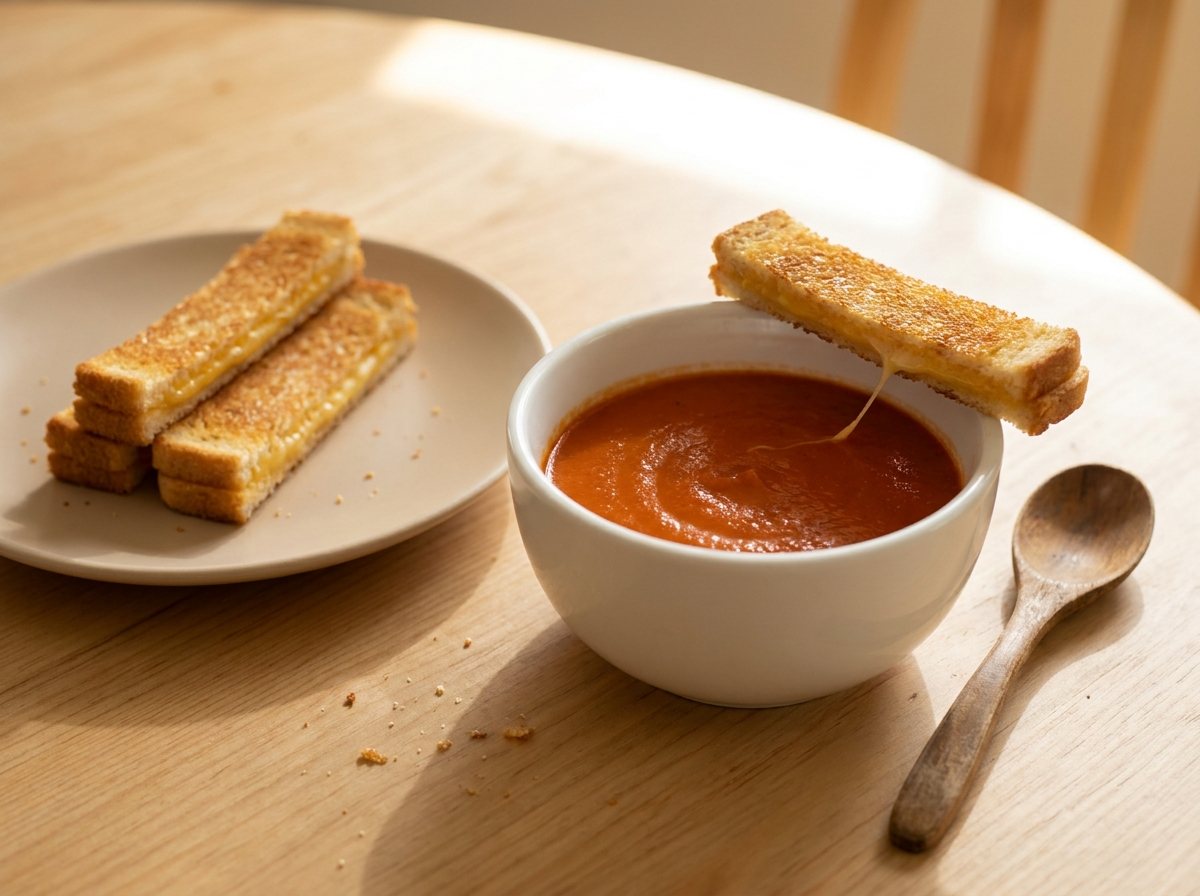
Roasting tomatoes first deepens the sweetness and cuts the sharp acidity that bothers a lot of kids. The dippers give your child something familiar to hold.
Ingredients
- 2 pounds ripe Roma tomatoes, halved (or one 28-ounce can of whole peeled tomatoes, drained, if fresh aren’t at their best)
- 1 carrot, peeled and chopped. It adds sweetness and balances acidity.
- 1/2 small onion, quartered
- 2 tablespoons olive oil
- 2 cups low-sodium chicken or vegetable broth
- 1 teaspoon sugar or a small grated apple, if the soup tastes sharp
- Salt to taste, very light
Directions
- Heat the oven to 425°F. Toss tomatoes, carrot, and onion with the olive oil on a sheet pan. Roast 30 to 35 minutes until soft and slightly browned at the edges.
- Scrape everything into a pot with the broth. Simmer 10 minutes.
- Blend until smooth. For the smoothest result, strain out the tomato skins and seeds through a mesh strainer. Many texture-sensitive kids are bothered by the skins more than anything else.
- Taste. If it’s sharp, stir in the sugar. A tiny bit goes a long way.
Grilled cheese dippers: Make grilled cheese sandwiches as usual, then cut into thin strips or small squares. For toddlers under 3, cut into narrow fingers so they can grip, and keep the bread soft rather than crunchy.
How to adjust:
- Down to Level 1: Strain well and add a spoonful of cream cheese or yogurt for a milder, creamier feel.
- Up to Level 3: Leave a quarter of the soup unblended before stirring it back in.
Level 3: Creamy Soup Recipes With Soft, Tiny Bits
These soups are mostly smooth, but a few tender pieces hide in the creamy base. This is the step where kids practice handling slightly mixed texture without it being overwhelming.
Cheddar Potato Soup
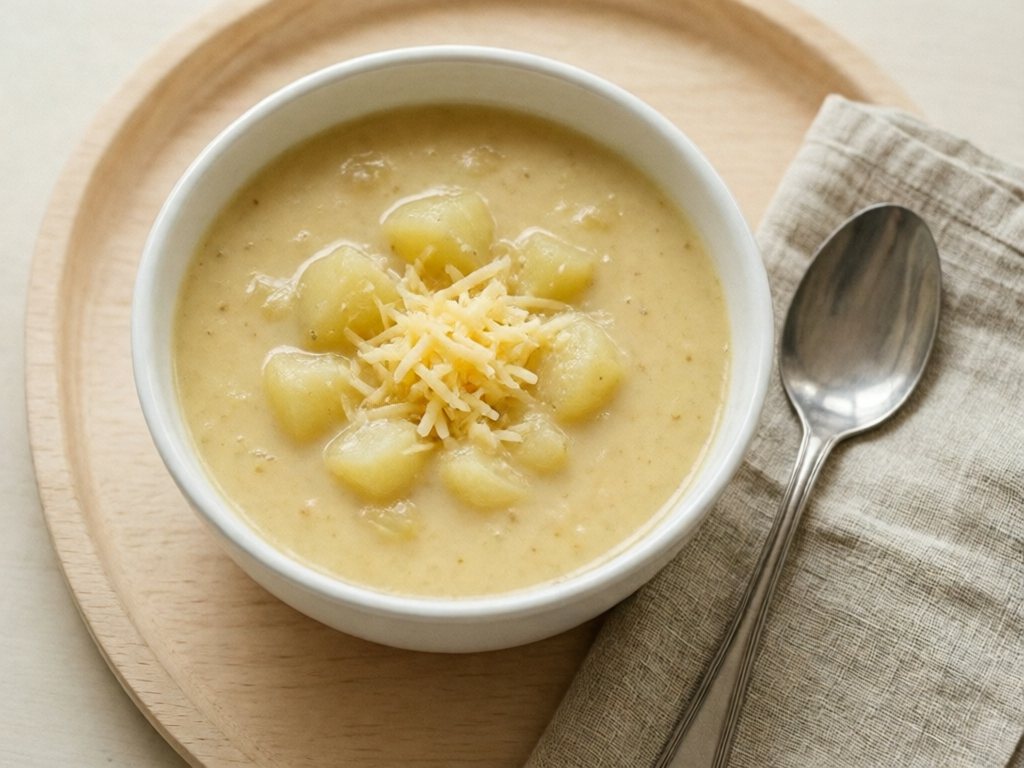
If your child loves mashed potatoes, this is basically a drinkable version. It’s filling, mild, and a dependable fall weeknight meal.
Ingredients
- 2 tablespoons butter
- 1/2 small onion, finely diced
- 1.5 pounds Yukon Gold potatoes, peeled and cut into 1/2-inch cubes
- 3 cups low-sodium chicken or vegetable broth
- 1 cup whole milk
- 1 cup shredded mild cheddar (shred it yourself. Pre-shredded cheese has anti-caking coatings that can make soup grainy)
- Salt to taste, very light
Directions
- Melt the butter in a pot over medium heat. Cook the onion until very soft, about 5 minutes.
- Add potatoes and broth. Simmer 15 to 18 minutes until potatoes are tender and break apart easily with a spoon.
- Using an immersion blender, blend about two-thirds of the soup, leaving some soft potato pieces. (No immersion blender? Scoop out half, blend it in a countertop blender with the vent open, and stir it back in.)
- Reduce heat to low, add milk, then stir in cheese a handful at a time until melted. Don’t let it boil after the cheese goes in.
- Taste and adjust. Add a splash of milk if it’s too thick.
TipFor kids who dislike visible bits, blend it completely. It becomes a Level 1 or 2 soup with real staying power.
Sweet Corn Chowder (Mostly Smooth)
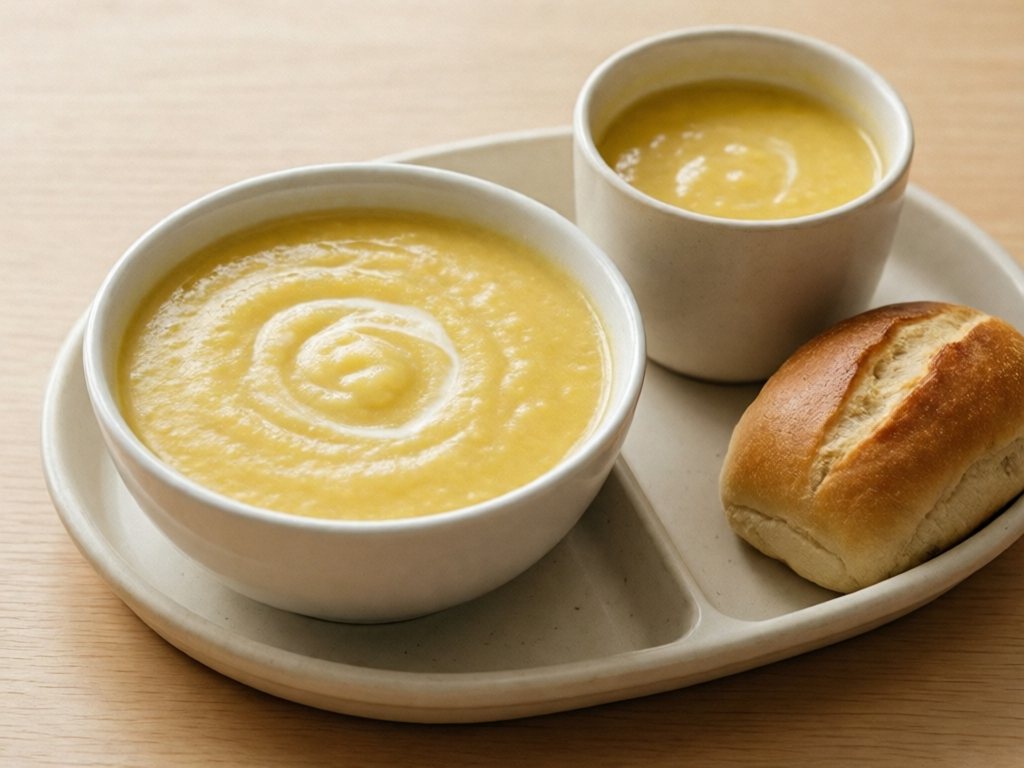
Corn chowder wins over kids who love sweet flavors, but the tough kernel skins bother many sensitive eaters. The fix is to blend most of the corn.
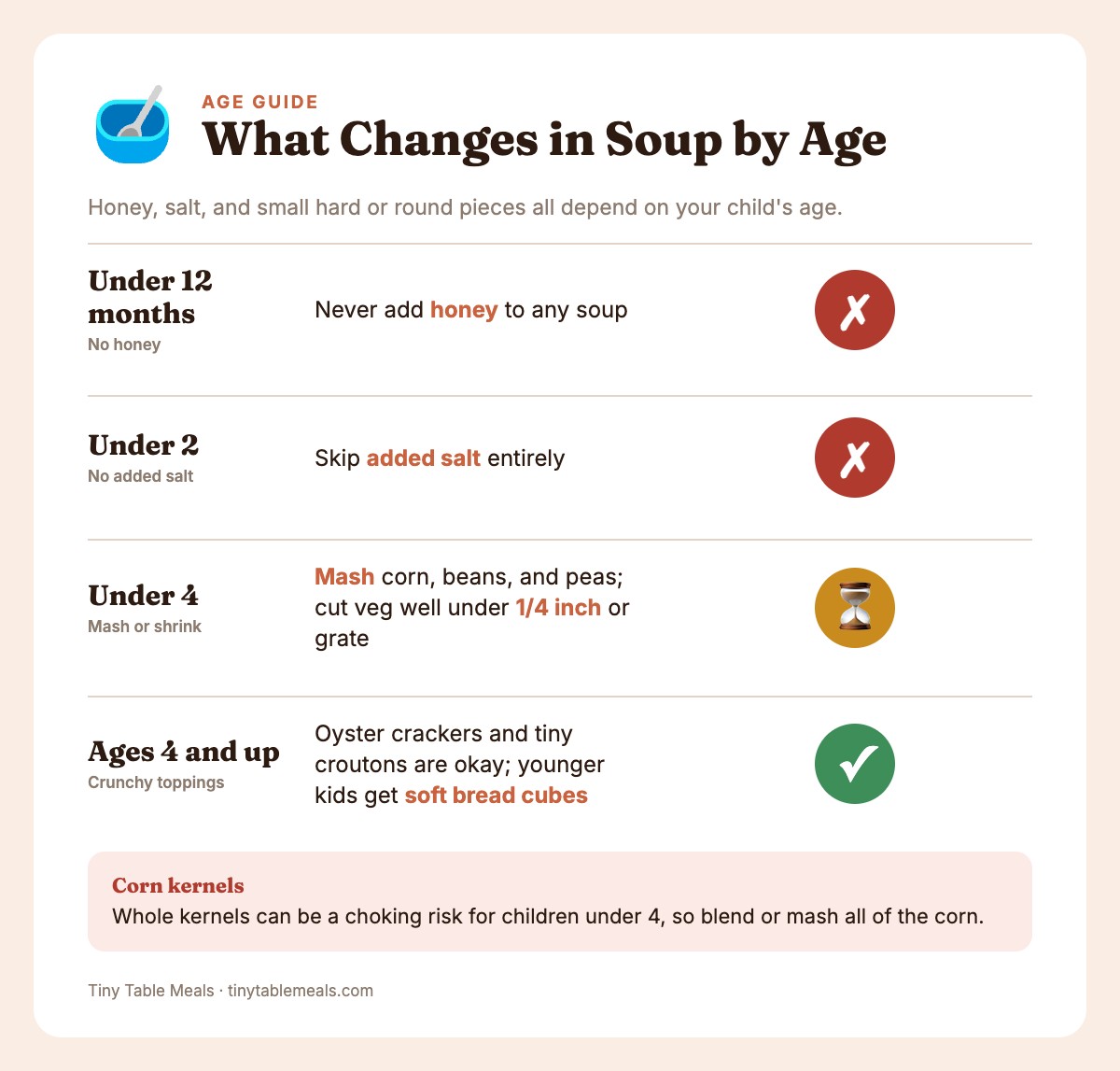
Safety firstFor children under 4, blend or mash all of the corn. Whole kernels can be a choking risk for small children.
Ingredients
- 1 tablespoon butter
- 1/2 small onion, finely diced
- 1 medium potato, peeled and finely diced
- 3 cups corn kernels (frozen is perfect)
- 2 cups low-sodium chicken or vegetable broth
- 1 cup whole milk
- Salt to taste, very light
Directions
- Melt the butter in a pot. Cook the onion 4 minutes until soft.
- Add potato, 2 cups of the corn, and the broth. Simmer 15 minutes until the potato is very tender.
- Blend until completely smooth, then pass through a mesh strainer to catch the corn skins. Press with a spoon.
- Return the strained soup to the pot and stir in the milk.
- For children under 4, or any child who doesn’t like kernels, blend the remaining 1 cup of corn too, strain again, and stir it in. For older kids who like kernels, stir them in whole.
Why strain? Skip this step if your child doesn’t mind it. But if they do the “spit out a tiny bit” thing, the corn skins are usually the culprit.
Level 4: Brothy Soup Recipes With Small, Soft Pieces
Here the broth is thin and the solid bits are small, soft, and uniform. This is the home of classic chicken-and-noodle-style soups, and it works for kids who like to see what they’re eating but dislike variety in a single bite.
Chicken and Little Stars Soup
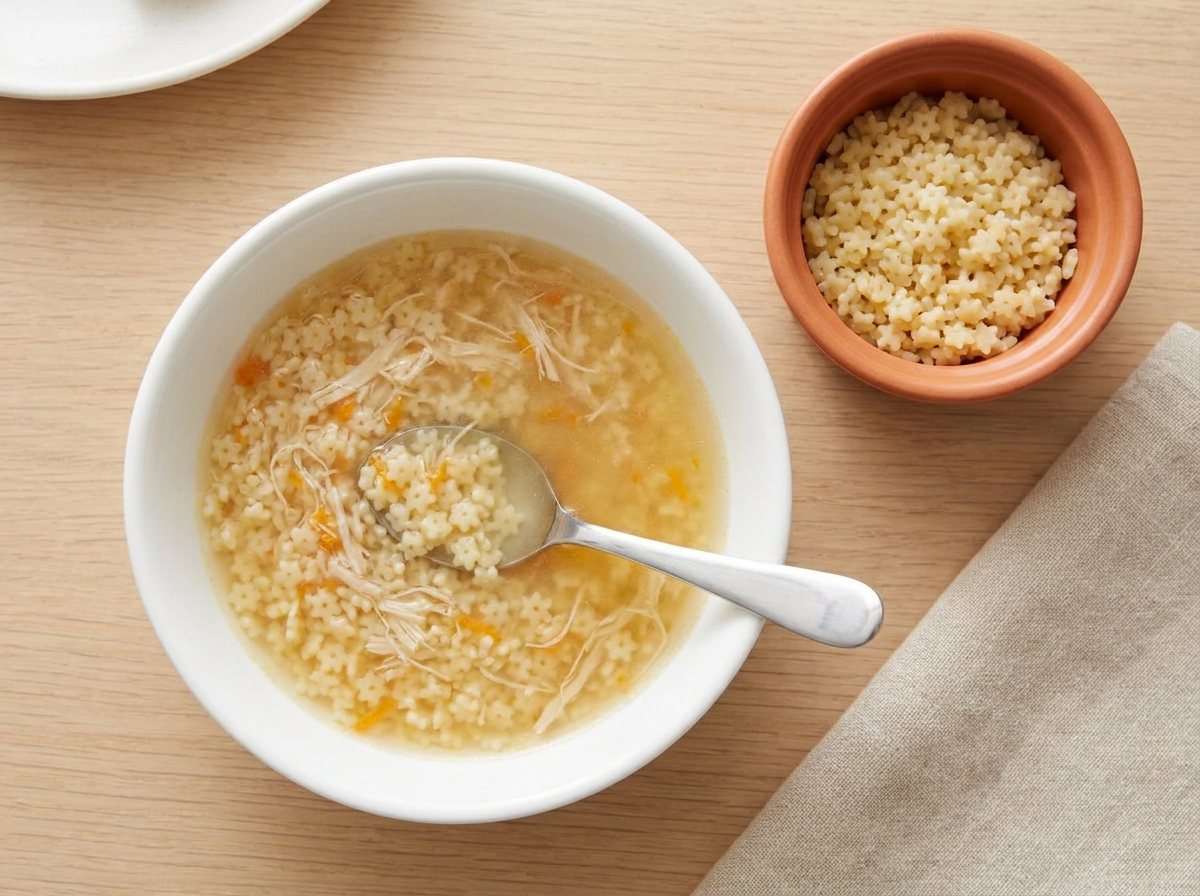
The trick to this soup is restraint. Few ingredients, tiny pieces, and nothing slimy.
Ingredients
- 1 tablespoon olive oil
- 2 carrots, peeled and grated on the large holes of a box grater (they cook down to near-invisible)
- 1 celery stalk, very finely diced (or skip for celery-averse kids)
- 6 cups low-sodium chicken broth
- 1 pound boneless, skinless chicken breast or thighs
- 3/4 cup tiny pasta such as stelline (little stars), acini di pepe, or orzo
- Salt to taste, very light
Directions
- Heat oil in a pot over medium heat. Cook carrots and celery for 4 to 5 minutes.
- Add broth and whole chicken pieces. Bring to a gentle simmer and cook 15 to 20 minutes, until a thermometer reads 165°F in the thickest part of the chicken.
- Remove chicken and shred it very finely with two forks. For the pickiest eaters, chop it even smaller.
- Return chicken to the pot. Add pasta and cook according to package directions, usually 5 to 7 minutes.
- Serve right away or cook the pasta separately (see tip below).
TipPasta continues to swell in leftover soup and turns mushy overnight, which is a dealbreaker for many texture-sensitive kids. Cook the pasta separately, store it separately, and add it to each bowl as you serve.
How to adjust:
- Down to Level 3: Blend the carrots into the broth before adding chicken, then keep the pasta and shredded chicken.
- Up to Level 5: Add a handful of small cut vegetables like peas (mashed for under 4) or diced zucchini.
If you’re juggling a whole week of dinners and want soup to fit in without more stress, our picky eater meal plan shows how to rotate a “safe” meal with a “stretch” meal so no one feels pressured.
Level 5: Chunky Fall Soup Recipes
You may not need this level for a while. That’s okay. Chunky soup is a destination, not a requirement. When your child is ready, make it gentle.
Mild Minestrone With Tiny Pasta
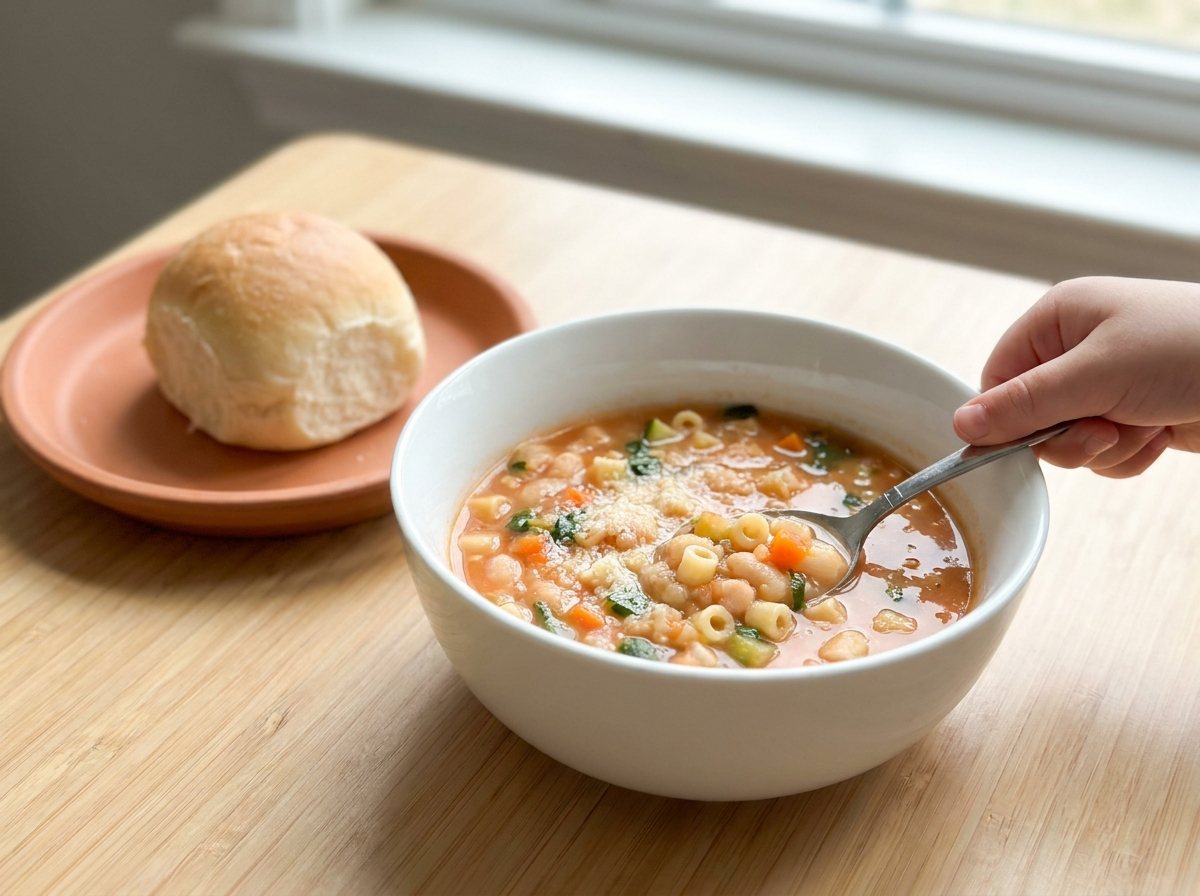
This is the soup that my daughter pushed away that October. Here’s the more kid-friendly version I make now. It’s still chunky, but the pieces are small and soft and the flavor is mild. For more ways to tuck vegetables into meals, see our hidden veggie recipes for kids.
Ingredients
- 2 tablespoons olive oil
- 1 carrot, peeled and diced small (1/4 inch)
- 1 small zucchini, diced small
- 1/2 small onion, finely diced
- 1 can (14.5 ounces) diced tomatoes, undrained (or fire-roasted for sweetness)
- 5 cups low-sodium vegetable or chicken broth
- 1 can (15 ounces) white beans such as cannellini, drained and rinsed
- 3/4 cup small pasta (ditalini or tiny shells)
- 1 cup baby spinach, chopped very fine (optional)
- 1/4 cup grated parmesan, plus more for serving
- Salt to taste, very light
Directions
- Heat the oil in a large pot over medium heat. Cook carrot, zucchini, and onion for 6 to 8 minutes until softened.
- Add the tomatoes and broth. Bring to a boil, then simmer 15 minutes.
- Add the beans and pasta. Cook 7 to 9 minutes until the pasta is just tender.
- Stir in the spinach and parmesan in the last minute.
- Mash about a third of the beans against the side of the pot with a spoon to thicken the broth and reduce the number of “whole” bean surprises.
TipFor tentative chunky-eaters, serve the broth first with just a few pieces, then add more over several meals. Or ladle some into a bowl and use a potato masher briefly to soften the texture.
Safety firstFor children under 4, cut the carrot and zucchini into pieces well under 1/4 inch (or grate them), cook them until very soft, and mash the beans and any peas.
Keeping Fall Soups Mild (Without Making Them Boring)
The title promises “not too spiced,” and here’s why that matters. Many young children are more sensitive to strong tastes and smells than adults. The “warming spices” we reach for in fall (curry powder, chili, a lot of black pepper, big ginger, smoked paprika) can feel like too much. A soup that smells overwhelming at the table can lose before the first bite.
Here’s how I keep soup flavorful without it being “spicy”:
Build flavor with sweet and savory, not heat.
- Roast vegetables before simmering. Roasting brings out natural sweetness.
- Use a parmesan rind in the simmer (pull it out before serving).
- Add a small splash of milk or a spoonful of butter at the end for rounder flavor.
- Use low-sodium broth, then season lightly at the end. For children under 2, skip added salt entirely.
If you want a little spice, introduce it on the side.
- Make the pot mild, then let the grown-ups add black pepper, chili flakes, or hot sauce at the table.
- Offer a tiny dish of “toppings” the child can choose from, such as shredded cheese, plain yogurt, or crushed crackers.
Common soup flavor swaps
| Instead of… | Try… | Why |
|---|---|---|
| Curry powder or chili | A pinch of cinnamon or sweet paprika | Gentle warmth without heat |
| Raw garlic, lots of it | A single roasted garlic clove, blended in | Sweeter and less pungent |
| Fresh herbs floating in the soup | Dried herbs, tiny pinch, or none | Removes green flecks |
| Heavy black pepper | Skip it in the pot | Adults can add their own |
| Strong cabbage or kale | Spinach blended in at the end | Mild flavor, disappears |
| Salty store broth | Low-sodium broth, plus a pinch of salt at the end (none under 2) | Better for small kids’ sodium needs |
Safety firstPlease don’t add honey to any soup for a child under 12 months. It can carry a serious risk for babies.
How to Get Picky Eaters to Try Soup
How you serve the soup can matter as much as how you make it. These small shifts have helped in my house.
Cool it down
Kids are not tolerant of hot soup the way we are. Let it cool until it’s just warm, and test a spoonful yourself. A burned tongue can end soup for weeks.
Use a small portion in a small vessel
A big bowl of anything looks like a mountain to a cautious eater. Try a small ramekin, a toddler mug, or even a muffin-tin cup. Two tablespoons that get eaten beat a full bowl that gets refused.
Give them something to dip or crunch
Pairing soup with something familiar helps a lot:
- Grilled cheese strips or toast fingers
- Soft bread cut into cubes for dunking
- Soft crackers or crackers they crush into the bowl (for under 4, choose ones that dissolve easily and make sure your child stays seated while eating)
- Cheese quesadilla triangles
- Soft-cooked pasta on the side
Let them add the toppings
Control is magic. A topping bar might include:
- A spoonful of plain yogurt or sour cream
- Shredded cheese
- Small crackers or oyster crackers (ages 4 and up; for under 4, use soft crackers that dissolve easily)
- A few tiny croutons (ages 4 and up) or soft bread cubes for younger kids
- A drizzle of olive oil
Try a “soup bar” for mixed-level families
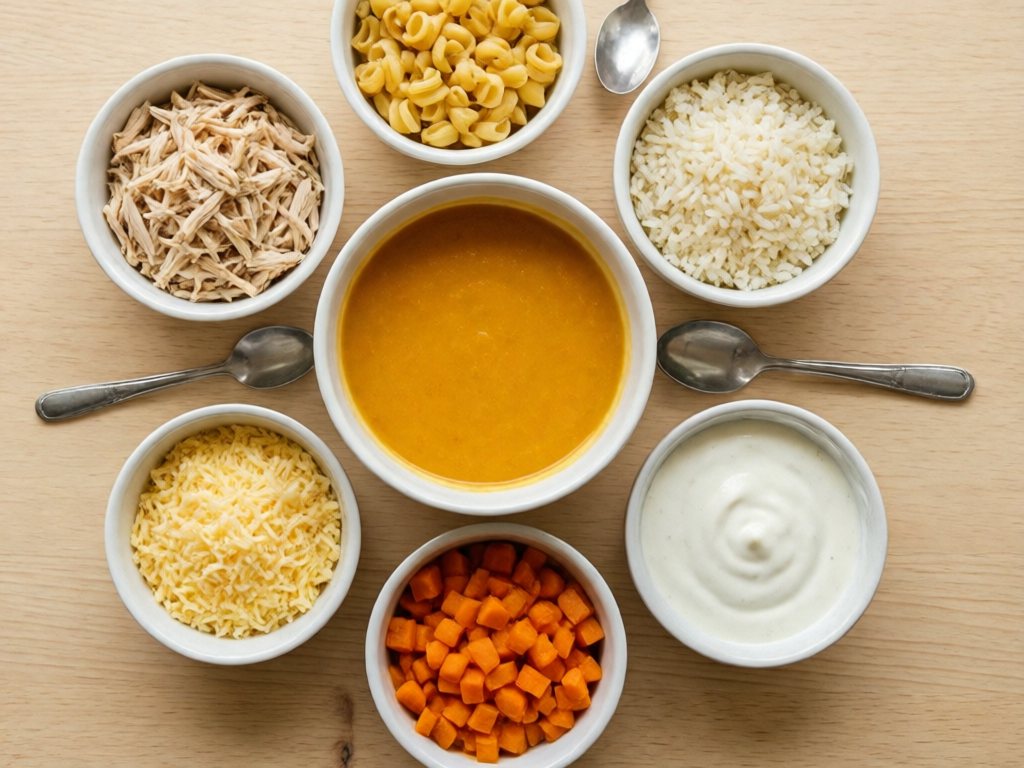
When you have an adventurous eater next to a very sensitive eater, the soup bar solves it. Make one blended base, such as butternut or carrot soup, then set out small bowls of add-ins:
- Shredded chicken
- Tiny pasta
- Cooked rice
- Soft diced vegetables (cooked very soft and cut small for under 4)
- Grated cheese
The sensitive kid gets the smooth base. The braver kid builds a chunkier bowl. Nobody has to eat something they aren’t ready for, and you’re only cooking one pot.
Keep the pressure low
“Take three bites” and “just try it” usually make things harder. A calmer approach is to put a small portion on the table, eat your own bowl, and talk about something else. Exposure happens when a food is around and nobody’s making a fuss.
Moving Along the Spectrum (Slowly)
Once your child is eating a soup comfortably at one level, you can nudge them along. This is the same logic as food chaining, where you build from a food they already accept toward a slightly different one. Our food chaining method guide goes deeper on this, but here’s how it looks for soup:
Chain idea 1: Add one thing, not five.
Your child loves silky butternut soup. Next time, stir in a spoonful of soft-cooked rice. The flavor stays the same. Only the texture changes a little.
Chain idea 2: Keep the flavor, change the texture.
They love cheddar potato soup blended smooth. Make it again but leave a few soft potato bits. Same flavor, one tiny texture step.
Chain idea 3: Move the “extras” to the side first.
They accept the smooth tomato soup. Offer a few cooked pasta shapes on a plate next to the bowl. Let them add them if they choose.
Chain idea 4: Change the shape, not the ingredient.
If they eat chicken and stars soup, try swapping the stars for slightly bigger pasta shells next time.
How long should this take? Honestly, it varies widely. Some kids move up a level in a couple of weeks; others take months. Both are normal.
Good to knowCheck in with your pediatrician or a feeding specialist if your child’s food list is shrinking, mealtimes bring a lot of distress or gagging, you have weight concerns, or your gut says something’s off.
Making Soup Work for a Busy Week
Soup is one of the best make-ahead foods there is, and if you’re in the weeknight crunch of fall, it’s a lifesaver.
Batch, portion, freeze
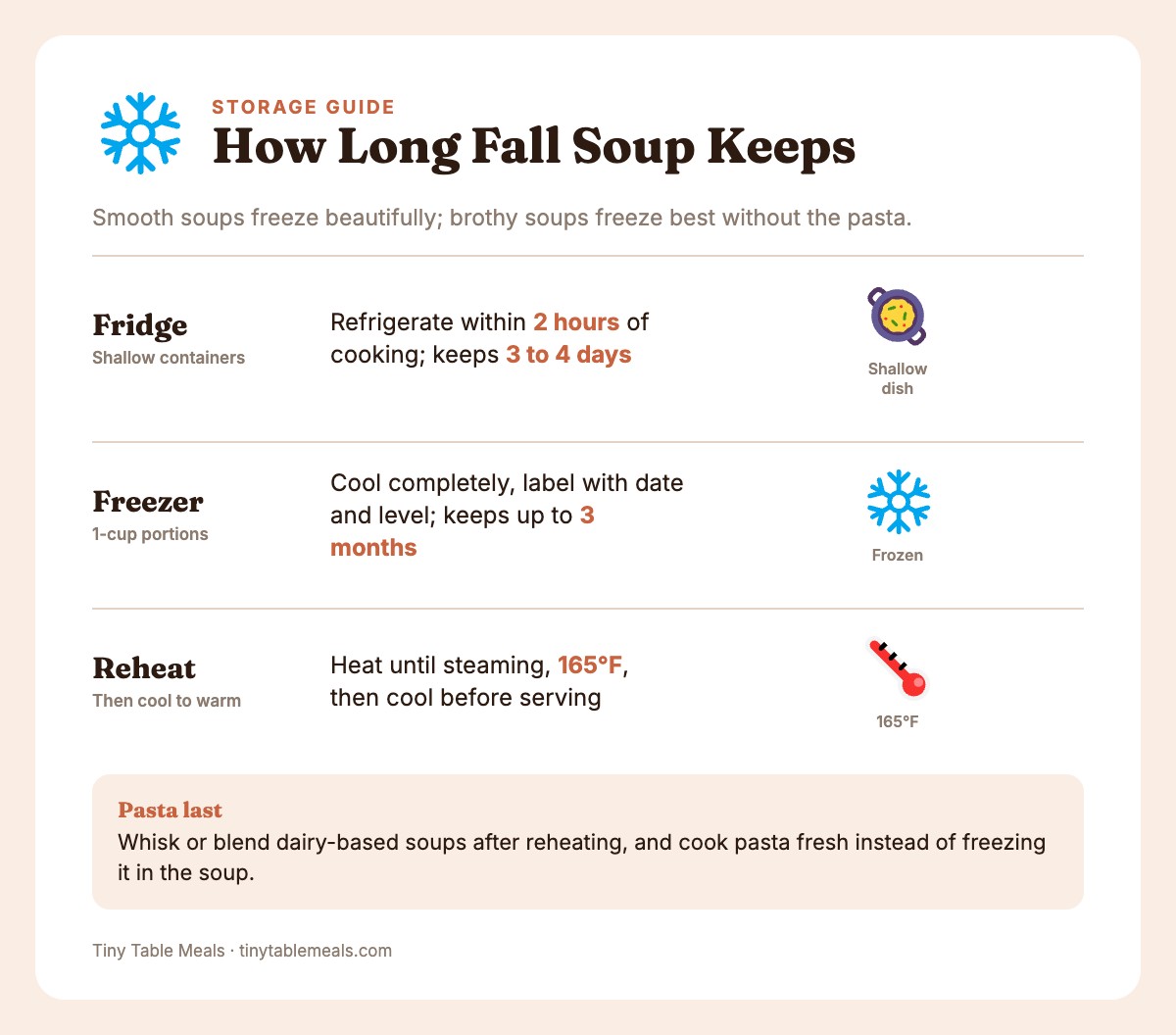
- Smooth soups (Levels 1 to 3) freeze beautifully. Cool completely, then portion into 1-cup containers or freezer bags laid flat.
- Cream and cheese-based soups can separate a bit when frozen. Whisk or blend after reheating, and add the cheese or dairy fresh if you can.
- Freeze brothy soups without pasta, and cook the pasta fresh.
- Label with the date and the texture level so you know what you’re grabbing.
| Storage | How | How long | Reheating tip |
|---|---|---|---|
| Fridge | Refrigerate within 2 hours of cooking, in shallow containers | 3 to 4 days | Reheat to 165°F (steaming hot), then cool to warm |
| Freezer | Cool completely, portion into 1-cup containers, label with date and level | Up to 3 months | Thaw overnight in the fridge, then reheat to 165°F; whisk or blend dairy-based soups; cook pasta fresh |
Reheat safely
- Thaw frozen soup overnight in the fridge, not on the counter.
- Reheat to 165°F, steaming all the way through, then let it cool to a comfortable warm before serving to kids.
- If you blended hot soup, always vent the blender lid and start on low. Steam builds pressure fast.
A sample soup week
| Day | Soup | Level | Pair With |
|---|---|---|---|
| Monday | Silky Butternut Apple | 1 | Buttered toast fingers |
| Tuesday | Leftovers or different dinner | — | Give the soup a rest |
| Wednesday | Roasted Tomato | 2 | Grilled cheese strips |
| Thursday | Different dinner | — | |
| Friday | Cheddar Potato | 3 | Grated or thinly sliced apple (cooked slices for under 4) and soft crackers |
| Weekend | Chicken and Little Stars | 4 | Soft bread |
Notice the gaps. Serving soup every night would wear anyone out, and rest days keep it from feeling like pressure. For those other nights, our 5 slow-cooker fall dinners have dinner ready when you walk in the door.
Add protein and staying power
The whole milk, butter, and olive oil in these recipes are there on purpose: young children need fat and calories to grow, and they help a small bowl keep them full. To add protein, blend a scoop of white beans or silken tofu into a smooth base, or stir in plain full-fat yogurt once the soup has cooled a little. Our guide to high-protein meals and snacks for kids has more ideas.
Frequently Asked Questions
What is the best fall soup to start with for a texture-sensitive child?
Start with a fully blended, naturally sweet soup such as butternut apple or carrot and sweet potato. Because every spoonful is identical, there are no surprises. Strain it for extra smoothness, serve it warm rather than hot, and offer a small portion with something familiar like toast fingers. Once your child accepts it a few times, move one step along the spectrum.
My child refuses any soup with visible pieces. What can I do?
Blend everything completely and strain it. Many kids who refuse “chunky” soup will eat the exact same recipe when it’s smooth. Keep serving the blended version, then try leaving a small amount of soft, tiny pieces in, or offer the extras on the side so your child can add them when ready. Forcing or bribing tends to make texture refusal stronger, so keep the mood relaxed.
How do I get vegetables into soup without my child noticing?
Grate carrots or zucchini very finely so they cook down, roast vegetables for sweetness, or blend them into the base. That said, I’d gently suggest not making secrecy the whole strategy. Let your child help pick, wash, or stir the vegetables at other times so they still build a positive relationship with whole vegetables. Hidden veggies and honest veggies can coexist.
At what age can toddlers eat these soups?
These recipes are written for ages 12 months and up, using low-sodium broth and minimal added salt (none at all before age 2). Babies under 12 months can have the plain blended vegetable base before any milk, cheese, salt, or honey is added. Never give honey before age one. For children under 4, mash or blend peas, beans, and corn kernels, and keep any pieces small and very soft because they can pose a choking risk. If you’re unsure about your own child’s readiness, check with your pediatrician.
Can I make these soups ahead and freeze them?
Yes. Smooth soups (butternut apple, carrot and sweet potato, tomato) freeze well for up to three months. Dairy-heavy soups like cheddar potato may separate slightly, so reheat gently and whisk or blend to bring them back together. For soups with pasta, freeze the broth and chicken without the pasta and cook fresh pasta when you reheat. Cool soups quickly, store in shallow containers, thaw frozen portions overnight in the fridge, and reheat to 165°F (steaming) before cooling to a safe eating temperature.
How do I keep soup from being too salty for kids?
Use low-sodium or no-salt-added broth, and add just a small pinch of salt at the end if needed (skip it entirely for children under 2). Build flavor with roasted vegetables, a little butter, a parmesan rind during simmering, or a touch of sweetness from apple or carrot. Be mindful that canned beans, canned tomatoes, and cheese all add sodium too, so rinse the beans and taste before you add any salt.
My child will only eat soup if it’s one specific brand. Should I worry?
Brand loyalty is common among picky eaters, and it often comes down to a very predictable texture and flavor. You can use that to your advantage by comparing your homemade soup to the brand: is it thicker, smoother, sweeter? Adjust your recipe toward it, then slowly shift. If your child’s list of accepted foods is very short or shrinking, or you see stress, gagging, or growth concerns, check in with your pediatrician or a feeding therapist.
Where to Start With Fall Soup Tonight
If your child will only eat the smoothest, plainest soup right now, that’s a perfectly good place to start. A bowl of silky butternut that gets finished is a win.
You don’t have to turn your picky eater into a minestrone fan by Thanksgiving. Pick the level that fits this week, serve it a few times, then move one step along the ladder.
Tonight, that might simply be Silky Butternut Apple Soup in a mug with buttered toast fingers.