After-School Snacks Kids Can Make Themselves: 20 Easy Recipes for Independence
Tired of being the snack dispenser? This guide offers 20 easy, kid-made after-school snack recipes, categorized by age and skill level, plus tips for setting up a safe snack station and a free printable kit to foster independence.
- Learn 20 kid-friendly after-school snack recipes your child can make.
- Discover 4 skill levels for ages 5-12 to match your child's readiness.
- Set up a safe, accessible snack station with clear rules for independence.
- Download a free printable kit with recipes, safety charts, and a progress tracker.
- Identify potential allergens for each snack with provided flags.
This post contains affiliate links. As an Amazon Associate I earn from qualifying purchases.
The door flies open. Backpack hits the floor. And before you can even ask about their day, the words you knew were coming: “I’M STARVING. What’s for snack?”
If you’re tired of being the afternoon snack dispenser, I get it. This guide gives you 20 after-school snacks kids can make themselves, sorted into four levels for ages 5 to 12. It also covers a snack station setup, kitchen safety rules by age and a plan for building skills.
Our first few weeks were messy. Then one afternoon I heard the toaster pop while I was still answering email, and I knew it was worth it.
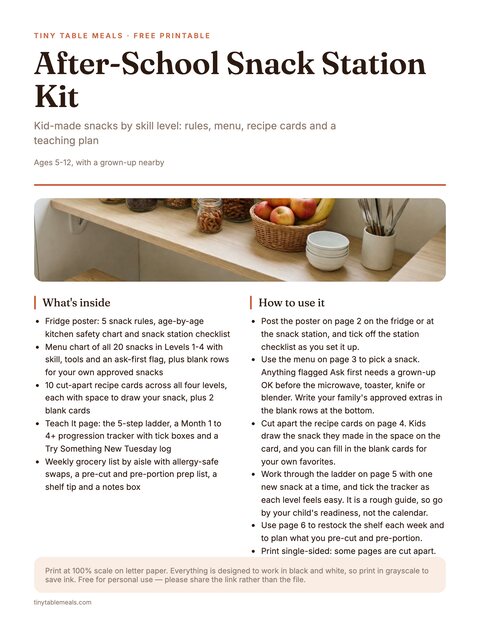
Free printable · 6 pages
After-School Snack Station Kit
A fridge poster with the 5 snack rules, an age-by-age safety chart and a station checklist, a menu of all 20 snacks by level with tools and ask-first flags, 10 cut-apart recipe cards with draw-your-snack space plus 2 blanks, a teaching ladder with a progress tracker and Try Something New Tuesday log, and a weekly grocery list with allergy-safe swaps and a pre-cut prep list.
Free. Your download link appears right here. You'll also join the Sunday Supper Plan. Unsubscribe anytime. Privacy
In this article (11 sections)
- Which Level Fits Your Child
- All 20 After-School Snacks at a Glance
- Snack Station Setup and Rules for Kids
- Level 1: No-Cook After-School Snacks Kids Can Make (Ages 5+)
- Level 2: Easy Spreading Snacks for Ages 7+
- Level 3: Microwave and Toaster Snacks for Ages 9+
- Level 4: Snacks With Knife Skills for Ages 10+
- Building Skills Over Time
- Fixing Common Problems When Kids Make Snacks
- Frequently Asked Questions
- Start With One Snack This Week
Which Level Fits Your Child
Every child is ready at a different pace, so stay close at first. Here is where each level fits:
| Level | Ages | What’s involved |
|---|---|---|
| 1: No-cook, no sharp tools | 5+ | Assembly, spreading, pouring |
| 2: Spreading and basic tools | 7+ | Butter knife on soft foods |
| 3: Microwave and toaster | 9+ | Heat, with an adult in the kitchen at first |
| 4: Cutting and prep | 10+ | Knives and blender, supervised |
All 20 After-School Snacks at a Glance
| # | Snack | Level | Min. age | Equipment | Allergen flags |
|---|---|---|---|---|---|
| 1 | Ants on a Log | 1 | 5+ | None | Nuts (or use seed butter) |
| 2 | Yogurt Parfait | 1 | 5+ | None | Dairy, gluten (granola) |
| 3 | Apple Nachos | 1 | 5+ | None (adult cuts apples) | Nuts, coconut |
| 4 | Trail Mix Creation Station | 1 | 5+ | None | Varies by mix-ins |
| 5 | Cheese and Cracker Stacks | 1 | 5+ | None | Dairy, gluten, sesame (some crackers) |
| 6 | Pinwheel Roll-Ups | 2 | 7+ | Butter knife | Dairy, gluten, sesame (hummus) |
| 7 | Banana Sushi | 2 | 7+ | Butter knife | Nuts, gluten, sesame (some wraps) |
| 8 | Loaded Rice Cakes | 2 | 7+ | None | Nuts, dairy, sesame (everything bagel seasoning) |
| 9 | Caprese Skewers | 2 | 7+ | Blunt skewer | Dairy, gluten (if using pretzel sticks) |
| 10 | Frozen Banana Pops | 2 | 7+ | None (adult inserts sticks) | Dairy, gluten (cereal topping) |
| 11 | Quesadilla | 3 | 9+ | Microwave | Dairy, gluten |
| 12 | English Muffin Pizza | 3 | 9+ | Toaster, microwave | Dairy, gluten |
| 13 | Mug Cake | 3 | 9+ | Microwave | Dairy, gluten; soy and nuts possible (check chocolate chip and cocoa labels) |
| 14 | Cinnamon Toast | 3 | 9+ | Toaster | Dairy, gluten |
| 15 | Nachos | 3 | 9+ | Microwave | Dairy (check chip and salsa labels) |
| 16 | Fresh Spring Rolls | 4 | 10+ | Knife | Shellfish (if shrimp), soy (if tofu) |
| 17 | Veggie Cups with Dip | 4 | 10+ | Knife | Dairy, sesame (hummus), egg and soy (some ranch packets) |
| 18 | Bruschetta | 4 | 10+ | Toaster, knife | Gluten, sesame (some breads) |
| 19 | Smoothie | 4 | 10+ | Blender | Dairy, nuts if added |
| 20 | Avocado Toast | 4 | 10+ | Toaster | Gluten, sesame (some breads) |
Good to knowThe allergen flags above are typical, not complete, so check every label. Crackers, breads, wraps and rice cakes can contain sesame. Ranch packets and dressings can contain milk, egg, soy and sesame.
Snack Station Setup and Rules for Kids
A low shelf and a few labeled containers do most of the work.
The Accessible Snack Station
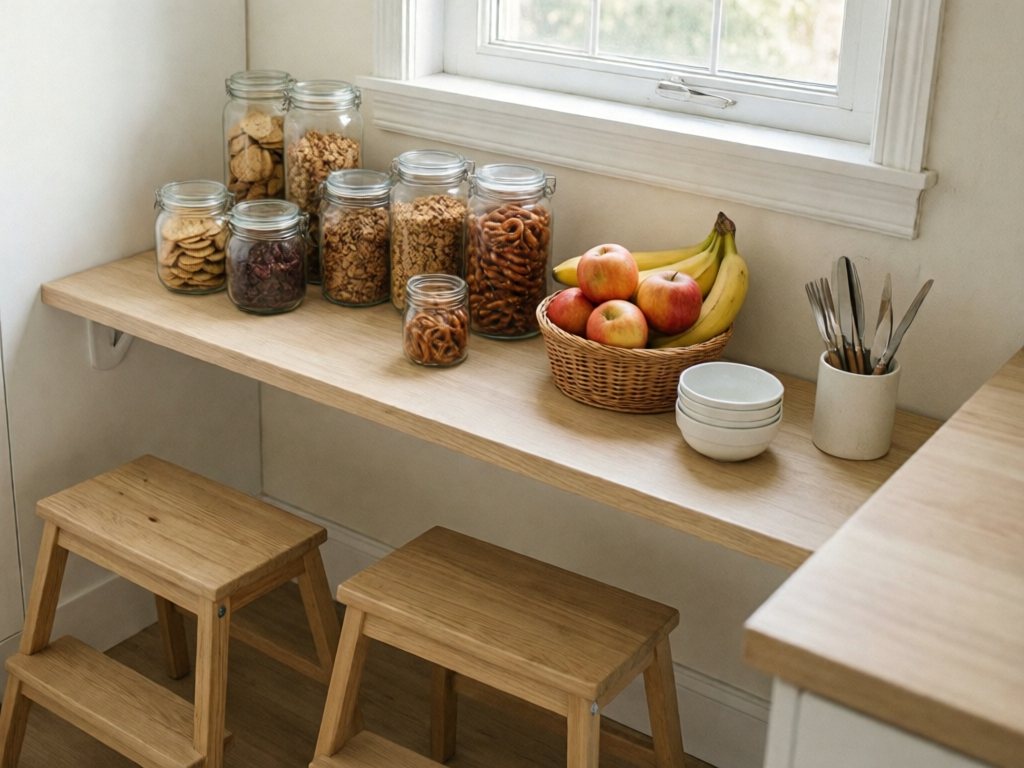
Designate a kid-accessible area in your kitchen and tick these off as you stock it:
- A low drawer or shelf with approved snack ingredients.
- A child latch or gate on that drawer or shelf if a baby or toddler is ever in the house.
- Kid-safe utensils (butter knives, kid scissors, small bowls).
- A stable step stool or sturdy learning tower if they need a boost, set well away from the stove.
- Any freestanding shelf unit anchored to the wall so it can’t tip.
- Clear containers labeled with pictures for younger kids.
- A designated “snack prep” space they can use independently.
Safety firstAnchor any freestanding shelf unit to the wall so it can’t tip over. Drawers and shelves are not ladders, so no climbing. Younger kids use the step stool only with an adult nearby.
You don’t need to buy much to start. A few containers and a shelf you already own will do. If you want ready-made labels and a menu, the After-School Snack Station Kit below has them.
A low open shelf only works when no baby or toddler can get to it. If a little one lives in or visits your home, put the station in a drawer or cupboard with a child latch your big kid can open. A gated-off kitchen works too.
Can’t latch or gate it? Keep only toddler-safe foods down low. Move nuts, dried fruit, pretzels, skewers and popsicle sticks to a higher shelf or a latching container that only your older child can reach or open.
Keep a younger sibling’s snacks separate too. These toddler snack ideas are made for them.
The Snack Rules
Post these five rules at the station:
- Wash hands first, every time.
- One planned snack after school, so there’s still room for dinner.
- Clean up your mess.
- Ask before using sharp tools or appliances (based on age and skill).
- Choose from the approved list.
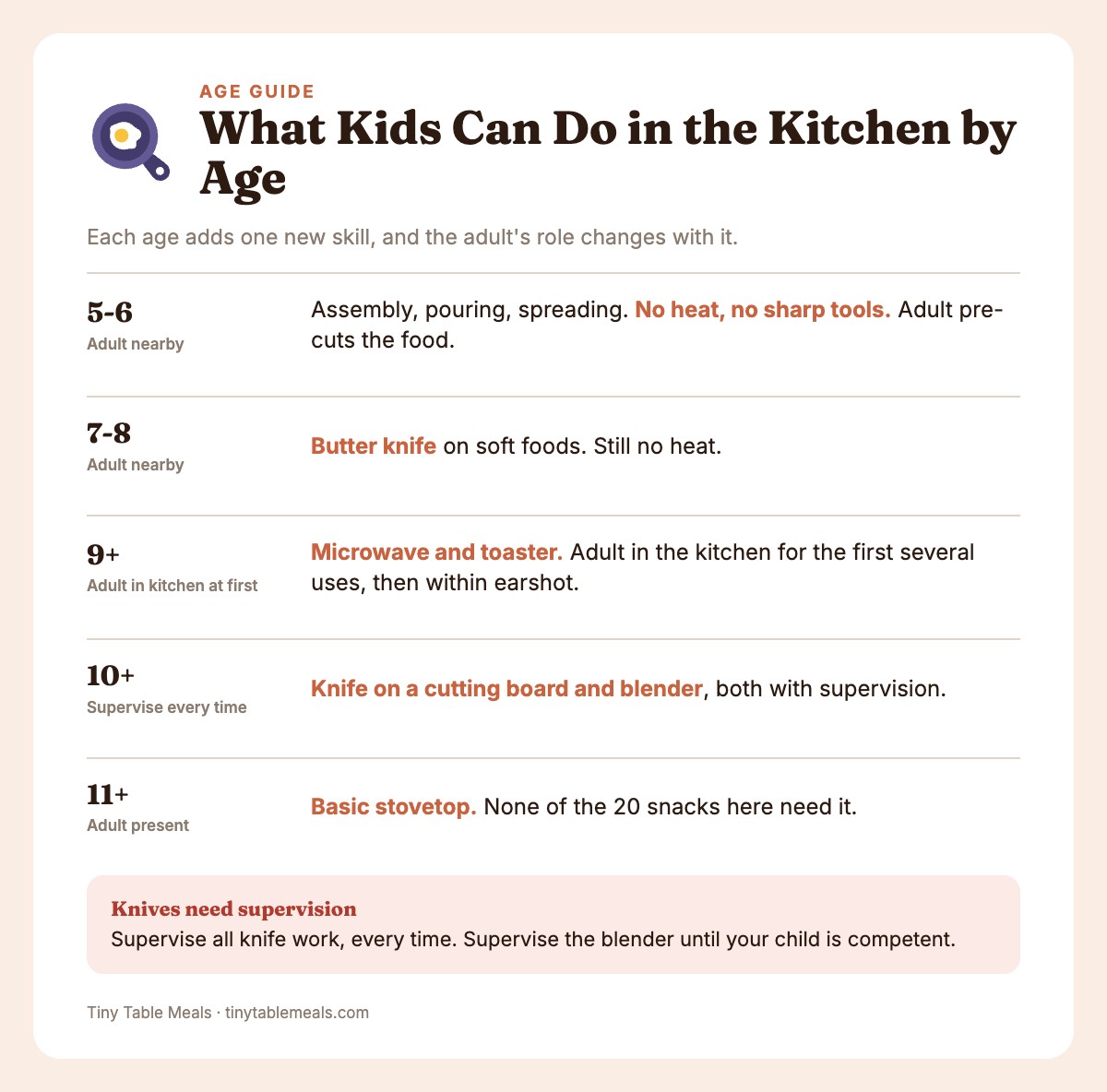
Age-by-Age Kitchen Safety Rules for Kids
Safety firstA big kid’s snack can end up in a little hand, so set these rules before anyone starts:
- Choking hazards under 4. Whole nuts, whole grapes, whole cherry tomatoes, hard raw vegetables, popcorn, dried fruit, chunks of cheese, hard candy and spoonfuls of nut butter.
- Make them safer. Quarter grapes and cherry tomatoes lengthwise, and spread nut butter thinly.
- Sit to eat. Have everyone sit down to eat.
- Latch or gate. If a baby or toddler is ever in the house, latch or gate the station as described above.
- No honey for babies. If a baby lives in or visits your home, keep honey off the station shelf. It is never safe for children under 12 months.
Good to knowIf anyone in the house has a food allergy, read the FAQ below before you stock the station. For nut-free swaps, see our nut-free school lunch ideas.
| Age | What they can do | Adult role |
|---|---|---|
| 5-6 | Assembly, pouring, spreading. No heat, no sharp tools. | Nearby in the kitchen; pre-cut the food |
| 7-8 | Butter knife on soft foods | Nearby; still no heat |
| 9+ | Microwave and toaster | In the kitchen for the first several uses, then within earshot |
| 10+ | Knife on a cutting board and blender, both with supervision | Supervise all knife work, every time. Supervise the blender until they are competent. |
| 11+ | Basic stovetop (none of the 20 snacks here need it) | Adult present |
Level 1: No-Cook After-School Snacks Kids Can Make (Ages 5+)
These snacks require only assembly, spreading and pouring. They’re perfect for the youngest independent snackers.
When my kid first took over the parfait, most of the granola ended up in one cup. Pre-portioning it into small containers fixed that faster than any lecture.
Safety firstCut celery thin and short. Spread nut butter thinly. Chop any nuts finely, or leave them out. Have kids sit down to eat, and keep ingredients away from toddlers.
1. Ants on a Log
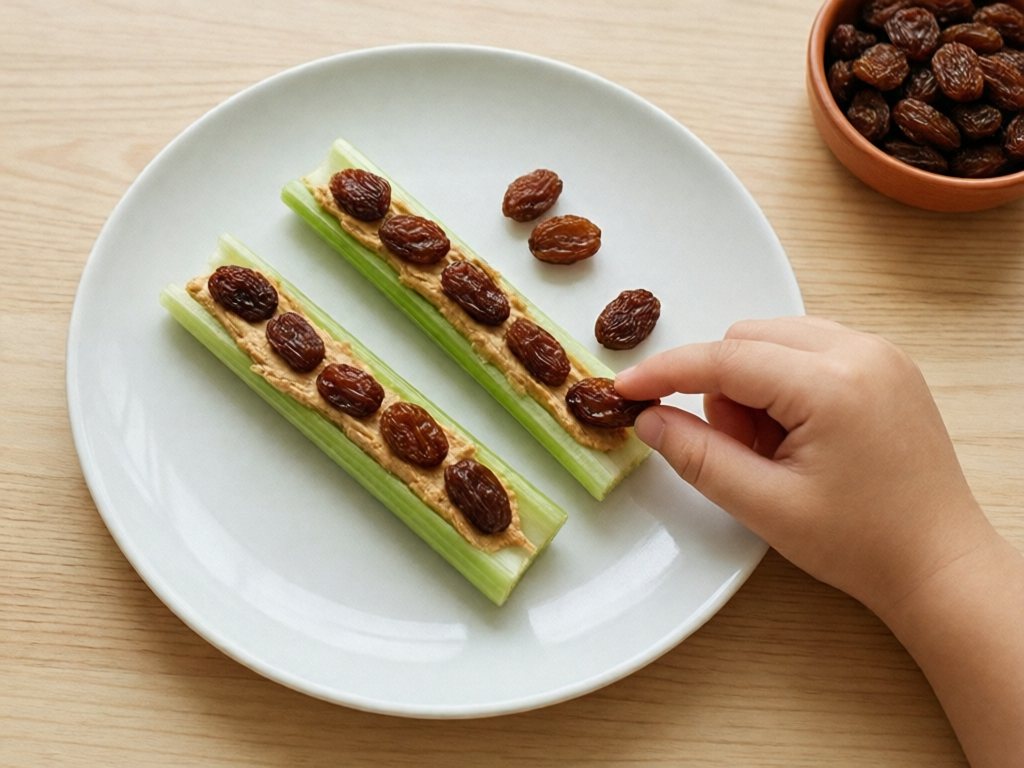
What they need:
- 2-3 celery sticks (cut thin and short by you).
- Peanut butter or sunflower seed butter.
- Raisins.
What they do:
- Spread nut butter thinly in the celery “log.”
- Line up raisin “ants” on top.
Skills learned: Spreading, fine motor control, following steps.
Variations: Try cream cheese instead of nut butter, or use dried cranberries instead of raisins.
Allergy note: Sunflower seed butter is a good default at a shared station. Check for sibling and school nut rules before stocking peanut butter.
2. Yogurt Parfait
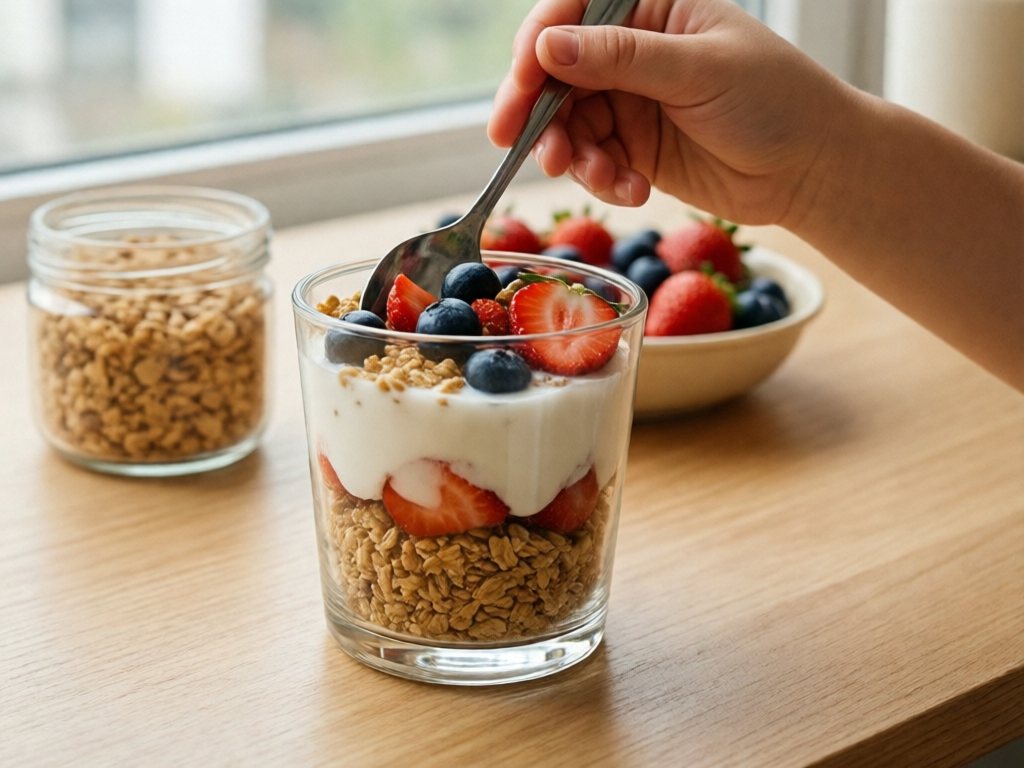
What they need:
- 1/2 cup yogurt (a single-serve cup works).
- 2 tablespoons granola in an easy-to-reach container.
- 1/4 cup berries (fresh or thawed frozen).
What they do:
- Spoon yogurt into a cup or bowl.
- Add a layer of granola.
- Top with berries.
Skills learned: Layering, portion awareness, presentation.
Pro tip: Pre-portion granola into small containers so they don’t pour half the bag.
3. Apple Nachos
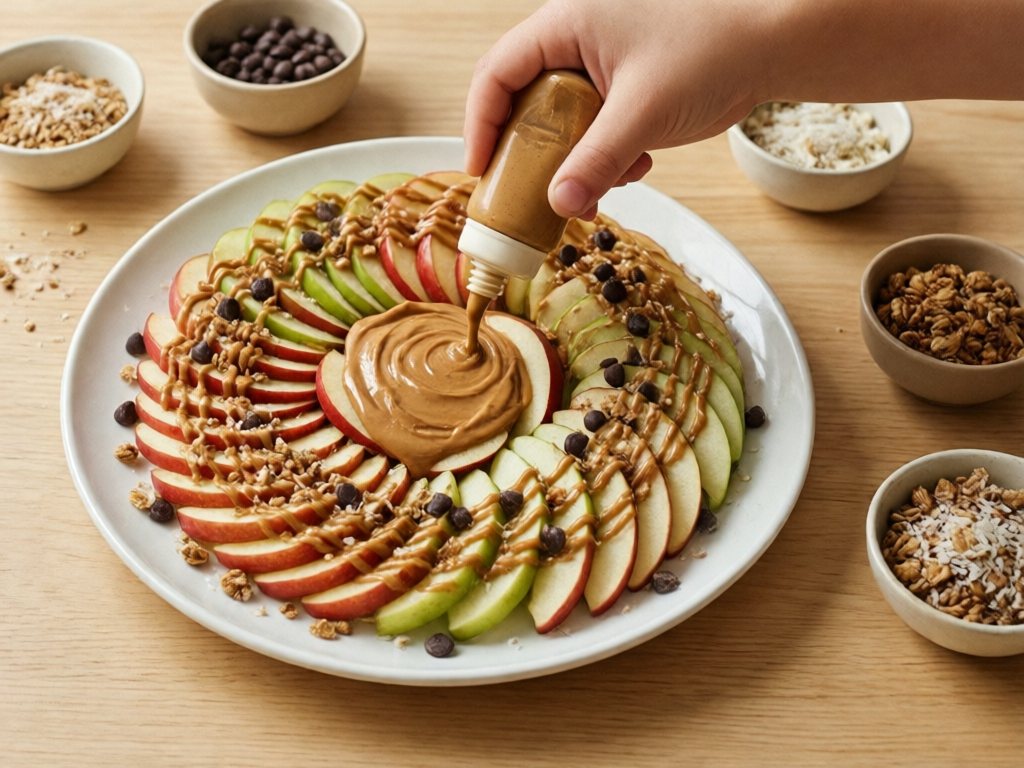
What they need:
- Thin apple slices cut by you and tossed with a little lemon juice. Keep them in a covered container in the fridge.
- 1 tablespoon nut butter that drizzles. An adult warms it 10 seconds, or thins it with a teaspoon of warm water or yogurt.
- Toppings: mini chocolate chips, granola, shredded coconut.
What they do:
- Arrange apple slices on a plate.
- Drizzle with nut butter.
- Sprinkle on toppings.
Skills learned: Drizzling, sprinkling, creativity with toppings.
4. Trail Mix Creation Station
What they need:
- Small containers of approved ingredients: cereal, pretzels, dried fruit and chocolate chips.
- Finely chopped nuts, never whole, if your home allows them.
- Measuring cups or scoops.
- Baggie or container for their mix.
What they do:
- Scoop one portion of each chosen ingredient.
- Combine in the bag or container.
- Shake to mix.
Skills learned: Measuring, decision-making, listening to hunger.
Make it special: Let them name their creation and save the “recipe.”
Good to know: Whole nuts are not for children under 4. Use finely chopped nuts or thinly spread nut butter for younger kids at the station, and keep nuts away from toddlers. Dried fruit and pretzels suit ages 5+, not toddlers sharing the station.
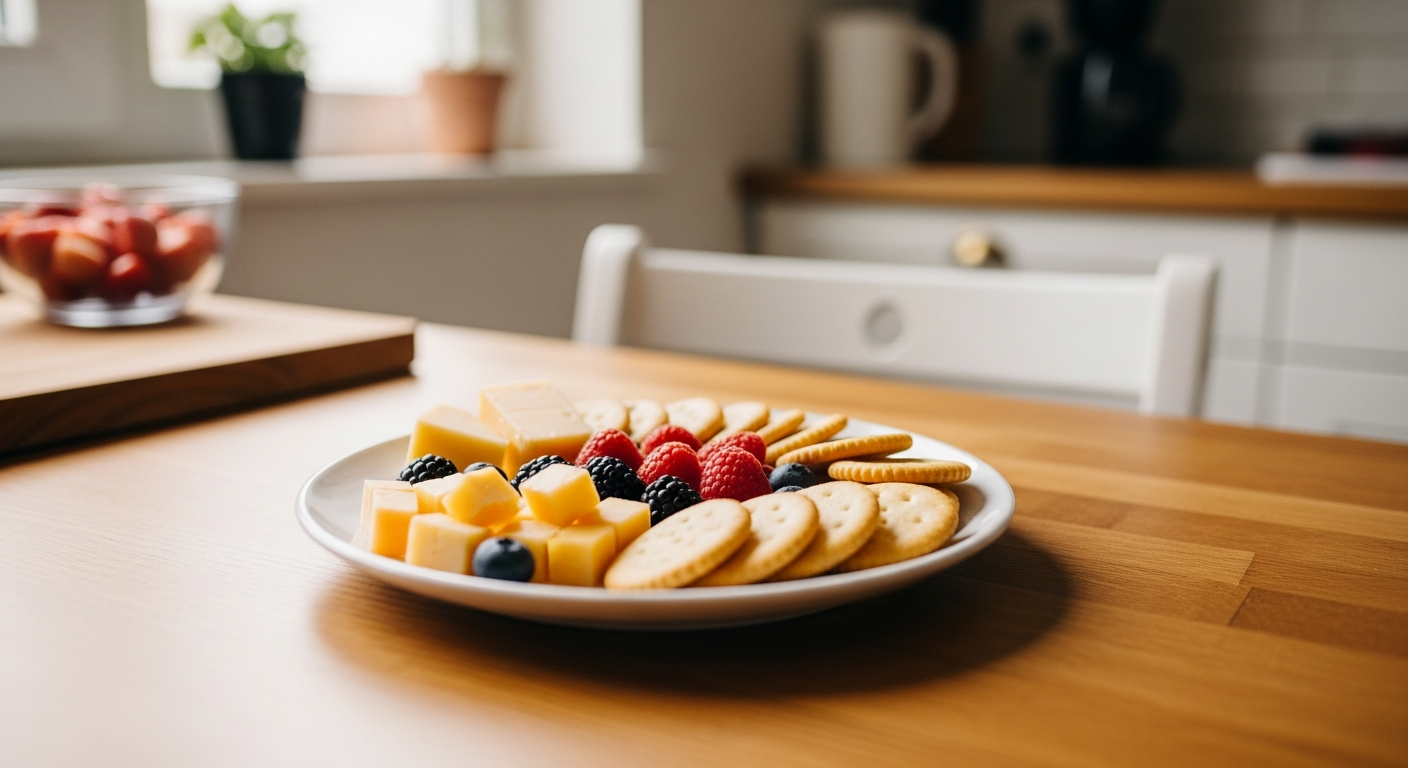
5. Cheese and Cracker Stacks
What they need:
- Crackers (check the label for sesame).
- Pre-sliced cheese.
- Optional: deli meat, cucumber slices.
What they do:
- Stack crackers with cheese between.
- Add more layers if you like.
Skills learned: Assembly, stacking, sandwich-building basics.
Level 2: Easy Spreading Snacks for Ages 7+
These snacks introduce butter knives and simple assembly with slightly more complexity.
6. Pinwheel Roll-Ups
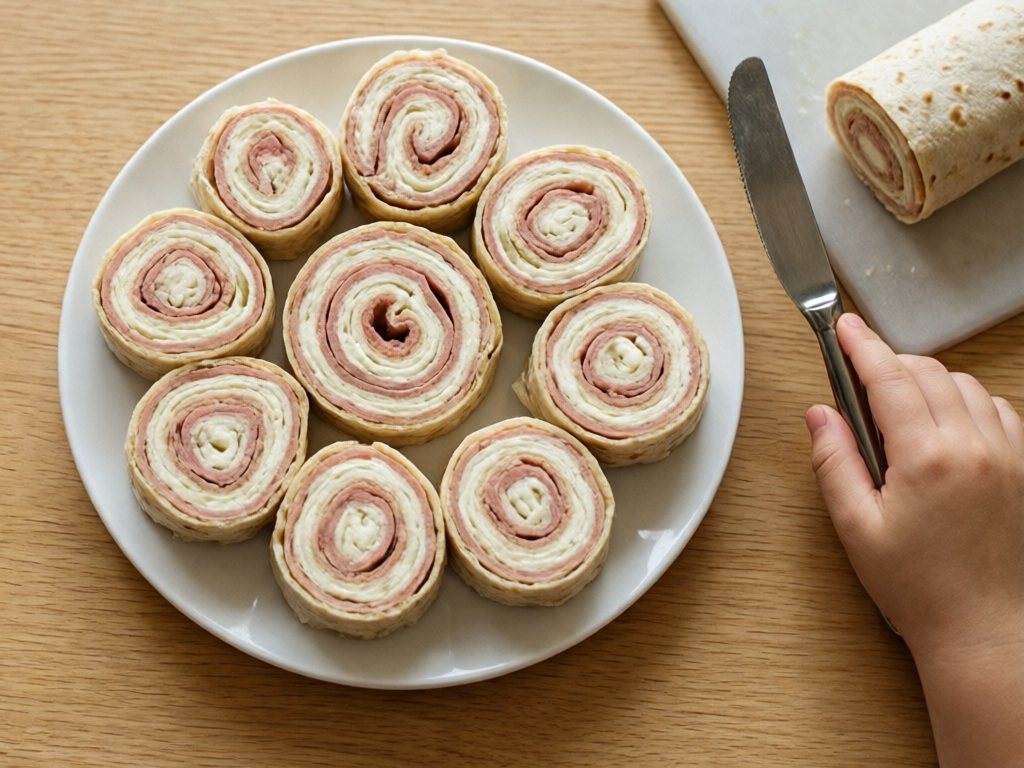
What they need:
- Flour tortilla.
- Cream cheese or hummus.
- Deli meat or sliced cheese.
- Butter knife.
What they do:
- Spread cream cheese or hummus over the entire tortilla.
- Layer meat or cheese on top.
- Roll up tightly.
- Cut into pinwheels with the butter knife (or leave whole).
Skills learned: Spreading evenly, rolling, optional cutting.
Allergy note: Hummus contains sesame. Use cream cheese if anyone at the station has a sesame allergy.
7. Banana Sushi
What they need:
- Tortilla or flatbread.
- Nut butter.
- Banana.
- Butter knife.
What they do:
- Spread nut butter thinly over the tortilla.
- Place the banana at the edge.
- Roll the tortilla around the banana tightly.
- Slice into “sushi” rounds.
Skills learned: Spreading, rolling, cutting with a butter knife.
Variations: Add cinnamon or mini chocolate chips before rolling.
8. Loaded Rice Cakes
What they need:
- Rice cakes.
- Topping options: nut butter, cream cheese, avocado (pre-mashed).
- Additional toppings: banana slices, berries, everything bagel seasoning (contains sesame).
What they do:
- Choose a spread and put a thin layer on the rice cake.
- Add toppings.
- Sprinkle with seasoning if you like.
Skills learned: Spreading on fragile surfaces (teaches gentle pressure), topping decisions.
9. Caprese Skewers
What they need:
- Cherry tomatoes. For any child under 5, quarter them lengthwise and serve them off the skewer.
- Small mozzarella balls (ciliegine), quartered the same way for any child under 5.
- Fresh basil leaves.
- Blunt-tip skewers or pretzel sticks (pretzel sticks contain gluten).
What they do:
- Thread a tomato onto the skewer.
- Add a basil leaf.
- Add a mozzarella ball.
- Repeat the pattern.
Skills learned: Pattern recognition, fine motor skills.
Safety firstThese skewers are not for children under 4. Keep the skewers, whole tomatoes and mozzarella balls out of toddler reach. An adult watches the first attempt. Point the skewer down at the plate, never at anyone.
10. Frozen Banana Pops
What they need:
- Banana (cut in half).
- Popsicle sticks.
- Yogurt (in a bowl for dipping).
- Toppings: sprinkles, crushed cereal, mini chocolate chips. Cereal can contain gluten, so check the label.
What they do:
- Have an adult push a stick into the cut end of each banana half.
- Dip in yogurt to coat.
- Roll in toppings.
- Place on wax paper on a plate and freeze at least 2 hours.
- Let the pop soften for a minute or two before eating.
Skills learned: Dipping, coating, patience.
Pro tip: Make these the night before so they’re ready after school.
Safety firstLet the pop soften for a minute or two so it isn’t rock hard. Have kids eat it sitting down, and never walk around with the stick. Offer pops only to children who can manage hard frozen food. Sprinkles and mini chocolate chips are choking hazards for children under 4. Keep pops away from younger siblings, since a hard frozen pop on a stick is a choking and poking risk for little ones.
Level 3: Microwave and Toaster Snacks for Ages 9+
These snacks introduce heat with appliances most kids can learn to use responsibly.
Safety firstMicrowave rules for this level:
- Adult nearby. In the kitchen for the first several uses, then within earshot.
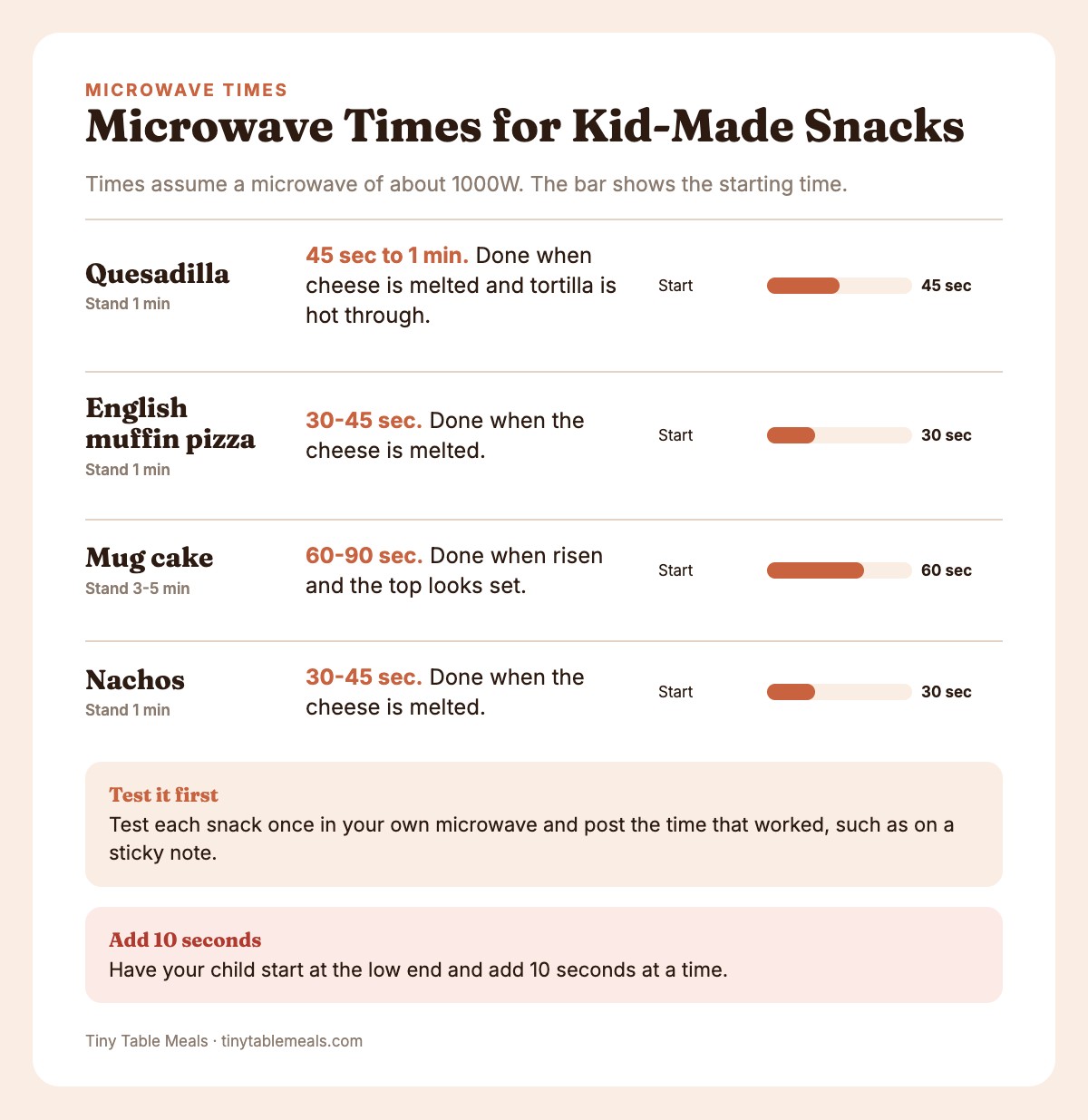
- Know your microwave. Times below assume about 1000W.
- Test once, then post it. Before your child makes a snack alone, test it in your own microwave and post the time that worked.
- Start low. Begin at the low end and add 10 seconds at a time.
- Mitts on. Use oven mitts or hot pads for plates and mugs.
- Steam burns. Open covered or folded food away from the face.
- Let it stand. 1 minute for most snacks, 3-5 minutes for mug cake.
Safety firstStay by the toaster while it runs. Only dry bread goes in, never anything buttered. Never put a fork or knife in a toaster. Unplug it and let it cool before freeing stuck bread. If you see smoke, unplug the toaster and call an adult. An adult empties the crumb tray once a week.
TipTeach the done cues: cheese fully melted, plate hot through, then stand one minute (3-5 minutes for mug cake). Check each batch yourself for those first several uses.
My kid’s first microwave quesadilla came out rubbery because the timer was set for a full two minutes. Now we keep a sticky note with the right time on the microwave door.
Here are the times on ours:
| Snack | Time at about 1000W | Done when | Stand time |
|---|---|---|---|
| Quesadilla | 45 sec to 1 min | Cheese melted, tortilla hot through | 1 min |
| English Muffin Pizza | 30-45 sec | Cheese melted | 1 min |
| Mug Cake | 60-90 sec | Risen, top looks set | 3-5 min |
| Nachos | 30-45 sec | Cheese melted | 1 min |
11. Quesadilla
What they need:
- Tortilla.
- Shredded cheese.
- Optional fillings: beans, vegetables, or leftover chicken an adult has already reheated (see our rotisserie chicken meal ideas).
- Microwave-safe plate.
What they do:
- Place the tortilla on the plate.
- Add cheese and fillings to one half.
- Fold the tortilla in half.
- Microwave 45 seconds (about 1000W). Add 10 seconds at a time, up to 1 minute, until the cheese is melted and the tortilla feels hot through.
- Let it stand a minute, then open it away from your face.
Safety firstLeftover chicken needs an adult. Use chicken that went into the fridge within 2 hours of cooking and is no more than 3 to 4 days old. An adult reheats it to 165°F before it goes in the quesadilla, since the short microwave time here only melts the cheese. For solo snacks, stick to beans, cheese and vegetables.
Skills learned: Microwave timing, folding, heat awareness.
Upgrade: A stovetop version gives crispier results, but save it for ages 11+ with an adult present.
12. English Muffin Pizza
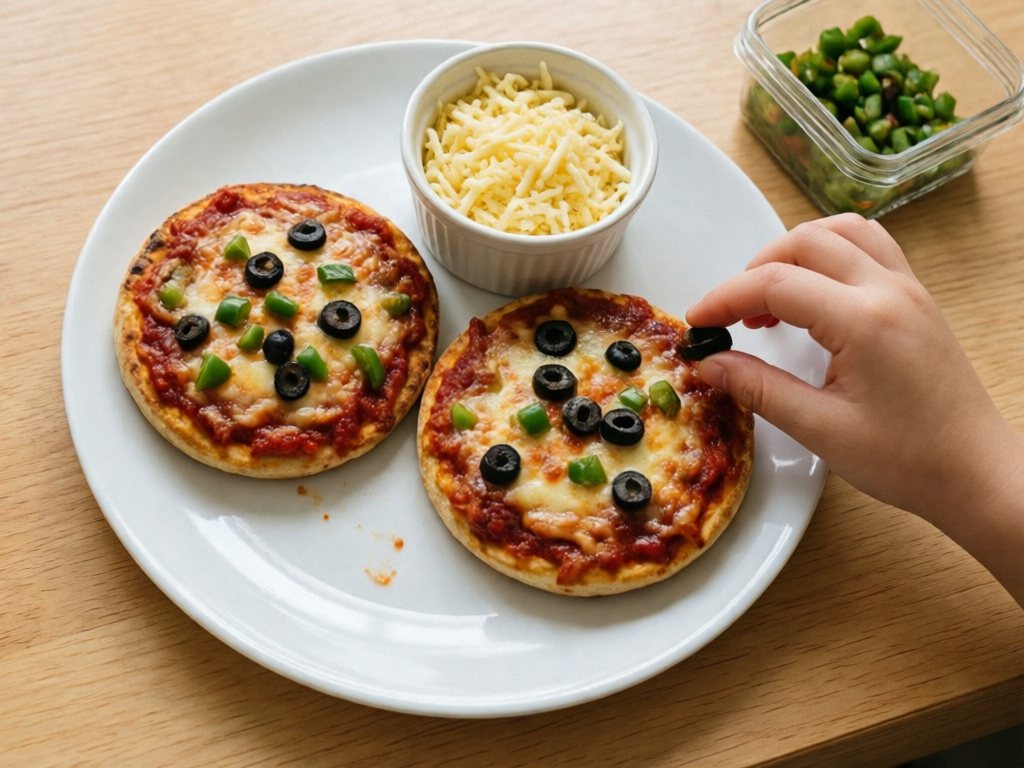
What they need:
- English muffin (pre-split).
- Pizza sauce or marinara.
- Shredded mozzarella.
- Toppings of their choice.
- Microwave-safe plate.
What they do:
- Toast the English muffin halves, staying by the toaster.
- Spread sauce on each half.
- Add cheese and toppings.
- Set the halves on the plate and microwave 30 seconds. Add 10 seconds at a time, up to 45, until the cheese melts.
- Let stand 1 minute.
Skills learned: Toaster use and melting cheese. Let the muffin cool a minute before building, and take the hot plate out with a mitt.
Pro tip: Make a “pizza toppings” container with pre-chopped options.
13. Mug Cake
What they need:
- 4 tablespoons flour.
- 2 tablespoons sugar.
- 2 tablespoons cocoa powder.
- 3 tablespoons milk.
- 2 tablespoons vegetable oil.
- 1/4 teaspoon baking powder and a pinch of salt.
- 2 tablespoons chocolate chips (optional). Check the chip and cocoa labels for soy and nuts.
- Large microwave-safe mug (14 to 16 oz), with batter filling it no more than halfway.
- Microwave-safe plate to set under the mug and catch spills.
What they do:
- Add all dry ingredients to the mug and stir.
- Add the wet ingredients and stir until smooth. Check that the mug is no more than half full.
- Set the mug on the plate and microwave 60 seconds. Add 10 seconds at a time, up to 90, until the cake has risen and the top looks set.
- Remove the mug with an oven mitt, since it will be very hot.
- Let cool 3-5 minutes, and keep steam away from your face.
Skills learned: Measuring, mixing, microwave timing, patience for cooling.
Good to know: This mug cake has no egg, which helps in egg-free homes. For more swaps, see our egg-free baking substitutes.
14. Cinnamon Toast
What they need:
- Bread.
- Butter (softened).
- Cinnamon sugar (pre-mixed in a shaker).
- Toaster.
What they do:
- Toast the bread, staying by the toaster.
- Spread butter while the toast is warm.
- Shake cinnamon sugar over the top.
Skills learned: Toaster use, spreading on warm bread, shaking evenly. The same toaster rules apply: no forks or knives inside.
15. Nachos
What they need:
- Tortilla chips.
- Shredded cheese.
- Optional: canned beans (drained), salsa, sour cream. Check the chip and salsa labels if anyone has a food allergy.
- Microwave-safe plate.
What they do:
- Spread chips on the plate in a single layer.
- Top with cheese (and beans if using).
- Microwave 30 seconds. Add 10 seconds at a time, up to 45, until the cheese melts.
- Let stand 1 minute, then add cold toppings.
Skills learned: Arranging food, microwave timing, topping sequence.
Level 4: Snacks With Knife Skills for Ages 10+
These snacks introduce knife skills with supervision. Always assess your individual child’s readiness.
Safety firstAn adult supervises all knife work. Teach the claw grip, and set the cutting board on a damp towel so it can’t slide. An adult halves and pits avocados. Tell the child to flag any shellfish or other allergies before choosing fillings.
16. Fresh Spring Rolls
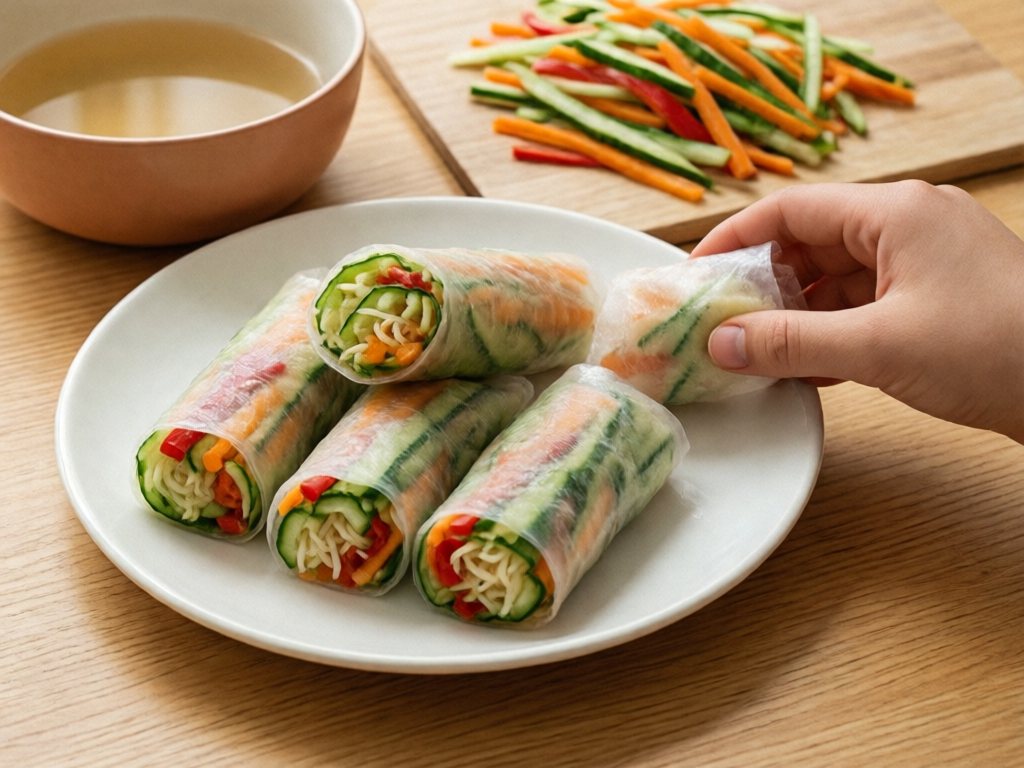
What they need:
- Rice paper wrappers.
- Thinly sliced vegetables: cucumber, carrots, bell peppers. Kids can cut their own with an adult supervising.
- Rice noodles, cooked by an adult, refrigerated within 2 hours and used within 1 day.
- Optional: tofu or shrimp that an adult has already cooked or prepared. Keep both in the fridge until the moment you use them, and wash hands after handling either one. Flag shellfish and soy allergies.
- Bowl of warm tap water (not hot).
What they do:
- Dip the rice paper in warm water until pliable.
- Lay it flat on the cutting board.
- Add fillings in the center.
- Fold the sides in and roll up tightly.
Skills learned: Working with delicate ingredients, rolling technique, cutting vegetables.
Safety firstEat spring rolls the day they are made. Refrigerate extras right away and eat them within 24 hours. Throw out rolls, shrimp, tofu or noodles left out more than 2 hours, or 1 hour if it is above 90°F.
Want more? These pair well with our around-the-world dinner nights.
17. Veggie Cups with Homemade Dip
What they need:
- Vegetables (carrots, celery, cucumber, bell peppers), cut into thin sticks or rounds.
- Cutting board and kid-safe knife.
- Ranch packet + Greek yogurt OR hummus. Hummus contains sesame, and ranch packets can contain milk, egg and soy, so check the label.
What they do:
- Wash the vegetables.
- Cut into thin sticks or rounds, with an adult supervising.
- If making dip, mix the ranch packet with yogurt.
- Arrange the vegetables around the dip.
Skills learned: Vegetable washing, safe cutting techniques, dip preparation.
18. Bruschetta
What they need:
- Baguette, cut ahead of time by an adult into thin slices that drop easily into the toaster.
- Tomatoes.
- Fresh basil.
- Olive oil.
- Garlic salt (one pinch is plenty; check the label if anyone has a food allergy).
What they do:
- Toast the bread slices, staying by the toaster.
- Dice the tomatoes with an adult supervising, and tear the basil.
- Mix the tomatoes and basil with a drizzle of olive oil and a pinch of garlic salt.
- Spoon the mixture onto the toasted bread.
Skills learned: Dicing technique, mixing flavors, assembly.
Good to know: A slice that is too thick or wide can jam and burn in the toaster. If it won’t drop in easily, have an adult toast it.
19. Smoothie
What they need:
- 1 cup frozen fruit.
- 1/2 cup yogurt.
- 1/2 cup milk.
- Optional: 1 tablespoon nut butter, honey (not for children under 12 months), spinach.
- Blender.
What they do:
- Add 1 cup frozen fruit to the blender.
- Add 1/2 cup yogurt and 1/2 cup milk.
- Add any extras.
- Check that the blender is no more than half full.
- Put the lid on firmly and blend 30-60 seconds, until smooth.
- Pour into a glass.
Skills learned: Blender operation and safety, ratio awareness, experimentation.
Safety firstLid on firmly, and no hands or utensils inside the blender, ever. If frozen fruit jams the blades, stop and unplug it first, then ask an adult to clear it. An adult washes the blade assembly. Supervise until your child is competent.
For flavor ideas, see our smoothie recipes for picky eaters.
20. Avocado Toast
What they need:
- Bread.
- Ripe avocado, halved and pitted by an adult (or buy pre-halved), plus a spoon and fork.
- Butter knife.
- Salt (a pinch), pepper, optional toppings.
What they do:
- Toast the bread, staying by the toaster.
- Start with the halved, pitted avocado your adult prepared.
- Scoop the avocado onto the toast.
- Mash with the fork and spread evenly.
- Season and add toppings.
Skills learned: Scooping, mashing, seasoning.
Building Skills Over Time
The Progression Path
Treat this as a rough guide. Go by your child’s readiness and the age bands above, not the calendar.
| Stage | Ages | Goal |
|---|---|---|
| First | 5+ | Master 2-3 Level 1 snacks until they’re comfortable on their own |
| Next | 7+ | Add Level 2 skills while Level 1 stays easy |
| Then | 9+ | Begin Level 3 with an adult in the kitchen for the first several uses, then within earshot |
| Later | 10+ | Build independence in Level 3 and introduce Level 4 with supervision |
Teaching New Snacks: The Method
- I do, you watch. Make the snack while they observe.
- I do, you help. Make it together with them assisting.
- You do, I help. They lead while you assist as needed.
- You do, I watch. They make it independently while you supervise.
- You do. Full independence, except knife work, which stays supervised.
Creating a Snack Menu
Post a visual menu of approved snacks your child can make. Include:
- A picture of the finished snack.
- The skill level.
- Where to find the ingredients.
- Any rules (like “ask before using the microwave”).
Kids pick faster when the choices are on one page at eye level.
For more on building kitchen skills, see our age-by-age guide to teaching kids to cook and the 5-minute breakfasts kids can make.
Fixing Common Problems When Kids Make Snacks
“The mess is worse than just making it myself”
I’ve stood in a kitchen dusted with cinnamon sugar and wondered why I bothered. It does get better once cleanup is part of the deal.
- Give each child a tray to work on, with a damp cloth beside it.
- Set a 5-minute cleanup timer, and nobody eats until the counter is wiped.
- Start with two or three ingredients and one tool.
- Designate a specific prep area that’s easy to wipe.
“They only reach for the sweet options”
- Stock your kid-accessible area with only approved options.
- Offer choices: “You can make trail mix OR yogurt parfait.”
- Include one “fun” element in healthy snacks (chocolate chips in trail mix).
- Snack alongside them and let them see you enjoy the same foods.
“They get frustrated and give up”
One of our early banana sushi attempts fell apart into a sticky pile. We ate it with spoons and laughed, and my kid asked to try again the next day.
- Drop back one level for a week, then try again.
- Name one thing they did well, such as “you spread that right to the edges.”
- Stay nearby for encouragement (not hovering).
- Let imperfect results be eaten anyway. It builds resilience.
“They make the same thing every day”
- Introduce one new option per week.
- Create a “try something new Tuesday” tradition.
- Make it a game: snack bingo, trying all 20 recipes.
- Let them pick the next recipe to learn, and tick it off on a chart on the fridge.
Mama Munch
Mama Munch is a food-obsessed parent of two who believes every family deserves simple, nutritious meals — even on the busiest weeknights. With a background in nutrition education and years of navigating picky eaters, allergies, and toddler taste buds, she creates practical recipes and meal strategies that actually work for real families.
Frequently Asked Questions
At what age can kids start making their own snacks?
Most children can begin with simple assembly snacks (Level 1) around age 5-6. The key is matching tasks to their developmental readiness and providing appropriate supervision.
How do I handle food allergies when giving kids independence?
A child with a food allergy needs an adult-approved list of snacks and their own utensils. They also need an emergency plan agreed with their allergist or pediatrician. Adults, not young children, should check labels. Wash shared knives and boards between uses, and check sibling and school nut rules before stocking peanut butter.
What if my child only wants to make unhealthy snacks?
Control what’s available, not what they choose. If the kid-accessible area holds only snacks you’re happy with, any choice from it works.
How do I teach knife safety?
Start with butter knives and soft foods at ages 7-8. Move to real knives at 10+ with an adult supervising. Teach the claw grip (fingers curled under) and a board that doesn’t slide. Never rush knife skills.
My child wants to use the stove. When is this appropriate?
Many kids are ready for basic stovetop cooking around age 11, depending on maturity, and an adult should be present each time. None of the 20 snacks in this guide need the stove. When you do start, begin with stirring something warm, such as scrambled eggs, with an adult beside them. Wait on flipping hot food until they are comfortable.
How do I make time for teaching when afternoons are so busy?
Pick one snack on Saturday and run through the five steps above once. By midweek, many kids can make it on their own.
What if snacks spoil their dinner appetite?
Set a snack time (like 3:30 PM) that leaves a gap before dinner. If dinner appetite suffers, move snack earlier or make it a bit smaller. If appetite or growth is a concern, talk to your pediatrician.
Should I worry about food waste from mistakes?
Some waste is part of learning. Minimize by starting with small portions during the learning phase. Imperfect results can usually still be eaten.
Start With One Snack This Week
Pick one snack from this list and make it together this week. Add a second once the first feels easy. Soon that 3:30 PM “I’M STARVING” will end with your kid heading to the snack station.
—