
High-Protein Meals and Snacks for Kids: An Age-by-Age Guide for Growing Bodies
You open your phone. You scroll past a headline about protein for kids. Then another one. Then a friend mentions she started adding protein powder to her toddler’s smoothies. Your mother-in-law asks if your four-year-old is “getting enough protein.” Suddenly, you’re standing in the grocery aisle wondering if you’ve been failing your kid this whole time.
Welcome to the protein panic of 2026, and you are not alone.
Here’s the truth: most kids in the U.S. get enough protein. But “enough” and “optimal” are two different things, and the conversation around protein for children has shifted dramatically in the last year. The 2025-2030 USDA Dietary Guidelines raised protein recommendations for children to 1.2-1.6 grams per kilogram of body weight per day, up from the previous 0.8 grams. That’s a significant jump, and it’s got parents everywhere rethinking lunchboxes.
This guide is your one-stop resource. We’re breaking down exactly how much protein your child needs at every age, the best sources (both animal and plant-based), and over 30 practical meal and snack ideas your kids will actually eat. No protein powder required.
Why Protein Matters More Than Ever for Kids
Protein isn’t just about muscles. For growing kids, it’s the building block of nearly everything happening in their bodies.
Growth and Development
Every cell in your child’s body requires protein to grow and repair. During periods of rapid growth (toddlerhood, the pre-teen growth spurt), protein needs spike. Amino acids from protein are essential for building new tissue, producing enzymes, and supporting the immune system. Without adequate protein, kids can experience slower growth, fatigue, and frequent illness.
Brain Function and Focus
Here’s something that doesn’t get enough attention: protein plays a critical role in your child’s ability to concentrate at school. Amino acids like tyrosine and tryptophan are precursors to neurotransmitters like dopamine and serotonin. Translation? A protein-rich breakfast can genuinely help your child focus better in class and regulate their mood throughout the day.
Energy and Satiety
If your kid is hungry an hour after every meal, protein might be the missing piece. Unlike simple carbohydrates that cause blood sugar spikes and crashes, protein provides sustained energy and keeps kids feeling full longer. This is especially important for active kids in sports or those long school days with late lunch periods.
The New USDA Guidelines
The 2025-2030 USDA Dietary Guidelines represent the most significant shift in children’s protein recommendations in decades. The increase to 1.2-1.6 grams per kilogram per day reflects growing research showing that children benefit from higher protein intake than previously thought, particularly during periods of rapid growth and for supporting healthy body composition.
A recent survey by Chartwells K12 found that 74% of Gen Alpha parents are actively striving to increase their children’s protein intake. That statistic tells you everything: this isn’t a fringe concern. It’s a mainstream parenting priority.
How Much Protein Does Your Child Actually Need?
Let’s get specific. Here’s what the current Recommended Dietary Allowance (RDA) looks like at each stage, along with what that translates to in real food terms.
Ages 1-3: 13 Grams Per Day
This is the minimum RDA. For a 25-pound toddler, the updated USDA range of 1.2-1.6g/kg translates to roughly 14-18 grams per day.
What 13 grams looks like:
- 1 egg (6g) + 1/2 cup milk (4g) + 2 tablespoons peanut butter (7g) = 17g
Most toddlers hit this without much effort if they’re eating a variety of foods. The challenge? Toddlers are notoriously unpredictable eaters.
Ages 4-8: 19 Grams Per Day
The RDA minimum is 19 grams, but a 45-pound child following the updated guidelines would aim for roughly 24-33 grams per day.
What 19 grams looks like:
- 1 cup yogurt (12g) + 1/4 cup almonds (7g) = 19g
- 2 ounces chicken breast (14g) + 1/2 cup black beans (7g) = 21g
Ages 9-13: 34 Grams Per Day
This is where it gets more critical. Pre-teens are growing fast, and many — especially girls — tend to undereat protein at this age. For a 70-pound child, the updated range is 38-51 grams per day.
What 34 grams looks like:
- 3 ounces salmon (22g) + 1 cup edamame (17g) = 39g
- 2 eggs (12g) + 1 cup lentil soup (18g) + string cheese (7g) = 37g
A Practical Rule of Thumb
If calculating grams per kilogram feels overwhelming, aim to include a protein source at every meal and at least one snack. That simple habit will get most kids well within the healthy range without weighing or measuring anything.
Best Protein Sources for Kids: Animal and Plant-Based
Not all protein is created equal, and understanding the difference helps you build balanced plates.
Animal Proteins
Animal-based proteins are considered “complete” proteins, meaning they contain all nine essential amino acids the body can’t make on its own. They’re also the primary source of vitamin B12 and heme-iron, which is more easily absorbed than plant-based iron.
| Food | Serving Size | Protein (g) | Bonus Nutrients |
|---|---|---|---|
| Chicken breast | 3 oz | 26g | B6, niacin |
| Eggs | 1 large | 6g | Choline, B12 |
| Greek yogurt | 1 cup | 15-20g | Calcium, probiotics |
| Salmon | 3 oz | 22g | Omega-3s, vitamin D |
| Ground turkey | 3 oz | 21g | Iron, zinc |
| Cottage cheese | 1/2 cup | 14g | Calcium, B12 |
| Mozzarella cheese | 1 oz | 7g | Calcium |
| Milk (whole) | 1 cup | 8g | Calcium, vitamin D |
| Shrimp | 3 oz | 20g | Selenium, B12 |
The American Academy of Pediatrics encourages parents to move “beyond chicken nuggets” when it comes to protein, recommending diverse options like salmon, eggs, beans, and tofu. The idea isn’t that chicken nuggets are bad — it’s that variety ensures a broader nutrient profile and helps kids develop more flexible eating habits.
Plant-Based Proteins
Plant proteins tend to be leaner and come packaged with more fiber, which is great for digestion. The trade-off is that most plant proteins are “incomplete,” meaning they’re lower in one or more essential amino acids. But this is easily solved by eating a variety of plant proteins throughout the day — you don’t need to combine them at every single meal.
| Food | Serving Size | Protein (g) | Bonus Nutrients |
|---|---|---|---|
| Tofu (firm) | 1/2 cup | 10g | Calcium, iron |
| Lentils (cooked) | 1/2 cup | 9g | Fiber, folate, iron |
| Black beans | 1/2 cup | 7g | Fiber, magnesium |
| Edamame | 1 cup | 17g | Fiber, vitamin K |
| Chickpeas | 1/2 cup | 7g | Fiber, folate |
| Peanut butter | 2 tbsp | 7g | Healthy fats, vitamin E |
| Quinoa | 1 cup cooked | 8g | Complete protein, iron |
| Hemp seeds | 3 tbsp | 10g | Omega-3s, magnesium |
| Green peas | 1 cup | 8g | Fiber, vitamin C |
The Bottom Line on Animal vs. Plant Protein
You don’t have to choose one camp. The healthiest approach for most kids is a mix of both animal and plant-based proteins. Animal proteins provide complete amino acids, B12, and heme-iron that are harder to get from plants alone. Plant-based proteins contribute fiber, phytonutrients, and heart-healthy fats. Together, they cover all the bases.
10 High-Protein Breakfasts Kids Will Actually Eat
Breakfast is the meal where protein often falls shortest. Cereal, toast, waffles — these staples are carb-heavy with minimal protein. Here’s how to fix that without a complete breakfast overhaul.
1. Peanut Butter Banana Protein Pancakes
Protein: 18g per serving
Blend 1 ripe banana, 2 eggs, and 2 tablespoons of peanut butter. Cook like regular pancakes on a griddle. That’s it — three ingredients, no flour needed. Top with a drizzle of honey and sliced strawberries. Kids love these because they taste like banana bread in pancake form.
2. Greek Yogurt Parfait with Granola and Berries
Protein: 17g per serving
Layer 3/4 cup of plain Greek yogurt with a handful of granola and mixed berries. The trick for kids who think plain yogurt is “too sour”: stir in a teaspoon of honey or maple syrup before layering. Still far less sugar than flavored yogurt cups from the store.
3. Scrambled Egg Muffin Cups
Protein: 14g per 2 muffin cups
Whisk 6 eggs with a splash of milk, diced ham or turkey, and shredded cheese. Pour into a greased muffin tin and bake at 375 for 15 minutes. Make a batch on Sunday and reheat throughout the week. These are grab-and-go gold for busy mornings.
4. Cottage Cheese Toast
Protein: 18g per serving
Spread 1/2 cup of cottage cheese on whole-grain toast. Top with everything bagel seasoning, sliced avocado, or a drizzle of honey and cinnamon. This is the sleeper hit of high-protein breakfasts — kids who won’t touch cottage cheese with a spoon will often eat it on toast.
5. Overnight Protein Oats
Protein: 16g per serving
Combine 1/2 cup oats, 1/2 cup milk, 1/4 cup Greek yogurt, 1 tablespoon chia seeds, and 1 tablespoon peanut butter. Refrigerate overnight. In the morning, stir and top with banana slices. This is the breakfast you prep in two minutes the night before and feel smug about all morning.
6. Ham and Cheese Roll-Ups
Protein: 15g per serving
Spread cream cheese on deli ham slices, roll up, and slice into pinwheels. Serve with apple slices. It’s basically a deconstructed sandwich, and kids eat it faster than you’d believe.
7. Smoothie with Hidden Protein
Protein: 20g per serving
Blend 1 cup milk, 1/2 cup Greek yogurt, 1 banana, 1 tablespoon peanut butter, and a handful of spinach (they won’t taste it, promise). The frozen banana makes it thick and milkshake-like. For extra protein without powder, add 2 tablespoons of hemp seeds.
8. Mini Egg and Cheese Quesadillas
Protein: 16g per serving
Scramble 1-2 eggs, place on a small tortilla with shredded cheese, fold, and press in a pan until the cheese melts. Cut into triangles. Dip in salsa or ketchup. This takes five minutes and covers protein, carbs, and fat in one handheld package.
9. Turkey Sausage and Fruit Plate
Protein: 14g per serving
Cook 2-3 turkey sausage links (or use pre-cooked ones for speed). Serve with sliced fruit and a handful of nuts or cheese cubes. Sometimes breakfast doesn’t need to be a “recipe” — it just needs to be a balanced plate.
10. Peanut Butter and Banana Waffle Sandwich
Protein: 13g per serving
Toast two whole-grain waffles, spread peanut butter on one side, add banana slices, and sandwich together. Cut in half. This is the “I overslept and we have four minutes” breakfast that still packs solid protein.
High-Protein Lunch Ideas for School and Home
Packing a lunch that stays appetizing, travels well, AND delivers protein is one of parenting’s underrated challenges. These ideas check all three boxes.
Lunchbox Protein Builders
Turkey and Cheese Pinwheels (16g): Spread cream cheese on a tortilla, layer turkey and cheese, roll tight, and slice into rounds. Pack with veggies and hummus on the side.
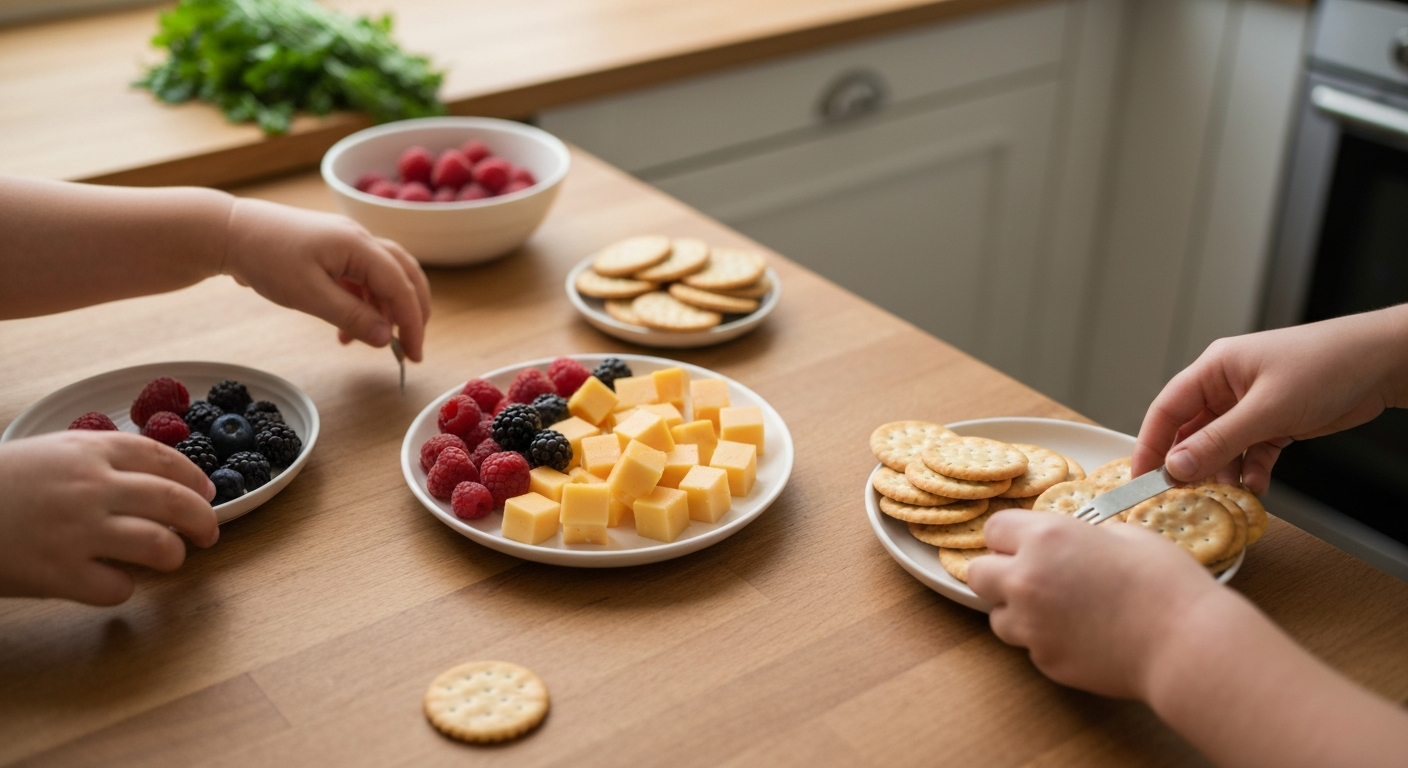
DIY Protein Bistro Box (18g): Hard-boiled egg, cubed cheese, crackers, grapes, and a small container of mixed nuts. This is the lunchbox equivalent of a charcuterie board, and kids feel fancy eating it.
Black Bean and Cheese Quesadilla (15g): Mash black beans with a fork, spread on a tortilla with shredded cheese, fold and press in a pan. Slice into wedges. These hold up well at room temperature in a lunchbox.
Greek Yogurt Dip and Dippers (14g): Pack a container of Greek yogurt mixed with a little ranch seasoning alongside carrot sticks, bell pepper strips, pretzels, and whole-grain crackers. The protein is in the dip.
Peanut Butter and Jelly Upgrade (12g): Use whole-grain bread, natural peanut butter, and real fruit jam. Add 1 tablespoon of hemp seeds into the peanut butter before spreading. Nobody will notice, and you’ve added 3 extra grams of protein.
At-Home Lunch Ideas
Egg Fried Rice (16g): Use leftover rice, scramble in 2 eggs, add frozen peas and soy sauce. Ready in 10 minutes and endlessly customizable.
Loaded Bean and Cheese Nachos (17g): Layer tortilla chips with canned black beans (rinsed), shredded cheese, and pop under the broiler for 3 minutes. Top with sour cream and salsa. Lunch and a half.
Tuna Salad Stuffed Mini Peppers (15g): Mix canned tuna with a little mayo and stuff into halved mini bell peppers. Kids who won’t eat a tuna sandwich will often eat tuna when it comes in a colorful, crunchy pepper “boat.”
High-Protein Dinners the Whole Family Will Love
Dinner is where you can really build protein into the family routine. These meals are designed so everyone eats the same thing — no separate kids’ meals needed.
Sheet Pan Chicken Fajitas
Protein per serving: 30g
Slice chicken breast into strips, toss with bell peppers and onions, season with cumin, chili powder, garlic powder, and lime juice. Spread on a sheet pan and roast at 400 degrees for 20 minutes. Serve in warm tortillas with cheese, sour cream, and guacamole. The beauty of fajitas: everyone builds their own, so even picky eaters find a combination they like.
One-Pot Lentil and Turkey Bolognese
Protein per serving: 28g
Brown ground turkey, add canned crushed tomatoes, red lentils, garlic, and Italian seasoning. Simmer for 20 minutes until lentils are tender. Serve over pasta. The lentils dissolve into the sauce and are virtually invisible, adding 9 extra grams of protein per serving without anyone being the wiser.
Baked Salmon with Honey Soy Glaze
Protein per serving: 25g
Mix 2 tablespoons soy sauce, 1 tablespoon honey, 1 teaspoon sesame oil, and a clove of minced garlic. Brush over salmon fillets and bake at 400 degrees for 12 minutes. The sweet glaze makes salmon approachable for kids who think fish is “weird.” Serve with rice and steamed broccoli.
Chicken and Black Bean Burrito Bowls
Protein per serving: 32g
Shredded chicken (rotisserie works great), black beans, rice, corn, cheese, salsa, and sour cream — set everything out in bowls and let everyone assemble their own. This is the dinner equivalent of a build-your-own-adventure, and it gets kids invested in their plate.
Tofu Stir-Fry with Peanut Sauce
Protein per serving: 22g
Press and cube firm tofu, pan-fry until golden, then toss with whatever vegetables your kids tolerate and a quick peanut sauce (peanut butter, soy sauce, honey, lime juice, warm water to thin). Serve over rice or noodles. Even tofu skeptics tend to come around when peanut sauce is involved.
Slow Cooker Chicken Tortilla Soup
Protein per serving: 26g
Toss chicken breasts, canned black beans, canned corn, diced tomatoes, chicken broth, and taco seasoning into the slow cooker. Cook on low for 6-8 hours. Shred the chicken right in the pot. Serve with tortilla strips, cheese, avocado, and sour cream. This is the “set it and forget it” dinner that’s ready when you walk in the door.
Quick High-Protein Snacks: 5 Minutes or Less
Snack time is a massive opportunity to add protein to your child’s day. These require minimal effort and zero cooking skills.
String Cheese + Almonds (10g): The most portable, zero-prep snack that exists. Toss both in a bag and go.
Apple Slices with Peanut Butter (7g): Classic for a reason. Slice the apple, serve with a ramekin of peanut butter for dipping.
Hard-Boiled Eggs (6g each): Batch-cook a dozen on the weekend. Keep peeled and ready in the fridge. Sprinkle with a little salt or everything bagel seasoning.
Edamame with Sea Salt (17g per cup): Buy frozen, microwave for 2 minutes, sprinkle with sea salt. Kids love popping them out of the pods.
Turkey and Cheese Roll-Ups (12g): Wrap a slice of turkey deli meat around a cheese stick. Done in 30 seconds.
Cottage Cheese with Pineapple (15g): Mix 1/2 cup cottage cheese with canned pineapple tidbits. The sweetness offsets the tanginess perfectly.
Hummus and Veggies (5g per 1/4 cup): Not the highest protein snack on its own, but pair it with a handful of pita chips and you’re at 8g.
Trail Mix with Pumpkin Seeds (8g per 1/4 cup): Combine pumpkin seeds, sunflower seeds, dried cranberries, and a few chocolate chips. High protein AND the chocolate chips make kids reach for it willingly.
Smoothie Popsicles (10g each): Blend Greek yogurt, banana, and berries. Pour into popsicle molds and freeze. Your kids think it’s a treat. You know it’s 10 grams of protein.
Protein for Picky Eaters: Strategies That Work
If your child lives on bread, pasta, and air, you’re not alone. Picky eating is developmentally normal, but it does make hitting protein targets trickier. Here are strategies that actually work — no force-feeding or bribery required.
Lead with Texture, Not Taste
Many picky eaters reject protein sources because of texture, not flavor. A child who gags at shredded chicken might happily eat ground chicken in a meatball. Experiment with different preparations of the same protein: cubed, shredded, ground, blended into sauces, or formed into shapes.
The “Dip Everything” Strategy
Kids who won’t eat chicken plain will often eat chicken dipped in ketchup, ranch, honey mustard, or barbecue sauce. If a dip gets protein into your child, that is a win. Don’t worry about the condiment. The protein matters more.
Blend It In
Smoothies are the ultimate vehicle for hidden protein. Greek yogurt, nut butter, hemp seeds, and even silken tofu blend smoothly and taste like nothing when combined with fruit and a splash of milk. You can also blend white beans into pasta sauce, pureed lentils into soup, or cottage cheese into pancake batter.
Serve Protein in Familiar Formats
Kids are creatures of habit. If your child loves pasta, make pasta with meat sauce, add white beans to mac and cheese, or toss shredded chicken into buttered noodles. If they love muffins, make high-protein muffins with almond flour, eggs, and Greek yogurt. Work within their comfort zone rather than trying to overhaul it.
Don’t Forget Dairy
If your picky eater won’t touch meat, beans, or tofu, dairy can carry a lot of the protein load. Milk, cheese, yogurt, and cottage cheese are protein-rich and tend to be well-accepted by even the pickiest kids. A cup of milk at each meal adds 24 grams of protein to the day without a single fight at the table.
Offer Choices, Not Ultimatums
Instead of “eat your chicken,” try “do you want chicken or cheese with your crackers?” Giving kids a sense of control over protein choices reduces resistance. Both options have protein, so you win either way.
Common Protein Myths: Setting the Record Straight
Myth: Kids Need Protein Powder
Reality: The vast majority of children do not need protein supplements. Protein powder is designed for adults with specific athletic or dietary needs. For healthy children eating a varied diet, whole food sources provide more than enough protein along with other essential nutrients that powder doesn’t offer. The AAP has not endorsed protein powder for typical pediatric use. If you’re concerned your child isn’t getting enough, talk to your pediatrician before supplementing.
Myth: Kids Can’t Get Enough Protein from Plants
Reality: Kids absolutely can meet their protein needs on a plant-based diet, but it requires more intentional planning. The key is variety — eating beans, lentils, tofu, nuts, seeds, and whole grains throughout the day ensures they get all essential amino acids. Plant-based kids may also need B12 and iron supplementation, so work with your pediatrician.
Myth: Too Much Protein Is Dangerous for Kids
Reality: For healthy children with functioning kidneys, the risk of eating “too much” protein from whole foods is extremely low. The body uses what it needs and processes the rest. The concern is more about displacement — if a child eats so much protein that they skip fruits, vegetables, and whole grains, their diet becomes unbalanced. Aim for balance, not extremes.
Myth: Protein Makes Kids Gain Unhealthy Weight
Reality: Protein is actually the most satiating macronutrient, meaning it helps kids feel full and reduces mindless snacking on less nutritious foods. Adequate protein supports healthy body composition — it helps build lean muscle, not excess fat. The weight-gain concern is more relevant to highly processed protein products loaded with added sugars and fillers.
Myth: If My Kid Eats Meat, Protein Is Covered
Reality: It depends on how much and how often. A few bites of chicken at dinner might only contribute 5-8 grams of protein. If that’s the only significant protein source all day, your child could still fall short. The goal is protein at every meal and at least one snack — not just one protein-heavy dinner.
One-Week High-Protein Meal Plan
Here’s a practical week of eating that hits protein targets for a school-age child (ages 4-8, aiming for 25-30 grams per day). Adjust portions up for older kids.
Monday
- Breakfast: Peanut Butter Banana Pancakes (18g)
- Lunch: Turkey and Cheese Pinwheels with veggies (16g)
- Snack: String cheese + apple slices (7g)
- Dinner: Sheet Pan Chicken Fajitas (30g)
Tuesday
- Breakfast: Greek Yogurt Parfait (17g)
- Lunch: Black Bean and Cheese Quesadilla (15g)
- Snack: Hard-boiled egg with crackers (8g)
- Dinner: Lentil Turkey Bolognese over pasta (28g)
Wednesday
- Breakfast: Scrambled Egg Muffin Cups x2 (14g)
- Lunch: DIY Protein Bistro Box (18g)
- Snack: Edamame with sea salt (17g)
- Dinner: Baked Salmon with Honey Soy Glaze (25g)
Thursday
- Breakfast: Overnight Protein Oats (16g)
- Lunch: PB&J with hemp seeds (12g)
- Snack: Turkey and cheese roll-ups (12g)
- Dinner: Chicken Burrito Bowls (32g)
Friday
- Breakfast: Mini Egg and Cheese Quesadilla (16g)
- Lunch: Egg Fried Rice (16g)
- Snack: Cottage cheese with pineapple (15g)
- Dinner: Tofu Peanut Sauce Stir-Fry (22g)
Saturday
- Breakfast: Ham and Cheese Roll-Ups with fruit (15g)
- Lunch: Loaded Bean and Cheese Nachos (17g)
- Snack: Smoothie popsicle (10g)
- Dinner: Slow Cooker Chicken Tortilla Soup (26g)
Sunday
- Breakfast: Protein Smoothie (20g)
- Lunch: Tuna Stuffed Mini Peppers with crackers (15g)
- Snack: Trail mix with pumpkin seeds (8g)
- Dinner: Family choice — repeat a favorite from the week
Notice something? Every single day hits well above the 19g RDA minimum for ages 4-8 without any protein powder, supplements, or exotic ingredients. Just real food, prepared simply.
Frequently Asked Questions
Should I give my child protein powder or protein shakes?
For most healthy children, protein powder is unnecessary. Whole foods provide protein alongside other nutrients — fiber, vitamins, minerals — that powders don’t replicate. Some protein powders also contain added sugars, artificial sweeteners, or ingredients not tested for children. If your child has specific dietary restrictions or medical needs that make it hard to get enough protein from food, talk to your pediatrician before supplementing. They can recommend a product appropriate for children if needed.
My toddler barely eats anything. How do I get enough protein in?
Toddlers are erratic eaters, and that’s normal. Focus on offering protein at every meal and snack opportunity rather than stressing about a daily total. High-protein foods toddlers tend to accept: yogurt, cheese, scrambled eggs, peanut butter on toast, shredded chicken mixed into pasta, and beans mashed into quesadillas. Some days they’ll eat everything; some days they’ll survive on three bites of cheese and a cracker. Look at protein intake over the course of a week, not a single day.
Is too much protein bad for a child’s kidneys?
For children with healthy kidneys, there’s no evidence that a high-protein diet from whole foods causes kidney damage. The concern about protein and kidneys applies primarily to people with pre-existing kidney disease. That said, balance matters — a diet overly focused on protein at the expense of fruits, vegetables, grains, and healthy fats isn’t ideal. Aim for protein at every meal as part of a varied diet, not protein to the exclusion of everything else.
What about protein for kid athletes?
Active kids and young athletes may benefit from protein at the higher end of the recommended range (closer to 1.6g/kg per day). The most important strategy is a protein-rich snack within 30 minutes after intense activity to support muscle recovery. A glass of chocolate milk, a yogurt tube, or a peanut butter sandwich all work well as post-activity recovery snacks. Again, whole foods are sufficient — sports protein supplements are not recommended for children.
Can my child get enough protein on a vegetarian or vegan diet?
Yes, but it requires more intentional planning. Vegetarian kids who eat dairy and eggs can typically meet their protein needs without difficulty. Vegan kids need a wider variety of plant proteins — beans, lentils, tofu, tempeh, nuts, seeds, and whole grains — eaten consistently throughout the day to get all essential amino acids. Vegan children should also be monitored for B12, iron, zinc, and omega-3 fatty acids, which are harder to obtain without animal products. Work with your pediatrician or a registered dietitian to ensure all bases are covered.
How do I know if my child isn’t getting enough protein?
Signs of inadequate protein in children can include slow growth or falling off their growth curve, frequent infections or slow wound healing, fatigue and low energy, thinning hair, and difficulty concentrating. If you notice any of these, talk to your pediatrician — they can evaluate your child’s diet and run simple blood work if needed. For most kids eating a reasonably varied diet, protein deficiency is rare. The bigger issue is usually inconsistency — plenty of protein at dinner but very little at breakfast and lunch.
Building a Protein-Positive Kitchen
Here’s the most encouraging thing about protein for kids: you probably don’t need to overhaul your entire approach to feeding your family. Small shifts make a big difference. Swap regular yogurt for Greek yogurt. Toss hemp seeds into smoothies. Add a hard-boiled egg to the snack plate. Choose whole-grain waffles over refined ones. Include beans in one more meal per week.
The goal isn’t perfection. It’s not about hitting an exact gram count every single day or buying expensive supplements. It’s about building habits — consistent protein at meals and snacks, variety in sources, and a relaxed attitude that models healthy eating for your kids.
Your child’s body knows how to use protein. Your job is to make sure it shows up on the plate. With the ideas in this guide, you’re more than equipped to do exactly that.
Now go make those peanut butter banana pancakes. Your kids will thank you.