How to Reduce Food Waste and Save Money
Last Tuesday morning, I opened my refrigerator to find a bag of spinach that had turned into what I can only describe as green slime, three bananas so brown they looked like they belonged in a Halloween display, and a half-eaten container of strawberries growing their own science experiment. Standing there in my pajamas, coffee mug in hand, I calculated that I’d just thrown away about $15 worth of produce – again. That’s when it hit me: our family was literally tossing money into the garbage can every single week.
The average American family throws away $1,500 worth of food annually, but here’s what really stings – most of that waste happens because we simply don’t have a plan. We buy with good intentions, store things incorrectly, forget what’s lurking in our fridges, and end up ordering pizza while perfectly good ingredients rot in our crisper drawers. But after years of trial and error (and way too many slimy vegetables), I’ve discovered that reducing food waste isn’t just about saving money – it’s actually made our family meals more creative, flavorful, and satisfying.
The best part? These strategies don’t require you to become a meal-prep perfectionist or suddenly love leftovers. They’re simple shifts that work with your real life, whether you’re dealing with picky eaters, unpredictable schedules, or a grocery budget that’s tighter than your favorite jeans after Thanksgiving dinner.
Smart Shopping: Buy What You’ll Actually Use
The foundation of reducing food waste starts before you even enter the grocery store. I learned this lesson the hard way after countless impulse purchases of beautiful bell peppers that ended up wrinkled and forgotten, or bulk packages of chicken that seemed like a great deal until half of it got freezer burn.
Start by taking a “fridge inventory” before every shopping trip. Open those crisper drawers and check what’s actually in there – you might discover you already have carrots, onions, or herbs that can anchor your meal planning. I keep a running list on my phone of what we have, what’s getting close to expiration, and what we actually need. This simple practice has cut our grocery bill by about $40 per week.
When planning meals, think in terms of ingredient overlap. If you’re buying fresh cilantro for taco Tuesday, plan a second meal that week that uses cilantro – maybe a Thai-inspired chicken stir-fry with lime and cilantro served over rice, or a simple cilantro-lime vinaigrette for salads. Fresh herbs are notorious waste culprits, but they’re also flavor powerhouses that can transform simple ingredients into restaurant-quality meals.
For produce, buy loose items instead of pre-packaged when possible. That bag of eight bell peppers might seem economical, but if you only need three for your planned recipes, you’re setting yourself up for waste. Loose produce also lets you inspect each item for quality – choose firm vegetables with good color, and avoid anything that’s already showing soft spots or wrinkled skin.
Proper Storage Techniques That Actually Work
The way you store fresh ingredients can literally double or triple their lifespan, which means more time to use them and significantly less waste. After years of watching expensive produce turn to mush, I’ve become obsessive about proper storage – and the results speak for themselves.
Herbs and Leafy Greens
Fresh herbs should be treated like flowers. Trim the stems and place them in a glass of water, then cover loosely with a plastic bag and refrigerate. Basil is the exception – it prefers to stay at room temperature. This method keeps cilantro, parsley, and dill fresh for up to two weeks instead of the typical three to four days.
For leafy greens like spinach, arugula, and lettuce, the key is controlling moisture. Wash and completely dry the leaves, then store them wrapped in paper towels inside a partially open plastic bag. The paper towels absorb excess moisture while the bag prevents the leaves from drying out completely. I’ve kept spinach fresh for nearly two weeks this way.
Fruits and Vegetables
Not all produce belongs in the refrigerator. Tomatoes, avocados, bananas, and stone fruits (peaches, plums, nectarines) should ripen at room temperature, then can be refrigerated once they reach your preferred ripeness. Potatoes, onions, and garlic prefer cool, dark places with good air circulation – never store them in plastic bags.
Mushrooms need to breathe, so transfer them from plastic containers to paper bags in the refrigerator. Carrots, celery, and radishes stay crisp longest when stored in water – place them in containers with about an inch of water at the bottom, covering loosely with plastic wrap.
Extending Bread and Baked Goods
Bread stays freshest at room temperature for two to three days, but if you won’t use it that quickly, slice and freeze it immediately. Frozen bread slices can go straight into the toaster, and they’ll taste fresh-baked. For items like muffins or quick breads, wrap individual portions in plastic wrap, then place in freezer bags. They’ll thaw quickly at room temperature or can be warmed in the microwave for 20-30 seconds.
Creative Ways to Use Up Ingredients Before They Spoil
The most satisfying part of reducing food waste is discovering how “tired” ingredients can become the stars of incredible meals. Some of my family’s favorite dishes were born out of necessity – using up vegetables that were past their prime or transforming leftovers into something completely new.
Vegetable Rescue Recipes
When vegetables start looking a little sad, soups and stir-fries become your best friends. A simple “clean out the fridge” soup starts with sautéing any combination of onions, carrots, celery, and garlic in olive oil until fragrant. Add whatever vegetables need using – even slightly wilted spinach, soft bell peppers, or mushrooms that are past their prime. Cover with broth (chicken or vegetable), add a can of diced tomatoes, and season with salt, pepper, and herbs. Simmer for 20-25 minutes until vegetables are tender, then add any cooked grains or pasta you have on hand.
Overripe tomatoes are perfect for a quick marinara sauce. Roughly chop 2-3 pounds of soft tomatoes, sauté with minced garlic and onion, add a splash of wine or balsamic vinegar, and let it simmer for 30-40 minutes until thick and fragrant. This sauce freezes beautifully and tastes infinitely better than store-bought versions.
Fruit Revival Strategies
Brown bananas are actually perfect for baking – their concentrated sweetness means you can reduce added sugar in recipes. A simple banana bread uses three very ripe bananas mashed with 1/3 cup melted butter, 3/4 cup sugar, one egg, one teaspoon vanilla, one teaspoon baking soda, pinch of salt, and 1 1/3 cups flour. Bake at 350°F for 60-65 minutes until a toothpick comes out clean.
Soft berries transform into amazing compotes that can top yogurt, pancakes, or ice cream. Combine two cups of berries (even if they’re a little mushy) with 1/4 cup sugar, a tablespoon of lemon juice, and a pinch of salt in a small saucepan. Cook over medium heat for 8-10 minutes until the berries break down and the mixture thickens slightly. This keeps in the refrigerator for up to a week.
Protein and Leftover Magic
Leftover roasted chicken becomes the base for countless meals: chicken salad with grapes and almonds, quesadillas with cheese and sautéed peppers, or a hearty chicken and rice soup. Even small amounts of leftover meat can stretch into satisfying meals when combined with beans, grains, and vegetables.
Day-old rice is actually superior for fried rice – the drier texture prevents mushiness. Heat oil in a large skillet, scramble a couple of eggs and set aside, then stir-fry any vegetables you need to use up (carrots, peas, broccoli, bell peppers). Add the cold rice, breaking up any clumps, and stir-fry until heated through. Return the eggs to the pan, add soy sauce and sesame oil, and you have a complete meal that tastes intentional, not like leftovers.
Meal Planning Strategies That Prevent Waste
Effective meal planning isn’t about rigidly following a menu – it’s about creating a flexible framework that uses ingredients efficiently while accommodating your family’s real life. The key is planning meals that share ingredients and building in flexibility for busy nights.
I plan our weekly meals around what I call “anchor ingredients” – versatile items that can work in multiple dishes. If I buy a bunch of fresh spinach, I’ll plan a spinach and feta quiche for Sunday brunch, use some in a weeknight pasta with garlic and parmesan, and add the rest to smoothies or scrambled eggs. This approach ensures that everything gets used while keeping our meals varied and interesting.
Build your meal plan with “flex meals” – dishes that can easily incorporate whatever needs using up. Stir-fries, pasta dishes, frittatas, and grain bowls are perfect for this. If you planned a specific stir-fry but discover you have wilting bell peppers that need attention, you can easily swap them into your meal without derailing your plans.
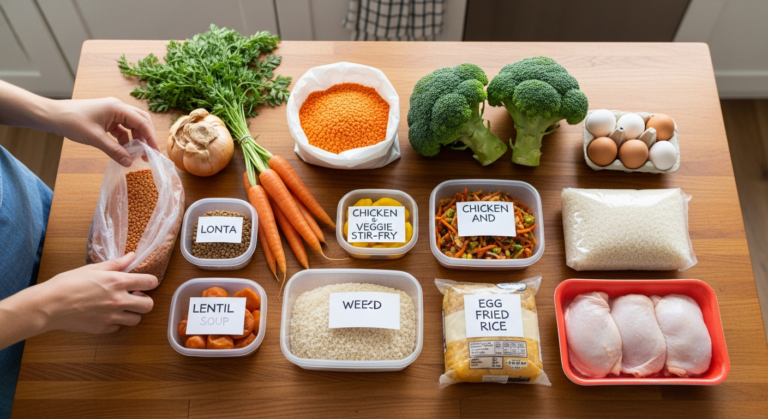
Prep ingredients immediately after grocery shopping, when your motivation is highest. Wash and chop vegetables, cook grains in bulk, and portion proteins for easy access during busy weeknights. I spend about 30 minutes after each grocery trip washing lettuce, chopping onions and carrots, and storing everything properly. This small time investment prevents that “I don’t know what to cook” paralysis that leads to ordering takeout while fresh ingredients languish unused.
Transforming Leftovers Into New Meals
The secret to making leftovers appealing is changing their context completely. Instead of reheating the same flavors, transform them into entirely different dishes that happen to use components from previous meals.
Leftover roasted vegetables become the filling for next-day quesadillas when combined with cheese and maybe some black beans. That pot roast from Sunday transforms into incredible tacos when shredded and warmed with cumin, chili powder, and a splash of lime juice, served with fresh salsa and avocado.
Cooked grains are incredibly versatile bases for new meals. Leftover rice becomes fried rice or can be mixed into soups for heartiness. Quinoa or farro can be turned into grain salads with whatever fresh vegetables and herbs you have – dress with olive oil, lemon juice, salt, and pepper, then add nuts, cheese, or dried fruit for complexity.
Even small amounts of leftovers can enhance new dishes. A handful of leftover roasted chicken can boost a simple vegetable soup into a satisfying meal. Remaining pasta sauce can become the base for a quick skillet meal with eggs poached directly in the sauce, served with crusty bread.
The key is thinking about leftovers as ingredients rather than complete meals. That shift in perspective opens up countless possibilities and ensures nothing goes to waste while keeping your family excited about what’s for dinner.
Building Long-Term Habits That Stick
Reducing food waste becomes effortless when it’s built into your regular routines rather than treated as an extra task. The most impactful changes are the ones that require minimal ongoing effort but deliver consistent results.
Create a “use it up” space in your refrigerator – maybe a designated shelf or drawer where anything approaching expiration gets priority placement. This visual reminder helps you grab those items first when deciding what to cook or pack for lunch. I check this space every morning while making coffee, and it’s saved countless vegetables and fruits from an untimely demise.
Establish a weekly “leftover challenge” night where dinner comes entirely from what needs using up. Make it fun by presenting the available ingredients and letting family members vote on the combination or cooking method. This approach reframes potential waste as a creative cooking opportunity.
Keep a simple inventory system that works with your lifestyle. Whether it’s a magnetic notepad on the fridge or a note in your phone, track what you have, what you’re running low on, and what needs attention soon. This prevents overbuying and helps you make quick decisions when meal planning.
Most importantly, remember that reducing food waste is a skill that improves with practice. Every rescued vegetable, every creative leftover transformation, and every successful week of using up everything you bought builds your confidence and saves your family money. Start with one or two strategies that feel manageable, and gradually add more techniques as they become natural parts of your routine.