Cheap and Healthy Meals for Large Families
Picture this: it’s 5:30 PM on a Tuesday, and I’m staring into my pantry while four hungry kids circle the kitchen like little sharks. My grocery budget is stretched thinner than the last bit of peanut butter, and I’ve got exactly 45 minutes to create something that won’t have anyone asking “What IS this?” with that unmistakable look of horror.
If you’re feeding a crowd on a shoestring budget, you’ve probably been there too. The good news? Some of my family’s absolute favorite meals happen to be the cheapest ones I make. We’re talking hearty, nutritious dinners that cost less than $10 to feed eight people – and taste so good that even my pickiest eater asks for seconds.
After years of stretching dollars and filling bellies, I’ve discovered that cheap doesn’t have to mean boring, and healthy doesn’t have to break the bank. These are the real-deal recipes that have saved my sanity and my budget, tested in the trenches of actual family dinners where someone always needs a drink refill and the baby inevitably drops half his food on the floor.
The Magic of Bean and Legume-Based Meals
Dried beans and lentils are absolute powerhouses for large family cooking – they’re packed with protein, fiber, and nutrients while costing pennies per serving. A single bag of dried black beans that costs $1.50 can easily feed my family of six for two complete meals.
My go-to 15-Bean Slow Cooker Chili starts with a $2 bag of mixed dried beans soaked overnight. Toss them in the crockpot with diced onions, a can of crushed tomatoes, chili powder, cumin, and whatever vegetables are hiding in your freezer. After 8 hours on low, you’ll have a thick, smoky chili that smells incredible and serves at least 12 generous portions. I serve it over baked sweet potatoes (often on sale for $0.50/lb) with shredded cheese and watch it disappear.
Red Lentil Curry is another champion in our rotation. Red lentils cook in just 20 minutes and absorb flavors beautifully. Sauté onions and garlic in oil, add curry powder, diced tomatoes, coconut milk (the cheap canned kind), and 2 cups of red lentils with 4 cups of water. Twenty minutes later, you have a creamy, protein-rich curry that costs about $6 total and serves 8 people over rice.
Make-Ahead Bean Strategies
I cook massive batches of beans every Sunday – usually 4-5 cups of dried beans at once. After they’re tender, I portion them into freezer bags with some cooking liquid. This gives me the equivalent of 8-10 cans of beans for the price of one bag of dried, and they taste infinitely better. Label them with the date and type, and you’ll have protein ready to throw into soups, tacos, or grain bowls all week.
Grain-Forward Dinners That Satisfy
Brown rice, oats, and whole wheat pasta become the foundation for incredibly filling meals when you know how to build flavors around them. The key is treating grains as your canvas, not your afterthought.
Savory Oat Risotto sounds fancy but costs less than $4 for a family dinner. Use steel-cut oats instead of rice – they have a wonderful chewy texture and are often cheaper than arborio rice. Sauté diced onions and mushrooms (whatever’s on sale), add 2 cups of steel-cut oats and toast them for 2 minutes until fragrant. Slowly add warm vegetable or chicken broth, stirring frequently for about 25 minutes. Finish with frozen peas, parmesan cheese if you have it, and black pepper. The result tastes rich and creamy, and one cup of dry oats serves six people easily.
My Mediterranean Rice Skillet transforms basic brown rice into something special. Cook 2 cups of brown rice in chicken broth instead of water for deeper flavor. In a large skillet, sauté whatever vegetables need to be used up – zucchini, bell peppers, onions, cherry tomatoes. Add the cooked rice, a handful of olives if you have them, dried oregano, and crumbled feta (often on sale for $3/container). The combination of salty olives, tangy cheese, and herb-scented rice feels like a restaurant meal but costs about $7 total.
Pasta That Goes the Distance
White Bean and Kale Pasta uses a full pound of whole wheat pasta but bulks it up so much with beans and greens that it easily feeds 8-10 people. Cook the pasta in well-salted water, reserving a cup of the starchy cooking water before draining. In the same pot, sauté garlic and red pepper flakes in olive oil, add chopped kale (massage it first to tenderize), cooked white beans, and the pasta. Use the reserved pasta water to create a silky sauce that coats everything. Total cost: under $8, and it’s loaded with fiber, protein, and iron.
Soup Strategies for Maximum Impact
Soup is the ultimate budget stretcher – you can create enormous quantities with minimal ingredients, and it always tastes better the next day. The secret to great cheap soups is building layers of flavor with techniques, not expensive ingredients.
Start every soup by sautéing your aromatics properly. Dice onions, carrots, and celery (the classic mirepoix), and cook them slowly in oil until the onions are golden and everything smells sweet. This foundation adds incredible depth to any soup and costs maybe $2 total.
My Potato Leek Soup feeds an army for under $5. Use the cheapest potatoes you can find – russets work perfectly. Slice 4-5 large potatoes and 2-3 leeks (or substitute onions if leeks are pricey). Sauté the leeks until soft, add the potatoes and enough water or broth to cover by 2 inches. Simmer until everything is tender, then partially blend the soup with an immersion blender for texture. The result is creamy, satisfying, and surprisingly elegant. I serve it with crusty bread and butter, and everyone leaves the table happy.
Cabbage and White Bean Soup is my answer to expensive grocery weeks. A whole head of cabbage costs about $1.50 and provides massive volume. Chop it roughly and sauté with onions until it starts to caramelize. Add cooked white beans, diced tomatoes, and broth, then simmer until the cabbage is meltingly tender. The beans provide protein, the cabbage adds fiber and vitamins, and the whole pot costs less than one fast-food meal but feeds the family for two days.
Soup Storage and Reheating Tips
Most soups improve after sitting overnight as flavors meld together. I make huge batches and freeze half in freezer-safe containers, leaving room for expansion. Vegetable-based soups freeze beautifully, though dairy-based ones can separate. When reheating, add a splash of broth or water if the soup has thickened too much, and always taste for seasoning – frozen soups often need a pinch more salt after thawing.
Strategic Protein Stretching
Rather than making meat the star of every meal, I’ve learned to use smaller amounts of protein strategically, where it adds maximum flavor impact. This approach keeps our meals satisfying while dramatically reducing costs.
Ground Turkey and Sweet Potato Hash uses just one pound of ground turkey (often $3-4 on sale) but feeds my whole family when stretched with diced sweet potatoes, onions, and peppers. Brown the turkey first to develop flavor, remove it from the pan, then sauté cubed sweet potatoes until they’re caramelized and tender. Add back the turkey with cumin, paprika, and garlic powder. Serve with fried eggs on top – the runny yolks create a natural sauce that brings everything together.
My Chicken and Rice Casserole transforms chicken thighs (the cheapest cut) into a complete meal. Season 6-8 thighs with salt, pepper, and paprika, then brown them skin-side down in an oven-safe pot. Remove the chicken and sauté onions in the rendered fat. Add uncooked brown rice, broth, frozen vegetables, and nestle the chicken back on top. Cover and bake at 350°F for 45 minutes. The chicken stays juicy, the rice absorbs all the flavors, and you have a complete balanced meal from one pot.
For fish lovers, Salmon Patties made with canned salmon are incredibly economical. Mix canned salmon with breadcrumbs, eggs, diced onion, and seasonings, form into patties, and pan-fry until golden. Serve with mashed potatoes and steamed vegetables for a dinner that feels special but costs less than $8 total.
Eggs as Dinner Protein
Don’t overlook eggs for dinner – they’re one of the most affordable complete proteins available. Vegetable Fried Rice with scrambled eggs becomes incredibly filling when you add frozen peas, carrots, and corn. Use day-old rice for the best texture, scramble 6-8 eggs separately, then combine everything with soy sauce and sesame oil. The eggs provide richness and protein, while the vegetables add color and nutrition.
Make-Ahead and Meal Prep Strategies
The real secret to consistently feeding a large family cheaply is getting ahead of the dinner rush. I spend 2-3 hours on Sunday preparing components that make weeknight cooking effortless.
Every weekend, I prep what I call my “flavor bases” – diced onions stored in the fridge, minced garlic mixed with a little oil, and pre-cut vegetables. Having onions already diced means I can start any soup, stew, or skillet meal in under 5 minutes on busy nights.
Freezer Burritos are my emergency dinner solution. I make 20-24 at once using scrambled eggs, black beans, cheese, and salsa. Wrap each one individually in foil and freeze them flat. They reheat perfectly in the oven and cost about $0.75 each to make – compare that to store-bought frozen burritos at $2+ each.
I also pre-cook grains in large batches. Three cups of brown rice made on Sunday provides the base for fried rice, grain bowls, and soup additions throughout the week. Store cooked grains in the refrigerator for up to five days, and they’ll actually improve in texture for fried rice and skillet meals.
Smart Shopping and Storage
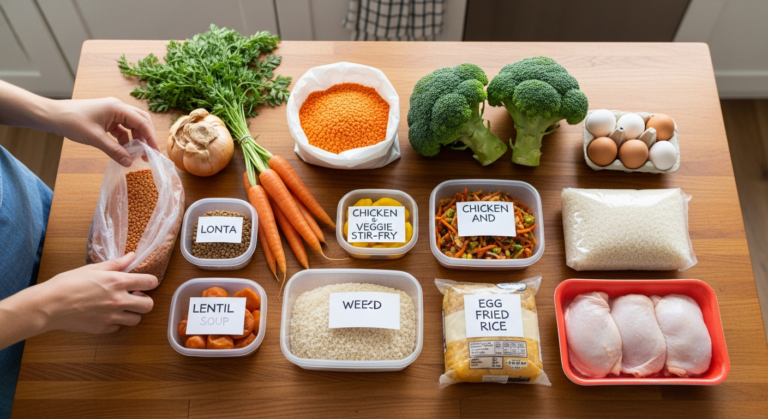
I keep a running inventory of pantry staples and stock up when they’re on sale. Dried beans, lentils, oats, and brown rice store for months in airtight containers. When I find chicken thighs or ground turkey marked down, I buy several packages and freeze them immediately with marinades – the meat thaws already seasoned and ready to cook.
Root vegetables like potatoes, carrots, and onions keep for weeks when stored properly, so I buy them in bulk when prices are low. Sweet potatoes are often cheaper than regular potatoes and add natural sweetness and nutrients to everything from hash to soup.
These strategies have transformed how we eat as a family – we spend less money but enjoy more varied, flavorful meals than ever before. The key is embracing ingredients that work hard for you, building flavor through technique rather than expensive additions, and always cooking with love and intention.