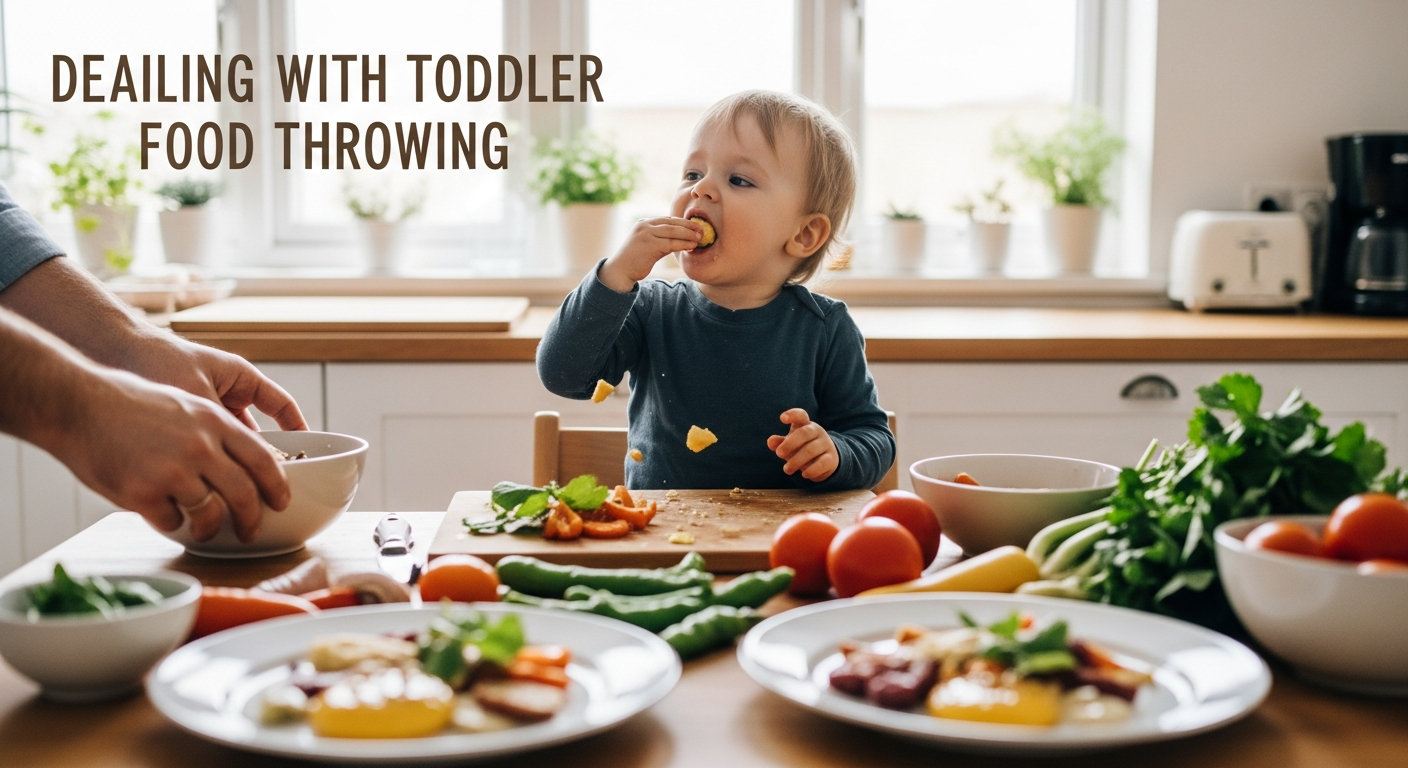
Dealing with Toddler Food Throwing
I had just finished making a beautiful batch of homemade butternut squash risotto—the kind that takes 35 minutes of constant stirring. I spooned a perfect little portion onto my 14-month-old’s tray, feeling genuinely proud of this meal. She looked at it. She looked at me. She picked up the entire handful of golden, creamy risotto and launched it directly at the dog. Then she laughed. The dog was thrilled. I was not.
If your dining room floor currently looks like a Jackson Pollock painting made entirely of mashed sweet potato and yogurt, welcome to one of the most universally frustrating phases of toddlerhood. Food throwing is incredibly common between ages 8 months and 2 years, and while it can make you want to scream into a dish towel, it’s actually a normal part of your little one’s development. That doesn’t make it less annoying—but understanding why it happens is the first step toward making it stop.
Why Toddlers Throw Food (It’s Not to Ruin Your Evening)
Before we can fix the behavior, it helps to understand what’s driving it. Spoiler: your toddler is not a tiny villain plotting your demise. There are real, developmentally appropriate reasons behind every airborne piece of banana.
They’re scientists conducting experiments. Between 8 and 18 months, babies are fascinated by cause and effect. “What happens when I drop this? It falls! What happens when I throw it? It goes farther! What happens when it hits the floor? Mom makes a funny face and the dog runs over!” Every throw is a data point in their ongoing research project about gravity, trajectory, and how the world works.
They’re telling you they’re done eating. Toddlers don’t have the vocabulary to say “I’ve had enough, thank you.” So they communicate with their actions. Food throwing often ramps up at the end of a meal when they’ve lost interest or are genuinely full. They’re not wasting food to be defiant—they literally don’t know a better way to signal that mealtime is over.
They’re overwhelmed by too much food. A plate piled high can be overstimulating for a small child. When they don’t know where to start, throwing food off the tray can be a way of reducing the overwhelm and getting things down to a manageable amount.
They want your attention. Did you gasp the first time food went flying? Did you rush over? Laugh? Make a dramatic “No!” face? Toddlers are attention connoisseurs. Even negative attention (your frustrated reaction) is incredibly reinforcing. If throwing food reliably gets a big reaction from you, they’ll keep doing it.
They’re exploring texture and sensory input. The feeling of squishing food between fingers and then releasing it, watching it arc through the air, hearing it splat—this is genuinely interesting sensory information for a developing brain. It’s messy, but it’s learning.
Practical Strategies That Actually Reduce Food Throwing
Now for the part you came here for—how to make it stop (or at least happen way less often). These strategies work best when used together consistently over 1-2 weeks.
Serve Tiny Portions
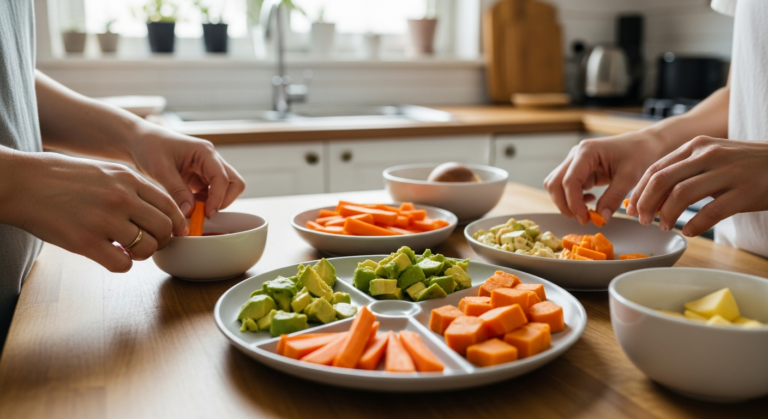
Instead of putting a full meal on your toddler’s tray, start with just 2-3 small pieces of food. When they finish those, add 2-3 more. This does two things: it reduces the amount of food available for throwing, and it prevents the overwhelm that triggers throwing in the first place. I call this the “tapas approach”—small courses, served one at a time. Yes, it means more trips to the kitchen, but trust me, it’s faster than cleaning risotto off the ceiling.
Teach “All Done” and “No Thank You”
Give your toddler words (or signs) for the feelings that lead to throwing. Baby sign language is incredibly effective here—the sign for “all done” (open hands waving back and forth) can be learned as early as 8-9 months. Every time your toddler starts throwing, gently catch their hand if you can, and say “Are you all done? Show me all done” while demonstrating the sign. When they use the sign (or later, the words) instead of throwing, praise them warmly: “You told me you’re all done! Great job!”
Create a “No Thank You” Bowl
Place a small bowl on the tray or table next to your toddler’s plate. Teach them that food they don’t want goes in the bowl, not on the floor. Say “If you don’t want it, put it in the bowl” and physically guide their hand the first several times. This gives them an appropriate action to replace the throwing—they still get to reject the food, but without the mess. Many toddlers take to this surprisingly quickly because it still gives them control over what stays on their plate.
Stay Calm and Boring
This is the hardest strategy but possibly the most important. When food goes flying, resist the urge to react dramatically. Don’t gasp, don’t laugh, don’t scold, don’t make a big production of cleaning it up. Simply say in a calm, flat voice, “Food stays on the tray” or “We don’t throw food,” and redirect. If you’ve been giving big reactions to throwing, removing that payoff is often enough to significantly reduce the behavior within a week. Your toddler is watching your face—make it as boring as possible.
Watch for “I’m Done” Signals
Food throwing often escalates near the end of a meal. Learn your toddler’s pre-throwing cues: playing with food without eating it, turning their head away, squishing food in their fists, getting restless in the high chair. When you see these signals, end the meal proactively. Say “It looks like you’re all done!” and remove the tray before the throwing starts. It’s much easier to prevent throwing than to stop it once it’s begun.
Setting Up Your Mealtime Environment for Success
A few practical setup changes can make a huge difference in how much food ends up on the floor:
Use plates and bowls that stick. Suction plates and silicone mats that attach to the high chair tray are worth their weight in gold. When the entire plate can’t be launched, throwing is limited to individual pieces of food, which is much more manageable. Look for strong suction—some toddlers are remarkably determined and will defeat a weak suction cup in seconds.
Position the high chair strategically. If possible, place the high chair on hard flooring rather than carpet. Put a splash mat or old shower curtain under the chair. This doesn’t prevent throwing, but it makes cleanup a 30-second job instead of a 15-minute scrubbing session. Your future self will thank you.
Keep the dog out of the dining area during meals. I know, I know—the dog is a very convenient cleanup crew. But if your toddler is throwing food specifically because the dog catches it (and this is extremely common), removing the audience removes half the motivation. Feed the dog in another room during family meals and let them clean up any scraps after the toddler is out of the high chair.
Eat together whenever possible. Toddlers who eat at the table with the rest of the family throw less food than those who eat alone in their high chair while you prep your own meal. When they see you eating the same food calmly, it models the expected behavior. Family meals also provide the social interaction your toddler craves, reducing their need to seek attention through throwing.
What to Do When Throwing Continues Despite Your Best Efforts
You’ve tried everything. You’re serving small portions, you’ve introduced the “all done” sign, there’s a no-thank-you bowl on the tray, and you’ve maintained the poker face of a professional card player. Yet food is still flying. Here’s your escalation plan:
Give one clear warning. After the first throw, make eye contact and say calmly and clearly: “Food stays on the tray. If you throw food again, the meal is over.” Say it once. Only once.
Follow through immediately. If food gets thrown again, say “I see you’re throwing food. The meal is all done” and remove the tray. Get your toddler out of the high chair without anger or punishment. This isn’t a time-out—it’s a natural consequence. Throwing food means the meal ends.
Don’t offer a replacement meal or immediate snack. This is where it gets tough. If your toddler threw food and the meal ended, the next eating opportunity is the regularly scheduled snack or the next meal. They might be grumpy about it. That’s okay. They’re learning that throwing has consequences. One missed partial meal will not harm a healthy toddler.
Be consistent every single time. The warning-then-removal approach only works if it happens at every meal, with every caregiver. If Dad lets throwing slide at lunch but Mom ends dinner for it, your toddler will keep testing the boundaries. Get all caregivers (including grandparents and daycare providers) on the same plan.
The Messy Truth: This Phase Does End
I want to leave you with the most important piece of information: this phase is temporary. It doesn’t feel temporary when you’re mopping the floor for the third time today, but it is. Most children significantly reduce food throwing between 18 and 24 months as their language develops and they find better ways to communicate their needs.
In the meantime, protect your sanity with these survival tips:
- Keep a handheld vacuum near the dining area for quick cleanups
- Dress your toddler in a long-sleeved bib or smock for messy meals
- Serve less staining foods when you’re already having a tough day (bananas instead of beets, for instance)
- Take a photo of the mess occasionally—you’ll laugh about it someday, I promise
- Remember that every toddler does this, even the ones who seem perfectly behaved at restaurants
You’re not doing anything wrong if your toddler throws food. You’re not a bad cook, a bad parent, or raising a wild child. You’re raising a curious, boundary-testing, cause-and-effect-loving little human who will eventually learn to keep spaghetti on their plate. Until then, stock up on paper towels, keep your sense of humor close, and know that this too shall pass—probably right around the time they discover a new, equally exasperating phase to keep you on your toes.