Meal Prep for Beginners: Getting Started Guide
Last Sunday at 4:47 PM, I stood in front of my open refrigerator with a screaming toddler on my hip and absolutely zero idea what we were having for dinner. Again. My husband was working late, the baby was teething, my five-year-old was asking for chicken nuggets for the fourteenth meal in a row, and I was one forgotten grocery item away from ordering pizza for the third time that week. Sound familiar? That was my life before I discovered the life-altering magic of meal prep—and I’m not exaggerating when I say it completely transformed our family’s evenings.
Now, before you click away thinking meal prep means spending your entire Sunday chained to the stove making 47 perfectly portioned containers of grilled chicken and broccoli—stop. That’s not what we’re doing here. Family meal prep is flexible, forgiving, and honestly? Once you get the hang of it, it takes less time than all those last-minute grocery runs and takeout orders combined. Let me walk you through exactly how to get started, even if you’ve never prepped a single thing in advance.
What Family Meal Prep Actually Looks Like (Hint: It’s Not Instagram-Perfect)
Forget those perfectly color-coordinated meal prep photos you see online with seventeen matching glass containers lined up on a marble countertop. Real family meal prep is messier, more practical, and way more effective than it looks in pictures.
At its core, meal prep simply means doing some cooking work ahead of time so that putting dinner on the table during the week takes 15 minutes instead of 45. That’s it. There’s no single right way to do it, and the best approach is the one you’ll actually stick with.
Here are the most common styles of family meal prep:
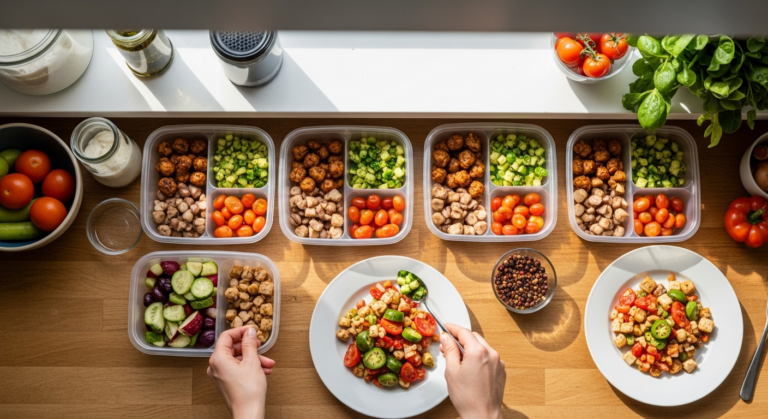
- Full meal prep: Cooking complete meals on the weekend and storing them for reheating throughout the week. Best for families with very predictable schedules.
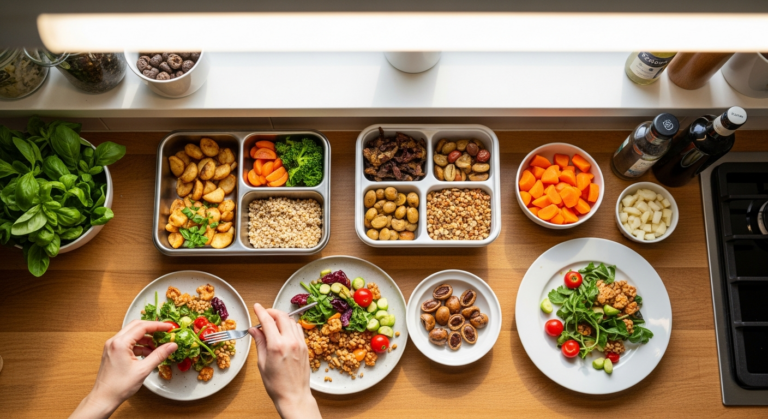
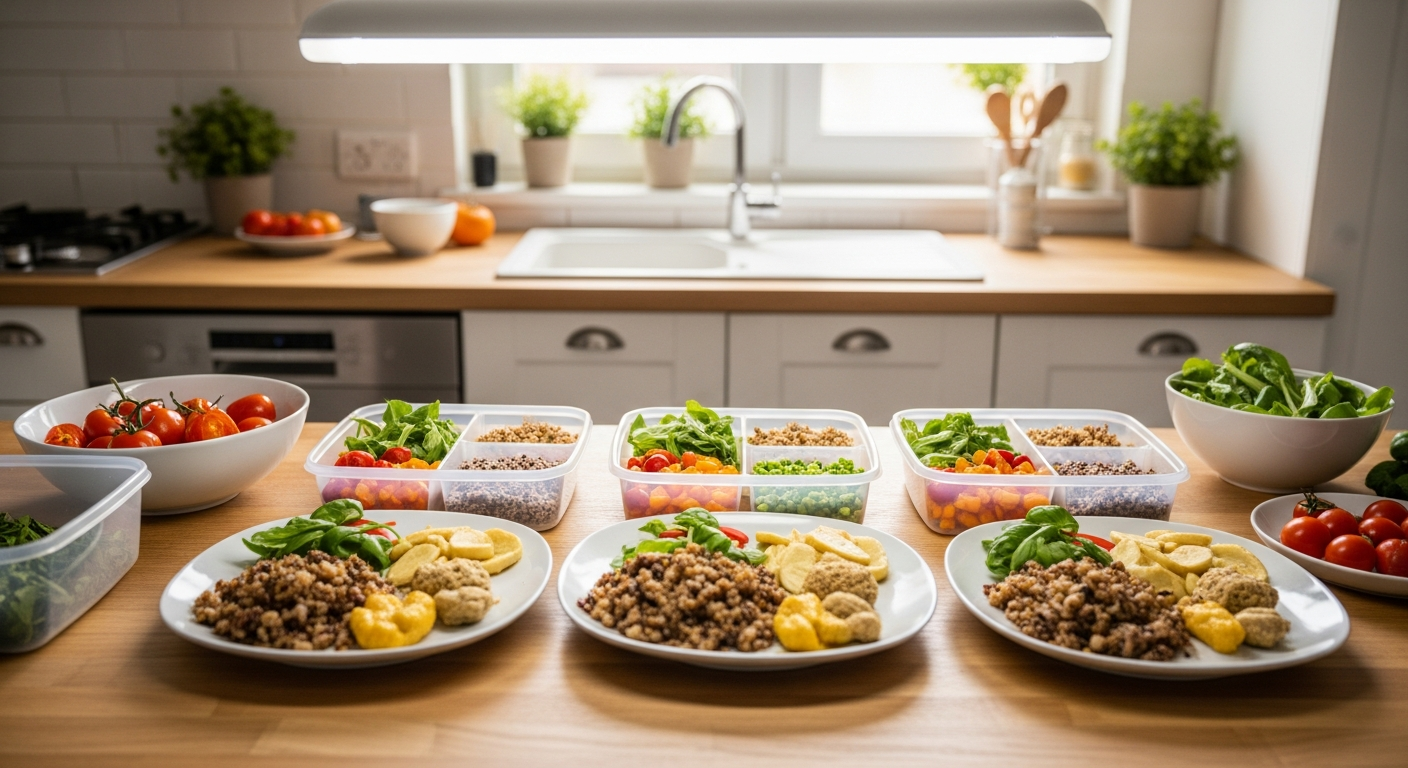
- Component prep: Preparing individual ingredients (cooking grains, chopping vegetables, marinating proteins) that you mix and match into different meals. This is my favorite approach because it keeps things flexible.
- Freezer prep: Assembling meals or ingredients in freezer bags that go straight into the slow cooker or Instant Pot on busy nights. Amazing for those weeks when everything is chaos.
- Partial prep: Just doing the most time-consuming steps ahead—washing and chopping produce, making sauces, cooking grains. Even this small effort shaves significant time off weeknight cooking.
For beginners, I always recommend starting with component prep and partial prep. You’ll get the biggest time savings with the least amount of pressure to get everything perfect.
Your First Meal Prep Session: A Step-by-Step Walkthrough
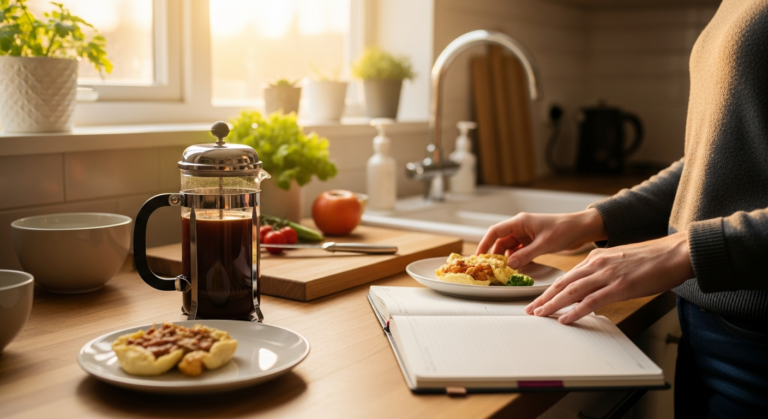
Let’s do this together. Set aside about 90 minutes to 2 hours on a Sunday (or whatever day works for you). Put on a podcast, pour yourself something nice to drink, and let’s make your week infinitely easier.
Step 1: Plan Five Weeknight Dinners (15 minutes)
Grab a piece of paper and write down five simple dinners. Don’t overthink this. For your first week, aim for meals that share ingredients. Here’s a sample starter plan:
- Monday: Chicken stir-fry with rice and vegetables
- Tuesday: Taco night with seasoned ground turkey, rice, and toppings
- Wednesday: Sheet pan sausage with roasted vegetables and leftover rice
- Thursday: Pasta with meat sauce and a side salad
- Friday: Leftover remix bowls (whatever needs to be used up)
Notice how rice appears three times? That’s strategic. Cook it once, use it all week.
Step 2: Make Your Grocery List and Shop (30-45 minutes)
Go through each meal and write down exactly what you need. Check your pantry first—you probably already have oils, basic spices, pasta, and rice. Group your list by store section (produce, dairy, meat, pantry) so you’re not zigzagging through the store. A focused, list-based grocery trip takes half the time of wandering the aisles.
Step 3: The Actual Prep (60-90 minutes)
Here’s the order I follow to maximize efficiency:
- Start the grains first (5 minutes active time). Get a big pot of rice going or throw quinoa in the rice cooker. This cooks while you do everything else.
- Get proteins marinating or cooking (10 minutes). Season and bake 2 pounds of chicken breasts at 400 degrees Fahrenheit for 22-25 minutes. Brown the ground turkey with taco seasoning. These are your protein bases for the week.
- Wash and chop all your produce (20-30 minutes). This is the big one. Dice onions, mince garlic, slice bell peppers, chop broccoli, shred lettuce, dice tomatoes. Store everything in containers or zip-top bags lined with a paper towel to absorb moisture.
- Make any sauces (10 minutes). A simple stir-fry sauce (soy sauce, sesame oil, garlic, ginger, cornstarch) and a quick pasta sauce can both be made while the protein cooks.
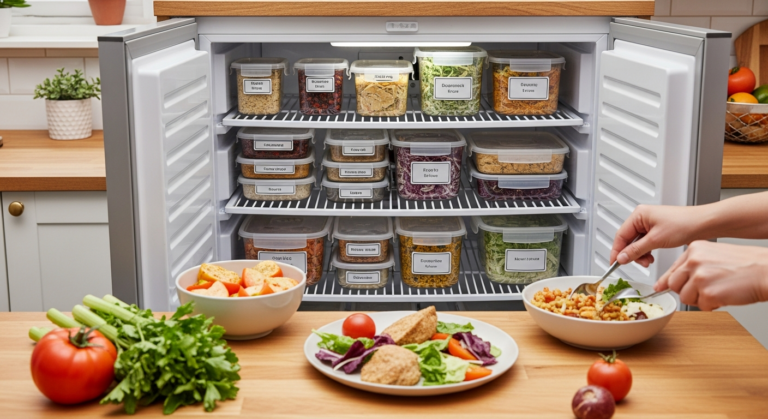
- Portion and store everything (10 minutes). Let cooked items cool slightly, then transfer to containers. Label with the day you’ll use them if that helps.
Essential Gear You Actually Need (And What You Don’t)
You do not need to spend hundreds of dollars on fancy meal prep containers and gadgets. Here’s what genuinely makes a difference and what’s just marketing:
Worth the investment:
- Glass storage containers with locking lids (a set of 10-12 mixed sizes). Glass doesn’t stain, doesn’t absorb odors, and goes from fridge to microwave to dishwasher. A good set costs around $25-35 and lasts for years.
- A sharp chef’s knife. If your knife is dull, chopping vegetables takes twice as long and is actually more dangerous. Get it sharpened or invest in a decent 8-inch chef’s knife.
- A large cutting board. Bigger than you think you need. A large board means fewer batches of chopping.
- Zip-top freezer bags in quart and gallon sizes for marinating, freezing, and storing prepped ingredients.
- Sheet pans (at least two). Half-sheet pans are the workhorses of meal prep. You can roast proteins and vegetables simultaneously on separate pans.
Skip for now:
- Fancy label makers (masking tape and a marker work fine)
- Specialized prep containers with built-in dividers (regular containers are more versatile)
- A vacuum sealer (great for serious freezer preppers, but overkill for beginners)
Meal Prep Recipes That Actually Work for Families
These are my go-to meal prep staples. Each one is kid-tested, reheats well, and can be used in multiple ways throughout the week.
All-Purpose Shredded Chicken
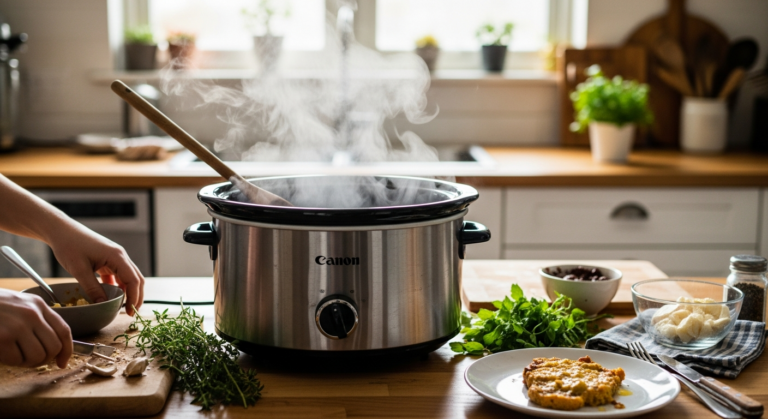
Place 2 pounds of boneless, skinless chicken breasts in a slow cooker. Add 1 cup of chicken broth, 1 teaspoon each of garlic powder, onion powder, and cumin, plus salt and pepper. Cook on low for 6-7 hours or high for 3-4 hours. Shred with two forks. This chicken works in tacos, stir-fry, pasta, salads, wraps, quesadillas—literally anything. It keeps in the fridge for 4 days or freezes for up to 3 months.
Versatile Seasoned Ground Turkey
Brown 2 pounds of ground turkey in a large skillet over medium-high heat, breaking it into small crumbles. Once cooked through (about 8-10 minutes), drain any excess liquid and season with 1 tablespoon chili powder, 1 teaspoon each of cumin and garlic powder, 1/2 teaspoon onion powder, and salt to taste. Divide into portions for taco night, pasta sauce (just add marinara), rice bowls, or stuffed peppers.
Big-Batch Veggie Chop
This isn’t a recipe so much as a strategy. Spend 20 minutes chopping the following: 3 bell peppers (mixed colors), 2 large onions, 4 cloves garlic (minced), 2 heads of broccoli (florets), 2 large zucchini, and 1 bag of shredded carrots. Store each vegetable separately in containers. Having these ready to grab and toss into any pan is the single biggest time-saver in my kitchen. Pre-chopped veggies last 4-5 days in the fridge.
Storage and Food Safety Rules You Need to Follow
Meal prep only works if the food stays safe to eat all week. These aren’t suggestions—they’re non-negotiable rules for keeping your family healthy:
- Cool cooked food within 2 hours before refrigerating. Spread food in shallow containers to speed up cooling. Never put a huge pot of hot food directly in the fridge—it raises the temperature and can put other foods in the danger zone.
- Cooked proteins last 3-4 days in the fridge. If you’re prepping on Sunday, anything you won’t eat by Wednesday should go in the freezer immediately.
- Chopped raw vegetables last 4-5 days when stored properly with a paper towel to absorb excess moisture.
- Cooked grains (rice, quinoa) last 4-5 days refrigerated in airtight containers. Rice should be cooled and refrigerated within an hour of cooking.
- Label everything with the date you made it. When in doubt, throw it out. No meal is worth a foodborne illness, especially with little kids in the house.
- Keep your fridge at 40 degrees Fahrenheit or below. Use an inexpensive fridge thermometer to be sure.
Making Meal Prep a Habit That Sticks
The hardest part of meal prep isn’t the cooking—it’s doing it consistently. Here are the strategies that helped me turn it from a one-time experiment into a weekly routine that I genuinely look forward to:
Start embarrassingly small. Your first week, just cook a batch of rice and chop some vegetables. That’s it. The next week, add a protein. The week after, try a sauce. Building gradually means you don’t burn out after one marathon session.
Pick a consistent day and time. For most families, Sunday afternoon works well, but Saturday morning or even Wednesday evening can work too. The point is making it a predictable part of your routine, like doing laundry or grocery shopping.
Involve the kids. My five-year-old washes vegetables and tears lettuce. My toddler “helps” by putting things in bowls (and eating half the shredded cheese). It takes longer, yes, but it teaches them about food and makes them more likely to eat what we’ve prepared.
Keep a running “hits” list. When a meal prep recipe is a family hit, write it down. After a few months, you’ll have a rotating list of 15-20 meals that everyone eats without complaint. Planning gets faster every single week.
Give yourself grace on imperfect weeks. Some Sundays you’ll prep five full dinners with homemade sauces and freshly baked bread. Other Sundays you’ll throw some chicken in the slow cooker and call it done. Both of those count. Both of those are better than standing in front of the fridge at 4:47 PM with no plan. And both of those versions of you are doing a great job feeding your family.