Should You Make Separate Meals for Picky Eaters?
It’s 5:30 on a Tuesday. You’ve spent 40 minutes making a perfectly good chicken and vegetable stir-fry. You set the plate down in front of your four-year-old, and before a single bite touches his lips, he pushes it away and declares, “I don’t like that. I want buttered noodles.” Your two-year-old takes one look and drops her fork on the floor. Your stomach growls. The stir-fry is getting cold. And you find yourself standing at the stove again, boiling water for pasta because you just need everyone to eat something. Anything.
If you’ve ever wondered whether you should keep making separate meals for your picky eater—or whether that habit is making things worse—you’re wrestling with one of the most common and emotionally loaded questions in family feeding. The short answer? No, you probably shouldn’t be a short-order cook. But the real answer is much more nuanced than that, and getting it right can transform your family’s mealtime from a nightly battle into something everyone can actually enjoy.
The Short-Order Cook Trap (And Why It Feels So Hard to Escape)
Let’s be honest about how we end up here. Nobody decides to make separate meals for fun. It usually starts innocently—your toddler refuses dinner, you worry about them going to bed hungry, so you make something you know they’ll eat. Totally reasonable. The problem is that this pattern builds on itself until it becomes the expectation.
Here’s what tends to happen when separate meals become routine:
- Your child learns they have veto power. Why try the stir-fry when buttered noodles are always available as a backup? There’s zero motivation to explore new foods when the alternative is guaranteed.
- Their food world shrinks instead of expanding. Instead of gradually accepting new foods through repeated exposure, they eat the same five “safe” foods over and over. Over time, even those safe foods can start getting rejected.
- You burn out completely. Cooking two or three different dinners every night is exhausting, expensive, and demoralizing. It takes the joy right out of feeding your family.
- Siblings notice. If one child gets a special meal, the others want one too. Suddenly you’re running a restaurant with the world’s most demanding clientele.
But here’s the crucial thing—if you’re currently making separate meals, there is nothing wrong with you. You did it because you love your child and you wanted them to eat. That instinct is good. We’re just going to redirect it into a strategy that actually helps them grow into more adventurous eaters.
The One-Family, One-Meal Approach That Actually Works
The gold standard recommended by pediatric feeding experts is what’s often called the “Division of Responsibility,” developed by dietitian Ellyn Satter. The concept is beautifully simple:
You (the parent) decide what food is served, when meals happen, and where eating takes place.
Your child decides whether they eat and how much they eat.
In practice, this means you serve one family meal, and your child can eat as much or as little of it as they choose. No pressure, no bargaining, no separate meals—but also no forcing them to eat. This approach respects both your role as the food provider and your child’s ability to regulate their own appetite.
Now, I know what you’re thinking: “But my child won’t eat anything on the table. They’ll go to bed hungry.” And I hear that fear, because I’ve felt it too. So let’s talk about how to make this work without anyone going hungry or losing their mind.
The Safe Food Strategy: Your Secret Weapon
The bridge between “short-order cooking” and “one meal, take it or leave it” is what I call the safe food strategy. It’s the single most practical piece of feeding advice I’ve ever received, and it changed everything in our house.
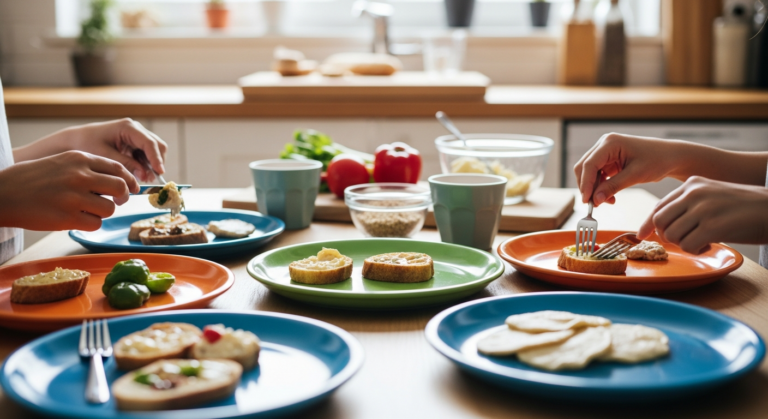
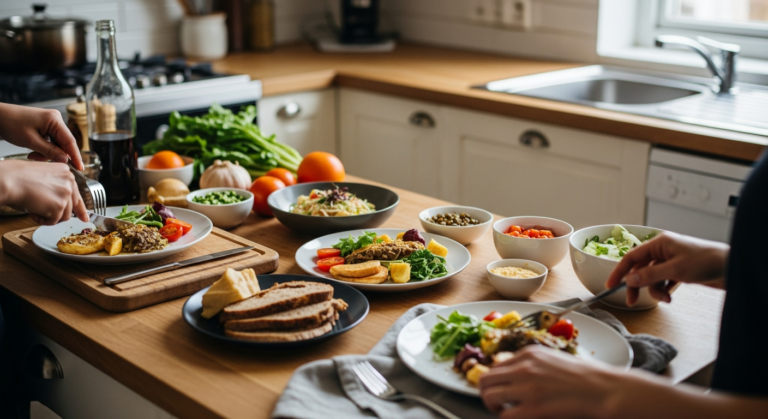
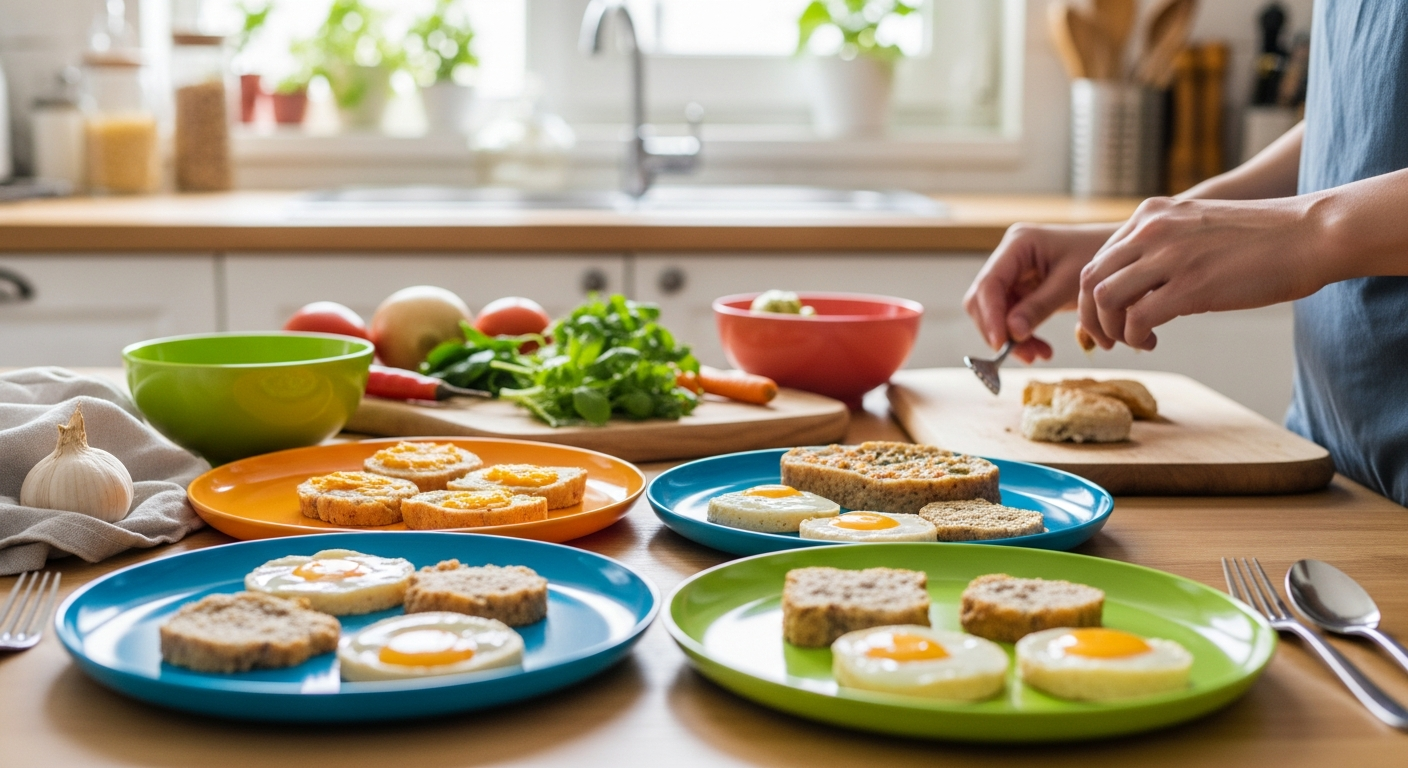
Here’s how it works: At every meal, include at least one food you know your child will eat. This isn’t making a separate meal—it’s building the family meal with your child in mind.
For example, if you’re serving that chicken stir-fry:
- Put plain rice on the table (most kids will eat rice)
- Serve some of the vegetables and protein separately, before mixing them into the stir-fry sauce, so your child can try them plain
- Add a small bowl of fruit on the side
- Offer milk as the beverage
Your child now has the rice and fruit as their “safe” foods. If they eat only rice and strawberries for dinner, that’s okay. They had access to the stir-fry, they saw everyone else eating and enjoying it, and they weren’t pressured. Over time, proximity and repeated exposure do their work. One day, they’ll try a piece of chicken. Then a bite of broccoli. It happens gradually, but it does happen.
Some reliable safe foods to keep in rotation:
- Plain rice or pasta
- Bread or dinner rolls
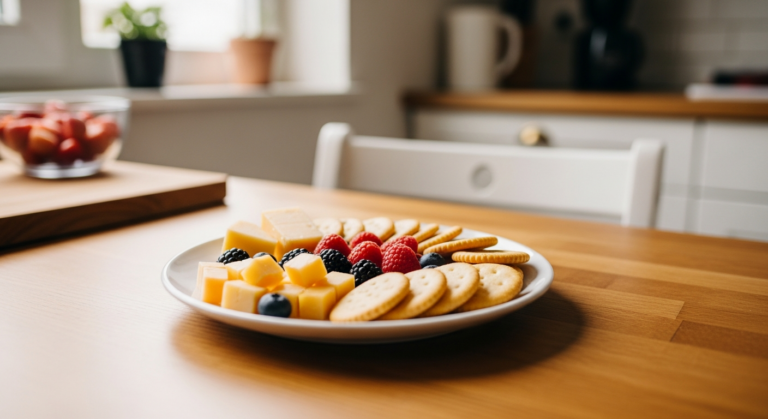
- Fresh fruit (berries, banana slices, apple slices, clementine segments)
- Raw vegetables with a dip (baby carrots, cucumber slices, cherry tomatoes)
- Cheese cubes or string cheese
- Plain yogurt
How to Make the Transition Without a Meltdown (Yours or Theirs)
If you’ve been making separate meals for a while, you can’t just stop cold turkey. That’s a recipe for an epic power struggle. Here’s a gentle, gradual transition plan that worked for our family:
Week 1-2: The Bridge Meals
Start by planning family meals that naturally overlap with your child’s preferred foods. If they love pasta, make pasta with a sauce on the side. If they love chicken nuggets, make baked chicken tenders that the whole family eats. You’re not making separate meals, but you’re choosing family meals that aren’t too far from their comfort zone.
Week 3-4: Introduce the Safe Food Plate
Start serving meals that are more “adult” with a safe food included. Make a curry, but put plain rice and naan bread on the table. Prepare grilled salmon, but also have buttered corn and rolls available. Explain casually to your child: “This is what we’re having for dinner tonight. You can eat as much of anything on the table as you’d like.”
Week 5 and Beyond: Hold the Line Gently
By now, your child understands the new normal. They might test it—expect some pushback. When they ask for buttered noodles instead of dinner, calmly say: “This is what’s on the menu tonight. There’s rice and fruit if you’d like those.” Then move on. Don’t negotiate, don’t lecture, don’t draw attention to what they are or aren’t eating. Keep the mood light.
What About Snacks?
This is important: maintain a structured snack schedule during this transition. Offer a planned afternoon snack (around 3:00-3:30 PM) so your child isn’t arriving at dinner absolutely famished. A hungry child is a less flexible child. But don’t offer snacks immediately after a refused dinner—that becomes the new “separate meal” in disguise.
Dealing with the Guilt and the Grandparents
The emotional side of this shift can be harder than the practical side. You will feel guilty the first time your child eats only bread for dinner. Your mother-in-law might give you a look. Your partner might cave and make the separate meal behind your back. These are all normal bumps in the road.
Here’s what helped me push through the guilt:
Remember that one meal doesn’t define their nutrition. Look at what your child eats over the course of a week, not a single meal. Most children, even very picky ones, get adequate nutrition over time. If you’re genuinely worried, talk to your pediatrician about whether a multivitamin makes sense during the transition.
Healthy children will not starve themselves. Barring medical conditions that affect appetite or sensory processing, children eat when they’re hungry. A child who eats only bread at dinner will likely make up for it at breakfast. Their bodies are remarkably good at self-regulating when we let them.
Get your partner on the same page. This approach only works if both caregivers are consistent. Have a conversation away from the dinner table about your plan, the reasoning behind it, and how you’ll both handle pushback. Present a united front.
Handle outside opinions with confidence. A simple “We’re working on trying new foods, and our pediatrician supports this approach” usually quiets well-meaning relatives. You don’t owe anyone a detailed explanation of your feeding philosophy.
When Separate Meals Might Actually Be Appropriate
While I firmly believe most families benefit from moving away from short-order cooking, there are legitimate situations where accommodations make sense:
Diagnosed sensory processing disorders or autism spectrum conditions can make certain textures, temperatures, or flavors genuinely intolerable—not just “picky” but physically distressing. If your child has a diagnosed condition affecting their relationship with food, work with an occupational therapist or feeding specialist to develop an individualized plan. The general advice in this article may not fully apply.
Food allergies and intolerances obviously require modifications. A child with a dairy allergy needs a dairy-free version of mac and cheese—that’s a medical accommodation, not short-order cooking.
Very young toddlers (12-18 months) who are still developing chewing skills may need modified textures of the family meal. Cutting food smaller, mashing it slightly, or removing very tough textures is a reasonable adaptation.
Recovery from illness often calls for gentle, familiar foods. If your child just had a stomach bug, plain crackers and toast are perfectly appropriate even if the rest of the family is having lasagna.
The difference between accommodating and short-order cooking is intent and duration. Accommodations address a specific need. Short-order cooking caters to preference at the expense of food learning. Knowing the difference gives you the confidence to hold your boundaries where it matters while being flexible where it counts.
Making the switch to one family meal takes courage, consistency, and a whole lot of deep breaths. There will be nights when your child eats almost nothing and you question everything. But there will also be a night—maybe three weeks in, maybe three months—when your picky eater picks up a piece of broccoli, puts it in their mouth, chews, swallows, and says “more please.” And in that moment, every bread-only dinner will have been completely worth it.