Introducing Allergens to Baby: A Safe Step-by-Step Guide
This guide helps you safely introduce top allergens to your baby around 4-6 months to potentially prevent allergies. You'll learn the step-by-step process, what to watch for, and how to prepare specific foods.
- Introduce top allergens around 4-6 months to help prevent future allergies.
- Consult your pediatrician first if your baby has eczema or family allergy history.
- Follow a step-by-step protocol: start small, watch for reactions, and increase gradually.
- Introduce one new allergen at a time, waiting 2-3 days between each for safety.
- Maintain regular exposure (2-3 times/week) once an allergen is introduced.
The guidelines have changed. For years, parents were told to delay allergenic foods. Now we know that early introduction—starting around 4-6 months—may actually help prevent allergies from developing.
But “introduce allergens early” is easier said than done. Which ones first? How much? What if something goes wrong?
This guide walks you through introducing the top allergens safely and confidently. Knowledge replaces fear when you have a clear plan.
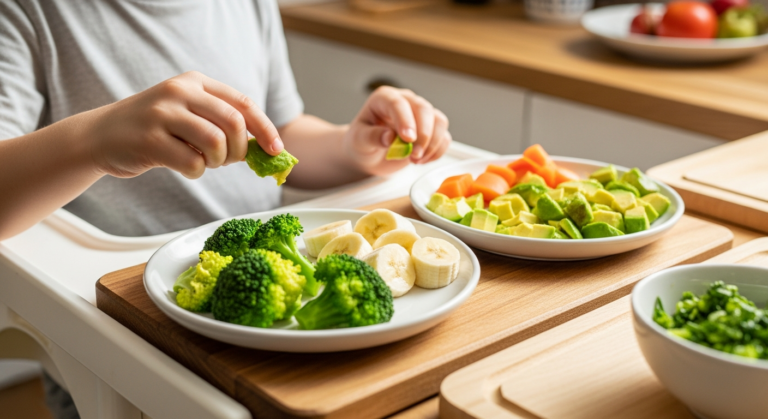
[IMAGE: Baby in high chair trying first foods with parent watching closely]
Why Early Introduction Matters
The science: Landmark studies (including LEAP and EAT) found that introducing peanuts and other allergens early significantly reduced allergy rates. Delaying introduction may actually increase risk.
Current recommendations: The American Academy of Pediatrics now recommends introducing allergenic foods around 4-6 months, alongside other solid foods.
The window: There appears to be a critical window in infancy when the immune system learns to tolerate foods. Missing this window may increase allergy risk.
Important caveat: Babies with severe eczema or existing food allergies may need testing before introduction. Talk to your pediatrician about your specific situation.
The Top 9 Allergens
These foods account for 90% of food allergies:
- Peanuts
- Tree nuts (almonds, cashews, walnuts, etc.)
- Milk (cow’s milk protein)
- Eggs
- Wheat
- Soy
- Fish
- Shellfish
- Sesame
Note: While these are the “big 9,” any food can potentially cause an allergic reaction.
Before You Begin
Talk to Your Pediatrician If:
- Baby has moderate to severe eczema
- Baby has a known food allergy
- Baby has had a previous allergic reaction to any food
- There’s a strong family history of food allergies
- You’re concerned for any reason
Some babies may need allergy testing before introduction. Your pediatrician can guide you.
Signs Baby Is Ready for Solids
Before introducing ANY solid food (allergenic or not), ensure baby:
- Is at least 4 months old (6 months is often ideal)
- Can hold head up steadily
- Shows interest in food
- Has lost the tongue-thrust reflex
- Can sit with support
What You’ll Need
- The allergenic food in age-appropriate form
- A timer or clock
- Benadryl (diphenhydramine) on hand—know the correct dosing for baby’s weight
- Your pediatrician’s after-hours number
- Knowledge of nearest emergency room
The Ultimate Guide to Baby-Led Weaning: First Foods & Safety Tips
How to Introduce Each Allergen
General Protocol
Step 1: Start small
Begin with a very small amount—about 1/4 teaspoon mixed into a food baby already tolerates.
Step 2: Watch and wait
Observe for at least 2 hours after introduction. Most reactions occur within this window.
Step 3: Increase gradually
If no reaction, slowly increase amount over subsequent exposures.
Step 4: Maintain exposure
Once introduced, continue offering 2-3 times per week. Irregular exposure may increase risk.
Step 5: One at a time
Wait 2-3 days between introducing new allergens. This helps identify the culprit if a reaction occurs.
Timing Tips
- Introduce early in the day (easier to monitor)
- Don’t introduce when baby is sick
- Don’t introduce when you’re stressed or rushed
- Have another adult present if possible
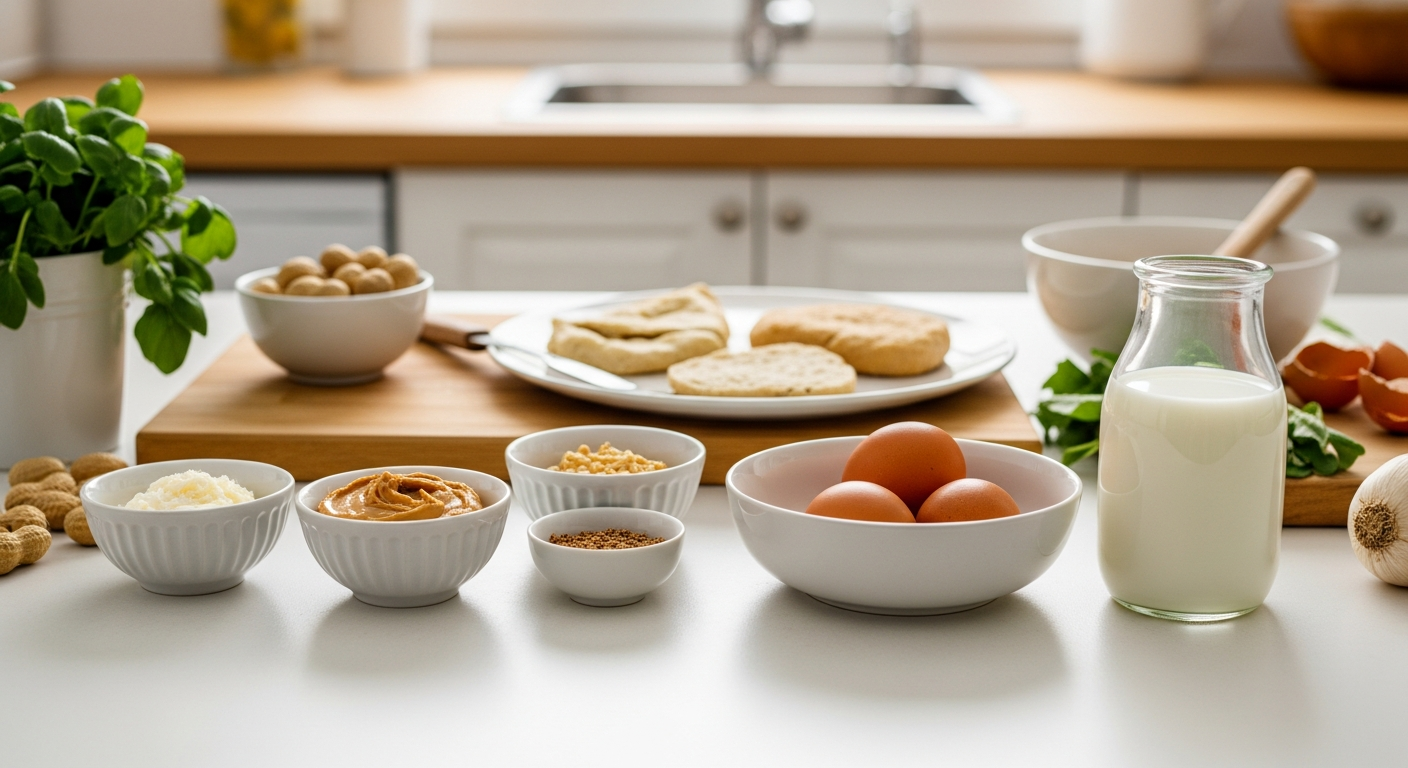
[IMAGE: Small portions of allergen foods prepared for baby introduction]
Introducing Specific Allergens
Peanuts
Why it matters: Peanut allergies have increased dramatically. Early introduction reduces risk by up to 80% in high-risk infants.
Age to introduce: 4-6 months (earlier end for high-risk babies with pediatrician guidance)
Safe forms:
- Peanut butter thinned with breast milk, formula, or water
- Peanut puff snacks (like Bamba)
- Peanut butter powder mixed into purees
Never give: Whole peanuts or chunky peanut butter (choking hazard until age 4+)
How to serve:
Mix 2 teaspoons of peanut butter with 2-3 tablespoons of warm water until smooth. Start with 1/4 teaspoon of this mixture.
—
Eggs
Safe forms:
- Well-cooked scrambled eggs (mashed or in small pieces)
- Hard-boiled egg yolk mixed into puree
- Baked goods containing egg
Never give: Raw or runny eggs
How to serve:
Start with 1/4 teaspoon of well-cooked scrambled egg or mashed hard-boiled yolk.
Note: Some babies react to egg white but tolerate yolk. If reaction occurs, consult your pediatrician.
—
Cow’s Milk
Important distinction: This refers to milk protein, not milk as a drink.
Safe forms:
- Full-fat plain yogurt
- Cheese (soft varieties, small pieces)
- Milk cooked into foods
Never give: Cow’s milk as a drink before 12 months (nutritional reasons, separate from allergy)
How to serve:
Start with 1/4 teaspoon of plain full-fat yogurt.
—
Tree Nuts
Safe forms:
- Nut butters thinned with water or breast milk
- Finely ground nuts mixed into purees
- Nut butter powder
Never give: Whole nuts or nut pieces (choking hazard until age 4+)
How to serve:
Same as peanut butter—thin with liquid, start with tiny amount.
Note: Introduce each tree nut separately. Allergy to one doesn’t mean allergy to all.
—
Wheat
Safe forms:
- Infant oatmeal made with wheat flour
- Soft, small pieces of toast or bread
- Wheat pasta cooked very soft
How to serve:
Start with infant cereal containing wheat, or soft bread pieces for baby-led weaning.
—
Soy
Safe forms:
- Tofu (soft, small cubes)
- Edamame (mashed or pureed, NEVER whole—choking hazard)
- Soy-based formula (if using)
How to serve:
Start with silken tofu mashed into a puree baby already eats.
—
Fish
Safe forms:
- Well-cooked, flaky fish mashed or pureed
- Start with mild white fish (cod, tilapia)
- Ensure no bones
How to serve:
Mash a small amount of well-cooked fish into puree, or offer soft flakes for baby-led weaning.
—
Shellfish
Safe forms:
- Well-cooked shrimp or crab, pureed or finely minced
- Ensure thoroughly cooked
How to serve:
Start with a very small amount of pureed well-cooked shrimp.
—
Sesame
Safe forms:
- Tahini (sesame paste) thinned with water
- Hummus (contains tahini)
- Sesame seeds ground into purees (whole seeds are choking hazard)
How to serve:
Mix a tiny amount of tahini into a puree, or offer hummus as a spread or dip.
Recognizing Allergic Reactions
Mild to Moderate Symptoms
(Usually appear within minutes to 2 hours)
- Hives (red, itchy bumps)
- Rash around mouth or body
- Swelling of lips, face, or eyes
- Vomiting
- Diarrhea
- Increased eczema
- Runny nose
- Stomach pain (baby seems uncomfortable, crying)
What to do: Stop feeding the food. Monitor closely. Call your pediatrician for guidance.
Severe Symptoms (Anaphylaxis)
CALL 911 IMMEDIATELY if you see:
- Difficulty breathing
- Wheezing
- Swelling of throat or tongue
- Severe vomiting
- Pale or blue color
- Sudden drowsiness or floppiness
- Loss of consciousness
Anaphylaxis is rare but life-threatening. Don’t wait to see if it gets better.
Easy Homemade Baby Food Recipes: Stage 1-3 Complete Guide
Creating an Introduction Schedule
Sample 8-Week Plan
Week 1: Peanut
- Day 1: First small introduction
- Day 3: Second exposure (slightly more)
- Day 5: Third exposure
- Continue 2-3x/week ongoing
Week 2: Egg
- Same protocol
Week 3: Milk (yogurt)
- Same protocol
Week 4: Tree nut (choose one, like almond)
- Same protocol
Week 5: Wheat
- Same protocol
Week 6: Soy
- Same protocol
Week 7: Fish
- Same protocol
Week 8: Sesame
- Same protocol
Continue: Once introduced, keep all allergens in regular rotation (2-3x/week each).
The Ongoing Rotation
After introduction, maintaining exposure is crucial. Here’s how to keep allergens in the diet:
Breakfast ideas:
- Oatmeal with peanut butter
- Scrambled eggs
- Yogurt with wheat cereal
Lunch ideas:
- Hummus with soft pita
- Cheese and crackers
- Tofu stir fry
Dinner ideas:
- Salmon (fish)
- Pasta (wheat)
- Edamame as side (soy)
Snacks:
- Nut butter on banana
- Bamba puffs
- Cheese sticks
FAQ
What if there’s a family history of allergies?
Talk to your pediatrician. Some babies with high risk may need testing before introduction. But even high-risk babies often benefit from early introduction—just with medical guidance.
My baby has eczema. Should I wait?
Actually, babies with eczema are at higher risk for food allergies, which makes early introduction potentially more important. Consult your pediatrician—they may recommend earlier introduction and/or testing.
What if baby doesn’t like an allergenic food?
Keep trying in different forms. The goal is exposure, not enthusiasm. A small amount mixed into accepted foods counts.
How long do I need to keep offering allergens?
Ideally through toddlerhood and beyond. Regular exposure seems to maintain tolerance.
Can I introduce multiple allergens in one day?
It’s safest to wait 2-3 days between NEW allergens. But once all are introduced without reaction, combining in meals is fine.
What if my baby had a mild reaction?
Don’t reintroduce without consulting your pediatrician. They may recommend testing or supervised reintroduction.
Are allergen introduction products worth it?
Products like SpoonfulOne or Ready Set Food can be convenient, but they’re not necessary. You can introduce allergens effectively with regular foods.
Conclusion
Introducing allergens can feel scary, but the evidence is clear: early, consistent introduction is one of the best things you can do to reduce your baby’s allergy risk.
Start small. Watch carefully. Keep exposure consistent. And remember—you’re giving your baby’s immune system the chance to learn tolerance during a critical window.
Talk to your pediatrician, make a plan, and introduce with confidence. Most babies do beautifully—and you’re doing something genuinely protective for their future.
Toddler Snack Ideas: 40 Healthy Options They Will Actually Eat
—