Budget Grocery Shopping for Families: Save Money Without Sacrificing Nutrition
Grocery prices keep climbing, but your family still needs to eat. The good news? Feeding your family well doesn’t require a massive budget—it requires strategy. These practical tips will help you cut grocery costs without resorting to ramen every night or sacrificing the nutrition your kids need.
Understanding Where Your Money Actually Goes
Before slashing your budget, understand where it’s going. Most families overspend in predictable categories:
Convenience foods. Pre-cut vegetables, individual snack packs, and ready-to-eat meals cost significantly more than their basic counterparts. You’re paying for someone else’s labor.
Impulse purchases. Those end-cap displays and checkout lane temptations add up quickly, especially with kids in tow asking for everything they see.
Food waste. The average family throws away hundreds of dollars worth of food annually. Buying more than you can use is the same as throwing money away.
Brand loyalty. Name brands often cost 30-50% more than store brands with identical ingredients.
Building a Grocery Budget That Works
Start with a realistic number. Track your current spending for a month before setting a target. Trying to cut too drastically too fast usually fails.
Per-person guidelines:
- Thrifty budget: $50-60 per person per week
- Moderate budget: $65-80 per person per week
- Liberal budget: $80-100+ per person per week
A family of four can eat well on $200-250 per week with planning. Some families manage even less, while others in high-cost areas may need more.
The key isn’t hitting a specific number—it’s spending intentionally rather than reactively.
Meal Planning: Your Most Powerful Tool
Meal planning prevents the 5pm panic that sends you to the drive-through or ordering takeout. It also ensures you buy only what you need.
Weekly planning process:
- 1. Check what’s already in your fridge, freezer, and pantry
- 2. Review store sales and plan meals around discounted items
- 3. Write out breakfasts, lunches, dinners, and snacks
- 4. Create your shopping list based on the plan
- 5. Stick to the list
For detailed meal planning strategies, check out our meal prep guide for new moms which works for any busy parent.
Flexible Planning vs. Rigid Planning
Rigid planning (Monday is always chicken, Tuesday is always tacos) doesn’t work for most families. Life happens.
Try flexible planning instead: Plan seven dinners for the week without assigning them to specific days. Each evening, choose from your planned options based on time, energy, and what sounds good.
Smart Shopping Strategies
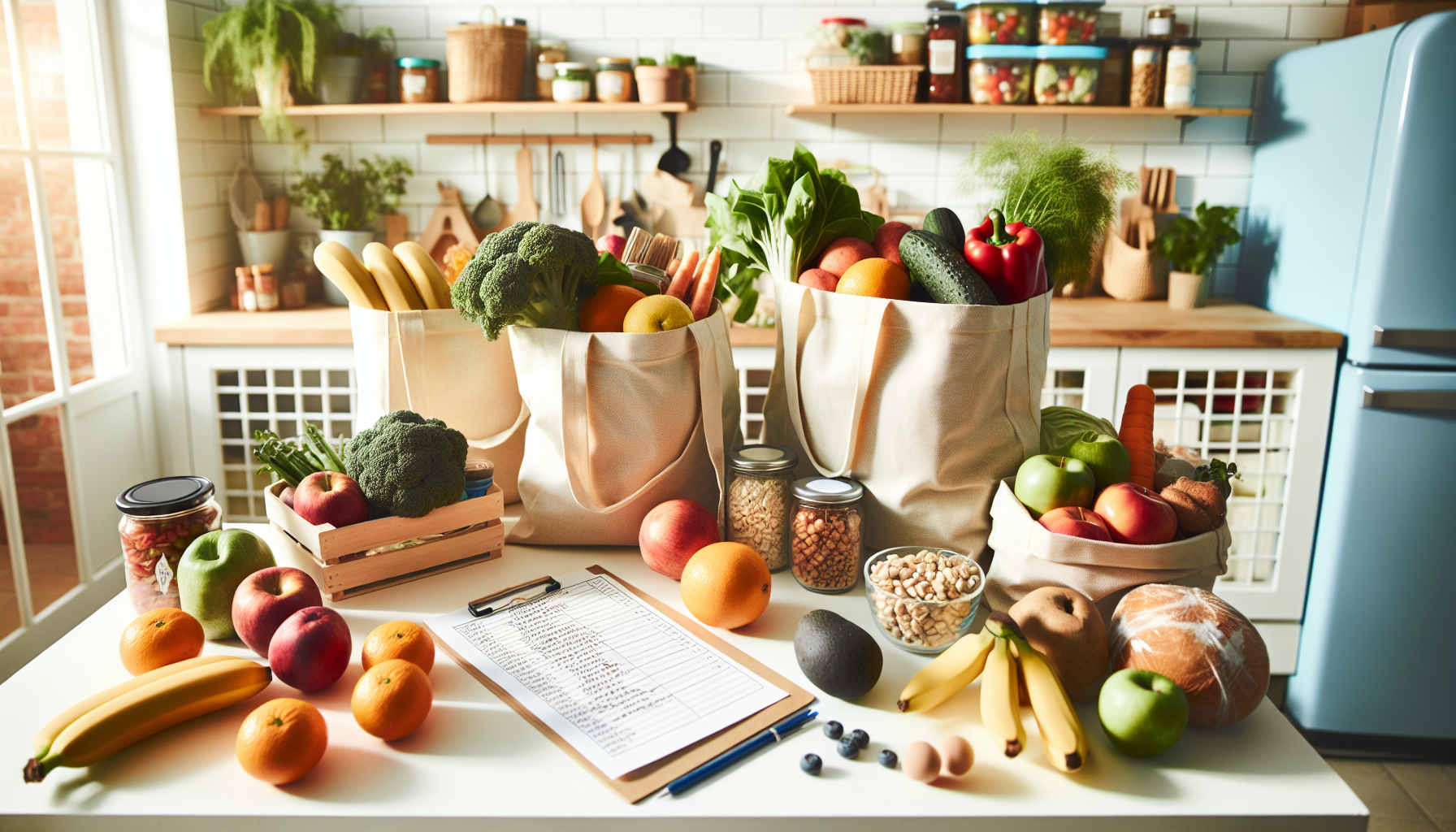
Make a List and Actually Use It
This sounds obvious, but most people don’t do it consistently. Going without a list increases spending by 20-30% on average.
List-making tips:
- Organize by store section to avoid backtracking
- Include quantities to prevent over-buying
- Use a notes app that syncs across devices
- Let family members add items throughout the week
Shop Less Frequently
Each store trip provides opportunities for impulse purchases. Consolidating trips to once per week (or less) naturally reduces spending.
Weekly shopping requires better planning but typically saves money. Stock up on shelf-stable items monthly; shop weekly for fresh produce and dairy.
Choose Your Store Strategically
Different stores serve different purposes:
Discount grocers (Aldi, Lidl): Best for basics, produce, dairy, and staples. Can save 30-40% compared to traditional supermarkets.
Warehouse clubs (Costco, Sam’s): Good for large families buying in bulk. Watch unit prices—not everything is actually cheaper.
Traditional supermarkets: Use primarily for sales and items unavailable elsewhere.
Ethnic grocery stores: Often have excellent prices on produce, spices, and specialty items.
Consider splitting your shopping between a discount grocer for basics and a traditional store for specific items.
Timing Matters
Best days to shop: Tuesday and Wednesday typically have fresh markdowns and restocked shelves without weekend crowds.
Best times: Early morning for best selection, evening for markdowns on items expiring soon.
Seasonal awareness: Produce is cheapest when it’s in season locally. Summer berries cost a fraction of winter prices.
Where to Save Without Sacrificing Quality
Proteins (Usually the Biggest Expense)
Budget-friendly proteins:
- Whole chickens (break down yourself or roast whole)
- Chicken thighs instead of breasts
- Ground turkey or beef (buy family packs, portion and freeze)
- Eggs (versatile and incredibly cheap per serving)
- Canned tuna and salmon
- Dried beans and lentils
Stretching meat further:
- Use meat as a flavoring rather than the main event
- Add beans or lentils to ground meat dishes
- Make soups and stews where less meat goes further
For protein-focused breakfast ideas that stretch your budget, see our protein breakfast guide for kids.
Produce
Save money on fruits and vegetables:
- Buy seasonal produce (in-season = cheaper and better tasting)
- Choose frozen for out-of-season items (nutritionally equivalent to fresh)
- Shop the reduced produce section for immediate use
- Buy whole vegetables and prep yourself (pre-cut costs 2-3x more)
- Consider a CSA box or farmers market for seasonal abundance
Longest-lasting produce: Carrots, cabbage, apples, oranges, potatoes, onions. Build meals around these to reduce waste.
Dairy and Eggs
- Store brands are typically identical to name brands
- Buy larger sizes when the math works out (check unit prices)
- Cheese blocks cost less than pre-shredded
- Plain yogurt is cheaper and more versatile than flavored
Pantry Staples
Always buy store brand:
- Flour, sugar, salt
- Canned tomatoes and beans
- Pasta and rice
- Cooking oils
- Spices (or buy from bulk bins)
Stock up during sales:
- Pasta (long shelf life)
- Canned goods
- Cereal and oatmeal
- Peanut butter
Cutting Costs Without Coupons
Traditional couponing is time-intensive and often pushes you toward processed foods you wouldn’t otherwise buy. These strategies work better for most families:
Store loyalty programs: Free to join, automatic discounts, and often digital coupons for items you actually buy.
Cash-back apps: Ibotta, Fetch, and similar apps provide rebates on purchases without the clipping. Scan receipts after shopping.
Price matching: Some stores match competitors’ advertised prices. Know the policies and bring ads.
Raincheck requests: If a sale item is out of stock, request a raincheck to get the sale price later.
Reducing Food Waste (Saving Money You’ve Already Spent)
Proper storage extends life:
- Store herbs in water like flowers
- Keep apples away from other produce (they release ethylene gas)
- Use airtight containers for everything
- Learn which produce goes in the fridge vs. counter
First in, first out: When unpacking groceries, move older items to the front. Use what you have before it spoils.
Embrace “ugly” produce: Bruised apples make great applesauce. Wilting vegetables work fine in soups and smoothies.
Leftover transformation: Plan to use leftovers. Roast chicken becomes chicken salad, soup, or tacos. Rice becomes fried rice. Get creative.
For more on making ingredients stretch, explore our freezer meals guide.
Feeding Kids Cheaply (Without Battles)
Kids can be expensive eaters when allowed unlimited snacking on pricey convenience foods. Structure helps both budget and nutrition.
Snack strategies:
- Portion snacks into containers rather than letting kids graze from packages
- Offer fruits, vegetables, cheese, and crackers before reaching for packaged snacks
- Make popcorn (incredibly cheap per serving) a go-to snack
- Bake simple treats rather than buying packaged cookies
Making cheap ingredients appealing:
- Presentation matters: Cut food into fun shapes
- Involve kids in cooking: They’re more likely to eat what they help make
- Offer choices within your plan: “Do you want carrots or cucumbers with lunch?”
Sample Budget-Friendly Weekly Meal Plan
Monday: Slow cooker whole chicken with roasted potatoes and vegetables
Tuesday: Chicken fried rice using leftover chicken
Wednesday: Bean and cheese quesadillas with salsa and sour cream
Thursday: Pasta with meat sauce (ground turkey stretched with lentils)
Friday: Homemade pizza night (dough is cheap to make)
Saturday: Breakfast for dinner—eggs, pancakes, fruit
Sunday: Chicken soup using remaining chicken carcass
This plan maximizes one chicken across multiple meals while providing variety.
When Splurging Makes Sense
Budget shopping doesn’t mean never spending more for quality. Some splurges are worth it:
Worth paying more:
- Olive oil (used in small quantities, quality matters)
- Parmesan cheese (real parmigiano-reggiano has more flavor, so you use less)
- Spices (fresh spices from ethnic grocers often cost less while being higher quality)
- Items your family loves and will definitely eat
Not worth the splurge:
- Organic versions of thick-skinned produce (bananas, avocados)
- Premium brands of basic commodities
- Expensive snack foods
Teaching Kids About Food Budgets
Involving children in budget shopping teaches valuable life skills:
Age-appropriate involvement:
- Toddlers: Help put items in cart, choose between two options
- Preschoolers: Find items on the list, compare sizes
- School-age: Compare prices, help plan meals, calculate totals
- Tweens/teens: Plan and shop for a meal within a budget
Framing budget shopping as smart rather than restrictive helps kids develop healthy money attitudes.
Tracking Your Progress
You can’t improve what you don’t measure. Track grocery spending for a few months to:
- Identify patterns and problem areas
- Celebrate wins and savings
- Adjust strategies that aren’t working
Use a simple spreadsheet, budgeting app, or just save receipts and review monthly.
Starting Your Budget Journey
Begin with one or two changes rather than overhauling everything at once:
Week 1: Make a list and stick to it
Week 2: Add meal planning
Week 3: Try a discount grocery store
Week 4: Track and reduce food waste
Small changes compound. A family saving $50 per week on groceries saves $2,600 per year—real money that can go toward experiences, savings, or other priorities.
Feeding your family well on a budget isn’t about deprivation. It’s about intention, planning, and smart choices that add up over time.