
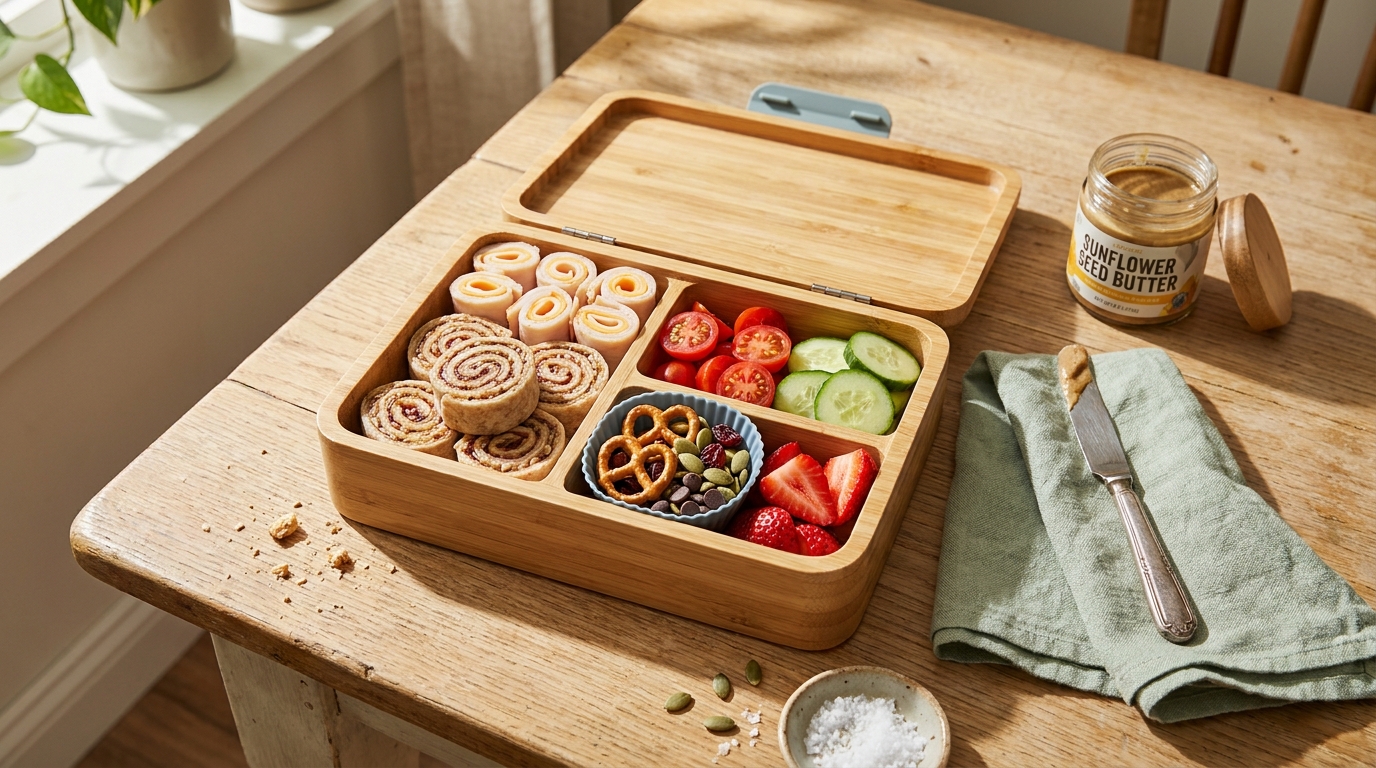
Nut-Free School Lunch Ideas That Still Feel Fun and Filling
If you're facing a nut-free classroom, this article provides practical solutions. You'll find a nut-free swap list for common items like peanut butter and Nutella, label-reading tips, and a free printable kit to help you pack fun and filling lunches.
- Swap peanut butter with sunflower seed butter and Nutella with cocoa spread.
- Carefully read labels for "nut-free facility" and understand school policies.
- Download the free printable kit for swap charts, lunchbox ideas, and checklists.
- Consult an allergist before using soy or pea butter if your child has a peanut allergy.
- Remember nut-free policies are often temporary, not a permanent lifestyle change.
Got a nut-free classroom email and no idea what to pack? This post gives you a nut-free swap table, five full lunchbox combos, a nut-free trail mix, label-reading tips and class party treats.
My email arrived three days before school started. Room 14 was nut-free, and peanut butter sandwiches had been my son’s lunch five days a week for two years. I stood at the open fridge wondering what kids even eat without it.
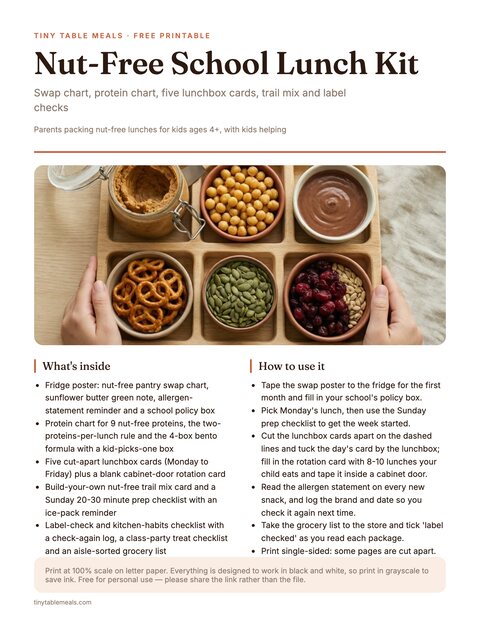
Free printable · 6 pages
Nut-Free School Lunch Kit
A fridge poster with the nut-free swap chart, a protein chart with the 4-box bento formula, five cut-apart Monday-Friday lunchbox cards with a cabinet-door rotation card, a build-your-own trail mix card with a Sunday prep checklist, and label-check, class-party and grocery checklists.
Free. Your download link appears right here. You'll also join the Sunday Supper Plan. Unsubscribe anytime. Privacy
If you got that same email, feeling stuck is normal. Peanut butter does a lot of heavy lifting in a lunchbox, and it took me about two weeks to build a rotation that was just as quick.
In this article (12 sections)
- Why Nut-Free Classrooms Are So Common Now
- The Nut-Free Pantry Swap List
- Nut-Free Protein Ideas for School Lunches
- A Full Week of Nut-Free Lunchbox Combos
- Nut-Free Trail Mix for School Lunches
- Nut-Free Bento Lunch Ideas for Picky Eaters
- Reading Labels and Avoiding Cross-Contact
- Nut-Free Treats for Classroom Parties
- Kids Can Pack Their Own Nut-Free Lunch
- Nut-Free Lunch Prep for the Week
- Frequently Asked Questions
- Nut-Free Lunch Ideas: Your First Week
Why Nut-Free Classrooms Are So Common Now
If every other classroom seems to have a nut-free note on the door, there’s a reason. Peanuts and tree nuts are among the most common food allergens in children, and some highly sensitive kids react to very small amounts.
A peanut butter sandwich is fine for your own child. But crumbs travel in a room of 22 five-year-olds, so schools remove the risk at the source.
Three things to check:
- “Nut-free classroom” and “nut-free school” are different policies. Some schools only restrict the specific room with an allergic student; others go nut-free building-wide. Check your school’s actual policy rather than assuming.
- “May contain tree nuts” labels matter. Many schools ask you to avoid products manufactured in a facility that also processes nuts, not just products with nuts as an ingredient. Read the fine print on cracker boxes and granola bars, not just the ingredient list.
- This isn’t forever, and it’s not personal. Policies shift year to year based on which students are enrolled. Treat it as this year’s puzzle to solve, not a permanent lifestyle overhaul.
The Nut-Free Pantry Swap List
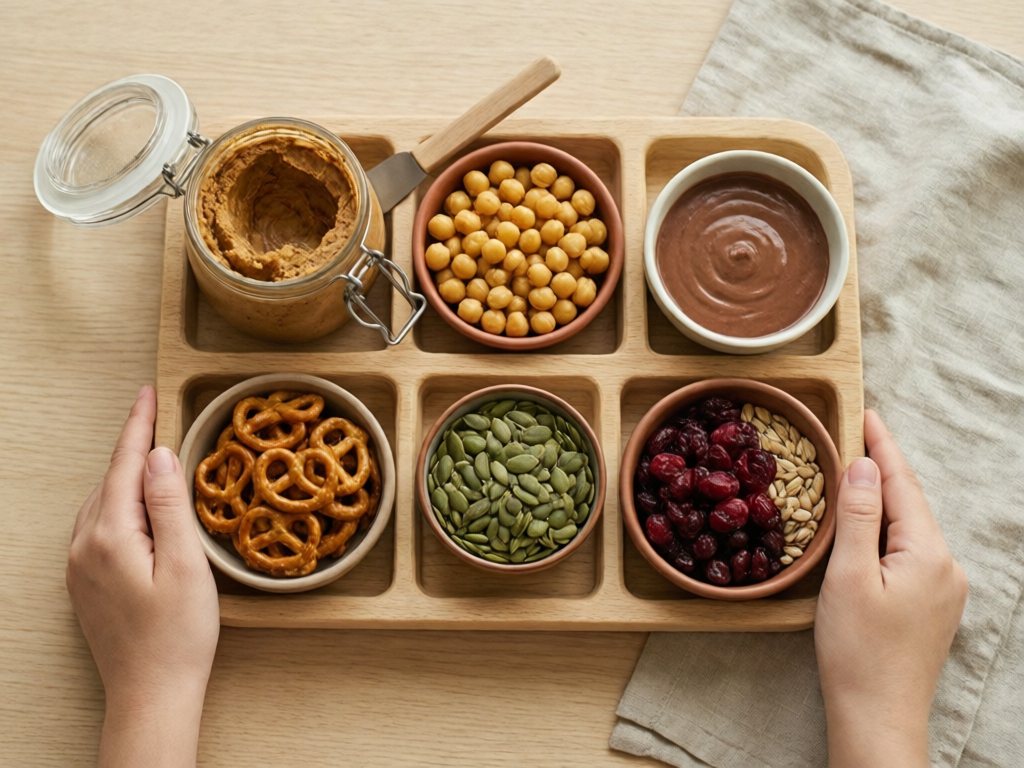
The fastest way to un-stick yourself is a straight substitution list. Whatever your kid loved with peanut butter, there’s very likely a nut-free product that slots into the exact same spot in your routine.
| Instead of… | Try… | Why it works |
|---|---|---|
| Peanut butter | Sunflower seed butter (SunButter is the most widely available brand) | Similar texture and spreadability. The flavor is slightly earthier, and most kids adjust fast. |
| Peanut butter (if seeds are off the list too) | Soy butter or pea butter | Usually nut-free and protein-dense. Confirm the facility label and read the allergy note below the table first. |
| Trail mix with nuts | Pretzels, seeds, and dried fruit mix (recipe below, ages 4+) | Salty-sweet crunch, nut-free when you check labels for cross-contact. |
| Nutella | Sunflower seed cocoa spread or a simple cocoa-and-yogurt dip | Works in a wrap or on a waffle. Look for a “made in a nut-free facility” statement. |
| Granola bars with nuts | Sunflower-seed-based granola bars | Look for a “made in a dedicated nut-free facility” statement. Many bars in this category are made on shared lines with nuts. |
| Nut-crusted chicken tenders | Sunflower seed or pretzel-crusted tenders | Same crunchy coating. Check the crumb label for nut warnings. |
| Pesto (often has pine nuts) | Basil-Parmesan pesto made without nuts, or a sunflower-seed pesto | Great on pasta salad or as a sandwich spread. |
Good to knowSoy and peas are legumes, like peanuts. If your child has a peanut or legume allergy, ask the allergist before trying soy butter or pea butter. Soy is also a top allergen, so skip soy butter for soy-allergic kids. Whichever you buy, confirm it’s made in a nut-free facility.
Keep this list on your fridge for the first month. You only need one-to-one swaps until the new products feel normal. The Nut-Free School Lunch Kit offered at the top of this post puts this swap list and the weekly plan on one page.
Sunflower seed butter does most of the work in a nut-free kitchen. It spreads like peanut butter, works in most recipes that call for it, and holds up fine in a lunchbox packed with an ice pack.
Good to knowSunflower seed allergy is uncommon but real, and some classrooms ask families to avoid seeds too. Confirm with the teacher before you pack it.
One heads-up: sunflower seed butter can turn green when it reacts with baking soda or baking powder. The green color is harmless. Use slightly less baking soda, or add a little acid like lemon juice.
Nut-Free Protein Ideas for School Lunches
What worried me most wasn’t flavor, it was protein. Peanut butter does quiet nutritional work in a lunch: roughly 7-8 grams of protein in two tablespoons, plus fats that kept my son full until pickup. Losing it meant I had to think about protein again.
Nut-free protein sources are everywhere, and most kids take to a few of them without a fight.
| Protein source | Approximate protein (varies by brand) | Lunchbox-friendly format |
|---|---|---|
| Sunflower seed butter (2 tbsp) | about 5-7g | Sandwich, dip for apple slices. |
| Hard-boiled egg | 6g | Whole, sliced, or as egg salad. |
| Cheese stick or cubes | 6-7g | Straight up, or paired with crackers. |
| Turkey or ham roll-ups | 8-10g | Rolled around cheese, no bread needed. |
| Greek yogurt (3/4 cup, about a small cup) | about 12-15g | Tube, pouch, or with granola on the side. |
| Hummus (1/4 cup) | 5g | Dip for veggies, pretzels, or pita. |
| Edamame (1/2 cup) | 8-9g | Shelled, lightly salted, eaten cold or room temp. It’s soy, so skip it for soy-allergic kids. Halve or mash for under 4. |
| Roasted chickpeas (1/4 cup) | 5g | Crunchy snack, salad topper. Ages 4+ only. For 4- and 5-year-olds still learning to chew well, swap in soft black beans or cheese cubes. |
| Bean and cheese quesadilla | 10-12g | Cut into wedges, holds up well cold. |
Want real protein targets for your kid’s age and activity level? Our high-protein snacks and meals for kids guide breaks it down by age. It took a lot of the guesswork out of my own planning once nut butter was off the table.
A practical rule I use: aim for at least two protein sources per lunch, since kids rarely eat 100% of what you pack. If the sandwich comes home half-eaten but the cheese and yogurt are gone, protein is still covered.
Portions can stay small. I use about 1 tablespoon of sunflower seed butter for a 4- or 5-year-old’s sandwich or roll-up, and closer to 2 tablespoons for an older kid.
TipLunch came home untouched? Ask what happened before you change the menu. Sometimes the lunch period was short or a container was hard to open. Next time, pack the new food beside one you know your kid eats.
A Full Week of Nut-Free Lunchbox Combos
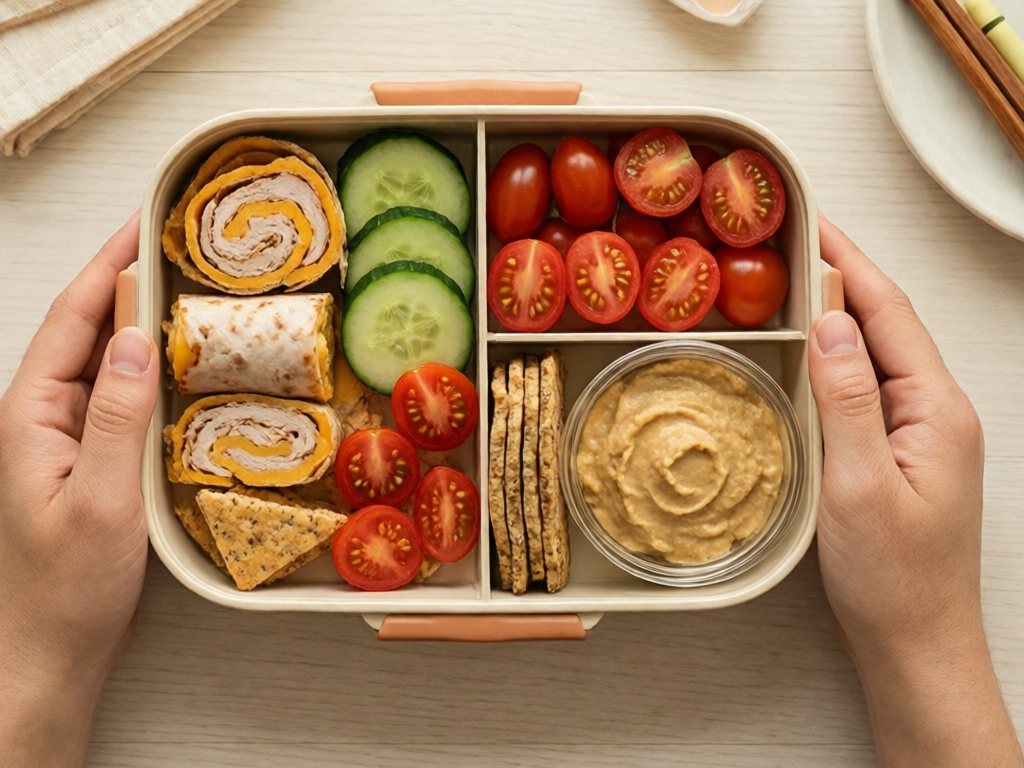
This is the part I wanted most that first week: five actual lunches I could pack tomorrow. These are real combos from our rotation, sized for a bento-style lunchbox with four to five compartments.
The plan is written for ages 4 and up. For 4- and 5-year-olds, quarter grapes and cherry tomatoes lengthwise. If your child is still learning to chew well, keep cutting food small and swap Friday’s roasted chickpeas for soft black beans or cheese cubes.
Packing for a child under 4? The under-4 prep table below Friday’s lunch lists the change for each food in this plan and in the bento list further down.
| Day | Protein | Fruit/veg | Carb | Prep ahead |
|---|---|---|---|---|
| Mon | Sunflower butter, cheese stick | Apple slices | Tortilla, pretzels | Roll Sunday night. |
| Tue | Turkey, cheddar, hummus | Cucumber, tomatoes | Crackers | Roll Monday night. |
| Wed | Sunflower butter, egg, yogurt tube | Banana, strawberries | Mini waffles | Boil eggs Sunday. Assemble that morning. |
| Thu | Cheese, black beans | Bell pepper | Tortilla | Cook Wednesday night, or thaw a frozen one. |
| Fri | Cheese, salami, roasted chickpeas (soft black beans for ages 4-5 still learning to chew well) | Grapes (quartered for ages 4-5) | Crackers | Assemble that morning. |
Monday: Sunflower Butter and Jam Roll-Ups
Spread an 8-inch whole wheat tortilla with about 1 tablespoon sunflower seed butter and 1 teaspoon strawberry jam. Roll it tight on Sunday night and slice it into pinwheels Monday morning.
Add apple slices (toss in a little lemon juice so they don’t brown by lunchtime), a cheese stick, and a small handful of pretzels.
Tuesday: Turkey and Cheese Bento
Turkey and cheddar roll-ups with no bread. Roll them Monday night or that morning, not on Sunday. Pack them seam-side down, or hold them with a silicone food band. Add cucumber coins, cherry tomatoes, a few whole-grain crackers, and a small container of hummus for dipping.
Wednesday: Breakfast-for-Lunch Waffle Sandwich
Two mini whole grain waffles with a thin layer of sunflower seed butter and banana slices in between, pressed into a sandwich. Pair with a hard-boiled egg (peeled that morning), a few strawberries, and a yogurt tube.
Thursday: DIY Lunchbox Quesadilla
A folded cheese quesadilla. Cook it Wednesday night and pack it cold. As a backup, freeze one on Sunday and thaw it in the fridge overnight. Either way, pack it right against the ice pack so it stays cold until lunch.
Add black beans on the side, bell pepper strips, and a small container of salsa or guacamole for dipping.
Friday: Snack Plate Lunch
No sandwich, just a grazing plate: cheese sticks, salami or turkey pepperoni, whole grain crackers, grapes, roasted chickpeas, and a couple of squares of nut-free chocolate with no may-contain warning. Quarter the grapes lengthwise for 4- and 5-year-olds.
Is your 4- or 5-year-old still learning to chew well? Swap the roasted chickpeas for soft black beans or extra cheese cubes.
It’s the most-requested lunch in our house, because kids get options instead of one fixed sandwich.
Safety firstPacking for a child under 4? Prep each food the way the table below shows. Skip whole seeds, popcorn, hard pretzels, roasted chickpeas and toothpicks until age 4. For any food not listed, cut it into small, soft, bite-size pieces.
| Food | Under-4 prep |
|---|---|
| Grapes and cherry tomatoes | Quarter lengthwise. |
| Strawberries | Quarter. |
| Banana | Cut each slice into halves or quarters. |
| Orange segments | Peel off the tough membrane and cut each segment into small pieces. |
| Raw apple | Slice thin. |
| Hard-boiled egg | Slice. |
| Cheese | Cut into thin sticks. |
| Salami or pepperoni | Cut into thin quarter-slices, or use turkey roll-ups instead. |
| Carrots, including baby carrots | Cook until soft, then cut into thin sticks. Skip raw carrots. |
| Cucumber | Peel and cut into thin strips, or quarter each coin. |
| Snap peas | Steam until soft, then cut into small pieces. |
| Bell pepper | Cook until soft, or slice into very thin, short strips. |
| Edamame | Halve or mash. |
| Black beans | Flatten each bean with a fork, or mash. |
| Pretzels | Swap for soft crackers. |
| Sunflower butter pinwheels and waffle sandwich | Spread the sunflower butter thin. Cut into bite-size pieces. |
| Turkey and cheese roll-ups | Cut into bite-size pieces. |
| Quesadilla | Cut into thin strips. |
| Mini muffin | Break into small pieces. |
| Pasta salad | Use small, soft pasta and cut the add-ins small. |
| Chocolate squares | Break into small pieces. |
Food safetyEvery lunch in this plan includes something perishable (meat, egg, cheese, yogurt, cooked quesadilla or cut fruit). Pack each one in an insulated lunchbox with a real ice pack, or two. Keep them at or below 40°F until lunch. A frozen drink is only a supplement.
Sunday Prep Checklist (20-30 Minutes)
- Boil 2-3 eggs and leave them in the shell: one for Wednesday’s lunch, the extras for snacks.
- Roll Monday’s sunflower butter and jam tortilla. Wrap it whole and slice it Monday morning.
- Wash all the produce. Cut only what you’ll pack through Wednesday, and cut the rest midweek.
- Portion trail mix into small airtight containers.
- Plan to cook Thursday’s quesadilla on Wednesday night. For a backup, cook and freeze one now.
Fridge limits to plan around:
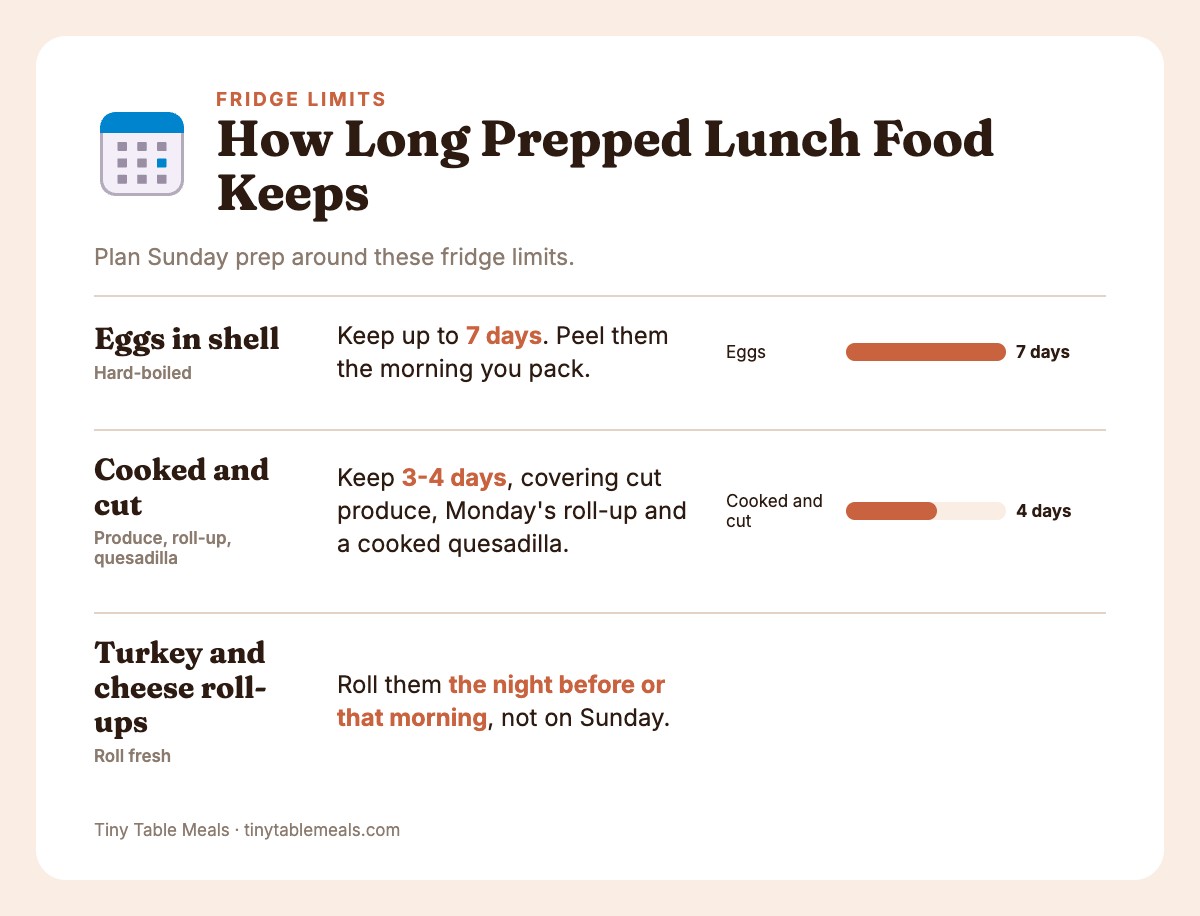
- Hard-boiled eggs in the shell: up to 7 days. Peel them the morning you pack.
- Cooked and cut items: 3-4 days. That covers cut produce, Monday’s roll-up and a cooked quesadilla.
- Turkey and cheese roll-ups: roll them the night before or that morning, not on Sunday.
Want more combos once this week is down? Our Bento Box Lunch Ideas for Kids post has a whole gallery, and most go nut-free with a sunflower-butter swap.
Nut-Free Trail Mix for School Lunches
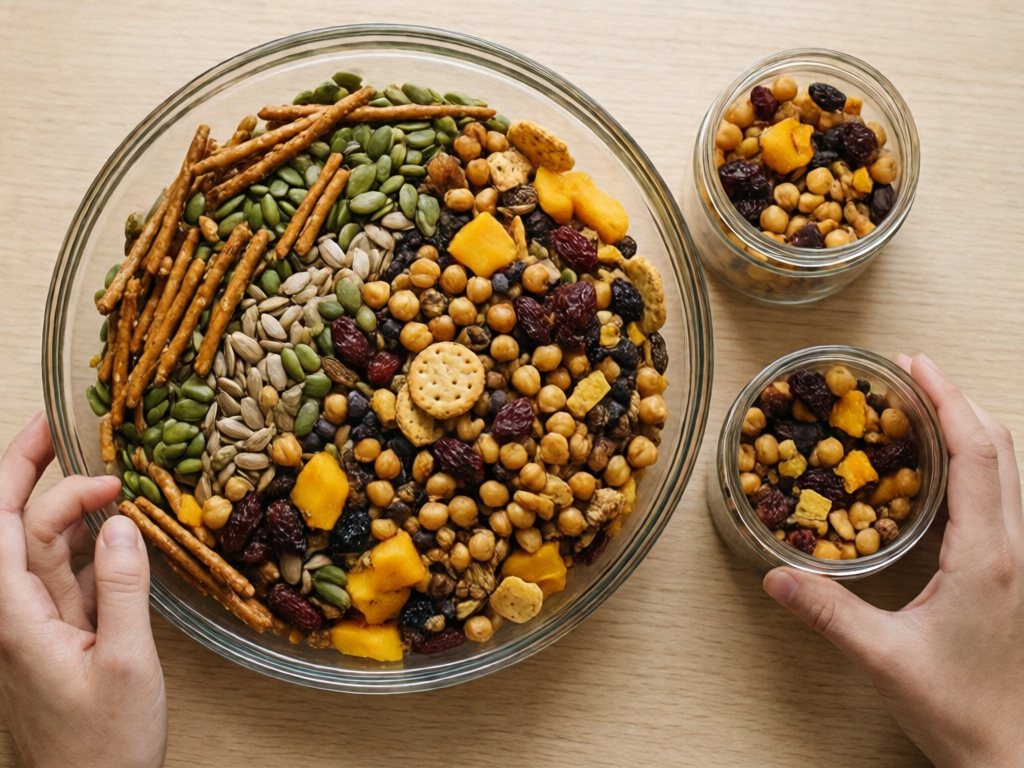
Trail mix was the other casualty in our house, and my son missed it more than peanut butter. It was never really about the nuts, just the format: salty, sweet, crunchy, and eaten one piece at a time.
Here’s our go-to nut-free trail mix formula. Pick one item from each column and mix to taste. This mix is for kids 4 and up.
| Crunchy base | Sweet element | Salty/savory element |
|---|---|---|
| Pretzel sticks or twists | Raisins or dried cranberries | Roasted chickpeas. Leave them out for ages 4-5 still learning to chew well. |
| Pumpkin seeds (pepitas). Chop them for ages 4-5. | Dried mango or apple rings | Cheese crackers (mini) |
| Sunflower seeds, shelled. Chop them for ages 4-5. | Certified nut-free chocolate chips | Popcorn (air-popped). Leave it out for ages 4-5 still learning to chew well. |
| Corn puff cereal | Freeze-dried strawberries | Sesame sticks |
Safety firstThis mix is for ages 4 and up. Popcorn, whole seeds, roasted chickpeas and hard pretzels are choking hazards for children under 4, in line with AAP and CDC choking guidance. The risk fades gradually, not on the fourth birthday, and each child’s chewing skill matters. For 4- and 5-year-olds still learning to chew well, chop or grind the seeds and leave out the popcorn and chickpeas. For younger kids, offer soft options like puffed cereal that dissolves or soft dried fruit cut small.
I make a big batch in a gallon bag every couple of weeks and portion it into small containers on Sunday nights. It costs less than pre-packaged nut-free mixes, and I know exactly what’s in it. That matters once you start reading labels (more on that below).
Pumpkin seeds deserve a special mention. They’re nut-free and a good source of iron and zinc, and most kids who liked nuts for the crunch take to pepitas quickly. For more iron ideas, including options for younger kids, see our Iron-Rich Meals and Snacks for Kids guide.
Nut-Free Bento Lunch Ideas for Picky Eaters
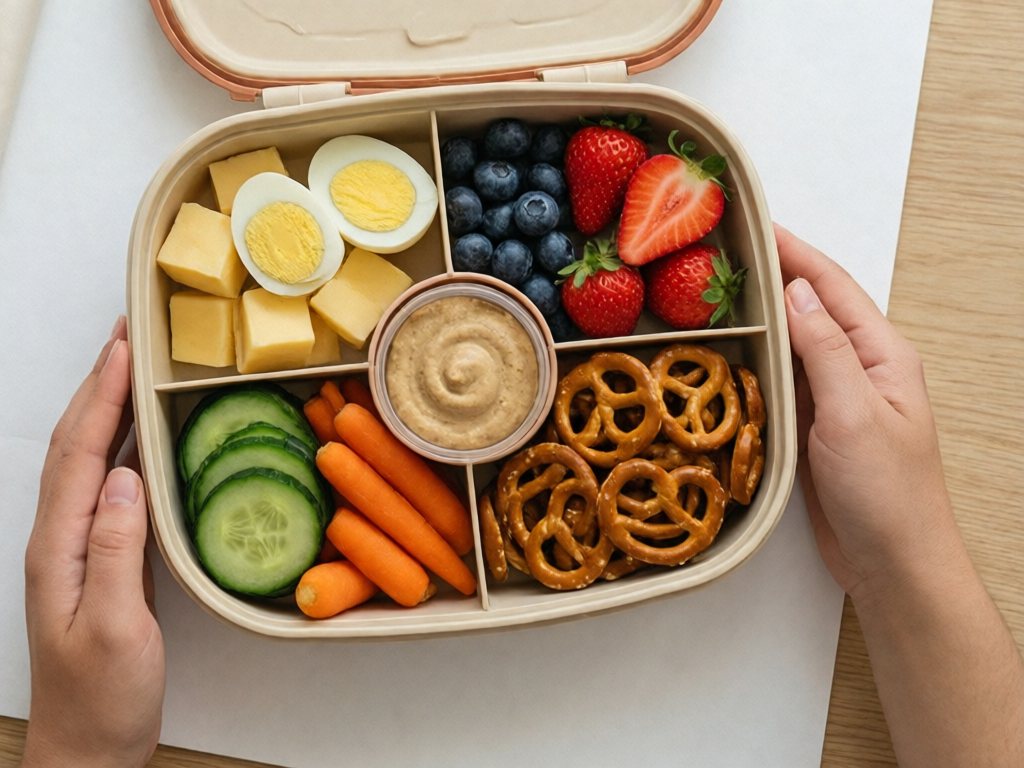
If your kid would rather eat six small things than one sandwich, a bento-style box is the easiest way to go nut-free. Kids who reject a sunflower-butter sandwich will often happily pick at the same ingredients in little compartments.
Our simplest bento formula is four boxes, one from each category:
- A protein — cheese cubes, hard-boiled egg, turkey roll-ups, or edamame.
- A fruit — berries, grapes (quartered lengthwise through age 5), apple slices, or orange segments.
- A vegetable — cucumber, snap peas, baby carrots, or bell pepper strips, usually with a dip.
- A “fun” carb — pretzels, crackers, a mini muffin, or a few bites of pasta salad.
What got my picky eater to finish the box was letting him choose one item per category each week. He doesn’t get full veto power over the whole lunch, but having one “pick” makes the rest of the box feel less imposed. Under 4? Use the under-4 prep table in the weekly plan above. For more packing ideas, see our guide to packing lunches kids actually eat.
Reading Labels and Avoiding Cross-Contact
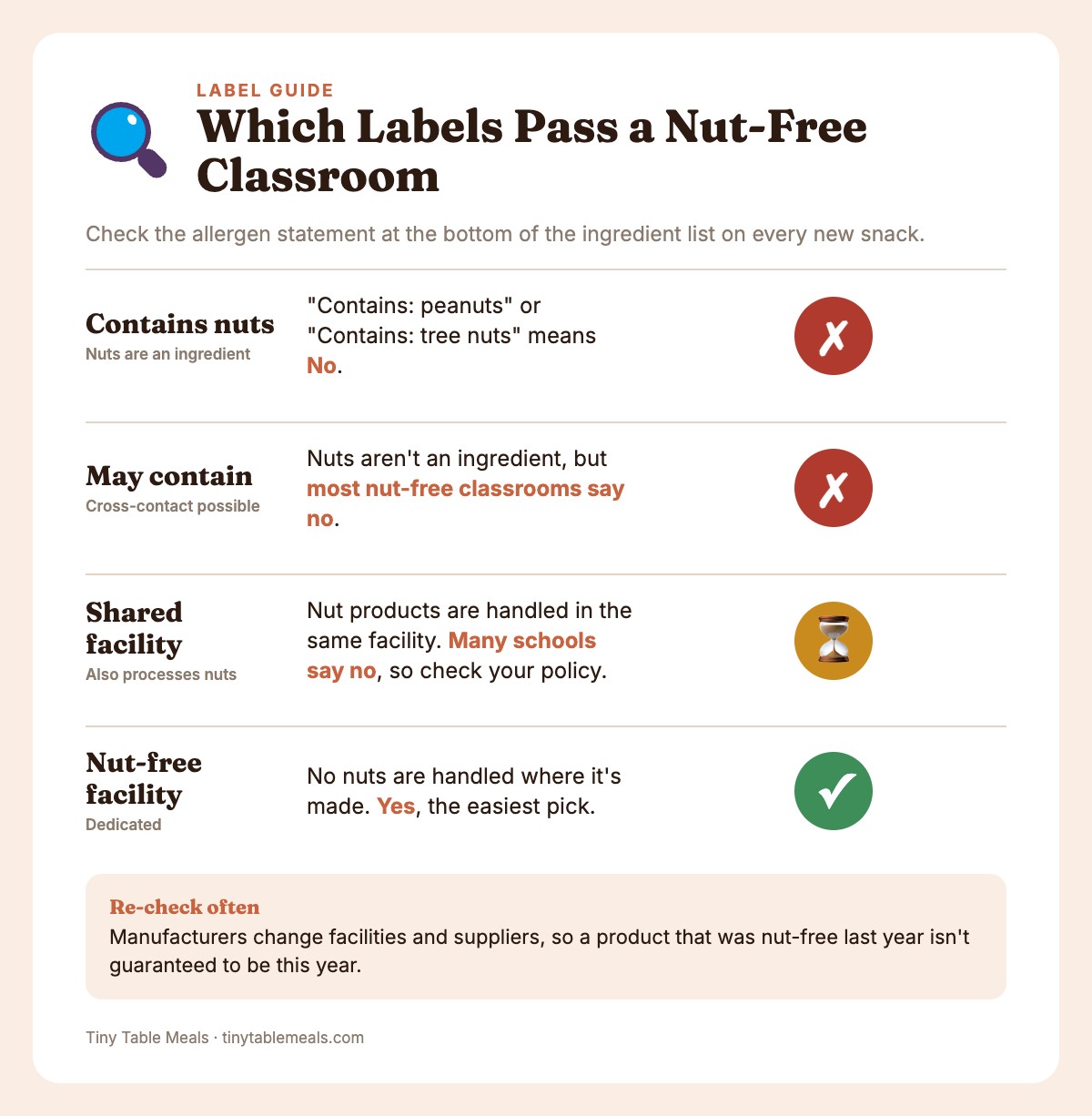
Once you start reading labels, you’ll notice how many snacks carry a “may contain tree nuts” warning. Others say “processed in a facility that also processes peanuts.” Often these are products with no nuts in the ingredient list.
| The label says | What it means | Nut-free classroom? |
|---|---|---|
| “Contains: peanuts” or “Contains: tree nuts” | Nuts are an ingredient. | No. |
| “May contain peanuts or tree nuts” | Nuts aren’t an ingredient, but cross-contact is possible. | Most nut-free classrooms say no. |
| “Processed in a facility that also processes nuts” | Nut products are handled in the same facility. | Many schools say no. Check your policy. |
| “Made in a dedicated nut-free facility” | No nuts are handled where the product is made. | Yes. This is the easiest pick. |
Some categories where I get caught off guard most often:
- Granola bars and cereal bars. A huge percentage are made on shared equipment with nut products, even the ones that look totally innocent.
- Chocolate and candy. Especially anything with a “chocolatey” coating — cross-contact is extremely common in candy manufacturing.
- Baked goods from bakeries or grocery store bakery sections. Even a plain sugar cookie can pick up nut residue if it’s baked on shared trays.
- Trail mix and snack mixes — obviously, but even “just raisins and pretzels” mixes are sometimes packaged on shared lines.
- Pesto, certain breads, and some granolas — pine nuts and almonds show up in places people don’t expect.
My habit now: I check the allergen statement at the bottom of the ingredient list every time I buy a new snack. I do it even when I already trust the brand for a different product. Manufacturers change facilities and suppliers, and a product that was nut-free last year isn’t guaranteed to be this year.
A few small habits keep a shared kitchen safer:
- Store any nut products the rest of the family eats on a separate, clearly labeled shelf.
- Give the peanut or almond butter its own jar and knife. Never use that knife on the nut-free lunch.
- Before you pack, wash cutting boards, knives and the counter with soap and water. A commercial cleaning wipe also works on hard surfaces.
- Wash hands and faces with soap and water after a nut-containing breakfast, before school. Hand sanitizer doesn’t remove nut protein, and FARE and other allergy organizations say the same.
Nut-Free Treats for Classroom Parties
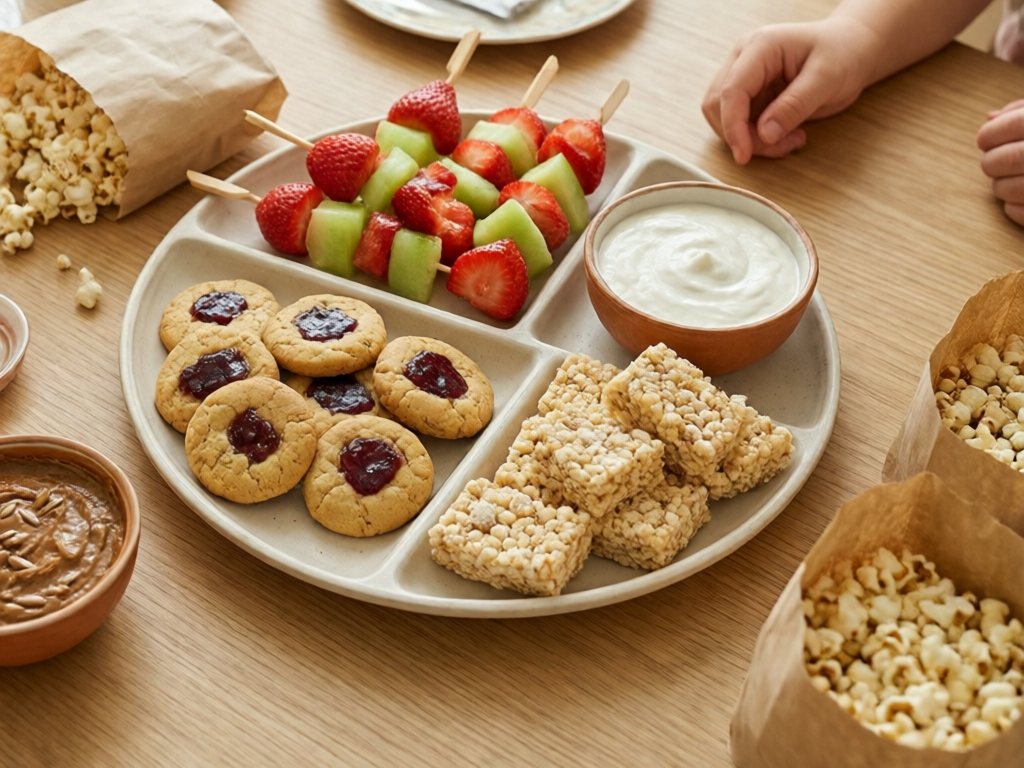
Birthday treats and class party snacks are where nut-free rules trip people up most. You’re not just packing for your own kid. You’re sending something 20+ kids will eat, and at least one has the allergy the policy exists for.
A few reliable nut-free treats that read as “special” rather than “the sad allergy-safe option”:
- Sunflower seed butter and jelly thumbprint cookies — same nostalgic cookie, nut-free when every ingredient is checked. Confirm the teacher is fine with seeds.
- Rice Krispie treats — nut-free as long as your marshmallows and butter are. Double-check the cereal box for cross-contact warnings.
- Fruit kabobs with a yogurt dip — colorful and easy to portion. For pre-K groups, skip the skewers and serve the cut fruit in cups, with grapes quartered.
- Cupcakes with sprinkles labeled nut-free — pick ones with no may-contain warning. Sprinkles are a sneaky source of cross-contact.
- Popcorn bags individually portioned, for ages 4+ only. Check labels for nut cross-contact. For pre-K groups, choose fruit cups or puffed-rice treats instead.
Signed up to bring a batch for a class party? Our roundup of class-party treats kids can help bake has plenty of crowd-pleasers. Most go nut-free with a single sunflower-butter or seed-based swap, and I flagged which ones need no change at all.
For a class of 20-24, plan one treat per child plus a few extras.
One tip that saved me a lot of stress: check with the teacher about what’s already cleared for the classroom. Many nut-free classrooms keep an approved-snack list, and bringing something on it is one less thing to second-guess at 7am on party day.
- Teacher OK on seeds if the treat uses sunflower butter or seeds.
- Nut-free label on every ingredient.
- No may-contain warning on any package.
- Ingredient label or box saved to show the teacher.
- Treat made in a clean kitchen, with surfaces washed with soap and water.
Safety firstFollow your school’s written policy, and if your child has a diagnosed allergy, follow your allergist’s guidance and the school’s emergency plan. If a classmate shows signs of an allergic reaction, tell an adult right away.
Kids Can Pack Their Own Nut-Free Lunch
Involving my son in packing his own nut-free lunch made the transition easier, not harder. In our house, new foods go over better when he feels like he chose them.
Starting around age 5 or 6, kids can help with:
- Spreading sunflower seed butter on bread or a tortilla. A butter knife is fine with supervision.
- Portioning crackers, pretzels, or trail mix into small containers.
- Peeling a hard-boiled egg or a clementine.
- Choosing the day’s fruit or veggie from two or three options you set out.
- Assembling roll-ups by rolling the tortilla or turkey slice themselves.
By 8 or 9, many kids can pack most of a simple lunch on their own when the ingredients are pre-portioned in the fridge. That saves real time on rushed mornings. For what’s reasonable to hand off at each age, our age-by-age guide to kids’ kitchen skills lays out a clear progression.
Letting kids build their own after-school snacks is a similar confidence-builder, and a lot of the same nut-free swaps carry over from lunch to snack time. The After-School Snacks Kids Can Make Themselves post has 20 ideas geared toward independence, and most work without any nut products at all.
Nut-Free Lunch Prep for the Week
A lunch routine only survives if it’s fast on weekday mornings. The Sunday prep checklist above covers the cooking. These habits keep the rest from falling apart by Wednesday:
- A dedicated “nut-free lunch” shelf in the fridge and pantry. Everything approved for the lunchbox lives in one spot, so mornings are grab-and-assemble instead of decision-making.
- A rotating list of 8-10 approved lunches, not infinite variety. I keep this list on the inside of a cabinet door. When I’m out of ideas, I just look at the list instead of starting from scratch.
- Double a dinner on purpose. Quesadillas, pasta salad, and rice bowls all repurpose into next-day lunches with almost no extra work.
- Freeze what freezes. Sunflower-butter energy bites, mini muffins, and pre-made sandwiches (minus lettuce or tomato) all freeze well and thaw by lunchtime if packed frozen in the morning.
If mornings are your bottleneck, our back-to-school lunch prep guide walks through this batching system. Its combos work nut-free with the swaps above.
Frequently Asked Questions
Is sunflower seed butter a safe substitute if my child’s classroom is nut-free?
Usually, yes. Sunflower seeds are not a tree nut or a peanut, so sunflower seed butter (like SunButter) is widely accepted in nut-free classrooms. Sunflower allergy is uncommon but real, and some classrooms ask families to avoid seeds, so confirm with the teacher. Also check the label for a “may contain” warning, since some facilities process it on shared lines with tree nuts.
What snacks should I avoid sending even if they don’t list nuts as an ingredient?
Watch for “may contain tree nuts or peanuts” and “processed in a facility that also processes nuts” warnings. These appear on many granola bars, chocolate products, baked goods, and trail mixes, even when nuts aren’t an ingredient. Most nut-free classrooms ask families to avoid these products too, since cross-contact residue can still trigger a reaction in a highly sensitive child.
How do I keep my child’s protein intake up without peanut butter?
Lean on eggs, cheese, Greek yogurt, turkey or ham roll-ups, hummus, edamame, and roasted chickpeas (ages 4 and up). Aim for at least two protein sources per lunch since kids rarely finish everything packed. Sunflower seed butter has roughly 5-7 grams of protein per two tablespoons, depending on brand. It fills the same role as peanut butter in a sandwich or as a dip.
Is it okay to still keep peanut butter at home if my child’s classroom is nut-free?
Yes — a nut-free classroom policy applies to what’s sent to school, not what your family eats at home. Watch for cross-contact if you prep both in the same kitchen. Use separate utensils and jars, and wash hands and surfaces with soap and water before you pack the lunchbox.
What’s a good nut-free replacement for trail mix?
Build your own mix with pretzels, pumpkin seeds, sunflower seeds, roasted chickpeas, dried fruit, and a few chocolate chips or cheese crackers. It has the same salty-sweet, handful-at-a-time appeal as traditional trail mix, and pumpkin seeds are a good nut-free source of iron and zinc. Keep it for kids 4 and up. For 4- and 5-year-olds still learning to chew well, chop the seeds and leave out the popcorn and roasted chickpeas. Whole seeds, popcorn and roasted chickpeas are choking hazards for children under 4.
How do I know if a classroom party treat is safe to bring?
Check with the teacher first — many nut-free classrooms keep an approved-snack list you can reference. When making something yourself, use only verified nut-free ingredients, including sprinkles and chocolate chips, which sometimes carry hidden cross-contact warnings. Individually wrapped, store-bought items with a clear allergen label are often the easiest low-risk option, and keep the box or label to hand to the teacher. Some schools don’t allow homemade or bakery items at all, so ask first.
My child is upset about giving up peanut butter sandwiches — how do I help with that?
Let them help choose the replacement rather than just handing them a swap. Taste-test a few sunflower seed butter brands together, or let them pick the trail mix ingredients. That turns the change into something they’re part of, not something that happened to them. Many kids adjust within a few weeks once the new lunch feels like “their” lunch again.
Nut-Free Lunch Ideas: Your First Week
That first nut-free week felt like starting from zero, but it’s really a handful of swaps on a routine you already run. Give yourself the two weeks of adjustment I needed.
Next step: pick Monday’s lunch and tape the swap table to the fridge. For a printable copy, the lunch kit at the top of this post has the swap list and the week’s plan ready to go.